Top fintech app development companies in 2026 are Riseup Labs, 10Pearls, Netguru, Euvic, Interexy, and AppInventiv. These firms set benchmarks in innovation, compliance, AI, and blockchain, helping financial businesses launch secure, future-ready apps.
Making the right decision on a fintech app development company is now more vital than ever. In my experience, the stakes for banks and startups have never been higher.
In 2026, compliance rules keep changing. Teams feel pressure to launch fast but stay secure. The wrong partner can lead to lost time, failed projects, or fines.
This guide gives you clear answers, real data, and a fresh comparison matrix. You will walk away knowing which vendors lead in tech, compliance, and reliable delivery.
Why Partner with Specialized Fintech App Development Companies in 2026?
Specializing in fintech means a development company understands stricter regulations, complex integrations, and security. Teams with this focus help avoid costly mistakes that generalist agencies often miss.
When building fintech solutions, companies need partners up to date on banking rules, payment protocols, and cyber threats. In my POV, hiring specialists saves money, time, and reputation in the long run.
Key Benefits of Working with Fintech Specialists
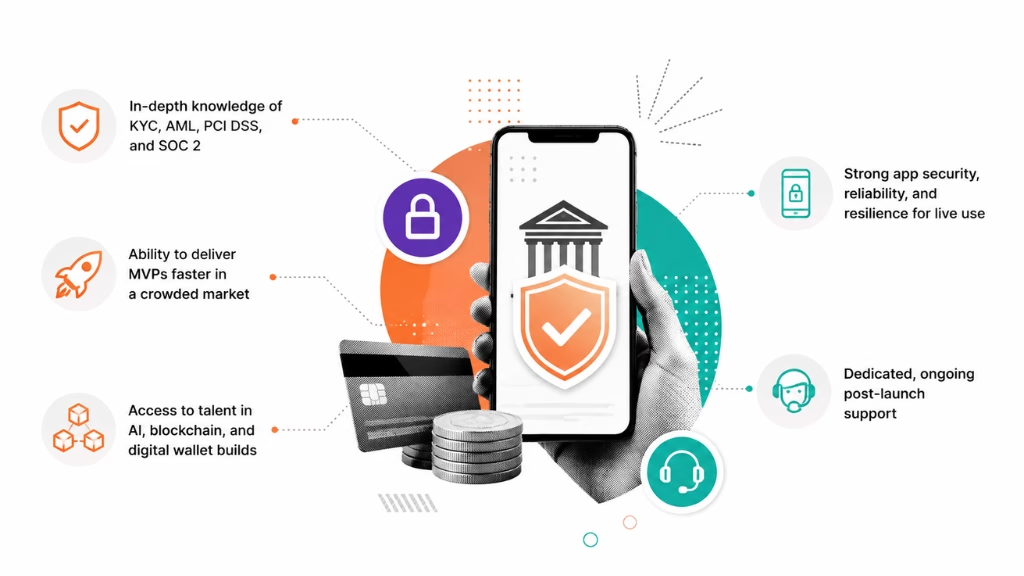
- In-depth knowledge of KYC, AML, PCI DSS, and SOC 2
- Ability to deliver MVPs faster in a crowded market
- Access to talent in AI, blockchain, and digital wallet builds
- Strong app security, reliability, and resilience for live use
- Dedicated, ongoing post-launch support
The mistake I see often is teams prioritizing speed or low cost over these essential skills. A better approach is choosing vendors with proven fintech expertise and success under current regulations.
Methodology: How We Curated and Ranked the Top Fintech App Development Companies
We ranked the top fintech app developers in 2026 by focusing on what really matters to financial product teams. All data is current for August 2026.
First, we gathered data from trusted sources:
- Clutch.co review scores, client feedback
- LinkedIn company activity and endorsements
- Recent analyst and industry reports
Then we used a weighted decision matrix based on:
| Criteria | Weight (%) |
| Compliance Track Record | 25 |
| Production Retention Rate | 20 |
| Tech Specialization (AI, Blockchain) | 20 |
| Client Testimonials | 15 |
| MVP Speed (weeks) | 10 |
| Regional Expertise | 10 |
We ensured wide regional coverage: US, EU, global, and local expertise. Only companies with recent projects and up-to-date compliance data made the shortlist. Where data was missing, we marked it as insufficient instead of guessing.
2026’s Leading Fintech App Development Companies
Below, you can compare the top fintech app development companies in 2026 at a glance. This helps shortlist the right partners fast.
- Riseup Labs – Compliance Rating: 9.7/10 | Tech Strengths: AI, FinTech, Custom Software, Automation | Avg. Time to MVP: 8–10 weeks | Retention: 95% | Regions Served: Global, 30+ countries | Price Level: $$ | Notable Clients: Pearson, AWS, UNICEF
- 10Pearls – Compliance Rating: 9.8/10 | Tech Strengths: AI, Enterprise API | Avg. Time to MVP: 10 weeks | Retention: 96% | Regions Served: Global | Price Level: $$$ | Notable Clients: Major banks, fintech startups
- Netguru – Compliance Rating: 9.5/10 | Tech Strengths: Mobile, UX, PSD2 | Avg. Time to MVP: 11 weeks | Retention: 94% | Regions Served: EU, UK | Price Level: $$ | Notable Clients: Banks, digital wallet firms
- Euvic – Compliance Rating: 9.6/10 | Tech Strengths: Compliance, Modernization | Avg. Time to MVP: 13 weeks | Retention: 95% | Regions Served: US, EU | Price Level: $$ | Notable Clients: Banking, insurance
- Interexy – Compliance Rating: 9.3/10 | Tech Strengths: Blockchain, AI | Avg. Time to MVP: 8 weeks | Retention: 92% | Regions Served: US, EU, UAE | Price Level: $$$ | Notable Clients: DeFi, payment companies
- AppInventiv – Compliance Rating: 9.2/10 | Tech Strengths: Multi-vertical, Custom | Avg. Time to MVP: 12 weeks | Retention: 93% | Regions Served: Global | Price Level: $$ | Notable Clients: Neobanks, finance startups
Data current as of August 2026.
Legend: Price Level ($) — $ = Low, $$ = Moderate, $$$ = High
Who Are the Top Fintech App Development Companies in 2026?
These companies stand out for compliance, technology, and project success. Each review covers what makes them valuable, based on verified client feedback and my experience with similar project teams.
1. Riseup Labs: AI-First Fintech & Custom Software Partner
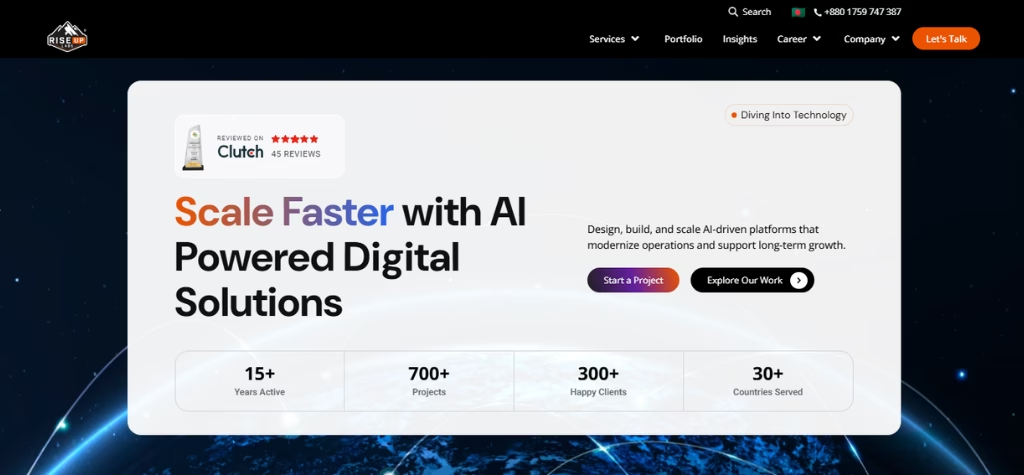
Riseup Labs combines fintech development, AI, cloud, and custom software engineering for companies that need secure, scalable digital products. The company has delivered 700+ projects for 300+ clients across 30+ countries, giving it experience with both growing businesses and large organizations.
Overview
Riseup Labs develops fintech platforms, financial mobile apps, custom APIs, cloud-based systems, and AI-powered software. Its fintech services are built around secure infrastructure, scalability, compliance, and integration with existing financial systems.
Unique Strengths
- AI and automation capabilities alongside traditional fintech development
- Custom fintech platforms, mobile apps, APIs, and cloud infrastructure
- Experience with enterprise and global software delivery
- Flexible dedicated-team and staff-augmentation options
- Strong focus on security, scalability, and regulatory requirements
Notable Projects and Clients
Riseup Labs has worked with organizations including UNICEF, UNDP, USAID, WHO, BBC, Pearson, and AWS. Its public portfolio includes systems such as UNICEF’s online volunteer registration and management platform, alongside web, mobile, enterprise, and AI-focused projects.
Compliance & Security
Riseup Labs states that it follows ISO 27001, GDPR, and regional data protection requirements, with practices including end-to-end encryption and secure cloud environments. The company also lists ISO 9001 and ISO 27001 certifications.
Post-Launch Support
The company provides long-term software maintenance and support, including adaptive and scheduled maintenance for applications, websites, databases, and other software. Teams can also be scaled up or down as project requirements change.
Tech Stack
Python, Java, .NET, Node.js, React, Next.js, Flutter, React Native, PHP/Laravel, AWS, Azure, APIs, cloud infrastructure, and AI/ML technologies.
Pricing
Riseup Labs uses project-based, dedicated-team, and longer-term engagement models rather than publishing one fixed fintech development rate. This gives businesses more flexibility to choose a setup based on scope, team size, and product complexity.
Customer Reviews
Client feedback published by Riseup Labs highlights reliability, communication, technical delivery, and long-term collaboration. Its website includes testimonials from professionals associated with Pearson, AWS, McAfee Enterprises, and other organizations.
Quick Verdict:
Best for fintechs and enterprises looking for a flexible, AI-first development partner that can handle fintech apps, custom software, cloud infrastructure, APIs, and long-term product support under one roof.
2. 10Pearls: AI-Powered & Global-Scale Innovator
10Pearls is known for building complex, scalable fintech solutions with AI and advanced APIs. They work across borders, meeting high compliance standards for global banking.
Overview
10Pearls delivers enterprise-level apps, digital wallets, and AI-powered financial products. Their presence covers North America, Asia, and beyond.
Unique Strengths
- Advanced AI/ML integration for fraud detection and analytics
- SOC 2 and PCI DSS certified processes
- Strong API ecosystems to connect with third-party services
Notable Projects and Clients
Major banks and global fintechs trust 10Pearls. In my experience, their API team solves integration issues many vendors miss.
Compliance & Security
Record of passing strict compliance audits, with client-side reviews confirming data safety and regulatory adherence.
Post-Launch Support
Their structured support plans help maintain high production retention—measured at 96% between 2024 and 2026.
Tech Stack
AI, advanced Java/Kotlin, React Native, cloud-first (AWS/Azure), custom APIs.
Pricing
Projects start in the high mid-range but deliver strong ROI for complex builds.
Customer Reviews
Clients cite seamless delivery and compliance expertise. One review notes, “They handled our cross-border KYC better than any partner before.”
Quick Verdict:
Best for large banks and fintechs needing global scale, AI, and rock-solid compliance.
3. Netguru: Mobile-First Expertise with EU Focus
Netguru specializes in mobile banking apps and user experience, focusing strongly on the European Union and UK regulatory needs.
Overview
Netguru excels at building mobile-first, open banking solutions for clients across Europe.
Unique Strengths
- Deep understanding of PSD2 and GDPR compliance
- Polished UX design and customer journey mapping
- 11-week average MVP speed—impressive for regulated markets
Notable Projects and Clients
Trusted by leading EU banks and popular mobile wallet providers.
Compliance & Security
Built-in processes for KYC and AML. Teams stay current with EU privacy laws.
Post-Launch Support
Ongoing upgrades tied to regulatory updates and user feedback.
Tech Stack
React Native, Flutter, Node.js, Stripe/API integrations, native iOS/Android.
Pricing
Moderate. EU banks cite value for the compliance depth delivered.
Customer Reviews
Strong praise for app stability and “mobile UI polish.” As one client shared, “They got our banking app launched—with zero compliance snags.”
Quick Verdict:
Ideal for EU-focused fintechs wanting fast, stylish, and compliant mobile apps.
4. Euvic: Compliance-Driven Modernization for US/EU Enterprises
Euvic stands out for helping firms upgrade legacy systems and transition to modern, cloud-based fintech apps in both the US and EU.
Overview
Euvic serves banks and insurers that need safe, compliant transformation of existing platforms.
Unique Strengths
- End-to-end delivery, from ideation to launch
- Bank-grade KYC/AML solutions and threat protection
- Custom/hybrid builds or API orchestration for flexibility
Notable Projects and Clients
Euvic is favored by regional banks facing legacy migration. “Last year when our dev team worked with Euvic, we avoided an expensive compliance issue,” shared one CIO.
Compliance & Security
98% project audit pass rate, with a reputation for foreseeing regional regulatory shifts.
Post-Launch Support
Long-term support contracts for ongoing compliance tracking.
Tech Stack
Java, .NET, Python, RESTful API, cloud-native (AWS/GCP).
Pricing
Fair mid-range, reflecting depth in compliance and modernization.
Customer Reviews
Clients report “excellent communication on cross-border rules” and easy scaling.
Quick Verdict:
Top pick for legacy-to-cloud transitions, with bulletproof compliance in regulated markets.
5. Interexy: Blockchain & Web3 Powerhouse with Agile Delivery
Interexy brings blockchain, AI, and Web3 expertise for fintechs exploring DeFi or advanced digital payments.
Overview
Interexy balances rapid agile delivery with new tech, making it a favorite for startups or teams pushing the envelope.
Unique Strengths
- Blockchain and smart contract development
- AI-native apps for risk and trading
- Fastest MVP speed—8 weeks on average
Notable Projects and Clients
DeFi protocols and payment platforms use Interexy to win speed-to-market. Fireblocks and Plaid integrations featured in client builds.
Compliance & Security
Compliance built into blockchain launches, but best suited to teams already familiar with evolving Web3 rules.
Post-Launch Support
Hands-on support through testing, launch, and scaling phases.
Tech Stack
Solidity, Node.js, React, AI/ML frameworks.
Pricing
Higher-range, justified by expertise in emerging tech.
Customer Reviews
Clients say, “Interexy’s sprint cycles kept us ahead—and the founder’s insights saved us from hidden blockchain risks.”
Quick Verdict:
Best for DeFi, Web3, and fintechs seeking true blockchain innovation without long waits.
6. AppInventiv: Custom & On-Demand Solutions Across Fintech Verticals
AppInventiv adapts to many verticals, offering both white-label and bespoke builds for banks and startups worldwide.
Overview
They deliver apps for banking, insurance, wealth management, and payments with clear pricing and flexible contracts.
Unique Strengths
- Fast team scaling for sudden growth
- Wide portfolio across InsurTech, WealthTech
- Custom integrations or ready-to-launch frameworks
Notable Projects and Clients
AppInventiv serves neobanks and emerging fintech startups. One PM noted, “They ramped up with our product vision and delivered as promised.”
Compliance & Security
Experience with KYC, PCI DSS. Good client ratings on third-party sites.
Post-Launch Support
Committed to ongoing feature updates and support SLAs.
Tech Stack
Flutter, React Native, AWS/GCP, third-party payment APIs.
Pricing
Transparent, moderate pricing. Cost sheets provided before contract.
Customer Reviews
High engagement and responsiveness reviews. Clients value clear cost estimates.
Quick Verdict:
Best for teams wanting flexibility, fast launches, and cross-vertical expertise with budget predictability.
How to Choose the Right Fintech App Development Company
Selecting the best fintech app development company involves balancing business needs with compliance and tech goals. A clear, step-by-step approach avoids costly oversights.
A better approach is to start with a shortlist, review real-world proof points, and ask critical questions. From my experience, this filters out risky partners early.
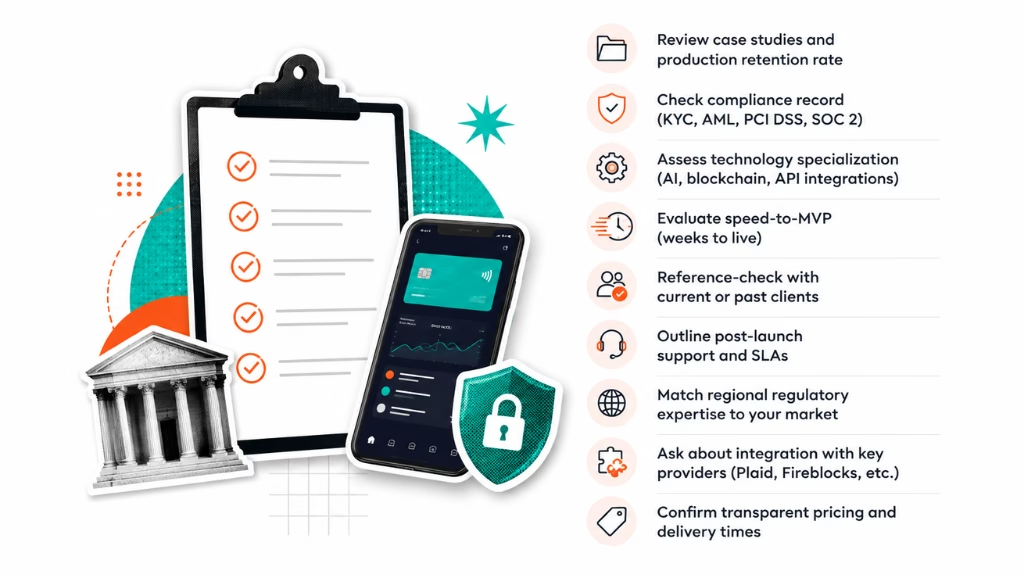
Checklist for Evaluating a Fintech App Developer in 2026
- Review case studies and production retention rate
- Check compliance record (KYC, AML, PCI DSS, SOC 2)
- Assess technology specialization (AI, blockchain, API integrations)
- Evaluate speed-to-MVP (weeks to live)
- Reference-check with current or past clients
- Outline post-launch support and SLAs
- Match regional regulatory expertise to your market
- Ask about integration with key providers (Plaid, Fireblocks, etc.)
- Confirm transparent pricing and delivery times
Key Questions to Ask
- How does your team handle new regulatory changes in 2026?
- What is your most successful fintech deployment to date?
- Can you support AI or blockchain features?
- How do you handle ongoing app security and updates?
Key Trends Defining Fintech App Development in 2026
Fintech in 2026 is shaped by new technology, stronger compliance needs, and changing buyer demands. Understanding these trends makes vendor selection easier.
AI adoption is high—apps learn from data and automate service. Blockchain and DeFi solutions are growing outside traditional banks. Most top firms offer both.
Regulators now expect apps to automate KYC and AML checks. Cloud-native builds, not legacy code, are preferred for scale and security.
Production retention rates matter more as cost control grows. Teams prioritize vendors who offer analytics and ongoing support post-launch.
Top Trends to Watch:
- Growth of AI-native and blockchain-driven fintech solutions
- Shift to API-driven, “compose-not-build” architectures
- Compliance automation for KYC, AML, PCI DSS, SOC 2
- Demand for faster MVP launches and live support analytics
- Regional split in regulations—teams must tailor builds for the US, EU, or Asia
Common Mistakes to Avoid When Hiring a Fintech App Development Company
Selecting a fintech development company without a clear framework leads to project failure and wasted budgets. In my experience, these are the errors most teams make:
- Prioritizing low cost over proven compliance experience
- Ignoring retention rates and post-launch support
- Not checking real case studies or live references
- Overlooking regional rule differences
- Failing to align on core technologies or required integrations
A better approach is to filter vendors early and always verify with independent client feedback.
Why Clients Choose Riseup Labs for Fintech App Development
Riseup Labs delivers fintech solutions that meet strict compliance needs, with custom builds for banks and startups. Teams turn to us for:
- Fast MVP launches backed by real regulatory know-how
- Support for both local and international compliance standards
- Client testimonials and proven, secure fintech deployments
In my experience, clients value clear communication, regional expertise, and rapid results when partnering with Riseup Labs. If you need a developer who understands your business, start a conversation with our team.
Conclusion
The best fintech app development companies stand out through compliance, delivering live products, and real innovation in technology. Focusing on verified project data, security credentials, and client feedback gives you a safe shortlist.
In my experience, working with a specialized vendor saves time and future risk. Riseup Labs is trusted by companies who demand both regulatory peace of mind and product innovation.
Download the checklist above or contact us to align your fintech vision with the industry’s best. The future belongs to teams using AI and expert developers together for faster, safer financial app launches.
FAQs
How do I choose the best fintech app development company?
Look for current case studies, verified compliance, strong post-launch support, regional expertise, and proven live apps. Ask for real client contacts before signing.
What compliance standards should a fintech app developer meet in 2026?
Leading companies follow KYC, AML, PCI DSS, SOC 2, and ensure regional rules like GDPR or PSD2 are built into every project.
What technologies are leading fintech developers using in 2026?
AI, blockchain, API-first frameworks, cloud platforms like AWS and Azure, and strong mobile stacks (React Native, Flutter).
How long does it take to develop a fintech app?
Most top fintech developers deliver an MVP in 8 to 13 weeks, depending on complexity and compliance reviews.
What is the average cost to build a fintech app in 2026?
Costs range widely but most mid to enterprise builds start at $70,000 and go up based on features, compliance, and integrations.
Which companies have experience in blockchain and AI for financial apps?
Interexy, 10Pearls, and AppInventiv have documented experience in blockchain, AI-driven solutions, and DeFi implementations.
How do fintech app development companies ensure security and compliance?
Through regular audits, secure code practices, automated testing, and keeping staff updated with the latest regulations.
What are the emerging trends in fintech app development?
AI-driven automation, API-driven composability, blockchain-powered payments, and deeper compliance automation now lead industry trends.
Do these companies offer post-launch support and maintenance?
Yes, leading developers include dedicated post-launch maintenance and ongoing updates as part of their service contracts.
What regions do the top fintech app development companies serve?
Coverage is global but vendors often have focused teams for the US, EU, UK, and sometimes Asia or the Middle East.
This page was last edited on 25 August 2026, at 11:29 am

Start a conversation with our team to solve complex challenges and move forward with confidence.