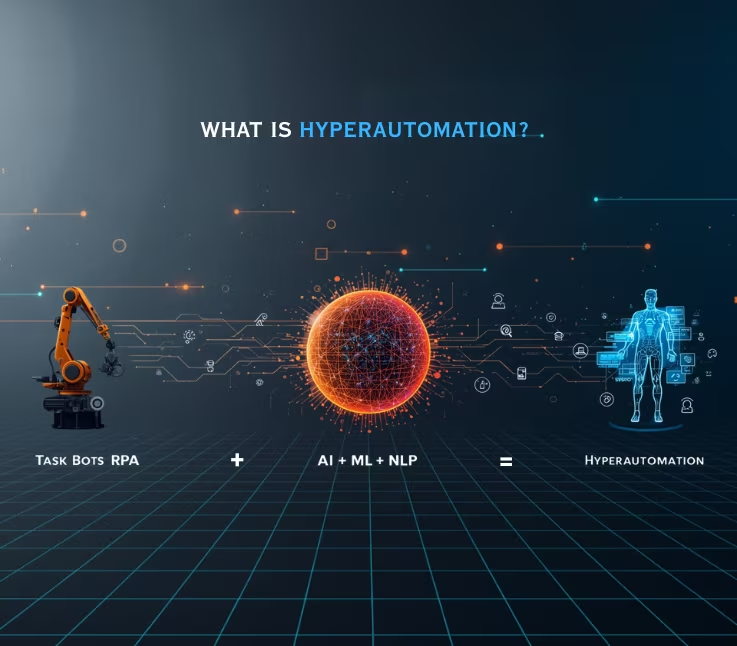
Hyperautomation is an advanced approach to business automation that combines AI, RPA, machine learning, NLP, and workflow orchestration to automate complete business processes. Unlike traditional automation, it enables systems to analyze data, make decisions, learn from outcomes, and continuously improve operations with minimal human intervention.
Automation has been helping businesses save time for decades. But here’s the problem: most companies are still only automating small parts of their workflows.
A chatbot answers customer questions. A bot moves data between systems. A tool generates reports. But these solutions often work separately, leaving businesses with disconnected processes and plenty of manual work behind.
That’s where hyperautomation changes the game.
Hyperautomation combines AI, machine learning, robotic process automation (RPA), and intelligent workflows to automate entire business processes — not just individual tasks. It allows systems to understand information, make decisions, and continuously improve how work gets done.
Think of it as moving from simple “task automation” to building a smarter digital workforce that can support employees, improve efficiency, and help businesses scale faster.
In this guide, you’ll learn what hyperautomation is, how it works, the technologies behind it, real-world use cases, benefits, challenges, and why more businesses are adopting it as the next evolution of automation.
What is Hyperautomation?
Hyperautomation is the strategic and intelligent expansion of automation across an entire organization. It combines Robotic Process Automation (RPA), Artificial Intelligence (AI), Machine Learning (ML), and other advanced technologies to automate complex, end-to-end business processes rather than just individual tasks.
In simpler terms, hyperautomation connects multiple automation tools and layers them with intelligence enabling systems to analyze, learn, and make decisions with minimal human input.
Unlike traditional automation, which typically focuses on repetitive rule-based tasks, hyperautomation builds an integrated ecosystem where bots, data, and AI models work together to streamline workflows, enhance accuracy, and continuously optimize operations.
Many organizations already have automation tools, but the problem is fragmentation.
Example points:
- Different departments use disconnected automation tools
- Data remains trapped in separate systems
- Employees still handle manual handoffs
- Automation cannot make intelligent decisions
In our view, the biggest shift with hyperautomation is not the technology itself. It is the ability to connect existing technologies into one intelligent operating model. Companies rarely fail because they lack automation tools; they fail because those tools do not work together.
The Difference Between Automation and Hyperautomation
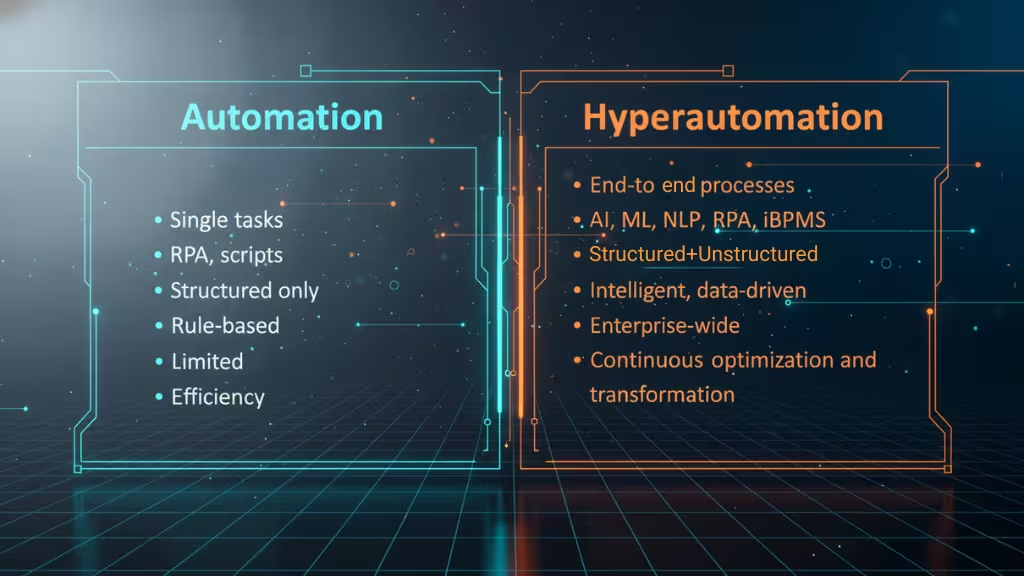
While both automation and hyperautomation aim to improve efficiency, they differ vastly in scope, intelligence, and business impact.
Traditional automation focuses on specific, repetitive tasks such as data entry or report generation using predefined rules. It’s effective for reducing manual work but limited when processes involve decision-making, multiple systems, or unstructured data.
Hyperautomation, on the other hand, goes beyond automating tasks it automates entire workflows and processes across departments. By integrating RPA with AI, ML, and process orchestration tools, hyperautomation allows systems to learn, adapt, and optimize in real time.
The Components of Hyperautomation
Hyperautomation works by bringing together a suite of advanced technologies that complement one another. Each component plays a unique role in transforming how work is done turning disconnected automation tools into a unified, intelligent system.
Artificial Intelligence (AI)
Artificial Intelligence is the brain of hyperautomation. It enables systems to mimic human reasoning, analyze data, and make informed decisions. AI helps automation move beyond simple “if-then” rules to handle complex scenarios such as predicting customer needs, identifying anomalies, or generating personalized recommendations.
In a hyperautomation ecosystem, AI powers intelligent bots, enhances decision-making, and allows continuous process improvement through insights and predictions.
Machine Learning (ML)
Machine Learning is the learning engine behind hyperautomation. It allows systems to recognize patterns in data, learn from outcomes, and improve performance over time without explicit programming.
For instance, ML algorithms can analyze past transactions to predict delays in a supply chain or detect fraudulent financial activities automatically. As processes repeat, ML models refine their accuracy making automation smarter and more adaptive.
Natural Language Processing (NLP)
Natural Language Processing enables systems to understand and interact with human language both written and spoken. NLP allows hyperautomation platforms to process emails, chat messages, forms, and documents, extracting meaning and intent.
This capability powers AI chatbots, sentiment analysis tools, and automated customer service assistants that can interpret requests and respond conversationally.
Optical Character Recognition (OCR)
Optical Character Recognition transforms unstructured documents into machine-readable data. It scans invoices, forms, contracts, or handwritten notes, accurately extracting key information that can then feed into other automated workflows.
When OCR is combined with AI and NLP, the system not only reads text it also understands context, classifies information, and initiates actions (like processing an invoice or updating a CRM).
Steps and Components in Navigating the Hyperautomation Journey
Implementing hyperautomation is not just about deploying technology, it’s about transforming how your organization operates. The journey follows a structured path that combines strategic planning, process discovery, and technology integration to build an intelligent, scalable automation ecosystem.

Here’s a breakdown of the essential steps and components:
Identify and Analyze Processes
Start by identifying which business processes are most repetitive, time-consuming, or error-prone. Tools like process mining and task mining help visualize real workflows, detect inefficiencies, and uncover hidden automation opportunities.
Select the Right Technologies
Each process may require different automation tools. Combine RPA for repetitive tasks, AI/ML for cognitive decisions, and integration platforms (like iPaaS) to connect systems and data across departments.
Design and Orchestrate Intelligent Workflows
Once technologies are chosen, create end-to-end workflows that integrate humans and machines. Use intelligent business process management systems (iBPMS) to orchestrate these workflows, ensuring seamless collaboration between bots, systems, and people.
Implement and Scale
Begin with pilot projects to prove value quickly, gather insights, and refine the model. Then scale across departments with a Center of Excellence (CoE) to manage standards, governance, and best practices.
Monitor, Optimize, and Evolve
Continuous monitoring ensures that automated processes remain efficient and accurate. Use analytics and feedback loops to measure performance, track ROI, and fine-tune workflows as business needs evolve.
Empower Employees
Successful hyperautomation involves people, not just technology. Empower teams with low-code/no-code tools so they can build simple automations themselves, helping to democratize innovation across the organization.
The Benefits of Hyperautomation
Hyperautomation delivers far more than process efficiency it reshapes how organizations work, scale, and compete. Connecting systems and intelligence across operations, it creates smarter workflows, improves accuracy, and frees teams to focus on higher-value innovation.
Here are the most impactful benefits:
Reducing Operational Obstacles
Manual, repetitive tasks often slow down productivity and introduce human error. Hyperautomation eliminates these bottlenecks by streamlining workflows from start to finish.
For example, an automated order-processing system can verify payments, generate invoices, and update records across multiple platforms all without human intervention. The result: fewer delays, lower error rates, and faster turnaround times.
Transforming Live Agents to Digital Workers
One of the most transformative impacts of hyperautomation is the rise of digital workers software bots and AI agents that perform structured, rule-based tasks traditionally handled by people.
These digital workers operate 24/7, never tire, and maintain consistent accuracy. They free up human employees to focus on creative, strategic, or customer-facing tasks enhancing both productivity and employee satisfaction.
Accelerating Compound Tasks
Some business activities involve multiple systems and data types like onboarding a new customer or processing an insurance claim. Hyperautomation connects these tasks through intelligent orchestration, enabling end-to-end execution without manual switching between platforms.
By linking AI, RPA, and integration tools, companies can complete complex workflows in minutes instead of hours or days, improving overall speed and customer experience.
Increasing Business Agility
In a rapidly changing market, agility is everything. Hyperautomation allows organizations to adapt quickly by continuously monitoring performance, learning from outcomes, and updating workflows automatically.
This dynamic adaptability means businesses can respond to new opportunities or challenges such as sudden demand spikes or regulation changes with minimal disruption.
Challenges of Hyperautomation
While hyperautomation offers enormous potential, implementing it across an enterprise comes with real challenges. Success depends on how well an organization manages its technology integration, data quality, workforce transition, and governance.
Here are the main obstacles businesses often face:
1. Technical Complexity
Hyperautomation involves integrating multiple technologies AI, RPA, ML, and iPaaS across legacy systems that were never designed to work together. Without careful architectural planning, these integrations can create data silos, inconsistent workflows, or maintenance bottlenecks.
Solution:
Adopt a scalable architecture with open APIs and modular design. Start small, standardize integrations, and expand gradually with clear governance and documentation.
2. High Initial Investment
Building a hyperautomation ecosystem requires upfront investment in software licenses, infrastructure, training, and change management. Smaller organizations may find this barrier daunting.
Solution:
Focus on high-ROI use cases first processes that deliver measurable impact quickly. Once these pilots prove value, reinvest the savings into broader automation initiatives.
3. Data Quality and Availability
Automation is only as good as the data it relies on. Inconsistent, incomplete, or outdated data can cause automation failures and poor decision-making.
Solution:
Implement strong data governance frameworks, ensure data cleansing routines, and use AI tools to detect anomalies and maintain data integrity continuously.
4. Change Resistance and Workforce Concerns
Employees may fear job loss or struggle to adapt to automated systems. Without clear communication and reskilling, even the best technology can face internal resistance.
Solution:
Position hyperautomation as an augmentation strategy, not ra eplacement. Provide upskilling programs and highlight how automation removes repetitive work allowing employees to focus on strategic and creative tasks.
5. Security and Compliance Risks
As automation expands, so does the attack surface. Bots, APIs, and AI models can become potential security risks if not properly managed.
Solution:
Implement Identity and Access Management (IAM), encrypt sensitive data, and ensure every automation has built-in auditability and compliance checks. Continuous monitoring and strong governance are key to maintaining trust and safety.
Hyperautomation Use Cases Across Industries
Hyperautomation is transforming industries by combining AI, machine learning, robotic process automation (RPA), and intelligent workflows to automate complex business operations. Instead of automating isolated tasks, organizations are creating connected systems that can analyze information, make decisions, and continuously improve processes.
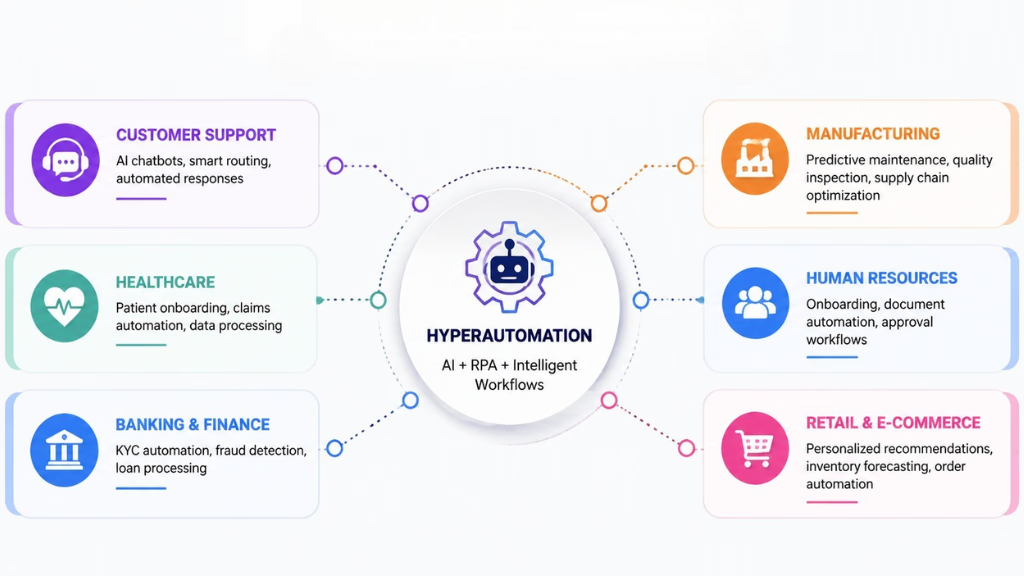
From customer support and HR operations to manufacturing and finance, hyperautomation helps businesses reduce manual work, improve accuracy, and scale operations efficiently.
Hyperautomation in Customer Support
Customer support is one of the most impactful areas for hyperautomation. Businesses can combine conversational AI, natural language processing (NLP), voice automation, and workflow integrations to handle customer interactions faster while maintaining a personalized experience.
Common applications include:
- AI-powered chatbots and voice assistants
- Automated customer query classification
- Intelligent ticket routing
- Automated CRM updates
- Sentiment analysis and conversation insights
- Human-agent escalation for complex issues
For example, AI-powered customer support platforms can handle high-volume conversations, automate repetitive inquiries, and integrate with existing business systems. This allows organizations to reduce response times, lower operational costs, and enable human agents to focus on more complex customer needs.
A real-world example is Commplify AI, an AI-powered customer support automation platform that helped organizations automate routine conversations, reduce service costs, and improve response efficiency.
Hyperautomation in Healthcare
Healthcare organizations manage large amounts of patient information, documentation, and administrative workflows. Hyperautomation helps simplify these processes while improving accuracy and compliance.
Common healthcare applications include:
- Automated patient onboarding
- Digital document processing
- Insurance claim automation
- Appointment scheduling optimization
- Healthcare data analysis
- Administrative workflow automation
By combining AI with automated workflows, healthcare providers can reduce paperwork, minimize errors, and allow medical professionals to spend more time on patient care.
Hyperautomation in Banking and Finance
Financial institutions rely on accurate data processing, compliance monitoring, and risk management. Hyperautomation enables banks and financial organizations to automate complex workflows while improving security and decision-making.
Common use cases include:
- Automated KYC verification
- AI-powered fraud detection
- Loan document processing
- Compliance reporting
- Customer onboarding
- Financial data analysis
For example, OCR and AI systems can extract information from financial documents, validate customer data, and trigger automated approval workflows, reducing processing time while improving accuracy.
Hyperautomation in Manufacturing
Manufacturing businesses are using hyperautomation to improve production efficiency, supply chain visibility, and decision-making.
Common applications include:
- AI-powered production monitoring
- Predictive maintenance
- Automated quality inspection
- Inventory optimization
- Supplier management workflows
- Intelligent manufacturing platforms
AI-powered manufacturing solutions can connect different stages of production, analyze operational data, and help businesses identify inefficiencies before they become costly problems.
One example is Cloud Couture, an AI-powered fashion manufacturing marketplace that uses generative AI to automate technical documentation, improve supplier matching, and streamline manufacturing workflows.
Hyperautomation in Human Resources
HR departments often handle repetitive processes involving employee onboarding, documentation, approvals, and internal coordination. Hyperautomation helps transform these manual workflows into intelligent, connected systems.
Common HR applications include:
- Automated employee onboarding
- AI-generated HR documents
- Employee lifecycle management
- Approval workflow automation
- HR analytics dashboards
- Automated employee asset generation
An AI-powered HR automation system can connect multiple departments, automate document workflows, track employee requests, and provide real-time operational visibility.
For example, an AI HR automation workflow can reduce repetitive documentation work, speed up onboarding processes, and improve collaboration between HR, IT, Finance, and management teams.
Hyperautomation in Retail and E-commerce
Retail businesses need to respond quickly to changing customer expectations, inventory demands, and market trends. Hyperautomation helps retailers combine customer data, AI insights, and automated workflows to improve operations.
Common applications include:
- Personalized recommendations
- Automated customer service
- Inventory forecasting
- Order processing automation
- Marketing workflow optimization
- Customer behavior analysis
By automating repetitive operations and using AI-driven insights, retailers can deliver better customer experiences while improving efficiency.
Conclusion
Hyperautomation marks the next major leap in digital transformation. It goes beyond simply automating repetitive tasks combining AI, RPA, and intelligent workflows to build systems that can think, learn, and optimize continuously.
By connecting every layer of a business data, systems, and people hyperautomation enables organizations to operate with greater speed, precision, and agility. It reduces costs, improves accuracy, and allows teams to focus on innovation rather than administration.
In short, hyperautomation isn’t just a trend it’s becoming a strategic necessity for organizations that want to stay competitive in a rapidly evolving digital economy.
FAQs
What is the main goal of hyperautomation?
The goal of hyperautomation is to automate as many business processes as possible using a combination of advanced technologies like AI, RPA, and machine learning. It aims to improve efficiency, reduce human error, and create smarter workflows that can adapt and learn over time.
How is hyperautomation different from traditional automation?
Traditional automation focuses on single, rule-based tasks like data entry or form filling. Hyperautomation, however, connects multiple tools and technologies to automate entire end-to-end processes, allowing systems to analyze, make decisions, and continuously optimize themselves.
Which technologies drive hyperautomation?
The core technologies include Artificial Intelligence (AI), Robotic Process Automation (RPA), Machine Learning (ML), Natural Language Processing (NLP), and Optical Character Recognition (OCR). These work together with process mining, analytics, and low-code platforms to create intelligent, connected workflows.
What are the biggest benefits of hyperautomation?
Hyperautomation helps businesses operate faster and smarter by automating repetitive tasks, reducing errors and costs, improving data accuracy and compliance, increasing employee productivity, and enabling organizations to adapt quickly to changing business needs.
What challenges do companies face when implementing hyperautomation?
Common challenges include technical complexity, high initial costs, poor data quality, employee resistance to change, and security concerns. Overcoming these requires strong governance, clear ROI goals, and proper training and communication.
Is hyperautomation suitable for small and medium-sized businesses (SMBs)?
Yes. Thanks to cloud-based platforms and low-code tools, SMBs can start small automating specific workflows and gradually scale up. The key is to focus on high-impact processes that deliver measurable value quickly.
What industries benefit most from hyperautomation?
Nearly every industry can benefit, but the leading adopters include healthcare, banking and finance, manufacturing, supply chain, and retail, where data-intensive and repetitive workflows dominate.
What’s the future of hyperautomation?
The future lies in AI-driven, self-learning systems that operate autonomously across the enterprise. As technologies like large language models (LLMs) and agentic AI mature, hyperautomation will enable businesses to achieve near real-time adaptability and intelligent decision-making at scale.
This page was last edited on 2 September 2026, at 11:51 am

Start a conversation with our team to solve complex challenges and move forward with confidence.