Selecting a software development partner in the UK is a business-critical decision that shapes your digital future. Too often, buyers face confusion, unforeseen costs, and compliance headaches—especially in the UK’s demanding regulatory climate.
This guide provides a structured, expert-backed framework for choosing software development companies in the UK, covering compliance, cost, and aftercare so you achieve clarity and confidence at each step.
By the end, you’ll know exactly how to evaluate, select, and succeed with UK software development services, supported by actionable tools, checklists, and UK-centric best practices.
Quick Answer: How to Choose a Software Development Partner in the UK (5 Steps)
| Step | Action | Outcome |
|---|---|---|
| 1 | Define business & technical goals | Aligned project vision |
| 2 | Screen for UK compliance expertise | Regulatory fit, reduced risk |
| 3 | Review experience and references | Proven delivery matches your needs |
| 4 | Compare cost/value models | Transparent pricing, value for money |
| 5 | Verify ongoing support & clarity | Reliable aftercare, future proofing |
What Are Software Development Services in the UK?
Software development services in the UK encompass the full range of custom digital solutions—including web, mobile, cloud, and systems integration—delivered by specialist agencies or consultancies.
UK software development companies don’t just code; they guide clients through discovery, architecture, build, compliance, and post-launch support, leveraging regional strengths and strict regulatory standards.
Software Development Services UK: End-to-end technical and consultative solutions provided by UK-based agencies to design, build, integrate, and maintain bespoke digital systems—covering web, mobile, cloud, and API projects, with an emphasis on compliance, aftercare, and business alignment.
Key Service Types:
- Bespoke/Custom Development (tailored platforms, applications)
- Web and Mobile Apps
- Cloud Solutions
- API/Integration Services
- Discovery & Consulting (problem definition, solution design)
- Support & Maintenance
UK Ecosystem Highlights:
- Local Agencies: London, Manchester, Newcastle, Edinburgh leading hubs for talent and sector specialization.
- Offshore Comparison: UK firms offer regulatory assurance, proximity, and post-launch support unmatched by many offshore providers.
- Value-Add: UK agencies often excel in requirements workshops, roadmapping, user experience, and aftercare—essential for complex or regulated projects.
Glossary Callouts:
- Bespoke: In the UK, “bespoke” means a software solution tailored precisely to your business requirements, not a generic product.
- NHS DSP Toolkit: A mandatory framework for suppliers to demonstrate information governance/security compliance when delivering to the UK National Health Service.
Who Needs UK Software Development Services?
Software development services in the UK serve a spectrum of clients, from scaling SMEs to regulated enterprises seeking digital transformation or compliance assurance.
Understanding your buyer profile helps tailor expectations and select the right-fit partner.
Typical Buyer Profiles & Drivers:
| Buyer Type | Common Needs | Unique Priorities (UK Context) |
|---|---|---|
| SMEs | Rapid scale-up, online growth, agility | Cost control, speed, future-proofing |
| Enterprises | Legacy integration, stable delivery, cost containment | Governance, risk, large-scale roadmap |
| Regulated Sectors | Security, audit, compliance (FCA, NHS, data privacy) | Accreditation, reporting, traceability |
| Tech Leaders | Innovation, cloud, integration | Modern stacks, access to local skills |
| Procurement/CTOs | Value and risk assessment, vendor management | Due diligence, contract transparency |
Use Case Examples:
- An SME updating legacy databases to a modern cloud platform, needing value and flexibility.
- A financial enterprise integrating new APIs for compliance with FCA regulations.
- A healthcare provider automating patient data workflows, requiring adherence to NHS DSPT and GDPR.
How Do I Choose the Right Software Development Partner in the UK?
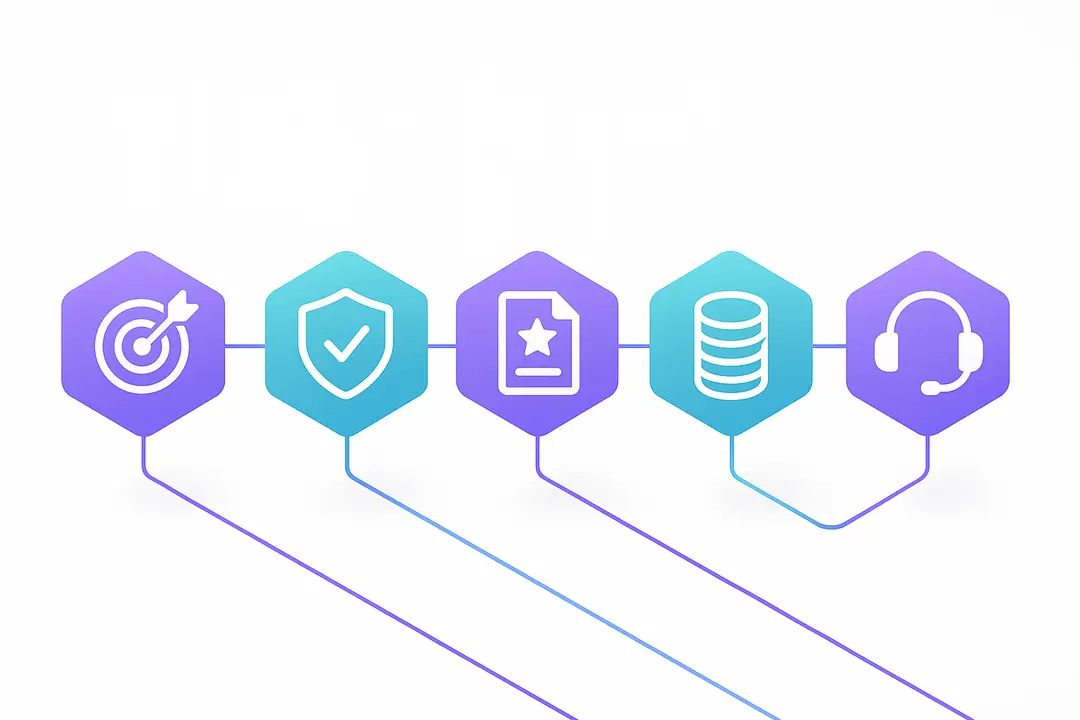
Choosing a UK software development partner requires a structured, criteria-driven process that minimizes headaches and maximizes value.
Follow this proven 5-step framework for confident, compliant partner selection:
Key Selection Criteria Table
| Criteria | What to Check | UK-Specific Considerations |
|---|---|---|
| Reputation | Clutch, Manifest, testimonials, public clients | Local references, UK reviews, sector fit |
| Portfolio | Relevant case studies, complexity handled | Evidence with UK businesses/regulations |
| Compliance | Proven track record with UK laws (GDPR, FCA) | Certification, NHS DSPT where applicable |
| Technical Fit | Expertise in needed tech stacks and domains | In-house talent vs. subcontractors |
| Cost | Transparent, realistic pricing models | UK VAT inclusion, no hidden surcharges |
| Aftercare | SLAs, bug fixes, roadmaps, upgrades | Onshore support, escalation, change mgt. |
5-Step UK Software Development Partner Selection Guide
- Define Your Business and Technical Goals
Document your project objectives, users, technical environment, budget, and timelines.
Use a requirements template to ensure clarity and alignment. - Screen for UK Compliance Expertise
Check if the agency has experience and certifications (e.g., ISO 27001, NHS DSPT, FCA).
Ask about their UK data handling practices and compliance processes. - Assess Experience and References
Review similar UK projects, especially those in your sector.
Request client lists and references; verify successful delivery and support. - Compare Cost and Value Models
Evaluate fee structures: time & materials, fixed price, or day-rate.
Review contracts for VAT, payment milestones, and deliverable definitions. - Verify Ongoing Support and Transparency
Ask about standard SLAs and aftercare offerings.
Ensure clarity on change management, incident response, and progress updates.
Red Flags to Watch For:
- Unwillingness to provide UK-specific references.
- Vague answers on compliance or regulation.
- Opaque pricing or hidden fees.
- No clear aftercare/support arrangement.
What Processes and Methodologies Do UK Software Agencies Use?
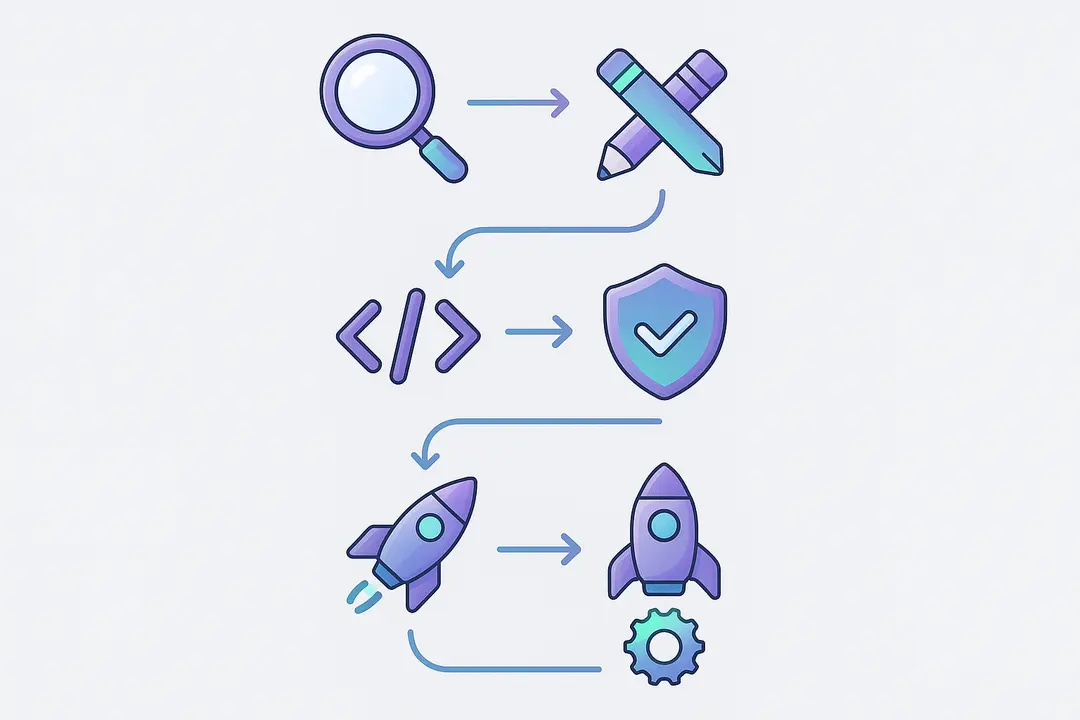
UK software agencies typically adopt robust project management methods—most commonly Agile, Waterfall, or hybrid approaches—to deliver predictable, compliant results.
Summary: UK software projects progress through phases including discovery, design, build, QA, launch, and aftercare, using delivery methods tailored to risk and scope.
Common Project Lifecycle Phases
- Discovery (requirements, goals)
- Design (user journeys, UI/UX)
- Build/Development (coding, integration)
- QA/Testing (quality assurance, user acceptance)
- Deployment/Go-live (launch, cutover)
- Aftercare/Support (updates, maintenance)
Methodology Comparison
| Methodology | Ideal For | Pros | Cons |
|---|---|---|---|
| Agile | Evolving needs, regular feedback | Flexibility, early delivery, transparency | Requires high stakeholder input |
| Waterfall | Fixed-scope, compliance-heavy | Predictable, strong documentation | Less adaptable, slower changes |
| Hybrid | Large, phased projects | Balance of control and adaptability | More complex to manage/administer |
UK-Specific Practices:
- Frequent milestone reviews with progress reporting.
- Detailed documentation for regulated projects.
- Managed change request process, often tied to contract appendices.
Ensuring Compliance and Security: What Do UK Buyers Need to Know?
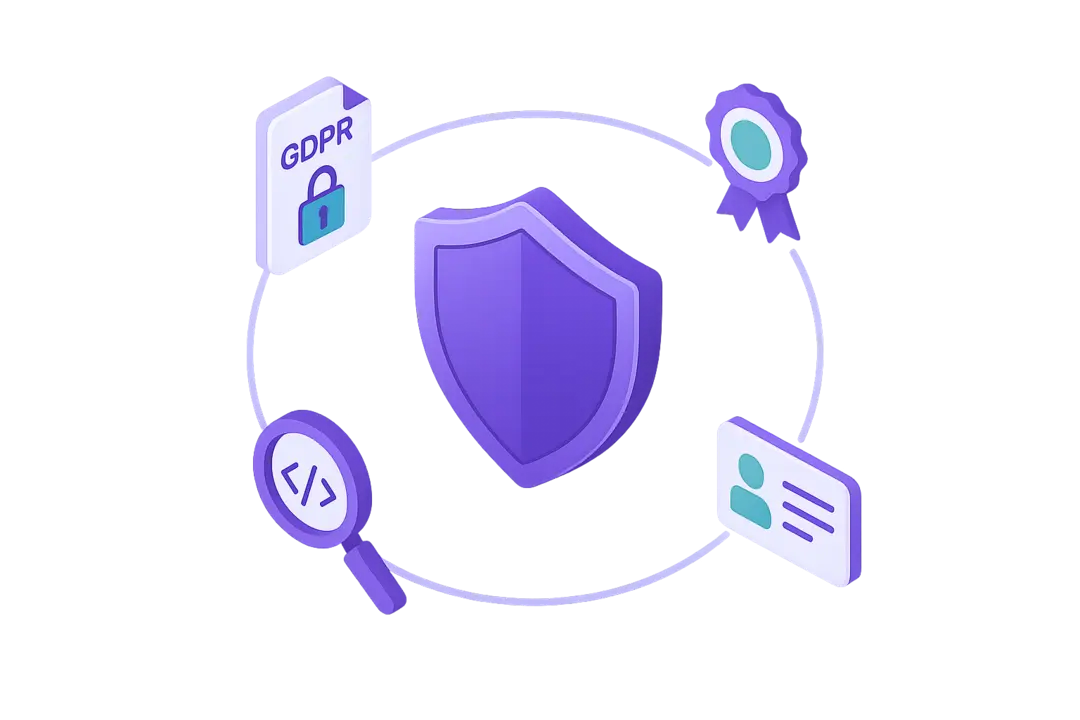
Compliance is non-negotiable for UK software projects—especially for regulated sectors or any data-driven solution.
Summary: UK buyers must ensure software partners proactively address GDPR, industry certifications (FCA, NHS DSPT), and “security by design.”
Core Compliance Checklist for UK Buyers
- GDPR Adherence: Does the agency assure UK GDPR-compliant development, data handling, and record-keeping?
- Sector Accreditation: FCA, NHS DSPT, Cyber Essentials, or relevant policies?
- Role-based Access: Is user access granular, auditable, and documented?
- Transparency: Will you receive clear data flow diagrams, data processing agreements, and audit trails?
- Security by Design: Are regular security reviews, code scans, and vulnerability assessments included?
How Compliance is Addressed Throughout UK Projects
| Project Phase | Compliance Focus | Buyer Actions |
|---|---|---|
| Discovery | Requirements capture; data mapping | Provide compliance context |
| Design | Privacy by default; secure architecture | Review diagrams, workflows |
| Development | Code reviews; secure coding | Participate in demos/tests |
| QA/Testing | Data handling validation; pen tests | Audit results, request fixes |
| Launch | DPIA, documentation, user training | Approve, keep documentation |
| Aftercare | Patch management, incident response | Regular security reviews |
Red Flags:
- Unwillingness to detail processes.
- No documentation on security or audit logging.
- “We handle compliance for you” without specifics.
What is the Typical Software Development Lifecycle in the UK?
A typical UK software development lifecycle follows a clear, phase-based journey that sets expectations for buyers from inception to ongoing support.
Summary: Projects progress through distinct stages, with roles and deliverables mapped to each phase—minimizing surprises and aligning stakeholders.
UK Software Development Lifecycle: Buyer Journey Table
| Phase | Main Activities | Buyer Role | Agency Role | Key Outputs |
|---|---|---|---|---|
| Discovery | Workshops, audits, MVP definition | Define vision, approve | Facilitate, recommend | Requirements, scoping doc |
| Planning | Timelines, resourcing, contracts | Review, signoff | Prepare project plan | Plan, contract, schedules |
| Design | Prototyping, UI/UX, architecture | Approve, feedback | Deliver wireframes etc. | Wireframes, technical specs |
| Development | Coding, integration, status updates | Track, test, feedback | Build, status updates | Software modules, sprints |
| QA/Testing | Test plans, user acceptance | Run UAT, report issues | Test, report, fix bugs | Test logs, bug reports |
| Deployment | Go-live, user training, support plan | Signoff launch | Implement, support | Live software, user guides |
| Aftercare | Maintenance, improvements | Request/champion | Update/support | Support logs, upgrade plans |
How Much Does Software Development Cost in the UK?
UK software development costs vary by project size, complexity, location, and vendor experience, with several standard pricing models dominating the market.
Summary: Buyers should assess fee structures and typical price ranges, and prioritise transparency to avoid hidden costs.
Pricing Model Comparison
| Model | How It Works | Pros | Cons | Typical Usage |
|---|---|---|---|---|
| Time & Materials | Pay for time spent (+materials) | Flexibility, scalability | Less predictable total | Iterative, changing scope |
| Fixed Price | Set scope, set price | Budget certainty | Hard to adapt, costly to change | Well-defined, regulated |
| Day Rate | Per day of work | Simple, clear | No incentive for efficiency | Small engagements, consulting |
Typical Cost Ranges (Indicative)
| Project Type | SME Starter (£) | Enterprise (£) |
|---|---|---|
| Small App/Module | 15,000–50,000 | 50,000–150,000+ |
| Platform/Custom Enterprise | 50,000–250,000+ | 100,000–1M+ |
| API/Integration Focus | 10,000–40,000 | 40,000–150,000 |
Major Cost Influencers:
- Complexity (features, integrations)
- Compliance Needs (GDPR/FCA/NHS requirements)
- Aftercare Level (support contracts, upgrades)
- Location (London agencies typically premium)
Watch Out For:
- “Lowball” offers with little compliance or aftercare
- Unclear payment terms, extra charges for changes
- Lack of VAT breakdown
What Type of Post-Launch Support and Maintenance Should I Expect?
Reliable aftercare is a hallmark of quality UK software development, ensuring your investment delivers continuous value.
Summary: Expect clear support packages, documented response SLAs, and accessible progress tracking—baked into your contract.
What’s Standard in the UK:
- Hotfixes & Bug Tracking: Defined warranty (often 30–90 days), bug reporting procedures.
- Support SLAs: Response times, escalation paths, support hours detailed contractually.
- Upgrade Cycles: Scheduled platform/security updates; proactive maintenance.
- Reporting: Regular reports on incidents, usage, improvement suggestions.
- Change Management: Procedures for enhancements, improvements, new compliance needs.
What to Include in Your Contract/SLA:
- Support scope (hours, inclusions/exclusions)
- Communication and escalation channels
- Warranty/guarantee period
- Charges for out-of-scope changes
Key Takeaways: At-a-Glance Summary Table
| Topic | Core Insight/Action |
|---|---|
| Partner Selection (5 Steps) | Define needs, vet for UK compliance, evidence, value, aftercare |
| Compliance Must-haves | GDPR baseline, FCA/NHS overlays, document everything |
| Cost Models | Time & materials, fixed price, day rate—compare benchmarks |
| Aftercare Expectations | SLAs, warranty, transparent support |
| Buyer Profiles | SME, enterprise & regulated tracks for tailored fit |
FAQs: Direct Answers to Common Buyer and Decision-Maker Questions
How do I choose a software development partner in the UK?
Start by defining your project’s goals, shortlist firms with relevant UK compliance experience, check references, compare pricing models, and ensure robust aftercare and support.
What are the key differences between UK and offshore software agencies?
UK agencies offer stronger compliance alignment, easier communication, and onshore support. Offshore providers may be cheaper, but often lack expertise in UK regulations and aftercare expectations.
What does a typical UK software development lifecycle look like?
Projects move through discovery, planning, design, development, testing, launch, and aftercare—each with clear roles, deliverables, and review stages.
How do agencies in the UK ensure GDPR and data protection compliance?
By following structured processes: mapping data flows in discovery, secure design, documentation, audit trails, role-based access, and periodic compliance reviews.
What are the average costs for bespoke software development in the UK?
Costs range widely—from £15,000 for simple apps to £1M+ for enterprise solutions—with most SME projects falling between £30,000 and £150,000. Always request detailed quotes and clarify VAT.
Which software development methodology is best for UK projects?
Agile suits projects needing flexibility and frequent input; Waterfall is preferred for fixed-scope, highly regulated work. Many agencies offer hybrid approaches to balance both.
What type of post-launch support should I expect from a UK software partner?
Expect clear SLAs covering response times, issue tracking, warranty periods, and scheduled updates—typically formalized in a support contract.
How can I assess an agency’s experience with regulated industries?
Review their portfolio for sector-relevant case studies, check certifications (e.g., FCA, NHS DSPT), and request references from regulated clients.
What is a “discovery phase” and why is it critical?
Discovery is the initial stage where goals, user needs, compliance, and technical environments are clarified—directly reducing risk and costly change requests later on.
How often should I expect progress updates during my project?
UK agencies typically provide weekly or bi-weekly progress reports, with milestone reviews and demo sessions at key delivery stages.
Conclusion
Choosing and partnering with a UK software development company demands diligence, clarity, and a methodical approach. Equipped with this guide’s frameworks, checklists, and real-world insights, you can confidently shortlist, compare, and engage the right provider—minimising risk and ensuring digital project success.
Key Takeaways
- A structured, 5-step framework ensures confident UK software vendor selection.
- UK compliance and aftercare are essential—never secondary.
- Transparent cost models and pricing benchmarks help avoid budget shocks.
- Project lifecycles and methodologies should fit your company’s size and needs.
- Always formalize support expectations in your agreement.
This page was last edited on 9 July 2026, at 11:10 am

Start a conversation with our team to solve complex challenges and move forward with confidence.