
The global dating app market is valued at approximately $12.5 billion in 2026, with over 350 million active users — and still growing. But the headline number hides a more important story: swipe fatigue is real, niche platforms are outpacing giants, and users now expect security and quality as a baseline, not a bonus.
The window to build something meaningful is open. The question is how to do it right.
This guide gives you a complete, actionable path — from defining your niche and choosing your tech stack, to budgeting, compliance, and launching for growth. No fluff, no partial answers.
Types of Dating Apps: Which Model Are You Building?
Before you write a single line of code or brief a designer, know which category your app belongs to. The online dating platform development space breaks down into four core types — and most modern apps blend at least two:
1. Geolocation-based
Matches users by proximity. Tinder pioneered this model. Best for casual discovery and high user volumes.
2. Questionnaire-based
Users answer compatibility questions; the algorithm matches on shared values and goals. eHarmony and Hinge’s prompts follow this logic. Better for relationship-intent audiences.
3. Niche-based
Built for a specific community: LGBTQ+ users (Grindr), faith-based daters (Hallow), pet owners (Dig), professionals (The League). Niche dating apps are outperforming generalist apps in 2026 — PURE, a niche Gen Z platform, grew registrations 95% year-over-year in 2025 while Tinder declined 14% (Business Wire, 2026).
4. Traditional / web-platform
An app that complements an existing dating website (OkCupid, Match.com). Often questionnaire-heavy with a desktop-first history.
Knowing your type determines your matching algorithm, your feature priorities, your UI/UX pattern, and your monetization model. Get this wrong early and you’ll rebuild later.
How to Create a Dating App: 7-Step Development Process
Whether you’re building a swipe-based app like Tinder or a niche dating platform for a specific community, the core process follows the same seven-stage development lifecycle. Here’s how it maps out — and why each stage matters:
- Define your unique value proposition and target audience.
- Choose your app development approach: no-code, custom code, or AI builder.
- Plan essential features and design user flows for engagement.
- Design high-converting, safe UI/UX experiences.
- Select technical stack and platforms (iOS, Android, cross-platform).
- Address security, privacy, and all legal compliance.
- Build, rigorously test, launch, and optimize for growth.
Each step ensures your dating app stands out, stays compliant, and is ready to scale. Let’s break down each phase in detail.
How Do You Define Your Dating App’s Unique Value and Audience?
Start by clarifying your app’s purpose, the users you serve, and what sets your platform apart in a crowded market.
Summary: Successful dating apps target specific niches or solve unique problems. Begin by researching your competition, identifying underserved users, and validating demand before building.
Steps to Nail Down Your Value Proposition
- Identify your audience:
- Who do you want to reach? Consider age, gender, intent (serious, casual, geography, and unique needs.
- Analyze the competition:
- Study top players (Tinder, Bumble, niche platforms) and emerging trends.
- Use tools like App Annie or Sensor Tower to track features, growth, and user reviews.
- Spot gaps such as ignored demographics, region-specific features, or safety concerns.
- Brainstorm your unique selling point (USP):
- Is your app for dog lovers? Single parents? Travelers?
- Consider value adds like advanced privacy, anti-ghosting, or AI-powered matching.
- Validate with real users:
- Run surveys, interviews, or quick ad tests to confirm there’s appetite for your concept.
- Incorporate feedback early to avoid costly pivots.
Dating App Niche & USP Examples
| Niche Focus | Example USP |
| Mature singles (40+) | Age-relevant activities |
| Hobby/interest-centric | Music, pets, fitness match |
| Location-based | Hyperlocal connections |
| Faith/community-based | Shared beliefs, customs |
How to Choose Your Dating App Development Approach
Picking the right development approach ensures you stay within budget, hit deadlines, and reach the desired quality. Today’s founders can choose between no-code tools, custom coding, or AI-assisted builders.
Summary: No-code builders empower non-coders for fast launches; custom code delivers maximum flexibility; AI builders accelerate setup but may have limits.
Development Models: Pros, Cons, and When to Use
| Approach | Best For | Cost Range | Timeline | Customization | Scalability | Example Platforms |
| No-Code | Non-tech founders | Low | Days–Weeks | Moderate | Moderate | Flipabit, Appy Pie |
| Custom Code | Experienced devs | High | Months | Maximum | High | React Native, Flutter |
| AI-Builder | Fast MVP, demos | Low–Medium | Hours–Days | Limited | Limited | Replit AI |
No-Code Dating App Builders
Pros: No programming required, drag-and-drop UI (Flipabit, Appy Pie), integrated hosting and templates, fastest go-to-market.
Cons: Limited deep customization, may incur platform fees, possible scaling limits.
Custom Coding
Pros: Full control over features, performance, integrations. Open-source starter templates and customizable matching algorithms.
Cons: Requires developer skills/team, higher upfront investment, longer launch times.
AI/Automation Builders
Pros: Automate code and content generation. Rapid prototyping (e.g., Replit AI builder).
Cons: Early-stage ecosystem, support for advanced features varies.
Pro Tip
If launching solo or on a tight budget, start with a no-code builder for MVP validation. If you’re targeting millions of users or pioneering complex features, invest in custom code.
A third path — hiring a dedicated development team or outsourcing to a specialized agency — sits between no-code and full custom builds. For founders without an in-house tech team, this is often the most practical route. When evaluating a software partner, look for experience specifically in mobile dating solution development, check their portfolio for real-time chat and geolocation work, and confirm they have in-house QA. Your backend architecture, matchmaking algorithm design, and real-time chat integration will all depend on the team’s specialization, not just their general app development experience.
Key Features Your Dating App Needs in 2026
A successful dating app is not built by stacking every feature you can think of — it is built by choosing the right features for the right stage, and understanding why each one matters to user behavior, retention, and safety. Below is a comprehensive breakdown of both MVP-essential and advanced features, with the technical reasoning behind each.
A successful dating app isn’t built by copying Tinder’s feature list — it’s built by understanding why each feature exists and what it does for user behavior, retention, and safety. Here’s every feature category you need to account for, from day-one MVP to post-launch growth.
1. User Onboarding & Age Verification
First impressions determine whether a user stays or deletes. Onboarding should take under two minutes — social login via Google, Apple, or Facebook removes the biggest drop-off point. Age verification isn’t optional: COPPA and app store policies both require it, and most dating platforms set a hard minimum of 18. Build this into registration, not as an afterthought.
2. User Profiles
A profile is more than a photo and a bio. The richer the profile data, the better your matchmaking algorithm performs downstream. Give users structured fields — interests, lifestyle habits, relationship intent, dealbreakers — alongside free-text prompts. Hinge’s prompt-based profiles outperform Tinder’s photo-first format precisely because they generate conversation starters before the first message is sent.
3. Search & Discovery (Filters + Geolocation)
Users need control over who they see. Location-based filtering using GPS is the baseline, but strong discovery also includes filters for age range, distance, intent, and interests. The matchmaking algorithm feeds into this — the more behavioral data you collect, the more relevant the discovery feed becomes over time. Without good discovery, even great profiles go unseen.
4. Swipe / Matching System
The swipe mechanic gamifies decision-making and drives daily active usage. But in 2026, raw swipe volume is less important than match quality — swipe fatigue is a documented problem driving users away from generalist apps. Consider adding friction intentionally: daily like limits (Hinge), intent signals, or match reasons that explain why two profiles were connected. These small UX choices dramatically improve the perceived value of each match.
5. Real-Time Chat & In-App Messaging
Chat is the engine of a dating app — once a match is made, everything depends on the conversation experience. This means WebSocket-based real-time messaging, read receipts, typing indicators, media sharing, and GIF support as a minimum. The secondary goal of in-app messaging is keeping users on your platform rather than exchanging numbers and leaving. A polished chat experience with voice notes and reactions gives users less reason to move off-app.
6. Voice & Video Calling
Video calling has shifted from premium add-on to expected feature. Users — particularly Gen Z — increasingly want a video interaction before committing to an in-person meeting. Build this natively using WebRTC or integrate via a provider like Agora or Twilio. In-app video calling also reduces catfishing risk, which directly impacts trust and retention.
7. Push Notifications
Notifications are your re-engagement lever. A well-timed push (“You have a new match” or “Sarah sent you a message”) brings dormant users back into the app. The key is behavioral triggering — notifications tied to actual user events, not generic promotional blasts. Overuse kills retention; silence kills DAU. Firebase Cloud Messaging and OneSignal are the standard implementations here.
8. AI-Powered Match Suggestions
Beyond simple filters, AI matching learns from user behavior over time — who you engage with, who you skip, which conversations lead to dates — and continuously refines the profiles it surfaces. This is what separates apps that feel intelligent from apps that feel like a random scroll. As of 2026, 58% of dating platforms have integrated algorithm-based compatibility tools, and users increasingly expect the app to improve with use rather than stay static.
9. Profile Verification & Photo Audits
Verification builds trust — and trust drives conversion. Bumble’s data shows verified profiles receive 56% more matches than unverified ones. At minimum, implement selfie-based photo verification that confirms a live person behind the account. For higher-trust platforms (serious relationships, older demographics), government ID verification is worth the added onboarding friction. AI-assisted photo audits can also flag fake or recycled images at scale.
10. Safety Features: Reporting, Blocking & Moderation
No dating app survives without a safety layer. Users need a one-tap path to report or block anyone, accessible directly from every profile and chat screen. On the backend, AI content moderation can flag abusive messages, inappropriate images, and suspicious account behavior before a human moderator reviews. Without active moderation, your app store rating and user trust will erode faster than any other single factor.
11. Social Integrations (Spotify, Instagram)
Spotify and Instagram integrations have become common because they solve a real problem: proving authenticity. Linking a Spotify account shows musical taste and signals a real person behind the profile. Instagram grids add visual depth beyond curated profile photos. These aren’t vanity features — they reduce skepticism and increase swipe-right rates, particularly among younger users.
12. Premium Features & Monetization Hooks
Freemium works by making the free tier genuinely useful while creating clear desire for upgrades. Standard premium features include: seeing who liked you before matching, profile Boosts (appearing at the top of discovery), unlimited swipes, advanced filters, and read receipts. Structure these into subscription tiers (e.g., Gold, Platinum) rather than one-off purchases — recurring subscription revenue is more predictable and scales better than transactional in-app purchases.
Dating App Features at a Glance
| Feature | Category | Priority | Notes |
|---|---|---|---|
| Social login (Google, Apple, Facebook) | Onboarding | MVP | Biggest drop-off reducer at registration |
| Age verification | Onboarding | MVP | Required by COPPA and app stores |
| User profiles (photos, bio, prompts) | Core | MVP | Structured fields improve match quality |
| Geolocation-based discovery | Core | MVP | GPS + configurable radius filter |
| Search filters (age, distance, intent) | Core | MVP | Essential for user control |
| Swipe / like / pass mechanic | Core | MVP | Add match-quality friction in v2 |
| Real-time in-app messaging | Core | MVP | WebSocket-based; keep users off SMS |
| Push notifications | Engagement | MVP | Event-triggered only; avoid spam |
| Report & block (in chat + profiles) | Safety | MVP | One-tap access required |
| AI content moderation | Safety | MVP | Flag abuse before human review |
| Photo verification (selfie-match) | Safety | MVP | Verified profiles convert significantly better |
| AI-powered match suggestions | Matching | Advanced | Improves with behavioral data over time |
| Voice & video calling | Communication | Advanced | WebRTC or Agora/Twilio integration |
| Voice notes in chat | Communication | Advanced | Strong engagement driver for Gen Z |
| Spotify / Instagram integration | Trust signals | Advanced | Reduces skepticism, proves authenticity |
| Daily like limits | UX | Advanced | Reduces swipe fatigue, improves match intent |
| Profile Boost | Monetization | Advanced | Discovery visibility upgrade |
| See who liked you | Monetization | Advanced | Core freemium-to-paid conversion trigger |
| Subscription tiers (Gold, Platinum) | Monetization | Advanced | More predictable revenue than one-off IAP |
| Government ID verification | Safety | Advanced | High-trust platforms, older demographics |
How Much Does It Cost to Build a Dating App in 2026?
Understanding development costs helps you budget wisely and avoid surprises. Expenses vary by platform, feature set, and team skills.
Summary: Dating app costs range from a few hundred dollars (no-code MVP) to over $100,000 for a custom-coded, feature-rich mobile app. Ongoing costs include hosting, moderation, and updates.
Dating App Cost Breakdown Table
| Build Approach | MVP/Budget Cost | Full-Feature Cost | Typical Timeline | Ongoing Maintenance |
| No-Code (Builder) | $300 – $2,500 | $5,000 – $10,000 | 2–4 weeks | $50–$200/month |
| Custom Code | $10,000 – $30,000 | $80,000 – $150,000 | 3–6 months | $500–$2,000/month |
| AI Builder Hybrid | $500 – $5,000 | $10,000+ | 1–2 weeks | Varies |
Key Influencing Factors
- Feature Set: Advanced options like AI matching, video chat, and robust moderation drive up the budget.
- Platforms Supported: Building for both iOS and Android increases cost.
- Design & UX Investment: Custom, branded interfaces are pricier than templates.
Example:
For a custom-built dating app MVP with core features — user profiles, swipe-based matching, real-time chat integration, and push notifications — expect a development budget in the range of $50,000 to $150,000, depending on your team’s location and feature scope.
Velvetech’s 2026 benchmark puts a functionally complete basic dating app between $74,480 and $211,680. No-code or low-code builds using platforms like Appy Pie or Flipabit can get a prototype live for under $5,000, but will hit scaling and customization walls quickly. Factor in ongoing costs: hosting (~$200–$2,000/month depending on user load), content moderation tools, app store fees, and post-launch updates — these typically add 20–30% annually to your original build cost.
How Do You Design UI/UX For Maximum Engagement and Safety?
Great UI/UX is essential for trust, retention, and user satisfaction. Dating apps must balance smooth flows with clear safety signals.
Summary: The ideal dating app UX emphasizes simple navigation, safety-first onboarding, and features that encourage healthy, ongoing engagement.
Best Practices for Dating App UI/UX
- Intuitive User Flows:
- Onboarding → Profile Creation → Discovery/Matching → Chatting
- Limit friction—enable sign-up with social logins and rapid profile setup.
- Build Trust Fast:
- Use visible verification badges, real photos, and prompts to complete bios.
- Add clear photo guidelines and in-app support/help.
- Prioritize Safety:
- Prominent reporting/block features in chat and profiles.
- Antiharassment prompts or content moderation using AI.
- Visual Hierarchy:
- Consistent color schemes, large “like”/“pass” buttons, clear calls to action.
- Notifications and match prompts should be easy to find but never intrusive.
Example
- App opens, easy onboarding with phone/email/social
- Quick age/ID verification (protects minors, addresses COPPA/CCPA)
- Guided profile setup (photos, interests, safety prompts)
- Swipe-based discover, instant feedback on matches
- Instant messaging with inline safety/report options
What Technical Stack and Platforms Should You Use (No-Code vs Full-Code)?
Selecting the right tech stack and building for the right platforms ensures your app is accessible, performant, and scalable to your audience.
Summary: Choose no-code builders for speed and affordability, or leverage custom stacks like React Native/Firebase for scalability and deep customization.
Comparison: Technical Stack Options
| Build Method | Platforms | Core Tech/Tools | Integrations | Suited For |
| No-Code | iOS, Android, Web | Flipabit, Appy Pie | Chat, push via plug-ins | MVPs, fast launch |
| Custom Code | iOS, Android, Web | React Native, Firebase | Custom APIs (Twilio, Stripe) | Scale, differentiation |
| AI Builder | iOS, Android | Replit AI, OpenAI plugins | Semi-automated integration | Prototyping |
APIs & SDKs to Consider
- Chat: Twilio, CometChat
- Notifications: Firebase Cloud Messaging, OneSignal
- Location Services: Google Maps API
- Authentication: OAuth, SMS, Email, Apple/Google sign-in
- Payments: Stripe, Apple Pay, Google Pay
Pro Tip
For non-coders, start with a no-code platform that supports future export or API plug-ins. Technical founders can use open-source starter kits to save time on chat, profile, and matching features.
Dating App Security, Privacy, and Legal Compliance

Building a dating app in 2026 demands strict adherence to security, privacy, and data compliance laws—this is nonnegotiable for user trust and legal safety.
Summary: Every dating app must secure user data, verify ages, and comply with global regulations like GDPR, CCPA, and COPPA. Failure can lead to heavy fines and reputation damage.
Essential Compliance & Security Checklist
| Area | Actions/Requirements |
| Data Storage | Encrypt databases; secure all PII |
| User Verification | Age checks (must be ≥18 or COPPA-compliant); optional photo/ID verification |
| GDPR/CCPA Compliant | Obtain explicit user consent; offer data deletion/export |
| Moderation | Deploy AI/manual review of profiles/chats; fast response to reports |
| App Store Guidelines | Comply with Google/Apple rules (privacy policy, content moderation) |
Real-World Risks
According to Statista, privacy breaches and poor moderation are among the top reasons users abandon dating apps.
In 2026, profile verification has moved from nice-to-have to competitive advantage. Bumble’s AI-driven “Deception Detector” automatically scans photos and reports verified profiles receive 56% more matches. Hinge has announced plans to require verification for all profiles by end of 2026. For new platforms, building verification into your user onboarding flow from day one — rather than retrofitting it later — builds trust signals that directly improve match rates and user retention. Options range from selfie-matching (most common, low friction) to government ID checks (higher trust, higher drop-off risk). Consider your audience’s tolerance before choosing.
Moderation Tips
- Use AI to flag suspicious messages or images.
- Staff or outsource manual moderation for nuanced review.
- Provide clear, accessible reporting channels for users in-app.
How to Build, Test, and Launch Your Dating App
Moving from prototype to live app requires methodical testing and strict adherence to app store policies.
Summary: A successful launch involves thorough alpha/beta testing, complete app store documentation, and post-launch fixes.
5-Step Launch Workflow
- Alpha/Beta Testing
- Invite a small, trusted group to try the app.
- Gather feedback on UX, bugs, and stability.
- Iterate on features or privacy settings as needed.
- App Store Submission
- Prepare assets: icons, screenshots, descriptions, privacy policy.
- Set up developer accounts with Google Play/Apple App Store.
- Review and address any flagged issues during app review process.
- Privacy & Legal Checks
- Ensure your privacy policy is clear and present in-app.
- Confirm age and content filters meet store requirements.
- Go Live & Monitor
- Watch error reports, reviews, and user feedback.
- Prepare for hotfixes or urgent updates in the first weeks.
- Iterate Post Launch
- Use analytics to spot engagement/drop-off points.
- Roll out updates for features, UX, and security as feedback arrives.
App Store Submission Checklist
- Up-to-date app icons and screenshots
- Complete app description and category
- Privacy policy linked
- Age verification operational
- No violation of prohibited content
- Contact/support details available
Dating App Monetization: Revenue Models That Work in 2026
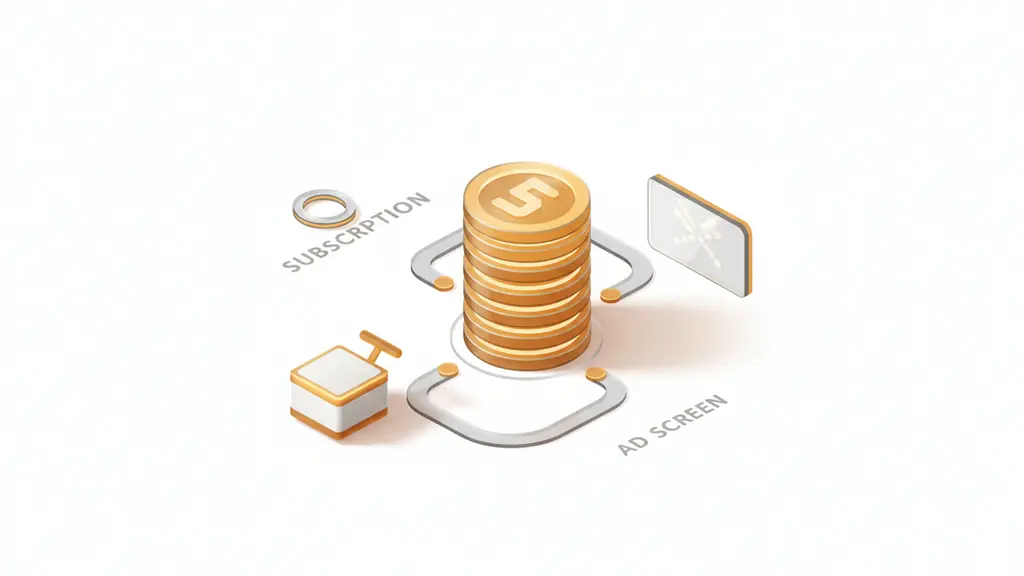
App monetization is vital for sustainability. The right revenue mix supports ongoing feature updates, safety, and growth.
Leading dating apps use a blend of freemium, ads, subscriptions, and in-app purchases to generate revenue.
Dating App Monetization Models
| Model | How It Works | Pros | Cons |
| Freemium | Basic use free, pay for upgrades | Attracts many users | Requires high volume |
| Subscriptions | Recurring premium features | Reliable revenue, loyal users | Price sensitive |
| In-App Purchases | Boosts, gifts, profile upgrades | Microtransactions, flexibility | Needs strong value |
| Ads | Display ads to free users | Monetize free tier | May impact UX |
Examples & Data
Paid services generated nearly 70% of dating app market revenue in 2025, with subscriptions leading and micro-transactions growing. The freemium monetization model remains the dominant entry strategy: offer core features free, then gate premium experiences (unlimited swipes, advanced filters, read receipts, boosted visibility) behind a subscription tier.
Tinder generated $1.79 billion in revenue in 2024 but has seen subscriber counts decline from a 2023 peak of 10.9 million — a signal that users want more value, not just more swipes. For new apps, the smarter play is charging less but delivering more perceived value: better matches, faster connections, and safer interactions.
Integration Tips
- Use Stripe or PayPal for secure, global payments.
- Apple/Google store policies require in-app payment compliance for subscriptions/purchases on their platforms.
User Growth and Retention Strategies for Dating Apps
After launch, sustained growth depends on smart marketing and user engagement tactics.
Successful dating apps invest in launch marketing, app store optimization, in-app events, and analytics-driven retention.
User Acquisition & Retention Strategies
- Launch Marketing:
- Leverage PR, influencer outreach, and social ads.
- Partner with local businesses or niche communities if app is interest-based.
- App Store Optimization (ASO):
ASO for dating apps is different from other categories because screenshots and the first-frame preview video carry more weight than keywords alone. Lead your screenshots with the emotional hook (connections made, not feature lists). Use your app name and subtitle fields to include your primary keyword (“dating app”) and your niche (“for professionals,” “for Christians,” etc.). Encourage early users to leave reviews in-app at the right moment — right after a match, not randomly. Apps with 50+ reviews in their first month rank significantly faster in both the App Store and Google Play. - Gamification & Events:
- In-app challenges or streak rewards boost daily activity.
- Host virtual or real-world events for niche or high-value communities.
- A/B Testing & Analytics:
- Test onboarding flows, prompts, and feature placement.
- Use tools like Firebase Analytics to monitor engagement, churn, and DAU/MAU.
- Ongoing Moderation:
- Keep community safe with proactive moderation and responsive support.
Example Retention Tactics
- Timely push notifications (“You have 3 new matches!”)
- Periodic feature drops (e.g., video chat, new filters)
- “Refer a friend” programs for viral growth
Dating App Creation at a Glance
| Step | Key Actions | Tools/Platforms | Cost |
| Define Value & Audience | Research, USP, validation | Survey tools, analytics | Low |
| Choose Build Approach | No-code vs. Custom, MVP plan | Flipabit, React Native | Low–High |
| Plan Features | Must-have/advanced features checklist | Docs, forums | Low–Med |
| Design UI/UX | Flow, branding, safety | Figma, Canva | Low–Med |
| Select Tech Stack | Platforms, integrations, scalability | APIs, SDKs | Low–High |
| Compliance & Security | GDPR, moderation, legal checklist | Legal consult, plugins | Medium |
| Build/Test/Launch | QA, app store submission, feedback loop | App stores, Firebase | Low–High |
| Monetization & Growth | Subscriptions, IAP, ASO, analytics | Stripe, ASO tools | Variable |
Dating App Trends Shaping 2026 (And What They Mean for New Builders)
The market is shifting faster than most guides acknowledge. Here’s what’s actually happening — and why it matters if you’re planning to build now:
Swipe fatigue is real. Tinder (-14%), Bumble (-11%), and Hinge (-12%) all reported revenue declines in 2025. Meanwhile, PURE App grew 95% year-over-year by removing mindless swiping entirely (Business Wire, 2026). New apps that replicate the Tinder swipe mechanic without differentiation will face an uphill battle.
Video-first features are now table stakes. Video profiles, video prompts, and in-app video calling have become standard — not add-ons. This trend accelerated during COVID-19 and has not reversed. Build video into your core feature set, not as a premium upgrade.
Niche platforms are outpacing generalists. Platforms built for specific communities — faith, ethnicity, lifestyle, LGBTQ+, age groups — report higher user satisfaction and stronger engagement than broad-audience apps (WhichDating Annual Report, 2026). Your niche dating app doesn’t need 10 million users to be profitable.
The over-50 segment is the fastest-growing. The 55+ demographic is growing at 15%+ annually across major platforms. If your target audience analysis skipped this group, revisit it.
AI-powered matching is now an expectation. 58% of dating platforms have integrated algorithm-based compatibility tools (Business Research Insights, 2026). Users increasingly expect the app to learn their preferences — not just filter by age and distance.
Frequently Asked Questions (FAQ)
What are the exact steps to create a dating app from scratch?
First, define your app’s unique audience and value proposition. Next, choose a development approach (no-code, code, or AI builder), list your must-have features, design UI/UX, select your technical stack, ensure compliance (security, privacy, legal), and then build, test, and launch your app. After launch, focus on growth and retention.
How much does it cost to make a dating app in 2026?
Costs range from $300–$2,500 for a no-code MVP, up to $100,000+ for a custom-built, fully featured dating app. The main factors are feature complexity, chosen platform, and development model. Ongoing costs include maintenance, server hosting, and moderation.
Can I build a dating app without any coding experience?
Yes. Thanks to no-code app builders like Flipabit and Appy Pie, you can create fully functional MVPs or even production apps without any programming knowledge. These platforms offer drag-and-drop interfaces, templates, and integrated hosting.
What features are must-have in a dating app?
Essential features include user onboarding, profile creation, discovery/matching tools, real-time chat, notifications, and safety features such as reporting and content moderation. Advanced features like video chat, premium upgrades, and AI matching add competitiveness but aren’t strictly required for launch.
Which platforms or builders can I use to make a dating app easily?
Popular builder options include Flipabit, Appy Pie, and Replit AI builder. For custom development, frameworks like React Native and Firebase are widely used by professionals for scalable and cross-platform apps.
How do dating apps make money?
Monetization models include freemium (free basic use, paid upgrades), subscriptions, in-app purchases (boosts, gifts), and advertising. Most successful apps combine several methods to maximize revenue.
How do I ensure security and data privacy for users?
Implement strong data encryption, age and identity verification processes, GDPR/CCPA compliance, clear privacy policies, and active in-app moderation. Choose trusted third-party APIs and review app store security requirements.
What are the legal compliance requirements for a dating app?
Dating apps must comply with GDPR (Europe), CCPA (California), and COPPA (if under-18 users are targeted). Requirements include explicit consent, data deletion/export options, age verification, moderation, and transparent privacy policies.
How long does it take to launch a dating app?
A basic no-code MVP can be live in 2–4 weeks. Custom-coded apps with advanced features or complex integrations typically take 3–6 months from idea to deployment.
How can I get users and grow my dating app after launch?
Focus on targeted launch marketing, app store optimization, influencer and PR initiatives, in-app engagement tactics (gamification, push notifications), and proactive community moderation. Analytics tools help optimize retention and growth.
Conclusion
Creating a dating app in 2026 is both more accessible and more competitive than ever. By following this step-by-step playbook—defining your unique audience, selecting the right build approach, prioritizing core features, ensuring UX, safeguarding security, launching skillfully, and supporting growth—you can turn your idea into a safe, profitable platform.
Key Takeaways
- Define and validate your niche: Stand out by solving real user needs in underserved markets.
- Choose the right build approach: No-code platforms speed MVPs; custom code enables limitless features.
- Prioritize must-have features and UX: Focus on safety, ease, and engagement before advanced add-ons.
- Compliance is mandatory: Secure user data and follow all legal/privacy regulations from day one.
- Growth doesn’t end at launch: User acquisition and retention require continuous marketing and analytics.
This page was last edited on 30 April 2026, at 3:47 pm

Start a conversation with our team to solve complex challenges and move forward with confidence.