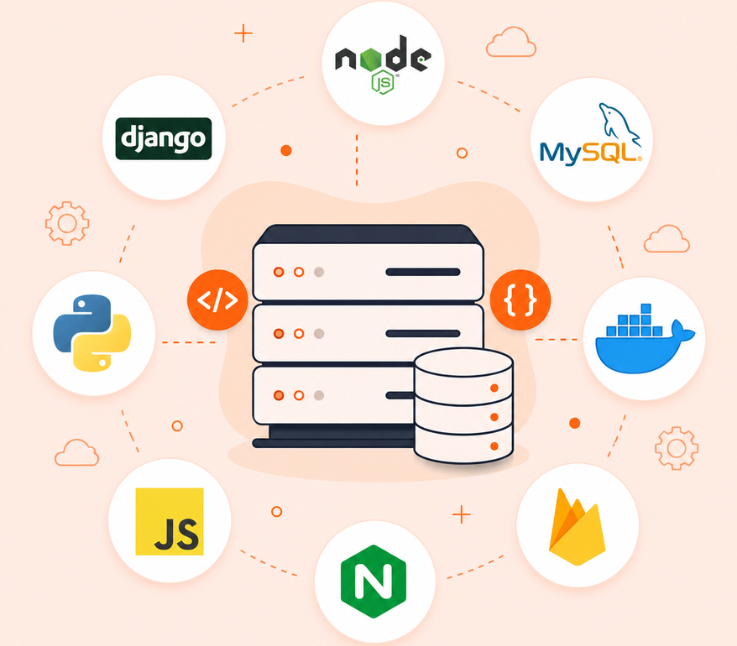
Backend development is key for robust web apps because it ensures security, data safety, reliable growth, custom features, and smooth integration with other tools, supporting your business as it scales.
When a web app goes down or leaks data, users lose trust fast. I have seen organizations spend months building great interfaces, only to face outages or security nightmares that could have been avoided.
The hard truth: your app’s long-term success depends less on what users see and more on the invisible backend that powers each interaction. Fragile backends cost money, time, and reputation.
This expert guide shows how backend development makes web apps resilient, secure, and ready to grow. By the end, you’ll know what separates robust apps from risky ones—and how your team can build with confidence.
What is Backend Development—And Why Does It Matter for Robust Web Apps?
Backend development is the process of designing and managing the systems, code, and infrastructure that power a web application behind the scenes. This includes databases, server-side logic, API integrations, authentication, and data security.
While frontends show users what to do, the backend handles what happens next. If you want data to be safe, features to work fast, and your app to survive real-world growth, strong backend development is not optional.
Think of it this way: the frontend is the tip of the iceberg, while the backend forms everything beneath the surface—keeping the whole project afloat.
Backend vs. Frontend Responsibilities
| Frontend | Backend | |
| User Interface | Yes | No |
| Data Storage | No | Yes |
| App Logic | Some | Heavy (core logic) |
| Security | Some checks | Major responsibility |
| Integrations | Limited | Full (APIs, 3rd party) |
The 5 Reasons Backend Development is the Backbone of Robust Web Apps
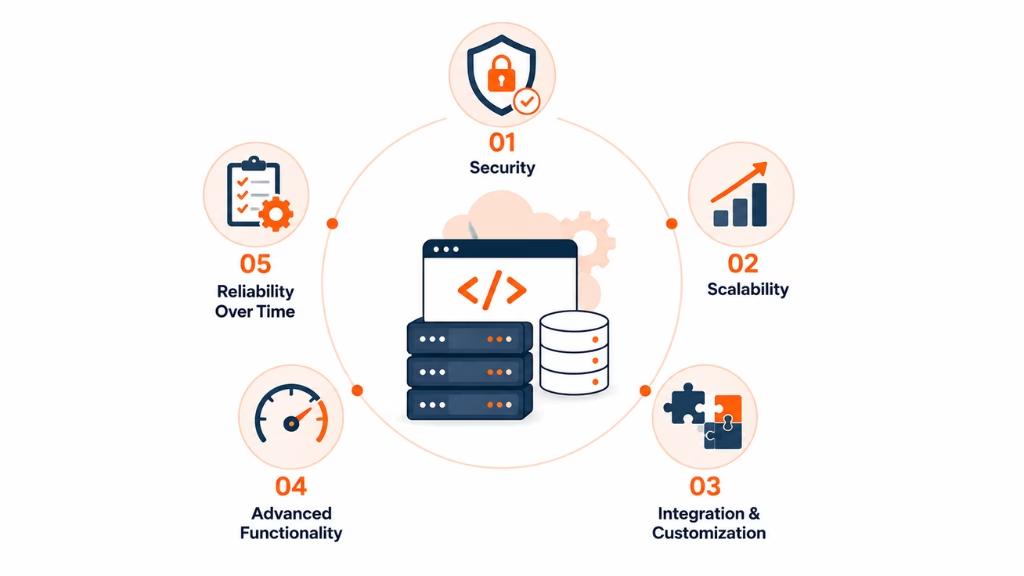
A resilient web application rests on five key pillars, all rooted in solid backend development. Each one contributes to your app’s ability to survive, adapt, and earn user trust in real business environments.
Security: The First Line of Defense
Securing your web app starts at the backend. In my experience, most serious data breaches begin here—weak password storage, poor access controls, or unpatched code get exposed.
Security in the backend includes:
- User authentication and role-based access control
- Data encryption at rest and in transit using up-to-date protocols
- Defense against SQL injection, cross-site scripting, and OWASP Top 10 threats
- Secure handling of sensitive information and proper logging
Security Checklist
| Security Practice | Description |
| Strong authentication | Password/hash management, 2FA |
| Encryption (at rest/in transit) | Uses TLS for data transfer, AES |
| Input validation/sanitization | Stops injection/XSS attacks |
| Regular vulnerability scans | Detects and patches weak points |
| Strict access roles | Least privilege principles |
| Secure error logging | Blocks info leaks |
Having seen what a simple SQL injection can do, my advice is: never take shortcuts with backend security. Following best practices like those from the OWASP Foundation should be standard, not optional.
Scalability: Building for Growth
A web app that cannot handle growth is one that will fail when success arrives. Scalability is about building your backend so it keeps performance high—even with more users or bigger data.
Scalability depends on:
- Load balancing across multiple servers or cloud instances
- Caching data to speed up repeated requests and reduce strain
- Optimizing database queries and structures for high traffic
- Using cloud-native tools to scale up or down based on real use
Imagine your app is hit by a surge of buyers on Black Friday. If the backend is ready—with distributed architecture and strong caching—your team will celebrate record sales instead of scrambling to fix outages.
Integration & Customization: Powering Unique Features
Your users expect more than basic features. Real value comes from connecting payment systems, analytics, or messaging tools—all driven by API-first backend development.
Integration and customization cover:
- Building and consuming APIs to connect third-party services
- Using middleware for connecting and transforming data across systems
- Supporting unique business rules and custom workflows
The mistake I see often is teams using “cookie-cutter” backends that can’t adapt. When a business needs to stand out, the backend must be flexible enough to connect new partners or add specialized logic.
Advanced Functionality: Enabling Real-Time and Analytics
Today’s top-performing apps do more: live chat, instant notifications, real-time dashboards. This level of ability flows directly from backend design.
Advanced functions rely on:
- Real-time protocols like WebSockets for instant updates
- Large-scale data processing for analytics and insights
- Frameworks such as Node.js (for high concurrency), Django, or Rails
Last year, when our dev team rebuilt analytics pipelines for a fintech app, robust backend choices cut dashboard delays from 10 seconds to nearly real time. Users noticed—and stayed loyal.
| Advanced Feature | Backend Technology |
| Real-time chat/notifications | WebSockets, Node.js |
| Analytics/dashboards | Data pipelines, Django, Rails |
| Personalization | User data, middleware logic |
Reliability Over Time: Monitoring, Logging, and Updates
New web apps often run smoothly—until they meet real-world stress. What makes apps survive is ongoing backend maintenance: smart monitoring, clear logging, and planned updates.
Reliability involves:
- Cloud-native monitoring (AWS CloudWatch, Azure Monitor, etc.)
- Detailed logging of errors and transactions
- Backup plans and redundant systems for disaster recovery
- Zero-downtime deploys and quick rollout of security patches
I have seen businesses fall because of weak logging—missing one critical alert can cost hours of downtime. A better approach is to automate alerts for any system anomaly.
Best Practices for Backend Reliability
| Practice | Benefit |
| Real-time monitoring | Faster issue resolution |
| Detailed error logging | Quick bug discovery |
| Regular backups/failover | Data protection |
| Automated updates | Patch vulnerabilities |
The Essential Components of a Robust Backend Architecture
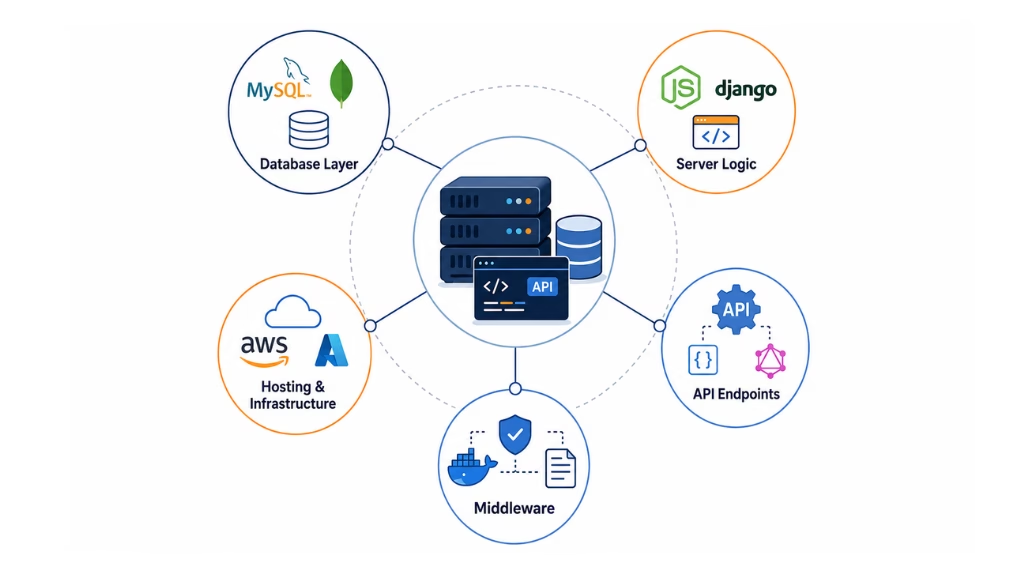
A strong backend has several moving parts. Each piece plays a role in keeping your app robust, whether you are building for ten users or millions.
A robust backend includes:
- Database Layer: Stores and organizes data. SQL databases handle structured data and complex queries; NoSQL suits rapid scale or unstructured information.
- Server Logic: Runs the business rules, processes API requests, and manages background tasks.
- API Endpoints: Provide a stable way for the frontend or others to talk to the backend.
- Middleware: Handles security, error processing, logging, and connecting services.
- Hosting & Infrastructure: Uses cloud providers like AWS, Azure, or serverless platforms for speed and flexibility.
Summary Table: Backend Architecture Components
| Component | Main Job | Key Decision Point |
| Database | Data storage and retrieval | SQL vs. NoSQL, backups |
| Server Logic | Process requests, app rules | Language, framework, scaling |
| API Endpoints | Connect frontend/services | REST vs. GraphQL, auth methods |
| Middleware | Security, error handling | Choose needed layers/plug-ins |
| Hosting | Infra for uptime/performance | Cloud, serverless, containers |
A clear backend structure reduces chaos as your team scales features or fixes bugs.
How to Build a Robust Backend: Best Practices & Pro Tips
Strong backend apps come from good process, not luck. Here’s what works—in my POV, following these saved our team hours of stress and produced fewer outages.
Start with these steps:
- Choose Proven Frameworks: Use stable, well-documented backend frameworks (e.g., Node.js, Django, Rails). Keep libraries up to date and avoid experimental packages in core areas.
- Automate Testing & Deployment: Set up continuous integration (CI) and continuous deployment (CD) pipelines. Run automated tests before pushing any changes.
- Implement Real-Time Monitoring: Use observability tools from day one. Log all errors, and set up alerts for key events or downtime.
- Practice Defense in Depth: Layer security—authenticate every request, validate all input, use strong encryption, and regularly audit dependencies.
Do’s and Don’ts Checklist
| Do | Don’t |
| Use updated frameworks | Ignore dependency updates |
| Test every feature | Ship without automated tests |
| Automate monitoring | Settle for manual checks |
| Secure all access points | Rely on default configurations |
| Plan for scaling | Underestimate traffic growth |
Applying these best practices gives your backend resilience not just on launch day, but as your business grows.
Comparing Backend Frameworks: Choosing the Right Tool for Reliability and Scale
Framework choice matters. The wrong pick leads to technical debt. Below, I compare the most-used backend frameworks based on performance, security, flexibility, and community support.
Framework Comparison Table
| Feature | Node.js | Django | Rails | Laravel | Flask |
| Language | JavaScript | Python | Ruby | PHP | Python |
| Performance | High | High | Medium | Medium | Medium |
| Security Features | Good (manual) | Excellent | Excellent | Good | Good |
| Scalability | Excellent | Very Good | Good | Good | Good |
| Community Support | Huge | Large | Large | Large | Large |
| Best for | Real-time, APIs | Full-stack, analytics | Rapid prototyping | Web CMS, mid-scale | Simple APIs, microservices |
In my experience, Node.js is best for real-time and high-concurrency apps, Django excels in security and analytics-heavy projects, and Rails works well for quick launches. Laravel and Flask are good for smaller teams who want fast development with less setup.
A better approach is to pick a framework your team knows well and suits your security, performance, and scaling needs—not just what is trendy this year.
Case Study: How GitHub’s Backend Failure Caused a 24-Hour Service Degradation
A strong real-world example is GitHub’s October 2018 incident. During routine network maintenance, a 43-second connectivity loss between data centers triggered an unexpected MySQL failover. GitHub’s applications began writing to new database primaries before all recent writes had replicated, which created inconsistent database states across regions.
What happened:
- A brief network partition triggered automated database failover.
- Some database writes had not replicated before traffic moved to the new primary.
- Users saw outdated or inconsistent information.
- Webhook delivery and GitHub Pages builds were paused during recovery.
How GitHub responded:
- Prioritized data integrity over faster recovery.
- Restored affected MySQL clusters from backups.
- Rebuilt replication topology across data centers.
- Added technical initiatives to prevent unsafe cross-region database promotion.
The lesson: backend reliability is not just about servers staying online. Database replication, failover rules, monitoring, and recovery planning must work together, or a small infrastructure issue can turn into a major service disruption.
Common Backend Development Mistakes That Undermine App Robustness
Even smart teams trip up by missing the basics. The real issue is that most outages and exploits trace back to a few repeat mistakes.
Common mistakes I see:
- Forgetting to set up regular backups and redundancy
- Relying only on basic health checks without real monitoring
- Building architecture too complex to maintain, or too simple to handle real loads
- Ignoring dependency updates and known vulnerability alerts
Avoid these pitfalls and your backend foundation stays strong.
Why Choose Riseup Labs as Your Backend Development Partner
Choosing the right partner saves you from the most common backend risks. Riseup Labs brings deep experience designing secure, scalable, custom backends for businesses in finance, healthcare, and ecommerce.
Our engineers follow industry best practices, apply lessons from real failures, and stay updated with the newest frameworks and security protocols.
If you want a backend development company that delivers robust solutions, our team can help. Contact us to discuss your backend needs.
Conclusion
A robust web application is built on a strong backend. Skipping reliability, security, or real scalability puts your business at risk. In my experience, investing in backend development pays off with fewer outages, faster growth, and happier users.
To get ahead, prioritize these three areas:
- Secure your backend from day one—never take shortcuts.
- Plan for growth and automate your monitoring.
- Choose proven frameworks and update them regularly.
Align your backend investments with your business goals. Consider working with backend experts who understand the pressure to deliver robust results.
As web technology changes, apps that combine expert backends with AI-assisted tools will define the next decade of success.
FAQs: Backend Robustness, Security, and Development Choices
Why is backend development critical for robust web apps?
Backend development is critical because it handles security, data storage, app logic, and scaling. It makes sure your web app can handle real users, grows safely, and keeps information protected.
How does robust backend development improve app security?
Robust backends secure user data through strong authentication, encrypted data flows, and limits on access. They follow best practices like the OWASP Top 10 to block common attacks.
What are the best backend frameworks for building reliable web applications?
Popular reliable frameworks include Node.js for real-time needs, Django for security, Rails for fast prototyping, Laravel for enterprise PHP, and Flask for microservices.
How does backend enable web app scalability?
Backends support scalability by using load balancing, caching, distributed databases, and cloud hosting, so apps can serve more users without losing speed or crashing.
What role do APIs play in robust backend development?
APIs allow apps to connect with other services and support custom features. Well-designed APIs make your backend flexible, enable new integrations, and help future-proof your app.
How do databases support robust web apps?
Databases store, organize, and protect all app data. Choosing the right type (SQL or NoSQL) and structure ensures fast, reliable access to information as your app grows.
What’s the difference between frontend and backend for app reliability?
Frontend handles what users see. Backend does the processing, data management, and all security. A reliable backend is key—without it, no frontend can keep the app running.
What are common backend development mistakes that reduce robustness?
Mistakes include skipping backups, using weak monitoring, out-of-date dependencies, and overcomplicating the architecture. Avoiding these keeps your backend strong and reliable.
How does backend monitoring contribute to ongoing app stability?
Backend monitoring tools detect issues fast. With alerts and clear logs, teams fix problems quickly, prevent long downtime, and keep users happy.
Why invest in custom backend solutions versus off-the-shelf platforms?
Custom backends address your exact needs, integrate with existing systems, and grow with your business. Off-the-shelf platforms often limit scaling and unique features.
This page was last edited on 8 July 2026, at 2:18 pm

Start a conversation with our team to solve complex challenges and move forward with confidence.