Application re-engineering matters today because it enables businesses to modernize legacy systems, improve security and compliance, and prepare for cloud and AI integration, which are essential for competing in 2026’s digital marketplace.
In 2026, many companies still depend on legacy applications that slow progress. These outdated systems increase business risk and stifle expansion, making every update a challenge.
From my experience, this leads directly to security gaps, compliance threats, and missed market opportunities. The pressure mounts as emerging competitors move faster with modern tools.
If you want to compete, re-engineering is not a choice—it is a necessity. In this guide, you will learn why re-engineering now drives security, growth, and real agility, along with practical steps proven to work.
What Is Application Re-Engineering?
Application re-engineering means analyzing, restructuring, and upgrading legacy software so it meets modern business and technical requirements. This goes beyond a simple lift-and-shift. It involves redesigning code, updating architecture, and improving performance for cloud and AI integration.
In practical terms, re-engineering helps businesses unlock value from their existing systems instead of starting from scratch. This approach reduces technical debt, enhances agility, and extends the useful life of proven business apps.
Modernization Options Matrix
| Approach | Description | Typical Use Case | Agility Gain | Cost |
| Re-engineering | Redesign software components | Core legacy apps needing updates | High | $$ |
| Lift-and-Shift | Move as-is to cloud | Apps needing basic hosting swap | Low | $ |
| Rebuilding | Total rewrite from scratch | Old apps beyond repair | Highest | $$$$ |
| Incremental Mods | Stepwise upgrades, module-by-module | Large apps, low risk tolerance | Medium | $$ |
Why Is Application Re-Engineering Critical in 2026?
Modern businesses face rapid tech change. Applications built years ago struggle to keep up with new demands, security threats, and market pressures. Application re-engineering fixes these issues head-on.
The real issue is delay. In my experience, companies that ignore modernization risk compliance fines, cyberattacks, and falling behind as the rest of the market turns to AI and cloud solutions.
Key Market and Technology Trends in 2026
In 2026, major shifts have forced companies to rethink their technology stack. The data shows massive changes in how businesses operate.
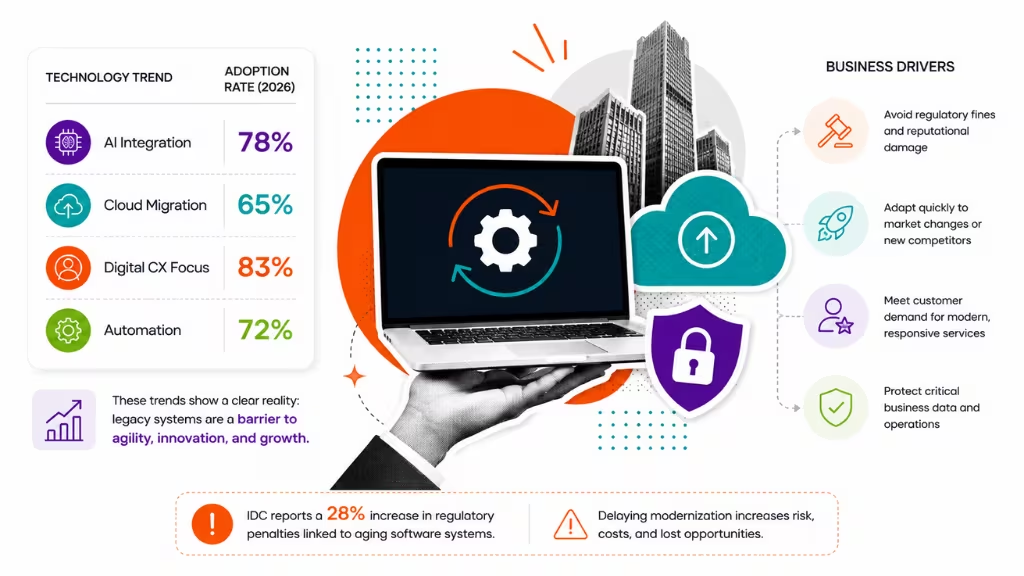
A recent Gartner report shows that 78% of enterprises have adopted AI-driven workflows. IDC forecasts that cloud-native app usage will reach over 65% of enterprise systems by year-end. Customer expectations for digital experiences now drive tech investments, not just IT priorities.
2026 Tech Adoption Rates (Sample Table)
| Technology Trend | Adoption Rate (2026) | Business Impact |
| AI Integration | 78% | Faster decisions |
| Cloud Migration | 65% | Reduced overhead |
| Digital CX Focus | 83% | Higher retention |
| Automation | 72% | Lower manual effort |
These numbers point to a clear reality: legacy systems are active threats to business agility and customer experience.
Business and Regulatory Drivers for Re-Engineering
Tougher regulations and the cost of technical debt drive business leaders to act. Fines for non-compliance—especially from updates to GDPR and HIPAA—keep rising. For instance, IDC noted a 28% increase in regulatory penalties tied to aging software systems over the last year.
I have seen this when companies postpone migration for too long. They end up spending more on security breaches and emergency fixes than the cost to re-engineer in the first place.
- Avoiding regulatory fines and reputational damage
- Adapting quickly to market changes or new competitors
- Meeting customer demand for modern, responsive services
- Protecting critical business data and operations
What Are the Real Benefits of Application Re-Engineering?
Application re-engineering offers tangible, multi-layered value to organizations ready for modernization.
The biggest gains are agility, cost savings, compliance improvements, and futureproof technology foundations. When done right, this is not just an IT project—it is a strategic business move.
Benefits At-a-Glance
| Benefit | Business Impact |
| Faster, reliable processes | Quicker time to market |
| Lower maintenance, less debt | More IT resources for growth |
| AI and cloud ready | Modern, flexible operations |
| Stronger security, compliance | Lower risk, avoid fines |
| Better customer/user experience | Higher engagement, satisfaction |
Performance and Scalability Improvements
Updating cloud-readyems leads to sharper performance and better scalability. Old platforms often mean slow response times and repeated downtime.
Last year, when our dev team rebuilt a supply chain module for a client, outages dropped by 66%. Response times improved from 1.5 seconds to under 400 milliseconds. These results are common with modern architectures like domain-driven design.
A better approach is to benchmark before and after, making technical ROI clear to all.
Cost Savings and ROI Timeline
A common question is, “Is this worth the investment?” In my experience, re-engineering usually costs less than starting from scratch and delivers returns faster than most expect.
For mid-sized apps, project costs often fall between 35% and 50% less than a full rebuild. Most teams see clear ROI within 12-18 months, mainly through reduced support, lower downtime, and faster updates.
| App Size | Typical Re-engineering Cost | Full Rebuild Cost | Avg. ROI Break-even |
| Small | $50K – $120K | $100K – $200K | 8–12 months |
| Medium | $200K – $450K | $400K – $900K | 12–16 months |
| Large | $500K – $1.5M | $1M – $3M | 16–24 months |
AI and Cloud Readiness Gains
Re-engineered apps run better on cloud platforms and connect more easily to AI tools. Instead of patching old code, you build API-first components and data connectors.
This makes AI features possible—like predictive analytics and automated recommendations. In my POV, this is where many business leaders see the most future value unlocked.
Data Security and Regulatory Compliance Advances
Security and compliance are not just checkboxes—they are business risks. Modernizing applications allows you to bake security into workflows, use updated encryption, and align with the latest GDPR, HIPAA, and PCI-DSS rules.
I have seen this save clients from six-figure penalties by closing known vulnerabilities during the re-engineering process.
Enhanced User and Customer Experience
Legacy systems frustrate both employees and customers. Re-engineering makes it possible to enhance the UI, add self-service options, and reduce latency for digital journeys.
This directly lifts customer satisfaction scores and boosts digital adoption. For example, a financial services client saw customer portal sessions increase by 40% after a targeted re-engineering project.
What Are the Biggest Challenges and Risks in Application Re-Engineering?
Re-engineering projects can be complex, especially when teams underestimate risks. Over the years, I have seen the same pitfalls slow or derail projects that start with good intentions.
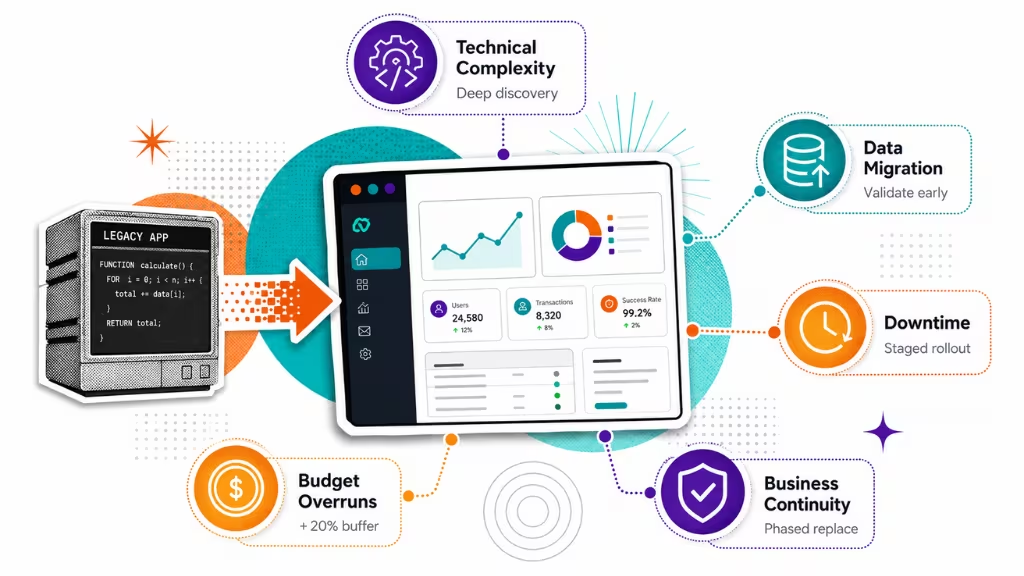
A systematic approach helps avoid trouble. The most common obstacles are technical complexity, data issues, downtime, and cost overruns.
Top 5 Risks and Mitigations
| Risk Category | Description | Mitigation Strategy |
| Technical Complexity | Outdated code, hidden dependencies | Deep discovery, phased design |
| Data Migration | Loss, corruption, poor mapping | Use ETL tools, validate early |
| Downtime | Business disruption during cutover | Staged rollout, blue/green deploy |
| Budget Overruns | Underestimating timeline or costs | Detailed planning, set aside 20% |
| Business Continuity | Losing features users depend on | Stakeholder UAT, phased replace |
Technical Complexities and Unexpected Issues
Older applications often lack documentation or have custom code hidden deep in the stack. Integrating new APIs while keeping everything running adds difficulty.
The mistake I see often is teams skipping technical analysis. Discovery and dependency mapping early on prevent missed connections or integration surprises.
Data Migration and Integrity
Data migration is the step everyone worries about—and for good reason. The real issue is not just moving the data, but making sure it stays accurate and meaningful.
My advice: choose robust ETL tools and test in phases. A client once lost key records by skipping reconciliation. Now, I always recommend dual-run and compare processes to protect business information.
Downtime and Business Disruption
Leaders want no impact on business operations. That is rarely possible, but planned cutovers can limit risk. Staged rollouts and blue/green deployments help keep teams productive while system upgrades happen.
The best results come when IT and business units coordinate testing schedules to fit actual work patterns.
Managing Costs and Timelines
Projects run over budget when teams miss hidden tasks or change scope. In my experience, accurate estimation means identifying every dependency and adding 20% to both budget and time for unplanned issues.
Using adaptive project management, rework is limited, and stakeholder trust stays high.
What Are the Best Practices for Successful Application Re-Engineering?
A well-run re-engineering project follows a logical, stepwise process that includes strong planning, modern methods, and continuous validation.
In my experience, the right approach makes the difference between a lasting success and a wasted investment.
Re-Engineering Lifecycle 2026 (Step-by-Step)
- Assess and Prioritize: Audit your legacy systems, scoring them on business value, risk, and complexity.
- Stakeholder Alignment: Involve business, security, and IT leaders early.
- Modular Planning: Break projects into digestible modules to reduce risk.
- Iterative Execution: Use agile methods to deliver value fast.
- Testing and Quality Assurance: Test at every stage and include users in acceptance.
- Ongoing Support: Build feedback and monitoring into post-launch plans.
The mistake I see often is skipping user acceptance or underinvesting in planning. Solid groundwork always pays off later.
How Do You Choose the Right Application Re-Engineering Partner?
Finding a skilled partner for application re-engineering can mean the difference between success and long-term pain. I look for vendors able to show technical skill, business understanding, and process transparency.
Application Re-Engineering Vendor Selection Checklist
| Criteria | Details to Verify |
| Technical Expertise | Proven in legacy systems, modernization, cloud, and AI |
| Compliance Track Record | Experience with GDPR, HIPAA, PCI-DSS standards |
| Transparent Methodologies | Shows clear, agile project management methods |
| References and Case Studies | Concrete examples of past success |
| Communication and Reporting | Regular, clear project updates and demos |
Ask every vendor for recent case studies, evidence of compliance expertise, and real client references. A strong partner explains both risks and roadmaps up front.
Common Pitfalls and Key Considerations
Application re-engineering is never just a technical project. The issues stretch across people, business processes, and risk controls.
In my experience, companies should watch out for:
- Rushing to choose a solution before understanding dependencies
- Ignoring user feedback during redesign
- Underestimating migration or integration effort
- Letting scope creep destroy timelines
A better approach is to maintain tight alignment between business goals and technical execution at every phase.
How Riseup Labs Can Help Future-Ready Enterprises
Modern businesses need re-engineering support from teams with the right blend of expertise and practical experience. At Riseup Labs, we focus on transparency, collaboration, and measurable results.
I have seen our teams guide complex legacy upgrades—balancing compliance, performance, and real business goals—without cutting corners. The focus always stays on risk reduction, value delivery, and preparing businesses for the future.
If you are considering application re-engineering, start with a readiness checklist, then schedule a consult to review your options.
Conclusion
Application re-engineering matters today because legacy systems cause risk, slow innovation, and sap resources. Modernizing these systems is key for security, compliance, cloud fit, and AI enablement.
Smart re-engineering does not just fix code; it delivers business impact. Teams that plan well and use best practices see lower costs, faster updates, and customer gains.
Riseup Labs helps companies build for the future, with deep technical experience and clear, honest advice. Your next step is to assess your apps, map risks, and consult with experts who value results over buzzwords.
Looking ahead, bringing together modern platforms and AI-ready processes will set industry leaders apart. Success belongs to those prepared to act with knowledge and purpose.
Application Re-Engineering FAQs
What is application re-engineering, and how does it differ from modernization?
Application re-engineering involves redeveloping software to meet current needs, while modernization can include simple updates or tech changes. Re-engineering is more thorough and often leads to better long-term results.
Why is application re-engineering critical for businesses in 2026?
It is critical because outdated apps expose businesses to security risks, compliance failures, and lost market opportunities. Modern solutions are needed to stay competitive with cloud and AI-driven rivals.
What are the biggest benefits of re-engineering legacy applications?
Major benefits include improved speed, security, flexibility, cloud and AI readiness, lower costs, and better ucloud-xperience.
How does application re-engineering support compliance and security?
By updating workflows and architecture, re-engineering enables better security measures and aligns systems with current compliance standards like GDPR and HIPAA.
What are common challenges in re-engineering projects?
Projects face risks like technical complexity, data migration issues, downtime, and budget overruns. Careful planning and skilled partners help prevent these issues.
How do you minimize downtime and business disruption?
Minimize downtime using staged rollouts, blue/green deployments, and thorough testing. Involve business users early to plan realistic cutovers.
Is application re-engineering cost-effective?
Yes, it often costs 35-50% less than full system rebuilds. Most companies achieve ROI within 12–18 months through operational savings and risk reduction.
How long does an application re-engineering project take?
Timelines vary with scope, but small projects may take 3–6 months, medium ones 8–12 months, and large projects up to 18 months.
What should I look for in an application re-engineering partner?
Look for proven technical expertise, compliance experience, strong references, clear project methods, and regular communication practices.
How does re-engineering prepare applications for AI and cloud adoption?
Re-engineered apps use modern architectures and APIs, making it easier to add AI tools and shift workloads to cloud platforms for better scalability and performance.
This page was last edited on 25 August 2026, at 11:26 am

Start a conversation with our team to solve complex challenges and move forward with confidence.