Building a SaaS product is one of the most powerful ways to create scalable digital businesses, but it comes with its own set of challenges. This how to build a saas product guide is designed to help founders navigate every stage, from idea validation to launch and growth, with clarity and confidence.
Many aspiring founders struggle with unclear direction, technical complexity, and the difficulty of achieving product market fit. Without a structured approach, it is easy to waste time and resources or make decisions that slow down progress.
This guide to how to build a saas product provides a practical, step by step roadmap that combines product strategy, technical execution, and go to market planning. Whether you are a solo developer, startup founder, or product manager, you will gain the insights needed to build, launch, and scale a successful SaaS product while avoiding common mistakes.
What Is a SaaS Product and How Does It Work?
A SaaS (Software as a Service) product is cloud-based software delivered over the internet via subscription, with updates and maintenance handled by the provider. Unlike traditional on-premises software, SaaS apps are centrally hosted, multi-tenant, and typically monetize through recurring payments.
Key SaaS Attributes
- Cloud Delivery: Users access the software through web browsers, not local installs.
- Subscription Model: Revenue is generated via monthly or annual subscriptions rather than one-time licenses.
- Multi-tenancy: Many customers share the same infrastructure with data isolation.
- Frequent Updates: Features, fixes, and enhancements roll out seamlessly to all users.
- B2B and B2C: SaaS serves businesses (e.g., Salesforce, Slack) and consumers (e.g., Spotify).
Fact Box: What is SaaS?
SaaS (Software as a Service) provides centrally hosted applications to users on a subscription basis, accessible via the cloud.
Recent industry reports continue to show strong SaaS market growth, with global revenues surpassing $175 billion and projected to rise. The leading success factors are customer stickiness, rapid iteration, scalable infrastructure, and the speed at which you can reach your audience. Subscription economics also mean metrics like churn (rate of customer loss) and retention are critical: increasing retention yields exponential growth over time.
How Do You Validate a SaaS Idea Before Building? (Step 1: Ideation & Market Validation)
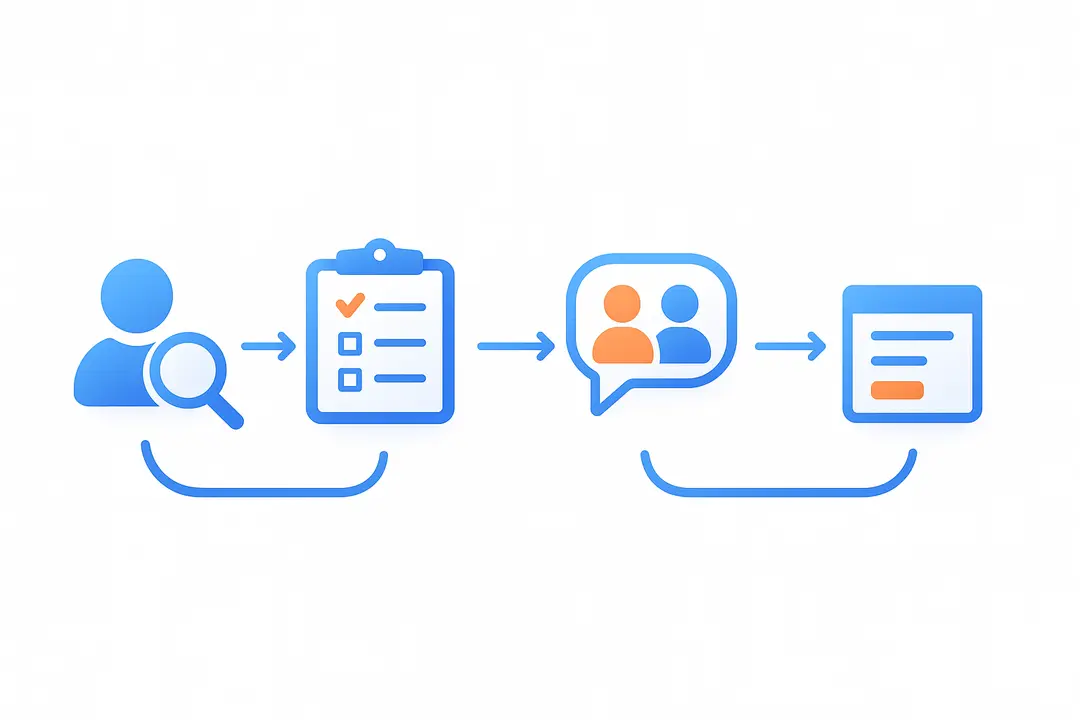
Validating your SaaS idea before writing code is essential to avoid wasted time and money. Most SaaS startups that fail do so because they solved a problem nobody cared about.
SaaS Idea Validation Steps
- Identify a Real Pain Point
Use frameworks like Y Combinator’s “Make something people want” or Steve Blank’s “Get out of the building.” Talk directly to potential customers about their workflow problems. - Competitive Audit
Research existing solutions. What’s missing in their offerings? What are users complaining about? - Customer Discovery Interviews
Interview 5–20 potential users. Ask about their pains, needs, and current hacks. - Smoke Test or Landing Page
Create a simple landing page describing your product. Run targeted ads or outreach—are people signing up? - Pre-sales or Letters of Intent
Attempt to collect pre-orders or letters of intent before building. - Survey & Polls
Validate demand with quick, targeted surveys to your ideal user group.
Example:
Avra, a solo SaaS founder, interviewed 20 HR managers before building a recruiting tool—only after consistent positive feedback did he start prototyping.
Validation Checklist
| Step | Description |
| Problem interviews | Talk to 15+ target users |
| Survey or landing page signups | Capture intent, measure sign-up rate |
| Competitor analysis | List top 3 alternatives, key gaps |
| Pre-orders or beta signups | Secure 3–5 early commitments |
How Do You Define Your Value Proposition and Target Users? (Step 2)
Clarifying your Unique Value Proposition (UVP) and defining target users are the keys to focusing your SaaS and avoiding costly feature bloat.
Defining UVP and User Personas
- UVP (Unique Value Proposition): Distill what sets your product apart. The “Jobs to Be Done” framework is a reliable way to map user needs (“What are they ‘hiring’ your product to do?”).
- User Personas/ICPs: Develop Ideal Customer Profiles (ICPs) to segment users—B2B SaaS might focus on industries, company size, role, or pain points.
- Avoid trying to “build for everyone”; niche focus leads to successful early adoption and clearer messaging.
UVP Template
For [target user], who [pain point], [Product] is a [category] that [main benefit].
Example:
For remote software teams who waste hours syncing schedules, TeamSync is a SaaS platform that automates timezone coordination.
| Persona Example | Industry | Key Pain Point |
| Startup CTO | SaaS/B2B | Manual onboarding processes |
| E-commerce Marketer | Retail/Ecom | Disconnected analytics |
What’s the Best Way to Build a SaaS MVP? Technical Options & Key Features (Step 3)
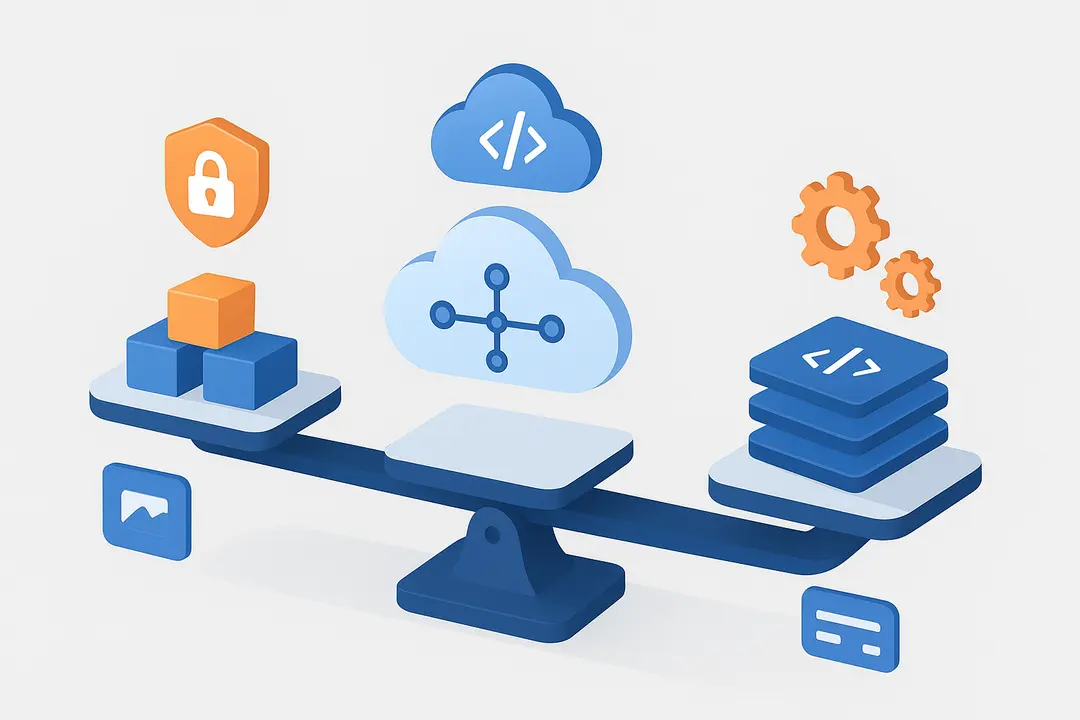
A SaaS MVP (Minimum Viable Product) is the simplest version of your product that delivers your UVP and collects feedback. Choosing the right tech stack—code, no-code, or BaaS—impacts speed, scalability, and cost.
Choosing Your SaaS MVP Stack
Options:
| Option | When to Choose It | Pros | Cons | Popular Tools |
| No-Code | Fastest validation & non-dev founders | Launch in days; low cost | Limited customization, scalability | Bubble, Glide |
| BaaS (Backend as a Service) | Fast prototyping, some code needed | Quick setup; handles auth, DB, payments | Vendor lock-in, less control | Firebase, Bolt.new |
| Custom Code | Unique features, scaling required | Unlimited flexibility, scaling | Requires dev skills, more time | Node.js, React, Python |
Common SaaS MVP Features:
- Secure authentication (sign up/login)
- User dashboard
- Billing/payments integration
- Simple onboarding flow
- Core value feature (the “aha!”)
- Support or feedback mechanism
Rapid Prototyping Tips:
- Use SaaS boilerplates (e.g., Bolt.new, GitHub repos) to accelerate setup.
- Focus only on “must-have” features; nice-to-haves can wait.
- Start with serverless or managed platforms to minimize maintenance at MVP stage.
How Do You Build Core SaaS Features (Authentication, Billing, Onboarding)? (Step 4)
Building your SaaS core features right from the start ensures a smooth user experience, compliance, and readiness for launch.
Building Must-Have Features
Authentication:
- Use OAuth, “magic link” emails, or third-party services (Auth0, Firebase Auth) for secure, quick integration.
- Avoid building authentication from scratch due to security risks.
Billing/Subscriptions:
- Integrate proven payment platforms:
- Stripe: Flexible and widely used for recurring billing.
- Chargebee/Paddle: Handle subscriptions and tax compliance.
Plug into ready-made SDKs; don’t reinvent subscription or VAT logic.
Onboarding:
- Build step-by-step guides, onboarding checklists, or “product tours.”
- Use PLG (Product-Led Growth) tactics like in-app tips or activation nudges (e.g., guided tours, email sequences).
Security/Compliance:
- Adhere to GDPR (user data protection) and PCI DSS (payment data security) basics.
- Leverage built-in compliance of top platforms when available.
How to Integrate Stripe with Your SaaS:
- Sign up for a Stripe account.
- Add Stripe SDKs to your backend/frontend.
- Implement secure checkout and webhooks for billing events.
- Test thoroughly using Stripe’s sandbox mode.
How Should You Price and Monetize Your SaaS Product? (Step 5)
Your SaaS pricing model affects adoption, retention, and revenue. Early-stage products must balance user growth with sustainable monetization.
Top SaaS Pricing Models
- Freemium: Base tier is free; advanced features are paid.
- Free Trial: 7–30 days of full access, then paid subscription.
- Tiered Pricing: Multiple paid plans (basic, pro, enterprise).
- Usage-Based: Customers pay for what they use (API calls, seats).
- Paid Pilot: Initial cohort receives discounted access for feedback.
| Pricing Model | Best For | Example |
| Freemium | Viral/consumer apps, wide funnels | Slack, Trello |
| Free Trial | B2B, value visible in short time | Salesforce, Asana |
| Tiered | Different user sizes/use cases | HubSpot, Mailchimp |
| Usage-Based | API/SaaS infra, variable usage | AWS, Twilio |
Key Monetization Metrics (Know Your SaaS Numbers)
- MRR (Monthly Recurring Revenue): The sum of all active subscriptions in a month.
- ARPU (Average Revenue per User): MRR divided by user count.
- Churn Rate: User or revenue loss over a period.
- LTV (Lifetime Value): Projected revenue from a customer over lifespan.
When to Change Pricing:
- After substantial usage data or major product updates.
- Communicate changes clearly, with notice and rationale to users.
What Are the Steps to Launch and Iterate Your SaaS MVP? (Step 6: Pre-Launch, Beta, Practice Iteration)
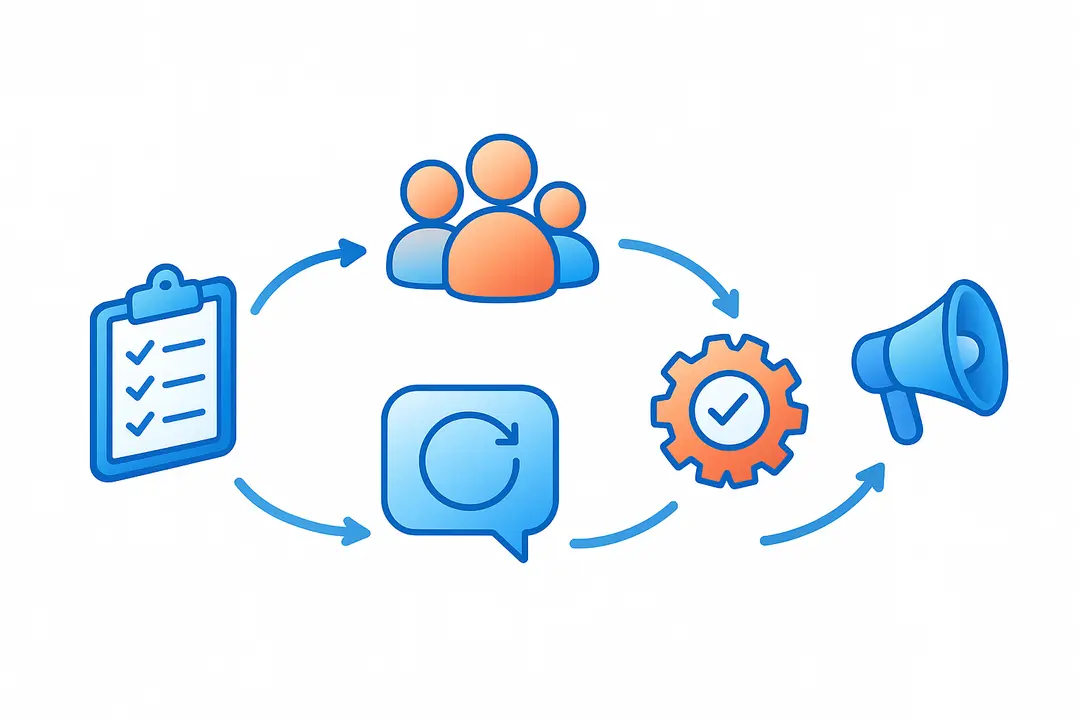
The path from MVP to public launch involves continual user feedback, rapid iteration, and phased rollout to reduce risk.
SaaS Pre-launch and Beta Steps
- Create a Launch Checklist
Map out tech, marketing, and support tasks. - Recruit Beta Users
Start with friends/family, founder communities, or targeted waitlists. - Collect Actionable Feedback
Use surveys, in-app analytics, and 1:1 interviews. - Refine Onboarding
Improve activation rate with guided tours or checklists. - Test Distribution Channels
Launch on Product Hunt, Hacker News, or relevant subreddits for organic traction.
Pre-launch Checklist
| Pre-launch Checklist | Done? |
| Beta group recruited | |
| Analytics set up | |
| Billing tested (live & sandbox) | |
| Feedback loop tools ready | |
| Social/profile assets prepared |
What’s the Best SaaS Go-to-Market Strategy for 2024? (Step 7: Launch & Growth)
Turning your product into a thriving SaaS business requires a go-to-market strategy that fits your audience and leverages the right channels.
Go-to-Market Models
- Inbound: Content marketing, SEO, and helpful resources drive organic signups.
- PLG (Product-Led Growth): Self-serve onboarding, virality, and referrals spread adoption.
- Direct Sales: Outreach to business buyers, founder-led sales calls for B2B.
- Partnerships: Integrate or co-market with complementary platforms.
Key Launch Channels:
| Channel | Strengths | Example Use Case |
| Product Hunt | Tech-savvy early adopters | Launch MVP to feedback |
| Social Media | Broad awareness, network effects | Teaser campaigns |
| Paid Ads | Immediate traffic, keyword targeting | Validate messaging |
| Founder/VC Network | Direct beta introductions | B2B pilots |
Early PR: Share your backstory, vision, and case studies in founder interviews, blogs, or podcasts. Active community support (Slack, Discord) boosts trust and advocacy.
“Our Product Hunt launch brought in 400 signups in 2 days, mostly from indie hacker networks.” – SaaS founder, IndieHackers
How Do You Measure SaaS Product Success? (Step 8: KPIs, Benchmarks & Scaling Up)
Tracking the right SaaS KPIs is essential to understand growth, retention, and when to scale.
Key SaaS KPIs to Monitor
| KPI | What It Measures | Common Benchmark |
| MRR | Monthly revenue | Varies by market |
| Churn Rate | Customer loss rate | <5%/month (ideal) |
| DAU/MAU | Engagement levels | 15–30% DAU/MAU |
| LTV (Lifetime Value) | Long-term revenue/user | 3–5x CAC (healthy) |
| Activation Rate | First value action | 20–40% (early stage) |
- Starter Dashboard: Track KPIs weekly (post-launch), then switch to monthly.
- Industry Benchmarks: OpenView and Bessemer publish up-to-date SaaS metrics to compare your progress.
Diagnostic Checklist: Is My SaaS Working?
- MRR trending up for 2+ months
- Churn rate stable or decreasing
- User activation and retention improving
- Feedback loop consistently active
What Are the Most Common SaaS Startup Pitfalls to Avoid?
Many SaaS ventures fail due to preventable mistakes in validation, development, and post-launch management.
Top 7 SaaS Founder Mistakes
- Building too much before validating with users
- Ignoring real user feedback or feature requests
- Scaling hiring or infrastructure prematurely
- Overcomplicating your tech stack (technical debt)
- Neglecting data security or compliance basics
- Failing to track and respond to post-launch metrics
- Underinvesting in onboarding and customer success
“If I’d spent half as much time on user interviews as building, I would have saved myself months.” – SaaS builder, Reddit
Frequently Asked Questions About Building a SaaS Product
What are the key steps in how to build a saas product from scratch?
To understand how to build a saas product, follow steps like idea validation, defining your value proposition, building an MVP, integrating core features, launching, and scaling through effective saas product development practices.
How do you choose the right tech stack in how to build a saas product?
When learning how to build a saas product, select a tech stack based on team expertise, scalability, and speed. Tools used in saas product development can range from no code platforms to fully custom frameworks.
How do you validate an idea in a saas startup guide?
A strong saas startup guide recommends validating your idea through user interviews, competitor research, and testing demand before starting saas product development.
What is an MVP in how to build a saas product and why is it important?
In how to build a saas product, an MVP is a minimal version that delivers core value. It helps validate ideas quickly and supports efficient saas product development.
How should you price your product in how to build a saas product?
A saas startup guide suggests using models like freemium, trials, or tiered pricing. Effective pricing is essential in how to build a saas product to balance growth and revenue.
What tools support faster saas product development?
To accelerate saas product development, use tools like Firebase, Bubble, and starter kits. These are commonly recommended in guides on how to build a saas product.
How do you acquire early users when learning how to build a saas product?
When applying how to build a saas product, attract early users through beta launches, communities, and targeted outreach strategies included in a saas startup guide.
What mistakes should you avoid in how to build a saas product?
Common mistakes in how to build a saas product include skipping validation, overbuilding features, ignoring onboarding, and not tracking metrics during saas product development.
How long does saas product development take for an MVP?
In how to build a saas product, an MVP can typically be developed within 4 to 12 weeks depending on complexity and resources available for saas product development.
What metrics matter after learning how to build a saas product?
After applying how to build a saas product, track metrics like MRR, churn, user engagement, and activation rates to improve your saas product development outcomes.
How can you scale successfully after how to build a saas product?
A good saas startup guide emphasizes scaling through automation, performance optimization, and continuous feature improvement after initial saas product development.
Do you need a team to follow how to build a saas product?
While solo founders can follow how to build a saas product, having a team can speed up saas product development and improve execution across technical and business areas.
Conclusion: Your SaaS Journey—From Idea to Scalable Business
Building a SaaS product requires a clear, step by step approach focused on validation, execution, and continuous improvement. By carefully moving from idea validation to MVP development, pricing, and launch, you can reduce risks and build a product that truly meets market needs.
With the right strategy and consistent iteration, your SaaS product can evolve into a scalable and sustainable business. Staying focused on user feedback, performance, and long term growth will help you turn your idea into a successful digital product.
Key Takeaways & SaaS Launch Checklist
- Validate and refine your SaaS idea with real users before building.
- Focus your MVP on delivering the UVP, using SaaS boilerplates or no-code for speed.
- Build in billing, authentication, security, and onboarding from the start.
- Choose pricing models that fit your early market—freemium, trials, or tiered.
- Launch iteratively, gather feedback, and track key SaaS KPIs to guide scaling.
This page was last edited on 15 April 2026, at 9:43 am

Start a conversation with our team to solve complex challenges and move forward with confidence.