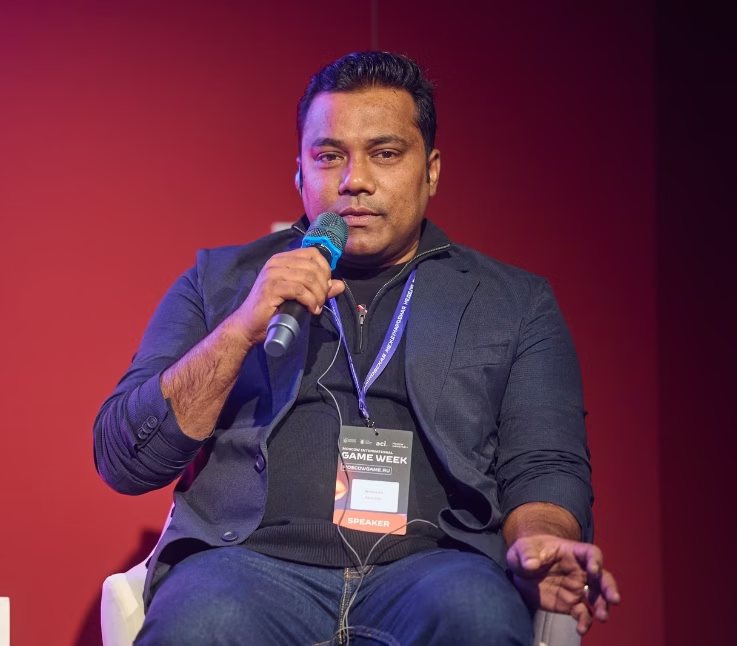
On November 1, Riseup Labs Founder and CEO Ershadul Hoque took the stage at the Second Moscow International Video Game Week 2026 as an in-person speaker. He joined the panel “AI in Game Development: Where It Really Changes the Process” at the Mos.Hub Skolkovo Stage, representing our Bangladesh-based technology company in an international industry conversation.
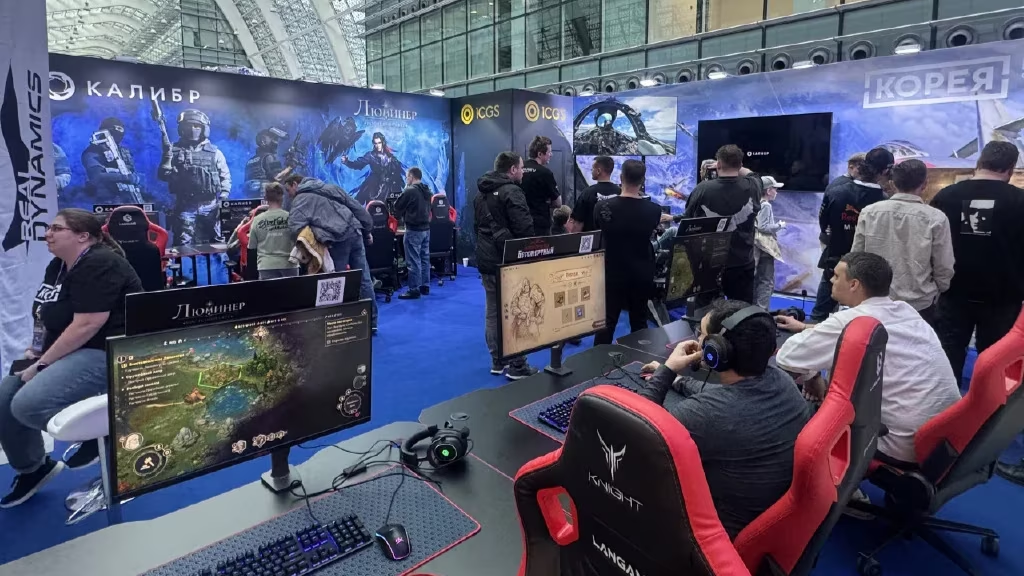
The event ran from October 29 to November 1 and brought together developers, studios, technology companies and industry professionals to discuss new tools, creative practices and the future of interactive entertainment.
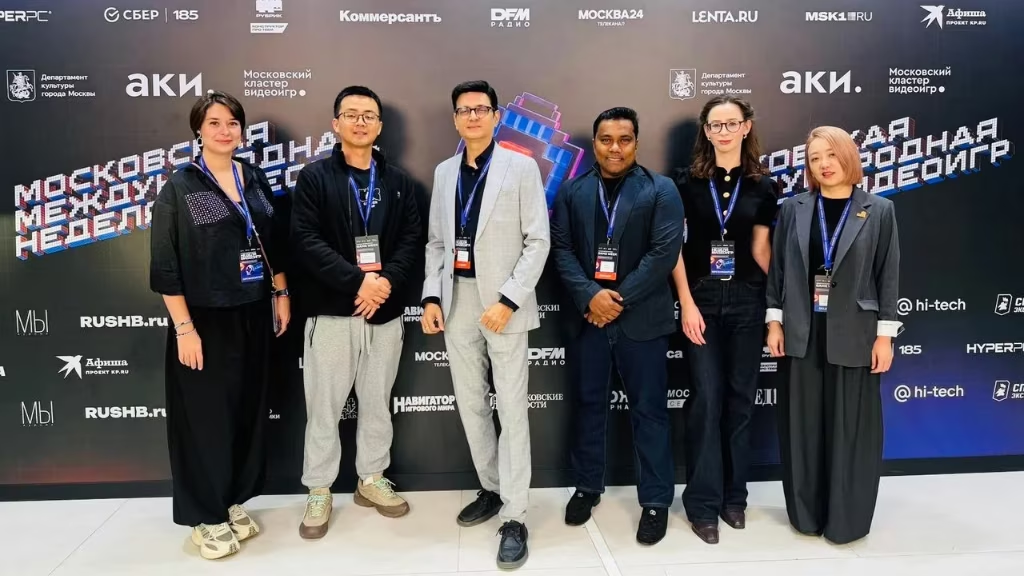
AI in Game Development: What Works in Real Production
The session looked at where AI really affects game production, from prototyping and asset development to testing, analytics and everyday workflows. The discussion kept returning to one question: what can teams rely on in real production today, and how much time and effort does it take to review and refine what AI produces?
Alexander Sharov, Lead Environment Artist at UpForge Games, moderated. Ershadul Hoque was joined by Koo Hyun Woo, CEO of Burning Soul; Igor Demin, Head of Gaming at MWS; game designer Sergey Zaigrayev; and independent game design expert Ilya Ivanov.
Riseup Labs AI Development Framework: Production-Ready, Human-Assisted or Experimental
Ershdul Hoque shared a simple way to judge any AI tool in a production pipeline:
- Production-ready: the task can be performed reliably.
- Human-assisted: AI speeds up the work, but expert review is still required.
- Experimental: the results are promising, but not dependable enough for production.
Using this lens, he pointed to research, ideation, coding assistance, rapid prototyping, quality assurance triage and analytics as areas already delivering real value. Fully AI-generated final assets and end-to-end automation, he noted, still need serious human oversight, technical validation, art direction and rights management.
The distinction matters in games. AI can help a studio test ideas or cut repetitive work, but people still have to decide whether a mechanic feels rewarding, whether a world is visually coherent, and whether the final experience meets players’ expectations. Faster output does not automatically make a better game.
Why Human Creativity Still Leads in Game Development
A core theme of the discussion was the creator’s vision, taste and the distinctive character of a game. As AI offers more ready-made solutions, a clear creative direction becomes more important, not less.
Ershadul Hoque argued that human involvement is more than a final sign-off. Designers, artists, engineers and producers bring the context behind decisions about gameplay, storytelling, visual identity, usability and quality. AI can widen the range of options, but it cannot take responsibility for the creative intent behind them. He added that useful AI adoption depends on meaningful oversight, testing, and specialists who can challenge or reject a machine-generated result.
Is AI Really Making Games Cheaper or Faster to Build?
The panel also took on a question every studio and client is asking: should AI make a game cheaper or faster to build? Ershadul Hoque’s answer was that tool prices and generation times don’t tell the whole story. Studios also have to count review cycles, integration effort, rework, production quality, and the risks tied to AI-generated assets and code.
His message to the room was clear: “A demo can impress everyone. A product has to deliver.” Studios, he said, should judge AI by the outcomes it creates, not by how impressive a demonstration looks.
For smaller studios in particular, selective adoption may be the smartest path. If a tool saves time in prototyping or QA, it earns its place. If it creates costly rework or weakens creative consistency, a conventional process may serve the project better.
Lessons from Riseup Labs’ Game Development Journey
Ershadul Hoque also drew on Riseup Labs’ own experience in game development, which goes back to the company’s early years and includes the mobile game Tap Tap Ants. That experience, he explained, shaped his belief that successful products must meet real user expectations rather than simply showcase new technology.
His participation highlighted the relevance of Bangladesh’s game development experience to global conversations about AI, creativity and production quality, and reflected Riseup Labs’ continued engagement with the international gaming and technology community.
The Takeaway
The conversations at Moscow International Game Week 2026 reinforced a principle that extends far beyond gaming: successful AI adoption depends on combining intelligent technology with human expertise.
At Riseup Labs, we bring this approach to businesses across industries through AI software development, intelligent automation, and scalable AI solutions – helping organizations turn emerging technology into measurable business outcomes.
This page was last edited on 3 November 2026, at 10:06 am

Start a conversation with our team to solve complex challenges and move forward with confidence.