
Outsourcing front-end development has become a strategic choice for businesses seeking faster project delivery, cost savings, and access to specialized talent.
With global competition intensifying, companies face challenges such as escalating hiring costs, skill shortages, and the pressure to keep up with evolving UI/UX standards.
This playbook addresses those pain points by providing a step-by-step, actionable framework for outsourcing front-end development — including how to select the right partner, control costs, ensure quality, and avoid common pitfalls.
By following this guide, you’ll be able to scale projects effectively, maximize your ROI, and achieve design and performance excellence without the headaches traditionally associated with software outsourcing.
What Is Front-End Development Outsourcing?
Front-end development outsourcing means hiring external specialists or agencies to design and build the user interface and client-side elements of web or mobile applications, rather than relying solely on in-house teams.
Outsourcing models vary, including staff augmentation (where remote developers supplement internal teams), dedicated teams (full outsourced squads working as an extension), and project-based contracts (scope-limited deliverables). Popular frameworks in this space include React, Angular, Vue, and Svelte.
Compared to forming a local in-house team or engaging traditional dev shops, outsourcing enables rapid access to skills, flexibility in scaling, and easier adoption of new UI/UX technologies, all while maintaining project control.
Key Front-End Outsourcing Models:
- Staff Augmentation: External developers temporarily join your team, following your processes.
- Dedicated Team: A managed, full-stack remote team works exclusively on your initiatives.
- Project-Based: Contracted for a fixed deliverable within a set timeline and budget.
Common Frameworks & Skills:
- React, Angular, Vue.js, Svelte
- TypeScript, HTML5, CSS3, UI/UX design, accessibility, performance optimization
Why Outsource Front-End Development? (Benefits & Value)
Outsourcing front-end development offers rapid access to global talent, reduces costs, and accelerates project timelines while leveraging the latest frameworks and design trends.
Top Benefits of Outsourcing:
- Access to Expertise: Engage developers skilled in modern frameworks, niche UI/UX, and emerging technologies.
- Cost and Time Savings: Lower hourly rates in regions like Eastern Europe or Latin America, and skips lengthy local recruitment.
- Scalability and Flexibility: Easily scale your front-end team up or down as project needs change.
- Faster Delivery: Outsourced teams can start quickly and often work in parallel with internal efforts, reducing time-to-market.
- Continuous Innovation: Outsourcing partners are more likely to bring in knowledge of micro-frontends, AI-driven design-to-code tools, and accessibility best practices, as highlighted by Deloitte’s 2022 Outsourcing Report.
Example Use Cases:
- Rapid prototyping for startups
- Upgrading legacy UIs to modern frameworks
- Adding accessibility compliance under new regulations
- Seasonal or project-based scaling without long-term commitments
What Should You Consider Before Outsourcing Front-End Work?
Thorough preparation is essential before outsourcing front-end development to avoid miscommunications, delays, or hidden costs.
Checklist: Outsourcing Readiness
- Define Requirements: Clarify project vision, technical specifications, and business goals.
- Engage Stakeholders: Identify decision-makers, gather approvals, and align on budget.
- Prepare Design Assets & Documentation: Include wireframes, style guides, and user flows to guide remote teams.
- Plan Timeline & Milestones: Set realistic deadlines for deliverables and feedback.
- Address Data Security & IP: Draft NDAs and specify IP transfer terms; consider regulatory needs (GDPR, HIPAA).
By organizing requirements and documentation upfront, you’ll enable faster onboarding, more accurate quotes, and higher project quality.
How to Outsource Front-End Development: Step-by-Step Process
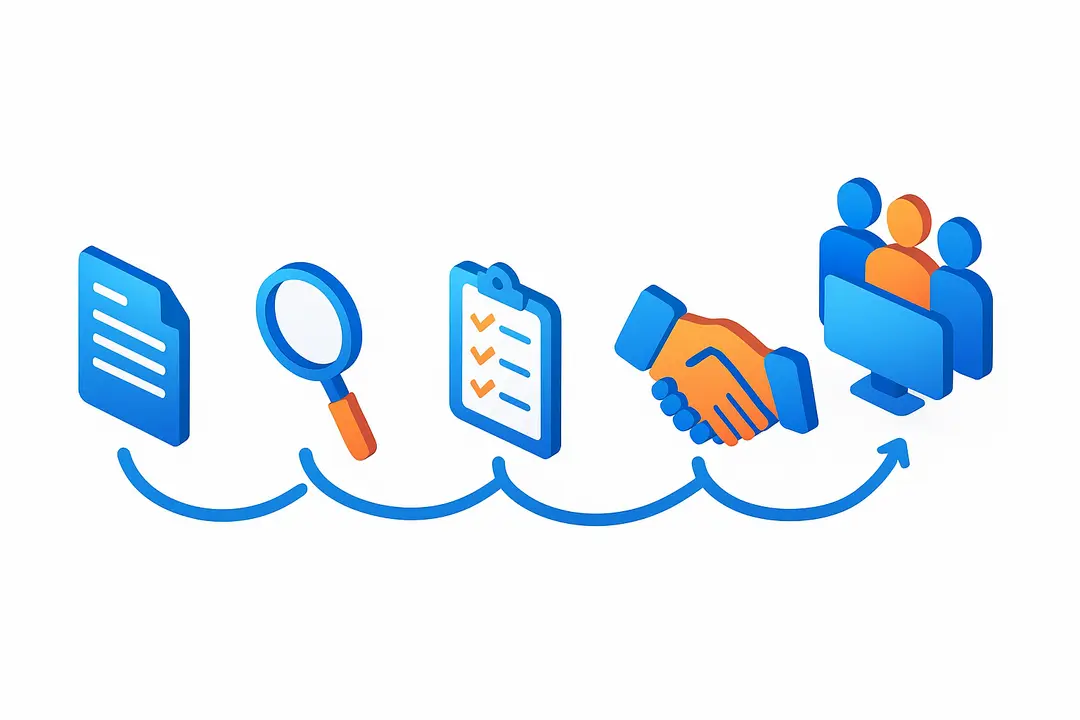
To outsource front-end development successfully, follow this five-step playbook for clarity, risk mitigation, and high-quality outcomes.
Step 1: Define Your Project Requirements Clearly
Start by mapping your project’s goals, preferred technologies, and expected deliverables.
Detail the intended user journeys, functional and non-functional needs (like accessibility, SEO, and performance), and specify target platforms (web, mobile, responsive).
Key Elements:
- Scope: What does “done” look like? List features, integrations, and third-party tools.
- Tech Stack: Which frameworks (React, Angular, etc.) and libraries do you require?
- Non-Functional Needs: Accessibility, performance, CI/CD integration, browser/device support.
- Timeline: Set delivery phases and deadlines.
“A well-documented scope is the foundation for a trouble-free outsourcing experience.” — Project Manager, Fortune 500 SaaS firm (per Deloitte 2022 IT Outsourcing Report)
Step 2: Research and Shortlist Potential Vendors
Identify agencies or freelancers with proven front-end expertise, considering both skill depth and geographic/cultural alignment.
How to Research:
- Explore rating directories (Clutch, GoodFirms), portfolio sites, and request referrals.
- Assess outsourcing regions (India, Eastern Europe, Latin America) for a balance of cost, skills, and time zone compatibility.
- Distinguish between staff augmentation, dedicated teams, and project-based models depending on your needs.
Vendor Shortlisting Checklist:
- Look for verified UI/UX experience in your tech stack
- Review ratings, interviews, and references
- Evaluate English proficiency and communication channels
- Confirm familiarity with your vertical or industry
Step 3: Evaluate Portfolios and Technical Expertise
Carefully audit candidate portfolios and technical chops to ensure they match your requirements.
What to Review:
- UI/UX Quality: Assess sample projects for user experience, accessibility, and consistency.
- Framework Proficiency: Verify experience in your chosen frameworks (React, Vue, Svelte, etc.) with real-world examples.
- Code Samples/Test Assignments: Request sample code, GitHub links, or complete a paid technical assessment.
- Process Alignment: Check their quality assurance (QA), testing, and code review protocols.
Portfolio Audit Template:
- List of delivered projects, with framework/technology tags
- Links to live demos or repositories
- Client testimonials/ratings
- QA and security practices outlined
Step 4: Set Clear Scope, Contracts & IP Protection
Clarify every aspect of collaboration via detailed contracts, safeguarding your intellectual property and project success.
Contract Must-Haves:
- Statement of Work: Deliverables, milestones, deadlines
- Payment Terms: Fixed price, milestone-based, or hourly
- Non-Disclosure Agreement (NDA): Protects confidential information
- IP Ownership Clauses: Define transfer of all code, assets, and designs
- Regulatory Compliance: GDPR, HIPAA, or industry-specific needs
| Clause | Description |
|---|---|
| Scope of Work | List of features, frameworks, non-functionals |
| IP Ownership | All code/assets become your property upon payment |
| NDA/Confidentiality | No use/disclosure of your data outside the project |
| Milestones & Payments | Schedule of deliverables with payment triggers |
| Compliance | Data protection, legal mandates per your region |
Refer to downloadable contract templates for clause examples.
Step 5: Establish Collaboration & Project Management Protocols
Effective communication and structured management are critical when working with distributed front-end teams.
Recommended Practices:
- Agile/Scrum: Weekly sprints, demo sessions, and retrospectives keep everyone aligned.
- Tools: Use Jira, Trello, or Asana for task tracking; Slack or MS Teams for messaging; Figma/Zeplin for design handoff.
- Feedback Loops: Set regular check-ins, design reviews, and code walkthroughs, accommodating for differing time zones.
- Asset Handover: Define process for final code, documentation, and credentials transfer.
| Tool | Purpose |
|---|---|
| Jira | Issue tracking, sprints |
| Trello | Kanban boards, collaboration |
| Slack | Real-time chat |
| Figma | UI/UX design handoff |
How Much Does It Cost to Outsource Front-End Development?

The cost to outsource front-end development varies based on region, vendor expertise, and project complexity, but is typically lower than maintaining an in-house team.
Cost Factors:
- Location: Rates differ by country. For example, according to Deloitte’s 2022 IT Outsourcing Report:
- India: $20–$45/hour
- Eastern Europe (Poland, Romania): $35–$75/hour
- Latin America (Brazil, Argentina): $30–$65/hour
- Western Europe/US: $75–$150+/hour
- Engagement model: Hourly billing suits dynamic, agile projects; fixed-price models suit tightly scoped work.
- Hidden Costs: Factor in project management, onboarding, communication overhead, and change requests.
| Region | Typical Hourly Rate (USD) | Notes |
|---|---|---|
| India | $20–$45 | Large talent pool, English proficiency |
| Eastern Europe | $35–$75 | Strong engineering, cultural alignment |
| Latin America | $30–$65 | Time zone overlap with US, high quality |
| US/Western Europe | $75–$150+ | Top-tier expertise, highest cost |
Savings vs. In-House:
Outsourcing reduces recruitment/HR spend, employee benefits, and infrastructure costs. Sample calculators can help estimate total project spend (see resources).
How to Ensure Quality Assurance and Limit Risks When Outsourcing

Quality assurance (QA) and risk management are vital to protect your investment and achieve the desired UI/UX outcome.
Best Practices for Quality Assurance:
- Set Coding Standards: Require adherence to style guides and code reviews for every pull request.
- Automate Testing: Implement unit, integration, and UI/visual regression tests; leverage AI test tools for coverage and accessibility.
- Design-to-Code Consistency: Use design handoff tools (Figma, Zeplin) and enforce design systems.
- Regular Reviews: Schedule sprint demos, user acceptance testing (UAT), and cross-team reviews early and often.
Risk Mitigation Steps:
- Protect IP and privacy with strong NDA clauses.
- Ensure all vendor staff sign individual NDAs if sensitive data is involved.
- Prioritize vendors with a track record of GDPR/HIPAA compliance if applicable.
Common Outsourcing Pitfalls to Avoid:
- Unclear requirements or scope creep
- Lack of QA process leading to buggy releases
- Poor communication or unresponsive teams
- Incomplete code/asset handover at project closure
Summary Table: Quality & Risk Controls
| QA Step | Risk Mitigation |
|---|---|
| Code reviews | Early bug detection |
| Automated tests | Catch regressions, ensure stability |
| Design checklists | Keep UI/UX on spec |
| NDA/Compliance | Protect IP, legal risk |
How to Choose the Right Front-End Outsourcing Partner
Choosing the best-fit outsourcing partner starts with understanding your needs and evaluating potential vendors against transparent criteria.
Agency vs. Freelancer: Pros and Cons
| Option | Pros | Cons |
|---|---|---|
| Agency | Team depth, process maturity, scalability | Higher cost, less flexibility |
| Freelancer | Cost-effective, flexible | Capacity limits, single point of failure |
What to Prioritize in a Partner:
- Strong written and verbal communication
- Deep technical expertise in required frameworks
- Proven client feedback and references
- Scalability (ability to add team members if needed)
- Willingness to start with a pilot/test project
Sample Vendor Comparison Template:
(Downloadable worksheet)
| Vendor | Tech Skills | Communication | Portfolio Match | Scalability | Price | Client Ratings |
|---|---|---|---|---|---|---|
| Vendor A | React, Vue | Excellent | High | Yes | $$ | 4.8/5 |
| Vendor B | Angular | Good | Moderate | Limited | $ | 4.3/5 |
| … |
Whenever possible, run a short pilot project before committing to a full-scope engagement.
Front-End Outsourcing Trends, Tools, and Top Destinations for 2026+
Staying ahead in front-end outsourcing means tracking technology, tools, locations, and evolving best practices.
Key Trends for 2026 and Beyond:
- Framework Shifts: React remains dominant, but Vue, Svelte, and Next.js are gaining traction, especially for high-performance and modular UIs.
- AI & Automation: AI-powered code review, design-to-code conversion, and automated UI testing tools (e.g., Percy, Chromatic) are speeding up delivery and boosting quality.
- Micro-Frontends & Serverless Deployments: Breaking large UIs into independently deployed modules enables parallel development and easier scaling.
- Accessibility & Compliance: New regulations require focus on WCAG guidelines and privacy standards (GDPR, CCPA).
Top Outsourcing Destinations:
- Eastern Europe: Poland, Romania — strong engineering education, English skills.
- India: Cost-effective, vast labor pool.
- Latin America: Brazil, Argentina — close time zone alignment with North America, quality UI talent.
| Framework/Skill | 2026 Demand Trend |
|---|---|
| React | High (General-purpose, SPA) |
| Vue.js | Rising (Mid-size projects, flexibility) |
| Svelte | Emerging (Lightweight, fast) |
| Next.js | High (Server-side rendering, SEO) |
| Accessibility | Mandatory for regulated domains |
Outsourcing hotspots may shift with global events, but the above regions consistently rank high in Deloitte and Gartner studies for software development outsourcing.
Frequently Asked Questions (FAQ) on Outsourcing Front-End Development
What is front-end development outsourcing?
Front-end development outsourcing is the practice of hiring external agencies or developers to design and build the user-facing aspects of websites or applications.
How do I outsource front-end development successfully?
To outsource front-end work successfully, define your requirements, shortlist and evaluate vendors, set clear contracts, establish collaboration protocols, and maintain regular quality checks.
How much does it cost to outsource front-end development?
Costs vary by region and expertise, typically ranging from $20/hour (India) to $75/hour (Eastern Europe) or higher in Western Europe/US. Project complexity and contract type influence the total spend.
How do I ensure code quality and design consistency?
Establish strict coding standards, require code reviews, use design handoff tools, and schedule regular user acceptance testing throughout the project.
Which countries are best for front-end outsourcing?
Top destinations include India, Poland, Romania, Brazil, and Argentina due to their strong developer talent pools and competitive rates.
What are the essential legal/contracts/IP protections for outsourcing?
Always include NDAs, clear IP ownership clauses, payment milestones, and necessary regulatory compliance language in your contracts.
What are common outsourcing pitfalls—and how can I avoid them?
Unclear requirements, weak QA processes, poor communication, and incomplete asset handover are common pitfalls. Avoid them with upfront planning and robust management protocols.
Which front-end frameworks should outsourced partners know?
Prioritize partners skilled in React, Angular, Vue, Svelte, and Next.js, as these frameworks are most in-demand for modern web and mobile projects.
Is outsourcing front-end work cheaper than in-house hiring?
Yes, outsourcing typically reduces costs by lowering recruitment, benefits, and infrastructure overhead, especially when working with vendors in lower-cost regions.
Can I scale my outsourced front-end team quickly?
A major advantage of outsourcing is the ability to scale teams up or down rapidly depending on project needs and timelines.
Conclusion
Outsourcing front-end development in 2026 is no longer a backup plan — it’s a competitive advantage. Companies that get it right gain faster delivery, leaner budgets, and access to a global bench of specialized talent that would take years to build in-house.
But the difference between a smooth engagement and a costly disaster comes down to preparation. Define your requirements before you search for vendors. Vet portfolios with the same rigor you’d apply to a full-time hire. Lock down your contracts, your IP, and your QA process before a single line of code is written.
The frameworks are evolving. The talent markets are shifting. And the teams scaling the fastest are the ones treating outsourcing as a system — not a shortcut.
Whether you’re plugging a skill gap, accelerating a product launch, or rebuilding a legacy UI from the ground up, the playbook is clear. Follow the steps, ask the hard questions, and choose a partner that treats your deadline like their own.
The right front-end outsourcing partner doesn’t just deliver code — they deliver outcomes. And in a market this competitive, outcomes are the only metric that matters.
Key Takeaways
- Outsourcing front-end development offers rapid access to specialized global talent, cost savings, and scalability.
- Success hinges on thorough scope definition, careful vendor selection, and robust contracts protecting IP and confidentiality.
- Prioritizing quality assurance, clear communication, and modern collaboration tools mitigates risk and ensures delivery excellence.
- Location and framework choices impact both cost and final product quality — consider the latest trends and your unique needs.
This page was last edited on 18 April 2026, at 3:57 pm

Start a conversation with our team to solve complex challenges and move forward with confidence.