Choosing the right development partner can define the success or failure of your entire project. This how to choose the right custom software development company guide is designed to help you make a confident, informed decision while avoiding costly mistakes.
Selecting the wrong company can lead to delays, budget overruns, and solutions that fail to meet your business needs. Beyond the technical aspect, your choice impacts your time, intellectual property, competitive advantage, and overall business performance.
This guide to how to choose the right custom software development company provides a clear, step by step approach to vendor selection. You will learn how to define your requirements, evaluate potential partners, compare capabilities, and ensure long term success through the right collaboration strategy.
Step 1: How Do You Define Your Project Needs, Goals, and Budget?
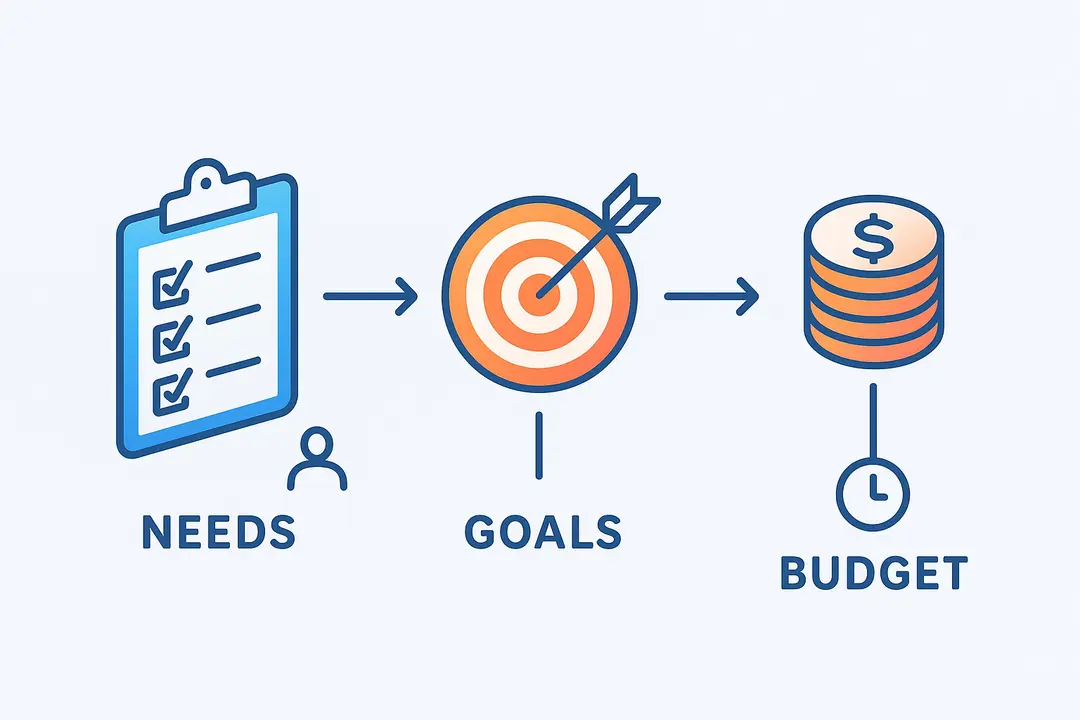
Before approaching any vendor, it’s crucial to clarify exactly what you want your software project to achieve, who needs it, and how much you can invest. Laying this foundation helps filter out unfit vendors early.
- Document Key Goals and Requirements: List the core business problems your software must solve, desired outcomes, must-have features, and success metrics. Involve all stakeholders to avoid late-stage surprises.
- Project Scope Checklist (Sample Download Template):
- Business objectives (What are you trying to achieve?)
- Core features & functionalities (What must it include?)
- User roles and personas (Who will use it?)
- Integration needs (What systems must connect?)
- Compliance/regulatory factors
- Timeline targets
- Budget range (with priorities: must-haves vs. nice-to-haves)
- Set a Realistic Budget: Research similar projects’ cost ranges and set boundaries. Be transparent about your budget when requesting proposals to avoid misalignment.
Clearly defined requirements help potential software vendors understand your needs—and enable you to compare their responses on equal footing.
Step 2: How Should You Research and Shortlist Software Vendors?

To find your ideal partner, start broad and narrow down systematically using reputable sources.
Where to Find Reputable Vendors:
- Review directories like Clutch and GoodFirms for verified lists and reviews.
- Ask for professional referrals from peers, IT consultants, or advisors.
- Search industry-specific associations or LinkedIn for proven specialists.
Red Flags in Early Research:
- Overly generic proposals—not tailored to your request.
- Negative or inconsistent online reviews.
- Lack of detailed project portfolios.
- Unclear company background or missing legal entity details.
| Vendor Name | Years in Business | Relevant Projects | Tech Stack | Review Score | Location | Industry Focus |
|---|---|---|---|---|---|---|
| Vendor A | 10 | 5 | .NET, React | 4.8 | Onshore | FinTech |
| Vendor B | 7 | 3 | Java, Vue | 4.5 | Offshore | Healthcare |
| Vendor C | 12 | 8 | PHP, Angular | 4.7 | Hybrid | Logistics |
Evaluating Vendor Portfolios & Industry Experience
Reviewing vendor portfolios and case studies is a direct line to assessing their fit for your industry and technology needs.
- What to Look For:
- Projects similar in scale, domain, and technical requirements to yours.
- Demonstrated expertise in your business sector (e.g., healthcare, finance, retail).
- Transparent case studies outlining challenges, solutions, and business results.
- Named client references or testimonials.
Request:
- Case studies with clear business context.
- Client references you can contact directly.
- Tech stack details for previous builds.
A strong portfolio with relevant, recent projects is a good predictor of successful delivery.
Step 3: How Do You Assess Technical Expertise and Delivery Capabilities?
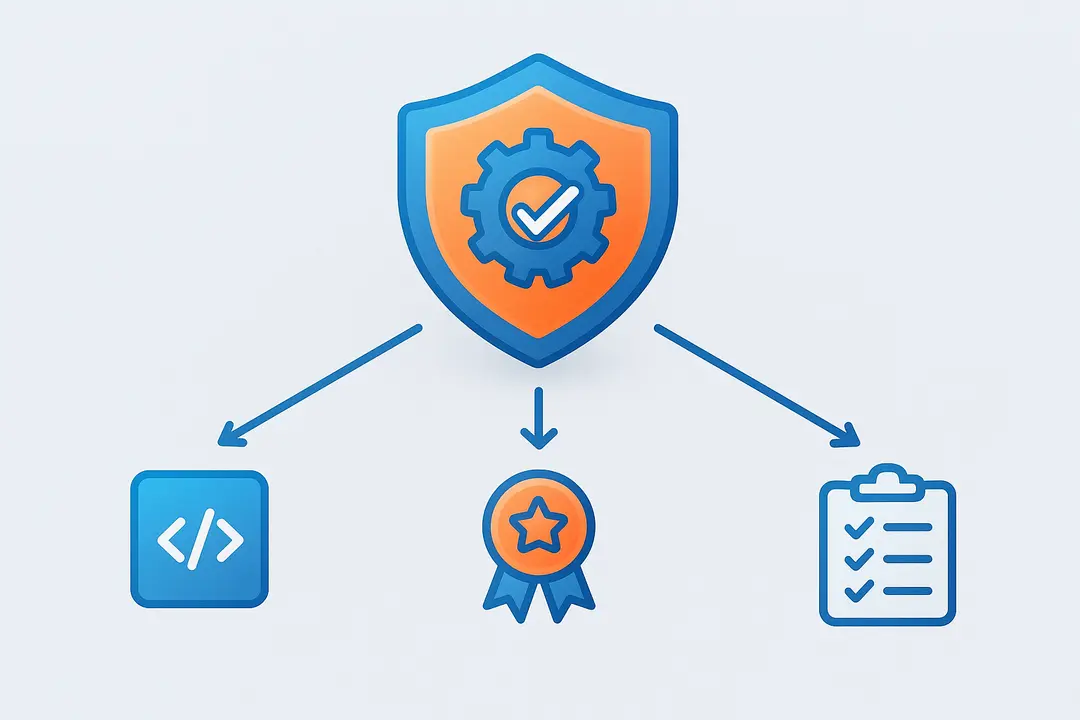
Even for non-technical buyers, there are concrete ways to verify a company’s technical skills and service quality.
- Discuss Technologies and Frameworks: Ask which programming languages, libraries, and frameworks the team specializes in—and why those are suited to your goals.
- Quality Assurance Practices: Inquire about their approach to software testing, code reviews, and continuous integration/DevOps. Reliable providers will describe their QA process clearly.
- Check Credentials:
- Certifications (individual and corporate, e.g., AWS Certified, Microsoft Partner)
- Key staff resumes and LinkedIn profiles
- Internal training and developer turnover rates
Key Questions to Assess Expertise:
- Which technologies do you recommend for our project and why?
- How do you handle code quality and peer review?
- What is your process for deploying and maintaining software?
- Can you share details about your senior technical leads?
- Do you have experience integrating with [specific system]?
Genuine expertise is demonstrated through transparent answers and detailed knowledge, not just buzzwords.
Step 4: Why Is the Team and Communication Approach Critical?
A successful project depends as much on collaboration and communication as on technical skills. Misaligned teams and unclear processes lead to costly misunderstandings.
- Meet the Delivery Team: Insist on learning about your project manager, tech lead, and primary developers—not just sales contacts. Assess team stability and ask about staff turnover risks.
| Role | Responsibilities |
|---|---|
| Project Manager | Planning, reporting, risk management |
| Tech Lead | Architecture, technical oversight |
| Developers | Coding, implementation |
| QA Engineers | Testing, bug tracking |
| UI/UX Designers | User experience, interface design |
- Communication Models: Ask how they handle updates (email, chat, video calls), meeting cadence, progress reports, and access to tracking tools like Jira or Trello.
- Cultural and Time Zone Fit:
- Offshore: Lower costs, but consider overlap in work hours and cultural norms.
- Onshore: Easier communication, higher cost.
- Hybrid: Mix of both for optimal balance.
Set clear communication routines—weekly check-ins, shared dashboards, escalation paths—to ensure ongoing transparency.
Step 5: What References and Past Success Indicators Should You Check?
Checking references and proven results is a non-negotiable step to surface trustworthy partners and avoid costly mistakes.
- How to Request References: Ask for recent clients with projects similar in nature and scale to yours.
- What to Ask During Reference Checks:
- Was the project delivered on time and within budget?
- How effectively did the team communicate and resolve issues?
- Were there any unexpected challenges or overruns?
- Would you choose this vendor again?
- How to Judge Testimonials:
- Prefer direct conversations; be cautious with generic, unverified praise on websites.
- Some vendors offer case studies as PDFs or on Clutch/GoodFirms that can be cross-referenced.
Reliable references build confidence—and expose gaps that marketing materials can’t hide.
Step 6: Which Project Management and Collaboration Models Should You Expect?
Understanding your vendor’s project management style is key to predicting how your project will run—and what it will cost.
| Model | Description | Pros | Cons |
|---|---|---|---|
| Agile | Iterative, fast feedback, changes embraced | Flexibility, transparency | Scope creep risk |
| Waterfall | Linear, upfront planning, stage-by-stage | Predictable, documentation | Less flexible, late fixes |
Sample SOW Essentials:
- Clear scope of work and deliverables
- Timelines and milestones
- Acceptance criteria
- Communication and reporting expectations
- Change management process
Ask Vendors:
- How do you handle change requests?
- What tools and dashboards will I have access to?
- How often will I receive progress updates?
Choose a vendor whose project management culture matches your internal processes and need for visibility.
Step 7: How Should You Approach Budgets, Pricing Models, and Cost Transparency?
Understanding how software development pricing works can save you from painful surprises and budget blowouts.
| Model | How It Works | Best For | Risks/Detail |
|---|---|---|---|
| Fixed Price | Set fee for defined scope | Clear, stable projects | Less flexibility, higher change fees |
| Time & Materials (T&M) | Pay for hours used | Evolving, complex projects | Cost overruns if scope creeps |
How to Avoid Hidden Costs:
- Insist on clear statements of work (SOW) with detailed deliverables and exclusions.
- Ask about support/maintenance costs and post-launch fees.
- Address “change order” processes up front—how will scope changes be handled and priced?
Practical Tip:
Always reserve 10–20% of your software budget for unforeseen adjustments. Review all documentation for clarity around what is and isn’t included.
Step 8: What Contractual, IP, and Legal Issues Must You Address?
Don’t overlook the importance of a solid contract and clear legal protections with your software vendor. A good agreement shields your ownership, privacy, and investment.
- Contract Essentials:
- Define who owns the source code and all deliverables (IP assignment clause).
- Non-disclosure agreements (NDAs) to protect sensitive information.
- Clear deliverables, acceptance criteria, payment milestones.
- Termination, dispute resolution, and exit clauses.
- Legal Checklist Highlights:
- Is IP transferred fully upon payment?
- Is third-party code or open-source use documented/approved?
- Are data privacy and compliance requirements addressed (especially for regulated industries)?
- Are service level agreements (SLAs) specified?
Legal Insight:
“Insist on language that explicitly transfers intellectual property to your company upon completion and payment,” advises many IT contract experts.
If possible, consult your legal counsel or an IT law specialist before signing.
Step 9: Should You Run a Pilot or Trial Project Before Committing?
Starting with a small, time-boxed pilot project gives you a risk-mitigated way to test a vendor before full commitment.
- How a Trial Project Works:
- Clearly define a problem (e.g., build a limited module or proof of concept).
- Agree on timeline, deliverables, communication cadence, and evaluation metrics.
- Evaluate the vendor’s responsiveness, technical work quality, adherence to deadlines, and collaboration fit.
| Criteria | Score (1–5) | Notes |
|---|---|---|
| Code quality | ||
| Communication | ||
| Timeliness | ||
| Team fit | ||
| Issue resolution |
Go/No-Go:
After the pilot, honestly assess whether this vendor meets your expectations. This step alone prevents many large-scale failures.
Common Mistakes and Red Flags to Avoid in Vendor Selection
Learning from others’ mistakes can protect your project from avoidable pitfalls.
- Red Flags Checklist:
- Bait-and-switch: Senior resources shown in sales pitch replaced with juniors post-signing.
- Overpromising: Lofty claims, but vague on specifics.
- Poor responsiveness: Delays in answering questions or reluctance to provide details.
- Vague contracts: Missing deliverable definitions or unclear IP terms.
- Opaque pricing: Unexplained charges and unclear hourly rates.
- Lack of transparency: Refuses access to project tools or regular updates.
- Quick Tips:
- Always read and clarify contract fine print.
- If the vendor is resistant to due diligence, walk away.
- Rely on references and concrete case studies, not only a polished website.
What Are the Best Practices for Onboarding and Managing Your Chosen Vendor?
Solid onboarding and vendor management set the tone for a smooth, productive partnership.
- Onboarding Checklist:
- Schedule a formal kickoff call with all key staff from both sides.
- Align on success metrics, delivery timelines, and key contacts.
- Establish shared working protocols (project tools, escalation ladder, meeting frequency).
- Confirm access to required systems, documentation, and credentials.
- Set up KPIs to track project health.
- Proactive Vendor Management:
- Monitor progress with regular reports.
- Communicate issues early; agree on escalation paths for conflicts.
- Debrief after major milestones to capture lessons learned.
- Post-launch, measure outcomes with agreed KPIs and schedule ongoing check-ins.
Software Vendor Evaluation Checklist
Make your selection process more objective, organized, and defensible with a comprehensive evaluation checklist.
- Checklist Includes:
- Requirements gathering and documentation
- Shortlisting and comparison table
- Vendor communication & team fit assessment
- Reference check questions
- Technical due diligence items
- Legal and contract review points
Implementing this checklist helps ensure you don’t miss a critical step when choosing your custom software development partner.
Summary Table: 8 Steps to Choosing the Right Custom Software Development Partner
| Step | What to Do | Why It Matters | What to Watch For |
|---|---|---|---|
| 1 | Define needs, goals, and budget | Sets clear foundation and filters | Conflicting priorities |
| 2 | Research and shortlist vendors | Identifies best-fit providers | Opaque backgrounds |
| 3 | Assess technical expertise | Ensures delivery capability | Surface skills without substance |
| 4 | Evaluate team and communication | Prevents miscommunication | High staff turnover |
| 5 | Check references and past successes | Verifies trust and reliability | Generic or uncontactable clients |
| 6 | Clarify project management and collaboration | Establishes process transparency | Incompatible methods |
| 7 | Analyze budgets, pricing models, transparency | Avoids budget shocks/hard negotiations | Hidden charges |
| 8 | Review contract, IP, legal issues | Protects ownership and business rights | Vague IP or exit clauses |
| 9 | Pilot or trial project before full commitment | Risk-mitigated real-world test | Skipped pilot or rushed decision |
Conclusion: Find Your Best-Fit Software Partner With Confidence
Choosing the right custom software development company is a critical decision that directly impacts your project’s success and long term business value. With a clear understanding of your requirements and a structured approach to evaluating vendors, you can reduce risks and make confident, informed choices.
By focusing on expertise, communication, and alignment with your goals, you can build a strong partnership that supports both immediate needs and future growth. A thoughtful selection process ensures your investment delivers reliable, scalable, and high quality software solutions.
Key Takeaways
- A structured, stepwise process dramatically reduces risk when selecting a software development company.
- Always clarify your project needs, goals, and budgets before engaging vendors.
- Vet expertise, industry experience, and communication models—not just technical claims.
- Insist on clear contracts addressing IP, deliverables, and pricing.
- Use pilots, reference checks, and onboarding checklists to validate your choice before you fully commit.
FAQ: Direct Answers to Common Vendor Selection Questions
What criteria should I follow in how to choose the right custom software development company?
In how to choose the right custom software development company, key criteria include technical expertise, industry experience, client references, transparent pricing, and strong communication as part of effective software development partner evaluation.
Should I choose local or offshore in how to choose the right custom software development company?
When learning how to choose the right custom software development company, local teams offer easier collaboration, while offshore teams reduce costs. A hybrid approach is often recommended in custom software development company selection.
What questions help in custom software development company selection?
For effective custom software development company selection, ask about past projects, team structure, workflows, IP policies, and maintenance support when applying how to choose the right custom software development company.
How do I verify expertise in how to choose the right custom software development company?
In how to choose the right custom software development company, verify expertise through case studies, client references, and pilot projects as part of a thorough software development partner evaluation.
How can I protect IP in custom software development company selection?
During custom software development company selection, ensure contracts include IP ownership, NDAs, and source code access to support secure software development partner evaluation.
What are red flags in how to choose the right custom software development company?
When applying how to choose the right custom software development company, watch for vague proposals, lack of references, unclear pricing, and poor communication during custom software development company selection.
How should costs be managed in how to choose the right custom software development company?
In how to choose the right custom software development company, define scope clearly, select appropriate pricing models, and use milestone tracking for better software development partner evaluation.
What is the difference between pricing models in custom software development company selection?
In custom software development company selection, fixed price suits defined projects, while time and materials offer flexibility, both important considerations in how to choose the right custom software development company.
How do I ensure communication in how to choose the right custom software development company?
Clear communication in how to choose the right custom software development company involves regular meetings, shared tools, and defined reporting as part of software development partner evaluation.
What should I do after custom software development company selection?
After custom software development company selection, complete onboarding, define KPIs, align expectations, and monitor progress following best practices in how to choose the right custom software development company.
How can startups approach how to choose the right custom software development company?
Startups applying how to choose the right custom software development company should focus on cost efficiency, scalability, and flexibility during software development partner evaluation.
Why is software development partner evaluation critical for long term success?
A strong software development partner evaluation ensures alignment with business goals, reduces risks, and supports sustainable growth when following how to choose the right custom software development company.
This page was last edited on 9 July 2026, at 11:06 am

Start a conversation with our team to solve complex challenges and move forward with confidence.