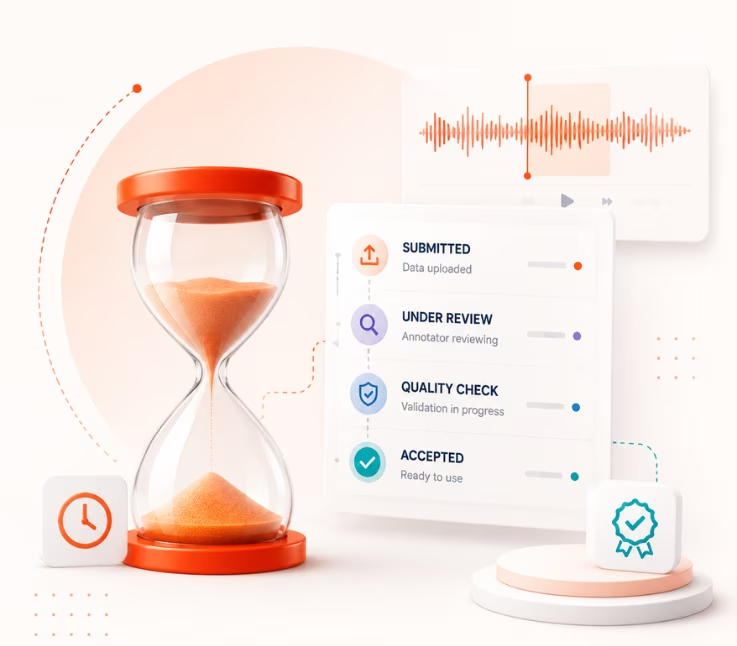
Most candidates get an answer from DataAnnotation.tech within 1 to 4 weeks after completing all assessments. Some applicants receive feedback within days, while others may wait longer or get no reply at all.
Getting accepted for a remote data annotation job is a top concern for job seekers in 2026. I have seen many candidates worry about long wait times and silent rejections, which create stress and uncertainty.
The real issue is not knowing when — or if — you will hear back from DataAnnotation.tech or similar platforms. Job search anxiety grows with every day of silence, especially for those who depend on fast freelance income.
This guide gives you the facts: how the process works, what timeline to expect, and proven ways to improve your chances. You will get expert insights, real candidate stories, and all the checkpoints you need to move ahead with confidence.
Why Does Data Annotation Acceptance Time Matter?
Understanding the data annotation acceptance time is important for planning your freelance or remote work schedule. Delays or unpredictable response times can affect your earning power and job choices.
From what I have seen, most applicants need to balance multiple gigs or rely on fast onboarding to meet their financial needs. If the hiring process drags on, you risk missing other job openings or losing income during long waiting periods.
This is where many teams and freelancers struggle. A faster, clearer acceptance timeline lets you plan better, reduce stress, and avoid wasted effort on jobs unlikely to respond.
How Does the Data Annotation Application Process Work? (Step-by-Step Framework)
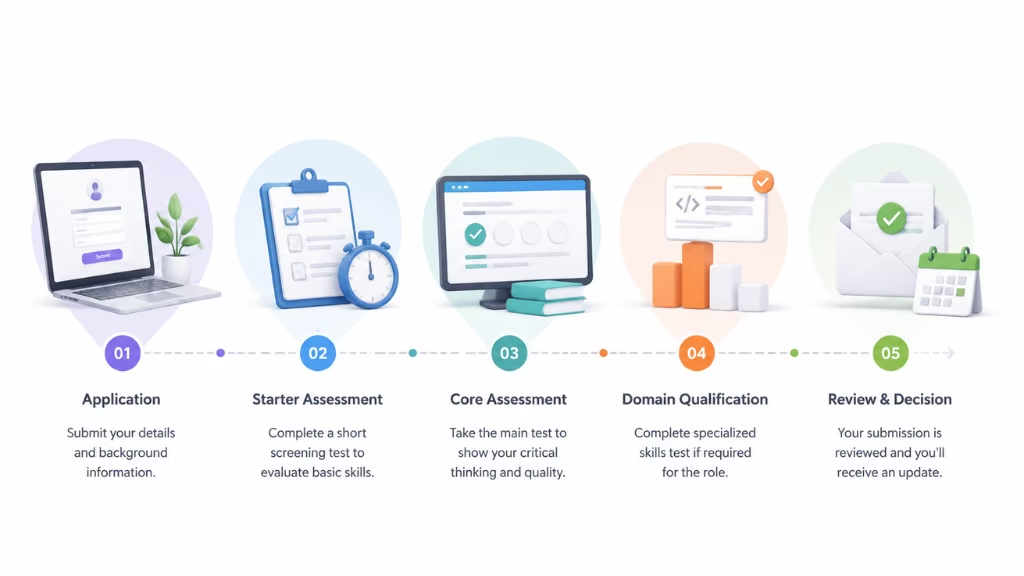
The data annotation application process has clear steps you must complete before getting accepted or rejected. Here is the process you can expect with DataAnnotation.tech or a similar platform:
The workflow includes your initial application, an entry-level assessment, a core test, sometimes a domain-specific check, and finally the review or offer. Each stage has its own timeline and challenges.
Step 1: Application Submission & Initial Review
The process starts with you submitting your application online. You need to share your basic details, any experience, your skills, and your language or coding background.
Usually, the platform screens your application quickly—sometimes within minutes, sometimes up to two days. Obvious red flags like incomplete forms, VPN usage, or mismatched locations lead to instant rejection.
In my experience, careful double-checking of details and following all instructions helps you avoid these early dismissals.
Step 2: Data Annotation Starter Assessment (Screening Test)
Once the application passes, you are invited to a starter assessment. This quick test checks your ability to follow guidelines and use basic logic.
Expect to spend 30–60 minutes. Questions often involve simple labeling, short writing, or identifying patterns. Most users finish this in under an hour.
The mistake I see often is rushing through or missing instructions. Take your time and double-check your answers before submitting.
Step 3: Core Assessment (Main Test)
The core assessment is a more detailed and challenging step. Here, you must show your skills in writing, critical thinking, and understanding AI contexts.
You can expect this test to take 60–90 minutes. Tasks may include evaluating text quality, classifying data, or giving short written responses.
A better approach is to review sample tasks, stay focused on quality, and avoid distractions. Many applicants fail here due to small errors or lack of attention.
Step 4: Domain Qualification/Test (if applicable)
If you apply for specialized roles (like coding, translation, or technical annotation), you may need an extra domain test.
This adds one to three days to the timeline. The test checks your skills in areas like Python, advanced writing, or language fluency. Not everyone needs to complete this.
From what I have seen, applicants with strong domain skills get through faster, but errors or missing proof can cause delays.
Step 5: Review & Waiting Period
After all assessments, the company reviews your results. Some reviews are automated, but many are manual due to quality controls.
You may get feedback within days, but more often, it takes between 7 and 21 days. During busy periods or after mistakes, it can take as long as four weeks.
Communication usually arrives by email or platform dashboard. The mistake I see most often is candidates missing emails by not checking spam folders or their account dashboards.
What Is the Typical Data Annotation Acceptance Timeline in 2026?
Knowing the real acceptance timeline helps set your expectations and prevent unnecessary worry. In 2026, the average time to get accepted for data annotation jobs at DataAnnotation.tech and similar sites is 1 to 4 weeks.
Most candidates complete assessments in one or two days. Reviews and offers usually come within two weeks but can be instant or take as long as a month, based on user forum reports and surveys. Silent rejection remains common if you do not pass.
Below is a table comparing platform timelines based on recent user data:
| Platform | Typical Total Timeline | Fastest | Slowest | Notes |
| DataAnnotation.tech | 7–21 days | 2–3 days | 30+ days/silent | Outliers if many applicants |
| Toloka | 2–5 days | Same day | 2 weeks | Fewer assessment gates |
| Remotasks | 1–3 days | Instant | 7 days | Shorter process, less qualification |
| Appen | 1–4 weeks | 3 days | 5 weeks | Large pool, slow manual reviews |
Source: Reddit, LinkedIn reports (2026), official FAQs, and aggregated user experience.
Factors affecting your wait time include assessment accuracy, matching skills, platform workload, and sometimes just luck.
What If You Don’t Hear Back? Handling Rejection, Ghosting, and Reapplying
Not hearing back after applying is frustrating but very common in the data annotation field. Many platforms do not send rejection emails, so silence usually means no.
In my POV, waiting two to three weeks without an update is a sign to move on or try again. Here is what to do if you do not get a response:
- Double-check your email (including spam/junk), and your platform dashboard for status updates.
- If 21 days pass with no news, you may reapply or try another role.
- Improve your next application by fixing skill gaps, reading all instructions, and avoiding rushed answers.
- Most platforms let you reapply after 30 days but check specific guidelines before resubmitting.
Common rejection reasons include failed assessments, use of VPNs, incomplete profiles, or answers that show poor attention to detail.
How to Improve Your Acceptance Odds: Essential Skills and Strategies
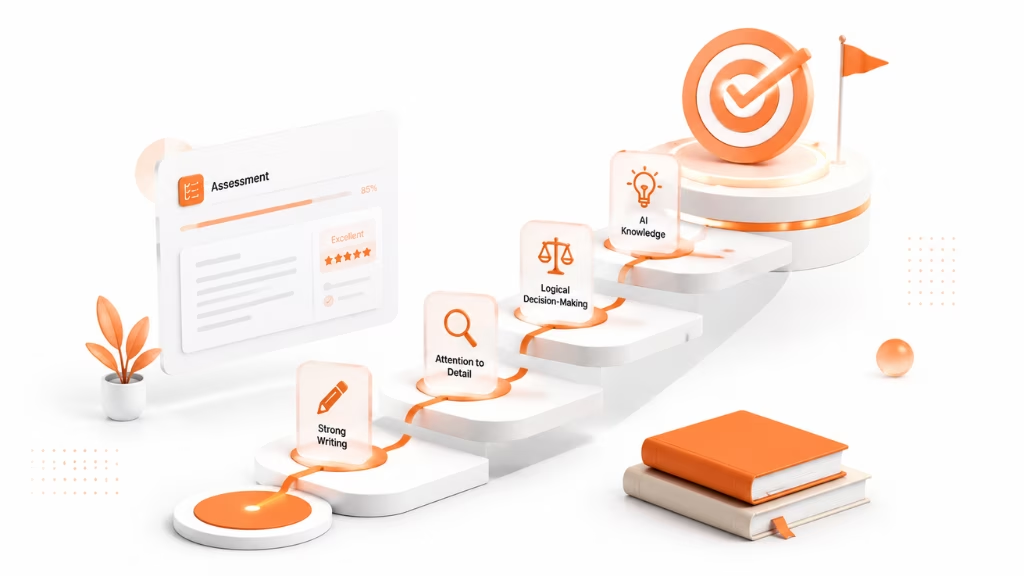
You can boost your chances of quick acceptance by focusing on key skill areas and following proven best practices. Many teams get faster approval by investing extra time in preparation.
The top skills platforms want include strong writing, attention to detail, logical decision-making, and basic AI knowledge. Even if you are new, practicing common tasks and reviewing sample assessments helps.
Here is my assessment readiness checklist from years of working with annotation platforms:
- Follow all instructions, step by step.
- Write clearly, avoiding major spelling and grammar errors.
- Take your time with each assessment question.
- Avoid using VPNs or location-masking tools.
- Fill in your profile completely with accurate skills.
- Review sample tasks and common error lists.
A better approach is to ask experienced annotators for tips, join online forums, and never rush through assessments just to get it over with.
Payment Timeline After Acceptance: When to Expect Your First Paycheck
It is normal to wonder when you will get paid after being accepted for a data annotation role. Payment speed can vary by platform and payment method.
Most platforms, including DataAnnotation.tech, pay applicants within 7 to 14 days after you start your first project. Some pay the following week, especially if you use PayPal. Delays can happen if there are project onboarding lags or issues verifying your account.
Here is a sample payment processing table:
| Event | Typical Time | Method | Common Delays |
| Project Assignment | 1–3 days after accept | Dashboard | Project slot availability |
| First Payment Process | 7–14 days after start | PayPal/Direct | Onboarding or task delays |
| Other Payment Options | Up to 21 days | Bank transfer | Country-based restrictions |
From what I have seen in 2026, most users get paid in under two weeks if all onboarding steps are complete and tasks are assigned quickly.
Key Considerations and Common Mistakes in the Application Process
Small mistakes can cost you your chance at data annotation jobs or slow your acceptance time. I have seen applicants miss out over avoidable errors. Watch for these key problems:
- Using VPNs or proxy tools. Many platforms ban this and flag your application.
- Submitting incomplete or rushed assessments. Double-check every section before submitting.
- Ignoring instructions. Read every question, and do not skip guidelines.
- Applying for skills you do not have. Answer only in areas you are confident.
- Failing to check communication channels for updates or offers.
Avoiding these mistakes improves your success rate and often speeds up your response time.
About Riseup Labs & More Remote AI/ML Jobs
If you are searching for more remote data annotation or AI jobs, Riseup Labs is another trusted option. I have worked with teams that used Riseup Labs for global data projects and found the platform offers opportunities similar to major AI crowdsourcing sites.
Riseup Labs follows a step-by-step process with clear assessment stages, skill-based tests, and a predictable timeline for both acceptance and payment—important for those who need reliability in remote work.
Explore Riseup Labs to find roles that fit your background, whether as a beginner or as a specialist seeking advanced annotation or AI tasks.
Conclusion
The path to data annotation acceptance is clear with the right process and mindset. Expect a timeline of 1 to 4 weeks from application to offer, though some cases move faster or take longer.
Success comes from careful preparation, following all guidelines, and learning from each attempt. Use the readiness checklist and stay informed about platform rules and updates.
Riseup Labs and similar platforms provide reliable opportunities if you are prepared and patient. Bookmark this guide to reference as you apply and keep checking for timeline updates.
AI-powered remote work will keep evolving, and being equipped with real process knowledge puts you ahead in this changing field.
FAQs
How long does it take to get accepted for data annotation jobs?
Typical acceptance takes 1 to 4 weeks, depending on assessment speed and platform workload. Some hear back in days, but others wait longer or receive no reply.
What should I do if I don’t hear back after applying for data annotation?
If you do not hear back after three weeks, confirm your status on the platform and consider reapplying after 30 days or trying another job.
Can I reapply if my data annotation application is rejected?
Yes, most platforms let you reapply 30 days after rejection. Improve your skills and fix errors before submitting a new application.
What are the steps in the DataAnnotation.tech application process?
The steps are application submission, starter assessment, core assessment, domain qualification (if needed), then final review and response.
Are there ways to improve my chances of acceptance for data annotation work?
Yes. Follow instructions closely, practice assessment questions, avoid VPN use, and fill out your profile completely to boost your odds.
Does DataAnnotation.tech send rejection emails?
Usually not. Most rejections are silent. If accepted, you will receive an email or dashboard update.
How long does it take to get paid after you’re accepted?
Most users receive payment 7 to 14 days after starting their first project, if onboarding and tasks are completed.
This page was last edited on 12 August 2026, at 2:56 pm

Start a conversation with our team to solve complex challenges and move forward with confidence.