![What is a Data Annotation Company? [2026 Guide]](https://riseuplabs.com/wp-content/uploads/2026/08/what-is-data-annotation-company-inner-thumb-nail.avif)
A data annotation company pays people to label, classify, or tag data—like text, images, or code—for AI and machine learning training. Workers often do remote, task-based jobs. Pay varies by task, skill, and platform.
Business leaders rely on artificial intelligence to improve everything from customer support to product design, but most forget a simple question: who teaches AI to understand the real world? In my experience, this is where the hidden work of data annotation comes in.
Many companies now turn to remote data annotation firms to turn raw information into structured, labeled datasets that make AI smarter. The growth in this field means more job options, but not all companies offer the same experience, pay, or safety.
This article will explain what a data annotation company is, how these platforms operate in 2026, the realities of pay and workflow, and what risks or rewards you should expect. You will get everything you need to decide where—and if—to get started.
What is a Data Annotation Company and Why Are They Important in 2026?
A data annotation company is a business that employs people to label, classify, or tag various types of information—such as images, text, code, audio, and video—so that artificial intelligence and machine learning systems can learn from accurate, human-verified data.
In practical terms, these companies supply the fuel for modern AI models. Every time you see an AI that can recognize faces, transcribe speech, or understand documents, it learned from thousands of labeled examples. In my POV, the real value is in connecting real-world context to digital information, and most leading AI systems depend on high-quality human-in-the-loop annotation.
Most annotation companies serve tech firms, health-care leaders, labs, and AI startups. In 2026, the demand has shifted beyond simple image labeling. Now, specialized teams classify clinical notes, label scientific data, or review code for AI research. As AI models get smarter, the complexity and importance of human labeling only increase.
How Do Data Annotation Companies Work? A Step-by-Step Process
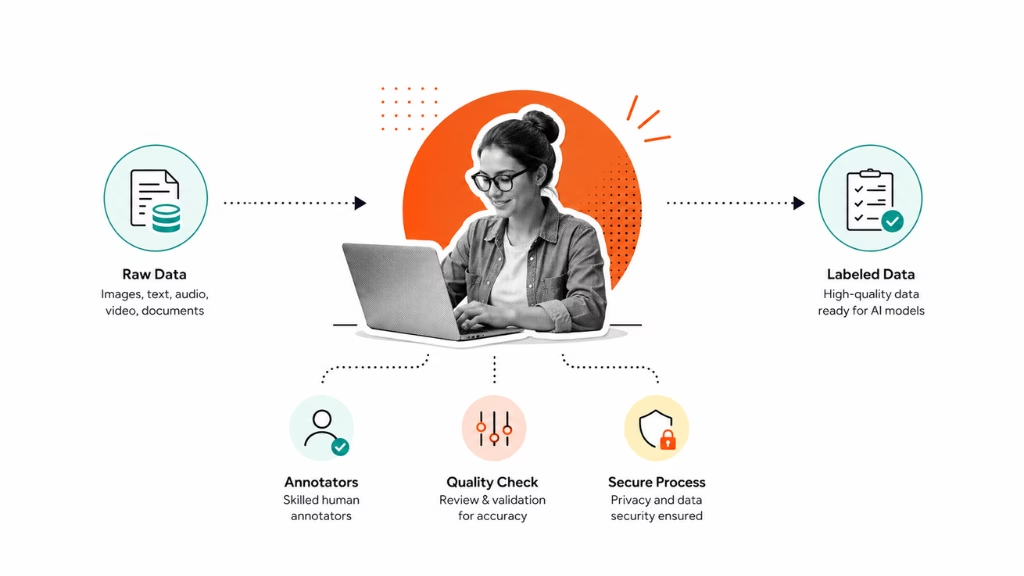
Data annotation companies run a structured process designed for efficiency, accuracy, and security. As a contractor, each stage impacts your workflow and pay.
Companies onboard new workers, assess skills, assign tasks, check results for quality, and pay based on either task, time, or project. The process is usually remote, flexible, and supported by project managers or algorithms.
Onboarding and Assessment Process Explained
Before annotators can access paid work, most companies have a two-step onboarding. This process helps platforms filter for skill and trustworthiness.
First, you register an account, provide identification (sometimes with video or photo verification), and consent to basic background checks, especially if you’ll handle sensitive data.
Second, most platforms test your skills—this could mean quizzes, labeling practice sets, or micro assignments. In my experience, the onboarding time averages from a few days up to two weeks depending on volume and complexity. The mistake I often see is underestimating these assessments; they can be intense, especially for advanced fields like medicine or coding.
Annotation Task Types: What Will You Do?
- Image Labeling: Drawing boxes around objects, categorizing images (used in self-driving cars, retail, agriculture).
- Text Tagging: Highlighting keywords, entities, or topics in documents; sentiment classification for chatbots or content filters.
- Audio Transcription: Transcribing or tagging sounds for speech recognition or language training.
- Code Review: Annotating code snippets for AI programming models or testing.
- Specialized Roles: Medical, legal, or scientific annotators label documents with expert context. These often require degrees or professional history.
A better approach for job seekers is to match your background to high-demand or specialized roles to increase earning potential.
Payment Structures and Pay Rates
Pay structures in data annotation are not one-size-fits-all. The most common types are:
- Task-Based Pay: Flat rates per item (for example, $0.02–$0.20 per labeled item).
- Hourly Pay: Some platforms or roles (especially specialized) offer hourly rates, often $8–$30 per hour.
- Project Rates: Payment for a defined set of work, common in expert or consulting projects.
According to published 2026 data from platforms like DataAnnotation.tech and Scale AI, entry-level annotators report earning $5–$15 per hour equivalent, while experienced or specialized annotators can make up to $35 per hour on some projects.
Your pay depends on:
- Task complexity (medical, code, language).
- Speed and accuracy in reviews.
- Volume of available work.
- Platform or region (some platforms pay more to attract certain languages or skills).
Workflow and Daily Experience
A typical workday for remote annotators involves checking available tasks, claiming jobs in a platform dashboard, and submitting work for review.
Most companies use automated systems to assign batches of work based on your skill and performance. In my experience, reliable annotation teams always prioritize clarity—clear instructions, visible quality feedback, and direct support channels.
You will see quality assurance in action: reviewers or AI double-check your labels, and you often receive feedback to correct or improve. Workers can access help via messaging tools, FAQ dashboards, or scheduled office hours.
Remote Work, Flexibility, and Contracts
Data annotation jobs are generally remote and offer real flexibility—work from almost anywhere, set your own hours, select projects to match your skills.
Most annotators are independent contractors, not employees. This affects taxes, benefits, and job security. Last year my team learned the hard way that contract terms matter—if you skip reading them, you may misunderstand minimum payout thresholds or notice periods.
Are Data Annotation Companies Legitimate? Risks and Red Flags to Watch
With the industry’s growth, not every data annotation company meets ethical or business standards. Legitimacy is the top concern for new annotators in 2026, as scams and low-reward platforms still exist.
I have seen this happen when companies mimic top brands but demand upfront fees, or disappear without paying. Reliable platforms act transparently—they show pay rates, tasks, and support systems before onboarding.
Common Risks and Red Flags in Data Annotation
Understanding key warning signs can keep workers safe. Here’s what to watch for:
- No clear pay rates or opaque contracts.
- Absence of worker reviews or company information.
- Requests for upfront “training” or “registration” fees.
- Unresponsive support or lack of contact details.
- Inconsistent or missing payout proof.
The real issue is that scammers target eager remote workers who skip research steps. Peer-verified reviews on Reddit, LinkedIn, or Trustpilot help spot safe choices. Most legitimate companies never ask for payment to join or access work.
Worker testimonials from 2026 show most issues come from ignored payment terms or misunderstandings about how project-based rates work. “Make sure to read every contract section,” one annotator posted on Reddit.
Which Data Annotation Companies Are Leading in 2026? [Comparison Table]
Choosing the right data annotation platform makes a huge difference in workflow, pay, and support. Here is a direct comparison of top data annotation companies, based on recent reports and aggregated worker reviews.
Below is a summary table. Pay reflects the typical range for remote contractor roles in 2026. Ratings scores reflect aggregate user sentiment from Reddit, LinkedIn, and community surveys.
| Company | Pay + Work Details |
|---|---|
| 1. Riseup Labs | Pay negotiable — Video captioning, description, data annotation and QA; annotation experience preferred. |
| 2. GigaBPO | Service pricing: $4–$8/hr — Text, image, audio, video and multimodal annotation; data cleansing and processing. This is client service pricing, not annotator wages. |
| 3. AI People Agency | Pay not publicly listed — Image, text, video and audio annotation, semantic segmentation, multi-class labeling and QA. |
| 4. DataAnnotation.tech | $15–$35/hr — Text, code, advanced QA; high expertise preferred; 4.7/5 |
| 5. Scale AI | $8–$20/hr — Images, text, geospatial; entry–mid level; 4.1/5 |
| 6. Surge AI | $12–$25/hr — Text, chatbots, edge cases; mid–high expertise; 4.3/5 |
| 7. Amazon Mechanical Turk | $2–$8/hr — Micro-tasks across many types; entry level; 3.5/5 |
| 8. Remotasks | $5–$18/hr — Images, LiDAR, transcription; entry–mid level; 3.8/5 |
A better approach is to start on top-rated, trusted platforms and avoid any that hide pay rates or user experiences.
What Specialized Roles or Projects Exist in Data Annotation? (Medical, Legal, Science, and More)
Specialized annotation roles are in demand as AI use expands into sensitive or technical fields. These jobs pay more but come with stricter requirements.
In my experience, teams that blend AI and domain experts achieve better data quality. These roles include:
- Medical Annotation: Doctors, nurses, or trained clinical staff annotate radiology images, clinical notes, or patient records. Platforms require professional licenses.
- Legal Annotation: Lawyers or paralegals label court documents, contracts, or compliance materials for AI models aimed at legal tech.
- Scientific Annotation: PhDs or scientific researchers tag research data, lab notes, or experiment results for academic or AI-driven discovery.
Pay rates for these roles in 2026 often reach $25–$55 per hour, depending on background and project scope. Companies like DataAnnotation.tech and Surge AI frequently seek experts for these projects.
For career growth, specialized annotation offers both better compensation and a bridge into AI product development or consulting.
How to Get Started with a Data Annotation Company in 2026 [Step-by-Step]
![How to Get Started with a Data Annotation Company in 2026 [Step-by-Step]](https://riseuplabs.com/wp-content/uploads/2026/08/how-to-get-started-with-a-data-annotation-company-body.avif)
Many job seekers want to break into data annotation but are unsure where to start. Follow this step-by-step guide to get started and maximize your chances of success.
Researching the right company and being prepared dramatically improves your outcome. Here is a simple roadmap:
Step 1: Research Credible Platforms
Start by reading independent reviews on forums, LinkedIn, or trusted review sites. Compare pay rates, contract types, and platform reputation.
Step 2: Register and Apply
Sign up on the platform website. Complete any signup forms and upload required documents—proof of identity is sometimes needed.
Step 3: Complete Assessment and Onboarding
Take required skill or language tests. Practice sample tasks until you reach the platform’s quality standard. Some fields, like medical or legal annotation, may require credentials.
Step 4: Set Up Your Profile and Tools
Fill out your contractor profile completely. Ensure you have a reliable internet connection, a modern web browser, and any required apps.
Step 5: Accept Tasks and Track Workflow
Read all project instructions before starting. Claim initial tasks, submit them, and check feedback to improve. Set up a simple payment tracker so you do not miss payouts.
Step 6: Stay Informed and Upskill
Check platform updates regularly. As new task types appear, take extra training to grow your earning potential.
Following these steps ensures you move from interest to your first paid project with fewer mistakes and surprises.
Ethics, Regulation, and Worker Protections in Data Annotation
Ethics and compliance play a bigger role in data annotation in 2026 than ever before. In my experience, companies are now more serious about privacy and worker protections, but gaps remain.
Regulatory frameworks like the EU’s GDPR and recent updates to global labor laws now apply to many annotation platforms. Top companies disclose how they secure data, respect contractor rights, and handle grievances.
Several platforms have introduced features like:
- Clear privacy and data handling policies.
- Minimum pay guarantees in some regions.
- Accessible reporting channels for ethics or pay issues.
However, many contractors still lack healthcare, social security, or paid leave. Industry groups recommend reading every platform’s compliance statement and reporting issues to authorities or advocacy groups if needed. Up-to-date resources from the Partnership on AI and labor rights organizations can help.
Common Mistakes and Key Considerations Before Working with Data Annotation Companies
Diving into data annotation without preparation leads to disappointment or avoidable risk. I see new annotators repeat several common mistakes, which can affect pay and job satisfaction.
- Overestimating earnings—rates vary by company, country, and task type.
- Underestimating onboarding or skill tests—the process can be tougher than expected.
- Ignoring security basics—never share passwords or click suspicious links.
- Skipping company research—join only trusted, well-reviewed platforms.
- Not tracking payments—use a spreadsheet or finance app to monitor work completed and payouts.
- Forgetting contract terms—always check for minimum payout rules or notice periods.
If you avoid these pitfalls and do your homework, data annotation work can be more predictable and rewarding.
Why Choose Riseup Labs for Data Annotation Projects?
If you need reliable annotation services, Riseup Labs is a strong choice with deep industry experience. In my POV, teams that work with Riseup Labs gain access to vetted annotation experts, secure workflows, and specialist support for health care, tech, and research projects.
What sets them apart:
- Robust security and privacy protections—data remains confidential.
- Diverse talent pool—specialized in multiple languages and industries.
- Consistent project tracking—clear timelines and progress reports.
- Positive client feedback—partners often mention quality control and on-time delivery.
To explore collaboration, you can request a quote or schedule a call with Riseup Labs’ expert team.
Conclusion
Data annotation companies now shape how AI learns and improves, making them key partners for both businesses and job seekers. The right company offers real income, skill growth, and a window into the AI industry.
In 2026, trends point toward more specialization, stronger regulation, and higher pay for proven expertise. Companies leading in data security, ethics, and fair compensation are set apart.
A better approach for businesses and workers is to prioritize trusted, transparent companies and to stay current with remote contract norms. Riseup Labs and similar platforms will support the next wave of AI development with humans kept firmly in the loop.
As AI grows smarter, the need for accurate human input will not go away, and neither will opportunities for those who know where to look.
FAQs about Data Annotation Companies
What is a data annotation company?
A data annotation company pays people to label data, like images or text, so AI systems can learn and improve.
Is working for a data annotation company legitimate?
Yes, if you choose a well-known company with clear pay and reviews. Always confirm the company’s reputation before starting.
What types of jobs are available at data annotation companies?
Jobs include labeling images, tagging text, transcribing audio, and specialized roles in legal, medical, or scientific annotation.
How do I get started with a data annotation company?
Research trusted platforms, sign up, finish onboarding tests, set up your profile, and begin accepting available tasks.
How much do data annotation companies pay?
Pay ranges from $5 to $35 per hour, based on task type, skills, experience, and the company.
What skills are needed to work in data annotation?
You need attention to detail, basic computer skills, and specific expertise for specialty roles, such as medical or legal annotation.
What are the major data annotation companies in 2026?
Leading names include DataAnnotation.tech, Scale AI, Surge AI, Amazon Mechanical Turk, and Remotasks.
What risks should I be aware of in data annotation work?
Common risks include scam companies, unclear pay, inconsistent work, and weak data security. Research platforms before joining.
What is the difference between data labeling and annotation?
Data labeling means marking data with tags or names; annotation adds context or notes for more precise AI understanding.
Are there regulations protecting data annotation workers?
Yes, recent laws improve pay and privacy. Major companies follow GDPR and local labor regulations to protect workers’ rights.
This page was last edited on 10 August 2026, at 12:59 pm

Start a conversation with our team to solve complex challenges and move forward with confidence.