To hire freelance data annotators in 2026, define your annotation needs, compare trusted platforms, review and test candidates, set contracts and NDAs, then manage quality, payment, and ongoing communication for your project.
Teams building AI models need more data annotated, faster and with higher accuracy. But the surge in annotation demand brings new hurdles—choosing the right freelancer, avoiding scams, and managing pay rates that change fast.
I have seen projects stall or lose budget when teams miss key hiring steps or use the wrong platform. Now, more scams and unvetted freelancers make this risk even bigger as of 2026.
In this guide, I break down how to find, vet, and manage freelance data annotators—step by step—so you get trustworthy results and avoid costly mistakes. You will see 2026 pay rates, top platforms, and risk signals to watch, all grounded in real project experience.
What Is a Freelance Data Annotator and Why Does Hiring Them Matter in 2026?
A freelance data annotator is a contractor who labels data—like images, text, or audio—to help train AI and machine learning models. Unlike full-time hires or agencies, freelance annotators work on demand and often remotely, handling annotation tasks as needed.
The demand for quality labeled data continues to grow alongside AI adoption. According to Grand View Research, the global data collection and labeling market is projected to reach $6.3 billion in 2026 and $17.1 billion by 2030, highlighting how important reliable annotation has become for AI development.
Hiring a freelance annotator can be more cost-effective than agencies, letting you choose skills, manage costs, and scale up or down quickly. In my experience, this flexibility is what most AI project teams need now. With the 2026 rise in AI, niche specialized skills and vetted freelancers are more valuable than ever.
Where to Find and Compare Freelance Data Annotation Platforms in 2026
You need the right source to get quality freelance data annotators. Along with freelance platforms, you can also hire experienced data annotators through Riseup Labs for projects that require reliable, scalable annotation support.
If you prefer hiring individual freelancers, not all platforms are equal: some provide stronger payment protection, while others offer larger candidate pools or specialize in certain data types.
In 2026, a few trusted platforms dominate freelance data annotation hiring. Below is a quick comparison table, then deeper details on what to look for.
| Platform | Candidate Pool | Common Rates | Supported Annotation Types | Payment Protection | Review/Vetting Tools | Unique Features |
| Upwork | 15,000+ | $10–$35/hr | Image, Text, Audio, Video | Yes | Detailed profiles | AI skills filtering |
| OpenTrain.ai | 10,000+ | $0.06–$0.22/task | Image, Text, Audio | Yes | Skill test results | Cross-platform profile |
| Fiverr | 5,500+ | $8–$30/hr | Text, Image, Audio | Yes | Client ratings | Quick start packages |
| ZipRecruiter | 4,000+ | Varies | All common types | Partial | Resume only | Bulk candidate import |
In my POV, match the platform to your project’s scope, timeline, and risk tolerance. Always check for payment protection and real reviews. The mistake I see often is choosing a platform on price alone and facing quality or trust issues later.
Top Platforms for Hiring Freelance Data Annotators
Below is a summary of each major platform’s strengths and weaknesses, based on 2026 data.
| Platform | Strengths | Weaknesses |
| Upwork | Large pool, payment security | High service fees |
| OpenTrain.ai | Vetted skills, multi-platform | Learning curve for new users |
| Fiverr | Fast, transparent pricing | Limited vetting for complex tasks |
| ZipRecruiter | Bulk job posting, easy access | Less specialization, no escrow |
Choose platforms that align with your risk appetite and annotation requirements. I have seen smoother projects when teams start with a small test hire before scaling up.
How to Hire a Freelance Data Annotator: Step-by-Step Framework
Hiring freelance data annotators works best when you use a clear, staged approach. Below is a practical process I have used with success.
Defining Your Annotation Needs
Before you post a job or start screening candidates, clarify exactly what you need annotated. This step keeps you from wasting time and money later.
List what type of data you have—images, text, audio, or video. Define how much data, the deadline, and quality standards. For example, if you need bounding box annotation for 10,000 images, that is different from labeling 1,000 audio files for intent.
A better approach is to match your task with the right skills and annotation tools. Document your requirements clearly so candidates know what you expect.
Screening and Vetting Freelance Candidates
After posting your job, you will get applications—sometimes dozens within hours. Screening candidates is where many teams struggle.
Start by reviewing each freelancer’s portfolio and platform reviews. Prioritize candidates with real project samples and at least three reviews from prior clients. In my experience, generic portfolios or only off-platform links are a red flag.
Check for experience with your required annotation type or tool (for example, CVAT for images or Label Studio). Use the following checklist:
- Past similar annotation projects
- Positive, recent reviews
- Clear, relevant skills listed
- Proof of tool proficiency
Next, shortlist candidates for a small paid test task.
Managing Test Tasks and Quality Control
Even strong profiles can hide skill gaps. I always use a practical, small test task relevant to the project—like annotating 50 images or transcribing five short audio clips.
Set up a review process to check accuracy, consistency, and speed. Clearly state what counts as a pass or fail (for example, at least 95 percent accuracy or proper category use in all cases). Pay for the test task—this draws more serious candidates and builds trust.
After the test, review results together and give clear feedback. Keep test projects small and the stakes low to reduce risk.
Setting Payment Terms, Contracts, and NDAs
Setting payment right reduces both disputes and risk. In 2026, platforms like Upwork and OpenTrain handle payments per completed task, hour, or milestone.
Always use a contract—even for small jobs. Include:
- Project scope
- Deadlines and milestones
- Payment terms (hourly, per task, per batch)
- Dispute resolution process
- Data protection expectations
For sensitive projects, use a non-disclosure agreement (NDA) to protect your data and IP. I have seen costly mistakes when teams skip this step, especially with overseas freelancers. Most platforms let you upload an NDA or use a built-in template.
Managing Communication, Feedback, and Project Delivery
Good projects rely on clear communication. Choose a secure, central channel—like Slack, MS Teams, or platform messaging.
Set milestone check-ins and keep feedback direct and specific. For longer projects, schedule weekly quality reviews. If you see issues, address them early.
Retain strong annotators by recognizing their good work and offering follow-on tasks. In my experience, turnover drops when you show appreciation and keep your project organized.
2026 Data Annotation Pay Rates: What to Expect
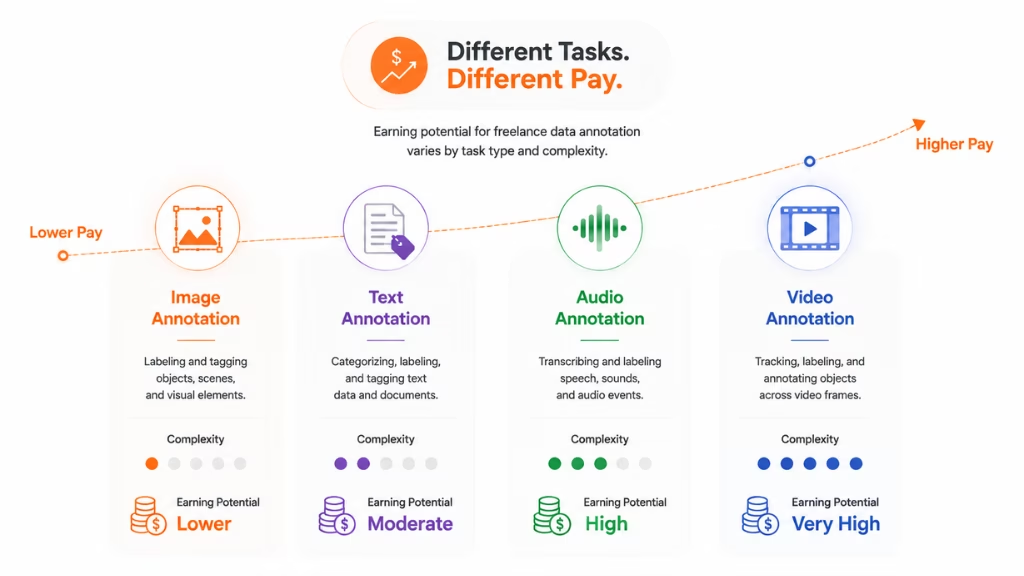
Pay rates for freelance data annotation vary by type of task, platform, and skill level. Below is a table based on 2026 industry benchmarks.
| Annotation Type | Upwork | OpenTrain.ai | Fiverr | ZipRecruiter |
| Image | $12–$28/hr | $0.09/task | $10–$25/hr | $14–$30/hr |
| Text | $10–$20/hr | $0.07/task | $8–$15/hr | $11–$18/hr |
| Audio | $15–$35/hr | $0.22/task | $12–$30/hr | $16–$38/hr |
| Video | $18–$40/hr | $0.15/task | $15–$32/hr | $20–$45/hr |
Rates reflect averages as reported by Upwork, OpenTrain.ai, Fiverr, and industry survey summaries from 2026.
Rates depend on complexity, turnaround, and the skill level you need. For example, niche categories or rush timelines can push rates higher.
Risks, Red Flags, and How to Avoid Data Annotation Hiring Scams
The growth in remote annotation has also brought more scams and risky hires. Avoiding these issues is one of the most important parts of a successful project.
A good process—and the right platform—reduce risk, but you still need to watch for warning signs during hiring and project delivery.
Most Common Risks and Warning Signs
Scammers are getting creative, especially as demand for freelance data annotation grows. Here is what to watch out for in 2026:
- Requests for upfront payment before any work
- Vague or generic portfolios
- Lack of real reviews or only off-platform links
- Poor communication or refusal to take a test task
- Underpriced bids too far below market rates
The real issue is when teams skip steps and rush to hire. In my experience, these red flags show up early if you know what to look for.
How to Safeguard Your Project
Reduce your risk with a clear process and by using platform tools. Use milestone payments tied to task delivery—never pay all fees up front.
Scrutinize candidate credentials with actual test work, not just portfolios. Always sign a contract and NDA. Escalate issues to the platform promptly if you suspect a problem or communication goes silent.
A better approach is to document every key agreement, from payment to data handling, before work begins.
Best Practices for Managing Freelance Data Annotators [2026 Edition]
Successful projects go beyond basic hiring. Managing your freelancers well pays off in better data, less turnover, and smoother scaling.
Always provide clear annotation guidelines and examples. In my POV, confusing instructions lead to the most avoidable errors.
Run regular quality reviews—spot-check delivered tasks weekly or at milestones. Give honest, actionable feedback.
To keep your best annotators, offer bonuses or public acknowledgments. Stay flexible, as annotation tools and AI data needs shift through the year.
Conclusion
Hiring freelance data annotators in 2026 means more than posting a job—it requires the right steps to get reliable, high-quality AI data fast and safely. Use this guide’s framework: define your needs, choose trusted platforms, test and screen candidates, set clear contracts, and manage communication.
From my experience, those who set clear guidelines and check for red flags early save time and budget. Proper onboarding and quality checks pay off in stronger AI outcomes.
If you want dedicated support or need to reduce risk, Riseup Labs can provide both managed annotation teams and vetted freelancer access. Their background in complex, secure annotation makes them a safe partner for your next project.
AI-powered tools are only as strong as the data behind them. Taking these steps—and working with trusted partners—will keep your data annotation projects on track in a rapidly changing landscape.
FAQs
What does a freelance data annotator do?
A freelance data annotator labels or tags data such as images, text, or audio clips to help train AI and machine learning models.
How do I hire a reliable freelance data annotator?
Define your needs, post on a trusted platform, review candidate reviews and portfolios, run a test task, then sign a contract and NDA.
What are typical pay rates for freelance data annotation in 2026?
Typical rates are $10–$35 per hour or $0.07–$0.22 per task, varying by platform, data type, and complexity.
Which platforms are safest for hiring freelance annotators?
Upwork, OpenTrain.ai, and Fiverr are considered safe due to payment protection, candidate vetting tools, and real reviews.
How can I screen freelance data annotators for quality?
Check portfolios and reviews, confirm experience with needed data types, and require a small paid test task to check accuracy.
Do I need an NDA when hiring a freelance data annotator?
Yes. For any project involving sensitive or proprietary data, use an NDA to protect your information.
What are the risks of hiring freelance annotators?
Risks include scams, low-quality work, and churn. Avoid issues by using contracts, milestone payments, and thorough screening.
Is it safe to hire data annotators from overseas?
It is generally safe if you use vetted platforms, have clear contracts and NDAs, and check credentials carefully.
How does payment work for freelance data annotation?
Payment is usually hourly or per task, with funds held in escrow by the platform and released upon task approval.
What should I include in a test task for annotators?
Use a small, paid task closely related to the main job, and check for accuracy, speed, and attention to instructions.
This page was last edited on 13 August 2026, at 9:37 am

Start a conversation with our team to solve complex challenges and move forward with confidence.