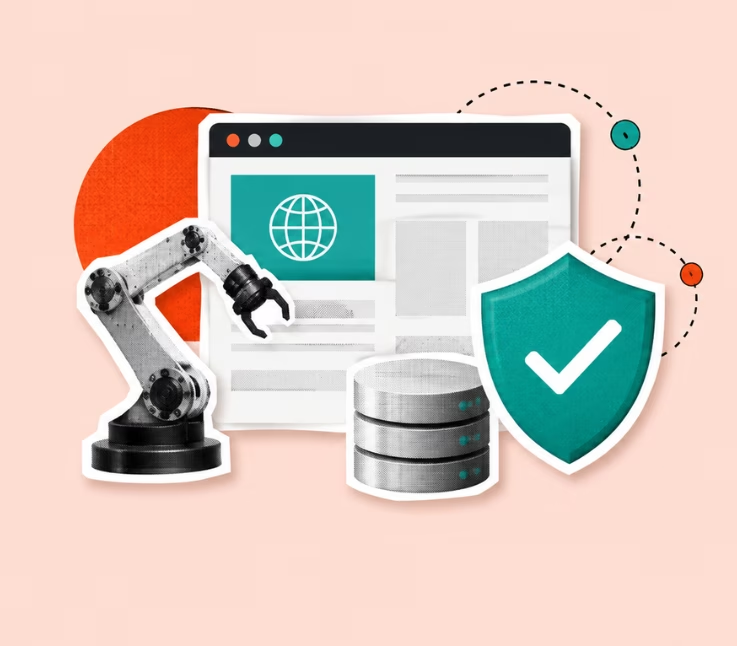
Compliant web scraping for AI training datasets in 2026 requires only legally sourced, ethically gathered data. You must follow privacy and copyright laws, respect opt-outs, secure licenses, anonymize personal data, and document every step to reduce legal risk.
High-quality data is the backbone of competitive AI models. Yet, new laws and major lawsuits in 2026 mean teams face real legal, financial, and reputational risk if they get compliance wrong.
In my experience, legal missteps today almost always lead to delays, data deletion, or public backlash—not just fines. The real issue is the cost of fixing mistakes rises fast.
This article breaks down what “compliant web scraping” looks like in 2026. You’ll see step-by-step how to collect AI data the right way. You’ll also find risk maps, legal updates, and action checklists you can use right now.
What Is Compliant Web Scraping for AI Training Datasets—and Why Does It Matter?
Compliant web scraping for AI training datasets means collecting online data in ways that fully align with laws like the GDPR, CCPA, EU AI Act, and copyright rules. It also means gathering data transparently, respecting site restrictions, and keeping personal information safe.
This is not the same as basic web scraping. AI teams now face strict checks. If you skip these steps, sites can block you, rights holders can sue, or regulators can force model deletion. Compliant scraping protects your organization and gives you a clean path to scale AI in 2026.
How Do AI Models Use Web-Sourced Data, and Where Does the Risk Lie?
Most AI models, especially large language models, need huge amounts of web data. This includes text, images, code, and voice content taken from websites, forums, wikis, and social platforms.
The way data moves from the web into AI models involves several steps. Problems—and legal risk—can show up at each stage. Here’s a basic flow:
| Stage | Typical Activities | Key Risk Points |
| Collection | Scraping/crawling websites | Unlicensed data, ignoring robots.txt or opt-outs |
| Processing | Cleaning, deduplication, labeling | PII exposure, mixing sources, lack of documentation |
| Dataset Building | Aggregating, storing, versioning | Licensing gaps, audit trail issues, privacy breach |
| Model Training | Feeding data to models | No proof of consent, use of restricted data |
| Deployment | Serving outputs to users | Outputting restricted or sensitive data |
I have seen many teams struggle most at the source audit and processing stages. Small mistakes there lead to much bigger issues downstream.
What Are the New Legal Requirements for Web-Scraped AI Training Data in 2026?
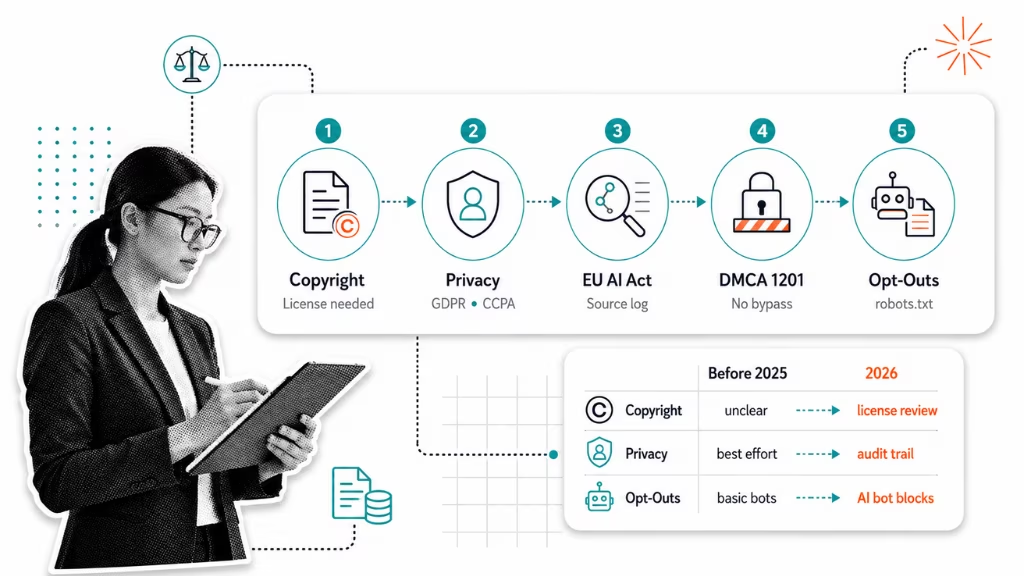
The rules around AI data collection changed fast after 2025. Missing a step opens your company to lawsuits, regulatory fines, and data wipes.
Key legal requirements in 2026 include:
- Copyright: Get licenses for anything protected, even if it is online.
- Privacy: Abide by GDPR and CCPA rules on personal data and opt-outs.
- EU AI Act: Document your data sources, create audit trails, and flag if your model is “high-risk.”
- DMCA Section 1201: Avoid scraping that breaks website access controls.
- Publisher Opt-Outs: Respect robots.txt, CCBot, and GPTBot exclusions immediately.
Let’s compare requirements before and after the big rule changes:
| Legal Area | Before 2025 | In 2026 (Current) |
| Copyright | Fair use unclear, fewer lawsuits | Licenses often required, mass lawsuits, strict fair use review |
| Privacy (GDPR/CCPA) | PII removal best effort | Stronger enforcement, strong audit need |
| EU AI Act | Not in force or early adoption | Enforcement in place, dataset audits, “high-risk” flagged |
| DMCA Section 1201 | Rarely applied | Aggressively used to block scraping |
| Site Opt-Outs | robots.txt for search bots | AI-specific blocks (CCBot, GPTBot), strict compliance needed |
The focus now is on transparency, consent, control of personal data, and audit-ready records for every dataset you build.
Copyright Law and AI Training Datasets—What’s “Infringement” Now?
Copyright covers any original work—text, images, video, code. In 2026, courts have held that even if data is public on the web, using it for AI can still infringe if you lack license or consent.
In my POV, teams must:
- Assume most web data is protected content.
- Get written licenses for any data used in production models, unless it is in the public domain or clearly open-licensed.
- Track opt-out signals from publishers (robots.txt, direct TOS, CCBot/GPTBot) actively.
- Monitor DMCA Section 1201 rulings, since they can ban any use if the website has access controls.
The blurred lines after big lawsuits (against OpenAI, Anthropic, and others) mean “transformative” or fair use defenses are risky for production datasets.
Global Privacy Laws—GDPR, CCPA, and EU AI Act Explained for AI Dataset Sourcing
Personal data is any info that relates to an identifiable person: names, emails, user IDs, IPs, and more.
In 2026, you must:
- Get user consent or remove personal info, in line with GDPR and CCPA.
- Document when and how data was collected, and for which purpose.
- Anonymize or pseudonymize all personal data, unless you have explicit consent suitable for AI training use.
- For EU AI Act compliance, label high-risk systems, maintain full data provenance, and prepare for possible audits—this is now enforced in all member countries.
A better approach is to always default to data minimization and full anonymization unless your legal team confirms it is unnecessary.
The 2026 “Opt-Out Revolution”—CCBot, GPTBot, and the New Robots.txt
Opt-out signals for AI crawlers have changed the industry in 2026. Robots.txt is no longer just for search crawlers—publishers use new tags to block AI training bots.
You must:
- Actively detect and follow CCBot and GPTBot blocks or exclusions in robots.txt or HTTP headers.
- Understand that ignoring opt-outs can bring lawsuits and instant loss of access to valuable sources.
- Review recent cases, where scraping AI bots ignored new blocks and courts quickly decided against the scraper, awarding damages to rights holders.
This is where many technical teams fail: they automate scraping without proper checks and get blindsided by these updated rules.
Which Web Data Types Pose the Highest Legal Risk in AI Training And Which Are (Somewhat) Safe?
Not all data is equal when it comes to risk. I see teams trip up by treating all text or images as fair game.
Here’s a risk matrix you can use:
| Data Type | Legal Risk | Compliance Action |
| Government/Public Domain Data | Low | Document source; minimal review |
| Open License Data (e.g. Creative Commons) | Low | Check license; record terms |
| Site-owned User-generated Content (forums) | Medium/High | Check TOS; may need license |
| News Outlets / Publishers | High | License or written permission |
| Social Media | High | Scraping often banned; avoid |
| YouTube, Reddit, Stack Overflow, GitHub | High | Require written permission/license |
| Personal Data (PII) | High | Remove or anonymize immediately |
| Aggregated Commercial Data | Medium | License or verify public domain |
After several lawsuits in the last year, news, forums, and social media are almost always “high risk” without explicit licensing.
How Can You Build Compliant AI Datasets? (Step-by-Step 2026 Framework)
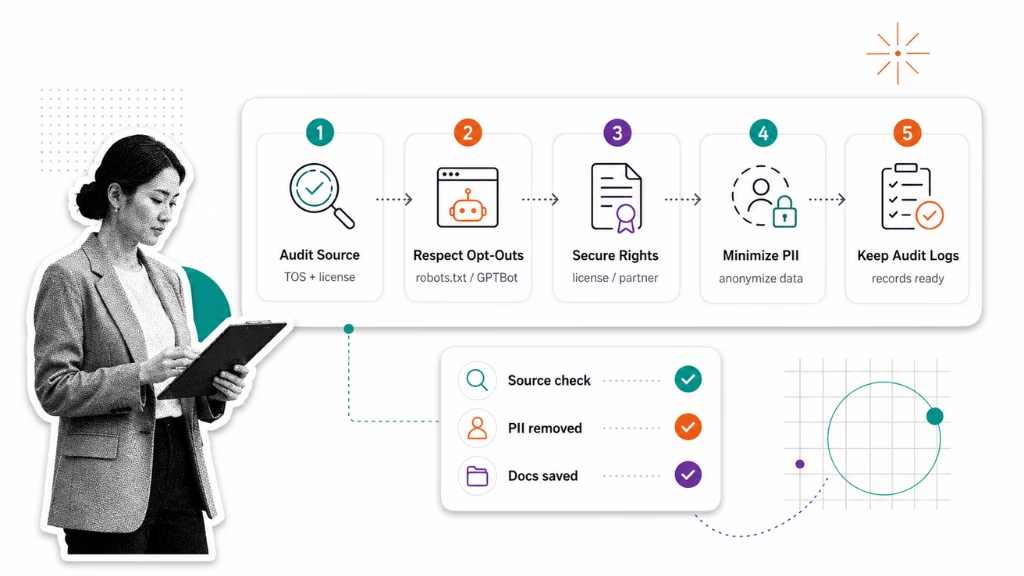
Collecting compliant datasets means more than “not getting caught.” In my experience, the teams that take a checklist approach avoid crises later.
Here is a simple, five-step compliance checklist for AI dataset collection in 2026:
- Audit your data source and terms of service.
- Respect opt-outs, robots.txt, and AI crawler directives.
- Secure permissions, licenses, or data partnerships.
- Remove or minimize personal data (PII).
- Maintain audit-ready documentation throughout.
Let’s break down each step.
Step 1: Audit Your Data Source and Terms of Service
Before you scrape, review each site’s license terms, TOS, and robots.txt. Record the jurisdiction where the publisher operates for compliance mapping.
You should:
- Log every domain, capture TOS and license screenshots.
- Map each source to its country’s copyright and privacy laws.
- Keep a record of your due diligence, including decision notes.
This step will help reduce risk before you ever collect data.
Step 2: Respect Opt-Outs, Robots.txt, and AI Crawler Directives
Always check for AI-specific opt-outs in robots.txt or HTTP headers, such as “Disallow: /” for CCBot or GPTBot.
You should:
- Use tools or scripts to scan for new opt-out standards.
- Review exclusions for each scrape and hold an internal review if unclear.
- Document when and how you respected each opt-out.
Missing a single exclusion signal now can risk your entire dataset’s legality.
Step 3: Secure Permissions, Licenses, or Data Partnerships
You need explicit licenses for anything not clearly public domain or open license. For gray areas, consider formal data partnerships.
You should:
- Only rely on fair use when expert legal counsel approves.
- Contact publishers directly or use data platforms such as TollBit or licensed consortia.
- Repeat checks on license validity as rules change fast in 2026.
As I have seen, skipping this step is the fastest way to get sued or blocked from valuable data.
Step 4: Remove or Minimize Personal Data (PII)
PII now means any user-related info, including names, handles, emails, even indirect data when linked.
You should:
- Run data through anonymization and pseudonymization tools.
- Only store PII if you have explicit, audit-ready consent.
- Document each removal or minimization, plus the tools used.
This reduces privacy compliance risk, and it avoids “poisoned” data that can halt your model in the last stretch.
Step 5: Maintain Audit-Ready Documentation Throughout
Every action—every domain checked, every license or opt-out followed, every PII removal—must be logged.
You should:
- Record the data source, use case, compliance finding, and license or consent artifact.
- Build your records in a structured format—spreadsheet, compliance software, or specialized tool.
- Prepare a summary for possible EU AI Act or regulator inspection.
Audit-ready documentation will save you in case of challenge and speeds up security reviews for enterprise buyers.
What’s the Practical 2026 Compliance Workflow for Web Scraping AI Datasets?
Building a compliant workflow helps teams move from theory to practice. Below is a clear, step-by-step process.
Here’s what the end-to-end compliant data collection workflow looks like in 2026:
- List target sources, map to risk table.
- Check TOS/robots.txt/opt-outs for each source.
- Secure licenses or agreements as needed.
- Scrape only after all checks and permissions are in place.
- Run data through PII anonymization/minimization.
- Document all steps in a centralized audit record.
- Store data in compliance-checked, access-controlled repositories.
- Review and update compliance docs before each new dataset use.
I have found that teams who print and follow this checklist make fewer mistakes and can react fast when laws change.
What Are the Most Common Compliance Mistakes and How Can You Avoid Them in 2026?
Mistakes in web scraping for AI datasets lead to lawsuits, lost data, and rework. I often see the same avoidable errors:
- Not recording licenses, consent, or TOS findings.
- Ignoring opt-out signals, especially as robots.txt rules shift for AI.
- Failing to remove or anonymize personal data.
- Sourcing from vendors who cannot provide audit-ready compliance records.
- Running automated scrapers without human review.
- Not tracking changes in laws and site policies.
Quick ways to avoid these pitfalls:
- Use a compliance checklist.
- Assign a compliance review to every project.
- Require vendors to provide full audit documentation.
Is Automation Enough? The Role of Human Oversight in Compliant AI Data Sourcing
Automation helps speed up scraping, but it cannot catch legal nuance or context.
In my experience, fully automated scrapers miss opt-out signals or ignore subtle TOS changes. Legal reviews, documentation checks, and source audits need human review.
When the law requires a “high-risk” system audit, or when PII is involved, only a human can give the case-by-case judgment regulators expect. Managed provider models with human oversight now outperform basic DIY solutions in compliance.
The mistake I see often is trusting a tool alone. Most recent legal cases spotlighted lack of human oversight as the source of non-compliance.
Should You Scrape or Partner? The Strategic Shift to Licensed AI Training Data in 2026
Many organizations are moving away from scraping toward direct data licensing or partnerships.
Today’s strategic choice:
| Factor | Legacy Scraping | Data Partnerships & Licensing |
| Legal Risk | High to variable | Low (if contract is clear) |
| Cost | Low at first, but high if sued | Medium, but stable and forecastable |
| Scale | Quick, but risky | Scalable, as sources are known/approved |
| Access | Prone to bans | Approved, with support |
| Compliance Burden | High (you own all checks) | Lower (vendor often shares burden) |
Teams that use licensed data platforms such as TollBit or publisher consortia get richer datasets, with compliance built in. For many, the extra investment is far less than the cost of a major legal dispute.
Real-World 2026 Case Studies: Legal Precedents and Compliance Lessons
- A major LLM vendor was sued after scraping news content without IP licenses. The court ruled that “public” does not mean “free for AI training”—the firm had to delete models and pay damages.
- A software startup trained on forum discussions, skipping anonymization. They were penalized under the GDPR for PII misuse, even though usernames were hashed.
- A large team ignored a “Disallow: /” for CCBot. After a quick lawsuit, the dataset had to be destroyed and the product launch was delayed by six months.
In each case, lack of records, missing consent, or skipping even one compliance step meant a costly rework.
The lesson is clear: Document everything, respect all opt-outs, and choose your sources with care.
FAQ—Compliant AI Data Scraping in 2026
What is compliant web scraping for AI training datasets?
Compliant web scraping for AI training datasets means collecting data legally, respecting copyright, privacy, and opt-outs, and keeping full audit records for every dataset used.
Is it legal to use public web data for AI model training in 2026?
It depends on the source, type of data, and jurisdiction. Licenses, privacy rules, and explicit site permissions are often required.
Which data types are safest to scrape for AI training?
Government or open-licensed data sources are safest. User-generated, news, social, and PII data often need licenses, consent, or anonymization.
What new compliance requirements does the EU AI Act introduce?
The EU AI Act now requires data provenance, detailed documentation, audit trails for training data, and labeling for “high-risk” AI systems.
How does DMCA Section 1201 affect web scraping for AI?
DMCA Section 1201 bans bypassing access controls. Scraping that goes around website protections can result in legal action.
What steps ensure copyright compliance in AI dataset collection?
Audit each source, secure written licenses, respect opt-outs, and maintain full documentation of permissions for all data used.
How should personal data be handled for compliant AI datasets?
Personal data should be removed or anonymized unless you have explicit, documented consent for its use in AI models.
Is licensing required for all AI training data?
Licensing is required for most copyrighted data. Public domain or clearly open-licensed sources may not need licenses but must still be documented.
What documentation is needed for EU AI Act compliance?
You need clear records of data sources, consent or licenses, risk assessment, purpose, and any processing steps for each dataset.
What are the risks of non-compliant AI data scraping?
Risks include lawsuits, regulatory fines, required deletion of datasets or models, bans from important data sources, and lost business trust.
Conclusion
Getting compliant web scraping for AI training datasets right in 2026 is not optional—it is central to protecting your business and unlocking lasting value from AI.
The risks—legal, financial, reputational—will only keep rising. The smart move is to use the practical compliance steps above every time you source or refresh your training data.
My advice to teams is this:
- Use the checklist here each time you build or buy a new dataset.
- Consult experts or legal counsel when handling high-risk sources or new jurisdictions.
- Choose partners and vendors who provide complete audit documentation for AI dataset sourcing.
Companies able to prove compliance, with audit trails and legal records, will outpace the market. That is the real future of secure AI development—with humans and experts in every compliance loop.
This page was last edited on 15 August 2026, at 3:42 pm

Start a conversation with our team to solve complex challenges and move forward with confidence.