Moodle stands for Modular Object-Oriented Dynamic Learning Environment. It is an open-source learning management system for EdTech. Moodle development means building, customizing, and improving a Moodle LMS to fit specific learning needs. It helps EdTech companies, institutions, and partners to build better courses, custom features, and connect tools to improve user experience and scale online learning platforms.
EdTech development teams and Moodle partners often face similar problems. Training institutes or organizations need a personalized LMS, but the default Moodle setup is not enough. They need custom features, smooth integrations, better user flow, strong security, and a team that can scale fast.
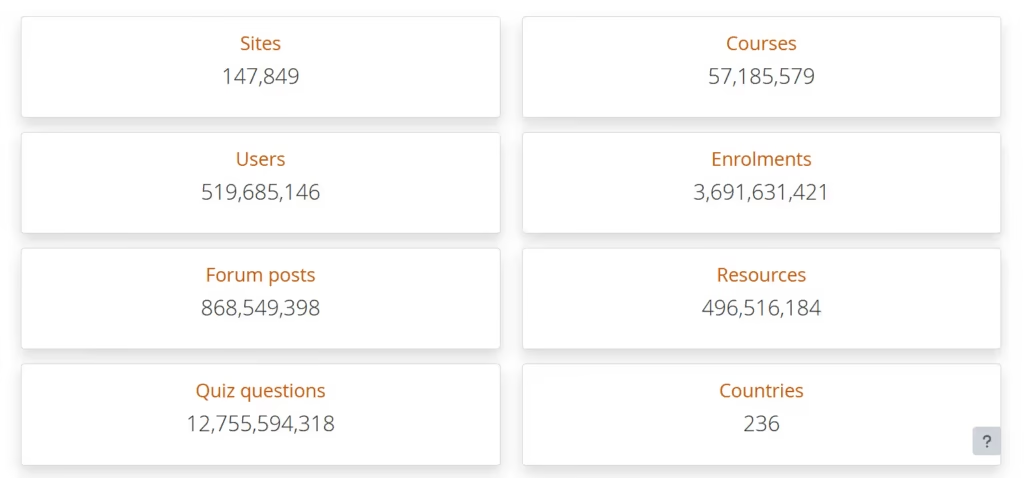
Moodle now supports 520M+ users, 57M+ courses, and 147K+ registered sites across 236 countries. The LMS market is also expected to grow from USD 31.61B in 2026 to USD 104.04B by 2034. This growth shows why Moodle development is no longer just a technical task. It is a key part of building better, smarter, and more scalable learning platforms.
Moodle development helps solve these needs. It turns a basic Moodle LMS into a flexible learning platform. It can support online courses, training portals, student systems, payment tools, AI features, reports, custom workflows, etc. Also, there are huge opportunities for Moodle partners to deliver more projects without building a full in-house Moodle team.
This Moodle development guide will walk you through the key areas. You will learn about Moodle benefits, market insights, trends, AI use cases, common challenges, required roles, partner opportunities, and how Riseup Labs can support Moodle projects.
Let’s get started!
What Is Moodle Development?
Moodle development is the process of building, customizing, and improving a Moodle LMS. It includes custom features, plugins, themes, integrations, reports, security, performance, etc. This helps to make the LMS platform fit for specific learning and business needs.
What Does Moodle Development Include?
Moodle development includes building, customizing, extending, and maintaining Moodle LMS for specific eLearning needs. LMS setup, theme design, custom plugins, third-party integrations, data migration, and reporting are also included. These tasks help to make Moodle easier to use, more scalable, and better aligned with learning goals.
Moodle Development vs Moodle Implementation
Moodle implementation is the first step. It means setting up Moodle, adding basic (default) settings, and preparing it for use. Moodle development goes deeper than implementation. It includes custom themes, plugins, features, integrations, and long-term improvements.
| Area | Moodle Implementation | Moodle Development |
| Main Goal | Launch Moodle | Improve and extend Moodle |
| Focus | Setup and configuration | Custom features and technical work |
| Timeline | Usually early stage | Before and after launch |
| Example Work | Install Moodle, set roles, add courses | Build plugins, integrate tools, customize dashboards |
| Best For | Starting a new LMS | Scaling or improving an LMS |
Moodle Development vs Moodle Customization
Moodle customization includes customizing Moodle LMS default features without coding. It changes Moodle to match a specific brand, workflow, or learning need. Moodle development is broader than customization. It can include customization, plugin development, integration, migration, testing, and support.
| Area | Moodle Customization | Moodle Development |
| Main Goal | Make Moodle fit specific needs | Build, extend, and maintain Moodle |
| Scope | Narrower | Broader |
| Focus | Design, workflows, dashboards, roles | Plugins, APIs, themes, integrations, performance |
| Example Work | Customize learner dashboard | Build a custom enrollment plugin |
| Best For | Better user experience | Full technical growth |
Moodle Development vs Moodle Administration
Moodle administration is about daily LMS management. It helps keep courses, users, roles, and settings organized. Moodle development is technical work. It changes how the platform works, looks, connects, and scales.
| Area | Moodle Administration | Moodle Development |
| Main Goal | Manage Moodle | Build and improve Moodle |
| Focus | Users, courses, and settings | Code, plugins, themes, and integrations |
| Coding Needed | Usually no | Yes |
| Example Work | Add users, assign roles, manage courses | Create a plugin, build a report, connect CRM |
| Best For | Daily LMS operation | Custom LMS needs |
Why EdTech Companies, Institutions, and Training Organizations Prefer Moodle LMS
While working with many eLearning brands, we have seen one common pattern. Most teams do not choose Moodle only because it is popular. They choose it because they need control, flexibility, and room to grow.
Recently, Riseup Labs worked with Survivor Alliance on a Moodle Cloud setup and templating project. The goal was to create a learning platform that looked professional, was easy to use, and could grow over time. It also needed reusable course templates, support for different languages, group-based learning, and simple learning paths. This project showed us why many EdTech teams choose Moodle for real learners, real course needs, and long-term growth.
Here are a few reasons why EdTech organizations prefer Moodle LMS:
- Flexibility for Different Learning Models: Moodle supports self-paced courses, live group classes, blended learning, corporate training, certificates, and global learning programs.
- Open-Source Control and Customization: Teams can adjust Moodle to match their brand, course style, user roles, privacy needs, and daily workflows.
- Scalable LMS Foundation for EdTech Growth: Moodle helps teams start small, add more courses, support more learners, and grow step by step.
- Strong Plugin and Integration Ecosystem: Moodle can connect with tools for content, video, payments, reports, user login, and other business systems.
- Suitable for Partner-Led LMS Delivery: Moodle gives EdTech partners a flexible base to design and deliver LMS solutions for many clients without building from scratch.
Moodle LMS Statistics and Key EdTech Industry Insights
The Moodle and EdTech market tells a clear story. Learning is no longer tied to one classroom, one campus, or one training room. Schools, universities, companies, nonprofits, and training providers now need platforms that connect learners, content, data, tools, and AI.
At Riseup Labs, we see this shift in our real projects. Many teams start with a basic LMS. Then they need better design, custom workflows, integrations, reports, mobile access, AI features, and long-term support. This is where Moodle development becomes a real growth driver.
Moodle Adoption Statistics and Market Size in LMS
Moodle has become a trusted LMS because it gives teams control and flexibility. It supports small course sites, large institutions, global training portals, and high-volume learning programs. From our experience, Moodle works best when organizations plan it as a long-term e-learning platform, not just a course upload system. Here are some valuable stats we found:
- Moodle now powers about 147.8K+ registered sites worldwide.
- Moodle supports more than 57.25M courses across different learning sectors.
- Moodle serves over 520M users, which shows its global reach.
- Moodle records more than 3.69B enrolments across registered platforms.
- Moodle users have created over 869M forum posts, showing strong learning activity.
- Moodle stores more than 496M learning resources for courses and training programs.
- Moodle supports over 12.76B quiz questions, making assessment one of its strongest use cases.
- Moodle operates across 236 countries, which proves its global adoption.
- Spain, the United States, Germany, Mexico, and Brazil lead the list of registered Moodle sites.
- Moodle has 30 registered sites with more than 1M users, which proves it can support enterprise-scale learning.
“Organizations are no longer looking for a learning platform that only delivers courses. They need a system that can evolve with their learners, connect with their business tools, and adapt to changing training needs. That is where Moodle continues to stand out.“
— Md. Rafiquzzaman, Director of Technology, Riseup Labs
Entire Online Learning and LMS Market Statistics
The LMS market is growing because organizations need a better way to manage learning. They want to deliver courses, track progress, improve skills, and connect learning data with business goals. This growth also creates more demand for Moodle customization, integration, cloud setup, AI support, and dedicated Moodle developer teams.
- The global LMS market reached USD 24.09B in 2025.
- Market researchers expect the LMS market to reach USD 31.61B in 2026.
- The LMS market may grow to USD 104.04B by 2034.
- The market may grow at a 16.10% CAGR from 2026 to 2034.
- North America held 42.70% of the global LMS market in 2025.
- The U.S. LMS market may reach USD 26.71B by 2032.
- LMS solutions may hold 52.43% revenue share in 2026.
- North America’s LMS market reached USD 11.56B in 2025.
- Europe’s LMS market reached USD 7.21B in 2025.
- Asia Pacific’s LMS market reached USD 5.8B in 2025.
At this point, our findings are that LMS growth will not only come from new platform launches. A large part of future demand will come from improving existing LMS platforms with better UX, data, integrations, security, automation, and AI.
EdTech and Corporate Learning Statistics
EdTech and corporate learning are now core business needs. Companies use LMS platforms for onboarding, compliance, reskilling, customer training, partner training, and employee growth. We believe this trend will push more organizations to invest in custom Moodle development instead of using a basic, one-size-fits-all setup.
- The global EdTech market reached USD 187.0B in 2025.
- Analysts estimate the EdTech market at USD 213.2B in 2026.
- The EdTech market may reach USD 437.5B by 2033.
- The market may grow at a 10.8% CAGR from 2026 to 2033.
- North America held 36.1% of the global EdTech market in 2025.
- The K-12 sector held the largest EdTech market share at 38.9% in 2025.
- The business segment held the largest EdTech end-use share at 67.0% in 2025.
- Cloud-based EdTech may grow fastest, with a 15.9% CAGR from 2026 to 2033.
- The global corporate eLearning market reached USD 104.32B in 2024.
- The corporate eLearning market may reach USD 334.96B by 2030, with a 21.7% CAGR.
So corporate learning will become one of the strongest areas for Moodle development. More companies will need branded training portals, skills dashboards, compliance tracking, role-based learning paths, and reporting systems.
AI in Education Statistics
AI is changing how learning platforms work. It can support course content, learner help, feedback, analytics, admin tasks, and personal learning paths. For Moodle projects, this means teams will need more AI-ready plugins, safe integrations, clean data flows, and expert developers who understand both LMS architecture and learning design.
- The global AI in education market reached USD 8.3B in 2025.
- Analysts estimate the market at USD 11.4B in 2026.
- The AI in education market may reach USD 57.2B by 2033.
- The market may grow at a 25.9% CAGR from 2026 to 2033.
- North America held 37.5% of the AI in education market in 2025.
- The solutions segment held more than 70% of the AI in education market in 2025.
- Higher education led the AI in education end-use segment in 2025.
- Cloud deployment held the largest AI in education market share in 2025.
AI tools are creating new demand for intelligent tutors, virtual assistants, automated grading, and adaptive learning. AI also creates new risks around privacy, bias, data security, and human review. So, AI will not replace LMS development. It will increase the need for expert Moodle teams. Organizations will need developers who can connect AI safely, manage data properly, and keep the learning experience human-centered.
Partner and Outsourcing Opportunity Statistics
The growth of Moodle, LMS, EdTech, corporate learning, and AI creates a strong opportunity for partners. Many agencies, consultants, and EdTech companies want to deliver Moodle projects. But they may not have enough Moodle developers, QA engineers, architects, or integration experts in-house. This makes resource augmentation and white-label Moodle development more valuable.
- The global IT outsourcing market may reach USD 634.18B in 2026.
- IT outsourcing may grow at a 6.20% CAGR from 2026 to 2030.
- The global software development market may reach USD 0.64T in 2026.
- The software development market may reach USD 1.11T by 2031.
- LinkedIn found that 49% of L&D professionals say executives worry that employees lack the right skills for business strategy.
- The World Economic Forum says 59 out of every 100 workers may need training by 2030.
- The same report says 39% of current worker’s skills may change or become outdated from 2025 to 2030.
- 63% of employers see skill gaps as a major barrier to business transformation.
- 85% of employers plan to make workforce upskilling a priority.
- Moodle partners can use this demand to offer dedicated developers, QA support, integrations, AI-ready LMS development, and long-term Moodle maintenance.
To stay up to date and innovative in the AI world, Riseup Labs regularly hosts and attends AI workshops and events to upskill our experts.
The biggest opportunity is not only building new Moodle platforms. It is helping partners deliver faster, support more clients, reduce hiring pressure, and add expert Moodle capacity when demand grows.
Future Trends of Moodle LMS Development in Edtech
Moodle development is changing fast because of the evolving learning process. Today, teams need more than a basic course platform. They want a Moodle LMS that is easy to use, mobile-friendly, secure, data-driven, AI-ready, and simple to connect with other tools. Here are some key points to prioritize in the future:
- Personalized Learning Experiences – Moodle will help learners get content, courses, and support based on their needs, progress, and learning goals.
- Streamlined User Experience (UX) and Accessibility – Teams will focus on simple navigation, clean course layouts, and easy access for all types of learners.
- Mobile-First Moodle Experiences – More learners use phones and tablets, so Moodle platforms need to work smoothly on every device.
- AI-Ready Moodle Platforms – Moodle will use AI for course content, learner support, feedback, automation, and smart suggestions.
- Advanced Moodle Integrations – Moodle will connect more with CRM, ERP, SIS, payment tools, video tools, and business systems.
- Data-Driven LMS Reporting – Teams will use reports to track progress, engagement, completion, skills, and learning results.
- Security, Privacy, and Compliance-Focused Development – Moodle platforms will need safer login, better access control, secure data, and privacy-friendly features.
- White-Label Moodle Delivery – EdTech partners can use Moodle teams to build branded LMS platforms for clients under their own name.
Impact of AI (Artificial Intelligence) in Moodle LMS Development

Artificial Intelligence is changing how Moodle LMS platforms are built and used. In the past, Moodle mainly focused on course delivery and learner management. Today, AI helps create smarter learning experiences.
It can assist with content generation, learner support, recommendations, and learning analytics. Moodle’s AI framework also makes it easier to connect different AI providers and tools.
For learners, AI can provide quick summaries, explain difficult topics, recommend learning materials, and offer personalized support. For instructors, it can help create course content, quizzes, images, and feedback in less time. These features improve productivity and help teams focus more on teaching and learning.
From a development perspective, AI is creating new opportunities for Moodle customization and innovation. Organizations can build AI-powered assistants, intelligent reporting systems, adaptive learning paths, and automated workflows.
However, successful AI adoption also requires strong attention to privacy, security, transparency, and human oversight to ensure responsible use.
Opportunities in Moodle LMS for the eLearning Ecosystem
Moodle creates new opportunities for organizations across the eLearning industry. As online learning grows, different stakeholders can use Moodle to build better learning experiences. Also, they can reach more learners and expand their services with flexible and scalable LMS solutions. Moodle’s open-source model and partner ecosystem make it a strong choice for long-term growth.
- Opportunities for EdTech Companies: Build custom learning platforms, launch new education products, add AI features, and scale services without starting from scratch.
- Opportunities for LMS Consultants: Help clients plan, improve, and optimize their learning platforms through Moodle customization, integrations, migrations, and LMS strategy.
- Opportunities for Software Agencies: Add Moodle development as a new service. Deliver custom plugins, themes, integrations, and LMS solutions for education and corporate clients.
- Opportunities for Training Providers: Create branded training portals, certification programs, employee onboarding, and customer education platforms that can grow with the business.
- Opportunities for Universities and Institutions: Modernize teaching with a personalized learning system. Moodle offers hybrid classrooms, learning analytics, and secure digital learning environments.
- Opportunities for Moodle Partners: Expand delivery capacity through custom development, white-label services, hosting, support, training, and long-term maintenance. Official Moodle partners also work closely with Moodle HQ to maintain high-quality solutions and stay aligned with new platform updates.
10 Common Moodle Development Challenges for EdTech Teams and Partners
Moodle is flexible and powerful. However, building a successful Moodle LMS is not always easy. Many teams face technical and business challenges as their platform grows. Solving these challenges early helps create a faster, safer, and more scalable learning platform. Official Moodle guidance also highlights the importance of compatibility, security, testing, and long-term maintenance.
- Limited Moodle Expertise – Many teams lack experienced Moodle developers.
- Complex Customization Needs – Default Moodle features may not meet every requirement.
- Plugin Compatibility Issues – Some plugins may conflict after Moodle upgrades.
- Third-Party Integration Challenges – Connecting CRM, ERP, SIS, and payment tools takes careful planning.
- Performance and Scalability – Large LMS platforms need optimized code and infrastructure.
- Security and Data Privacy – Learning platforms must protect user data and meet compliance rules.
- Difficult Version Upgrades – Custom code may require updates after each Moodle release.
- Poor User Experience – Complex navigation can reduce learner engagement.
- Testing and Quality Assurance – Every feature needs testing before going live.
- Long-Term Maintenance – Moodle platforms need regular updates, monitoring, and ongoing support.
Required Tech Stack for Moodle Development Projects
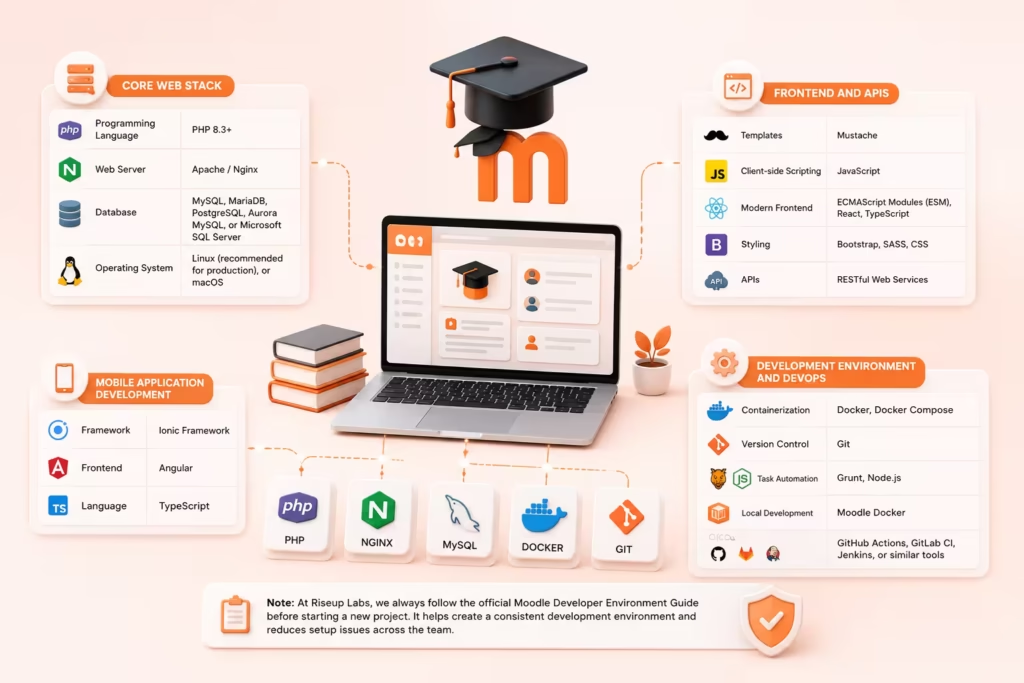
A successful Moodle project needs the right technology stack. Each tool has a different role. Some technologies offer flexibility and security for the backend. Others build the user interface, mobile app, or deployment process.
So, choosing the right stack makes Moodle faster, safer, and easier to maintain. Official Moodle developer documentation recommends modern development tools and supported server environments.
Core Web Stack
The core web stack runs the Moodle platform. It handles business logic, user requests, and data storage.
| Component | Riseup Labs Recommended Technology |
| Programming Language | PHP 8.3+ (depends on Moodle version) |
| Web Server | Apache or Nginx |
| Database | MySQL, MariaDB, PostgreSQL, Aurora MySQL, or Microsoft SQL Server |
| Operating System | Linux (recommended for production), or macOS |
Frontend and APIs
The frontend controls how users interact with Moodle. Modern Moodle also supports newer JavaScript technologies for building responsive interfaces.
| Component | Riseup Labs Recommended Technology |
| Templates | Mustache |
| Client-side Scripting | JavaScript |
| Modern Frontend | ECMAScript Modules (ESM), React, TypeScript |
| Styling | Bootstrap, SASS, CSS |
| APIs | RESTful Web Services |
Mobile Application Development
Moodle also supports a mobile learning management system. Developers can build custom mobile features for Android and iOS.
| Component | Riseup Labs Recommended Technology |
| Framework | Ionic Framework |
| Frontend | Angular |
| Language | TypeScript |
Development Environment and DevOps
Modern Moodle projects use DevOps tools to improve development speed and quality. Docker helps create the same environment for every developer and tester. Git tracks every code change and makes teamwork easier.
| Component | Riseup Labs Recommended Technology |
| Containerization | Docker, Docker Compose |
| Version Control | Git |
| Task Automation | Grunt, Node.js |
| Local Development | Moodle Docker |
| CI/CD | GitHub Actions, GitLab CI, Jenkins, or similar tools |
Note: At Riseup Labs, we always follow the official Moodle Developer Environment Guide before starting a new project. It helps create a consistent development environment and reduces setup issues across the team.
Different Types of Development Opportunities in Moodle LMS

Moodle gives many development opportunities for EdTech teams and partners. It can start as a basic LMS and grow into a full learning ecosystem. Teams can improve design, add features, connect tools, build reports, and support users at scale.
Moodle LMS Development
Moodle LMS development means building the main learning platform. It includes setup, configuration, user roles, course structure, learning flows, and core platform planning. This is the foundation for a stable Moodle system.
Moodle Theme Development
Moodle theme development improves the look and feel of the LMS. It helps match the platform with a brand. It also improves navigation, course layouts, mobile views, and learner experience.
Moodle Plugin Development
Moodle plugin development adds custom features to the platform. Teams can build plugins for reports, certificates, enrolment, payments, activities, dashboards, and workflows. This helps when the default Moodle features are not enough.
Moodle Integration Development
Moodle integration development connects Moodle with other systems. These may include CRM, ERP, SIS, SSO, payment gateways, video tools, analytics platforms, and content systems. Good integration reduces manual work.
Moodle Mobile App Customization
Moodle mobile app customization improves learning on phones and tablets. It can include app branding, custom features, push notifications, offline learning, and mobile-friendly course access.
Moodle Reporting and Analytics Development
Moodle reporting and analytics development help teams track learning results. It can show course progress, completion rates, learner activity, assessment results, and engagement data. Better reports support better decisions.
Moodle Migration and Upgrade
Moodle migration and upgrade help teams move safely to a new platform or version. It includes user data, courses, grades, files, plugins, and settings. Careful testing reduces data loss and downtime.
Moodle Performance Optimization
Moodle performance optimization makes the LMS faster and more stable. It may include database tuning, caching, code review, server setup, and load testing. This is important for large user groups.
Moodle Maintenance and Support
Moodle maintenance and support keep the platform healthy after launch. It includes bug fixes, plugin updates, security patches, monitoring, backups, and user support. This helps Moodle grow without major issues.
Real-World AI Use Cases in Moodle Development
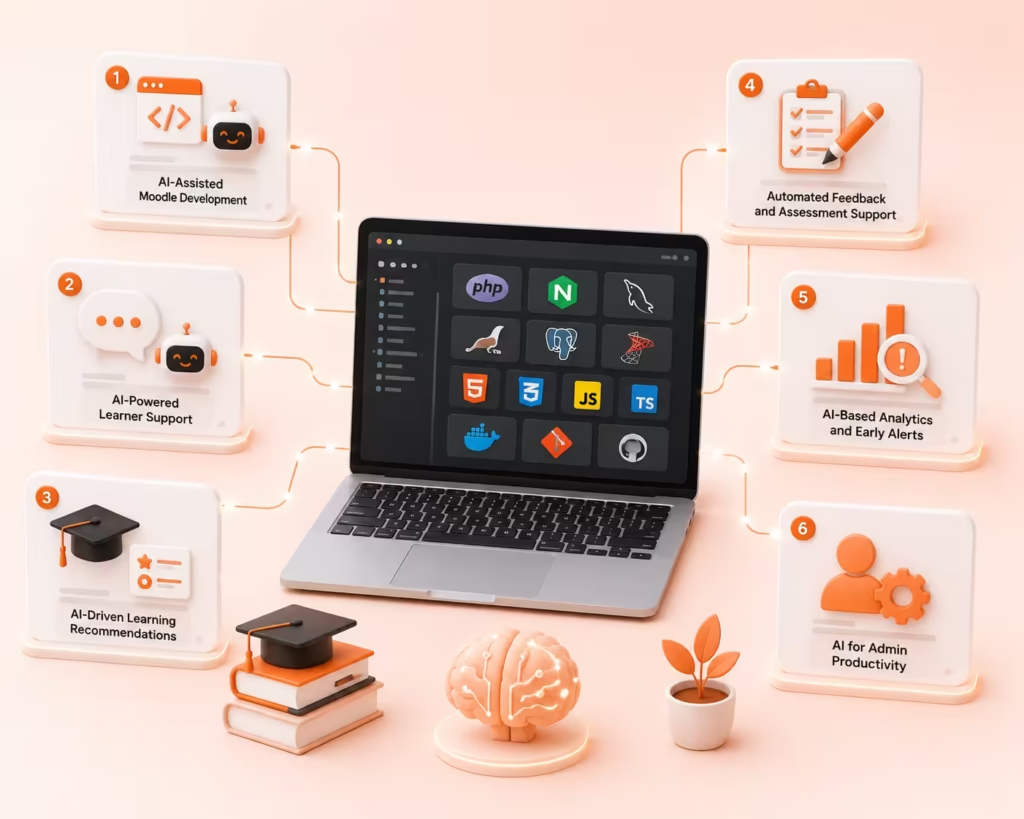
Nowadays, AI is everywhere, reducing manual work and helping humans to produce better output. AI can make Moodle more helpful for learners, teachers, admins, and partners.
It can reduce manual work, improve learning support, and make LMS data easier to use. With the right Moodle development team, AI can become part of real learning workflows.
AI-Assisted Moodle Development
Developers can leverage AI to write code, review logic, find bugs, and prepare test cases. It can also support documentation and requirement analysis. This helps teams build Moodle features faster.
AI-Powered Learner Support
Many students and learners have multiple questions during their learning time. AI can answer common learner questions inside Moodle. It can guide users through courses, deadlines, lessons, and resources. This reduces support pressure on teachers and admins.
AI-Driven Learning Recommendations
This is also a part of student support or a business opportunity for upsell/crosssell courses. AI can suggest courses, lessons, quizzes, and resources based on learner progress. It can also guide learners toward the next best step. This makes learning more personal.
Automated Feedback and Assessment Support
AI can help teachers prepare feedback drafts and review learning gaps. It can also support quiz creation and rubric-based assessment. Teachers still make the final decision.
AI-Based Analytics and Early Alerts
Scoring is one of the most time-consuming and boring tasks for trainers, teachers, or educators. AI can study learner activity, progress, and scores. It can help identify learners who may need extra support. This allows teams to act before learners fall behind.
AI for Admin Productivity
AI can help admins create reports, organize courses, draft messages, and manage repeated tasks. It saves time and reduces manual work across the Moodle platform.
8 Core Moodle Development Services EdTech Teams Usually Need
EdTech teams often start with a simple Moodle setup. But as learners grow, the platform needs more support. Teams need better design, custom features, smooth integrations, strong testing, and regular updates. That is why expert Moodle development services become important.
1. Moodle LMS Development Services
Many teams need a Moodle platform that fits their learning model. A basic setup may not support their users, courses, or business goals. Expert Moodle developers can plan the structure, roles, workflows, and core features from the start.
2. Moodle Customization Services
Default Moodle may not match every brand or learning process. Teams may need custom dashboards, course layouts, user roles, and learning paths. Moodle customization helps make the platform easier to use and more relevant for learners.
3. Moodle Plugin Development Services
Sometimes, existing Moodle features are not enough. Teams may need custom reports, certificates, enrolment rules, payment flows, or learning activities. Expert developers can build secure plugins that work well with Moodle core.
4. Moodle Integration Services
EdTech platforms rarely work alone. They often need to connect with CRM, ERP, SIS, SSO, payment, video, and analytics tools. Moodle integration services help reduce manual work and keep data moving smoothly.
5. Moodle Migration and Upgrade Services
Old Moodle sites can become slow, risky, or hard to manage. Teams may also need to move from another LMS. Expert migration support helps protect users, courses, grades, files, settings, and learning data.
6. Moodle Performance Optimization Services
A Moodle site can slow down as users and courses grow. Slow pages hurt learners and admins. Performance experts can improve caching, database setup, hosting, code quality, and load handling.
7. Moodle QA and Testing Services
Even small Moodle changes can affect courses, plugins, reports, or integrations. QA teams test features before launch. This helps reduce bugs, downtime, broken workflows, and poor learner experience.
8. Moodle Maintenance and Support Services
Moodle needs care after launch. Plugins need updates. Bugs need fixes. Security patches must be applied. Expert support keeps the platform stable, secure, and ready for future growth.
Key Moodle Development Roles Needed for Scalable LMS Projects
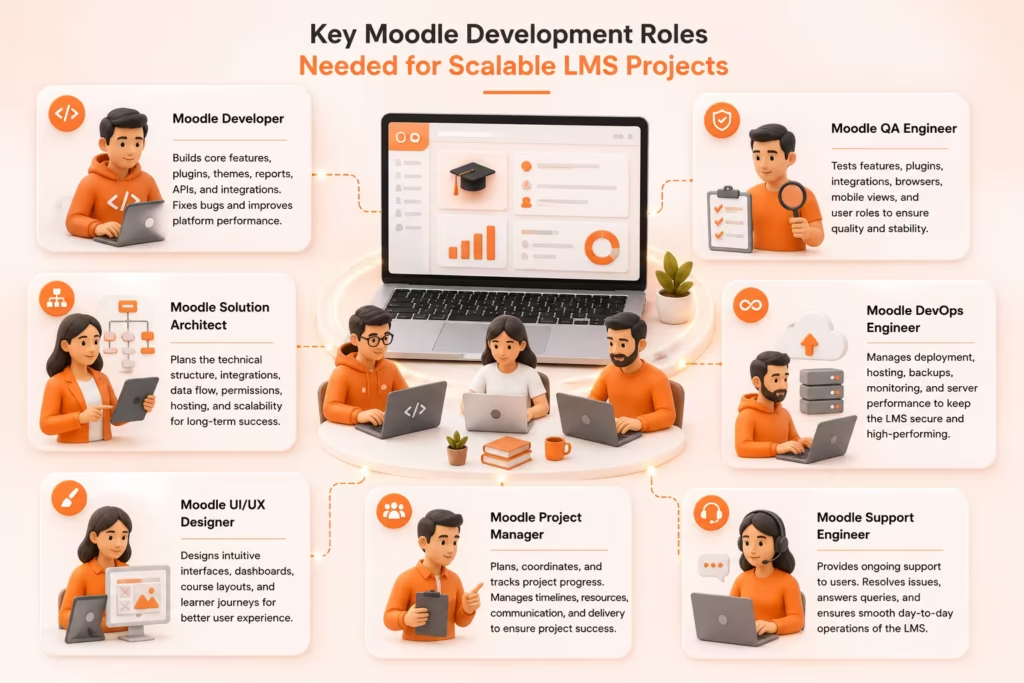
Building a successful Moodle LMS takes more than one developer. Different experts handle different parts of the project. The right team helps deliver a secure, scalable, and easy-to-manage learning platform. It also reduces project risks and speeds up delivery.
Moodle Developer
A Moodle developer builds the technical side of the platform. They create custom features, plugins, themes, and integrations. They also solve technical problems and improve Moodle performance.
Moodle Solution Architect
Large Moodle projects need a clear technical plan. A Moodle solution architect designs the platform architecture, integration strategy, security model, and scalability plan. This helps avoid costly changes later.
Moodle UI/UX Designer
A good learning platform should be simple to use. A Moodle UI/UX designer improves navigation, dashboards, course layouts, and learner journeys. Better design increases learner engagement.
Moodle QA Engineer
A small bug can affect many learners. A Moodle QA engineer tests every feature before launch. They help ensure the platform works correctly across devices, browsers, and user roles.
Moodle DevOps Engineer
A growing LMS needs a stable infrastructure. A Moodle DevOps engineer manages hosting, deployment, backups, monitoring, and system performance. This helps keep the platform available and secure.
Moodle Project Manager
Large Moodle projects involve many people. A Moodle project manager keeps the project organized. They manage timelines, communication, resources, and client expectations from start to finish.
Moodle Support Engineer
The work does not end after launch. A Moodle support engineer fixes issues, installs updates, monitors the platform, and helps users. This keeps the LMS running smoothly over time.
Moodle Developer vs Moodle Administrator
Many people confuse these two roles. However, they have different responsibilities. A Moodle developer builds and improves the platform. A Moodle administrator manages the platform after it is deployed.
| Area | Moodle Developer | Moodle Administrator |
| Primary Role | Builds and improves Moodle | Manages daily Moodle operations |
| Main Focus | Development and customization | User and course management |
| Technical Skills | PHP, APIs, plugins, themes, databases | Moodle settings, users, permissions |
| Writes Code | Yes | No |
| Builds Plugins | Yes | No |
| Integrations | Yes | No |
| Manages Users | Sometimes | Yes |
| Creates Courses | Sometimes | Yes |
| Updates Platform | Supports upgrades and code changes | Performs routine updates and maintenance |
| Best For | Custom Moodle projects | Daily LMS management |
Moodle Development for Partners: The Hidden Growth Opportunity
Many EdTech companies, software agencies, and Moodle consultants receive more project requests every month. However, building an in-house Moodle team is expensive and takes time. Many partners need extra technical support without increasing permanent hiring. This creates a great opportunity to work with a trusted Moodle development partner.
Why Partners Need Moodle Development Support
Many partners have strong client relationships but limited expertise with Moodle. Some projects also need more developers than their current team can handle. A Moodle development partner like Riseup Labs can help deliver projects faster, reduce hiring pressure, and maintain quality.
White-Label Moodle Development
Most of the agency and Moodle partners always want to keep their own brand in front of clients. So, the end client will never be informed that someone else is working on their project behind the scenes.
White-label Moodle development makes this possible. An experienced Moodle team works behind the scenes while the partner manages the client relationship. This helps partners grow without changing their business model.
Dedicated Moodle Developer Team
Some projects need ongoing technical support. Hiring full-time developers may not always be the best option. A dedicated Moodle developer team gives partners skilled resources whenever they need them. This makes project planning easier and more flexible.
Overflow Development Support
Project demand often changes throughout the year. During busy periods, internal teams may struggle to keep up. Overflow development support helps partners complete more projects without missing deadlines or reducing quality.
Project-Based Moodle Delivery
Some partners only need support for a single project. They may require help with plugin development, LMS customization, integrations, migration, or testing. Project-based Moodle delivery allows partners to get expert support only when needed.
Long-Term Maintenance Partnership
Launching a Moodle platform is only the beginning. Clients also need updates, bug fixes, security patches, and performance improvements. A long-term Moodle maintenance partnership helps partners provide continuous support without expanding their internal team.
How Riseup Labs Supports Moodle Development for EdTech Teams and Partners
Riseup Labs helps EdTech teams and partners to build, improve, and scale Moodle platforms. We support both direct projects and partner-led delivery. Our goal is to reduce technical pressure, speed up delivery, and help teams create better learning experiences.
Dedicated Moodle Developers
Riseup Labs provides skilled Moodle developers for custom LMS projects. They can work with your team, follow your process, and support your project goals. This helps you add Moodle expertise without long hiring cycles.
Moodle Resource Augmentation
Some teams need extra support during busy periods. Moodle resource augmentation helps you scale fast with developers, QA engineers, designers, and technical experts. You get the right skills when your project needs them.
End-to-End Moodle Development
Riseup Labs can handle complete Moodle projects from planning to launch. This includes discovery, architecture, design, development, testing, deployment, and support. It helps teams reduce project risk.
Moodle Customization
Default Moodle may not fit every workflow. Riseup Labs customizes dashboards, themes, roles, reports, learning paths, and user journeys. This makes the LMS easier to use and better aligned with business needs.
Moodle Plugin Development
Some learning processes or systems require custom features. Riseup Labs builds Moodle plugins for reports, activities, payments, certificates, enrollment, automation, and integrations. Each plugin is planned for security and built with the latest technology for long-term use.
Moodle Integration
Riseup Labs connects Moodle with external systems. These may include CRM, ERP, SIS, SSO, payment gateways, video tools, analytics platforms, and content systems. This helps teams reduce manual work.
Moodle QA and Testing
Every Moodle update needs careful testing. Riseup Labs tests features, plugins, integrations, performance, security, accessibility, and mobile views. This helps prevent bugs before users face them.
Moodle Maintenance and Support
Moodle needs regular care after launch. Riseup Labs supports updates, bug fixes, plugin checks, backups, monitoring, and performance improvements. This keeps the LMS stable and secure.
White-Label Partner Support
Riseup Labs also supports agencies and partners behind the scenes. We can work under your brand, follow your delivery model, and help you serve more Moodle clients without building a full in-house team.
A Practical Moodle Development Roadmap for EdTech Projects
A clear roadmap helps EdTech teams avoid confusion, delays, and rework. Moodle projects often involve many users, tools, roles, and learning goals. So each step should be planned carefully before launch.
Step 1: Discovery and Requirement Analysis
Start by understanding the users, business goals, course structure, and platform gaps. This step helps define what the Moodle LMS must do. It also reduces wrong assumptions later.
Step 2: LMS Architecture Planning
Plan the technical structure of the LMS. Define user roles, permissions, hosting, plugins, integrations, data flows, and scalability needs. A strong architecture makes future growth easier.
Step 3: UI/UX and Theme Planning
Design the experience for learners, instructors, admins, and managers. Plan simple navigation, clear dashboards, branded themes, and accessible layouts. Good UX helps users complete learning tasks faster.
Step 4: Moodle Development and Customization
Build the required features, plugins, themes, dashboards, reports, and workflows. This is where the Moodle platform starts matching real learning and business needs.
Step 5: Integration and Data Migration
Connect Moodle with CRM, ERP, SIS, SSO, payment, video, or analytics tools. Then migrate users, courses, grades, files, and content safely. Careful testing protects important learning data.
Step 6: QA and Security Testing
Test the full Moodle platform before launch. Check functionality, usability, performance, accessibility, security, browser support, mobile views, and plugin compatibility. This reduces errors after release.
Step 7: Launch and Training
Deploy the Moodle LMS in the live environment. Train admins, instructors, and support teams. Clear documentation helps users manage the platform with confidence.
Step 8: Continuous Support and Optimization
After launch, keep improving the platform. Monitor performance, fix issues, update plugins, improve UX, and add new features. This keeps Moodle stable, secure, and ready to scale.
How to Choose the Right Moodle Development Partner
Choosing the right Moodle development partner is very important. Because the wrong team can cause delays, bugs, security risks, and poor user experience. The right partner helps you build a stable, secure, and scalable Moodle LMS. Here are some key factors you should consider before choosing any Moodle development partners.
Moodle-Specific Technical Experience
Always try to choose a team with real Moodle experience. They should understand Moodle core, plugins, themes, APIs, roles, permissions, and upgrades. General web development skills are not always enough.
Customization and Integration Capability
Your Moodle LMS may need custom workflows, dashboards, reports, and third-party tools. The right partner should handle Moodle customization and integrations with CRM, ERP, SIS, SSO, payment, video, and analytics tools.
QA and Security Maintenance
Every Moodle update needs careful testing. Your partner should check features, plugins, integrations, performance, security, and user access. This helps prevent bugs and data risks.
Long-Term Support
Moodle needs support after launch. Choose a partner who can handle updates, bug fixes, plugin checks, monitoring, backups, and performance improvements.
White-Label or Partner-Friendly Delivery
If you are an agency or consultant, choose a partner who respects your client relationship. They should support white-label delivery, NDA-based work, clear communication, and flexible team models.
Data Privacy and Security
Your Moodle partner must protect learner and client data. Check their security process, access control, backup policy, and compliance mindset. Riseup Labs is ISO 9001 and ISO 27001 certified, which supports quality management and information security.
Conclusion
Moodle has become much more than a learning management system. Today, It helps schools, universities, training providers, businesses, and EdTech teams build better online learning platforms. With custom features, AI, integrations, and strong security, Moodle can support many types of learning needs.
But a basic Moodle setup is not always enough. That’s why, in this comprehensive guide, we have explained everything you need to know about Moodle development in this AI era. Many teams need better design, faster performance, smooth integrations, and long-term support. With the right Moodle development plan, they can save time, reduce problems, and give learners a better experience.
An expert Moodle team can help build or improve a learning platform for EdTech companies and organizations. For partners, the right team can help deliver more Moodle projects without hiring full-time resources.
Whether you need a new Moodle LMS, want to improve your current platform, or need a reliable Moodle development partner, Riseup Labs can help. Our team can support you with dedicated Moodle developers, resource augmentation, full Moodle development, and white-label delivery. We work like part of your team to build learning platforms that grow with your business.
FAQs
Why Is Moodle Development Important for EdTech Companies?
Moodle development helps EdTech companies build learning platforms that match their needs. It improves user experience, adds custom features, connects tools, supports AI, protects data, and helps the LMS grow over time.
What Is Moodle Plugin Development?
Moodle plugin development means creating custom add-ons for Moodle LMS. These add-ons help improve Moodle or add new features. For example, developers can create custom learning activities, enrollment options, grading tools, reports, or themes based on the needs of a school, university, or corporate training team.
How Can AI Be Used in Moodle Development?
AI in Moodle development helps developers build smarter LMS features through custom plugins, API integrations, automated grading, quiz generation, content summaries, personalized learning paths, and predictive analytics for at-risk learners.
Why Should Partners Work With a Moodle Development Team?
Partners should work with a Moodle development team to deliver more projects faster. It helps them reduce hiring pressure, add expert skills, support clients, and offer Moodle services under their own brand.
What Is Included in Moodle Development Services?
Moodle development services include LMS setup, customization, plugin development, theme design, integrations, migration, upgrades, testing, security, performance improvement, maintenance, and support.
Does Riseup Labs Provide Moodle Developers?
Yes. Riseup Labs provides dedicated Moodle developers and Moodle development teams. We support EdTech companies, institutions, agencies, and partners with development, customization, integration, QA, maintenance, and white-label delivery.
Does Riseup Labs Provide Moodle Developers?
Yes. Riseup Labs provides dedicated Moodle developers and Moodle development teams for EdTech companies, institutions, agencies, and partners. Teams can support resource augmentation, custom Moodle development, integrations, plugin development, QA, maintenance, and white-label delivery.
This page was last edited on 9 July 2026, at 11:10 am

Start a conversation with our team to solve complex challenges and move forward with confidence.