Design strategy is quickly becoming a competitive advantage for forward-thinking organizations. In a crowded market, companies struggle with fragmented design efforts that fail to deliver cohesive user experiences or achieve measurable business impact. Why are leading brands prioritizing design strategy like never before? Because without a unified approach, even the best ideas can falter in execution.
This comprehensive guide will break down exactly what design strategy is, why it’s crucial, and how you can implement a step-by-step framework in your organization. You’ll get definitions, proven processes, real-world case studies, and downloadable resources—empowering you to bridge the gap between business goals and standout design results.
What Is Design Strategy?
Design strategy is a systematic plan that aligns design decisions with business objectives and user needs, guiding teams to create solutions that deliver measurable value.
Unlike ad-hoc design or isolated creative efforts, a true design strategy provides a clear framework that ensures every design move serves larger business and customer goals. It connects the dots between vision, research, and execution—making design a driver of innovation and growth, not just aesthetics.
Why Is Design Strategy Important?
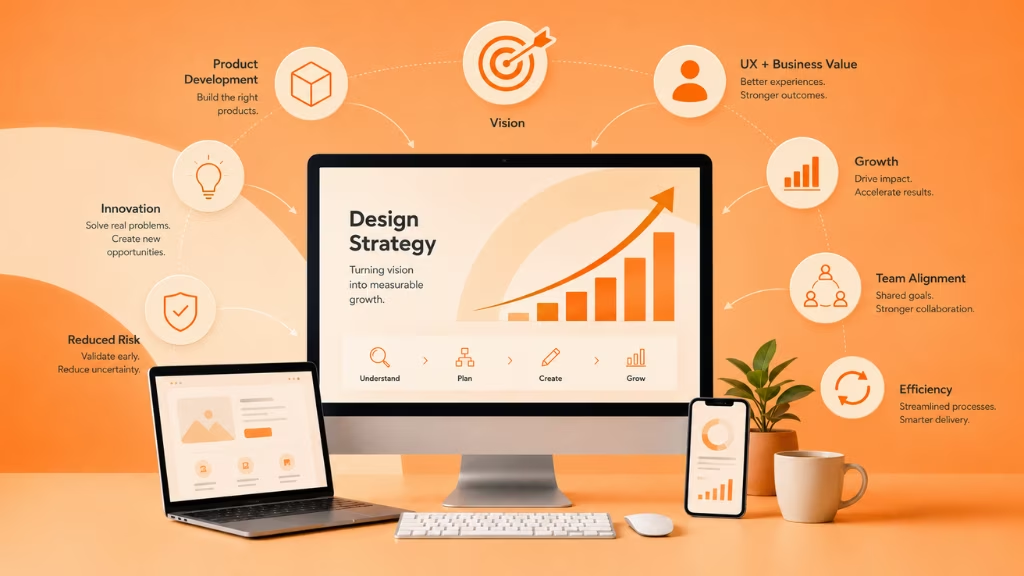
A strong design strategy translates vision into action, enabling organizations to build products and services that stand out, satisfy users, and support business growth.
- Driving successful product development: Guides teams from idea to launch with clear objectives and pathways.
- Connecting UX to business value: Ensures user experiences are measured against KPIs like retention, revenue, or NPS.
- Fostering innovation and differentiation: Unlocks creative solutions that set a brand apart in crowded markets.
- Reducing risk and waste: Avoids costly missteps by aligning everyone around research-backed direction.
- Enhancing team alignment: Provides clarity for cross-functional teams, minimizing conflicting priorities.
- Increasing efficiency: Streamlines workflows by focusing only on initiatives that drive impact.
Organizations that prioritize design strategy outpace competitors in both user satisfaction and ROI, according to benchmarks from leading design consultancies.
What Are the Core Principles of Design Strategy?
Design strategy is grounded in several essential principles that ensure relevance, effectiveness, and long-term success in any industry.
- User Centricity: Place real user needs at the center of every decision through research and validation.
- Business Alignment: Ensure all design choices support core business objectives and market realities (viability).
- Feasibility & Practicality: Design with an understanding of technical, operational, or resource constraints.
- Innovation: Strive for creative solutions that provide differentiation where it matters most.
- Cross-Functional Collaboration: Foster teamwork across design, product, engineering, and business stakeholders.
- Sustainability & Continuous Improvement: Build adaptable strategies that evolve with feedback, data, and market changes.
By anchoring your approach in these principles, your team can craft strategies that are not only creative, but also commercially relevant and adaptable for the future.
How Do You Develop a Design Strategy? Step-by-Step Process
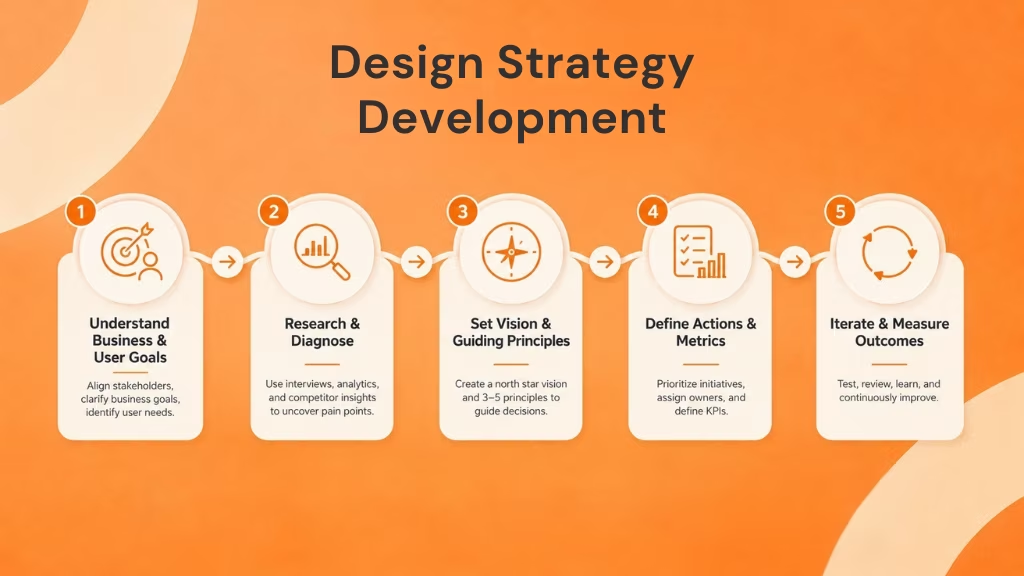
Developing a design strategy involves a structured process that links research, vision, action, and measurement into a repeatable framework.
Follow these five fundamental steps:
Step 1: Understand Business & User Goals
Start by aligning stakeholders on the organization’s vision, objectives, and what success looks like for users and the business. Facilitate workshops or interviews with leaders, team members, and customers to get a clear picture of priorities and pain points.
- Clarify: What are the business goals for this initiative?
- Identify: Who are the key user groups and what do they need?
- Stakeholder alignment is critical at this stage.
Step 2: Research & Diagnose
Gather quantitative and qualitative data to inform your direction. Use customer interviews, user analytics, and competitor analysis to surface insights that will guide design choices.
- Map pain points in the current experience.
- Explore unmet market needs and gaps in competitor offerings.
- Document actionable takeaways from findings.
Step 3: Set Vision & Guiding Principles
Translate your research into a compelling vision statement and clear design principles. These serve as the “north star” motivating and focusing the team.
- Craft a vision that is clear, inspiring, and measurable.
- Outline 3–5 principles that every solution should embody (e.g., “mobile-first,” “simplicity over complexity,” “data-driven”).
- Gain consensus across teams.
Step 4: Define Actions & Metrics
Convert vision into a roadmap of projects, initiatives, or experiments. For each, set accountability, resources, and success metrics.
- Prioritize projects based on impact and feasibility.
- Assign owners, timelines, and budgets.
- Define key performance indicators (KPIs) aligned with business and user outcomes (e.g., conversion rate, retention, satisfaction).
Step 5: Iterate & Measure Outcomes
Monitor progress using the defined metrics. Regularly gather feedback, both from users and project data, to refine your strategy and solutions.
- Run usability tests, A/B experiments, or customer surveys.
- Schedule recurring reviews to evaluate outcomes and adapt as needed.
- Foster a culture of continuous learning and iteration.
Design Strategy in Practice: Real-World Examples & Case Snapshots
Seeing design strategy in action helps clarify its impact. Here are brief case studies showing how top organizations leveraged frameworks for measurable success.
Case Study 1: Digital Product Innovation at FinTechCo
- Challenge: FinTechCo struggled with low app usage and unclear customer value.
- Design Strategy: Implemented user research sprints, defined a vision of “banking in one tap,” established principles around instant access and trust.
- Outcome: Redesigned app features led to a 30% uplift in daily active users and a 20% NPS increase within six months.
Case Study 2: Retail Experience at ShopSmart
- Challenge: Fragmented in-store and online experiences hurt sales.
- Design Strategy: Aligned business and user goals via cross-functional workshops, mapped seamless omnichannel journeys, applied design principles such as “frictionless checkout.”
- Outcome: Increased online conversion by 18% and reduced store complaints by 40% over one quarter.
Case Study 3: Service Redesign at HealthPlus
- Challenge: Long patient wait times and low satisfaction scores.
- Design Strategy: Combined ethnographic research with data analytics, set guiding principles focused on empathy and accessibility, introduced new appointment tools.
- Outcome: Reduced average wait times by 25% and improved patient satisfaction scores significantly.
These examples demonstrate how a structured strategy translates complex challenges into actionable, measurable change.
How Does Design Strategy Compare?
Design strategy, product strategy, and business strategy are distinct yet deeply interconnected. Understanding their differences ensures better collaboration and outcome alignment.
| Strategy Type | Purpose | Scope | Typical Owners | Example Outcomes |
| Design Strategy | Align design with user and business goals | UX/UI, Service | Design leads, UX strategists | User flow, interface, experience KPIs |
| Product Strategy | Guide development, feature set, positioning | Product lifecycle | Product managers, owners | Feature roadmap, market fit |
| Business Strategy | Drive overall organizational growth and direction | Organization-wide | Executives, C-suite | Revenue growth, market expansion |
- Overlap: In mature organizations, these strategies inform and support each other. For example, design strategy often shapes, and is shaped by, product and business strategies.
- Differences: Design strategy zooms in on how design delivers value, while product strategy focuses on what to build, and business strategy defines why and where the company competes.
Who Drives Design Strategy? Roles & Careers Explained
Design strategy is a cross-functional responsibility, led by key roles with strategic, facilitative, and collaborative skills.
- Design Strategist: Connects user insights, business needs, and actionable design frameworks. Champions research, ideation, and alignment.
- UX Lead or Director: Guides the end-to-end experience vision and ensures strategy translates to memorable products.
- Product Manager: Balances design opportunities with technical feasibility and business priorities.
- Business Lead/Stakeholders: Ensure alignment with financial, operational, and market objectives.
Key Skills:
Strategic thinking and systems perspective
User research and synthesis
Facilitation and stakeholder management
Communication and storytelling
Career Pathways:
Many start as designers, researchers, or product managers before moving into senior or specialist strategy roles. As organizations mature, dedicated design strategy roles are increasingly in demand globally.
What Are Common Challenges and Mistakes in Design Strategy?
Recognizing and avoiding common pitfalls prevents wasted resources and increases the odds of strategic success.
- Skipping the research phase: Decisions based on assumptions rather than evidence reduce success rates.
- Weak business alignment: When design doesn’t support core objectives or KPIs, efforts struggle for buy-in.
- Lack of stakeholder involvement: Failing to engage decision-makers early leads to friction and rework.
- Working in silos: Isolated design teams miss out on insights and support from product, engineering, or marketing.
- Inflexibility: Treating the strategy as static rather than reviewing and updating regularly as conditions change.
Anticipating these hurdles—and building processes to address them—can make your design strategy more resilient and impactful.
Frequently Asked Questions (FAQ)
What is a design strategy?
A design strategy is a structured approach that connects business goals and user needs, using research and guiding principles to deliver well-aligned, valuable design outcomes.
Why is design strategy important for businesses?
Design strategy ensures that design investments align with organizational objectives, reduce wasted effort, foster innovation, and result in experiences that drive measurable business and user outcomes.
How do you develop an effective design strategy?
Effective design strategy starts with clear business and user goals, is informed by research, sets a unifying vision, prioritizes actionable projects, and adopts a culture of ongoing evaluation and refinement.
What are the main principles of design strategy?
Core design strategy principles are user centricity, business alignment, feasibility, innovation, cross-functional collaboration, and continuous improvement.
How does design strategy differ from product strategy?
Design strategy focuses on how experiences are designed for users, while product strategy determines what is built and brought to market; both must align with the business strategy for best results.
What are examples of design strategy in real companies?
Brands like FinTechCo, ShopSmart, and HealthPlus have used design strategy to boost app engagement, integrate omnichannel retail, and improve healthcare delivery respectively (see earlier case snapshots).
Conclusion
Design strategy turns vision into actionable outcomes, bridging the gap between business ambition and real-world user experiences. By leveraging clear frameworks, prioritizing research, encouraging cross-functional collaboration, and learning from leading brands, teams can deliver results that stand out in the marketplace.
Key Takeaways
- Definition: Design strategy is a structured plan aligning design, business, and user goals for impactful results.
- Process: Clear steps from goal-setting to iteration drive consistent outcomes.
- Principles: User centricity, business alignment, and cross-team collaboration are key.
- Benefits: Supports innovation, efficiency, measurable ROI, and organization-wide alignment.
- Next steps: Use checklists and frameworks to jumpstart your own design strategy work.
This page was last edited on 2 June 2026, at 1:29 pm

Start a conversation with our team to solve complex challenges and move forward with confidence.