Picking a software development partner in Germany used to be simple. In 2026, the options are many, and the stakes are much higher for every digital project.
In my experience, buyers face two main issues—sorting reliable firms from lookalike companies and staying compliant with Germany’s strict rules. If you miss either, project costs and delays can escalate.
This guide will help you quickly shortlist the top software development companies in Germany, compare rates, and avoid common pitfalls. You will also find a straightforward buyer’s checklist and up-to-date trends for 2026.
Why Do the Best Software Development Companies in Germany Matter in 2026?
Germany’s leading software companies stand out for high-quality delivery, data security, and deep compliance know-how. Many international buyers now see these firms as gold standards in project reliability.
The German market is especially known for:
- Robust compliance with GDPR and evolving regulations
- High English proficiency in development teams
- Well-trained engineers and technical specialists
- Proven processes for project management
The focus on trust, transparency, and legal rigor minimizes risk. For business buyers, this means projects that are more likely to stay on budget and reach targets in regulated industries. As 2026 brings new tech standards, these advantages help future-proof your investment.
The Top Software Development Companies in Germany (2026 Ranked List & Comparison)
Choosing a top software development partner in Germany requires more than just a list. Below, I offer a side-by-side table of the most respected firms, followed by short summaries to help you match each company to your project needs.
| Company | City | Specialty | Hourly Rate (€) | Review Score (1-5) | Notes |
| Notch | Berlin | AI, Cloud, Enterprise | 80–160 | 4.8 | Strong compliance, end-to-end |
| Makers’ Den | Berlin | Web, Mobile | 70–140 | 4.7 | Fast scaling, agile teams |
| Boldheart | Munich | Custom Enterprise | 90–170 | 4.6 | Industry fit, ISO certified |
| Lemberg | Hamburg | IoT, Integration | 75–130 | 4.7 | Hardware+software experts |
| DigitalMinds | Düsseldorf | Web, SaaS | 60–120 | 4.5 | Startups, rapid delivery |
Each company above is recognized for strong project outcomes, transparency, and verified client feedback. Rates and scores are sourced from 2026 reviews on Clutch, Techreviewer, and market directories.
How We Selected the Best German Software Companies: Transparent Criteria
- Checked verified client reviews from trusted sites
- Evaluated diversity and scale of past projects
- Reviewed technical stack and innovation (AI, cloud, security approaches)
- Assessed regulatory certifications (such as GDPR compliance and ISO standards)
- Considered English proficiency and process transparency
- Compared rates for fair pricing and full cost clarity
In my POV, combining review data with compliance and communication skills is the only way buyers can avoid unwelcome surprises.
Individual Company Snapshots
Notch (Berlin)
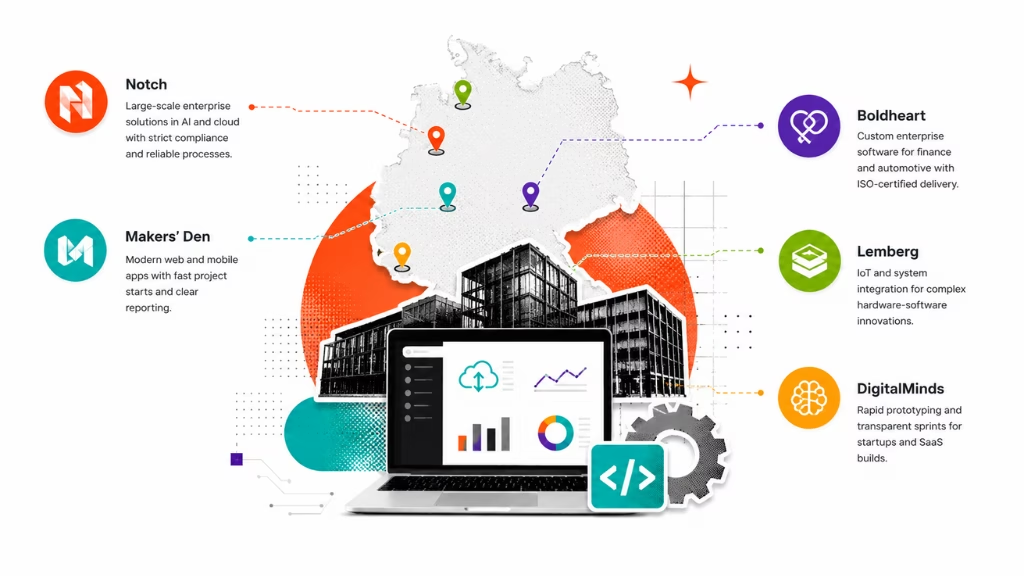
Notch is known for large-scale enterprise solutions, especially in AI and cloud. Their teams deliver under strict compliance needs. I have seen clients return for complex upgrades because of reliable, documented processes.
Best for regulated industries and innovative projects.
Makers’ Den (Berlin)
Makers’ Den specializes in modern web and mobile apps, serving both scale-ups and established brands. Fast project starts and clear reporting are key strengths.
Ideal for businesses seeking flexibility and quick launches.
Boldheart (Munich)
Boldheart stands out for custom enterprise software in fields like finance and automotive. Their ISO-certified project management keeps critical projects moving.
Strong fit for mid to large enterprises demanding full-lifecycle support.
Lemberg (Hamburg)
IoT and system integration make Lemberg a top pick for hardware-software projects. Teams speak fluent English, reducing delays in mixed international groups.
Great for complex, cross-disciplinary innovations.
DigitalMinds (Düsseldorf)
DigitalMinds focuses on startups and SaaS builds. Their rapid prototyping and transparent sprint approach help keep budgets under control.
Favored by founders wanting cost-effective, modern systems.
How To Choose the Right Software Development Partner in Germany: Expert Framework (2026)
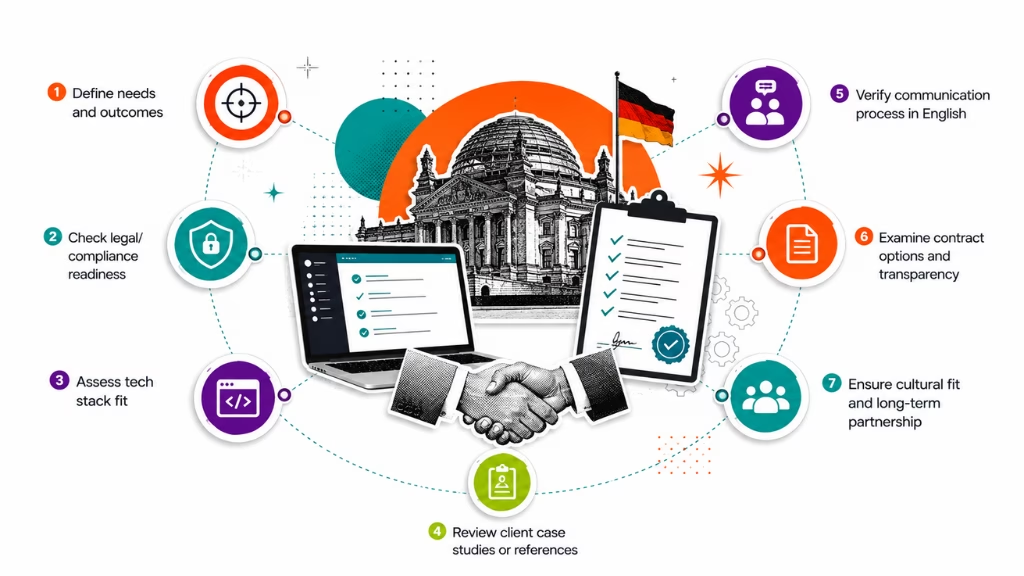
Selecting a partner in Germany is about more than price. In my experience, this checklist consistently leads to better projects.
Step-by-Step Buyer’s Checklist
- Define needs and outcomes. Document expected features, integrations, and scale.
- Check legal/compliance readiness. Confirm GDPR knowledge and security policies upfront.
- Assess tech stack fit. Do they have proven experience with your desired technologies (AI, mobile, web, legacy)?
- Review client case studies or references. Ask for stories in similar industries or project types.
- Verify communication process in English. Ensure project managers can work smoothly with your team.
- Examine contract options and transparency. Fixed price, T&M, or dedicated team—ask for sample contracts and clear pricing.
This framework helps reduce project risk, clarify expectations early, and fit company culture and business needs.
Top Tech Hubs: Where to Find German Software Talent
Major German cities each offer unique strengths for software projects. Here’s what I have learned working across several regions:
- Berlin: Major hub for AI, startups, and international projects. English is widely used.
- Munich: Known for enterprise software, finance, automotive tech, and deep tech experts.
- Hamburg: Strong in IoT, integration, and logistics technology.
- Düsseldorf: Focus on web, SaaS, and rapid delivery for startups.
If you need in-person meetings, hybrid work, or localized legal support, picking a partner in your target city speeds things along and simplifies compliance.
2026 Trends in German Software Outsourcing: What Smart Buyers Need to Know
The German software outsourcing market continues to shift. Recent trends I have seen include:
- Growth in AI and automation projects, especially in manufacturing and finance
- Stricter regulations for cloud and AI data protection
- Increasing use of English for all client communication
- Faster delivery cycles, but with continued focus on documentation
- Greater competition with Eastern Europe on price, but German firms still lead on compliance
Understanding these trends helps buyers avoid mismatches between project ambition and vendor capability.
Typical Services, Engagement Models & Software Development Costs in Germany (2026)
The German software sector serves a broad range of industries and project types. Below I summarize what you can expect in service offerings, contract models, and typical rates.
- Custom software development
- AI and machine learning solutions
- Mobile and web application builds
- IoT device integration
- Cloud migrations and upgrades
Average costs in 2026:
| Project Type | Hourly Rate (€) | Minimum Project Size (€) |
| Custom web/mobile app | 70–140 | 20,000+ |
| AI/ML solution | 80–160 | 40,000+ |
| Enterprise platform | 90–170 | 100,000+ |
Common contract models:
- Fixed-price: Set budget, used for well-defined scopes
- Time & Materials (T&M): Pay by developer hours, more flexibility
- Dedicated team: Ongoing engagement, ideal for long-term builds
- Staff augmentation: Add specialists for a set period
Cost drivers include project complexity, team size, tech stack, and duration. In my experience, clear scoping up front is what keeps costs in check.
Common Mistakes and How To Avoid Pitfalls When Outsourcing Software Development in Germany
- Skipping due diligence on company credentials and GDPR checks
- Not clarifying project scope, causing costly change requests
- Ignoring language abilities, leading to miscommunications
- Chasing the lowest hourly rate instead of total value
- Leaving contract details vague (especially around support and exit clauses)
Avoid these by using a detailed checklist and reviewing contracts line by line.
How Riseup Labs Can Help Buyers Succeed
Sometimes buyers need an independent tool to compare vendors, benchmark costs, or understand true compliance. Riseup Labs offers downloadable comparison worksheets and step-by-step guides to give you a confident head start when shortlisting German software partners. In my POV, neutral resources like these are crucial for fast-moving teams in 2026.
Conclusion
Selecting the right software development company in Germany is about clear standards—verified reviews, compliance know-how, and transparent business terms. Top firms like Notch or Makers’ Den win repeated clients for these reasons.
Using practical frameworks and trusted evaluation data, buyers can avoid costly mistakes. Resources from Riseup Labs, like comparison tables and RFP templates, help you confidently build your shortlist.
Strong partnerships form when experience, communication, and legal readiness all align. This is where AI-assisted vetting tools, combined with hands-on expert input, represent the future of B2B development buying.
FAQs: Software Development Outsourcing in Germany (2026 Edition)
How are the top software development companies in Germany selected in 2026?
They are selected based on verified client reviews, project success, compliance certifications, technical expertise, and transparent pricing from authoritative platforms.
What is the average hourly rate for software development in Germany?
Hourly rates in 2026 generally range from €70 to €170, depending on project type, expertise required, and company location.
Which cities in Germany have the most software development firms?
Berlin, Munich, Hamburg, and Düsseldorf have the highest density of software companies, each offering unique specialties and talent pools.
How do German firms compare to offshore providers?
German firms lead in compliance, process rigor, and English communication, while offshore providers may offer lower costs but with more risk in regulatory and delivery terms.
What are the common contract types for software development in Germany?
Fixed-price, Time & Materials (T&M), dedicated team, and staff augmentation are the most common engagement models in 2026.
Is English commonly spoken by German software engineers?
Yes, most leading German firms have fluent English-speaking development and project management teams for international projects.
Do German developers support AI/IoT/Cloud projects?
Yes, German companies have deep expertise in AI, IoT, and cloud, backed by adherence to local and EU compliance standards.
How do I verify the credibility of a German software development company?
Review independent client feedback, check for GDPR and ISO compliance, request recent case studies, and confirm transparent contract terms.
What’s new in the German software industry in 2026?
In 2026, AI, automation, and stricter compliance are transforming software delivery, with shorter timelines and more English-language support.
What compliance or data protection regulations apply to German IT projects?
GDPR, as well as specific German data security and IT standards, shape every project’s planning, documentation, and launch phases.
This page was last edited on 21 July 2026, at 12:51 pm
Start a conversation with our team to solve complex challenges and move forward with confidence.