The top sites to hire Azure developers in 2026 are Algoscale, Toptal, Upwork, LinkedIn Talent, and Bacancy. These platforms provide certified Azure experts, flexible hiring options, and strong vetting for secure cloud projects.
Finding skilled Azure developers is now a mission-critical business need. Many teams face endless challenges sorting through unproven freelancers, uncertain vetting, and unpredictable costs. I have seen this happen when selecting talent for high-stakes cloud migrations.
Picking the wrong hiring platform wastes money and puts sensitive cloud infrastructure at risk. The real issue is not just finding talent, but making sure they are actually Azure-certified and ready for your business needs in 2026.
This guide will help you compare the top sites for Azure hiring, understand the cost landscape, evaluate skills, and avoid common pitfalls. You’ll walk away able to confidently make your next Azure developer hire.
Why Is Hiring Specialized Azure Developers Important in 2026?
Hiring specialized Azure developers is vital in 2026, especially as Microsoft Azure powers key applications, data, and workflows for businesses across the globe. Generalist developers may lack the Azure-specific expertise needed for security, compliance, and new cloud capabilities.
In my experience, Azure-certified experts help organizations migrate and manage workloads faster, reduce errors, and avoid security gaps. Businesses in SaaS, finance, and healthcare depend on specialized skills such as Azure DevOps, OpenAI integrations, and compliance mastery.
A certified Azure expert brings a proven understanding of new Azure features—like advanced role-based access and AI—raising project success rates and lowering risk.
What Are the Top Sites to Hire Azure Developers in 2026?
Choosing the right site to hire Azure developers shapes the speed, quality, and outcome of your cloud initiatives. Top platforms differ in vetting depth, cost levels, and support. Here’s how the most trusted sites compare.
Hiring Platforms at a Glance
This table summarizes the main differences among the top options, helping you quickly spot which platform fits your use case.
| Feature | Riseup Labs | Algoscale | Toptal | Upwork | LinkedIn Talent | Bacancy |
|---|---|---|---|---|---|---|
| Vetting Depth | Deep, agency-led | High, custom | Rigorous, top 3% | Varied, user-rated | Profile and skills-based | Deep, agency-led |
| Certification Verified | Manual verification | Yes | Yes | Optional | Manual check | Yes |
| Best For | Dedicated Azure teams and staff augmentation | Enterprise and AI projects | Niche specialists | Flexible, on-demand hiring | Direct and local recruitment | Managed development teams |
| Pricing Model | Project, contract, or dedicated team | Project or contract | Hourly or monthly | Hourly or fixed-price | Salary or contract | Hourly or project |
| Support | End-to-end delivery and team management | Project management | Replacement and QA | Payment escrow | Talent search tools | End-to-end support |
| Delivery Speed | Based on team size and project scope | 1–2 weeks | Days to 1 week | Hours to days | Varies | 5–10 days |
| Regions | Global | Global | Global | Global | Global | Global |
A better approach to platform selection weighs not just talent volume, but also vetting, management support, and legal coverage.
1. Riseup Labs
Riseup Labs provides Azure development services alongside flexible team-hiring and staff-augmentation models. Businesses can hire individual Azure specialists or assemble dedicated development teams for cloud applications, migration, modernization, and ongoing support.
Key Use Cases:
- Dedicated Azure development teams
- Azure cloud application development and modernization
- Long-term staff augmentation and managed projects
Pros:
- Flexible full-time, part-time, and hourly hiring models
- Dedicated teams can include developers, QA specialists, and project managers
- Suitable for both ongoing development and project-based delivery
- End-to-end engineering and team-management support
Cons:
- Pricing is generally provided after discussing the project scope
- May be more structured than hiring an independent freelancer
- Final onboarding speed depends on team size and skill requirements
Cost Range:
Custom pricing based on team size, engagement model, skills, and project duration.
Pro Tips: Choose Riseup Labs when you need a scalable Azure team, dedicated specialists, or a managed development partner rather than a single short-term freelancer.
2. Algoscale
Algoscale is known for its focus on enterprise-grade Azure projects, including AI, big data, and regulated workloads. They offer heavy vetting and assign Azure-certified professionals.
Key Use Cases:
- Custom data science, AI, or analytics apps
- Regulated industries (healthcare, finance)
- Long-term cloud programs
Pros:
- Deep technical screening
- Compliance-aware teams
- Seamless project management
Cons:
- May cost more than basic freelance sites
- Not optimal for very short-term needs
Cost Range:
- Starts at $45–$120 per hour, varies by project scope
Pro Tips: Pick Algoscale if your project has strict compliance, custom data, or advanced AI needs.
3. Toptal
Toptal specializes in the top 3% of global freelancer talent. Their vetting covers Azure certification, code tests, and communication skills. In my experience, their focus cuts the risk of hiring unqualified developers.
Ideal For:
- One-off projects requiring high skill
- Sprints needing subject-matter experts
- Clients who want trial periods and replacement guarantees
Pros:
- Rigid vetting
- Strong replacement policy
- Flexible engagement types
Cons:
- Top-tier rates
- Limited for bulk/team hires
Hourly Range:
- $50–$160 depending on specialization
Pro Tips: Choose Toptal for short, skill-intensive projects with little management overhead.
4. Upwork
Upwork is the largest open freelance marketplace. You can post Azure jobs, browse profiles, and use built-in payment protection.
Strengths:
- Largest talent pool
- Hourly, part-time, or full-time options
- Useful for tight deadlines
Drawbacks:
- Vetting is up to you
- Quality varies widely
- Extra effort to verify certification
Cost Info:
- $30–$150 per hour; rates vary by location and skill
Pro Tips: Use Upwork for flexible hiring, but budget time for extra vetting.
5. LinkedIn Talent
On LinkedIn, you search for Azure developers or agencies directly by keywords, certifications, and even Microsoft Partner status.
Benefits:
- Access to corporate and local talent
- Transparency into background, endorsements
- Options to post jobs or recruit with InMail
Limitations:
- Manual outreach and negotiation
- No built-in vetting or project support
- Talent reviews not always project-focused
Useful For:
- Permanent hires
- Sourcing local or niche talent
Pro Tips: LinkedIn works well for direct, long-term, or highly specific Azure hiring needs.
6. Bacancy
Bacancy offers agency-led Azure teams. They vet developers in-house and provide end-to-end support—project management, onboarding, and skill matching.
Best For:
- Companies needing managed teams
- Fast ramp-up for project portfolios
- Organized onboarding and replacement
Advantages:
- Transparent skills matrix
- On-demand scaling
- Retention and support
Drawbacks:
- Slightly less flexibility for one-off small projects
- Upfront process
Price Range:
- $35–$100 per hour (depends on skill and engagement)
Pro Tips: Select Bacancy for managed Azure teams with skills assurance and agency support.
Honorable Mentions: Other Notables
A few more sources can be strong depending on your region or niche.
Highlights:
- Uplers: Good for fast hiring, AI-vetted profiles
- Microsoft Partner Directory: For certified partner firms worldwide
- Niche Consultancies: Strong regional/project fit, but smaller bench size
Each offers unique strengths—Uplers is ideal for quick ramp-up, while the Partner Directory lists only certified firms.
How Do You Choose the Right Platform or Agency for Azure Developer Hiring?
Selecting the right partner for Azure hiring depends on your goals, compliance risks, and how much management you want to handle. Below, you’ll find a checklist and breakdown to guide your decision.
Key Criteria for Assessing Azure Hiring Platforms
When I review platforms or agencies for my clients, these are the main factors I evaluate:
| Criteria | Why It Matters |
| Certification Verification | Proves technical competence |
| Skill Vetting (deep tests) | Reduces project risk |
| NDA/Data Privacy/Legal | Protects your business and clients |
| Support/Replacement Guarantee | Minimizes risk if talent churns |
| Delivery Speed/Timezone Alignment | Matches your deadlines and team communication |
Your best choice covers at least 4 of these areas, not just talent supply.
Platform vs. Freelancer vs. Agency vs. Microsoft Partner: What’s Right for You?
Understanding the options is key. Each approach offers different benefits and risks.
| Option | Best For | Pros | Cons |
| Platform (Toptal, Upwork) | Fast, flexible needs | Wide access; varying vetting | Varying quality; more DIY hiring |
| Freelancer | Short, low-risk tasks | Cost-effective, simple contracts | Hard to ensure security/compliance |
| Agency (Bacancy) | Fully managed teams, scaling | Vetted teams; end-to-end management | Higher cost than freelancers |
| Microsoft Partner | High-stakes, compliance-critical | Certified process, official recognition | Long lead times; project minimums |
In my POV, agencies or partners are safer for core systems; platforms excel for fast, tactical hires.
Azure Developer Cost Comparison 2026 (By Platform & Region)
Developer rates vary by platform, skill level, and geography. Below is a cost benchmark from my 2026 market research.
| Hiring Route | Hourly Rate Range (USD) | Typical Use Case |
|---|---|---|
| Riseup Labs | Custom pricing | Dedicated Azure teams, staff augmentation, managed cloud projects |
| Upwork | $30–$150 | Short contracts and flexible global hiring |
| Toptal | $50–$160 | Niche Azure skills and short technical sprints |
| Bacancy | $35–$100 | Managed teams and rapid scaling |
| LinkedIn Direct Hire | $45–$110 hourly equivalent; $100K–$180K annual salary | Long-term and full-time recruitment |
| Microsoft Partner Network | $70–$200+ | Regulated, enterprise, and mission-critical Azure projects |
Costs go up with skills like DevOps, OpenAI, and compliance expertise. Offshore talent is often 25–40% less than US/Western Europe rates, though timezone and oversight may add costs.
What Skills and Certifications Should Azure Developers Have?
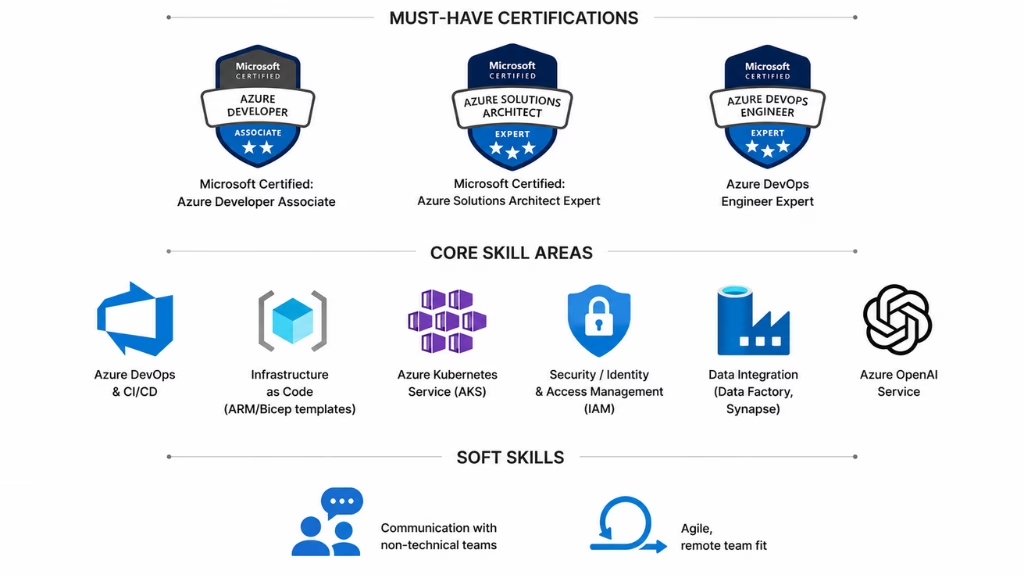
A qualified Azure developer brings up-to-date certification, deep technical skills, and strong communication. This is where many teams struggle to validate candidates.
Microsoft’s official Azure certifications remain the industry baseline in 2026.
Must-Have Certifications:
- Microsoft Certified: Azure Developer Associate
- Microsoft Certified: Azure Solutions Architect Expert
- Azure DevOps Engineer Expert
Core Skill Areas:
- Azure DevOps & CI/CD
- Infrastructure as Code (ARM/Bicep templates)
- Azure Kubernetes Service (AKS)
- Security/Identity & Access Management (IAM)
- Data integration (Data Factory, Synapse)
- Azure OpenAI Service (for advanced AI workloads)
Soft Skills:
- Communication with non-technical teams
- Agile, remote team fit
How to Verify:
- Ask for digital badges, certification IDs
- Use hands-on test projects
- Request references and delivery samples
In my experience, skipping these checks often leads to failed projects.
What’s the Step-by-Step Process to Hire an Azure Developer Successfully?
Hiring an Azure developer follows a structured process. Here’s the proven path I have used across several teams.
Step-by-Step Hiring Process:
- Define Your Needs: Map project scope, required skills, and security/compliance needs.
- Shortlist Candidates/Platforms: Use your chosen platform to filter for Azure-certified profiles.
- Screen and Assess: Review certifications, run coding tests, and evaluate project fit.
- Background & Legal Checks: Sign NDAs, verify legal ability to work, and check references.
- Make an Offer: Finalize rates, start dates, and service agreements.
- Onboard for Success: Grant secure access, set up IAM, and schedule kickoff meetings.
- Monitor Onboarding: Track first-week progress and check cultural/team alignment.
A better approach ensures you never skip both background and technical checks.
What Are the Most Common Mistakes or Red Flags in Hiring Azure Developers?
Hiring the wrong Azure developer can delay projects, waste budgets, and create security risks. The mistake I see often is treating Azure like generic cloud work.
Common Mistakes:
- Not verifying Azure certifications
- Ignoring depth of vetting on the platform
- Vague or incomplete project scope
- Skipping security or legal documentation (NDA)
- Not considering culture, time zone, or retention guarantees
Red Flags:
- Developer unable to show credible certification or digital badge
- No test project or technical review offered
- Avoids security questions
- Unclear on compliance requirements
Avoid these for better long-term project health.
Ensuring Security, Compliance, and Successful Onboarding
Security and compliance set Azure hiring apart from many other tech roles. In my experience, using structured onboarding keeps both data and business risks low.
Pro Tips:
- Always require NDAs and confirm data handling policies before onboarding.
- Use role-based access control (RBAC) and limit permissions by necessity.
- Check compliance for your sector, such as HIPAA or GDPR needs.
- Maintain audit logs when external devs access cloud systems.
- Have a templated onboarding checklist that covers IAM, credentials, and first project targets.
- Review post-hire metrics, like bug rates and on-time delivery, in the first month.
Preparing for these steps upfront will keep critical data and cloud tools secure.
Conclusion
Hiring Azure developers is no longer just about finding coders. It’s about sourcing certified, proven cloud specialists who align with your business security and delivery needs. The top sites in 2026—Algoscale, Toptal, Upwork, LinkedIn, and Bacancy—each offer unique paths to Azure expertise.
A smart hiring decision weighs skill verification, platform support, regional compliance, and long-term retention. Avoid the mistake of picking speed over security or depth.
When scaling or modernizing business systems, having the right Azure developer means more uptime, lower risk, and a faster move to cloud innovation. I have seen teams win projects when they follow a vetted, stepwise hiring process. If you’re ready to move forward, download our 2026 Azure hiring checklist or request a cost estimate to get started.
Looking ahead, combining AI-powered hiring tools and expert-led processes will be the future for every successful Azure development team.
Frequently Asked Questions About Hiring Azure Developers in 2026
Where can I find the best Azure developers to hire in 2026?
The best places are Algoscale, Toptal, Upwork, LinkedIn Talent, and Bacancy. Each provides access to Azure-certified, vetted developers suited to business needs in 2026.
What are the top-rated platforms for hiring Azure developers?
Algoscale, Toptal, Upwork, LinkedIn Talent, and Bacancy are top-rated for their rigorous vetting, flexible hiring terms, and proven developer quality.
How much does it cost to hire a certified Azure developer?
In 2026, certified Azure developer rates range from $30 to $200 per hour, depending on platform, skill depth, and region.
Should I choose a Microsoft Partner, agency, or freelancer?
Choose Microsoft Partners or agencies for large, mission-critical or regulated projects. Freelancers or platforms suit fast, smaller, or flexible tasks.
What certifications are important for Azure developers?
The key certifications are Microsoft Certified: Azure Developer Associate, Azure Solutions Architect Expert, and DevOps Engineer Expert.
How do hiring platforms vet Azure talent?
Leading platforms verify certifications, run technical assessments, and review past projects to ensure real Azure skills before listing talent.
Can I hire part-time or project-based Azure engineers?
Yes; Upwork, Toptal, Bacancy, and most platforms offer part-time, project-based, or contract hiring for Azure developers.
What’s the process for onboarding an Azure developer securely?
Define access levels, sign NDAs, enforce RBAC, enable auditing, and integrate the developer using onboarding checklists to keep your project secure.
What support or guarantees do agencies/platforms offer post-hire?
Most agencies and vetted platforms offer talent replacement guarantees and project support for periods after onboarding.
What are the main risks and red flags to avoid when hiring Azure talent?
Key risks include lack of certification, weak vetting, skipped background checks, unclear project scope, and not securing proper data access controls.
This page was last edited on 15 July 2026, at 11:44 am

Start a conversation with our team to solve complex challenges and move forward with confidence.