To succeed in artificial intelligence, create a learning plan that covers Python, machine learning, and hands-on projects. Grow your AI portfolio, keep learning new tools, and uphold ethical standards. Anyone can thrive in AI with the right learning path.
AI is changing how businesses deliver value, but the skills gap and rapid tech shifts make true success a moving target. In my experience, many teams struggle to keep up or even break in.
This guide meets readers at all backgrounds—students, professionals, or those shifting careers—who want clear, proven steps for success in artificial intelligence. I have seen strong results when learners apply structure, practice, and real problem-solving.
You will leave this article with a step-by-step AI learning plan, the most in-demand skills for 2026, tips for building an AI portfolio, and actionable advice for both tech and non-tech professionals.
Why Succeeding in Artificial Intelligence Matters in 2026
AI skills are in high demand because businesses across industries need talent for faster, smarter work. The job market is growing quickly, with many high-impact roles—yet there are not enough skilled professionals to meet the need.
A clear AI learning plan does not just fill a resume. It makes you valuable across job markets and can future-proof your career against automation and economic changes. In fields like healthcare, finance, and SaaS, AI knowledge sets teams apart and opens doors for promotion or new roles.
| Industry | AI Impact Example | Typical Roles | Projected Growth |
| Healthcare | Patient diagnosis, workflow AI | Data scientist, ML engineer | High |
| Finance | Fraud detection, credit scoring | AI analyst, automation lead | High |
| SaaS/Tech | Personalization, chatbots | AI engineer, product manager | High |
| Creative | Image, text, and audio generation | NLP specialist, creative coder | Moderate |
Step-by-Step Roadmap: How to Succeed in Artificial Intelligence
A structured learning plan helps avoid missteps. Below, I share the steps that work well for both first-timers and upskillers, grounded in my team’s real project experiences.
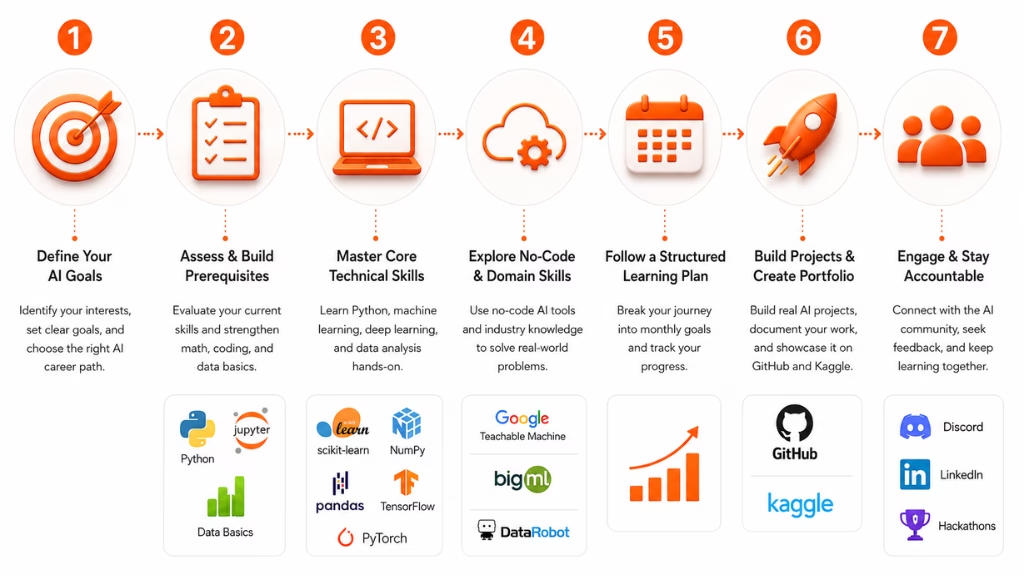
Define Your AI Goals and Pathway
First, clarify your destination. AI offers many options, but not every path fits every background. I have seen people skip this step and end up frustrated.
- Reflect on your current strengths and which AI roles interest you (data scientist, AI engineer, domain expert).
- Set SMART goals: specific, measurable, achievable, relevant, time-bound.
- Decide why you want to learn AI—career growth, research, building products—or starting your own solution.
A clear purpose guides your next steps and keeps learning focused.
Assess and Build Prerequisite Skills
Before jumping in, get honest about your current skills. In my view, most stuck learners skip this step and later need to backtrack.
- You need basic math (algebra, stats), some coding (often Python), or data reasoning for most technical AI paths.
- Non-coders can start with no-code AI tools (like AutoML, Google Teachable Machine) and branch out.
- Use free online diagnostics or self-assessment quizzes to spot gaps.
A better approach is to fill those gaps before starting advanced material.
Core Technical Skills to Master
Every solid AI practitioner I know works from strong technical skills—these are your toolkit.
- Python: Still the most important language for AI. Quick to learn, huge libraries.
- Machine Learning Basics: Understand models like regression and classification using libraries like scikit-learn.
- Deep Learning: Neural networks, using frameworks like TensorFlow or PyTorch.
- Data Literacy: Clean and interpret datasets; use Pandas, NumPy, and statistics.
In my experience, a hands-on project in each area cements the learning much better than theory alone.
No-Code and Industry-Specific AI Skills
Not everyone wants to code. I have watched marketers, analysts, and healthcare pros succeed with no-code platforms.
- Popular no-code tools for 2026: AutoML, BigML, Google Teachable Machine.
- Industry-specific AI applications help non-technical talent bring domain knowledge to tech teams.
- Learning the basics empowers you to steer projects—even if you never write code.
This is where many teams bridge the gap between business needs and AI outcomes.
Month-by-Month AI Learning Plan (Sample Roadmap Table)
Breaking learning into clear, time-based goals helps you stay on track. Last year when our dev team tried this, we saw much better progress.
| Month | Focus Area | Typical Outcome |
| Month 1 | Python basics, math refresh | Write scripts, solve math tasks |
| Months 2–3 | ML basics, first projects | Build regressors, simple models |
| Months 4–6 | Deep learning, main portfolio | Train neural nets, share work |
Print or save this roadmap to check off progress.
Build Your First AI Projects and Portfolio
Building a portfolio shows you can apply AI, not just talk about it. This is what recruiters want to see.
- Pick beginner-friendly projects like image recognition apps or chatbots.
- Use GitHub and Kaggle to host your work and share code.
- Focus on clear documentation and results—show how your AI model solves a real problem.
I have seen this approach land interviews and build confidence.
Engage with the AI Community and Stay Accountable
Connecting with peers and mentors makes the biggest difference for long-term growth.
- Join hackathons (Kaggle, Devpost), Discord groups, and LinkedIn AI circles.
- Pair up with a mentor or study partner. In my POV, accountability speeds up learning.
- Ask for feedback and track skills in a shared doc or learning app.
I have seen even solo learners succeed faster when plugged into these networks.
What Are the Most In-Demand AI Skills and Tools in 2026?
AI teams in 2026 want a mix of coding, analytics, and domain knowledge. If you want to prioritize, focus on the skills and tools below.
- Python: Main coding language for AI.
- Machine Learning: scikit-learn for modeling; understand pipelines, regression, classification.
- Deep Learning: TensorFlow and PyTorch are top choices for neural networks.
- Data Science Tools: Pandas, NumPy for data analysis; Keras for rapid prototyping.
- No-Code AI Tools: AutoML, BigML, Teachable Machine.
- Version Control: GitHub to host and share your work.
| Skill | Importance | Use Case Example |
| Python | Essential | Building, testing models |
| scikit-learn | High | Classic ML projects |
| TensorFlow/PyTorch | High | Deep learning apps |
| Pandas, NumPy | High | Data wrangling, stats |
| No-code AI Tools | Growing | Non-technical automation |
A good rule is to pick tools that match your career goals and projects.
Common Mistakes and How to Avoid Them on Your AI Journey
I have seen many people fall into the same traps when learning AI. Avoiding these improves your chances of real success.
Common pitfalls to watch for:
- Ignoring math, coding, or stats foundations
- Focusing only on theory, not projects
- Skipping peer feedback and the AI community
- Forgetting ethics and bias in project design
- Poor documentation or weak portfolio samples
The real issue is that quick wins fade unless you keep applying skills to new problems.
How to Build an AI Portfolio and Stand Out to Employers
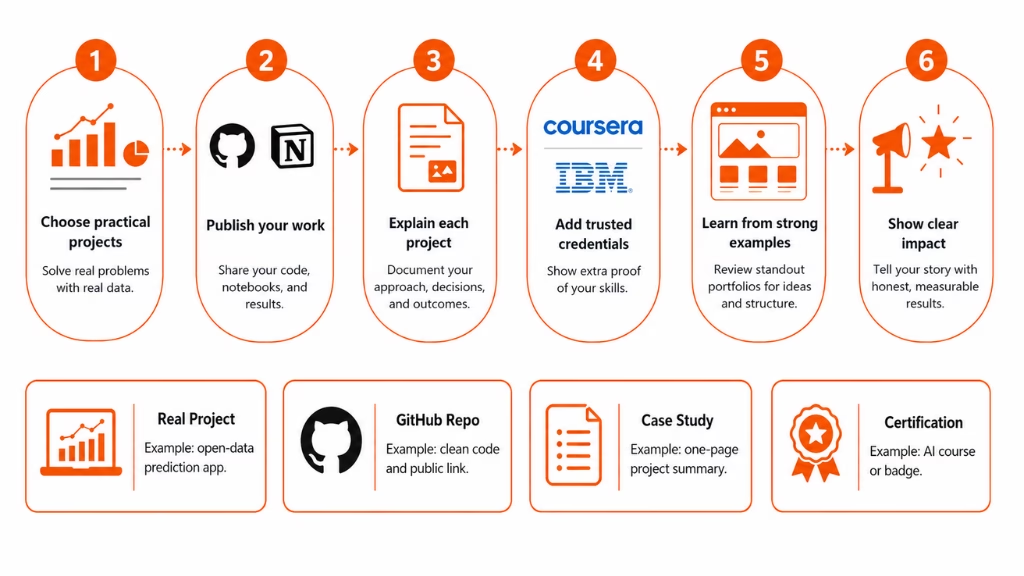
A strong AI portfolio shows employers you can solve real problems—not just pass a quiz. In my experience, this gets more attention than any cert.
Here’s how to build a standout portfolio:
- Pick real-world projects with visible impact (public datasets, creative uses, business apps).
- Use GitHub or Notion to share details and results.
- Write short case studies to explain your approach, choices, and impact.
- Supplement with certifications from trusted sources as needed.
- Look at examples from leading AI practitioners for ideas.
A better approach is clear, honest storytelling in your documentation; it brings your work to life.
| Portfolio Element | Why It Matters | Example |
| Real data project | Shows practical skill | Predict house prices from open data |
| GitHub repo | Proof of working code | Public link, clean scripts |
| Case study writeup | Adds business context | One page summary per project |
| Certification | Extra validation | Coursera AI Engineer, IBM badge |
Navigating AI Careers, Salaries, and Trends in 2026
AI careers now span many titles and roles, both remote and in-office. My peers have taken many entry routes, from internships to contract work.
Here is a short overview:
| Role Title | Typical Salary (USD) | Growth Outlook | Specialization Area |
| Machine Learning Eng. | $130,000+ | High | Algorithms, apps |
| Data Scientist | $120,000+ | High | Analytics, predictions |
| AI Product Manager | $140,000+ | High | Product strategy, roadmap |
| NLP Specialist | $125,000+ | Moderate | Language, text AI |
| Responsible AI Lead | $125,000+ | Growing | Ethics, risk assessment |
Entry-level AI roles increasingly require a strong portfolio, internships, or relevant certifications. Specializations such as ethical AI, computer vision, and NLP are especially in demand. This trend also reflects a broader shift: the World Economic Forum’s Future of Jobs Report projects that AI will create around 170 million new roles globally by 2030, while displacing about 92 million existing roles—a net gain of 78 million jobs. The point is clear: the right skills and specialization will determine who benefits from this wave, not just who works in tech.
Why Are Ethics, Bias, and Continuous Learning Critical for AI Success?
AI projects risk causing harm if ethics and bias are ignored. In my POV, continuous learning is the only way to stay current and responsible.
Brief explanation of key points:
- Bias often sneaks in through unbalanced data or faulty project framing.
- There are recent real-world failures where AI caused financial, legal, or social harm.
- Best practices include explainable AI and transparency at every stage.
- Regularly join AI ethics courses, read news, and follow thought leaders.
- Membership in standards groups and networks supports responsible growth.
A check-in on ethics is just as vital as technical skills.
Is It Possible for Non-Technical Professionals to Succeed in AI?
Absolutely, and I have seen it with my own teams. Many of the best AI project managers, analysts, and trainers come from non-coding backgrounds.
- No-code and low-code paths open doors to business and creative professionals.
- Domain expertise in marketing, healthcare, or finance improves the whole AI team.
- Start with AI concepts, join projects, and keep learning.
- Focus on skills like data labeling, project scoping, ethics reviews, or AI product management.
A better approach is to bring your unique strengths to the table rather than trying to fit a coder mold.
| Myth | Truth |
| “You must be a coder” | Many non-coders lead, analyze, or guide AI teams. |
| “Only for techies” | Business, creative, and science pros all thrive. |
How Riseup Labs Can Support Your AI Journey
Riseup Labs offers hands-on AI learning programs tied to real business projects. I have seen this model help people build portfolios, gain mentorship, and turn skills into job offers.
- Real-world project experience, not canned labs
- 1:1 mentorship from AI professionals
- Guidance for building public portfolios
- Partnerships with leaders in tech, finance, and healthcare
Try a session or join a community project to move from learning to doing.
Conclusion
Succeeding in artificial intelligence is about clear planning, building the right skills, and showing those skills through projects. Keep your AI learning plan active, connect with the AI community, and remember—responsible ethics are as important as technical chops.
In my experience, teams and individuals who build strong portfolios and stay curious about new tools land the best roles. If you seek more real-world projects or need mentorship, Riseup Labs is a trusted partner.
Take your next step by downloading a sample AI learning plan, starting a new project, or joining an AI forum. The future of practical, responsible AI work is open to anyone ready to start.
FAQs: Succeeding in Artificial Intelligence
What are the first steps to succeed in artificial intelligence?
Start with a structured learning plan. Focus on Python, machine learning basics, and beginner-friendly projects. Build foundational skills and join AI communities for support.
Do I need a degree in computer science to work in AI?
No. Many AI roles welcome candidates with diverse backgrounds, strong project portfolios, or relevant certifications. Formal degrees help but are not required.
What programming languages should I learn for AI in 2026?
Python is essential. Knowing R or Java can help, depending on the application, but most AI teams use Python for its libraries and community support.
Can non-technical professionals transition into AI successfully?
Yes. No-code tools, domain expertise, and roles in ethics, product management, or data labeling make AI careers possible for non-coders.
How can I build a strong AI project portfolio?
Start small projects using real data. Publish your code and findings on GitHub. Write clear case studies and document your process and outcomes.
What are the best resources for learning AI quickly?
Courses from Coursera, IBM, and Google. Use AutoML for hands-on learning and join Kaggle for project experience. Communities offer guidance and feedback.
How important is AI ethics in modern AI careers?
Very important. Employers seek professionals who consider fairness, transparency, and bias in every AI project, not just technical outcomes.
How do I stay current with AI developments in 2026?
Subscribe to leading AI newsletters, join active online communities, enroll in updated courses, and attend webinars or conferences regularly.
What is the difference between machine learning and deep learning?
Machine learning focuses on models that find patterns in data. Deep learning uses neural networks for more complex tasks like image or speech recognition.
How long does it take to become proficient in AI?
With regular study and hands-on projects, you can build core AI skills in six to nine months. Specialized roles may require more time and experience.
This page was last edited on 9 July 2026, at 3:27 pm

Start a conversation with our team to solve complex challenges and move forward with confidence.