AI workflow automation for compliance teams has become a necessity in the face of rising regulatory complexity and mounting resource constraints. As regulatory frameworks evolve and scrutiny increases, traditional compliance strategies strain under the pressure—driving up costs and exposing organizations to greater risk.
Manual processes can no longer keep pace with expanding compliance obligations. That’s why forward-thinking compliance leaders are turning to AI-powered automation tools that streamline workflows, enhance audit readiness, and ensure continuous policy alignment.
This 2026 Expert Playbook delivers practical, up-to-date guidance on selecting, implementing, and maximizing the value of AI workflow automation for compliance teams. You’ll find step-by-step advice, tool comparisons, ROI metrics, and industry insights—empowering your team to reduce risk, control costs, and future-proof compliance operations.
What Is AI Workflow Automation for Compliance Teams?
AI workflow automation for compliance teams is the use of artificial intelligence to automate, monitor, and manage core compliance processes—such as regulatory monitoring, evidence collection, policy mapping, and audit reporting—across evolving regulatory frameworks.
Key components typically include:
- AI agents: Automated bots that process, classify, and flag compliance events.
- Process orchestration: Coordinated workflows that route tasks, approvals, and documentation.
- Compliance event triggers: Automated responses to regulatory updates, risk alerts, or audit needs.

AI workflow automation solutions help compliance teams address workloads such as:
- Regulatory intelligence monitoring (real-time updates from global regulators)
- Automated evidence/document collection and audit-ready reporting
- Risk and control mapping aligned to multiple frameworks (NIST, SOX, GDPR)
- Policy management and enforcement
At a glance, AI workflow automation enables compliance teams to move from reactive, manual handling to proactive, scalable, and continuous compliance operations.
How Does AI Workflow Automation Transform Compliance Operations?
AI workflow automation fundamentally transforms compliance operations by delivering real-time regulatory insight, streamlining documentation, and reducing the risk of human error.
Here’s how it works:
- Continuous Regulatory Monitoring
AI systems automatically scan, interpret, and prioritize updates from regulators, integrating them directly into compliance workflows. - Automated Evidence Collection & Audit Trails
Compliance automation tools gather required evidence, document activities, and maintain accessible audit-ready reporting—saving countless hours during audits. - Risk and Control Mapping
Automated mapping matches organizational controls to external frameworks, identifying gaps and outdated processes. - Policy Management AI
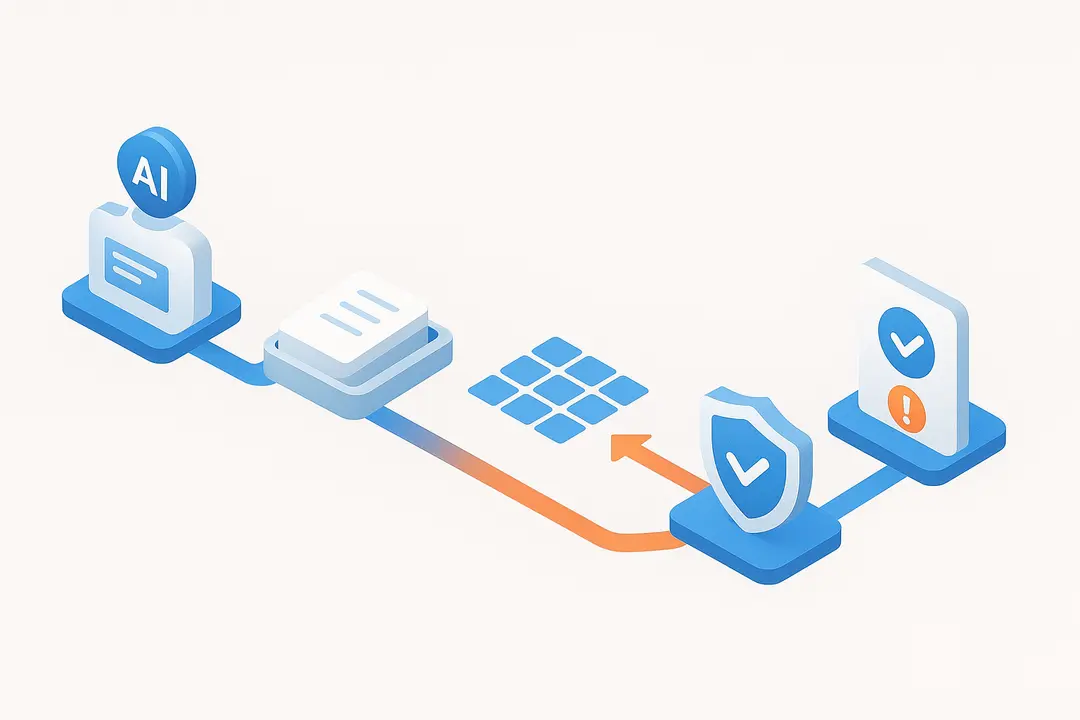
AI-based tools update, disseminate, and enforce compliance policies in real-time. - End-to-End Example Workflow
A new regulatory rule is detected → AI flags required action → task is routed, supporting documents are requested and auto-validated → automated approval or escalation to human reviewer.
Impact on Operations
- Real-time risk identification and remediation
- Streamlined audits and regulatory reporting
- Reduction in manual, repetitive tasks
What Are the Key Benefits of AI-Powered Compliance Automation?
AI-powered compliance automation offers measurable gains in risk reduction, cost savings, and productivity, directly impacting the bottom line and audit outcomes.
Primary benefits include:
- Time and Cost Savings: Automation reduces manual workload, translating to lower compliance costs and faster turnaround.
- Audit Readiness: Continuous documentation and automated audit trails make evidence readily available for regulatory reviews.
- Reduced Human Error and Risk Exposure: AI systems ensure policies and controls are consistently applied, lowering the risk of compliance breaches.
- Regulatory Alignment: Real-time monitoring keeps compliance aligned with the latest requirements.
- Productivity: Teams are freed to focus on higher-value tasks, enabling leaner, more effective compliance programs.
| Metric | Before Automation | After AI Workflow Automation |
|---|---|---|
| Time to compile audit reports | 7–14 days | Hours |
| Evidence collection hours | 40+/month | <10/month |
| Compliance incidents/year | 6+ | 1–2 |
| Cost per compliance FTE | 100% | 60–70% |
According to Deloitte and Thomson Reuters, over 70% of compliance leaders report time savings as a top driver for automation adoption.

What Core Features Should Compliance Teams Look for in AI Workflow Tools?
Choosing the right AI compliance platform requires a clear focus on essential features that support both current needs and future regulatory evolution.
Must-Have Features for AI Workflow Automation Platforms:
- Regulatory Updates & Monitoring: Automated feeds for relevant regulations and real-time change alerts.
- Customizable Workflow Orchestration: The ability to design, adapt, and automate compliance processes.
- Risk and Control Mapping: Automated linkage of organizational risks and controls to compliance frameworks.
- Evidence Collection Automation: Smart document management, evidence logging, and ready-to-audit repositories.
- Explainability & Auditability: Transparency features for AI decisions, ensuring compliance and regulatory acceptance.
- Integration Capabilities: APIs for seamless connection with GRC, HR, and document systems.
- Data Residency & Governance Controls: Compliance with regional data handling requirements.
- User Management & Access Controls: Role-based permissions suited for team structures.
| Feature | Centraleyes | Compliance.ai | Mitratech | Microsoft GRC | AI21 |
|---|---|---|---|---|---|
| Regulatory Monitoring | ✓ | ✓ | ✓ | ✓ | ✓ |
| Customizable Workflows | ✓ | ✓ | ✓ | ✓ | ✓ |
| Evidence Collection Automation | ✓ | ✓ | ✓ | ✓ | ✓ |
| Explainable AI | ✓ | Limited | ✓ | Limited | ✓ |
| Integration/APIs | ✓ | ✓ | ✓ | ✓ | ✓ |
| Cross-Framework Support | ✓ | ✓ | ✓ | ✓ | ✓ |
| Data Residency/Governance | ✓ | ✓ | ✓ | ✓ | ✓ |
Assess vendor offerings against these core features to ensure both present and future compliance needs are met.
How Do the Leading AI Compliance Automation Platforms Compare for 2026?
A direct, side-by-side comparison of top platforms is crucial for informed decision-making in compliance automation. Here’s how leading solutions stack up:
| Vendor | Differentiators | Supported Frameworks | Integrations | Typical Pricing Model | Vertical Focus |
|---|---|---|---|---|---|
| Centraleyes | Cross-framework mapping, real-time risk register, automation | SOX, NIST, GDPR, ISO 27001 | GRC, DMS, HR | Tiered, per-module | Finance, Insurance |
| Compliance.ai | Deep regulatory monitoring, machine learning, RCM command center | SOX, NIST, GDPR | Open API, DMS | Subscription | Financial services |
| Mitratech | Orchestrated GRC, workflow automation, strong reporting | Broad (customizable) | HRIS, GRC, legal | Per user/enterprise | Regulated industries |
| Microsoft GRC | Integration-first, AI/LLM-based intelligence, enterprise scale | NIST, ISO, GDPR | Microsoft Stack | Enterprise license | Enterprise/general |
| AI21 | Explainable AI, LLM-powered workflow, advanced analytics | NIST, GDPR, ISO | REST API | Usage-based | Multi-sector |
- Centraleyes specializes in continuous compliance and flexible mapping across frameworks.
- Compliance.ai is noted for its real-time regulatory content and command center for change management.
- Mitratech offers deep workflow orchestration, especially valued in legal and HR-centric processes.
- Microsoft GRC brings broad integration and security, ideal for mature enterprise environments.
- AI21 provides advanced explainable AI capabilities and language processing for rapid compliance assessment.
Consider your organization’s size, industry, and existing tech stack when selecting a platform.
What Are the Steps to Implement AI Workflow Automation in Compliance?
Implementing AI workflow automation in compliance is a phased process that balances technology rollout with process change and team adoption.
Stepwise Implementation Guide:
- Assess Compliance Process Readiness
Map current workflows, identify bottlenecks and repetitive tasks best suited for automation. - Define Objectives and Requirements
Set clear goals for risk reduction, audit readiness, cost savings, and productivity. - Vendor and Tool Selection
Evaluate platforms based on features, integrations, framework support, and vendor reputation. - Pilot Deployment
Start with a focused pilot involving key workflows and stakeholders. - Phased Rollout
Scale automation gradually, expanding to additional processes and teams. - Change Management & User Training
Prepare the team for new workflows, provide hands-on training, and gather feedback. - Ongoing Monitoring & Continuous Improvement
Measure KPIs, review incidents, and optimize automated workflows. - Integration with Legacy Systems
Connect AI platforms with existing GRC, HR, and documentation systems.
What Challenges and Risks Should Compliance Teams Expect When Automating with AI?
Automating compliance with AI brings both transformative potential and unique challenges. Awareness and proactive planning are essential for successful adoption.
Common Challenges & Solutions
| Challenge | Risk/Impact | How to Overcome |
|---|---|---|
| Data quality and normalization | Faulty automation, missed risks | Invest in data hygiene & normalization |
| Integration complexity | Slow, costly rollout | Prioritize open APIs & staged integration |
| Explainable AI and transparency | Regulator skepticism, audit gaps | Demand tools with clear AI audit trails |
| Human + AI errors | New failure modes, confusion | Maintain human oversight for critical tasks |
| Resistance to workflow change | Adoption delays, compliance gaps | Plan training and communicate benefits |
Best practices include early stakeholder engagement, maintaining clear documentation, and selecting platforms with strong support for transparency and governance.
How Does AI Workflow Automation Integrate with Regulatory Frameworks and Existing Systems?
Modern AI compliance automation platforms are designed for seamless integration with both regulatory frameworks and existing business systems.
Framework Integration:
- Support for standards such as NIST, SOX, ISO 27001, and GDPR with out-of-the-box mapping for controls and evidence.
- Automated cross-framework mapping reduces duplication and ensures multi-jurisdictional compliance.
System Integration:
- Robust APIs and connectors link AI platforms with GRC workflow solutions, HR systems, and document repositories.
- Framework-specific features enable organizations to demonstrate compliance under multiple regimes without duplicating effort.
| Vendor | NIST | SOX | ISO 27001 | GDPR | HIPAA | API/Data Exchange | Data Residency |
|---|---|---|---|---|---|---|---|
| Centraleyes | ✓ | ✓ | ✓ | ✓ | ✓ | ✓ | ✓ |
| Compliance.ai | ✓ | ✓ | ✓ | ✓ | ✓ | ✓ | |
| Mitratech | ✓ | ✓ | ✓ | ✓ | ✓ | ✓ | ✓ |
| Microsoft GRC | ✓ | ✓ | ✓ | ✓ | ✓ | ||
| AI21 | ✓ | ✓ | ✓ | ✓ | ✓ |
Verify framework coverage and API capabilities when shortlisting vendors for your compliance automation project.
What Does a Day-in-the-Life of a Compliance Team Using AI Look Like? (Human + AI Workflows)
A modern compliance team equipped with AI workflow automation operates through collaborative, hybrid workflows—where repetitive or data-intensive tasks are handled by automation, while critical decision-making and oversight remain firmly with humans.
Typical Day Workflow:
- Morning: AI agents scan overnight regulatory changes and flag relevant updates.
- Midday: Automated tools collect evidence for pending audits, pre-populate templates, and update risk registers.
- Afternoon: Compliance officers review AI-surfaced alerts, focus on policy exceptions, and provide approvals or escalate issues.
- End-of-day: Audit-ready reports are generated and shared, with AI maintaining a complete audit trail for every compliance event.
Case Study Example:
After deploying an AI-driven compliance platform, a mid-size insurance firm reduced evidence collection times by 80%, allowing their compliance manager to shift focus from manual audits to proactive risk strategy and team oversight.
Diagram Example:
– Regulatory monitoring (AI) → Alert triage (AI + Human) → Evidence gathering (AI) → Exception handling (Human) → Audit reporting (AI) → Approval/escalation (Human)
How Is Compliance Workflow Automation Applied in Different Industries?
AI workflow automation for compliance is not one-size-fits-all. Its impact varies across regulated industries, each with distinct requirements and use cases.
| Industry | Key Regulations | Sample AI Workflow Applications |
|---|---|---|
| Finance | SOX, FATCA, Basel | Regulatory change monitoring, RCM automation |
| Healthcare | HIPAA, HITECH | Patient data privacy checks, claims audits |
| Insurance | NAIC, GDPR | Agent onboarding, third-party risk assessment |
| Privacy/Law | GDPR, CCPA | SAR handling, data retention policy enforcement |
Finance:
– Real-time monitoring of regulatory updates across markets.
– Automated risk assessment and control mapping for SOX compliance.
Healthcare:
– HIPAA audit trails maintained by AI, reducing time to respond to claims.
Insurance:
– AI-driven workflows automate agent onboarding and track third-party risks.
Privacy:
– Automates Subject Access Request (SAR) responses and data documentation for GDPR compliance.
Buyers should evaluate AI compliance platforms with a clear understanding of their industry’s regulatory priorities and operational needs.
How Do You Measure ROI and Success for AI Compliance Automation?
Measuring ROI for AI workflow automation in compliance involves tracking operational, financial, and risk-related metrics.
Key Compliance ROI Metrics:
- Time to Audit: Reduction in days/hours to complete audit requests.
- Remediation Speed: How quickly compliance gaps are identified and closed.
- Staff Hours Saved: Decrease in manual effort, allowing reallocation to higher-value activities.
- Incident Reduction: Fewer compliance violations or late filings.
- Overall Compliance Costs: Year-on-year reduction in cost per FTE and total outlay.
| KPI | Before AI | After AI |
|---|---|---|
| Audit Preparation (days) | 7–14 | 1–2 |
| Evidence Gathering (hours) | 40+/month | <10/month |
| Staff Required | 5 | 2–3 |
| Compliance Incidents/year | 6 | 1–2 |
When calculating ROI, include both direct savings (labor, audit costs) and risk reduction (potential fines avoided, improved audit outcomes). Using vendor, analyst, or in-house benchmarks can provide a credible baseline for comparison.
FAQ: AI Workflow Automation for Compliance Teams
What is AI workflow automation for compliance teams?
AI workflow automation for compliance teams refers to platforms and processes that use artificial intelligence to automate compliance tasks such as regulatory monitoring, evidence collection, policy management, and audit reporting.
How do AI compliance automation tools work?
These tools leverage AI agents to scan for regulatory changes, automate data collection, and orchestrate compliance workflows. They integrate with existing systems to streamline routine tasks and surface critical compliance events for human review.
Which compliance frameworks can be managed with AI workflow tools?
Most modern AI compliance platforms support frameworks including SOX, NIST, ISO 27001, GDPR, HIPAA, and other region or industry-specific regulations.
What are the benefits of automating compliance workflows?
Key benefits include reduced manual workload, faster audit preparation, improved accuracy, enhanced risk detection, and real-time alignment with evolving regulations.
How do AI tools support audit readiness?
AI-powered tools maintain continuous audit trails, automate evidence collection, and ensure regulatory requirements are met—making audits quicker and less disruptive.
Can AI compliance automation integrate with existing systems?
Yes, leading tools offer robust APIs and out-of-the-box connectors for popular GRC, HR, and document management systems to ensure seamless integration.
Will AI workflow automation replace compliance teams?
Automation augments rather than replaces compliance teams. Humans continue to provide oversight, exception handling, and strategic leadership.
How is the ROI of compliance workflow automation measured?
ROI is calculated by measuring time and cost savings, productivity gains, reduction in compliance incidents, and fewer high-risk audit findings, using both internal and industry benchmarks.
What data security considerations apply to AI compliance tools?
Data residency, encryption, access controls, and regulatory data governance requirements are critical; platforms should meet all relevant compliance and IT security standards.
What are the biggest challenges when deploying AI workflow automation in compliance?
Common challenges include data quality, IT integration, ensuring AI explainability, managing human-AI collaboration, and driving user adoption through change management.
Conclusion
AI workflow automation is no longer optional for compliance teams—it’s essential for staying ahead in a world of growing regulatory complexity and operational pressure. By acting now, you can strengthen your organization’s risk posture, boost audit performance, and free your team to focus on strategic compliance initiatives.
Key Takeaways
- AI workflow automation for compliance teams delivers measurable gains in risk reduction, cost control, and audit readiness.
- Must-have features include regulatory monitoring, customizable workflows, evidence automation, and explainable AI.
- Leading tools like Centraleyes, Compliance.ai, Mitratech, and Microsoft GRC offer diverse strengths; compare against your org’s needs.
- Successful adoption requires phased rollout, cross-team buy-in, and ongoing optimization.
- ROI can be tracked through time, cost, and incident-reduction metrics; most organizations see productivity improvements within the first year.
This page was last edited on 9 July 2026, at 11:10 am

Start a conversation with our team to solve complex challenges and move forward with confidence.