
To choose a real estate app development company: define your requirements, review real estate experience, check technical skills, compare portfolios and pricing, evaluate support and security, validate references, and always request a demo or pilot.
Picking the right real estate app development company can make or break a digital project. In my experience, this decision often brings high stakes, from big investments to brand reputation on the line.
Many real estate leaders feel lost comparing vendors. The pressure to keep pace with PropTech trends, regulations, and rising user expectations is real. Too often, teams focus on price or features alone and miss critical business risks.
This guide shows you a clear, step-by-step method to compare vendors. You’ll see what drives success in 2026, get industry-insider advice, and find an expert-backed checklist to pick your next app partner with confidence.
Why Choosing the Right Real Estate App Development Company Matters in 2026
Selecting the right real estate app partner can impact your business growth, compliance, and future agility. As PropTech investment surges in 2026, the risks and rewards grow higher.
Many companies rush into projects with poorly matched vendors. I have seen this lead to failed launches, regulatory fines, or wasted budgets. A skilled partner builds more than software. They guide teams through innovation, security, and changing user needs.
Working with a trusted, proven firm can cut time to market, boost customer satisfaction, and keep your data safe. The real issue for many is balancing short-term needs with long-term value. That’s where strong due diligence pays off.
What is a Real Estate App Development Company?
A real estate app development company helps design, build, and launch mobile or web applications for property businesses. These firms blend PropTech knowledge with software expertise to deliver features like listings, mapping, analytics, CRM, and virtual tours.
In practice, these companies handle more than coding. The best firms help define requirements, create user experiences, ensure compliance, manage integrations, and support you after launch. Choosing a vendor with deep industry knowledge matters—this can save months of rework and keep your app aligned with market changes.
How to Choose a Real Estate App Development Company (2026 Checklist)
Choosing the best real estate app developer is not just a tech question—it is a business process. Here is a stepwise checklist I recommend, based on real project experience and industry trends.
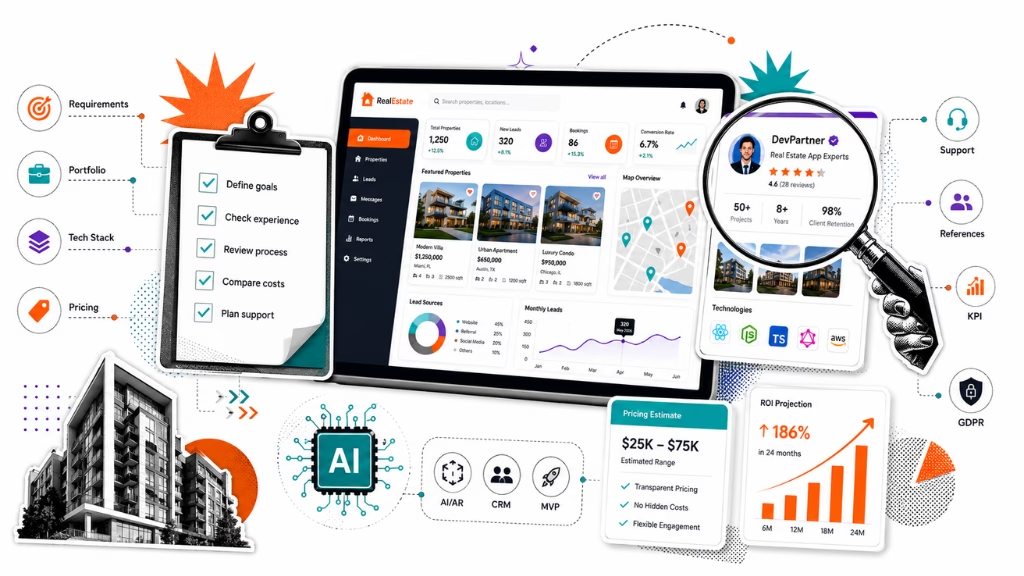
Define Your App Requirements & Success Metrics
Every successful app project starts with clarity. You must know what you want, why you want it, and which results matter.
First, list your must-have features. For most real estate apps in 2026, this covers property search, interactive maps, built-in CRM, lead capture, virtual tours, AI integration, and user messaging. Decide which platforms you need: iOS, Android, web, or all three.
Define your target users: agents, buyers, renters, or property managers. Keep compliance in mind. In my experience, apps in real estate often need to meet laws like GDPR or regional data rules.
Set clear business KPIs. Examples include lead conversion rate, listing engagement, or response time. This anchors your project and makes later vendor evaluation much easier.
Prioritize Industry Experience & Analyze Portfolios
Not all app developers understand real estate. I have seen smart technical teams struggle when they lack industry know-how.
Ask vendors for real estate project portfolios. Study whether they have delivered apps with similar complexity, integrations, and scale as yours. Check for sector-specific features, not just generic apps.
Case studies with real business outcomes build trust. Look for client testimonials and verified ratings on trusted platforms like Clutch. A table like this can help score vendors:
| Criteria | Vendor A | Vendor B | Vendor C |
| Similar real estate apps | Yes | Yes | No |
| Client references | 3 | 2 | 1 |
| Featured in industry | Yes | No | No |
The mistake I see often is choosing based on general tech skills without real estate results. Give more weight to domain experience.
Evaluate Technical Expertise & Process Transparency
Technical fit is about more than programming languages. In 2026, real estate apps demand AI, AR/VR, secure cloud, and API integrations.
Ask each company about their technical stack. Common tools include React Native or Flutter for mobile, Node.js or .NET for backend, RESTful APIs, and cloud platforms like AWS or Azure. If your app needs AI (e.g., smart property matching or chatbots), check real-world project samples.
Transparency counts. Insist on agile, milestone-driven workflows and clear documentation. Review how they manage feedback, code reviews, testing, and delivery. Ask about their security and compliance protocols—data privacy is a hot issue in real estate.
A checklist for technical evaluation:
- Which tech stacks do you use for apps like ours?
- How do you handle compliance (GDPR, local laws)?
- What is your QA and release process?
- How do you secure user and property data?
Compare Pricing Models and ROI Implications
Budget is always a concern, but the cheapest quote is rarely the best option. Pricing models vary:
- Fixed price: set features and costs.
- Time and materials: pay by hours worked.
- Dedicated team: monthly rates for assigned staff.
- Value-based: pricing tied to outcomes.
In my POV, value-based or dedicated team models often align better with complex projects. Ask vendors to break down costs for MVP, full-feature, and ongoing support stages.
Below is a typical range for 2026 (according to GrowRankers and Setproduct industry reports):
| Project Type | Typical Cost Range (USD) |
| MVP / Prototype | $30,000–$70,000 |
| Full-featured App | $70,000–$250,000+ |
Check for hidden costs, such as third-party integrations, aftercare, or cloud hosting. Weigh ROI factors like time-to-market and ongoing value, not just upfront expense.
Assess Post-Launch Support, Maintenance, and Upgrades
Strong post-launch support separates good vendors from risky ones. I have seen teams skip this step and pay the price later—bugs go unfixed, updates lag, or compliance lapses cause headaches.
Ask what maintenance packages include. Top agencies provide regular updates, bug fixes, security patches, feature upgrades, and compliance monitoring. Pay attention to their Service Level Agreement (SLA)—response times, escalation paths, uptime promises, and patch cycles.
Questions to ask:
- How do you handle bug reports and urgent fixes?
- Do you offer feature upgrades as regulations or user needs change?
- What are your support hours and channels?
- How do you manage third-party API or hosting changes?
Check References and Validate Claims
Anyone can make a pitch look good. Experience has taught me that direct reference checks reveal how a vendor performs under pressure.
Arrange reference calls with past clients—preferably ones who built similar apps. Ask about real challenges, surprises (good or bad), and how the team communicated through problems.
Sample questions for references:
- Did the vendor meet deadlines and budgets?
- How were issues or bugs handled post-launch?
- Would you hire them again for another real estate project?
- What was their biggest strength and any weakness?
Request a pilot or demo if possible. Even a small prototype shows how the agency approaches your unique challenges.
Key Comparison Table: Real Estate App Development Companies in 2026
Understanding how leading vendors stack up can help you shortlist with confidence. See the table below for a side-by-side comparison of the top real estate app development agencies in 2026 based on independent research and Clutch ratings.
| Company Name | Years of Experience | Real Estate Focus | Tech Stack Specialization | Clutch Rating | Price Range | Global Regions | Noteworthy Features |
| Riseup Labs | 10+ | Yes | AI, AR/VR, Cloud, Mobile | 4.9/5 | $$–$$$ | Global | AI-driven property tools |
| Setproduct | 7 | Yes | Web, Mobile, API | 4.6/5 | $$$ | USA, Europe | Advanced CRM integration |
| Trango Tech | 9 | Partial | Mobile, Blockchain | 4.4/5 | $$ | USA, APAC | Flexible engagement models |
| Binary Studio | 12 | Yes | Front- & backend | 4.7/5 | $$–$$$ | USA, Europe | MVP/complex delivery options |
| Grow Rankers | 8 | Yes | Security, Compliance | 4.5/5 | $$–$$$ | Global | Regulatory compliance focus |
| PropTechX | 6 | Yes | IoT, AR/VR, Analytics | 4.3/5 | $$ | Europe, APAC | AR/VR showcase, smart APIs |
Price range: $ = economical, $$ = mid, $$$ = premium. Ratings as of the latest Clutch report.
To compare, map each vendor’s strengths to your must-have criteria—from compliance to AI features.
How Technology Trends in 2026 Influence Vendor Selection
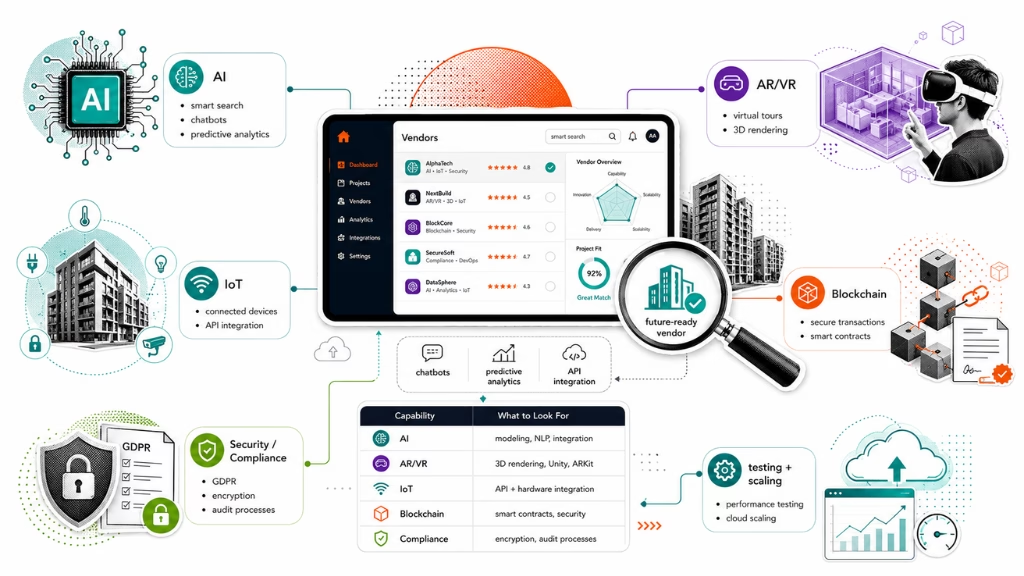
Emerging trends in PropTech change what matters when picking an app development company. My advice: judge partners not just by portfolio, but by how future-ready their approach is.
AI: Used for smart search, chatbots, predictive analytics. You want vendors with real project samples, not just buzzwords.
AR/VR: Needed for virtual tours, remote showings, and immersive listing experiences. Check their ability to deliver polished, stable AR/VR tools.
IoT: Increasingly ties into property management and analytics. Verify API skills and experience with connected devices.
Blockchain: Has become essential for secure transactions and title verification in some markets.
Security and compliance: Laws change fast. Make sure the agency monitors legal updates and adapts apps as needed.
| Trend | Vendor Capability Required |
| AI | AI modeling, NLP, integration |
| AR/VR | 3D rendering, Unity, ARKit |
| IoT | API & hardware integration |
| Blockchain | Smart contracts, security |
| Compliance (GDPR) | Encryption, audit processes |
Pick a vendor comfortable with testing and scaling these trends, not just talking about them.
Common Mistakes and Red Flags When Selecting a Real Estate App Development Company
Skimming vendor websites or picking on cost alone is risky. In my experience, this is where many teams struggle, paying for quick choices down the line.
Top mistakes include:
- Relying only on price or vague proposals.
- Ignoring post-launch support or compliance needs.
- Not verifying references, ratings, or real estate experience.
- Overlooking inconsistent or unclear communication.
- Falling for sales hype with no performance proof.
Red flags to watch for:
- No real estate portfolio or sector-specific case studies.
- Unwillingness to detail process, security, or pricing.
- Poor responsiveness during early talks.
- Overpromising features/delivery at low prices.
A better approach is to slow down and work through your checklist before signing anything.
Why Consider Riseup Labs as Your Real Estate App Development Partner?
Riseup Labs stands out based on recent industry reviews for delivering specialized PropTech solutions, especially AI-powered and AR/VR-enabled property tools.
Clients value the company’s detailed post-launch support, regulatory knowledge, and proactive communication. In my experience, Riseup Labs is often chosen for projects where compliance, innovation, and future scaling matter.
One product leader shared, “Last year, when our dev team needed a new listing tool, Riseup Labs brought ideas, speed, and a level of partnership we hadn’t seen elsewhere.”
Conclusion
Choosing a real estate app development company in 2026 is a business-critical step. Mistakes cost real money, trust, and lost opportunity. A step-by-step approach—clear requirements, proven experience, technology fit, strong support, and references—can protect your investment.
From my viewpoint, the best outcomes come from partnering with a vendor who doesn’t just code, but guides you through every detail, from planning to aftercare. Riseup Labs continues to fit this model for many businesses.
Next steps? Use the checklist above, shortlist two or three vendors, and run structured reference calls. Download the vendor scorecard to clarify your choice, or schedule a demo to see expertise in action.
AI-assisted platforms with real experts are shaping the future of real estate tech. Choose wisely, and your app investment will pay off over the long run.
FAQs on Choosing a Real Estate App Development Company
What factors should I consider when choosing a real estate app development company?
Look at real estate project experience, technology skills, transparent process, support, security, references, and pricing.
How do I compare the portfolios of different real estate app developers?
Check for apps with similar features, user scope, and complexity. Review real business outcomes, client testimonials, and industry ratings.
What is the typical cost of developing a custom real estate app in 2026?
Costs often range from $30,000 to $250,000+, depending on features, scale, and support needs.
Why is domain experience important when selecting a development partner?
Domain experience means the vendor understands industry needs, compliance, user flows, and can avoid costly mistakes.
How can I verify the security and compliance standards of an app development agency?
Request details on compliance protocols, security audits, technical documentation, and ask for past references with security-sensitive projects.
What are common mistakes to avoid when selecting a real estate app developer?
Avoid choosing solely by price, ignoring post-launch support, and skipping reference checks or compliance reviews.
How do AI/AR/VR trends affect selection criteria?
You need vendors with proven skills in these areas to deliver modern features and stay competitive in the PropTech landscape.
What level of post-launch support should I expect from a real estate app development company?
Look for regular updates, security patches, prompt bug fixes, feature upgrades, and clear Service Level Agreements.
Can a real estate app development company integrate with my existing CRM or property management tools?
Yes, but confirm they have experience with your CRM or platform and reference similar successful integrations.
How do I safeguard my intellectual property during the app development process?
Sign clear NDAs, ensure contract terms, and make sure source code and assets are owned or licensed to your business.
This page was last edited on 22 July 2026, at 3:22 pm

Start a conversation with our team to solve complex challenges and move forward with confidence.