Building a software development team can determine the success or failure of any tech initiative. A poor team structure often results in missed deadlines, budget overruns, or products that fail to meet user needs. On the other hand, a well-structured team elevates quality, speeds up delivery, and drives innovation.
This guide provides a practical, step-by-step playbook to assemble, structure, and optimize a software development team—whether you’re launching a startup, scaling rapidly, or leading a distributed engineering group. With clear frameworks, actionable advice, and field-tested templates, you’ll be equipped to build a team that delivers tangible results.
What Are the Essential Steps to Building a Software Development Team?
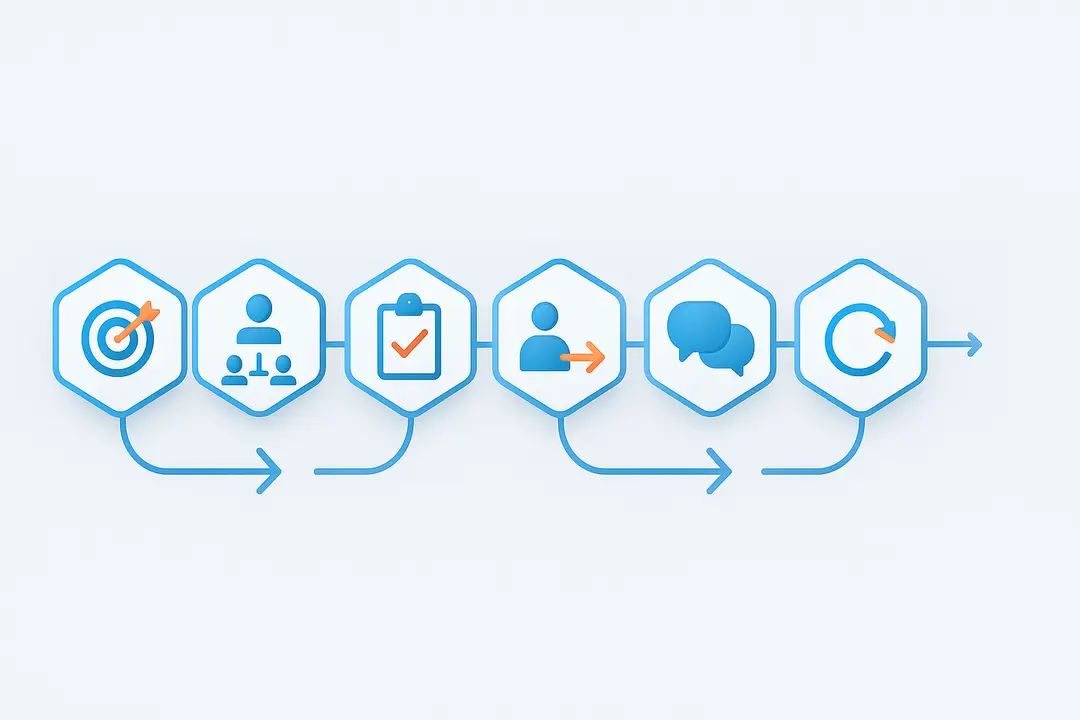
Building a software development team requires a systematic approach that aligns team composition, skills, and workflows to your project’s needs.
Here is a repeatable, eight-step process for building a software development team from scratch:
- Define project goals and requirements
- Identify essential roles and skills
- Source, screen, and hire candidates
- Design and implement team structure and workflows
- Onboard and integrate team members
- Foster collaboration, soft skills, and psychological safety
- Set clear KPIs and performance measurements
- Iterate and optimize the team as your project evolves
Let’s break down what each step entails:
1. Define Project Goals and Requirements
Clearly state what your software must achieve. Outline features, end-user needs, technical constraints, and success criteria. This foundation will shape your decisions on team size, composition, and skill sets.
2. Identify Essential Roles and Skills
Specify which roles (e.g., frontend developer, QA, project manager) are critical for your project’s scope. Consider the balance of technical skills, domain expertise, and complementary soft skills.
3. Source, Screen, and Hire Candidates
Leverage multiple channels: job boards, specialized agencies, professional networks, and remote talent platforms. Incorporate diversity pipelines and modern tools like AI-based screening, coding assessments, and EQ/personality evaluations to ensure both technical and cultural fit.
4. Design and Implement Team Structure & Workflow
Choose an optimal structure (e.g., Agile squad, Scrum team, matrix) that matches your project’s demands. Decide on remote versus in-office models and set clear roles, reporting lines, and collaboration practices.
5. Onboard and Integrate Team Members
Develop a thorough onboarding checklist covering account setup, process training, team introductions, and performance expectations to ensure a smooth start.
6. Foster Collaboration, Soft Skills, and Psychological Safety
Promote continuous communication, encourage knowledge sharing, and create a culture where team members feel comfortable voicing ideas or concerns.
7. Set Up Clear KPIs, Accountability, and Performance Measurement
Track metrics like cycle time, code quality, deployment frequency, and customer feedback. Regularly review performance and provide constructive feedback.
8. Iterate and Optimize Team as Project or Scale Changes
As projects evolve, update roles, introduce new skills, or adapt workflows. Use retrospectives and feedback loops to continuously improve team effectiveness.
Which Roles and Responsibilities Make Up a Software Development Team?
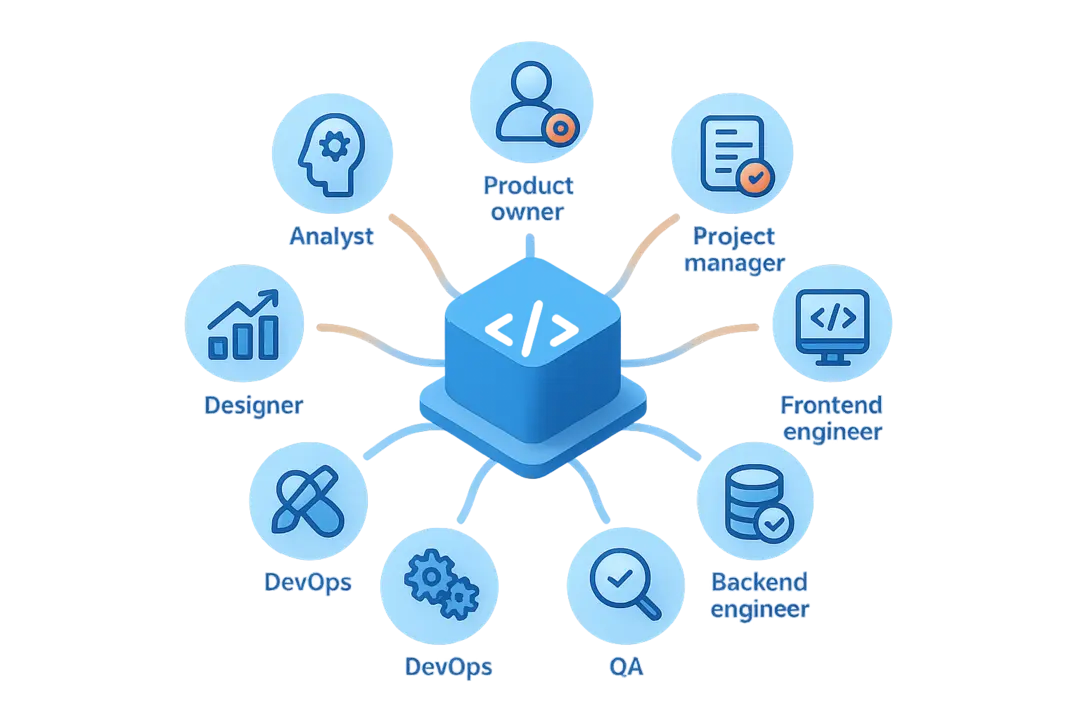
A high-performing software team is built on clear roles and well-matched responsibilities. The roles you need depend on project complexity, scope, and technology stack.
| Role | Description | Required Skills | When Needed |
|---|---|---|---|
| Product Owner | Defines the vision, prioritizes features, liaises with stakeholders | Domain expertise, communication | All projects |
| Project Manager/Scrum Master | Coordinates delivery, manages schedules and risks | Organization, Agile/PM knowledge | Medium to large teams, Agile setups |
| Software Engineer (Frontend) | Builds user interfaces, ensures usability | HTML/CSS/JS, frameworks | Interface-driven projects |
| Software Engineer (Backend) | Develops server-side logic & APIs | Databases, server-side languages | All but simplest projects |
| Full-Stack Developer | Handles both frontend & backend | Both frontend & backend tech | Small teams, rapid prototyping |
| QA Engineer / Tester | Ensures product quality via manual/automated testing | Test automation, TDD, attention to detail | All projects |
| DevOps Engineer | Manages CI/CD, deployment, infrastructure | Cloud, automation, scripting | Projects with complex deploys |
| UI/UX Designer | Designs user experience and interface | Design tools, empathy, research | Customer-facing products |
| Business/Data Analyst | Translates business needs, analyzes data | Analytics, business process modeling | Data-driven projects |
| AI/ML Engineer | Builds intelligent features using AI/ML | Python, ML frameworks | Projects with AI components |
| Support Engineer | Maintains and supports live applications | Troubleshooting, customer service | Post-launch and enterprise setups |
Specialist vs. Generalist:
– Small teams often favor generalists (full-stack developers, hybrid roles).
– Larger or complex projects tend to require specialists for depth in key areas.
Tip:
Regularly reassess the balance of roles as the project or company grows.
How Do You Choose the Best Team Structure for Your Project?
Selecting the right software development team structure ensures scalability, communication, and accountability.
Key team models include:
| Model | Description | Best For | Example Use Case |
|---|---|---|---|
| Generalist | Team members with broad, overlapping skills | Startups, MVPs, rapid prototyping | 3-person startup |
| Specialist | Role-dedicated experts with deep expertise in one area | Large, complex projects, regulated industries | Enterprise ERP implementation |
| Hybrid | Mix of generalists and specialists | Growing, evolving teams | SaaS product scaling up |
| Matrix | Combines project-based and functional reporting (multiple managers) | Large organizations with cross-functional needs | Product line transformation |
Decision Factors:
– Project Stage:
– Early-stage: favor generalists for speed/flexibility.
– Scaling or mature: shift towards specialists and hybrid structures.
– Organization Type:
– Startups: lean and flexible.
– Enterprise: structured, multi-layered teams.
– Remote/Distributed:
– Require explicit communication protocols and shared knowledge bases.
Decision Matrix Example:
| Project Size/Stage | Recommended Team Model |
|---|---|
| Startup/Early-Stage | Generalist or Hybrid |
| Growth/Scale-Up | Hybrid or Specialist |
| Large/Enterprise | Specialist or Matrix |
How to Recruit, Assess, and Onboard the Right Talent
Recruiting a strong software development team hinges on targeting the right sources, assessing both technical and soft skills, and ensuring a thorough onboarding experience.
Key steps include:
- Sourcing:
– Use reputable job boards (Stack Overflow, LinkedIn, GitHub Jobs)
– Specialized agencies and remote platforms (Toptal, Upwork)
– Leverage employee referrals and diversity-focused communities - Screening & Assessment:
– Hard skills: code challenges, technical tests, portfolio reviews
– Soft skills: interviews, scenario-based questions, personality assessments (MBTI, DISC, emotional intelligence)
– Use AI tools for unbiased resume scanning and skill matching - Diversity & Inclusion:
– Proactively seek candidates from varied backgrounds
– Implement structured, fair interviews and feedback processes - Onboarding Checklist for Developers:
1. Provide necessary hardware/software and account access
2. Introduce to team and assign a mentor or buddy
3. Share project documentation and coding standards
4. Schedule meetings with key stakeholders
5. Walk through agile processes and communication tools
6. Set clear initial goals and KPIs
7. Establish regular feedback check-ins - Remote/Distributed Onboarding:
– Use video calls for introductions
– Document all key processes
– Set up virtual coffee chats or Slack channels for connection
Tip:
Automate repeated onboarding tasks with checklists and templates for consistency and efficiency.
How to Set Up Workflows and Collaboration Practices That Drive Results
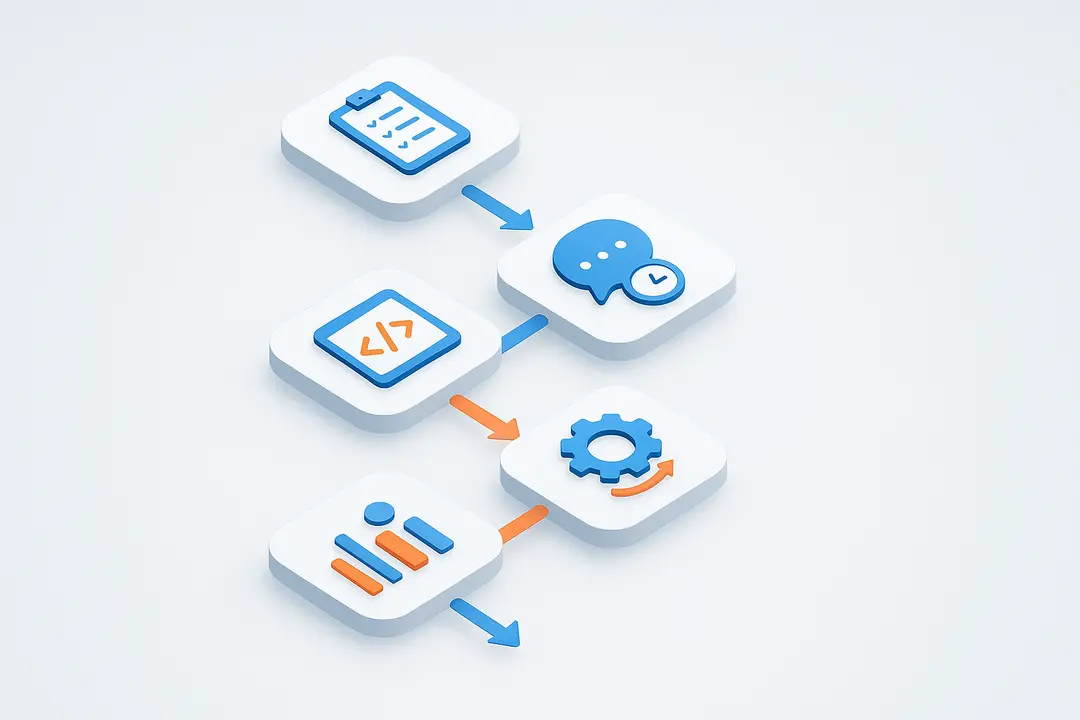
Well-designed workflows and collaboration tools help software development teams ship high-quality products, consistently and efficiently.
Popular collaboration methodologies and their uses:
- Agile: Iterative, flexible, promotes continuous improvement. Best for dynamic or evolving requirements.
- Scrum: Fixed-length sprints, roles (Scrum Master), and structured ceremonies (standups, retrospectives). Ideal for teams aiming for fast, incremental delivery.
- Kanban: Visual workflow, limits work in progress. Suited for maintenance or operations-focused teams.
- Waterfall: Linear, sequential stages. Still common in regulated or fixed-scope projects.
Workflow Sample:
- Sprint planning (define goals)
- Daily standups (track progress/blockers)
- Code review (peer audit via GitHub, GitLab, Bitbucket)
- Continuous integration & automated testing (using tools like Jenkins, CircleCI)
- Regular retrospectives (improvement feedback loop)
Top Collaboration Tools:
| Tool | Use Case |
|---|---|
| Jira | Agile project management |
| GitHub | Code versioning/review |
| monday.com | Task tracking & workflow |
| Slack | Team communication |
| Confluence | Documentation & wikis |
Remote Communication Hacks:
- Set clear core hours
- Use asynchronous updates for distributed teams
- Document all decisions in shared spaces
CI/CD & Automation Integration:
Adopt continuous integration/continuous deployment pipelines to automate builds, tests, and releases—reducing manual errors and accelerating delivery.
How to Foster Team Dynamics, Communication, and High Performance
Optimal software development outcomes are driven not just by technical prowess, but by strong team dynamics, psychological safety, and sustained motivation.
Summary of best practices:
- Prioritize communication, empathy, and transparency
- Regularly recognize achievements and celebrate team milestones
- Use frameworks like MBTI, DISC, or EQ assessments to understand personality differences and leverage diversity
- Tailor strategies for remote vs. on-site dynamics, such as virtual coffee breaks or hybrid meeting norms
- Address conflict early using structured feedback and candid, respectful discussions
- Recognize and act to reduce burnout via workload sharing, wellness initiatives, and open dialog
Expert Insight:
Studies from Stanford and Berkeley highlight that discursive diversity (varied perspectives and communication styles) measurably boosts innovation and team performance.
Tip:
Foster a culture where team members feel safe proposing new ideas without fear of criticism (“psychological safety”).
How to Measure and Optimize Your Dev Team’s Success
Measuring team performance ensures you catch issues early, optimize processes, and celebrate meaningful progress.
Key software development team KPIs:
| KPI | What It Measures |
|---|---|
| Cycle Time | Time from task start to completion |
| Velocity | Features/points delivered per sprint |
| Code Quality | Bugs found during QA/review |
| Review Cycle Time | Time to complete code reviews |
| Deployment Frequency | Releases to production |
| Customer Satisfaction | End-user/stakeholder feedback |
| Team Morale | Surveyed satisfaction, turnover |
How to Track:
– Use dashboards (Jira, GitHub Insights, or custom spreadsheets)
– Hold regular retrospectives for open discussions on what’s working and where to improve
– Schedule one-on-one meetings for nuanced feedback
When to Restructure or Scale:
– Frequent missed deadlines or declining code quality
– Growth in user base or new technical requirements
– Persistent team friction or high turnover
| Sprint Date | Cycle Time (days) | Bugs | Velocity | Team Morale (1-5) |
|-------------|-------------------|------|----------|-------------------|
| Sprint 1    | 4.2               | 5    | 23 pts   | 4.5               |
| Sprint 2    | 3.8               | 2    | 28 pts   | 4.7               |
What Are Common Mistakes to Avoid When Building a Development Team?
Many software projects stumble due to easily avoidable mistakes during team assembly and management.
Common pitfalls include:
- Understaffing or overstaffing: Leads to burnout or wasted resources. Always align team size to project needs.
- Neglecting soft skills or company culture fit: Technical strength alone doesn’t guarantee collaboration or motivation.
- Unclear roles and responsibilities: Causes confusion, duplicated effort, or dropped tasks.
- Rushed or poor onboarding: Onboards miss vital context, slowing productivity and increasing errors.
- Lack of consistent process and discipline: Omitting code reviews or agile rituals erodes quality over time.
- Ignoring performance metrics: Without data, it’s hard to know what’s working or how to improve.
Tip:
Review this pitfalls list during hiring, onboarding, and retrospectives to stay on track.
Frequently Asked Questions about Building Software Development Teams
What are the essential steps to build a software development team?
Define your project goals, identify key roles and skills, recruit and assess candidates, choose a fitting team structure, onboard effectively, promote collaboration, set up performance KPIs, and continuously optimize as needs evolve.
Which roles are required in a software development team?
Most teams include a product owner, project manager, frontend and backend engineers, QA/testers, and often DevOps, designers, and analysts, with specialist roles added for scale or complexity.
How do you assemble a remote or distributed software development team?
Source talent globally using remote platforms, establish clear workflows and communication tools, document well, and prioritize regular virtual check-ins and culture-building activities.
What is the ideal team size for software development projects?
Agile best practices recommend 5–9 members for most scrum teams, but the ideal size varies based on project complexity, required skills, and collaboration overhead.
How do you measure the success of a software development team?
Track KPIs such as cycle time, code quality, deployment frequency, customer satisfaction, and team morale, adjusting processes when metrics fall short of targets.
What are best practices for team collaboration in software projects?
Use structured workflows (Agile, Scrum), leverage collaborative tools (Jira, Slack, GitHub), schedule regular feedback sessions, and encourage open, transparent communication.
How should you structure your dev team for Agile or Scrum?
Build cross-functional squads with clear roles—product owner, scrum master, developers, QA—and focus on small, autonomous teams that iterate in short sprints.
What are the most important soft skills in a dev team?
Communication, empathy, problem-solving, adaptability, and the ability to give/receive feedback are all critical for long-term high performance.
When should you hire generalists vs. specialists?
Hire generalists for early-stage startups or rapid prototyping; bring in specialists as projects scale or technical needs become more specific.
How do you overcome common communication challenges in dev teams?
Standardize documentation, clarify responsibilities, use regular standups and retrospectives, and create channels for anonymous feedback.
Conclusion
The strength of your software product starts with the team behind it. By following a structured, stepwise approach—tailored to your goals and leveraging proven frameworks—you dramatically increase your odds of successful delivery and long-term growth.
Key Takeaways
- A strategic approach to building software development teams drives lasting success.
- Roles, structure, and workflows should adapt to project and company needs.
- Prioritize soft skills, psychological safety, and discursive diversity as much as tech expertise.
- Use clear KPIs and feedback loops to measure, iterate, and improve.
- Leverage downloadable guides and expert resources to speed up implementation.
This page was last edited on 9 July 2026, at 11:09 am

Start a conversation with our team to solve complex challenges and move forward with confidence.