AI learning and development platforms help UK enterprises build workforce skills through personalised learning, AI-powered content creation, skills mapping, knowledge assistants, and compliance tracking. Leading platforms include Cornerstone, Docebo, Sana Learn, 360Learning, Absorb, HowNow, Thrive, and CYPHER Learning.
The licences are approved. The tools are installed. The rollout email has landed in everyone’s inbox.
Then, a few weeks later, you check the usage dashboard. A small group of enthusiasts uses the tools every day. Everyone else tried them once, couldn’t see where they fit, and went back to the way they already knew.
That’s the gap many UK enterprises are facing right now. Access to AI isn’t the hard part anymore. Skills and confidence are.
Slalom’s research shows the gap clearly. Among 417 business leaders across the UK and Ireland, 70% said their teams have access to AI tools. Only 48% give people time to actually experiment with them. No surprise, then, that 54% of leaders see skills gaps as a major barrier to getting value from AI.
A one-off intro session or a stack of training videos can explain what AI does. It won’t change how someone works on a busy Tuesday afternoon. That takes ongoing, role-based learning, which is what AI learning and development platforms are built for.
In this guide, we compare the best AI learning and development platforms for UK enterprises. For each one, we cover features, pricing, integrations and compliance, then finish with what to check before you choose.
What Are AI Learning and Development Platforms?
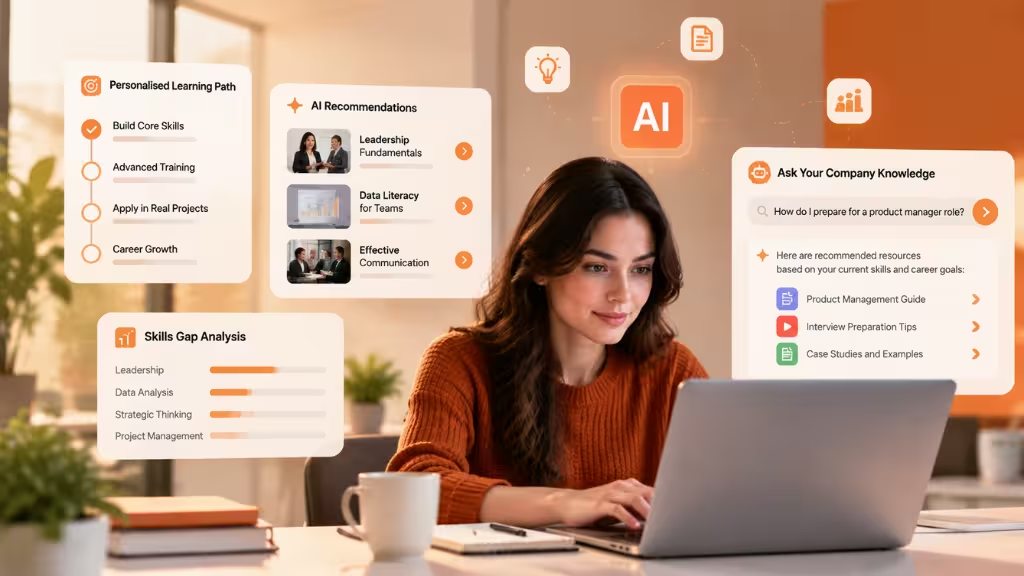
AI learning and development platforms are enterprise learning systems that use artificial intelligence, machine learning, natural language processing (NLP), and large language models (LLMs) to improve how organisations train and develop employees.
Instead of treating learning as a fixed catalogue of courses, these platforms use AI to personalise training, recommend relevant resources, identify skills gaps, automate content creation, and help employees find answers from company knowledge.
A traditional LMS is mainly designed to manage learning administration: assigning courses, tracking completion, and generating reports. AI-powered LMS and learning experience platforms (LXPs) go further by connecting learning with skills intelligence, employee development, workforce planning, and business goals.
For example, an employee preparing for a new role may receive recommended courses based on their current skills. A manager may see capability gaps across their team. An L&D team may use AI tools to turn internal documents into structured learning materials.
The goal is not simply completing more courses. It is helping people build the skills the organisation needs.
Why UK Enterprises Need AI Learning Platforms
AI adoption is moving quickly, but many organisations are finding that technology alone does not create business value. Employees need the right skills, practical guidance, and continuous support to use AI effectively in their day-to-day work.
The AI Skills Gap Is Becoming a Business Challenge
Many UK businesses are investing in AI tools, but workforce readiness remains a challenge. Research from the British Chambers of Commerce and Helium42 found that 97% of UK organisations have at least one significant AI skills gap. Meanwhile, ONS data shows that only 11% of businesses with 10 or more employees report that more than half of their workforce has received AI-related training.
For enterprises, this creates a gap between adopting AI tools and helping employees understand how to apply them. Without structured learning, businesses risk having disconnected AI experiments instead of a workforce that can use these technologies confidently.
Employee Roles Are Changing Faster Than Traditional Training
AI is not only creating demand for new technical skills; it is changing how existing roles are performed. A BusinessLDN survey of more than 2,000 London business leaders found that among organisations already using AI, 85% said AI has changed the skills their workforce needs, while 81% planned to increase investment in training.
This shift makes traditional one-size-fits-all training less effective. Employees need learning experiences that match their role, current ability, and the skills they need next.
Learning Needs to Become More Personalised and Scalable
Many organisations still depend heavily on informal knowledge sharing and on-the-job learning. One analysis found that 88% of organisations rely on informal workplace training rather than structured learning approaches. While this approach has value, it can be difficult to measure progress, maintain consistency, and support large distributed teams.
AI learning platforms help solve this problem by combining personalised learning paths, skills tracking, AI-powered knowledge assistants, and automated content creation. Instead of giving every employee the same training, these platforms help organisations deliver learning that fits individual needs while keeping development aligned with business goals.
How We Evaluated AI Learning and Development Platforms
Choosing an AI learning platform is not about counting features. A platform may have AI-powered tools, but the real question is whether those features solve practical problems for enterprise L&D teams.
For this comparison, we looked at the areas that matter most when businesses are investing in workforce development.
AI Capability and Skills Intelligence
AI means different things across learning platforms. Some use it mainly for content creation, while others use it to understand employee skills, recommend learning paths, and identify capability gaps.
The comparison looked at how each platform uses AI to support personalised learning and help organisations make better decisions about workforce development.
Content Creation and Learning Speed
Creating relevant training content is one of the biggest challenges for L&D teams. We considered how each platform helps organisations turn existing knowledge, documents, and expert input into useful learning materials.
The ability to keep content accurate while reducing the time needed for creation was an important factor.
Integrations and Data Flow
Enterprise learning does not happen in isolation. The strongest platforms connect with the systems businesses already use, from HR platforms such as Workday and SAP Success Factors to collaboration and business tools like Salesforce and Microsoft Teams.
Integration capability was considered based on how easily learning data can move between systems and support existing workflows.
Governance, Compliance and Data Protection
For UK enterprises, learning platforms must support more than employee development. They also need to meet security, compliance, and reporting requirements.
Key areas considered included audit trails, mandatory training management, user permissions, reporting capabilities, and how employee data is handled.
Cost and Scalability
A platform that works for 200 employees may not work for 20,000. The comparison also considered pricing models, implementation requirements, AI usage costs, and whether each platform can scale as workforce needs change.
8 Best AI Learning and Development Platforms for Enterprise in the UK
Choosing an AI learning platform is not just about finding a system with the most AI features. Enterprise buyers need to understand where AI actually improves learning, whether the platform fits their workforce, and how well it connects with existing HR and business systems.
Some platforms focus on workforce skills intelligence. Others are better suited for content creation, customer training, employee engagement, or AI-first learning experiences.
The right choice depends on what your organisation is trying to achieve.
1. Thrive Learning: Best for Workplace Learning and Knowledge Sharing
Many enterprises struggle with a simple problem: employees often have access to information, but they cannot always find the right knowledge when they need it.
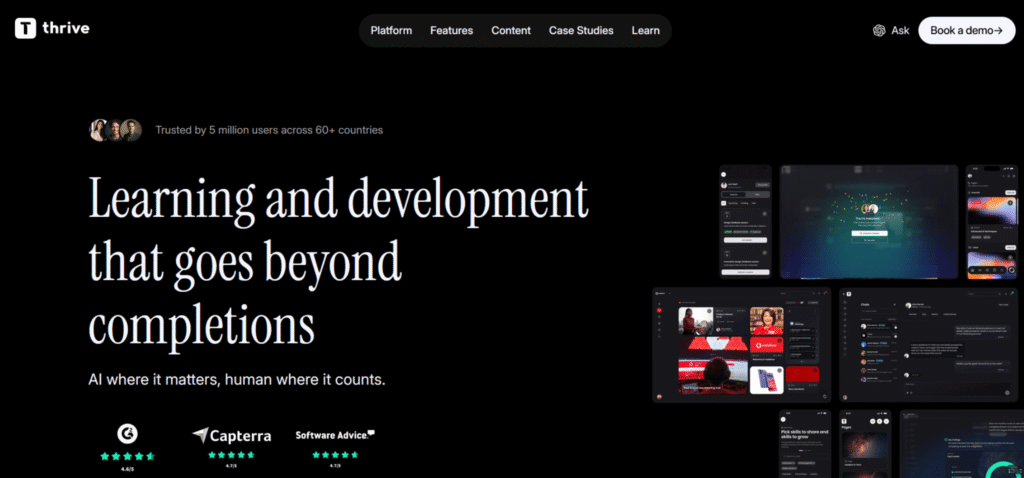
Thrive Learning approaches this challenge by combining a Learning Management System (LMS), Learning Experience Platform (LXP), and knowledge management capabilities into one workplace learning environment. The platform focuses on helping organisations make internal knowledge easier to discover while creating more personalised learning experiences for employees.
Its AI-powered features help surface relevant information, support content creation, and improve how employees engage with learning. This makes it particularly useful for organisations that want learning to become part of everyday work rather than a separate training activity.
Key Features
- AI-powered knowledge search
- Personalised learning journeys
- Learning experience platform (LXP) capabilities
- Knowledge management tools
- Employee engagement features
- Learning analytics
Best For
- UK enterprises focused on workplace learning adoption
- Organisations combining learning and knowledge sharing
- Businesses looking to improve employee engagement
Pricing
Thrive Learning does not publish standard pricing. Costs depend on factors such as workforce size, platform requirements, and selected features.
Consideration
Thrive Learning is a strong option for organisations focused on employee engagement and knowledge sharing. Businesses looking for deeper talent management, workforce planning, or advanced skills intelligence may need to compare it with larger enterprise platforms.
2. 360Learning: Best for Collaborative Learning and AI Content Creation
Many organisations have valuable internal knowledge, but turning that expertise into useful training content can be difficult.
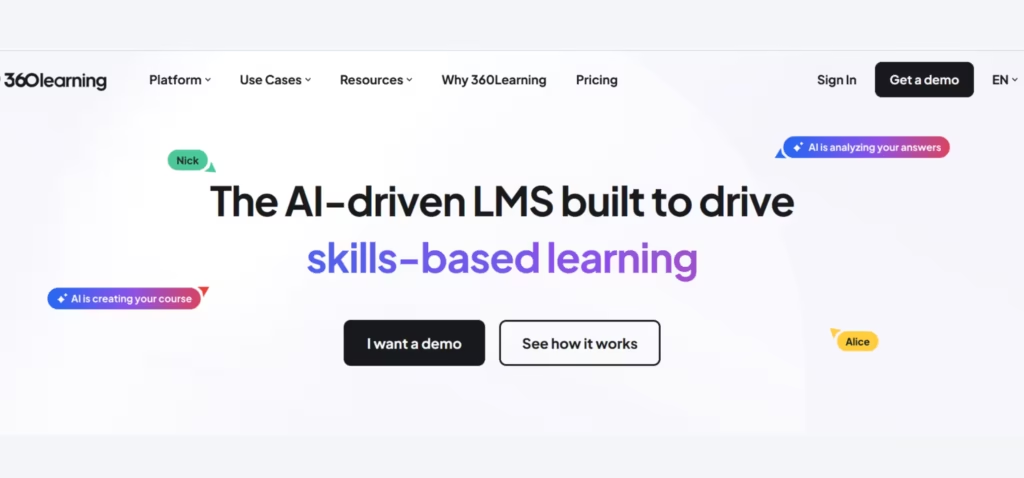
360Learning solves this challenge by combining collaborative learning with AI-powered authoring tools. Instead of relying only on a central L&D team, the platform allows subject matter experts across the organisation to contribute to course creation and share their expertise.
Its AI capabilities help speed up content development, while collaboration features make it easier to keep learning materials updated as business processes, products, and skills requirements change.
This makes it a strong fit for organisations where knowledge moves quickly and employees need access to current information.
Key Features
- AI-assisted course creation
- Collaborative authoring
- Peer learning
- Skills development paths
- Learning analytics
- Enterprise integrations
Best For
- Organisations with internal subject matter experts
- Companies needing faster content creation
- Businesses operating in fast-changing industries
Pricing
360Learning offers different pricing options depending on user numbers, features, and business requirements.
Consideration
360Learning works well for collaborative content creation, but organisations looking for broader workforce planning and talent management features may need to evaluate it alongside enterprise platforms such as Cornerstone.
3. Docebo: Best for Enterprise Learning at Scale
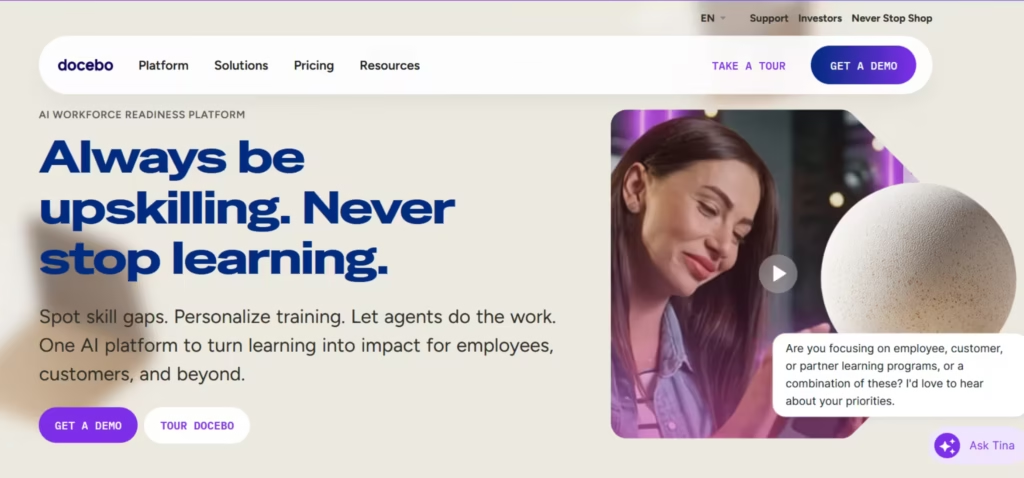
As organisations grow, learning often becomes more complicated. Employees, customers, partners, and external audiences may all need access to different types of training.
Docebo is designed for enterprises that need a flexible learning platform capable of supporting multiple audiences from one system. Its AI capabilities help organisations personalise learning experiences, organise content, and make knowledge easier to discover.
The platform is particularly useful for companies that want to move beyond employee training and create a broader learning ecosystem across their business.
Key Features
- AI-powered learning recommendations
- Extended enterprise learning
- Automated content organisation
- Personalised learning experiences
- Learning analytics
- Integrations with HR and business systems
Best For
- Enterprises training employees and external audiences
- Organisations with complex learning requirements
- Businesses needing scalable learning infrastructure
Pricing
Docebo uses customised enterprise pricing based on factors such as users, features, integrations, and implementation requirements.
Consideration
Docebo offers a wide range of capabilities, but organisations should consider administration requirements and ensure they have the resources needed to manage a large-scale learning ecosystem.
4. Sana Learn: Best for AI-First Learning Experiences
Many traditional learning platforms have added AI features over time, but Sana Learn takes a different approach by making AI central to the learning experience.
The platform helps organisations create learning content faster, search internal knowledge more effectively, and give employees AI-powered support while they work.
Sana is particularly useful for knowledge-driven organisations where employees need quick access to information and where learning content needs to be created and updated frequently.
Key Features
- AI-generated learning content
- AI knowledge assistant
- Intelligent search
- Adaptive learning experiences
- Document-based course creation
- Personalised learning recommendations
Best For
- Organisations looking for AI-first learning experiences
- Knowledge-intensive businesses
- Companies wanting faster content creation
Pricing
Sana Learn uses enterprise pricing based on organisational requirements, users, and selected capabilities.
Consideration
Sana’s AI-first approach is a strong advantage for some organisations, but businesses should also evaluate reporting, compliance capabilities, and integration requirements before choosing it as their main learning platform.
5. Cornerstone: Best for Workforce Skills Intelligence and Talent Development
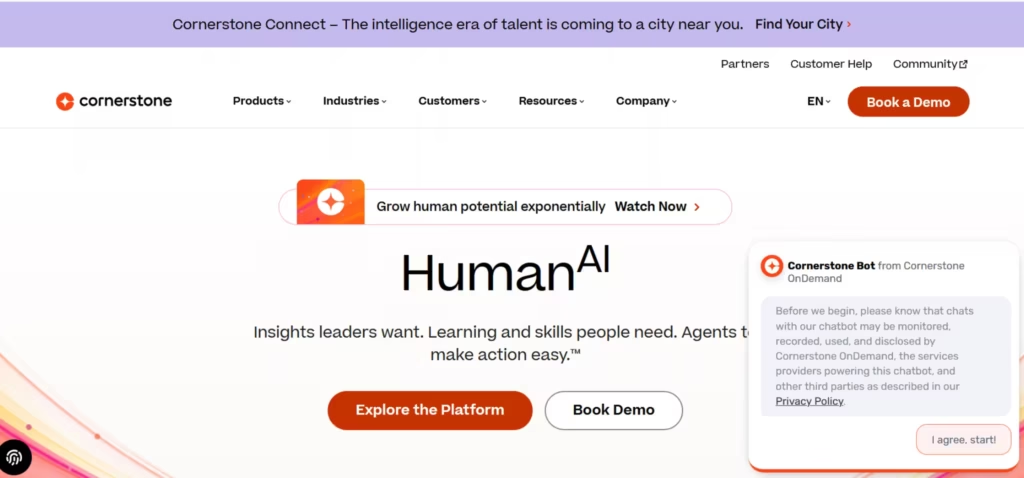
Large enterprises often struggle with a simple question: what skills do we actually have across our workforce?
Cornerstone approaches this problem by connecting learning with broader talent management. Its platform combines learning, performance, career development, and workforce planning, making it suitable for organisations that view employee development as part of a wider business strategy.
One of Cornerstone’s strongest areas is its AI-powered skills intelligence. The platform uses skills data to help organisations understand employee capabilities, identify gaps, and recommend relevant learning opportunities.
This makes it particularly useful for large organisations where learning cannot be managed through spreadsheets or disconnected training systems.
Key Features
- AI-powered skills intelligence
- Skills mapping and workforce insights
- Personalised learning recommendations
- Career development support
- Compliance management
- HR system integrations
Best For
- Large enterprises with complex workforce structures
- Organisations focused on internal mobility
- Regulated industries with strong compliance requirements
Pricing
Cornerstone does not publish standard pricing. Costs depend on factors such as workforce size, selected modules, integrations, and implementation requirements.
Consideration
Cornerstone offers broad enterprise capabilities, but smaller L&D teams may find the platform more complex than needed if their main goal is simply delivering and tracking training.
6. Absorb LMS: Best for Flexible Enterprise Learning
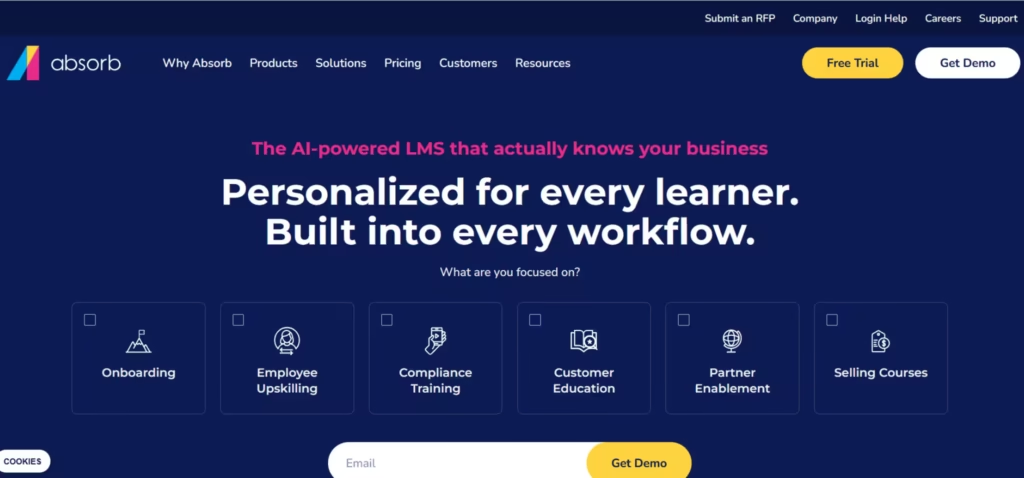
Not every organisation needs a complex talent management platform. Many businesses are looking for a flexible learning system that can support employee training, onboarding, customer education, and compliance requirements.
Absorb LMS focuses on usability and flexibility, helping organisations manage different learning programmes while providing automation, reporting, and integration capabilities.
Its AI features support the learning experience through recommendations and automation, making it suitable for enterprises that want to improve their existing LMS approach without completely changing how they manage training.
Key Features
- Employee and customer training
- AI-supported learning recommendations
- Compliance training management
- Learning analytics
- HR and CRM integrations
- Mobile learning support
Best For
- Enterprises needing a flexible LMS foundation
- Organisations managing different learning programmes
- Businesses prioritising ease of use
Pricing
Absorb LMS uses customised pricing based on user numbers, features, implementation requirements, and support needs.
Consideration
Absorb is a practical choice for organisations looking for a strong LMS with AI capabilities. Companies searching specifically for advanced skills intelligence or AI-native learning may need to compare additional options.
7. CYPHER Learning: Best for Personalised Learning Paths
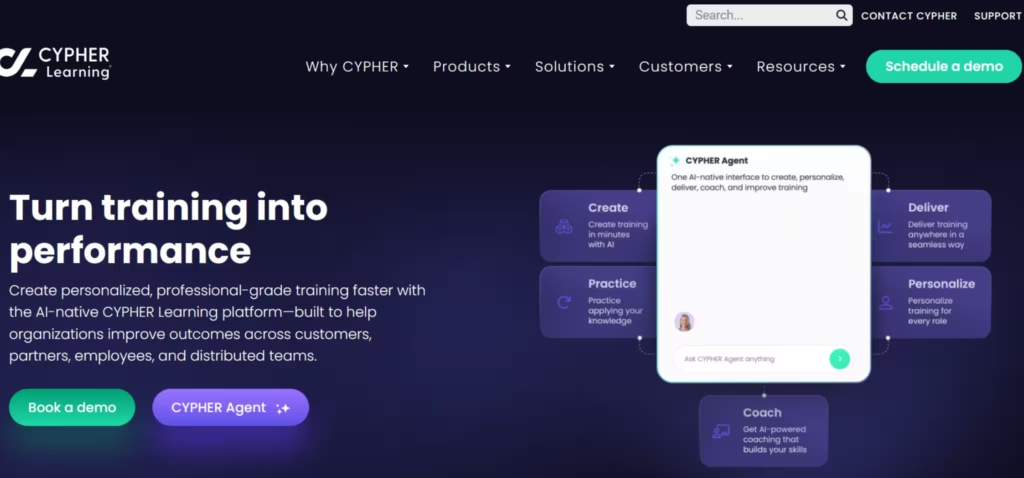
As organisations move towards skills-based development, personalised learning has become a bigger priority. Employees often need different learning experiences depending on their role, existing knowledge, and career goals.
CYPHER Learning focuses on adaptive learning experiences through AI-powered recommendations, content creation tools, and personalised pathways.
The platform helps reduce the manual work involved in managing learning resources while giving employees more relevant training opportunities.
Key Features
- AI-assisted content creation
- Personalised learning paths
- Adaptive learning
- Skills-based recommendations
- Learning analytics
- Content management
Best For
- Enterprises focused on employee development
- Organisations managing large training libraries
- Businesses investing in skills-based learning
Pricing
CYPHER Learning uses customised pricing based on organisation size, features, and deployment requirements.
Consideration
CYPHER Learning can support personalised development at scale, but organisations should evaluate how well it integrates with their existing HR and business systems.
8. Cambridge Spark: Best for AI and Data Skills Development
Many organisations are not only looking for a learning platform; they are trying to build the AI and technical skills needed for the future of work.
Cambridge Spark focuses on helping organisations develop capabilities in areas such as artificial intelligence, data science, and digital transformation. Unlike broader LMS platforms, it specialises in technical workforce development.
This makes it particularly relevant for enterprises that want to prepare employees for AI adoption and data-driven roles.
Key Features
- AI and data skills training
- Technical workforce development
- Enterprise upskilling programmes
- Digital transformation learning
- Industry-focused training
Best For
- Organisations building AI capability
- Businesses investing in technical skills
- Teams preparing for digital transformation
Pricing
Pricing depends on programme structure, learner numbers, and organisational requirements.
Consideration
Cambridge Spark is more specialised than a traditional LMS. Organisations looking for complete learning management, compliance tracking, and broad employee training may need to compare it with enterprise LMS providers.
Average Costs of AI Learning and Development Platforms
Pricing for AI learning and development platforms varies widely because enterprise requirements are rarely the same. The final cost usually depends on the number of employees, AI features, integrations with existing systems, reporting needs, and the level of support required.
Most enterprise vendors do not publish fixed pricing. Instead, they provide custom quotes based on usage and business requirements. Some platforms do offer public pricing. For example, 360Learning starts at $8 per user per month for its Team plan, while Business and Enterprise plans are priced separately based on requirements.
In general, buyers will come across a few common pricing models:
- Per active user: Charges are based on employees who regularly use the platform. This model works well for organisations that want costs linked to actual engagement.
- Registered user pricing: Based on the total number of users with access, which can be easier to budget but may cost more for large workforces.
- AI usage-based pricing: Some vendors charge separately for AI features such as content generation, AI assistants, or automated learning tools.
- Custom enterprise contracts: Larger organisations usually receive tailored pricing that includes integrations, implementation, security requirements, and support.
For smaller teams, AI learning platforms may start from a few thousand pounds per year, while enterprise deployments with thousands of users, advanced integrations, and AI capabilities can move into five-figure annual contracts.
When comparing platforms, the licence price should not be the only deciding factor. A cheaper tool may create higher costs later if it lacks the integrations, governance features, or scalability an enterprise needs.
AI Learning Platform Use Cases Across Industries
AI learning platforms are becoming useful across industries because each sector faces different workforce challenges. A bank may need stronger compliance control, while a technology company may need to continuously update employee skills as tools and products evolve.
The strongest use cases are not about replacing traditional training. They are about making learning easier to deliver, more relevant for employees, and more connected to business needs.
1. Financial Services: Regulatory and Role-Based Training
Financial institutions operate in environments where employee knowledge directly impacts compliance, customer trust, and operational risk. Large banks and insurance providers use AI learning platforms to deliver role-specific training, automate learning recommendations, and maintain visibility into employee progress.
Instead of assigning the same compliance courses to every employee, organisations can create personalised learning journeys based on job responsibilities. A customer-facing employee may receive training on conduct and regulatory requirements, while risk teams can focus on specialised compliance topics.
AI-powered learning platforms also help L&D teams identify knowledge gaps earlier and maintain accurate records for audits and regulatory reviews.
Common use cases:
- Mandatory and regulatory training
- Role-based learning paths
- Compliance tracking and reporting
- Risk and conduct training
- Leadership development
2. Healthcare and Public Sector: Training Distributed Teams
Healthcare providers and public sector organisations often manage large workforces spread across different locations and working patterns. Keeping everyone trained on policies, procedures, and mandatory requirements can become difficult with traditional learning methods.
AI learning platforms help these organisations deliver shorter, more accessible learning experiences that fit around employees’ schedules. Staff can receive relevant training recommendations, complete learning modules on mobile devices, and quickly access updated information when policies change.
This approach is particularly valuable for organisations where employees have limited time away from frontline responsibilities but still need continuous development.
Common use cases:
- Mandatory training management
- New employee onboarding
- Microlearning for shift-based teams
- Competency tracking
- Policy and procedure updates
3. Retail and Hospitality: Scaling Frontline Training
Retail and hospitality businesses often face the challenge of training large numbers of employees across multiple locations while maintaining consistent customer experiences.
AI learning platforms help organisations turn operational knowledge, product information, and company guidelines into structured learning resources. New employees can access training faster, while existing teams can refresh their knowledge without relying entirely on in-person sessions.
For businesses with seasonal hiring or frequent employee movement, this creates a more consistent onboarding process and reduces pressure on managers.
Common use cases:
- Employee onboarding
- Product and service training
- Seasonal workforce training
- Customer experience development
- Store and team leader training
4. Professional Services: Skills Intelligence and Workforce Planning
Professional services firms depend on specialist knowledge, but understanding where those skills exist internally is often challenging. AI learning platforms help organisations create clearer skills profiles and identify areas where employees need further development.
By connecting employee capabilities with learning recommendations, businesses can make better decisions about training investment, project allocation, and career progression.
This is particularly valuable for consulting firms, agencies, and organisations where expertise is a major competitive advantage.
Common use cases:
- Skills mapping
- Workforce capability planning
- Certification tracking
- Project staffing
- Career development programmes
5. Technology and SaaS: Continuous Upskilling
Technology companies operate in fast-changing environments where products, platforms, and development practices evolve constantly. Keeping employee knowledge updated is essential for maintaining productivity and delivering better customer experiences.
AI learning platforms help these organisations create and update training content faster, support internal knowledge sharing, and provide personalised learning paths for different teams.
For SaaS companies, these platforms are also valuable beyond employee training, helping create customer education programmes and partner enablement resources that can scale as the business grows.
Common use cases:
- Product training
- Customer education
- Partner enablement
- Engineering upskilling
- AI adoption programmes
Should Enterprises Buy an AI Learning Platform or Build a Custom Solution?
Most organisations can choose between adopting an existing platform or building a solution tailored to their specific requirements.
When Buying an AI Learning Platform Makes Sense
A SaaS platform may be suitable when organisations need:
- Faster implementation
- Standard learning management features
- Existing integrations
- Vendor-managed updates
- Proven enterprise functionality
When Building a Custom AI Learning Platform Makes Sense
A custom solution may be worth considering when businesses need:
- Unique learning workflows
- Integration with internal systems
- Custom AI assistants trained on company knowledge
- Industry-specific compliance requirements
- Full control over product development
For example, an enterprise with highly specialised processes may need an AI learning system that understands its internal documentation, workflows, and employee development framework.
The decision depends on factors such as budget, technical requirements, scalability needs, and how different the organisation’s learning processes are from standard approaches.
Final Thoughts
AI learning and development platforms are becoming an important part of how enterprises prepare employees for changing workplace demands. However, choosing the right platform is not about finding the one with the most AI features.
The better approach is to start with your organisation’s learning goals. A company focused on workforce skills planning may need strong skills intelligence, while another business may prioritise faster content creation, compliance tracking, or employee engagement.
Platforms such as Cornerstone, Docebo, Sana Learn, and 360Learning each solve different learning challenges. The right choice depends on factors such as workforce size, existing HR systems, security requirements, and how employees currently learn.
The technology itself is only one part of the solution. Successful AI adoption requires time for employees to practice, support from managers, and a clear way to measure whether new skills are improving performance.
FAQs
What are AI learning and development platforms?
AI learning and development platforms are enterprise learning systems that use artificial intelligence to improve how employees learn. They help organisations personalise training, recommend relevant learning paths, identify skills gaps, automate content creation, and provide faster access to internal knowledge.
Which AI learning platform is best for UK enterprises?
The right platform depends on the organisation’s goals and learning requirements. Cornerstone is strong for workforce skills intelligence and talent development, Docebo works well for employee and external audience training, Sana Learn focuses on AI-first learning experiences, and 360Learning is suited for organisations that rely on internal experts to create content.
How much do AI learning and development platforms cost?
Pricing varies depending on the number of users, required features, integrations, AI usage, and support needs. Some platforms use per-user pricing, while many enterprise vendors provide customised quotes based on the organisation’s requirements.
Can AI learning platforms help businesses close skills gaps?
Yes. These platforms help organisations understand existing workforce capabilities, identify missing skills, and recommend relevant training. Instead of assigning identical courses to everyone, AI can support more personalised learning based on roles, goals, and current knowledge.
Do AI learning platforms support compliance training?
Yes. Many enterprise platforms include compliance features such as mandatory training assignments, completion tracking, audit records, reporting dashboards, and role-based access controls. This makes them useful for industries with strict regulatory requirements.
Do AI learning platforms integrate with HR systems?
Most enterprise platforms are designed to connect with existing business systems. Common integrations include HR platforms such as Workday and SAP SuccessFactors, along with tools like Salesforce and Microsoft Teams, helping organisations keep employee and learning data connected.
How should businesses choose an AI learning platform?
Businesses should start with the problem they want to solve, whether that is improving skills visibility, increasing training adoption, creating content faster, or managing compliance. The final choice should consider features, integrations, security, scalability, and total cost.
This page was last edited on 6 October 2026, at 6:42 pm

Start a conversation with our team to solve complex challenges and move forward with confidence.