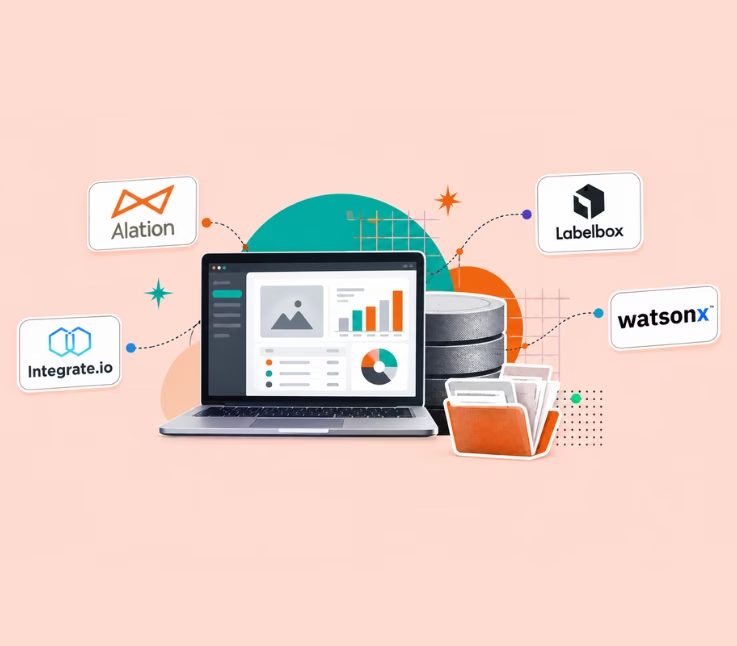
AI tools for dataset management in 2026 use machine learning and generative AI to automate data cataloging, cleaning, integration, annotation, and governance. Top platforms like Alation, IBM Watsonx, Integrate.io, and Labelbox optimize data pipelines and support regulatory compliance.
Data is now the backbone of business success. But handling growing volumes, tight compliance, and the push for analytics put real pressure on teams.
In my experience, many organizations hit roadblocks with traditional tools that can’t scale or automate enough. The real issue is wasted time, mounting errors, and poor data quality.
This guide will help you understand what modern AI tools for dataset management do, which platforms lead the field in 2026, and how to choose and use them for better outcomes.
What Are AI Tools for Dataset Management?
AI tools for dataset management are advanced software systems that use artificial intelligence—like machine learning and generative models—to automate and optimize the entire data lifecycle. These platforms handle everything from data discovery and cleaning to annotation, integration, governance, and compliance.
A good AI dataset management tool accelerates processes, improves quality, and lowers the risk of errors or non-compliance. Unlike legacy software, they adapt to new data types and regulatory needs.
Core functions include:
- Automated data discovery and cataloging
- Data cleaning, deduplication, and anomaly detection
- Smart annotation and lineage tracking
- Data integration from multiple sources
- Role-based access and compliance automation
Teams using these tools see faster project delivery, increased confidence in data quality, and easier reporting for audits or regulations. In my POV, these differences mean less time troubleshooting and more time generating insights.
How Does AI Transform Dataset Management in 2026?
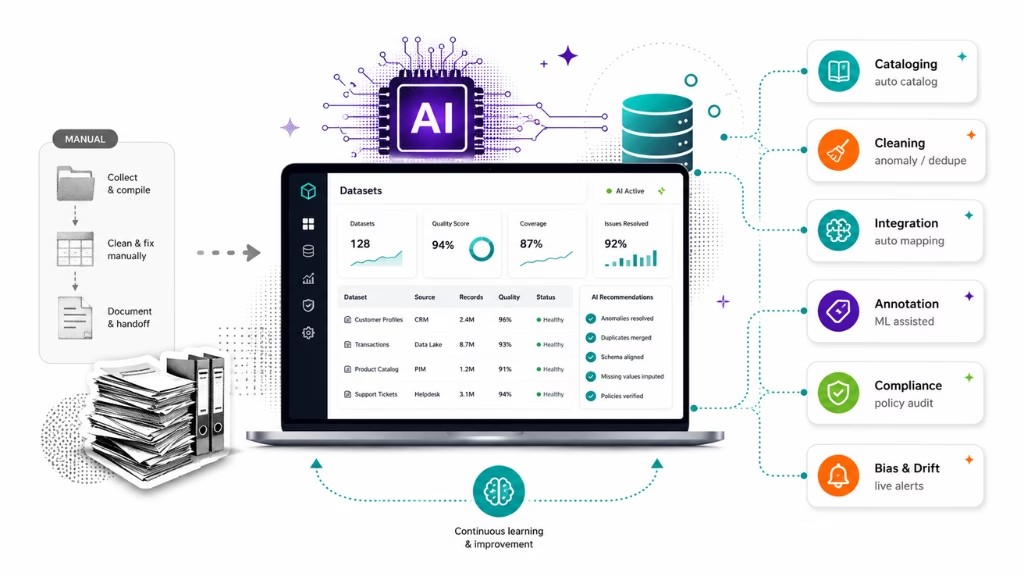
AI fundamentally changes how organizations manage datasets. Instead of relying on manual tasks and slow updates, AI-driven tools deliver speed, accuracy, and continuous improvement.
Many tasks that once required weeks—like labeling, integrating new sources, or checking data quality—now complete in hours or even minutes. Generative AI models also add value by creating synthetic data and automating annotation, which helps when real data is scarce or restricted.
According to reports from IBM and recent industry benchmarks, key innovations include:
| Feature | Traditional Management | AI-Driven Management |
| Data Cataloging | Manual, error-prone | Automated, self-updating |
| Data Cleaning | Manual scripts | AI-based anomaly/deduplication |
| Integration | Custom connectors needed | Low/no-code, auto-mapping |
| Annotation | Human labeling only | ML-assisted & generative models |
| Compliance | Reactive/manual | Policy engines, real-time audit |
| Bias & Drift Detection | Rare or missing | Embedded, automated alerts |
AI empowers teams to keep data flowing, adapt quickly to new business needs, and respond proactively to compliance shifts. In my experience, this is where many teams see the biggest difference.
What Are the Biggest Challenges in Managing Datasets with AI?
Adopting AI for dataset management is powerful—but not without friction. The main pitfalls often come from underestimating the complexity of new data, overlooking governance, or trusting AI blindly.
Top challenges I see are:
- Handling unstructured or diverse data formats.
- Keeping data private and secure with growing regulations like GDPR and HIPAA.
- Detecting and fixing bias or drift in datasets.
- Maintaining data lineage and clear audit trails for compliance.
- Over-relying on automation without enough human review.
Mistakes to avoid:
- Ignoring the need for regular data audits.
- Giving unchecked access to sensitive information.
- Failing to update compliance policies when new AI features roll out.
- Not tracking the impact of synthetic or annotated data on model fairness.
Smart teams invest early in setting up policies, monitoring systems, and staff training to handle these headwinds.
What Are the Main Functions of AI-Driven Dataset Management Tools?
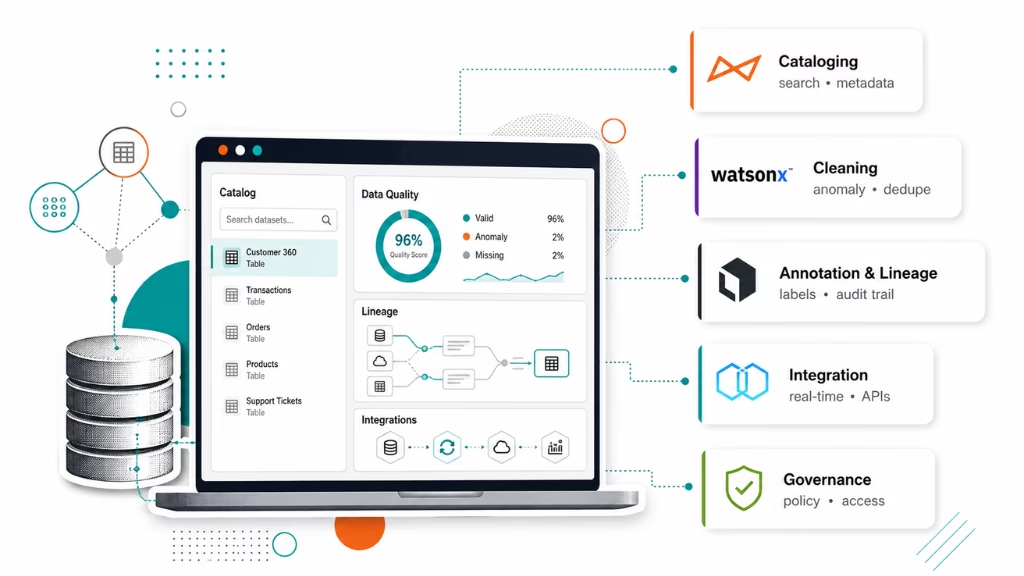
Modern AI dataset management tools deliver a range of functions, each built to automate common pain points while fitting into existing workflows. Here’s what matters most.
Data Discovery & Cataloging
Data discovery and cataloging make all company data findable and usable. AI models extract metadata, tag new datasets, and update catalogs as data changes.
Popular AI catalog tools in 2026 include Alation, Collibra, and Google Data Catalog. They support smart search, policy tagging, and dynamic data mapping, so users spend less time hunting for information.
Data Cleaning & Quality Control
Data quality is vital to every project. Good AI tools spot duplicates, flag anomalies, and enrich datasets with missing values. IBM Watsonx and Talend lead with advanced anomaly detection and synthetic data generation, supporting high-stakes projects and reducing manual cleanups.
Automated data cleaning means more reliable results, even with complex or messy data sources.
Data Annotation & Lineage Tracking
Annotation involves labeling data for machine learning or analytics. With tools like Labelbox and Scale AI, teams handle this at scale, using machine learning-assisted labeling and audit trails.
Lineage tracking maps how data changes over time, providing transparency for audits and compliance. This is critical to understanding who changed what—and why.
Data Integration & Real-Time Access
Modern businesses use many data sources: cloud apps, databases, APIs, streaming feeds. Tools like Integrate.io, Snowflake, and BigQuery let teams connect, transform, and stream data in real time with minimal coding.
AI models recommend best connection practices, map fields, and flag integration errors before they disrupt analytics.
Security, Compliance & Data Governance
Data security and compliance are non-negotiable. Platforms like Collibra, IBM, and Alation automate role-based access, enforce company policies, and make it easy to generate reports for GDPR or CCPA.
In my experience, combining automated policy checks and real-time alerts helps avoid costly compliance mistakes and builds trust with clients.
Which Are the Top AI Tools for Dataset Management in 2026?
Choosing a tool often starts with knowing what’s on the market. Here’s a head-to-head comparison of the top platforms, updated for 2026:
| Tool | Main Use Case | Core AI Features | Integration | Notable Pros | Compliance |
| Alation | Data catalog/gov | AI metadata, search/tags | Cloud, on-prem | Strong governance | GDPR, CCPA |
| IBM Watsonx | Data quality/compliance | Anomaly, cleaning, genAI | Multi-cloud, APIs | Trusted enterprise | HIPAA, PCI-DSS |
| Integrate.io | Real-time integration | Auto-mapping, connectors | 200+ sources | Low-code setup | GDPR, CCPA |
| Collibra | Governance/catalog | Policy engine, lineage | Data lakes/DBs | Deep compliance | GDPR, SOX |
| Labelbox | Annotation/labeling | ML-labeling, QA, lineage | ML pipeline APIs | Easy at scale | Depends on tier |
| Snowflake | Cloud data platform | ML data enrichment | Major clouds | Elastic scaling | SOC2, PCI |
| Google BigQuery | Data warehouse/AI | Integrated AI & analytics | Google/partners | Fast query, scaling | EU guidance |
| Couchbase Capella | Multimodal storage | Intelligent data syncs | Edge, cloud, IoT | Unstructured support | GDPR-ready |
Highlights:
- Alation and Collibra: Best for governance, catalog, and compliance.
- IBM Watsonx: Advanced data cleaning and anomaly detection.
- Integrate.io: Simple, scalable real-time integration.
- Labelbox: Scalable data labeling for ML.
In my POV, the best tool depends on your main bottleneck—governance, integration, annotation, or scale.
What Are the Best Practices for AI Dataset Management in 2026?
Managing datasets well with AI is about more than picking the right software. The real success stories come from blending people, process, and technology.
Recommended steps:
- Assess your data maturity, skills, and needed infrastructure.
- Implement automated metadata management and cataloging early.
- Use ongoing monitoring to check for bias, drift, and lineage issues.
- Set up clear roles and policy checks for security and compliance.
- Map your workflow: Discovery -> Integration -> Annotation -> Deployment.
- Review and update compliance and data access policies quarterly.
A better approach is to treat best practices as living processes—adapt them as your data grows and needs change.
How Do You Choose the Right AI Dataset Management Tool?
Selecting an AI tool is a business decision, not just a tech choice. In my experience, using a structured framework prevents wasted investment and helps align the tool with business goals.
Decision Matrix for Tool Selection:
| Criteria | Questions to Ask | Example Decision Factors |
| Needs | What are my data bottlenecks? | Cataloging, cleaning, labeling |
| Features | Which core features are must-have? | Lineage, annotation, streaming |
| Integration | What systems must the tool connect to? | AWS, Azure, data lakes, APIs |
| Compliance | What regulations apply? | GDPR, HIPAA, industry specifics |
| Scale | How much data and how fast? | TBs, PBs, real-time, batch |
| Budget | What is my TCO over 2 years? | Licensing, maintenance |
| Support | What level of vendor support? | 24/7, dedicated rep, forums |
Pro Tip: Always demo multiple tools with a real use case. Include representatives from compliance, engineering, and analytics teams in the trial process. Last year, when our dev team skipped this step, we missed costly integration gaps that surfaced later.
Evaluate based on current pain points and predicted growth.
What’s Next? The Future of AI-Powered Dataset Management (2026–2028)
AI dataset management is moving quickly. In the next two years, expect several big shifts that will shape project outcomes and platform priorities.
Self-healing pipelines will use AI to fix data issues without human help. Federated learning will let teams train AI on distributed datasets without moving sensitive information, solving privacy and speed problems at once.
Generative AI will expand both annotation and synthetic dataset creation—especially for unstructured and multimodal data like images, video, or text.
Real-time, cross-platform integration will be natively supported on more tools. MLOps and AIOps will automate tuning, monitoring, and explaining data changes for compliance and trust.
Teams who want to stay ahead should monitor these trends closely and pilot new features with a small group before wider rollout.
Trends checklist for leaders:
- Self-healing data flows
- Federated learning with regulatory focus
- Multimodal and real-time data support
- Automated bias and drift detection
- New compliance mandates for GenAI and data privacy
Why Partner with Riseup Labs for AI Dataset Management Solutions?
When organizations face complex data challenges, choosing the right partner can make a measurable difference. Riseup Labs brings practical expertise to AI dataset management, with a proven record working across banking, healthcare, and retail.
We partner with leaders like Alation, IBM, and Integrate.io for customized implementations. Our team handles design, setup, training, and support—letting your data teams focus on high-value work.
If you need help with tool selection, compliance workflows, or scaling secure data pipelines, connect with our experts for a personalized strategy session.
Conclusion
AI tools for dataset management are now essential for any organization that relies on fast, compliant, and high-quality data. They automate error-prone tasks, support real-time analytics, and enforce compliance through smart policies and audit trails.
As I have seen, companies that invest in the right mix of technology and process quickly unlock more project capacity and reduce risk. The core takeaway is clear: better data management builds a stronger, more adaptive business.
For those starting this journey, I recommend evaluating your current bottlenecks, talking with solution partners, and piloting leading AI tools side-by-side. Continuous monitoring and team adaptation help you avoid common traps and get the most out of modern platforms.
If your team needs help getting started or wants a full-service solution, explore a demo or strategy call with an expert team. AI-powered, expert-guided dataset management will keep you ready for the next wave of data innovation.
FAQs
What are the best AI tools for dataset management in 2026?
Top AI tools in 2026 include Alation for governance, IBM Watsonx for data quality, Integrate.io for integration, Collibra for compliance, and Labelbox for annotation.
How does AI automate data cleaning and annotation?
AI uses machine learning to detect errors, fix duplicates, and fill missing values. For annotation, AI models suggest labels and accelerate large-scale labeling for analytics or machine learning.
What is the difference between AI data management and traditional methods?
AI data management automates cataloging, cleaning, and integration, while traditional methods rely on manual work and scripts. AI systems adapt faster and reduce the risk of human error.
How do AI tools improve data governance and compliance?
AI tools automate policy enforcement, monitor access, and track all changes in lineage logs. This supports stricter audit trails and ensures teams meet GDPR, HIPAA, and CCPA requirements.
Which AI platforms support real-time or streaming data integration?
Integrate.io, Snowflake, and Google BigQuery lead in real-time data integration, enabling live data flows from cloud, API, or IoT sources for immediate analytics.
How do you choose the right AI tool for dataset management?
Use a decision matrix focused on your key data pain points, integration needs, compliance, and budget. Test shortlisted tools with your real data workflows before final selection.
What are the challenges of AI-powered dataset management?
Key challenges are managing unstructured data, ensuring privacy, avoiding bias or drift in datasets, and keeping up with changing regulations and audit needs.
How can AI reduce bias and ensure dataset fairness?
AI platforms offer bias detection, drift monitoring, and audit logs to flag unfair patterns. Human oversight and regular data reviews remain important for fairness.
What future trends will shape AI tools for dataset management?
Expect self-healing pipelines, federated learning, more multimodal data support, and stronger compliance monitoring as leading trends shaping dataset management from 2026 onward.
What industries benefit most from AI-powered dataset management?
Industries like healthcare, banking, and retail benefit most due to strict regulations, large data volumes, and the need for real-time analytics and privacy.
This page was last edited on 7 August 2026, at 12:11 pm

Start a conversation with our team to solve complex challenges and move forward with confidence.