Manual root cause analysis (RCA) is slow, error-prone, and costly in today’s complex IT environments. As digital systems expand, downtime and prolonged incident diagnosis can cost businesses hundreds of thousands per hour, according to industry estimates. Modern incident management now hinges on speed and precision—two qualities AI-driven RCA workflows uniquely deliver.
This playbook explains how AI-powered root cause analysis reshapes IT operations. You’ll learn proven frameworks, practical steps, and expert insights to reduce Mean Time to Resolution (MTTR), improve reliability, and confidently assess automation ROI. Whether you manage IT operations or lead a Site Reliability Engineering (SRE) team, this comprehensive guide is your roadmap to mastering AI-driven RCA and futureproofing your incident management workflows.
Why It Matters:
- Reduces costly downtime with faster diagnoses and fixes
- Addresses complex, high-velocity incidents beyond manual capabilities
- Provides actionable steps, not just theory or vendor pitches
- Empowers teams with community-sourced tips and real examples
What Is an AI-Driven Root Cause Analysis Workflow?
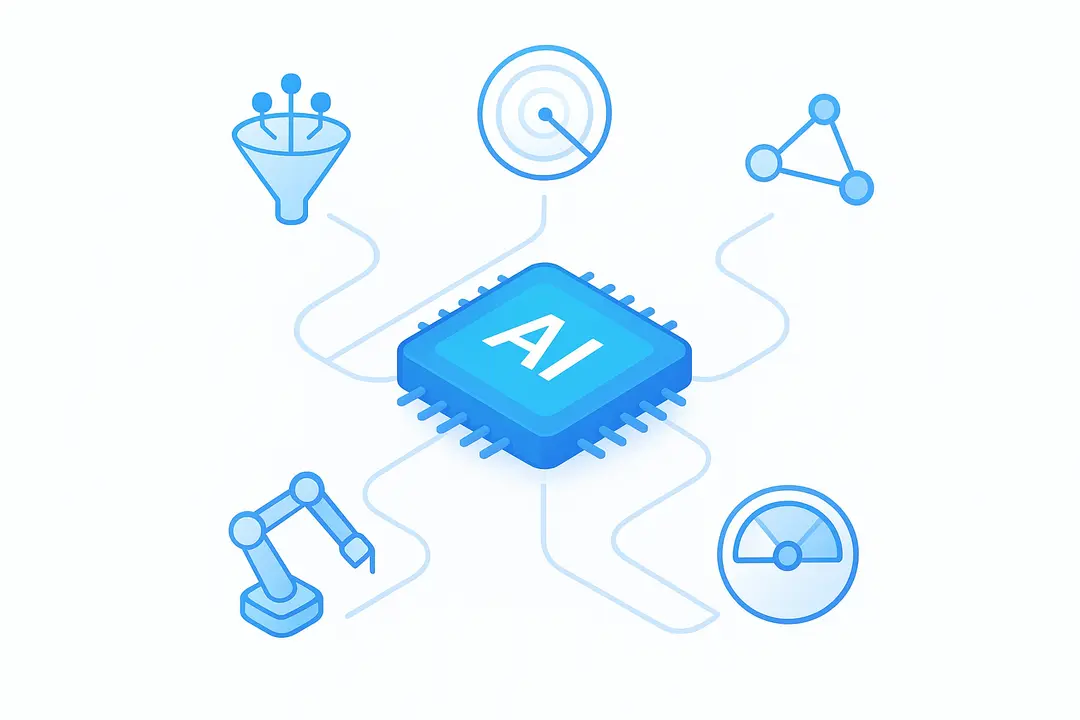
AI-driven root cause analysis (RCA) workflows leverage artificial intelligence and automation to identify, analyze, and remediate the underlying causes of IT incidents in real time. Unlike traditional RCA, which depends heavily on manual investigation, AI-powered RCA orchestrates data ingestion, anomaly detection, correlation, and remediation to accelerate and improve incident outcomes.
Key Characteristics
- AI-powered root cause analysis uses machine learning, natural language processing (NLP), and workflow automation to rapidly surface causality among vast telemetry data.
- Workflow orchestration coordinates the stepwise handling of incidents, allowing for end-to-end RCA automation.
- Applies across IT Service Management (ITSM), IT Operations (ITOps), and SRE (Site Reliability Engineering) practices.
Traditional vs. AI-Driven RCA
| Traditional RCA | AI-Driven RCA | |
| Investigation | Manual, expert-driven | Automated with ML/NLP models |
| Speed | Slow (hours/days) | Rapid (seconds/minutes) |
| Accuracy | Prone to human error/bias | Consistent pattern recognition |
| Scalability | Limited by team capacity | Handles massive, high-velocity incidents |
| Workflows | Siloed, informal processes | Orchestrated, integrated, repeatable |
Definition:
An AI-driven RCA workflow is a structured process that uses artificial intelligence to automatically collect data, detect incidents, correlate events, analyze root causes, and trigger remediation, minimizing effort and maximizing precision at every stage.

How Does AI Transform Root Cause Analysis? (Key Technologies & Concepts)
AI transforms root cause analysis by automating the detection, diagnosis, and resolution of incidents with advanced data-driven methods. This reduces reliance on manual expertise and enables teams to handle scale and speed impossible with traditional RCA.
Essential Technologies in AI-Driven RCA
- Machine Learning (ML):
ML models analyze massive amounts of metrics, logs, and traces, learning baseline patterns and detecting anomalies that signal incidents. These models are essential for incident diagnosis in large-scale IT operations. - Anomaly Detection AI:
Automated anomaly detection surfaces outlier events quickly. For example, a sudden spike in response time flagged by unsupervised ML can prevent bigger failures. - Predictive Analytics:
By leveraging time-series forecasting and regression techniques, AI can predict likely failure points—enabling proactive, preventive maintenance before issues escalate. - Natural Language Processing (NLP):
NLP parses unstructured data such as log files, support tickets, and alert messages, correlating relevant information that might otherwise go unnoticed. - Knowledge Graphs & Event Topology:
These AI constructs map service dependencies and event flows, crucial for identifying causal links rather than just related symptoms. - Causality vs. Correlation:
One of AI’s major challenges is distinguishing between merely co-occurring events (correlation) and true cause-and-effect (causality). While AIOps platforms are improving in causal inference, human-in-the-loop validation remains critical for high-stakes incidents. - Human-in-the-Loop Augmentation:
Incorporating operator review and override capabilities ensures accuracy and supports learning over time.
In Summary:
AI-driven technologies bring speed, scale, and statistical rigor to RCA—enabling faster, more reliable incident diagnosis, while recognizing that ultimate accuracy still benefits from human insight.
What Are the Core Stages of an AI-Powered RCA Workflow?
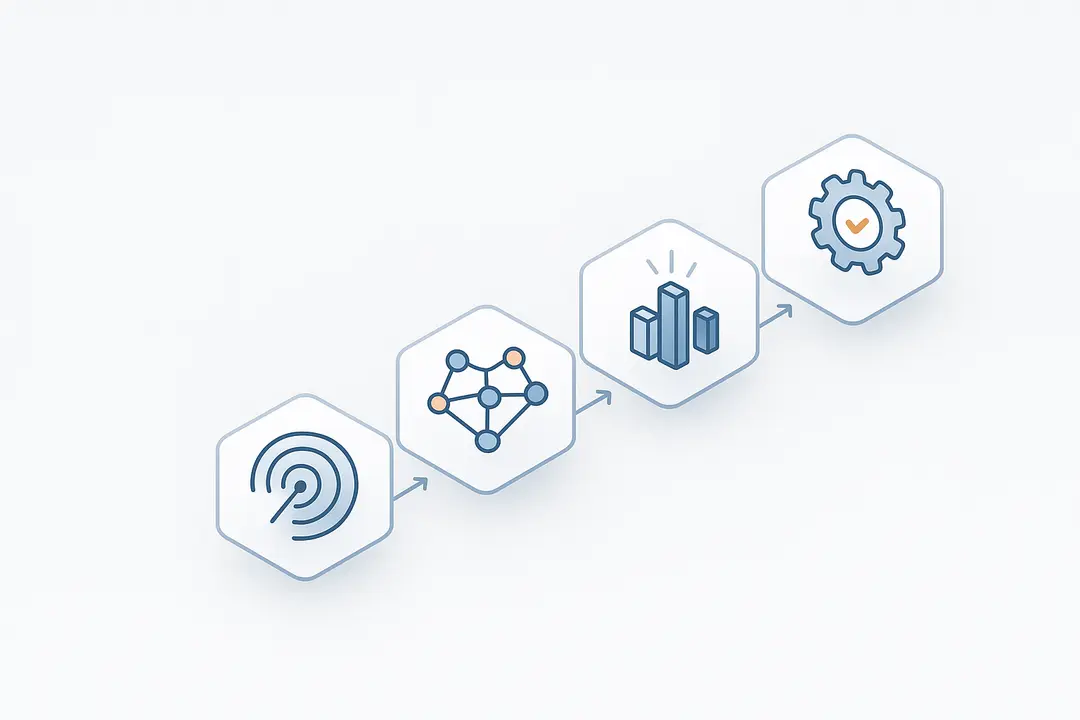
AI-driven RCA workflows follow a stepwise, modular sequence that automates each phase of incident resolution. Understanding these core stages helps teams plan, implement, and optimize AI RCA systems.
The 5 Key Stages
- Data Ingestion & Normalization
Collect telemetry (metrics, logs, traces) from infrastructure, applications, and services.
Normalize and enrich data for consistency across sources. - Pattern & Anomaly Detection
Use ML algorithms to identify unusual behaviors, outliers, or deviations from learned baselines.
Flag potential incidents quickly and with minimal noise. - Causality Correlation
Map dependencies and event topology (service maps, change logs).
Apply statistical and graph-based models to infer likely root causes, not just surface symptoms. - Impact Analysis & Visualization
Quantify the business and technical impact of the incident (affected users/services).
Present findings through dashboards or rich UI for rapid triage. - Automated Remediation & Case Closure
Suggest or trigger pre-built remediation actions/workflows (e.g., restart services, roll back changes).
Close incidents or escalate for human review with auto-generated RCA reports.

Automated vs. Human Review
- Automated: Routine incidents, common patterns, low-risk changes.
- Human-in-the-Loop: High-impact incidents, ambiguous causal links, novel failure modes.
Takeaway:
Modern RCA automation enables faster, more precise incident response while ensuring humans remain involved when critical judgment is needed.
What Are the Benefits—and Limits—of AI-Driven RCA?
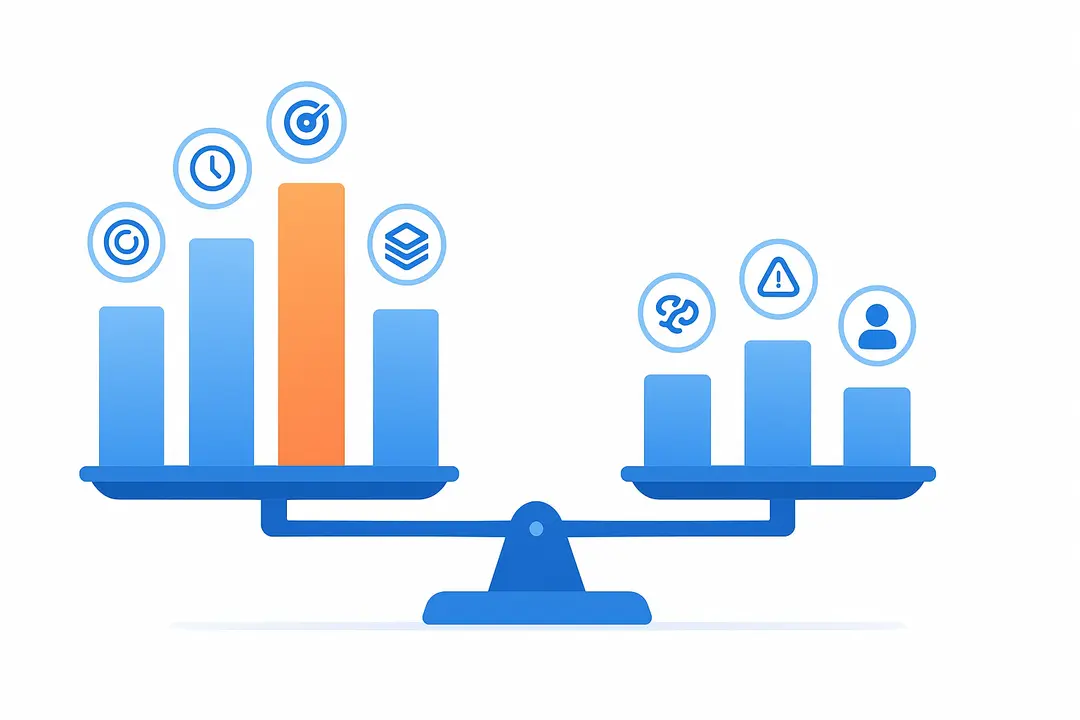
AI-driven RCA workflows provide tangible improvements in efficiency, scalability, and reliability. However, they are not without challenges—especially regarding explanation, trust, and causality.
Key Benefits
- Speed: Reduces MTTR significantly—often from hours to minutes.
- Accuracy: ML-driven pattern recognition finds root causes overlooked by manual methods.
- Proactivity: Identifies potential incidents before they escalate, supporting preventive maintenance.
- Scalability: Handles high volumes of incidents across complex hybrid or multi-cloud environments.
- Consistency: Automates repeatable processes, removing human inconsistency.
Challenges and Limitations
- False Positives/Negatives: Imperfect models can misclassify events, leading to alert fatigue or missed issues.
- Causality vs. Correlation: AI sometimes links correlated events rather than true causative factors, leading to possible misdiagnosis.
- Black Box Outputs: Some AI models provide little visibility into “why” a root cause was identified, making trust and regulatory compliance harder.
- Manual Oversight Needed: Human expertise is required for exceptional incidents, unusual contexts, or to validate and tune AI recommendations.
Human-in-the-Loop Workflow
- Continues to be essential for oversight, especially where business-critical decisions rely on diagnosis accuracy.
- Decision trees or escalation rules determine when to engage operators.
Benefits vs. Limitations Table
| Benefits | Limitations |
| Faster MTTR | Occasional incorrect diagnosis |
| Scalable across large estates | May require frequent tuning |
| Reduces manual workload | Relies on high-quality telemetry |
| Proactive incident prevention | Explains “what” more than “why” |
| Consistent incident handling | Human validation still needed |
What’s Required for Reliable RCA Automation? (Data, Tools, and Integration)
Launching effective RCA automation requires robust data, careful tool selection, and strong integration practices. Neglecting these foundations limits the success of any AI workflow.
Data Prerequisites
- Types of Data Needed:
- Metrics: CPU, memory, throughput, latency, etc.
- Logs: Application logs, infrastructure logs, middleware logs.
- Traces: Distributed tracing of transaction paths.
- Sources:
- Monitoring and observability platforms
- ITSM/ITOps ticketing systems
- Cloud or on-premise logging tools
- Quality Criteria:
- Completeness: All relevant telemetry captured—gaps cause blind spots.
- Freshness: Data must be current and minimally delayed.
- Normalization: Consistent formats and schemas across all data inputs.
Tool Evaluation Checklist
- Does it seamlessly integrate with existing monitoring/ITSM tools?
- Are anomaly detection and causal correlation transparent?
- Does it support human-in-the-loop review/escalation?
- Is it compatible with your data sources and incident management workflows?
- How does it handle privacy/security of sensitive operational data?
Readiness Rubric (Sample Table)
| Criteria | Not Ready | Partially Ready | Fully Ready |
| Telemetry Completeness | ☐ | ☐ | ☐ |
| Data Freshness | ☐ | ☐ | ☐ |
| Tool Integration | ☐ | ☐ | ☐ |
| Security/Privacy | ☐ | ☐ | ☐ |
| QA/Human Review Path | ☐ | ☐ | ☐ |
Security & Privacy:
- Only authorized access to production data.
- Anonymization or masking of sensitive customer details.
- Compliance with local and global data regulations.
Tip:
Use this readiness checklist before deploying AI-driven RCA in incident management. Ensuring robust data and integrations is the foundation for reliable outcomes.
How Do Real-World Teams Use AI-Driven RCA?
Real-world adoption of AI-driven RCA automates much of the incident response process, helping teams decrease resolution time and focus on higher-value work. But it also highlights limitations and areas for improvement.
Case Study: Lowering MTTR with AI RCA
A global SaaS provider implemented AI-powered root cause analysis across its IT operations stack. By automating the detection and triage of incidents, the team reduced MTTR by 35% within six months. Automated RCA connected infrastructure telemetry and application logs, immediately surfacing probable causes for most “routine” outages. Larger incidents still benefited from SRE review, with AI-generated reports accelerating root cause identification for human validation.
Practitioner Perspectives (Reddit SRE Insights)
- “AI RCA tools catch 80% of repeat issues much faster, but I still manually double-check the report for business-critical apps.”
- “Biggest stumbling block is data quality—garbage in, garbage out applies more than ever.”
- “Auto-remediation works only if you keep the automation scripts up to date and tightly scoped.”
Annotated RCA Reports: AI vs. Human
| Aspect | AI-Generated RCA | Human-Generated RCA |
| Speed | Seconds-minutes | Hours-days |
| Consistency | High (repeatable) | Varies |
| Context/Insight | Good for typical failures | Deep context on novel events |
| Trust/Explainability | Sometimes opaque | High, verbose |
| Need for Oversight | “Probable cause” auto-link | Explicit validation |
Key Metrics in Use
- MTTR (Mean Time to Resolution)
- Acceptance rate of AI recommendations vs. human override
- Reduction in escalated incident volume
- False-positive/negative incident ratio
Recovery Measures for AI Error Scenarios:
- Rolling back automated remediation scripts
- Adding manual checkpoints for ambiguous scenarios
- Regular QA cycles and feedback loops for model improvement
Bottom Line:
AI-driven RCA is most effective when combined with robust human oversight—a hybrid, continuously improving partnership.
What Are the Best Practices for Adopting and Optimizing AI RCA Workflows?
Success with AI-driven RCA depends on thoughtful planning, continuous tuning, and regular validation. Here is a practical framework to guide adoption and ensure ongoing value.
Step-by-Step Adoption Framework
- Baseline Assessment
Audit current RCA workflows, incident types, and data quality. - Pilot Implementation
Start with a well-scoped, low-risk application or system. - Data Preparation
Cleanse and normalize telemetry sources, close data gaps, ensure freshness. - Tool Selection & Integration
Choose platforms that meet your readiness checklist and support open data standards. - Accuracy Validation
Compare AI-generated RCA reports against human findings over multiple incidents. - Training & Team Alignment
Onboard IT and SRE teams, highlighting the “why,” “how,” and oversight paths. - Full Rollout
Expand to broader systems, adjusting workflows based on pilot lessons. - Continuous Improvement
Monitor KPIs (MTTR, accuracy, incident volume), refine rules, and incorporate operator feedback for ongoing accuracy gains.
RCA “Accuracy Checklist”
| Accuracy Factor | Action/Check |
| Data Freshness | Verify telemetry is up-to-date |
| Coverage | All relevant logs/metrics included |
| Anomaly Detection | Test low, medium, and high-severity incidents |
| Causal Link Validation | Cross-check with human RCA postmortems |
| False Alarm Ratio | Track and minimize over time |
| Remediation Safety | Ensure safe rollback/escalation |
Adoption Pitfalls (And How to Avoid Them)
- Over-trusting automation: Always enable human-in-the-loop, especially for novel incidents.
- Neglecting data hygiene: Commit to regular data audits and normalization.
- One-size-fits-all rollout: Customize automation levels by application risk and business impact.
- Ignoring feedback loops: Build in mechanisms for operators to flag errors and suggest workflow refinements.
What’s Next? Future Trends in AI-Driven RCA Workflows
AI-driven RCA is evolving rapidly, powered by advances in data science, automation, and SRE practices. Staying ahead means preparing for the next wave of innovations and regulatory developments.
Key Trends Shaping the Future
- Causality AI:
Improved algorithms that better distinguish correlation from causation, with greater explainability. - Knowledge Graphs:
More comprehensive mapping of service dependencies for context-aware RCA. - Full-Stack SRE Integration:
Closer alignment of RCA with SLO/SLA management and continuous improvement cycles. - Self-Healing Workflows:
Automated incident remediation that adapts in real time, reducing human intervention for predictable problems. - Generative RCA Reports:
AI systems creating readable, executive-level postmortems and recommendations for continuous service improvement. - Regulatory & Security Compliance:
New standards emerging on AI explainability and auditable incident workflows, especially in regulated industries. - 2025–2026 Outlook:
Community sources predict wider adoption of predictive maintenance AI and real-time RCA reliability scoring will become essential, driven by growing demand for near-zero downtime.
Actionable Recommendation:
Prepare now by investing in explainable AI, aligning with evolving SRE standards, and partnering closely with your observability/data teams.
Key Takeaways Table: Quick Reference Guide
| RCA Stage/Topic | Key Actions/Checks | Pro Tips/Risks |
| Data Ingestion | Collect all metrics, logs, and traces | Ensure normalization and coverage |
| Anomaly Detection | Apply ML algorithms, validate against baseline | Tune thresholds to reduce false alarms |
| Causality Correlation | Use dependencies/event topology mapping | Involve human review for novel scenarios |
| Impact Visualization | Use dashboards/UI for rapid triage | Quantify business/user impact |
| Automated Remediation | Trigger safe workflows, log actions | Always allow human review/override |
| Accuracy Validation | Compare AI vs. human RCA, iterate | Monitor and address false alarms regularly |
| Continuous Improvement | Gather operator feedback, adjust logic | Avoid over-automation on critical systems |
Frequently Asked Questions (FAQs) About AI-Driven RCA Workflows
What is an AI-driven root cause analysis workflow?
An AI-driven RCA workflow is an automated process that uses artificial intelligence to ingest incident data, detect anomalies, identify probable root causes, and trigger or suggest remediation—minimizing manual intervention and resolution time.
How does AI improve root cause analysis in IT operations?
AI automates data analysis, finds patterns and anomalies faster than humans, and scales across massive infrastructure. This allows IT teams to diagnose and resolve incidents more quickly and consistently.
What are the typical steps in an AI-powered RCA workflow?
The main steps are: (1) Data ingestion and normalization, (2) Anomaly and pattern detection, (3) Causality correlation, (4) Impact analysis and visualization, and (5) Automated remediation or escalation.
How do you ensure the accuracy of AI-generated RCA reports?
Accuracy is achieved through high-quality, fresh data; rigorous algorithm tuning; human-in-the-loop review for validation; and ongoing comparison with manual RCA results to identify gaps.
What are the main challenges or pitfalls of AI in root cause analysis?
Challenges include misidentifying correlation as causation, false positives/negatives, lack of explainability in AI outputs, and over-reliance on imperfect data.
How can organizations evaluate the effectiveness of AI automations in incident management?
Effectiveness is measured by MTTR reduction, accuracy/acceptance rates of AI recommendations, decreased incident escalations, and tracking false alarm ratios over time.
Is human supervision still necessary for AI-powered RCA workflows?
Yes—for business-critical or novel situations, human review is essential to validate AI findings and ensure risk is managed appropriately.
What data or telemetry is needed for effective AI root cause analysis?
Comprehensive, normalized logs, metrics, and traces from all relevant infrastructure, applications, and services are needed. Completeness, freshness, and consistency are paramount.
Which industries benefit most from automated RCA workflows?
Industries with large, complex digital infrastructures—such as SaaS, fintech, cloud services, telecom, and enterprise IT—see the greatest benefits from AI-driven RCA.
Conclusion
AI-driven root cause analysis workflows represent a step change in how modern IT teams address incidents. By combining automation, machine learning, and human expertise, organizations can respond to incidents faster, more accurately, and at scale—while freeing up valuable engineer time for innovation.
The path to success begins with data readiness, thoughtful tool selection, and continuous validation. For IT leaders, SREs, and service owners, embracing these best practices means reducing downtime, controlling costs, and delivering more reliable digital services.
Key Takeaways
- AI-driven RCA accelerates and improves incident diagnosis in complex IT environments.
- Success relies on data quality, workflow orchestration, and human-in-the-loop oversight.
- Real-world teams see significant reductions in MTTR—when best practices are followed.
- Continuous improvement and explainable AI are critical for trust and reliability.
- Prepare for future trends by adopting explainable, integrated, and secure RCA workflows now.
This page was last edited on 9 July 2026, at 11:10 am

Start a conversation with our team to solve complex challenges and move forward with confidence.