Businesses today face complex decisions at unprecedented speed and scale. Traditional decision support systems (DSS) often struggle to keep up with the needs of modern organizations, resulting in slower analytics and limited adaptability. AI automation is rapidly reshaping DSS, enabling smarter, faster, and more objective decision-making.
This definitive guide delivers a clear framework and actionable playbook for leveraging AI automation in your organization’s decision support systems. Discover how to bridge the gap between theory and impactful implementation, weigh benefits against challenges, and see real-world examples.
What Is AI Automation for Decision Support Systems?
AI automation for decision support systems is the use of artificial intelligence technologies—like machine learning and real-time data integration—to streamline, enhance, or automate business-critical decision processes traditionally handled by DSS.
| Feature | Traditional DSS | AI-Driven DSS |
| Data Processing | Manual, rule-based | Automated, adaptive, real-time |
| Analytics | Historical, descriptive | Predictive, prescriptive |
| Updates | Periodic, manual | Continuous, self-improving |
| Integration | Isolated data sources | Multi-source, real-time |
| User Involvement | Heavy, interpretive | Reduced (with human-in-the-loop) |
Key Technologies:
- Artificial Intelligence (AI)
- Machine Learning (ML)
- Automation frameworks and orchestration
- Data integration and pipelines
AI-driven decision support systems empower organizations to move from retrospective analysis to proactive, data-driven insights.

How Does AI Transform Traditional Decision Support Systems?
AI transforms traditional decision support systems by automating data processing, enabling advanced analytics, and reducing manual intervention.
The evolution from legacy, rule-based DSS to AI-enhanced systems is driven by the need for speed, accuracy, and actionable insight. Key differences include:
- Real-Time Analysis: AI systems process and analyze streaming data for immediate recommendations.
- Predictive and Prescriptive Analytics: Machine learning models forecast outcomes and suggest optimal actions.
- Automation of Routine Decisions: AI handles high-volume, repetitive decisions with minimal oversight.
- Scalability: Systems adapt and scale as data and business complexity grow.
- Human-in-the-Loop Models: While some decisions are fully automated, many systems involve human review, especially for high-impact actions.
Legacy DSS often relies on static models and manual data updates, resulting in slower, less adaptable decision cycles. AI-powered DSS overcomes these constraints by learning from new data and continuously optimizing recommendations.
Core Components of AI-Driven DSS: Technologies & Frameworks
AI-driven decision support systems consist of integrated technologies that work together to automate and enhance decision-making.
| Component | Function | Business Value |
| Data Ingestion | Collects real-time, multi-source data | Rich, current data for analysis |
| Data Integration | Harmonizes disparate data types/sources | Unified, accurate foundation |
| ML & Predictive Models | Learns from historical and live data | Forecasts trends, enhances accuracy |
| Rules Engine | Automates repetitive decision logic | Efficiency, consistency |
| Explainable AI (XAI) | Makes recommendations transparent | Trust, regulatory compliance |
| Automation Workflows | Orchestrates end-to-end decision process | Streamlined, low-latency operations |
| Human-in-the-Loop | Enables human review or intervention | Oversight, ethical assurance |
| User Interface | Dashboards or alerts for stakeholders | Actionable insights, user adoption |
Visual Architecture (Described):
An AI-DSS system typically consists of a data pipeline feeding into AI and ML models, governed by a rules engine. Explainable AI layers ensure model outputs are interpretable, while human-in-the-loop modules allow users to review or override automated recommendations.
This modular framework enables businesses to customize, scale, and continually improve their decision automation strategy.
What Are the Key Benefits of AI Automation in Decision Support?
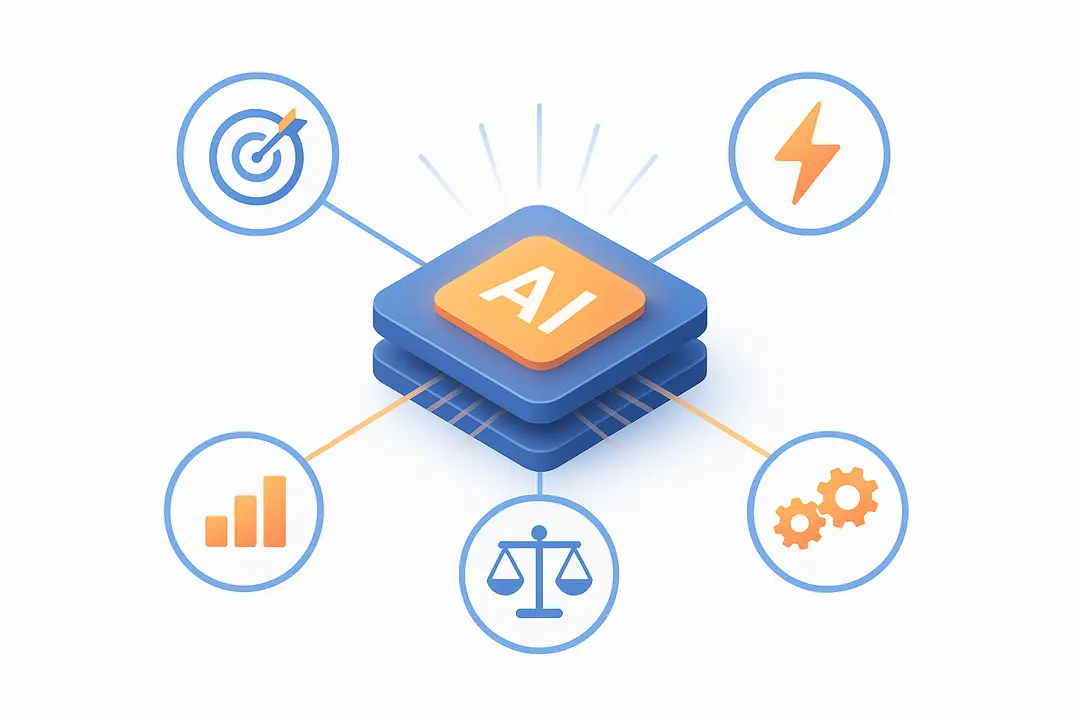
AI automation brings transformative benefits to decision support systems, including speed, accuracy, scalability, and objectivity.
- Greater Accuracy: Insights are based on real-time data and continuously learning models.
- Faster Decision-Making: Automated workflows slash analysis and response times.
- Objectivity: Reduces human bias by relying on data-driven models.
- Scalability: Handles growing data volumes and business complexity with ease.
- Adaptability: Models self-improve and adapt to changing conditions.

AI DSS has reduced our decision cycle from weeks to hours, enabling proactive business moves we could never have considered before.
— CIO, multinational manufacturing firm, as reported by SPD Technology
Organizations leveraging AI automation for DSS consistently report increased productivity, reduced costs, and improved competitive agility.
How to Implement an AI-Automated Decision Support System: Step-by-Step
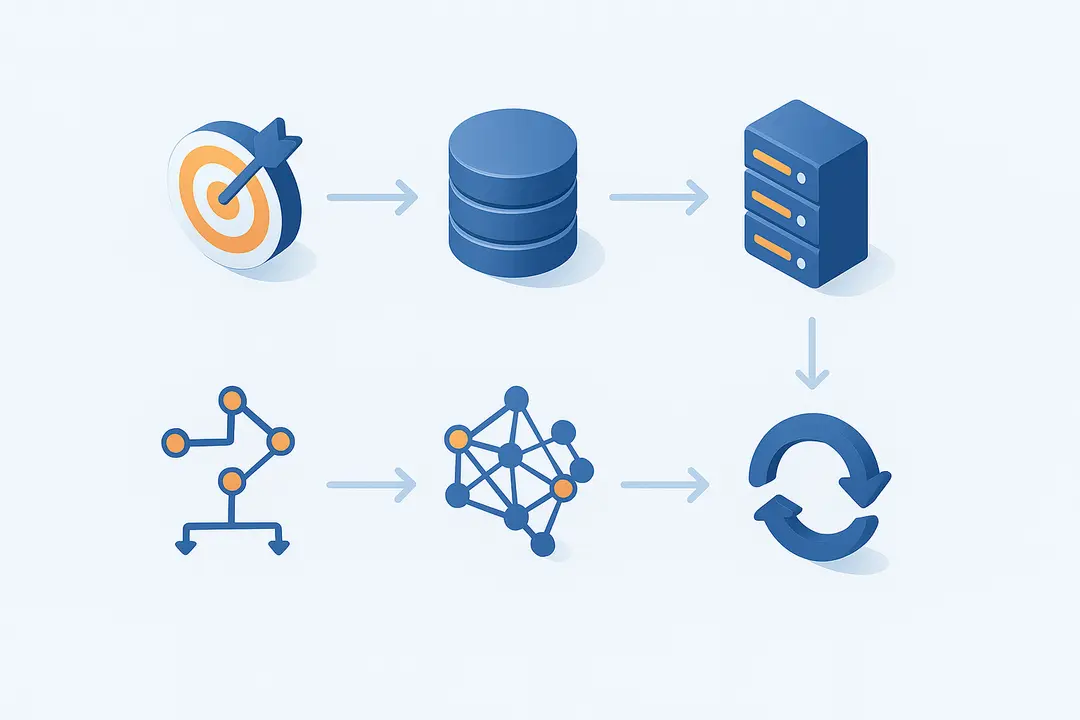
Implementing AI automation in decision support requires a systematic approach, from scoping to continuous monitoring.
- Define Business Objectives: Clarify the decision areas and measurable goals for automation.
- Audit Data Readiness: Assess source data quality, diversity, and gaps.
- Select Technology Stack: Choose AI/ML frameworks, data pipelines, and integration platforms.
- Develop ML Models: Train models on historical and real-time data.
- Integrate with Existing Systems: Seamlessly connect ERP, CRM, IoT, or external data feeds.
- Design Automation Workflows: Map out end-to-end decision processes with rules and escalation points.
- Incorporate Human-in-the-Loop Controls: Implement oversight checkpoints for high-stakes actions.
- Test and Validate: Pilot the system, measure against benchmarks, and refine.
- Monitor and Improve: Continuously monitor performance, retrain models, and update rules.
Implementation Checklist:
| Step | Key Consideration |
| Business Case Definition | Stakeholders, ROI projection |
| Data Quality Assessment | Completeness, bias, consistency |
| Tech Stack Selection | Scalability, compliance |
| Workflow Mapping | Integration touchpoints |
| Human Oversight | Review, override mechanisms |
| Compliance & Security | Privacy, auditability |
| Continuous Improvement | Monitoring, feedback loops |
Example:
A retail company deploys AI-driven DSS to manage inventory levels. Data from POS systems, suppliers, and market trends is ingested in real-time. Machine learning models predict demand spikes, while a rules engine automates restocking. Human managers review recommendations during major sales events.
Challenges and Limitations of AI-Driven Decision Support Systems
While AI automation unlocks significant value, it also introduces new challenges that must be managed to ensure trust and reliability.
- Data Quality Issues: Poor or biased data can lead to inaccurate or unfair recommendations.
- Model Transparency (“Black Box”): Complex algorithms may lack explainability, making decisions hard to audit.
- Regulatory Compliance: Regulations may require justification and traceability for automated decisions.
- Ethical and Bias Risks: Without careful monitoring, AI can perpetuate existing biases.
- Integration Complexity: Legacy systems and siloed data create roadblocks.
Risk-Mitigation Table
| Challenge | Recommended Mitigation |
| Data bias/inaccuracy | Robust data cleaning, regular audits |
| Black box ML models | Deploy explainable AI tools and dashboards |
| Regulatory hurdles | Automated logging, documentation, XAI |
| Over-automation | Maintain human-in-the-loop where needed |
| Integration barriers | Prioritize modular, API-driven architectures |
“Building trust in AI recommendations demands both technical transparency and human oversight. You can’t delegate complex decisions blindly to any system, no matter how advanced.”
— AI Solutions Architect, as cited by Evalcommunity
What Are the Top Industry Use Cases for AI Automation in DSS?
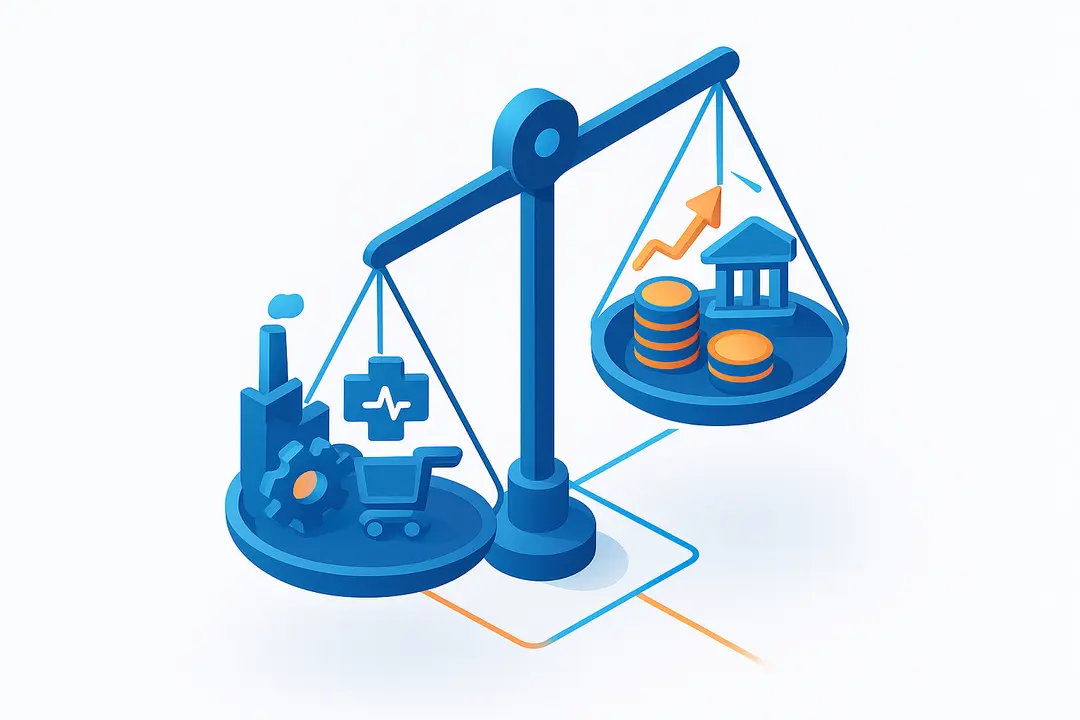
AI automation for decision support has high-impact applications across sectors.
Industry Use Case Vignettes:
- Manufacturing (Industry 4.0): Real-time production optimization, predictive maintenance, and quality control using integrated IoT and ML-driven decision engines.
- Healthcare: Automated diagnosis suggestions, patient risk scoring, and resource allocation powered by AI, improving accuracy and patient outcomes.
- Financial Services: Fraud detection, credit scoring, and algorithmic trading systems analyze massive datasets to optimize decisions and reduce risk.
- Monitoring & Evaluation (M&E): Automated data analysis for program impact assessments, supporting NGOs and government agencies in evidence-based policy.
- Retail: Dynamic pricing, inventory management, and personalized marketing recommendations using real-time consumer data.
- Public Sector: Crime prediction, resource deployment, and urban planning decisions informed by geospatial and socioeconomic analytics.
Use Case Comparison Table
| Sector | Decision Type | AI Advantage |
| Manufacturing | Production scheduling | Predictive optimization |
| Healthcare | Diagnosis support | Pattern detection, risk scoring |
| Finance | Risk/fraud assessment | Real-time anomaly detection |
| Retail | Inventory, pricing | Automated demand forecasting |
| Public Sector | Policy, resourcing | Scenario simulation, trend analysis |
According to industry reports, organizations adopting AI-driven DSS see significant improvement in operational efficiency and decision quality, sometimes reducing process time by over 50% (as noted by Decisions.com).
Future Trends: Where is AI Decision Automation Headed?
The future of AI-driven decision support systems is defined by increasing autonomy, explainability, and effective human-AI collaboration.
Emerging Trends in AI-DSS:
- Fully Autonomous Decision Systems: Advancements are making possible end-to-end automation of routine, high-volume decisions—though high stakes decisions will likely retain human oversight.
- Explainable AI Becomes Standard: Regulatory and operational demands are pushing for models that clearly justify decisions.
- Hybrid Human-AI Workflows: Organizations are embedding “human-in-the-loop” controls for critical decision points, combining AI speed with human judgment.
- Continuous Learning Ecosystems: AI-DSS will feature self-improving models, automatically incorporating new data to stay relevant.
- Data Governance and Compliance: As regulations tighten, robust data governance—privacy, auditability, and security—will become foundational.
“Success in tomorrow’s automated decision landscape hinges on transparency, oversight, and a deep understanding of both AI capabilities and limitations.”
— Industry Analyst, as referenced in Gartner and SPD Technology reports
Summary Table: Key Takeaways from AI-Driven DSS
| Category | Key Point |
| Advantage | Accuracy, speed, scalability, objectivity |
| Requirement | High-quality data, integration, ML models, human oversight |
| Challenge | Data bias, black box models, regulatory compliance |
| Use Case | Manufacturing, healthcare, finance, retail, public sector |
| Future Trend | Autonomous DSS, explainable AI, hybrid workflows, governance |
Frequently Asked Questions: AI Automation for DSS
What is AI automation for decision support systems?
AI automation for decision support systems means applying artificial intelligence tools—like machine learning and real-time data integration—to automate and enhance the decision-making processes traditionally handled by DSS in organizations.
How does AI enhance decision support system capabilities?
AI enhances DSS by automating data analysis, adding predictive and prescriptive analytics, processing real-time data, and reducing manual intervention, resulting in faster, more accurate, and scalable decision-making.
What are the key benefits of using AI-driven DSS?
Benefits include improved decision accuracy, faster response times, objective recommendations, scalability to handle complex datasets, and adaptability to changing conditions or business goals.
What are the main challenges of automating decision support systems?
Challenges include data quality risks, model transparency issues, integration with legacy systems, regulatory and compliance requirements, and the potential for bias in automated outputs.
How do explainable AI and human oversight improve AI DSS?
Explainable AI (XAI) makes the decision-making process transparent, allowing users to understand and trust recommendations. Human oversight ensures ethical considerations and addresses edge cases where automation may fall short.
Can AI-powered DSS replace human decision-makers?
While AI can automate many repetitive or data-intensive decisions, human judgment remains essential for ethical, strategic, or high-stakes choices, especially where context or nuance is critical.
What are common real-world applications of AI automation in DSS?
AI-driven DSS are widely used in manufacturing (production optimization), healthcare (diagnostic support), finance (fraud detection), retail (dynamic pricing), and the public sector (urban planning).
What steps are involved in implementing an AI-automated DSS?
Typical steps include defining objectives, ensuring data quality, selecting or building AI/ML models, integrating with existing systems, creating workflows, adding oversight controls, and continuous monitoring.
How do data quality and integration impact AI-driven decision support?
High-quality, integrated data underpins accurate and reliable AI-driven decisions. Poor or siloed data can lead to bias, errors, or ineffective recommendations.
What are the future trends in AI and decision automation?
Expect advances in fully autonomous DSS, the rise of explainable AI standards, tighter data governance, hybrid human-AI workflows, and ongoing improvements in continuous learning and compliance.
Conclusion
AI automation for decision support systems is reshaping how organizations analyze information, make decisions, and unlock new opportunities. By integrating advanced technologies with robust frameworks and sound business strategy, leaders can transform decision-making from a slow, reactive process into a scalable, proactive advantage.
Ready to put AI-driven automation to work in your organization? Explore actionable frameworks, connect with an expert, or dive deeper into our related guides to get started on your decision intelligence journey.
Key Takeaways
- AI-driven DSS automate and enhance decision-making, improving speed and accuracy.
- Unlocks scalability and objectivity, supporting more complex organizational needs.
- Requires strong data quality, integration, and ongoing human oversight.
- Delivers proven benefits across sectors like manufacturing, healthcare, and finance.
- Continual advances in explainable AI and governance will shape the future of automated decision support.
This page was last edited on 9 July 2026, at 11:06 am

Start a conversation with our team to solve complex challenges and move forward with confidence.