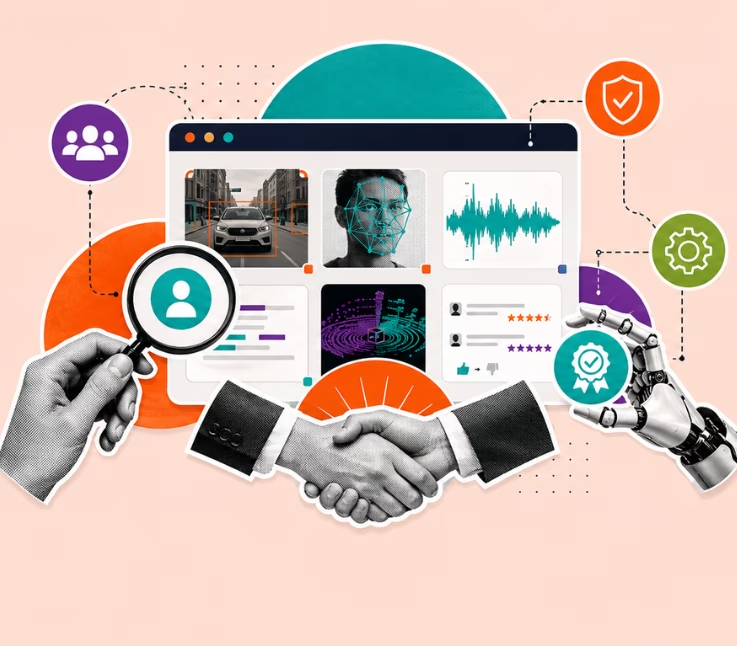
Top data annotation companies in 2026 include: Riseup Labs, Lightly AI, Surge AI, iMerit, Aya Data, Cogito Tech, Appen, Scale AI, and Labelbox. These providers lead in quality, compliance, and advanced annotation for AI and ML.
AI project success relies on precise, high-quality data annotation now more than ever. In my experience, poor labeling sets back even the best algorithms. The stakes have only grown in 2026. Multimodal models, RLHF, and strict regulations mean choosing the right vendor is critical.
The real issue is that over 50 annotation providers crowd the market, and not all are equal. It’s easy to make an expensive mistake. I wrote this guide to help you cut through the hype. You’ll get clear comparisons, real buyer insights, and a step-by-step playbook for making the right call.
By the end, you’ll know how to find a trusted data annotation partner, see what sets top vendors apart, and avoid common pitfalls—no matter your use case or industry.
Why Do Data Annotation Companies Matter for AI in 2026?
Understanding the role of data annotation companies is vital for AI project success. These companies specialize in labeling and preparing raw data so algorithms can learn from it.
Professional annotation ensures your models learn from accurate, clearly defined inputs. In my experience, outsourcing annotation saves time and boosts quality, especially as datasets grow. Veteran vendors also help meet privacy standards and scale quickly to match project needs. Choosing the right partner will speed up model development, reduce compliance risks, and improve results across computer vision, NLP, and audio.
What Types of Data Annotation Services Are Available in 2026?
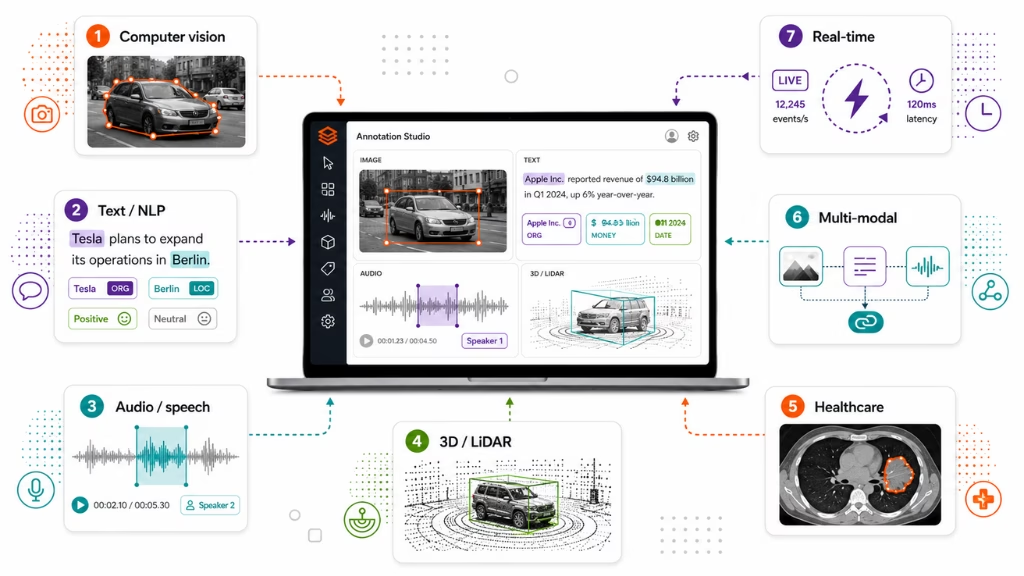
Data annotation services in 2026 cover more modalities and industries than ever before. This list shows how providers match services to business needs.
Common Data Annotation Service Types
- Computer vision: Bounding boxes, polygons, segmentation, object detection for images and video.
- Text/NLP: Named Entity Recognition (NER), sentiment labeling, intent, LLM/RLHF alignment.
- Audio/speech: Transcription, speaker ID, audio sentiment, event tagging.
- 3D/LiDAR: Point cloud, digital twin, navigation (autonomous vehicles, medical imaging).
- Healthcare: DICOM, radiology, pathology, medical record annotation.
- Multi-modal: Labeled data combining images, text, and audio for advanced use cases.
- Real-time annotation: For autonomous systems and active learning workflows.
The 2026 trend is deeper integration with AI pipelines, privacy compliance, and RLHF/LLM dataset support. Most enterprise vendors now support tool integration and workflow automation.
2026 Data Annotation Vendors: Features, Compliance, Modality, and Price
Comparing companies side by side clarifies which fit your industry, data, and compliance needs. Use this table to map core features.
| Company | Vision | NLP | Audio | 3D/LiDAR | RLHF/LLM | Medical | Tool Integration | HIPAA | SOC 2 | GDPR | ISO | Paid Pilot | Pricing Model |
|---|---|---|---|---|---|---|---|---|---|---|---|---|---|
| Riseup Labs | ✔ | ✔ | ✔ | ✔ | ✔ | API, AWS, Azure, GCP, ML stack | ✔ | ✔ | ✔ | ✔ | Project-based, dedicated team, hybrid | ||
| Lightly AI | ✔ | ✔ | Open-source, API | ✔ | ✔ | ✔ | ✔ | Per-label, project | |||||
| Surge AI | ✔ | ✔ | ✔ | ✔ | API, MLOps-ready | ✔ | ✔ | ✔ | ✔ | Per-task, per-hour | |||
| iMerit | ✔ | ✔ | ✔ | ✔ | ✔ | ✔ | API, major stack | ✔ | ✔ | ✔ | ✔ | ✔ | Custom/benchmarked |
| Aya Data | ✔ | ✔ | ✔ | ✔ | Tool-agnostic | ✔ | ✔ | ✔ | Project-based | ||||
| Cogito Tech | ✔ | ✔ | ✔ | ✔ | ✔ | ✔ | API, custom | ✔ | ✔ | ✔ | ✔ | ✔ | Per-label, project |
| Appen | ✔ | ✔ | ✔ | ✔ | ✔ | API, platform | ✔ | ✔ | ✔ | ✔ | Custom/scale-based | ||
| Scale AI | ✔ | ✔ | ✔ | ✔ | ✔ | ✔ | Proprietary, API | ✔ | ✔ | ✔ | ✔ | ✔ | Per-task, platform |
| Labelbox | ✔ | ✔ | ✔ | ✔ | Customizable | ✔ | ✔ | ✔ | ✔ | Platform licensing |
According to recent buyer benchmarks and 2026 public specs.
Leading Data Annotation Companies in 2026: Strengths, Weaknesses, and Use Cases
Riseup Labs: Managed, Multi-Modal Data Annotation at Scale
Riseup Labs provides managed image, video, text, audio, and document annotation services through trained human teams and automation-assisted workflows.
Its service-led model is suitable for businesses that want annotation operations, quality assurance, workforce scaling, and AI engineering support from one partner. Riseup Labs reports achieving 98% annotation accuracy and 25% faster turnaround through a dedicated 200-person annotation team and multi-level QA process.
- Strengths: Multi-modal annotation, dedicated teams, human-in-the-loop workflows, 24/7 operations, scalable BPO delivery, and AI development expertise.
- Compliance: ISO 9001 and ISO 27001 certified, SOC 2 Type II and PCI DSS compliant, with GDPR-focused data practices.
- QA: Client-specific guidelines, multi-level quality reviews, precision checks, standardized procedures, and continuous feedback loops.
- Cons: Less platform-first than tools such as Labelbox; highly specialized 3D/LiDAR projects may require additional scoping.
- Pricing: Custom project-based, dedicated-team, or flexible engagement pricing.
- Best for: Companies needing scalable, fully managed annotation across image, video, text, audio, and mixed datasets.
Quick Verdict: A strong full-service choice for businesses that want managed annotation teams, quality assurance, flexible scaling, and broader AI support from one provider.
Lightly AI: Open-Source + Active Learning for Computer Vision
Lightly AI stands out for its focus on efficient, high-quality computer vision annotation. Their open-source tools with active learning cut labeling costs while boosting relevance. In my experience, Lightly integrates well with custom pipelines.
- Strengths: Open-source stack, active learning, integration with MLOps tools.
- Compliance: SOC2, GDPR, ISO 27001. No medical/healthcare focus.
- QA: Automated sampling, multi-review.
- Cons: Not ideal for NLP/audio; strength is vision.
- Pricing: Per-label or project.
- Best for: Computer vision pilots, cost-sensitive teams.
Quick Verdict: First choice for startups and ML teams needing custom computer vision workflows.
Surge AI: RLHF/LLM Annotation and Advanced Metrics
Surge AI leads in RLHF and LLM dataset annotation, offering high compensation for annotators and strong QA metrics. Its advanced review and feedback tools catch subtle data quality issues.
- Strengths: RLHF expertise, advanced quality metrics, high workforce pay.
- Compliance: SOC2, GDPR.
- QA: Automated feedback loop, expert annotation review.
- Cons: Narrower focus; project types outside NLP/LLM get less support.
- Pricing: Per-task, per-hour.
- Best for: LLM fine-tuning, sentiment and nuanced text labeling.
Quick Verdict: Top pick for NLP/RLHF and LLM alignment projects.
iMerit: Regulated Industries & High-Retention Workforce
iMerit is well known for quality in regulated domains. They invest in workforce training and retention—91% by their stats—which I have seen lead to more consistent results.
- Strengths: Healthcare, finance, AV datasets, workforce stability, advanced compliance.
- Compliance: HIPAA, SOC2, ISO 27001, GDPR.
- QA: Multi-stage checks, onsite audits.
- Cons: Custom setup may be slower; not the cheapest.
- Pricing: Custom, project-based with benchmarks.
- Best for: Regulated, high-accuracy projects.
Quick Verdict: First call for healthcare, AV, or financial annotation at enterprise scale.
Aya Data: Tool-Agnostic & Impact Sourcing (Africa Focus)
Aya Data provides tool-agnostic annotation with a unique mission—growing expert teams in Africa. They support vision, NLP, and audio, often for agri-AI and geospatial projects.
- Strengths: Flexibility, fair labor practices, diverse modalities.
- Compliance: GDPR.
- QA: Custom workflow with client review.
- Cons: Some features less automated; compliance limited for US healthcare.
- Pricing: Project-based.
- Best for: Impact sourcing, agri-AI, diverse language projects.
Quick Verdict: Great for ethical sourcing and flexible, early-stage projects.
Cogito Tech: Compliance-First, In-Country Domain Experts
Cogito excels in compliance, supporting HIPAA, GDPR, and offering detailed documentation (DataSum platform). In-country experts aid regulated industries and localize annotation.
- Strengths: Compliance, broad modality, domain specialists.
- Compliance: HIPAA, SOC2, GDPR, ISO.
- QA: Data provenance, audit trails.
- Cons: Process can be rigid; higher minimums.
- Pricing: Per-label, project-based.
- Best for: Enterprises in healthcare, automotive, insurance.
Quick Verdict: Reliable for clients who cannot risk compliance lapses.
Appen: Global Scale & Multilingual Support
Appen brings decades of annotation experience with the largest global workforce for multilingual projects.
- Strengths: Scale, language support, platform reach.
- Compliance: HIPAA, SOC2, GDPR.
- QA: Multi-annotator review, built-in QA tools.
- Cons: Opaque pricing, sometimes slower setup.
- Pricing: Custom/scaled by volume.
- Best for: Multilingual, market-scale annotation.
Quick Verdict: Go-to for mass-scale, multi-language projects.
Scale AI: Enterprise, Proprietary Tools, ModelOps
Scale AI leads with proprietary annotation platforms and ModelOps tools, serving top autonomous vehicle and LLM labs.
- Strengths: Proprietary stack, ModelOps integration, high-end robotics/AV/LLM.
- Compliance: HIPAA, SOC2, GDPR, ISO.
- QA: Multi-tiered review, API audit logs.
- Cons: High minimums, platform lock-in possible.
- Pricing: Per-task, platform license.
- Best for: Autonomous systems, large LLM teams.
Quick Verdict: Best for Fortune 500 AI/ML scale with tight tool integration.
Labelbox: Annotation Platform with Customizability
Labelbox is a leading annotation platform, not a managed service. It allows teams to run annotation in-house or with partners.
- Strengths: Platform flexibility, custom workflows, MLOps-friendly.
- Compliance: SOC2, GDPR, ISO.
- QA: Workflow-driven, client-configurable QA.
- Cons: Service quality depends on partner; tool learning curve.
- Pricing: Platform license, partner-based service rates.
- Best for: Teams managing labeling via their own staff or networks.
Quick Verdict: Ideal for in-house teams needing a flexible, integrated platform.
How to Choose the Right Data Annotation Company: Criteria & Buyer’s Guide
Selecting a data annotation company affects quality, timeline, and cost from start to finish. This section outlines the choices I see buyers face and a process that works.
Vendors differ by the data types they support, their QA approach, compliance standards, platform integration, and domain focus. The wrong fit can lock you in, slow your project, or create compliance headaches.
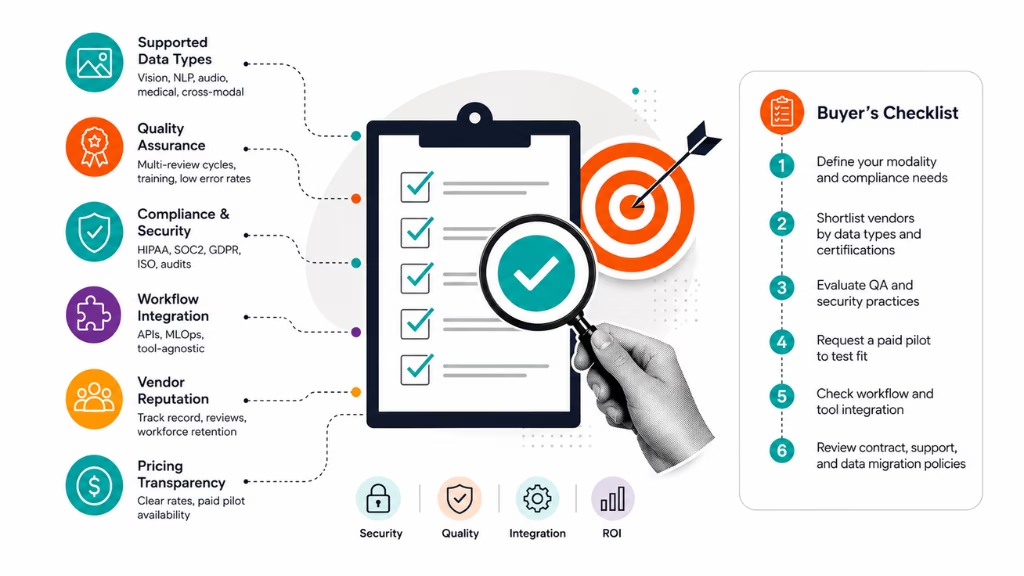
Key Selection Criteria
- Supported data types: Vision, NLP, audio, medical, cross-modal.
- Quality assurance: Multi-review cycles, annotator training, error rates.
- Compliance: HIPAA, SOC2, GDPR, ISO, with documentation and audits.
- Workflow integration: Open APIs, MLOps, tool-agnostic options.
- Vendor reputation: Track record, user reviews, workforce retention.
- Pricing transparency: Clear per-label/hour/project rates, paid pilot availability.
- Risk factors: Lock-in, workforce churn, migration support, data provenance.
Buyer’s Checklist
- Define your modality and compliance needs.
- Shortlist vendors based on supported data types and certifications.
- Evaluate QA and security practices.
- Request a paid pilot to test fit.
- Check for workflow and tool integration.
- Review contract, support, and data migration policies.
In my POV, skipping steps leads to costly setbacks—always run a pilot and double-check compliance.
What Are Typical Data Annotation Pricing Models & Benchmarks in 2026?
Pricing can be a shock if you don’t know the landscape. In my experience, costs in 2026 are clearer, but still vary by vendor, data type, and compliance level.
- Per-label: Standard for vision tasks, as low as $0.03/image for bounding boxes, up to $2+ for segmentation.
- Per-hour: NLP and RLHF, typically $12–$30/hour for expert labelers.
- Per-project: Fixed scopes, often required for regulated domains.
- Paid pilot: Most vendors offer a low-cost, fixed-scope test (often $1,000–$5,000).
| Modality | Low-End Price | High-End Price | Typical Model |
| Bounding boxes | $0.03/image | $0.15/image | Per-label |
| Segmentation | $1/image | $3/image | Per-label |
| NLP entity | $0.04/text block | $0.25/text block | Per-label |
| RLHF/LLM | $20/hour | $40/hour | Per-hour, per-task |
| Medical | $2/image | $10/image | Per-label/project |
| Paid pilot | $1,000/project | $5,000/project | Fixed/test |
Pricing rises with strict QA, expert review, or compliance. A better approach is to always request clear line items and avoid blanket “per-image” quotes for complex work.
What Compliance, Security, and Workflow Integration Features Should You Demand in 2026?
Compliance and workflow fit are deal-breakers for serious AI projects. I have seen projects stall due to a missed certification or poor integration.
- HIPAA: Required for US health data. Protects PHI.
- SOC2: Audits internal controls, often table stakes in procurement.
- GDPR: Needed for EU data. Privacy and processing rules.
- ISO 27001: Global information security benchmark.
- FedRAMP: Necessary for US federal contracts.
Ask vendors to provide clear, current certificates. For workflow, integration options—APIs, MLOps compatibility, open-source plugin support—are critical. Always test these in a pilot to avoid lock-in or process snags.
Key Pitfalls and Buyer Mistakes: What To Watch Out For
Choosing a data annotation company is a high-stakes decision. I have seen these common mistakes derail projects.
- Skipping the pilot phase—don’t rely on demos alone.
- Overlooking compliance, especially in healthcare or finance.
- Ignoring workforce retention—high churn increases error risk.
- Failing to plan integration—tool misfit means wasted cycles.
- Underestimating migration risk—ensure you can export data.
- Not budgeting for QA or independent audits.
A better approach is to run a small, paid pilot and use the vendor’s APIs before locking into a deal.
Conclusion
The right data annotation partner is mission-critical for AI projects in 2026. Model quality now depends as much on labeling, QA, and compliance as algorithm design. Taking shortcuts with vendor selection risks project delays, budget waste, or regulatory problems.
To move forward with confidence, start by mapping your key data types and compliance requirements. Use the comparison tables above to shortlist vendors who fit your needs, not just the biggest names. Insist on paid pilots and real workflow demos before you sign.
If your team needs expert guidance, support in running a paid pilot, or help evaluating options, Riseup Labs offers free consultations. Your next project deserves fully vetted data—make the selection process work for you.
Staying ahead means having flexible partners and robust processes. AI-assisted development only works when quality data annotation sits at the core.
Frequently Asked Questions (FAQs)
What is a data annotation company?
A data annotation company labels and prepares raw data, like images or text, for use in AI and machine learning training.
Who are the top data annotation companies in 2026?
The top companies include Lightly AI, Surge AI, iMerit, Aya Data, Cogito Tech, Appen, Scale AI, and Labelbox.
How much do data annotation services cost in 2026?
Costs vary but commonly range from $0.03 to $3 per image and $12 to $40 per hour for specialized text or RLHF labeling.
What types of data annotation services exist?
Key types are vision (bounding boxes), NLP (text/sentiment), audio (transcripts), 3D/LiDAR, and healthcare annotation.
How do I choose the right data annotation provider?
Match your data type and compliance needs, check QA and certifications, run a paid pilot, and review integration and support.
Which vendors offer RLHF and LLM annotation?
Riseup Labs, Surge AI, Scale AI, iMerit, Cogito Tech, and Appen now offer RLHF and LLM annotation services.
What compliance certifications matter?
HIPAA, SOC2, GDPR, ISO 27001, and FedRAMP are the most important for regulated and enterprise data labeling.
What is a paid pilot and how does it work?
A paid pilot is a small, fixed-scope project to test a vendor’s quality and fit before signing a larger contract.
How do annotation companies ensure quality and accuracy?
Most use multi-level review, expert raters, error sampling, and tracked QA feedback to maintain high accuracy.
Can annotation providers integrate with my existing ML pipeline?
Yes, top vendors offer APIs or SDKs for integration with ML, MLOps, and annotation platforms.
This page was last edited on 29 July 2026, at 3:57 pm

Start a conversation with our team to solve complex challenges and move forward with confidence.