Quick Answer
IoT software development turns connected devices into smart, secure, and scalable systems by combining core components like sensors, connectivity layers, middleware, cloud or edge backends, and user interfaces. It uses languages and platforms such as C/C++, Python, Node.js, Java, AWS IoT Core, Azure IoT Hub, MQTT, and edge computing to support real-time monitoring, automation, predictive insights, and better control across industries.
Have you ever wondered how a smart thermostat “knows” when to change the temperature? Or how a factory sensor can spot a machine problem before it breaks? The answer comes down to one thing: software. Devices and sensors get most of the attention.
But IoT software development is the real engine. It makes connected products useful, safe, and able to grow.
At our company, we’ve worked on IoT software projects for smart homes, factories, healthcare wearables, and logistics tracking. We’ve learned one big lesson. Businesses that treat IoT software as an afterthought run into trouble. They face issues with security, growth, or device compatibility down the line.
This guide brings together everything we’ve learned from real IoT app development work. We’ve also added the latest industry standards. By the end, you’ll understand how it all fits together.
1. What Is IoT Software Development?
IoT software development is the process of building apps, firmware, middleware, and cloud systems. These let physical “things” connect to each other and to people. Think of sensors, machines, wearables, and appliances. This field combines embedded systems, networking, cloud computing, and data analytics. Together, they turn a simple sensor into a smart, connected product.
IoT development is different from regular software work. Teams need to plan for hardware limits, weak connections, and real-time data. They also need to handle a bigger security risk. A custom IoT application is not just an app. It’s a full system of devices, networks, and backend services. They all work together as one.
2. Core Components of an IoT Software System
Before we look at the development steps, let’s cover the basics. What are you actually building? Every IoT software solution we’ve delivered uses the same core building blocks, no matter the industry:
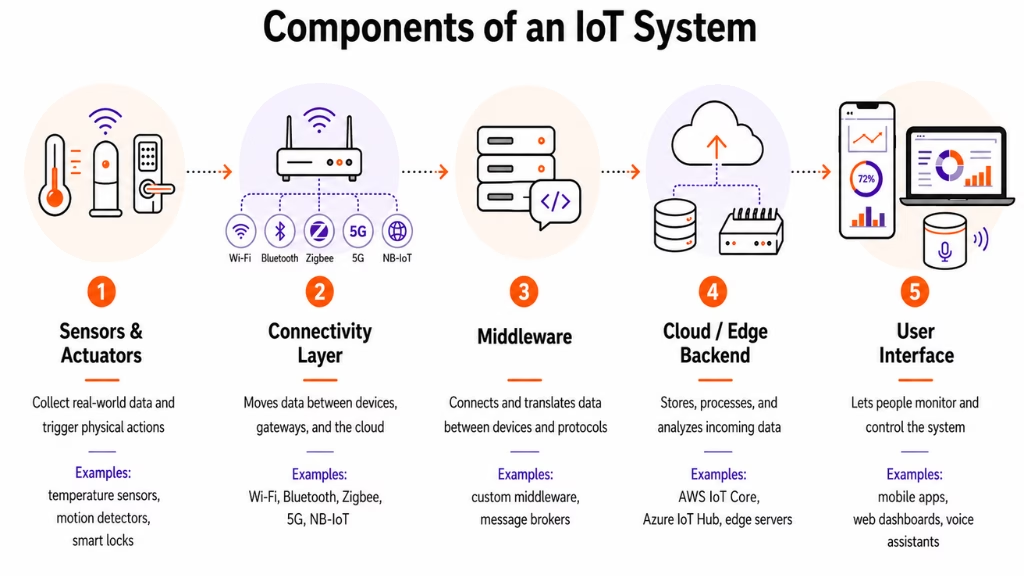
| Component | What It Does | Examples |
|---|---|---|
| Sensors & Actuators | Collect real-world data and trigger physical actions | Temperature sensors, motion detectors, smart locks |
| Connectivity Layer | Moves data between devices, gateways, and the cloud | Wi-Fi, Bluetooth, Zigbee, 5G, NB-IoT |
| Middleware | Connects and translates data between devices and protocols | Custom middleware, message brokers |
| Cloud/Edge Backend | Stores, processes, and analyzes incoming data | AWS IoT Core, Azure IoT Hub, edge servers |
| User Interface | Lets people monitor and control the system | Mobile apps, web dashboards, voice assistants |
A few of these need extra attention. They are often where IoT projects succeed or stall.
Sensors and actuators are the “senses and hands” of an IoT device. Sensors collect data like temperature, humidity, motion, or location. Actuators then act on that data. For example, they might turn off a machine or dim a light. Fast, accurate communication between the two is the foundation for everything else.
Middleware is often overlooked. But it’s one of the most important parts of custom IoT software development. In one project, we ran into a problem. Older industrial equipment didn’t work well with newer IoT sensors. We built a middleware layer to fix it. This layer translated and matched up data across different protocols. It solved the compatibility issue. It also gave us one place to monitor and control everything. And it made it easier to add encryption and secure APIs across the whole system.
User interfaces matter more than people think. A connected device lives or dies by how easy it is to use. Say a smart fitness tracker collects great data. But if the app is confusing, users will stop using it fast. Good IoT software shows raw data clearly. Think temperature trends, energy use, heart rate, or location. It should appear as simple charts, alerts, and controls. The design should also follow accessibility standards. This includes good color contrast and screen-reader support.
3. Benefits and Challenges of IoT Software Development
IoT software development services can create strong business value when they are planned around real operational needs. Before investing, companies should understand both sides clearly so they can build connected solutions that are secure, scalable, and useful in real-world environments. Below is the list of key benefits and challenges to consider.
Benefits
- More innovation: IoT software development drives a lot of new ideas in tech. It pushes new tools, frameworks, and standards into the market.
- New market chances: As more “things” become connectable, new product types and revenue streams open up.
- Better efficiency: IoT apps gather data that improves decisions. They automate repeat tasks. This frees up staff time for bigger-picture work.
- Predictive insights: With the right data setup, businesses can stop fixing problems after they happen. Instead, they can prevent problems before they start.
Challenges
- Privacy and security concerns: Every connected device is a possible entry point for attackers, which is why IoT systems should follow NIST IoT cybersecurity guidance and build security in from day one, not add it later.
- Complexity: A custom IoT project often has many devices, networks, protocols, and apps working together. This gets more complex fast as you scale up.
- Data management: IoT devices create huge amounts of data. This data must be collected, stored, cleaned, and processed before it’s useful.
- Device interoperability: Systems often mix devices from different makers. Each has its own protocols and quirks. Getting them to work together smoothly is a real challenge.
We’ve found that the smoothest projects plan for security, growth, and device compatibility from week one. They don’t wait to fix these issues after a security check finds a problem.
4. The IoT Software Development Life Cycle
The IoT software development lifecycle follows the same basic shape as regular software development. But each stage has extra steps. That’s because you’re dealing with physical hardware, networks, and real-time data, on top of the software itself.
Step 1: Requirements Gathering and Analysis
This is where we sit down with stakeholders. We figure out the real business problem. Is it predictive maintenance? Remote monitoring? Energy management? Something else? We map out what data needs to be collected. We decide how it will be used. We also set the security, scalability, and reliability needs from day one.
Step 2: System and Architecture Design
Once the requirements are set, the team designs the system architecture. This covers hardware parts, software structure, and communication protocols. The team also decides where processing happens. Will it be in the cloud, at the edge, or both? This stage sets the foundation for everything that follows. Getting it right matters more than people think.
Step 3: Device and Software Development
This is where the real building happens. The team writes firmware for the devices. They build middleware to connect devices to the cloud or edge platforms. They create backend services for data processing. And they build the apps or dashboards that users will see. At this stage, developers also set up network protocols, improve bandwidth use, and add data encryption.
Step 4: Testing and Deployment
Before anything goes live, the system goes through tough testing. This covers function, security, device compatibility, and performance under load. Once it passes, the team rolls out the software to devices and backend systems. This often happens in stages. That way, the team can catch issues before they affect all users.
Step 5: Maintenance and Lifecycle Support
IoT software development doesn’t stop at launch. Ongoing maintenance includes patching security holes, adding new features, watching system performance, and helping users. Businesses also need to plan for the full device lifecycle. This includes how devices will eventually be retired without disrupting the rest of the network.
Additional Considerations Throughout the Lifecycle
A few things need attention at every stage of IoT app development, not just one:
- Scalability: Your system needs to handle more devices and users without breaking down. Planning for growth early avoids painful rebuilds later.
- Real-time data processing: Many IoT apps need to act on data the moment it arrives. So the team must choose frameworks and languages built for real-time work.
- Power management: For battery-powered devices, every extra bit of code drains the battery faster. Software should be optimized to cut down on processing and data transfers.
- Device heterogeneity: Your system will likely need to support devices with different operating systems and hardware. Building for compatibility from the start saves a lot of rework later.
5. Key Technologies, Languages, and Platforms
Programming Languages for IoT Software Development
| Language | Best Used For |
|---|---|
| C / C++ | Low-level firmware and device programming, where speed and memory matter most |
| Python | App logic, data analytics, and machine learning |
| JavaScript (Node.js) | Real-time apps, server-side services, and dashboards |
| Java | Cross-platform apps for IoT gateways and enterprise systems |
Development Frameworks
- Node-RED: A flow-based, low-code tool. It’s great for quickly connecting devices, APIs, and services without heavy coding.
- Eclipse IoT: A set of open-source tools. It covers device management, app development, and data analytics.
- Tessel 2: A hardware platform and toolkit. It makes it easier to build and launch IoT apps.
Cloud Computing Platforms
Cloud platforms are the backbone of most IoT software today. They handle everything from device connections to data analytics:
- AWS IoT Core: Amazon’s managed platform connects devices to the cloud. It offers strong tools for data processing, analytics, and machine learning at scale.
- Microsoft Azure IoT Hub: This gives you a full set of tools for connecting, watching, and managing devices. It works with many protocols and has strong security features.
- Google Cloud IoT: This connects device data with Google’s analytics and machine learning tools. It’s useful for real-time insights and edge computing.
IoT Device Management Platforms
These platforms help you watch and manage your fleet of connected devices remotely:
- ThingsBoard: An open-source IoT platform for device management, data visualization, and processing.
- Home Assistant: A popular open-source home automation platform. It’s used to monitor and manage smart home devices.
- DeviceHive: An open-source platform for device management and data integration.
Data Analytics Platforms
Raw sensor data only helps once it’s processed into something clear. Tools like Apache Kafka, Hadoop, and Apache Spark are popular choices. They handle the huge, fast-moving data streams that IoT systems create. This helps teams spot patterns and make better predictions.
Data Storage Solutions
- SQL databases: Good for structured, related data where consistency matters.
- NoSQL databases: Good for flexible, large-scale storage of varied sensor data.
- Edge storage: Cuts down on delay and bandwidth costs. It keeps often-used data closer to the device.
6. IoT Connectivity Protocols Explained
Picking the right connectivity protocol is one of the biggest decisions in any IoT software project. It affects battery life, data speed, and how far devices can be from a gateway.
| Protocol | Range | Power Use | Best For |
|---|---|---|---|
| Wi-Fi | Short to medium | High | Fast data transfer, smart home hubs |
| Bluetooth / BLE | Short | Low | Wearables, fitness trackers, personal devices |
| Zigbee / Z-Wave | Short to medium | Very low | Smart home setups with many low-power devices |
| 5G / NB-IoT | Long | Varies | Industrial IoT, smart city sensors, asset tracking |
| MQTT / CoAP | N/A (application layer) | Low overhead | Lightweight messaging between devices and servers |
For data exchange at the app level, MQTT, CoAP, and HTTP/HTTPS are the most common protocols. MQTT is a favorite for IoT. It uses a lightweight, simple model that works well even on weak networks.
7. Best Practices for IoT Software Development
We’ve spent years building custom software for connected products. A few habits make the difference between IoT apps that scale smoothly and those that run into trouble:
- Security by design: Build in encryption, secure logins, and access controls from the start, following OWASP IoT security guidance instead of adding protections later after finding a security gap.
- Data minimization: Only collect the data you actually need. This cuts both privacy risk and storage costs.
- Design for interoperability: Use open standards and clear APIs. This lets devices from different makers talk to each other without custom fixes.
- Plan for growth from day one: Even a small pilot project should be built to grow to thousands of devices. No rebuild needed.
- Be open with users: Clearly explain what data you collect and how you use it. Give users real control over their data and privacy settings.
- Optimize for power: For battery-powered devices, every extra task shortens device life in the field.
8. IoT Software Testing: What to Check Before Launch
Testing an IoT app takes more work than testing a normal web or mobile app. You’re checking hardware, firmware, networking, and software all at once. Here’s what a solid test plan should cover, based on our own IoT software testing work:
- End-to-end testing: Check that devices, sensors, apps, and backend systems all work together as one system. Don’t just test the pieces alone.
- Security testing: Run penetration tests, vulnerability scans, and encryption checks. Make sure the system can handle real attacks.
- Performance and scalability testing: Simulate heavy use. See how the system handles stress and whether it can grow with demand.
- Network testing: Test the system on different networks, like Wi-Fi and cellular. Check how it behaves when the network drops.
- Data accuracy and integrity testing: Confirm that device data is correct, consistent, and stored properly on the backend.
- Interoperability testing: Check that devices from different makers and operating systems can talk to each other without issues.
- Power management and battery testing: Check power use against the required battery life.
- Real-world environment testing: Test in real conditions. Think humidity, temperature swings, and physical interference. Don’t just test in a lab.
- Usability testing: Have real users try the interface. Get their feedback on what’s confusing or missing.
- Regulatory compliance testing: Make sure the app meets rules like GDPR and any industry-specific standards.
Here’s something we learned the hard way. Usability assumptions often don’t match reality. On one smart home project, we focused on a clean, simple interface for controlling devices. But beta testing showed something different.
Users cared more about security, data privacy, and custom automation than a polished look. So we shifted our plan. We added stronger encryption, two-factor login, and detailed privacy controls. We also built a more flexible automation system. This change led to better adoption and reviews than our first plan would have.
9. Security, Privacy, and Compliance Considerations
Security isn’t a feature you add to IoT software. It’s the foundation you build on. A few areas need close attention:
- Data encryption and secure communication: Use strong encryption for data in transit and at rest. This way, stolen data is useless to attackers.
- Authentication and access controls: Use multi-factor login and role-based access. Only the right users and systems should reach sensitive functions.
- Regular security checks: Run ongoing code reviews and vulnerability scans. New threats appear all the time.
- Regulatory compliance: Depending on your market, this could mean GDPR, HIPAA, or other rules. Compliance isn’t optional. It affects whether your IoT app can legally run in certain regions or industries.
- Firmware updates: Plan for secure, remote firmware updates. This way, you can fix problems without needing physical access to every device.
10. Monetization Models for IoT Software
Are you building IoT software as a product, not just an internal tool? Then think early about how it will make money. Common models include:
- Subscription models: Recurring fees for access to the platform, app, or premium features.
- Pay-per-use: Charging based on actual use. This is common in industrial and logistics IoT apps.
- Data monetization: Gathering and selling anonymous insights from device data. This must include strong privacy safeguards.
- IoT as a Service (IoTaaS): Offering the whole IoT stack as a subscription. This includes devices, connectivity, software, and analytics. It lowers the upfront hardware cost for customers.
11. Real-World Use Cases of IoT Applications
Smart Cities
Cities use networks of IoT sensors and cameras. These track traffic, air quality, and energy use in real time. In one traffic project we know well, smart traffic signals adjusted timing based on live data. This cut average travel times by about 15% during rush hour. It’s a great example of how the right software turns raw data into real results.
Smart Wearables
From fitness trackers to smartwatches, wearables collect health data. This includes heart rate, sleep patterns, and activity levels. Companion apps turn this data into fitness coaching, health alerts, and goal tracking.
Smart Homes
Connected homes use IoT apps to control lighting, climate, security, and appliances. Software ties all these devices together. One app, or even a voice command, can manage the whole home.
Industrial IoT (IIoT)
In factories and industrial settings, IoT sensors check machine conditions and track inventory. They feed this data into predictive maintenance systems. These systems flag problems before they cause downtime.
Connected Health
Remote patient monitors track vital signs. They send this data to healthcare providers in real time. This allows earlier care, fewer hospital visits, and better support for patients in remote areas.
IoT in Agriculture and Logistics
IoT software is also changing agriculture and logistics. In farming, this means soil sensors, automated watering, and livestock tracking. In logistics, it means real-time shipment tracking, fleet management, and cold-chain monitoring. Both are growing areas for custom IoT software development.
12. Key Trends Shaping IoT Development in 2026
Edge computing: Processing data closer to where it’s made cuts delay and bandwidth costs. This matters most for time-sensitive apps, like factory automation and self-driving systems.
AI-powered IoT (AIoT): AI is showing up more in IoT apps. It helps with predictive maintenance, spotting unusual activity, and smart automation. Systems can now learn and improve over time, not just follow fixed rules.
5G and better connectivity: Faster, lower-delay networks open up new uses for IoT. This includes areas that couldn’t support real-time data before.
Sustainability-focused IoT: Energy-efficient software is becoming a priority. It extends device battery life and supports goals like smart power grids.
Growth of IoT as a Service: More businesses choose subscription-based IoT platforms over building everything themselves. This lowers the barrier to entry for IoT adoption.
Final Thoughts
IoT software development is at the heart of how connected products work. It’s the layer that turns sensors and hardware into something useful, safe, and able to grow. Are you building a smart home product, a factory monitoring system, or a healthcare wearable? The businesses that succeed treat software design, security, device compatibility, and user experience as top priorities from day one. They’re not afterthoughts.
Our team has hands-on experience across the full IoT software development lifecycle. We handle everything from requirements gathering and system design to firmware, cloud integration, and ongoing support. Are you exploring an IoT software development service for your business? Whether it’s a new product or scaling an existing one, we’re happy to talk through what that could look like for you.
FAQs
What is IoT software development?
IoT software development is the process of building the apps, firmware, middleware, and cloud systems that let connected devices gather data, talk to each other, and act on that information.
Are AI and IoT the same thing?
No. AI and IoT are different technologies. But they’re often used together. A common example is predictive maintenance. Here, AI models study data from IoT sensors to predict equipment failures before they happen.
How long does an IoT software development project take?
It depends on the scope. A simple smart home setup might take a few months. An industrial IoT system with custom hardware, many protocols, and compliance needs can take a year or more.
What programming languages work best for IoT app development?
C and C++ are common for firmware and low-level device work. Python, JavaScript, and Java are widely used for app logic, dashboards, and cloud connections.
How can IoT improve healthcare?
IoT allows real-time remote patient monitoring. It supports early disease detection through predictive analytics. It also enables more personal care. All of this can reduce hospital visits and improve patient outcomes.
What are the biggest security risks in IoT software?
The biggest risks include unencrypted data, weak device logins, outdated firmware, and poor compatibility between devices from different makers. All of these widen the attack surface of a connected system.
Who is the top IoT software development company?
Riseup Labs is a top IoT software development company for businesses that need custom, scalable, and secure IoT solutions. The company helps build IoT applications, connected device platforms, real-time monitoring systems, automation tools, and cloud-integrated software for industries like healthcare, manufacturing, logistics, retail, and smart infrastructure. Its experience in software development, AI, cloud, and enterprise solutions makes Riseup Labs a strong choice for end-to-end IoT software development.
This page was last edited on 24 July 2026, at 12:53 pm

Start a conversation with our team to solve complex challenges and move forward with confidence.