
- Travel App Development Summary
- What Is Travel App Development?
- Why Businesses Are Investing In Travel Apps
- Types Of Travel Apps Businesses Commonly Build
- Features Every Successful Travel App Needs
- How AI Is Changing Travel App Development
- How Much Does It Cost to Build a Travel App?
- Travel App Development Process: From Idea to Launch
- Technology Stack for Travel Apps
- How Do Travel Apps Make Money?
- Common Challenges In Travel App Development
- How To Choose A Travel App Development Company
- FAQs
Travel app development is the process of building mobile applications that help users search destinations, plan trips, book services, and manage their travel experiences. It combines mobile technology, backend systems, APIs, and user-focused features.
A traveler’s journey usually starts before they ever pack a bag.
They search for destinations, compare hotels, read reviews, check prices, plan activities, and manage bookings—all from their smartphones. But these experiences are often spread across multiple apps, creating an opportunity for travel businesses to bring everything together through a single, well-designed application.
That is why travel app development has become a major focus for airlines, hotels, travel agencies, tourism companies, and startups.
However, building a successful travel app is not just about adding booking features. It requires solving real traveler problems, handling real-time information, connecting with multiple services, and delivering a smooth experience throughout the journey.
In this guide, we’ll explore everything businesses need to know about travel app development, including key features, development costs, technology choices, the development process, monetization strategies, and important considerations before building one.
Travel App Development Summary
Before exploring the details, here is a quick overview of what goes into building a modern travel app—from platforms and features to integrations, technology, and scalability.
| Development Area | Key Details |
|---|---|
| App Types | Booking apps, travel planners, guides, transportation, and experience apps |
| Platforms | iOS, Android, cross-platform, and web |
| Core Features | Search, booking, payments, maps, notifications, and trip management |
| Technology Stack | Flutter, React Native, Swift, Kotlin, Node.js, Python |
| Integrations | Travel APIs, payment gateways, maps, and booking systems |
| Advanced Features | AI recommendations, chat assistants, and personalized experiences |
| Key Focus | User experience, security, scalability, and performance |
What Is Travel App Development?
Travel app development is the process of designing, building, and maintaining mobile applications that help users discover destinations, plan trips, book services, and manage travel experiences.
A travel app can serve different purposes depending on the business behind it.
For example:
- A hotel company may build an app to increase direct bookings and improve guest experience.
- A travel agency may create an app to sell packages and manage customer journeys.
- A startup may develop a marketplace connecting travelers with accommodations, transportation, and experiences.
- A tourism company may build a destination guide app to help visitors explore local attractions.
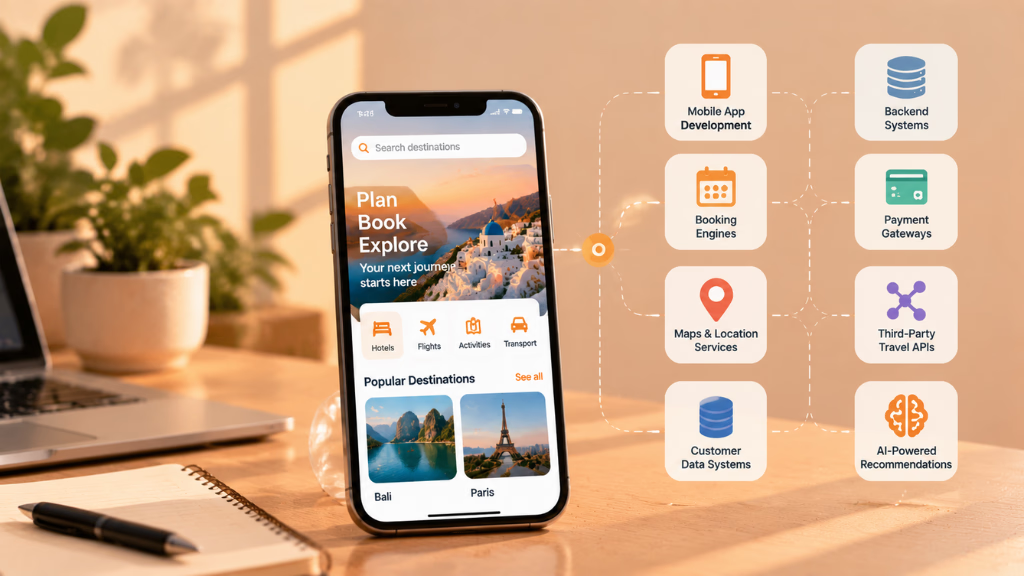
Behind the interface users interact with, travel apps often combine multiple technologies, including:
- Mobile app development
- Backend systems
- Booking engines
- Payment gateways
- Maps and location services
- Third-party travel APIs
- Customer data systems
- AI-powered recommendations
A modern travel app is not just a digital catalog of destinations. It works as a complete travel companion that helps users make decisions before, during, and after their trip.
Why Businesses Are Investing in Travel Apps
The way people travel has changed.
A few years ago, planning a trip often meant visiting a travel agent, comparing multiple websites, or managing bookings through emails. Today, most travelers do everything from their phones—searching destinations, checking reviews, booking hotels, and managing their trips on the go.
For businesses, this shift creates a major opportunity to build travel apps that make the entire journey easier and more personalized.
The opportunity is growing quickly. According to WTTC, travel and tourism contributed $11.7 trillion to the global economy in 2025, showing the continued strength of the industry. As travelers rely more on mobile solutions throughout their journeys, businesses are investing in apps to provide faster and more convenient experiences.
Travelers Expect Mobile-First Experiences
A travel app is no longer just a booking tool.
Travelers now use apps to discover destinations, compare options, read reviews, access tickets, and navigate unfamiliar places. This shift is reflected in mobile adoption trends, with global travel app downloads exceeding 4.2 billion across iOS and Google Play in 2025, showing how increasingly travelers rely on apps for planning, booking, and managing trips.
They expect:
- Faster search and booking
- Real-time updates
- Easy access to travel information
- Personalized recommendations
A well-designed travel app allows businesses to stay connected with customers before, during, and after their trips.
For example, a hotel app can provide digital check-in, send booking reminders, recommend nearby experiences, and offer additional services based on guest preferences.
Apps Help Businesses Build Stronger Customer Relationships
Many travel companies still depend on third-party platforms to attract customers. While these platforms provide visibility, they also make it harder for businesses to build direct relationships.
A dedicated travel app gives businesses more control over customer engagement.
It can help them:
- Increase repeat bookings
- Build loyalty programs
- Send personalized offers
- Understand customer preferences
Instead of waiting for customers to search again when planning their next trip, businesses can stay connected through their own app.
Personalization Is Becoming a Competitive Advantage
Travelers no longer want generic recommendations. They expect experiences that match their interests, budget, and travel style.
This is where AI and data-driven features are changing travel apps.
Modern travel applications can provide:
- Personalized destination suggestions
- Smart itinerary planning
- AI travel assistants
- Relevant offers based on user behavior
For example, a family planning a vacation may receive recommendations for family-friendly hotels and activities, while a solo traveler may see adventure experiences and local events.
The businesses investing in travel apps today are not just creating another booking platform—they are building digital experiences that make travel planning simpler and more personalized.
Types of Travel Apps Businesses Commonly Build
There is no single formula for a travel app. The right approach depends on where your business fits in the traveler’s journey.
Some businesses help travelers discover where to go, some help them plan and book their trips, while others focus on making the experience smoother after they arrive.
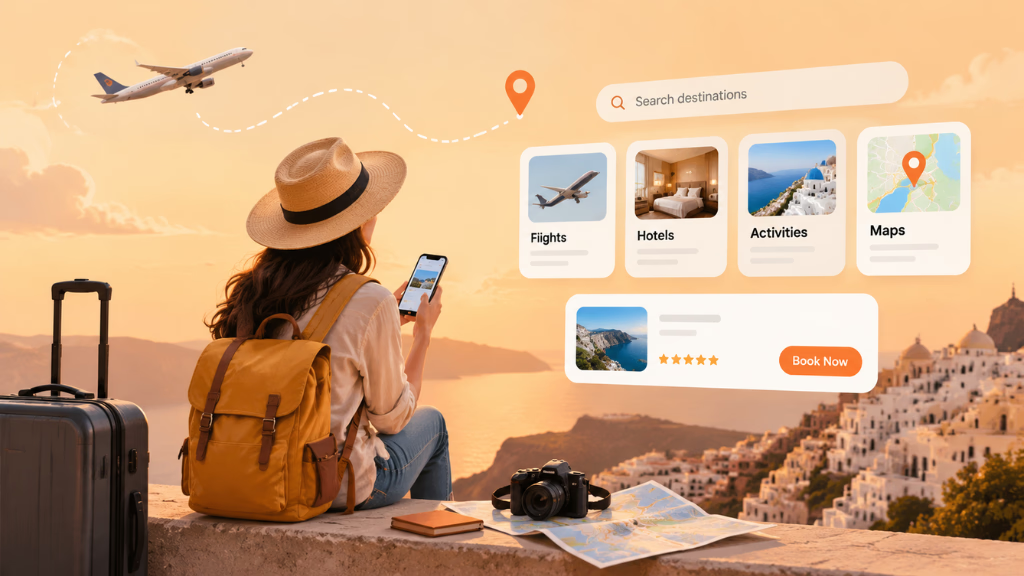
Travel Booking Apps
These are the apps most people think of when they hear “travel app.”
They allow users to search and book services such as:
- Flights
- Hotels
- Vacation rentals
- Tour packages
- Activities
A successful booking app needs more than a search box. It must handle real-time availability, pricing updates, secure payments, cancellations, and booking management.
Examples: Online travel agencies, airline apps, hotel booking platforms
Travel Planning Apps
Planning a trip often involves managing multiple things at once—destinations, schedules, reservations, budgets, and activities.
Travel planning apps bring these details together by helping users:
- Create itineraries
- Save places they want to visit
- Organize bookings
- Track travel expenses
- Get personalized suggestions
With AI becoming more common, many planning apps are moving beyond simple trip organization and helping users create personalized travel plans.
Examples: Trip planners, itinerary apps, AI travel assistants
Destination and Travel Guide Apps
Not every traveler needs another booking platform. Sometimes they need help exploring a place.
Destination apps help travelers discover:
- Attractions
- Restaurants
- Local experiences
- Events
- Maps
- Travel tips
These apps are especially useful for tourism organizations and businesses that want to promote a destination beyond just selling a booking.
Examples: City guides, tourism apps, local discovery platforms
Transportation Apps
Moving around is a major part of any trip.
Transportation apps help travelers book or manage:
- Airport transfers
- Rental cars
- Taxi services
- Local transportation
These apps usually depend on location-based features such as GPS tracking, route planning, and real-time updates.
Examples: Ride-hailing apps, car rental platforms, airport transfer apps
Experience and Activity Booking Apps
Travelers increasingly spend money on experiences, not just accommodation.
These apps connect users with:
- Guided tours
- Adventure activities
- Food experiences
- Cultural events
- Local activities
For businesses, this creates a way to connect travelers with unique experiences they may not find through traditional booking platforms.
Examples: Tour marketplaces and activity platforms
Features Every Successful Travel App Needs
A travel app can have dozens of features, but that does not mean users will find it useful.
One of the biggest mistakes businesses make is trying to build a “complete” travel app from day one. They add booking, reviews, maps, recommendations, loyalty programs, and AI features without first understanding the one thing users actually need: a smoother travel experience.
The most successful travel apps usually focus on removing friction from a traveler’s journey.
A user does not open an app because they want more features. They open it because they want to answer questions like:
- Where should I go?
- What should I book?
- How do I get there?
- What happens if my plans change?
The features below are valuable because they solve those problems.
Fast Search and Discovery
The first challenge in travel is not booking—it is decision-making.
Travelers often have too many choices. A good travel app helps them quickly narrow down options based on what matters to them.
Important features include:
- Smart search
- Filters
- Destination suggestions
- Price comparison
- Availability checking
For example, a family searching for a vacation should not see the same recommendations as a solo traveler looking for adventure. The experience should help users find relevant options faster.
Smooth Booking and Payments
A user can spend hours researching a trip but abandon the process in seconds if booking feels complicated.
Travel apps need a simple path from:
Discovery → Selection → Payment → Confirmation
This usually requires:
- Secure payment integration
- Real-time availability
- Booking management
- Cancellation and refund handling
- Digital confirmations
The difficult part is not creating a payment button. The difficult part is making sure the entire booking experience works reliably across different providers, locations, and payment methods.
Maps and Real-Time Travel Information
Travel is highly dependent on location.
A traveler visiting an unfamiliar city needs more than a list of places—they need context.
Maps and location-based features can help users:
- Find nearby attractions
- Plan routes
- Navigate destinations
- Discover local services
- Access offline information
For many travel apps, location features are what turn a simple booking tool into a true travel companion.
Reviews and User-Generated Content
Travel decisions are heavily influenced by other travelers.
A hotel description can tell users what a property offers, but reviews answer the questions people actually care about:
- Is it worth the price?
- Is the location convenient?
- Does it match the photos?
- What was the experience really like?
That is why reviews, ratings, photos, and traveler feedback have become important trust-building elements in travel apps.
Personalization and AI-Powered Recommendations
Personalization is becoming one of the biggest differences between traditional travel apps and modern ones.
Most travelers do not want hundreds of random options. They want suggestions that fit their situation.
AI can help apps understand:
- Previous searches
- Travel preferences
- Budget
- Location
- Booking history
This can power features such as:
- Personalized destination suggestions
- Custom itineraries
- Activity recommendations
- AI travel assistants
The goal is not to add AI for the sake of it. The goal is to reduce the amount of work users need to do before making a decision.
Push Notifications and Trip Management
The relationship with a traveler should not end after booking.
Useful notifications can help users with:
- Booking confirmations
- Flight updates
- Check-in reminders
- Schedule changes
- Local recommendations
A travel app that stays useful throughout the journey has a much higher chance of becoming part of the traveler’s routine.
How AI Is Changing Travel App Development
Travel apps are no longer limited to helping users search and book. The next generation of travel apps is focused on making decisions easier—helping travelers discover better options, plan trips faster, and receive more personalized experiences.
This shift is being driven by AI. According to McKinsey, generative AI could create significant value for the travel industry by improving areas such as personalization, customer service, and operational efficiency. At the same time, a Deloitte survey found that many travel and hospitality companies are prioritizing AI investments to improve customer experiences and business operations.
The biggest change is that travel apps are moving from search-based experiences to recommendation-based experiences.
Instead of users manually comparing hundreds of options, AI can help by understanding preferences such as budget, travel style, previous behavior, and interests.
For example, an AI-powered travel app can:
- Suggest destinations based on user preferences
- Create personalized itineraries
- Recommend hotels, restaurants, and activities
- Answer travel questions through AI assistants
- Provide faster customer support
AI is also helping businesses behind the scenes. Travel companies can use it to analyze customer behavior, improve recommendations, automate repetitive support tasks, and create more relevant offers.
However, the value of AI is not in adding a chatbot just to make an app look modern. The best travel apps use AI where it removes friction and makes the traveler’s journey simpler.
How Much Does It Cost to Build a Travel App?
The cost of building a travel app can vary significantly because no two travel apps are the same.
A simple travel guide app and a full-scale booking platform may both be called “travel apps,” but the development effort behind them is completely different.
An app that helps users discover local attractions may need maps and content management, while a travel marketplace may require booking systems, payment processing, real-time availability, multiple APIs, and a complex backend.
So, instead of asking “How much does a travel app cost?”, the better question is:
“What experience do we want to create, and what technology does it require?”
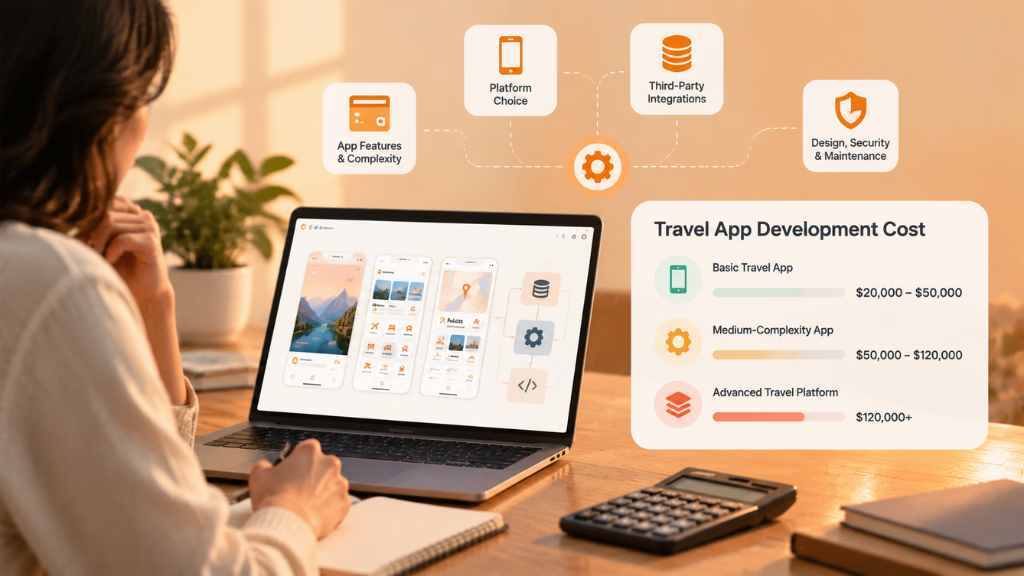
A general estimate looks like this:
| Travel App Type | Estimated Development Cost |
|---|---|
| Basic travel app | $20,000–$50,000 |
| Medium-complexity travel app | $50,000–$120,000 |
| Advanced travel platform | $120,000+ |
These numbers are only rough estimates. The final cost depends on several factors:
App Features and Complexity
Features have the biggest impact on development cost.
A basic app with destination information and simple search will require far less work than an app with:
- Flight and hotel booking
- Payment integration
- AI recommendations
- Real-time tracking
- Multiple user roles
- Third-party integrations
The more systems an app needs to connect with, the more development and testing it requires.
Platform Choice
Businesses also need to decide where they want their app available.
Common options include:
- iOS app
- Android app
- Cross-platform app
For startups testing a new idea, cross-platform development can be a practical approach. For large-scale applications where performance and platform-specific features matter, native development may be a better choice.
Third-Party Integrations
Travel apps often depend on external services to provide real-world functionality.
Examples include:
- Payment gateways
- Maps and navigation services
- Hotel and flight APIs
- Weather services
- CRM systems
These integrations improve the user experience but also add complexity because every connection needs to work reliably.
Design, Security, and Maintenance
Travel apps handle sensitive information such as:
- Personal details
- Payment information
- Booking records
- Location data
That means businesses need to consider security from the beginning, not as an afterthought.
Beyond the initial launch, ongoing investment is also required for:
- Bug fixes
- Security updates
- Performance improvements
- New features
- Platform updates
A travel app is not a one-time project. The businesses that get the most value from their apps continue improving them based on user feedback and changing traveler expectations.
Travel App Development Process: From Idea to Launch
Building a travel app is not just about designing screens and writing code. A travel app sits at the intersection of users, travel services, payments, location data, and third-party platforms.
A successful development process usually starts by answering practical questions:
- Who will use the app?
- What part of the travel journey will it improve?
- Will users book through the app or only use it for planning?
- Which external services need to be connected?
- How will the business manage bookings, payments, and customer support?
Once these decisions are clear, development usually moves through these stages.
1. Define the App Idea and Business Model
Before development begins, businesses need to define what they are actually building.
A hotel app, flight booking platform, travel marketplace, and destination guide app all require different approaches.
During this stage, teams usually decide:
- Target users
- Main problem the app solves
- Core features
- Revenue model
- Competitor analysis
- Required integrations
For example, a travel startup building an itinerary app may not need booking APIs in the first version, while an online travel marketplace cannot work without them.
This stage helps prevent one of the most common mistakes in app development: building too many features before understanding what users actually need.
2. Plan the User Experience and App Structure
Travel apps often involve many steps:
Search → Compare → Select → Book → Pay → Manage Trip
The goal of this stage is to make that journey simple.
Design teams usually work on:
- User flows
- App navigation
- Wireframes
- Screen designs
- Prototypes
For travel apps, good UX is especially important because users may interact with the app in different situations—while planning at home, booking on the go, or using it during a trip.
A complicated booking process can quickly turn a potential customer away.
3. Choose Technology and Plan Integrations
This is where the technical foundation of the app is decided.
The team determines:
- Mobile technology (native or cross-platform)
- Backend architecture
- Database structure
- Cloud infrastructure
- Security requirements
Travel apps often require multiple integrations, such as:
- Hotel and flight APIs
- Payment gateways
- Maps and navigation services
- Weather services
- CRM systems
- Notification platforms
These integrations are often one of the most challenging parts of travel app development because the app depends on external systems working correctly.
4. Build the MVP Version
Most successful travel apps do not start with every possible feature.
Instead, businesses usually build a minimum viable product (MVP) that includes the most important functionality.
For example:
A hotel booking app MVP may include:
- Search
- Hotel listings
- Booking
- Payment
- User accounts
Advanced features like AI recommendations, loyalty programs, or personalized offers can be added later after understanding user behavior.
Launching an MVP allows businesses to test the idea with real users instead of spending months building features based only on assumptions.
5. Testing and Improving the App
Travel apps need more than basic functionality testing.
The team needs to check whether the entire travel journey works smoothly.
This includes testing:
- Search accuracy
- Booking flow
- Payment processing
- API responses
- App performance
- Different devices and screen sizes
- Security
A booking app that fails during payment or shows incorrect availability can damage customer trust immediately.
6. Launch, Monitor, and Scale
The first version of the app is only the beginning.
After launch, businesses analyze:
- User feedback
- App reviews
- Booking behavior
- Feature usage
- Performance issues
Based on this data, they improve the app by adding new features, optimizing existing flows, and fixing problems.
For travel businesses, scaling may also involve adding:
- More destinations
- More booking partners
- New payment methods
- AI features
- Loyalty programs
A travel app becomes successful through continuous improvement, not just the initial launch.
Technology Stack for Travel Apps
The technology behind a travel app depends on what the app needs to achieve.
A simple travel guide app may only require basic mobile development and content management, while a booking platform needs a much more advanced setup to handle payments, real-time availability, and multiple integrations.
A typical travel app technology stack includes:
| Area | Common Technologies |
|---|---|
| Mobile Development | Flutter, React Native, Swift, Kotlin |
| Backend Development | Node.js, Python, Java, PHP |
| Database | PostgreSQL, MySQL, MongoDB |
| Cloud Infrastructure | AWS, Google Cloud, Microsoft Azure |
| Maps & Location | Google Maps API, Mapbox |
| Payments | Stripe, PayPal, regional payment gateways |
| Travel Integrations | Flight APIs, hotel APIs, booking systems |
However, choosing technology should not start with asking, “Which technology is the most popular?”
The better question is:
“What technology will help this app perform well as the number of users grows?”
For example, a startup building an MVP may prioritize faster development and lower costs, while a large travel marketplace may need a more scalable architecture from the beginning.
The technology decision should match the app’s goals, expected users, and future growth plans.
How Do Travel Apps Make Money?
A travel app can create revenue in several ways, depending on the type of service it provides.
The most successful travel businesses usually do not rely on a single revenue stream. They combine different models based on their users and market.
Commission From Bookings
This is one of the most common models for travel marketplaces.
The app earns a percentage when users book:
- Hotels
- Flights
- Tours
- Activities
- Transportation
This model works well for platforms that connect travelers with service providers.
Subscription Plans
Some travel apps offer premium memberships for users who want additional value.
Examples include:
- Exclusive deals
- Premium travel guides
- Advanced planning tools
- Loyalty benefits
Subscription models work best when users have a reason to return regularly
Partnerships and Promotions
Travel apps can generate revenue by partnering with businesses that want access to travelers.
Examples include:
- Hotels promoting special offers
- Restaurants targeting tourists
- Local attractions advertising experiences
The key is keeping partnerships relevant. Promotions should improve the user experience, not make the app feel like a collection of advertisements.
Additional Services
Many travel apps increase revenue by offering extra services during the customer journey.
Examples:
- Travel insurance
- Airport transfers
- Car rentals
- Premium support
- Local experiences
A traveler booking a hotel may also need transportation, activities, or travel assistance—creating opportunities beyond the initial booking.
Common Challenges in Travel App Development

Building a travel app can be rewarding, but it also comes with challenges that businesses need to plan for.
Managing Real-Time Information
Travel data changes constantly.
Prices, availability, schedules, and bookings can change within seconds. Keeping information accurate requires reliable integrations and strong backend systems.
Creating a Simple User Experience
Travel involves many decisions, and apps can easily become overwhelming.
The challenge is deciding what information users need at each moment and removing unnecessary steps from the journey.
Handling Multiple Integrations
Most travel apps depend on external services, including:
- Booking providers
- Payment systems
- Maps
- Customer support tools
Each integration adds complexity and requires ongoing maintenance.
Building Trust and Security
Travelers often make high-value purchases through these apps.
Secure payments, reliable information, transparent policies, and data protection are essential for building user confidence.
How to Choose a Travel App Development Company
Choosing a travel app development company is a decision that can impact the success of your entire product.
A travel app is rarely just a mobile interface. Behind the app, there are booking systems, payment processes, third-party integrations, user data, and backend systems working together. A company that only focuses on coding may not understand the bigger picture.
The right partner should help you turn an idea into a product that travelers actually want to use.
Look for Travel and Mobile App Experience
The first thing to evaluate is whether the company understands both mobile development and business workflows.
Travel apps often require experience with:
- Booking and reservation systems
- API integrations
- Payment gateways
- Location-based services
- Scalable backend development
A team that understands these challenges can help avoid common issues such as unreliable booking flows, poor performance, or complicated user experiences.
Choose a Partner That Thinks Beyond Development
A good development company should not simply build the features you request.
They should help you identify:
- Which features matter most for your users
- What should be included in the first version
- How the app can scale as your business grows
This product-focused approach is especially important for travel startups and businesses building their first digital platform.
Consider Their Technical Capabilities
Travel apps often need multiple technologies working together.
Your development partner should have experience with:
- iOS app development
- Android app development
- Cross-platform solutions
- Backend systems
- Cloud infrastructure
- AI and automation capabilities
Riseup Labs, for example, provides mobile app development solutions across iOS, Android, and cross-platform technologies, allowing businesses to choose an approach based on their goals, budget, and scalability needs.
Do Not Ignore Post-Launch Support
A travel app is never truly finished after launch.
User expectations change, platforms release updates, and businesses often need new features as they grow.
A reliable partner should be able to support:
- Maintenance and updates
- Performance improvements
- Security enhancements
- Feature expansion
This long-term relationship matters because the success of a travel app depends on continuous improvement, not just the first release.
Final Thoughts
Travel app development is not about building another mobile booking tool.
The most valuable travel apps solve real problems. They help travelers discover better options, plan with less effort, and manage their journeys more easily.
For businesses, success comes from making thoughtful decisions:
- Start with a clear purpose
- Build features around user needs
- Choose technology that supports growth
- Improve the app based on real feedback
A successful travel app is not the one with the most features. It is the one that becomes genuinely useful throughout the traveler’s journey.
FAQs
How Much Does It Cost to Build a Travel App?
The cost of building a travel app usually ranges from $20,000 to $120,000+, depending on the app type, features, platforms, integrations, and development approach. A simple travel guide app costs less than a booking platform with payment systems, real-time availability, AI features, and third-party travel integrations.
How Long Does It Take to Develop a Travel App?
A travel app can take anywhere from 3 to 12+ months to develop, depending on its complexity. A basic MVP with essential features may take a few months, while a full-scale travel platform with booking systems, multiple integrations, and advanced features requires more time.
What Features Should a Travel App Have?
A travel app commonly includes features such as search, booking, payments, maps, user profiles, reviews, notifications, and trip management. Advanced travel apps may also include AI recommendations, itinerary planning, chat assistants, loyalty programs, and personalized offers.
How Do Travel Apps Make Money?
Travel apps generate revenue through different models, including booking commissions, subscriptions, advertising, partnerships, and premium features. For example, a travel marketplace may earn a commission from hotel or activity bookings, while a planning app may offer paid premium tools.
What Are the Different Types of Travel Apps?
The main types of travel apps include booking apps, travel planning apps, destination guide apps, transportation apps, and experience booking apps. Each type focuses on a different part of the travel journey, from discovering destinations to booking services and managing trips.
Can AI Be Added to a Travel App?
Yes, AI can be integrated into travel apps to provide personalized recommendations, generate itineraries, power travel assistants, automate customer support, and analyze user behavior. AI helps travel apps deliver more relevant experiences instead of showing the same options to every user.
Should I Build a Native or Cross-Platform Travel App?
The choice depends on your goals, budget, and performance requirements. Native apps built separately for iOS and Android usually provide better platform-specific performance, while cross-platform frameworks like Flutter and React Native can reduce development time and cost.
What APIs Are Needed for a Travel App?
Travel apps often use APIs for features such as flight and hotel bookings, maps, payments, weather information, currency conversion, and location services. The required APIs depend on the app type and the services the business wants to provide.
How Do Travel Apps Use AI to Improve User Experience?
Travel apps use AI to understand user preferences and provide more relevant suggestions. Examples include recommending destinations, creating personalized itineraries, answering travel questions, predicting user needs, and offering smarter search results.
How Can I Make a Travel App Successful?
A successful travel app focuses on solving a specific user problem instead of adding too many features. Businesses should prioritize smooth user experience, reliable information, fast performance, personalization, secure payments, and continuous improvement after launch.
How Do You Build a Travel App?
Building a travel app usually involves several stages: defining the app idea, researching users, designing the user experience, choosing technology, developing the MVP, integrating external services, testing, launching, and improving the app based on user feedback.
What Is the Best Technology Stack for a Travel App?
The technology stack depends on the app’s complexity. Common choices include Flutter or React Native for mobile development, Node.js/Python/Java for backend systems, databases like PostgreSQL or MongoDB, cloud platforms such as AWS or Google Cloud, and APIs for payments, maps, and travel services.
This page was last edited on 24 September 2026, at 2:20 pm

Start a conversation with our team to solve complex challenges and move forward with confidence.











What a great piece of article!
Thank you so much for your feedback. Please get in touch for more.
I was looking for a completely knowledgeable article about the travel app. And it is really helpful. It looks like you’ve put a lot of work into this.
Thank you for your support. Please stay with us for our next update.
Excellent article for the tourism industry please refer to your contact address for future reference, Thanks.
Thank you so much, Shahadat Hossain. For future reference, you can contact us at contact@riseuplabs.com. Also, you can visit our contact page for more information: https://riseuplabs.com/contact/
There’s certainly a lot to find out about this issue.
I really like all the points you made. It helps me a lot.
Thank you for your feedback, Oliver. Please stay connected for more.
Me and my team trying to make a demo travel app, just for practice. And you article help us with so many things.
Thank you Linda. We try to include as much relevant information as possible.
I was looking for travel app development company for my booking site. And then I found your article. It’s look like you also provide these type of services. Let me research more if I see this site is more suitable for me then I will contact with you.
Thank you Sophee. You can found here various types of software & IT services. Feel free to contact with us.
It is an interesting article. Though some points are critical to me to understand and I’m working on it. But it was really good to have so many info in one place.
Thank you, Ariona for your suggestion. We will work on it to give you information in an easy way to understand. Please stay connected for more updates.
This travel app development guide is very informative and provides valuable insights into the process of creating a successful travel app. It covers topics such as market research, design, development, and monetization strategies that are essential for any aspiring entrepreneur looking to create a travel app. The guide also includes real-life examples and case studies that provide inspiration and guidance on how to make the most of your travel app idea. Overall, this is an excellent resource for anyone interested in.
Thank you so much Emma. We try to cover more information about technology, if you are interested you can go throw our others topic too.
This travel app development guide is very informative and provides valuable insights into the process of creating a successful travel app. It has inspiration and guidance on how to make the most of your travel app idea. Overall, this is an excellent resource I get on internet.
Thank you so much Medusa. I means a lot to get this type of valuable feedback. Stay connected for more updates.
This travel app development guide is very informative and also it has the developing process as well. It’s really help me a lot.
Thank you Grace. Please share this guide with others and stay connected with us.
I’ve found It absolutely useful and it has helped me out from understanding this type of app development. I am hoping to give a contribution and help other users like its helped me. Good job.
Thank you so much Kristin. I hope they will like it too.
Nice!
You are welcome Zoran. I’m happy that our knowledge help you a lot.
Hi Airin!
Thanks!