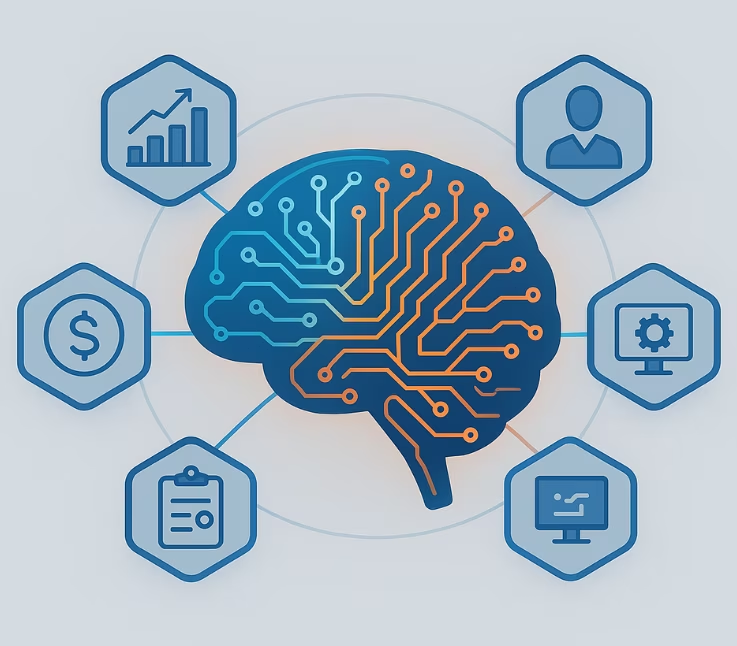
AI automation in enterprise shared services is rapidly transforming how global organizations operate. Traditional shared service centers (SSCs) and global business services (GBS) teams face high transaction volumes, rising compliance demands, and constant cost pressures. Manual processes struggle to scale, introduce errors, and limit agility in an increasingly digital landscape.
The arrival of intelligent automation—powered by advanced AI, robotic process automation (RPA), and generative AI (GenAI)—brings a rare opportunity. Enterprises can achieve breakthrough efficiency, reduce operational costs, and improve compliance while rapidly expanding services globally. Yet, many leaders struggle to move from isolated experiments to an integrated, high-ROI automation strategy.
This definitive guide covers everything you need: a practical “framework + playbook” for delivering AI-enabled transformation in shared services. Whether you direct an SSC, architect enterprise systems, or drive process improvement, you’ll find actionable roadmaps, vetted use cases by function, vendor comparisons, KPI benchmarks, and change management strategies.
By the end, you’ll be equipped to design, launch, and scale intelligent automation—future-proofing your shared services for the digital era.

What Is AI Automation in Enterprise Shared Services?
AI automation in enterprise shared services refers to the use of artificial intelligence and automation technologies—including RPA, agentic AI, and generative AI—to optimize and streamline functions like finance, HR, procurement, and IT within large organizations. These technologies enable scalable, cost-effective, and compliant service delivery by automating repetitive tasks, improving accuracy, and supporting complex decision-making.
- Key technologies: AI, RPA, agentic AI, generative AI (GenAI)
- Core functions: Finance, HR, procurement, IT, analytics
- Business value: Drives scale, reduces costs, enhances quality, and assures compliance
What Are the Key Benefits of AI Automation in Shared Services?
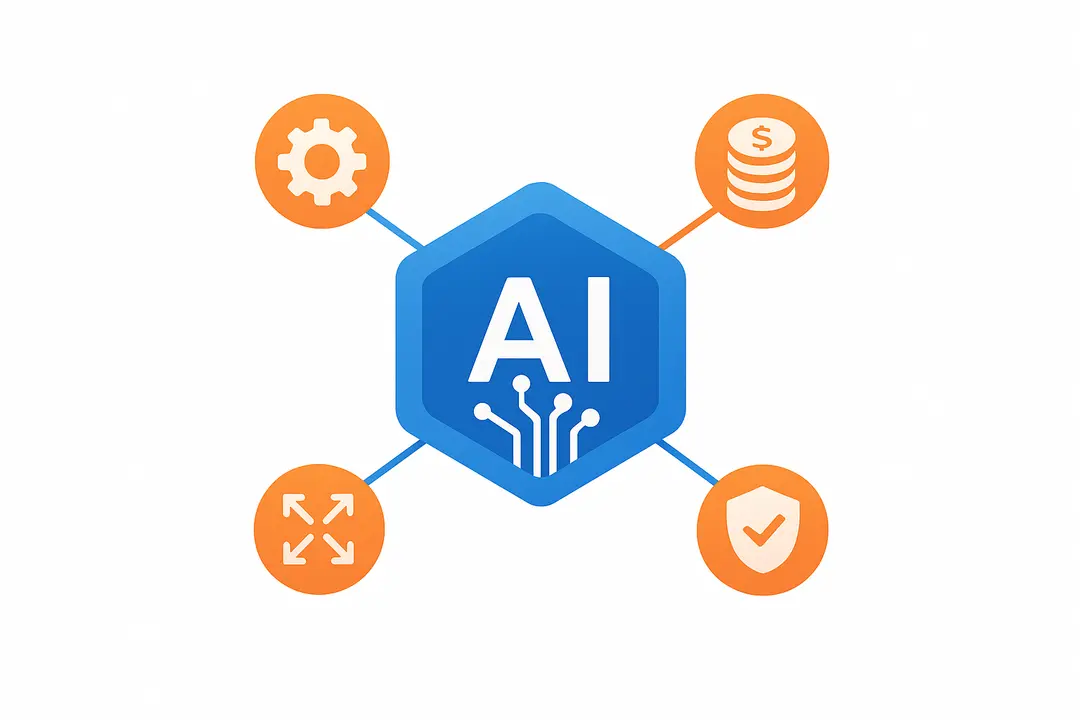
AI automation unlocks a range of measurable benefits across enterprise shared services, justifying rapid adoption.
- Operational Efficiency & Error Reduction:
AI-powered automation minimizes manual work, accelerates process cycle times, and reduces human error rates. Processes run 24/7 and with consistent quality. - Cost Savings & ROI:
Enterprises report substantial cost reductions (often 30–60% for automated transactional processes) and rapid payback, as evidenced in industry case studies. - Scalability for Global Operations:
Intelligent automation enables shared services to handle increased transactional workload without proportionally increasing headcount—vital for supporting global expansions. - Enhanced Compliance, Governance & Auditability:
Automated audit trails, real-time monitoring, and built-in controls help organizations meet stringent compliance requirements such as SOX, IFRS, and local privacy laws.
Benefits of AI Automation in Shared Services:
- Streamlines routine and complex processes
- Reduces costs with faster process execution
- Increases capacity to manage global transaction volumes
- Enhances compliance with audit-ready digital records
- Delivers data-driven insights for continuous improvement
How Is AI Automation Applied Across Shared Service Functions?

Enterprises leverage AI-driven automation across every major shared services domain. The following use cases illustrate breadth and real-world impact.
Finance & Accounting
Automating finance processes delivers rapid ROI and compliance.
- Invoice Processing: RPA and AI extract, validate, and enter invoice data, reducing cycle times by up to 80%, as reported by industry benchmarks (e.g., Automation Anywhere).
- Expense Auditing: AI detects anomalies and policy violations, flagging errors for human review.
- Reconciliations: Intelligent bots match payments and accounts, minimizing reconciliation errors.
- GenAI for Spend Analytics: Generative AI uncovers patterns and anomalies in spending, supporting predictive cost control.
Example ROI: Enterprises have reported FTE hour reductions of up to 30,000 hours annually after deploying RPA in finance and accounting.
HR
HR teams deploy AI automation to improve service and compliance while reducing administrative effort.
- Employee Onboarding: AI-powered workflows streamline document collection and verification, ensuring accuracy across regions.
- Payroll Validation: Bots cross-check payroll against attendance data, highlighting discrepancies before payouts.
- Sentiment Analysis: Natural language processing analyzes employee surveys, alerting HR to engagement or retention risks.
- Multilingual/Global Compliance: Automated processes adapt to varying local and regional requirements, minimizing risk in cross-border operations.
Procurement & Supply Chain
Procurement and supply chain shared services adopt AI to drive speed and accuracy.
- Contract Review: AI reads and flags key clauses or risks in supplier contracts for legal review.
- Purchase Order (PO) Processing: RPA automates PO creation, approval routing, and tracking.
- Supplier Risk Scoring: Machine learning models evaluate supplier performance and predict risks from financial data or news feeds.
- Workflow Orchestration: Orchestrates end-to-end processes—requisition to payment—reducing handoffs and errors.
IT & Service Desk
Automated IT shared services support digital scale and employee productivity.
- Automated Ticket Triage & Resolution: AI triages support tickets by priority and category, routing to appropriate support or resolving issues autonomously.
- ITSM Integration: Bots update IT service management (ITSM) platforms with status changes or documentation.
- Self-Healing Bots: AI agents resolve routine system failures or reset access—all without human intervention.
Analytics & Reporting
AI transforms data-driven decision-making within shared services.
- Automated KPI Dashboards: AI compiles and analyzes operational data, visualizing real-time performance.
- Pattern Detection: Machine learning spots anomalies and trends in financial, HR, or procurement data.
- Data Quality Assurance: AI validates and cleanses large datasets, ensuring reliable reporting for audits or management.
What Is the Step-by-Step Roadmap for Implementing AI in Shared Services?
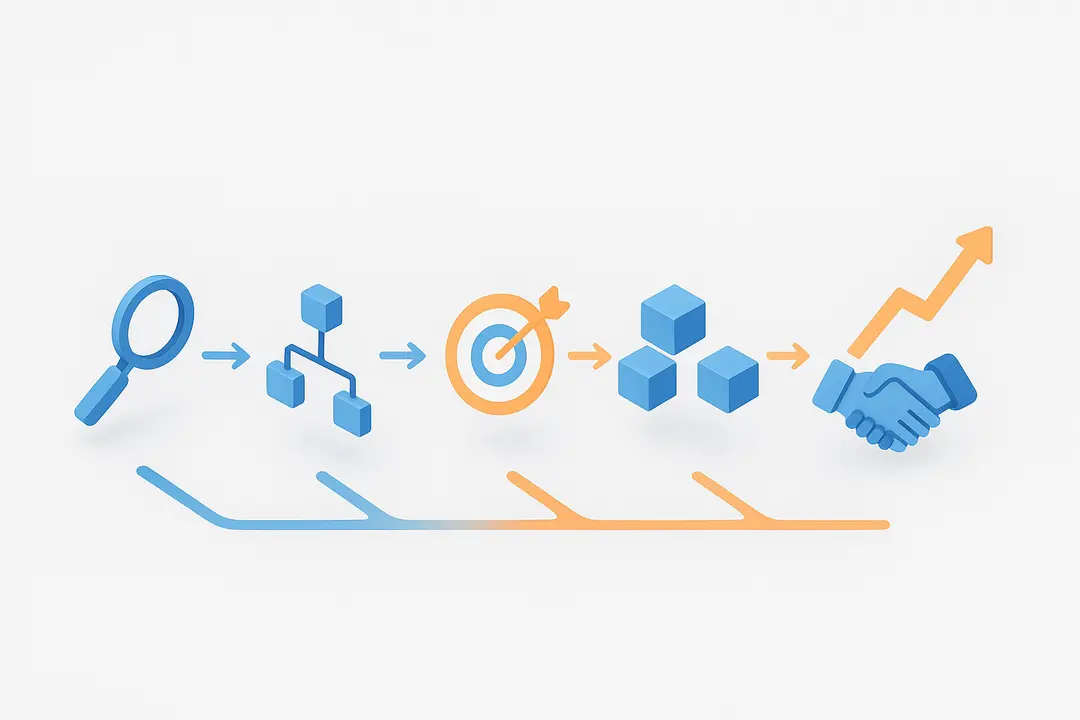
Implementing AI automation in shared services requires a structured roadmap that reduces risk and maximizes results. Enterprises succeed by following a staged approach:
1. Assess AI Readiness & Opportunity:
Conduct a gap analysis to identify high-volume, repetitive processes suitable for automation. Gather data on cycle times, error rates, and compliance bottlenecks.
2. Build an AI Operating Model:
Design governance frameworks, assign roles (e.g., automation COE), and create standardized process documentation. Ensure cross-functional alignment between IT, business units, and compliance teams.
3. Pilot & Validate Automation:
Select a controlled process for initial AI automation (such as invoice processing). Run pilots, measure results (cycle time, error reduction), and iterate based on feedback.
4. Scale Automation Across Functions:
Develop reusable automation components, expand scope to other business units, and integrate AI into enterprise architecture (ERP, HRIS, ITSM).
5. Embed Change Management & Workforce Enablement:
Train staff to work in hybrid human-AI teams. Address change resistance early through communication, upskilling, and transparent success stories.
6. Continuously Optimize:
Monitor KPIs, benchmark results, and adjust strategies. Use advanced analytics and GenAI to unlock new improvement opportunities.

How Does AI Automation Address Compliance, Governance & Risk in Shared Services?
AI automation strengthens compliance, governance, and risk management in highly regulated organizations.
- Automated Audit Trails: Every digital action and decision is logged, creating a transparent record suitable for SOX, IFRS, or regulatory scrutiny.
- Real-Time Anomaly Detection: AI systems scan transactions for unusual patterns, flagging potential errors, fraud, or compliance violations promptly.
- Risk Management Frameworks: Deep integration of models like RACI (Responsible, Accountable, Consulted, Informed) or the 3-lines of defense approach enables clarity in roles and responsibilities.
- Best-Practice Compliance Workflows: Automated checks are embedded within finance, HR, and procurement processes—such as SOC-2 controls in AP workflows or role-based access for HR data.
- Data Privacy & Model Explainability: AI deployments in SSCs include robust privacy controls and produce explainable results, essential for regions with strict privacy regulation (e.g., GDPR).
Table: Audit/Compliance Features by Function
| Function | Key Compliance Features |
| Finance | Automated audit trails, SOX checks, approval logs |
| HR | Data privacy, role-based access, e-signature logs |
| Procurement | Contract audit logs, supplier due diligence |
| IT | Access monitoring, real-time alerting |
Which KPIs and Metrics Best Measure the Success of AI-enabled Shared Services?
Measuring success is essential to sustain investment and improvement. The following KPIs help leaders monitor value and benchmark performance:
Core Process KPIs:
- Process Throughput: Number of transactions processed per hour/day by automated workflows.
- Cycle Time: Average time to complete a process from start to finish.
- Error Rate: Percentage of transactions requiring manual correction after automation.
Business and Operational Metrics:
- FTE Hours Saved: Total manual effort eliminated by automation; key for quantifying ROI.
- SLA Compliance: Percentage of service-level targets achieved, comparing pre- and post-automation.
Value/ROI Metrics:
- Payback Period: Time required for automation benefits to cover project investment.
- Incremental Savings: Additional financial gains realized after each phase of automation.
| KPI | Definition | Expected AI Impact |
| Cycle Time | Time to complete a process | Reduce by 50–80% |
| Error Rate | % of incorrect transactions | Reduce by up to 90% |
| FTE Hours Saved | Manual work eliminated by AI | 30k+ hours/year common |
| SLA Compliance | Service-level target achievement | Improve by 20–40% |
| Payback Period | Time to recoup automation investment | 6–24 months (typical) |
What Are the Leading Platforms and AI Solutions for Shared Services Automation?
Selecting the right platform is crucial for successful, scalable AI automation. The market offers many solutions, each with strengths in specific shared service domains.
| Vendor | Core Strengths | Example Use Case |
| Automation Anywhere | End-to-end process automation, RPA + AI | Invoice automation, HR onboarding |
| AppZen | AI auditing & spend analytics for finance | Expense audit, compliance, fraud detection |
| KYP.ai | Workforce analytics, process intelligence | Identify automation opportunities, benchmarking |
| ServiceNow | ITSM, case management, workflow orchestration | Automated ticket triage, IT service integration |
| NICE | Desktop automation, hybrid bot/human ops | Contact center automation, compliance |
Feature Checklist:
- RPA & cognitive automation capabilities
- GenAI and natural language features
- Built-in compliance controls/audit trails
- Integration (ERP, HRIS, ITSM)
- Analytics and reporting dashboards
Outbound links to platform comparison resources are recommended for deeper evaluation.
What Are the Common Challenges and Change Management Issues in AI Automation for GBS/SSCs?
AI transformation does not come without obstacles. Awareness of common challenges allows organizations to proactively plan and mitigate risks.
- Data Siloing & Integration Complexity:
Legacy systems and fragmented data make it difficult to deploy end-to-end automation. Integrating AI with multiple ERPs, HRIS, or third-party platforms can slow progress. - Workforce Disruption & Hybrid Models:
Employees may fear job loss or role changes. New hybrid working models require upskilling and adjustment to “human + AI” processes. - Change Resistance & Skills Gaps:
Resistance to process changes and lack of AI/automation skills can stall adoption. Success requires robust communication and targeted training. - Governance & Policy Shortcomings:
Without clear policies on AI use and oversight, organizations risk compliance incidents or ethical missteps.
Top Challenges:
- Data silos and integration woes
- Resistance to change at multiple levels
- Skills gaps in automation, AI, governance
- Overlooking compliance and policy requirements
What Is the Future of AI and Automation in Enterprise Shared Services?
The future of AI in shared services points toward hyperautomation, global scale, and new digital business models.
- GenAI & Agentic Automation:
Generative and agentic AI agents will perform end-to-end processes, from data capture to decision-making, with minimal human input. - Hyperautomation & Process Orchestration:
Advanced orchestration tools will link RPA, AI, and analytics for seamless, intelligent automation across business domains. - Evolving Operating Models:
SSCs/GBS will expand their digital footprint, offering new data-driven services and moving toward fully virtual operations. - Talent & Role Redefinition:
Routine work will increasingly be automated, with teams shifting to analytics, governance, and continuous improvement roles. - Regulatory Evolution:
Ongoing regulatory change (especially around AI ethics, explainability, and cross-border data flows) will require agile compliance models.
Industry Predictions:
- Over 70% of shared services will deploy AI-driven automation in at least one function by 2026 (source: SSON Analytics)
- GenAI will be mainstream for reporting, analytics, and document processing within 2–3 years
- Hybrid human-AI operating models will become standard in SSCs/GBS globally
Summary Table: Key Insights on AI Automation in Shared Services
| Theme | Key Points |
| Benefits | Efficiency, cost savings, scalability, compliance, auditability |
| Core Use Cases | Finance automation, HR onboarding & payroll, procurement orchestration, IT self-service |
| KPI Benchmarks | 30k+ FTE hours saved, cycle times cut by 50–80%, error rates down up to 90% |
| Leading Vendors | Automation Anywhere, AppZen, KYP.ai, ServiceNow, NICE |
| Implementation Steps | Assess readiness, build model, pilot, scale, optimize, change management |
Frequently Asked Questions: AI in Shared Services
What is AI automation in enterprise shared services?
AI automation in enterprise shared services uses artificial intelligence, RPA, and automation to optimize finance, HR, procurement, and IT functions. This leads to improved efficiency, reduced costs, and enhanced compliance.
How does AI automation reduce costs in shared services?
By automating repetitive, high-volume transactions, AI eliminates manual labor, accelerates process cycles, and reduces errors. This minimizes operational costs and allows growth without proportionally increasing headcount.
Which shared service functions benefit most from AI automation?
Finance & accounting, HR, procurement/supply chain, IT service desks, and analytics/reporting functions see the greatest impact. Automation handles transactions, data validation, workflow orchestration, and routine support at scale.
What are real-world examples of AI use cases in shared services?
Examples include automated invoice and expense processing, payroll validation, contract review, self-service IT ticket triage, and predictive analytics for spend optimization.
How is compliance ensured with AI automation?
AI automation includes audit trails, embedded compliance checks, real-time anomaly detection, and privacy controls. These features help meet SOX, IFRS, GDPR, and other regulatory standards.
What are the biggest challenges in adopting AI automation for GBS/SSC?
Key challenges include integrating siloed systems, workforce change resistance, upskilling gaps, and establishing robust governance for AI deployment.
What KPIs best measure success in AI-enabled shared services?
Common metrics include process cycle time, error rates, FTE hours saved, SLA compliance, payback period, and incremental cost savings post-automation.
How do you start implementing AI automation in shared services?
Begin with a readiness assessment, build governance frameworks, pilot high-impact processes, scale successful automations, and continuously optimize while enabling the workforce.
Which platforms are best for AI automation in shared services?
Leading platforms include Automation Anywhere, AppZen, KYP.ai, ServiceNow, and NICE. The choice depends on your domain needs, integration requirements, and compliance priorities.
What is the future outlook for AI in enterprise shared services?
Expect widespread adoption of hyperautomation, increased use of GenAI and agentic AI, more digital services, and evolving compliance demands as SSCs move toward fully virtual, global operations.
Conclusion
AI automation in enterprise shared services is no longer optional—it is the proven route to superior efficiency, compliance, and global agility. This guide showed how to identify, implement, and measure intelligent automation across every major function, underpinned by real-world use cases and ROI benchmarks.
To begin, assess your automation readiness and prioritize high-volume processes. Build a robust operating model, engage the right technology partners, and invest in workforce enablement to ensure sustainable change. Download our KPI scorecard to track impact, explore platform demos, or contact an expert for an initial consultation.
Act now—future-proof your shared services and accelerate digital transformation with intelligent automation. Your journey to data-driven, scalable excellence starts today.
Key Takeaways
- AI automation delivers measurable efficiency, cost savings, and compliance in enterprise shared services.
- Every major SSC function—finance, HR, procurement, IT, analytics—can benefit from targeted automation.
- Success requires a stepwise roadmap: assess, pilot, scale, and continuously optimize.
- Leading platforms include Automation Anywhere, AppZen, KYP.ai, and ServiceNow.
- Track progress with KPIs such as FTE hours saved, error rates, and cycle time reduction.
This page was last edited on 9 July 2026, at 11:10 am

Start a conversation with our team to solve complex challenges and move forward with confidence.