Offshore enterprise software development is no longer just a cost-saving tactic—it’s a strategic lever for innovation, agility, and resilience.
With the global software outsourcing market projected to surpass $480 billion by 2026 (Statista), enterprises face both unprecedented opportunities and critical risks. Decision-makers today seek more than generic advice; they need a current, practical playbook that covers new engagement models, regulatory minefields, security innovation, vendor management, and ESG requirements.
This comprehensive guide gives you expert frameworks, cost benchmarks, risk controls, and actionable 2026-forward trends—everything you need to unlock competitive advantage and avoid costly pitfalls in offshore enterprise software development.
What Is Offshore Enterprise Software Development and How Does It Work?
Offshore enterprise software development means delegating the design, building, and ongoing maintenance of complex software systems to specialized teams in other countries. This approach enables companies to tap into global talent, access diverse expertise, and scale faster.
Key Concepts:
- Offshore: Engaging a team in a country significantly distant from the enterprise (e.g., US companies hiring teams in India, Poland, or Brazil).
- Enterprise Software: Robust applications—like ERP, CRM, HRM, or bespoke digital platforms—powering large businesses.
- Offshore Outsourcing Models: Vary from dedicated teams and staff augmentation to project-based and BOT (Build-Operate-Transfer) arrangements.
How It Works:
Instead of traditional, on-premise development, companies select a remote offshore vendor, establish collaboration agreements, and leverage distributed project management tooling. Critical enterprise projects that benefit from offshoring include:
- Large-scale ERP rollouts
- Digital transformation programs
- Legacy modernization
- Industry-specific solutions (e.g., finance, healthcare, SaaS)
Offshore development differs from generic software outsourcing by focusing on complex, mission-critical projects, greater security, and tighter regulatory alignment.
Offshore vs. Onshore vs. Nearshore: How to Choose the Right Development Approach?

Understanding the differences among offshore, nearshore, and onshore software development helps enterprises select the best fit for their business goals.
Definitions:
- Onshore: Partnering with providers in your own country.
- Nearshore: Collaborating with teams in nearby or same-time-zone countries.
- Offshore: Engaging experts in more distant regions, typically with greater cost or talent advantages.
When to Choose Each Model:
| Model | Pros | Cons | Best Use Cases |
| Onshore | Easiest collaboration, same legal/compliance regime, minimal language barriers | Highest cost, limited talent pool | Projects requiring close day-to-day work, heavily regulated industries |
| Nearshore | Similar time zones, cultural affinity, moderate cost savings | May have less scale, possible higher cost than offshore | Agile projects, iterative collaboration, overlapping hours needed |
| Offshore | Greatest savings, global talent access, 24/7 delivery | Time zone/cultural/language gaps, increased management complexity, compliance risks | Large-scale builds, legacy system overhauls, long-term partnerships |
Key Factors to Weigh:
- Time Zone Alignment: Impacts meetings, emergencies, and real-time collaboration.
- Language/Cultural Fit: Critical for minimizing miscommunication.
- Talent Depth and Specializations: Some countries excel in specific domains (e.g., India in mobile/enterprise, Poland in gaming/AI).
- Regulatory and Compliance Requirements: Some data must remain onshore for legal reasons.
Which Offshore Development Models Work Best for Enterprises in 2026?
The choice of offshore development model directly influences cost, control, scalability, and risk. Enterprises in 2026 are increasingly selective, matching engagement models to project needs.
Main Offshore Engagement Models:
- Dedicated Team Model
- A long-term, full-time offshore team works exclusively for your enterprise.
- Best for ongoing development, product evolution, or complex projects.
- Staff Augmentation
- Add remote experts to your in-house team to fill skill or capacity gaps.
- Useful for short-term spikes or scarce specializations.
- Project-Based Model
- Fixed-scope projects delivered as end-to-end solutions.
- Suitable for well-defined, non-recurring tasks.
- Build-Operate-Transfer (BOT) Model
- The vendor builds and manages a team; after a set term, operations and personnel transfer to the enterprise.
- Ideal for companies planning to set up their own offshore delivery centers.
| Model | Cost Flexibility | Involvement Needed | Scalability | Control | Typical Risks |
| Dedicated Team | High | High | High | High | Integration, attrition |
| Staff Augmentation | Medium | Medium | Medium | Medium | Overlap, knowledge gap |
| Project-Based | Low (fixed) | Low | Low | Low | Scope creep, quality |
| BOT | Medium/High | High | High | Very High | Transfer complexity |
Model Selection Tips:
- Use a dedicated team when security, domain knowledge, and long-term roadmap matter.
- Opt for Staff Augmentation to quickly fill skill shortages or speed launches.
- Choose Project-Based for clear, time-bound deliverables.
- Select BOT if you plan to internalize the team long-term but want to minimize setup risk.
How Much Does Offshore Enterprise Software Development Cost in 2026?
Offshore software development costs in 2026 will depend heavily on location, expertise, project size, and engagement model.
Global 2026 Hourly Rate Benchmarks:
| Country/Region | Developer (USD/hr) | Senior/Lead (USD/hr) | QA Engineer (USD/hr) | Project Manager (USD/hr) |
|---|---|---|---|---|
| Bangladesh | $18–$32 | $35–$58 | $16–$28 | $38–$62 |
| India | $22–$38 | $40–$65 | $20–$32 | $45–$70 |
| Eastern Europe | $35–$58 | $60–$95 | $30–$50 | $70–$120 |
| Latin America | $32–$55 | $55–$85 | $28–$45 | $65–$110 |
| Southeast Asia | $20–$34 | $38–$60 | $18–$30 | $40–$68 |
Bangladesh’s competitive rates are backed by a growing pool of skilled IT talent. Companies like Riseup Labs — a Dhaka-based, ISO 9001 & 27001 certified technology firm with 13+ years of experience and clients across 30+ countries including UNICEF, WHO, and BBC Media Action — are a strong example of the quality global businesses are tapping into at these price points.
Complete Cost Breakdown:
- Direct Costs: Hourly/contract rates, project management.
- Indirect Costs: Communication tools, collaboration platforms, and additional training.
- Hidden Costs: Time zone overlap, rework due to miscommunication, legal and compliance costs, onboarding and ramp-up, QA/testing extensions.
Cost-Control Checklist:
- Clarify deliverables, milestones, and scope in writing.
- Plan for 10–15% contingency for hidden costs.
- Require periodic budget visibility from vendors.
- Secure fixed-plus-variable contracts where possible.
Pro Tip: Use a comparison table or interactive estimator to evaluate total cost, factoring in project duration, complexity, and risk premiums.
How Do You Manage Risks, Security & Legal Compliance in Offshore Projects?
Managing risk in offshore enterprise software development requires rigorous controls across IP, data security, legal frameworks, and delivery expectations.
Common Risks to Address:
- Intellectual Property (IP) Leakage
- Data Security Breaches
- Delivery Delays or Quality Issues
- Regulatory Non-Compliance
- Cultural Misalignments
Compliance and Security Best Practices:
- Adhere to Standards: Require ISO/IEC 27001 certification for all vendors.
- Regulatory Frameworks: Ensure compliance with GDPR (EU), HIPAA (US healthcare), SOC 2 (US SaaS), as relevant.
- Zero Trust Architectures: Adopt ‘never trust, always verify’ networks, especially for remote access and code repositories.
- DevSecOps Integration: Shift security left; integrate security checks early in the CI/CD pipeline.
Risk Mitigation Checklist:
- Execute NDAs and IP transfer agreements before any code or data sharing.
- Conduct thorough vendor due diligence—review security protocols and audit reports.
- Limit data access to essential personnel; use role-based controls.
- Regularly review compliance with your legal/compliance team.
- Establish clear incident response and escalation processes.
What Criteria Should You Use to Select and Vet Offshore Software Development Vendors?
Choosing the right offshore vendor is crucial for project success. Enterprises must follow a systematic, objective process to ensure quality and minimize risks.
Step-by-Step Vendor Vetting Process:
- Define Requirements: Project scope, technology stack, security/compliance needs.
- Initial Shortlist: Evaluate vendors by reputation, size, and portfolio alignment.
- Assess Credentials: Verify ISO/IEC 27001, GDPR readiness, relevant certifications.
- Review Case Studies & References: Ask for enterprise-scale project examples.
- Interview Teams: Assess communication skills and domain expertise.
- Ask Key RFP Questions:
- What’s your experience with similar enterprise projects?
- What is your escalation and incident management process?
- Can you provide recent client references from my industry?
- Pilot/Proof of Concept: Consider a small-scale engagement to validate fit.
- Scorecard Evaluation: Rate vendors on criteria like technical skills, governance, flexibility, and pricing transparency.
Red Flags to Watch For:
- Reluctance to share certifications or references
- Vague answers on security or compliance
- Weak post-launch support guarantees
Vendor Selection Criteria Table (Sample):
| Criteria | Importance | Evaluation Method |
| Technical Expertise | High | Portfolio, interviews |
| Security & Compliance | High | Certificates, audits |
| Communication | Medium | Team calls, test sprints |
| Pricing Transparency | High | Proposal analysis |
| Cultural Fit | Medium | Early interactions |
| Client Reference | High | Review/speak directly |
What Are the Best Practices for Managing and Scaling Offshore Teams?
To achieve enterprise-grade results with offshore teams, effective management and integration are non-negotiable.
Best Practices for Offshore Team Structure & Collaboration:
- Clear Role Definition: Map responsibilities using RACI charts.
- Strong Communication Protocols: Use shared tools like Jira (tasks), Slack (real-time chat), and Confluence (documentation).
- Time Zone Planning: Establish overlapping working hours and regular meeting cadences.
- Onboarding & Ongoing Training: Share company culture, process documentation, and domain context.
- KPIs & Feedback Loops: Track metrics such as sprint velocity, code quality, and incident rates, supplemented by quarterly performance reviews.
- Escalation Pathways: Predefine who handles which issues, and how escalation works for blockers or security incidents.
What Tech Trends and Innovations Are Shaping Offshore Enterprise Software Development in 2026?

Enterprise offshore development in 2026 is characterized by rapid technology shifts and new business priorities.
Key Trends to Watch:
- AI & Automation: Offshore teams are rapidly adopting generative AI and ML tools to accelerate coding, testing, and support—driving major efficiency gains.
- Platform Engineering: Building internal developer platforms boosts productivity and standardization.
- DevOps Maturity: Advanced enterprises require integrated, CI/CD-driven development, including infrastructure as code and automated quality gates.
- Sustainable/Green Software Development: ESG (Environmental, Social, Governance) factors are now considered in vendor selection—low-energy coding practices, green hosting, and carbon accounting become differentiators.
- Enhanced Security: Zero Trust and DevSecOps are standard requirements for data-heavy sectors.
- Market Growth: According to Statista and Deloitte, spending on IT and BPO offshoring is growing 8–10% annually through 2026, with India, Poland, and Brazil emerging as hotbeds for specialized talent.
Expert Insight: “Offshoring has evolved beyond cost arbitrage. Vendor selection now hinges on advanced tooling, regulatory agility, and responsible AI adoption,” notes a senior director at a leading global consultancy.
Step-by-Step Framework: How to Succeed in Offshore Enterprise Software Development
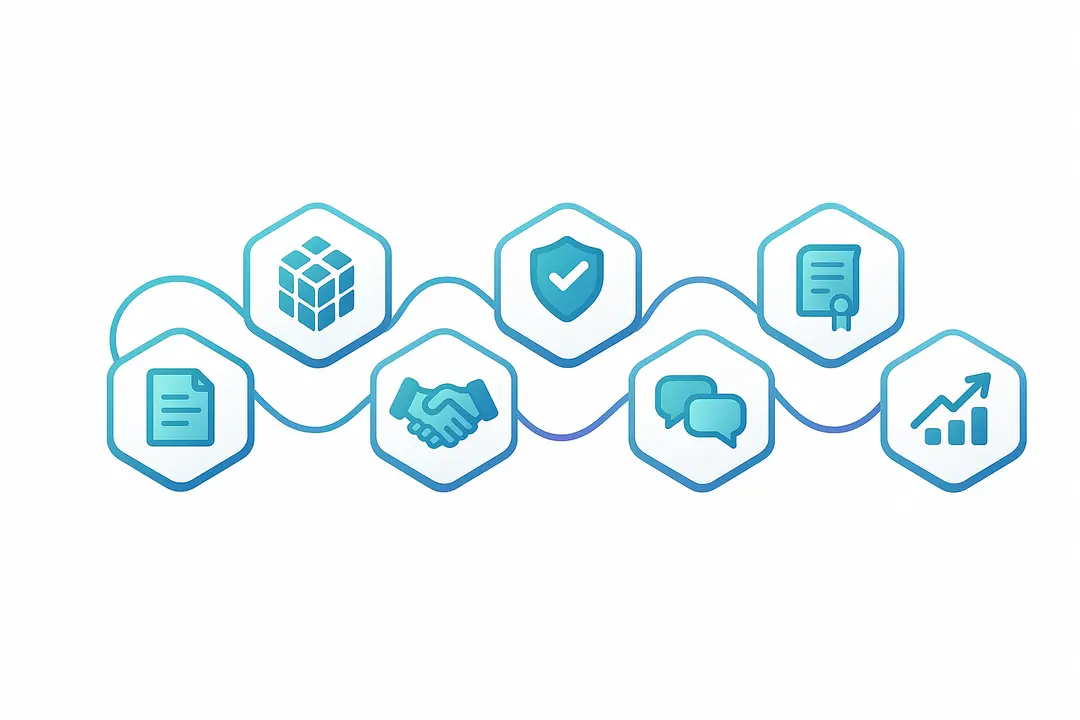
A proven, repeatable process is essential for enterprise offshoring success.
Offshore Enterprise Software Development Success Framework
- Define Project Scope & Requirements: Document clear objectives, deliverables, and KPIs.
- Select the Right Engagement Model: Choose among Dedicated Team, Staff Augmentation, Project-Based, or BOT, based on goals and control needs.
- Shortlist and Vet Vendors: Apply structured scorecards, check credentials, and run pilots.
- Legal & Security Due Diligence: Finalize contracts, NDAs, and regulatory compliance before kickoff.
- Onboard and Integrate Teams: Orient the offshore team to your tech stack, culture, and processes.
- Set Up Communication & Project Management Protocols: Establish toolchains, daily check-ins, and reporting flows.
- Ongoing Monitoring & Optimization: Track delivery, quality, and risk metrics; schedule reviews and adapt as needed.
- Scale Up and Knowledge Transfer: Plan for phased scaling, documentation, and eventual insourcing if required.
Common Pitfalls to Avoid:
- Vague requirements/specs
- Insufficient vendor vetting
- Weak security protocols
- Neglecting cultural onboarding
- Lack of performance measurement
Key Takeaways Table: Fast Facts on Offshore Enterprise Software Development
| Model | Avg. Cost (USD/hr) | Primary Risk | Best Region | 2026 Trend |
| Dedicated Team | $22–$58 | Integration, attrition | Bangladesh, India, Poland | AI, DevOps, ESG focus |
| Staff Augmentation | $28–$60 | Onboarding, alignment | Bangladesh, Eastern Europe | Platform engineering |
| Project-Based | $30–$85 | Scope creep | Bangladesh, LATAM | Automated QA, Green coding |
| BOT | $35–$95 | Transfer, compliance | Bangladesh, India, Vietnam | Insourcing, regulatory agility |
Offshore Development FAQ: Quick Answers to Your Top Questions
What is offshore enterprise software development?
Offshore enterprise software development is the practice of partnering with specialized teams in other countries to build, maintain, and evolve complex business-critical (enterprise) software solutions.
What are the main models for offshore software development?
The most common offshore models are Dedicated Team, Staff Augmentation, Project-Based, and Build-Operate-Transfer (BOT), each with distinct controls, costs, and use cases.
How do offshore and onshore development differ for large enterprises?
Onshore models offer easier coordination but higher costs, while offshore models give access to global talent and cost savings but require careful attention to risk and communication.
How much does offshore enterprise software development cost by country?
As of 2026, hourly rates range from $20–$38 (India, Southeast Asia), $35–$58 (Eastern Europe), and $32–$55 (Latin America), varying by expertise and project complexity.
What are the key risks and security considerations in offshore projects?
Core risks include data leaks, IP theft, compliance failures, and project delays. Mitigate these with strong contracts, ISO 27001 compliance, zero trust architectures, and clear communication.
What contracts and legal frameworks are needed for offshore partnerships?
Essential agreements include NDAs, IP transfer statements, and vendor contracts specifying compliance with data, regulatory, and IP standards (e.g., GDPR, HIPAA).
How do I select and vet an offshore software development vendor?
Use a structured scorecard to evaluate credentials, security, references, cultural fit, and pricing. Run pilot projects and speak with past clients.
What are the current trends in offshore software development for enterprises?
Key 2026 trends are AI-driven development, DevOps integration, green coding/ESG, advanced security, and platform engineering.
What best practices improve offshore team management and communication?
Define clear roles and escalation channels, use collaborative tools, establish timezone overlap in meetings, and implement KPIs for performance.
How does green coding or sustainability impact offshore software projects?
Sustainability is now a differentiator; enterprises increasingly prioritize vendors following green coding practices, ESG standards, and energy-efficient infrastructure.
Conclusion
Offshore enterprise software development in 2026 is more than just a cost-saving tool; it’s a strategic play for innovation, resilience, and global competitiveness.
By mastering the latest engagement models, prioritizing security and compliance, managing teams effectively, and staying ahead of tech and ESG trends, you ensure your outsourcing strategy pays dividends.
Ready to take the next step? Download our detailed checklists, connect with expert advisors, or subscribe for up-to-the-minute offshore insights tailored to your sector.
Key Takeaways
- Offshore enterprise software development delivers innovation, scalability, and cost optimization—but only with strong governance and up-to-date practices.
- Choosing the right engagement model (Dedicated, Augmented, Project, BOT) is essential for project fit and risk management.
- 2026 trends—AI, platform engineering, DevOps, ESG/green coding—are now core vendor and strategy selection criteria.
- Security, legal compliance (GDPR, ISO 27001), and due diligence remain non-negotiable for enterprise offshoring.
- Sustainable, high-performance teams rely on clear communication, performance metrics, and cultural alignment.
This page was last edited on 9 July 2026, at 11:07 am

Start a conversation with our team to solve complex challenges and move forward with confidence.