Today’s Chief Technology Officers (CTOs) face unprecedented pressure to drive digital transformation, safeguard organizations from rising threats, and deliver continuous innovation—all while talent shortages and regulatory demands accelerate. Keeping pace with 2026’s relentless shifts in AI, compliance, and hybrid work isn’t just complex; it can overwhelm even the most seasoned tech leaders.
The modern CTO’s dilemma goes beyond traditional budget balancing or project roadmapping. Board expectations, speed-to-market demands, and always-on security threats require new strategies. In-house teams alone often struggle to keep up, especially with the pace of generative AI adoption and changing cybersecurity landscapes.
This playbook arms CTOs and technology executives with a practical, stepwise framework for evaluating, adopting, and optimizing IT outsourcing as a strategic lever. Backed by actionable data, industry insights, and real-world case stories, you’ll learn exactly which modern pain points outsourcing can solve—and how to do it right.
What Are the Biggest Challenges Facing Modern CTOs?
Modern CTOs grapple with talent shortages, cybersecurity and compliance burdens, the struggle to modernize legacy systems, financial constraints, and managing distributed teams—all intensified by 2026’s technology acceleration. These obstacles are common across industries and validate the persistent difficulties faced in technology leadership roles.
The Top Challenges for CTOs Today
- Recruiting & Talent Management: Scarcity of skilled tech professionals, fierce hiring competition, high turnover rates.
- Security & Compliance: Increasing cyberthreats, expanding regulatory demands, and growing audit complexity.
- Modernization & Innovation Pressures: Balancing digital transformation with reliability and legacy system constraints.
- Budget Constraints & ROI Accountability: Delivering outcomes under tighter budgets and heightened ROI scrutiny.
- Hybrid/Remote Work Models: Coordinating distributed teams, integrating tools, and sustaining strong culture.
- Emerging Tech Pressure: Rapid advances in generative AI, API ecosystems, and regulatory shifts.
Let’s unpack each challenge—and why it matters for CTOs operating in 2026 and beyond.
Recruiting & Talent Shortages: The Tech Skill Gap
The tech talent crunch is the most cited obstacle for CTOs, driven by record-low unemployment and surging global demand for digital skills. According to the U.S. Bureau of Labor Statistics, software developer jobs are projected to grow 25% from 2022–2032, far outpacing available graduates and intensifying competition.
- Current Impact: Competition for AI, cybersecurity, and cloud specialists is especially acute. Vacancy periods for key roles can stretch months, impacting project timelines and innovation.
- Retention Challenges: Even after investment in hiring, churn rates remain high—Deloitte finds that tech professionals now change employers more frequently, lured by remote opportunities and competitive offers.
- Consequence: Relying solely on in-house hiring can stall product launches, inflate costs, and limit agility.
Outsourcing Solution: Outsourcing rapidly bridges the skills gap with pre-vetted global experts, accelerating hiring and reducing both cost and risk.
Security & Compliance Headaches: Staying Ahead of Threats
Cybersecurity is now a board-level issue, and the attack surface continues to expand. The World Economic Forum’s 2026 Cybersecurity Outlook highlights rising cloud attacks and ransomware as top concerns, while compliance frameworks like SOC2, GDPR, and HIPAA add to the burden.
- Threat Landscape: Cyberattacks exploit gaps in skills and process, especially as remote access increases.
- Regulatory Expansion: Every year brings new mandates and increased penalties for lapses, with multinational firms facing overlapping requirements.
- Operational Impact: Routine audits, incident response, and continuous monitoring strain resources—even more so if handled exclusively in-house.
Outsourcing Solution: Specialized IT partners offer certified security operations, 24/7 monitoring, and proven compliance support, reducing risk and audit overhead.
Modernization & Innovation Pressures: Upgrading While Operating
For CTOs, shifting from legacy systems to modern, cloud-native, or AI-driven environments is a balancing act. Transformation is necessary for competitiveness, but downtime, compatibility, and cultural resistance are real barriers.
- Legacy Complexity: Many enterprises run core business functions on aging infrastructure, hindering speed and scalability.
- Digital Push: Board directives and market competition demand cloud migration, API integrations, and piloting generative AI.
- Change Management: Teams often resist new workflows, fearing disruption or skill mismatches.
Outsourcing Solution: Outsourcing brings experienced transformation teams that accelerate modernization projects and ensure business continuity—without overwhelming internal staff.
Financial & ROI Pressures: Delivering More for Less
CTOs now face acute scrutiny on technology spend, with boards demanding tangible ROI and rapid payback. Economic volatility increases the need for flexible cost models.
- Cost Benchmarking: Industry metrics show in-house teams are often double the cost of equivalent outsourced models, once overhead and attrition are factored in.
- KPI Accountability: Executives expect measurable outcomes—on time, on budget, with documented value.
- Budgeting Complexities: Debate between capital vs operational spend shapes technology strategy.
Outsourcing Solution: Modern IT outsourcing provides usage-based pricing, detailed ROI frameworks, and cost transparency, eliminating unpredictability from the tech budget.
Navigating Hybrid/Remote Collaboration
With remote and hybrid work as the norm, CTOs must unify distributed teams, maintain productivity, and preserve culture across time zones.
- Coordination Challenges: Global schedules and language differences introduce friction in communication.
- Productivity Tools: Ensuring secure, consistent access to collaboration platforms is a persistent hurdle.
- Cultural Alignment: Integrating new team members and practices can slow progress if not proactively managed.
Outsourcing Solution: Leading outsourcing partners have mature remote work playbooks, cross-cultural onboarding, and best-in-class collaboration tools, helping CTOs turn distributed work into a competitive advantage.
How Does IT Outsourcing Solve Key CTO Challenges?
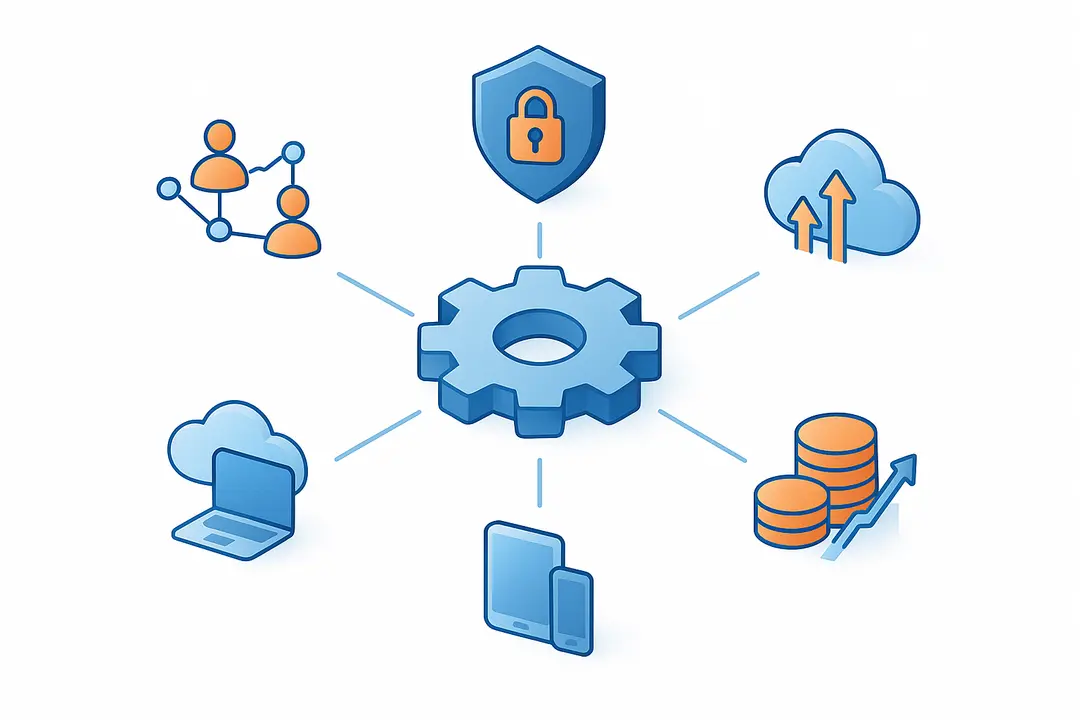
IT outsourcing offers a practical, point-by-point solution to today’s CTO challenges. By leveraging specialized partners, organizations gain scalable access to talent, security, innovation, and cost flexibility—allowing technology leaders to focus on strategic value creation.
How IT Outsourcing Helps CTOs Address Key Challenges
- Talent Augmentation: Fast-tracks access to scarce skills via global teams.
- Security & Compliance: Delivers industry-certified protection and regulatory expertise.
- Innovation & Modernization: Brings transformation experience and accelerates adoption of AI, cloud, and automation.
- Cost Optimization: Offers transparent, flexible pricing and proven ROI.
- Remote Collaboration: Deploys robust tools and virtual team management best practices.
Below, see how each specific CTO pain point maps to outsourcing capabilities.
Talent Augmentation & Skills Access
Outsourcing provides instant access to specialized tech skills through diverse delivery models:
- Nearshore: Teams in similar time zones, ideal for seamless collaboration.
- Offshore: Cost-effective access to larger global talent pools.
- Onshore: Local regulatory familiarity and cultural fit.
Comparative Cost/Time to Hire
| Model | Average Time-to-Hire | Cost Savings vs. In-House | Use Case Example |
| In-House | 2–4 months | Baseline | Strategic leadership/core |
| Nearshore | 2–6 weeks | 20–30% | Agile development, ops |
| Offshore | 2–8 weeks | 40–60% | Support, QA, scaling |
- Skill Certification: Top vendors rigorously vet and certify staff, ensuring fit for emerging roles like DevOps, AI engineering, or compliance.
- Outcome: CTOs fill crucial gaps rapidly, keep projects moving, and avoid talent wars.
Boosting Security & Compliance through Outsourced Expertise
Outsourcing to specialized IT partners strengthens security and compliance through:
- Expertise in Frameworks: Partners bring experience across GDPR, SOC2, HIPAA, and more, handling audit prep and evidence.
- 24/7 Security Ops: Always-on monitoring identifies threats before they escalate.
- Legal Protections: Robust SLAs, data privacy agreements, and regional legal adherence protect data and IP.
Result: CTOs mitigate breach risk and compliance gaps with authority-approved processes and tools.
Innovation & Legacy System Modernization Made Easier
Transformation experts within outsourcing firms can:
- Modernize Legacy Systems: Migrate on-premise apps to cloud, integrate APIs, and adopt automation at scale.
- Accelerate Innovation: Run pilot projects (POCs), minimum viable products (MVPs), or GenAI implementations without taxing internal teams.
- Iterative Upgrades: Support rapid development cycles and ongoing technology refresh.
This allows CTOs to enact modernization with less disruption and more predictable results.
Managing Costs & Proving ROI with Outsourcing
Outsourcing clarifies spend and makes ROI tracking feasible:
- Usage-Based Pricing: Pay for what you use—staff augmentation, project-based, or managed services.
- Transparent Models: Predict budgets with itemized cost structures.
- Benchmarked Value: Regular reporting via NPS (Net Promoter Score), KPIs, or scorecards shows outsourcing performance against internal benchmarks.
CTOs gain control over tech budgets and clear visibility into value delivered.
Optimizing Collaboration & Productivity with Distributed Teams
Outsourcing partners champion distributed work through:
- Remote Playbooks: Standardized workflows and communication cadences foster high productivity.
- Mature Tooling: Secure cloud platforms, video conferencing, and real-time collaboration tools are standard.
- Cultural Onboarding: Training for both client and outsourced teams minimizes misunderstandings and accelerates integration.
Case Example: A global fintech expanded hybrid teams using a nearshore partner, slashing onboarding time by 30% and boosting cross-region project delivery speeds.
In-House vs IT Outsourcing: A CTO Decision Framework
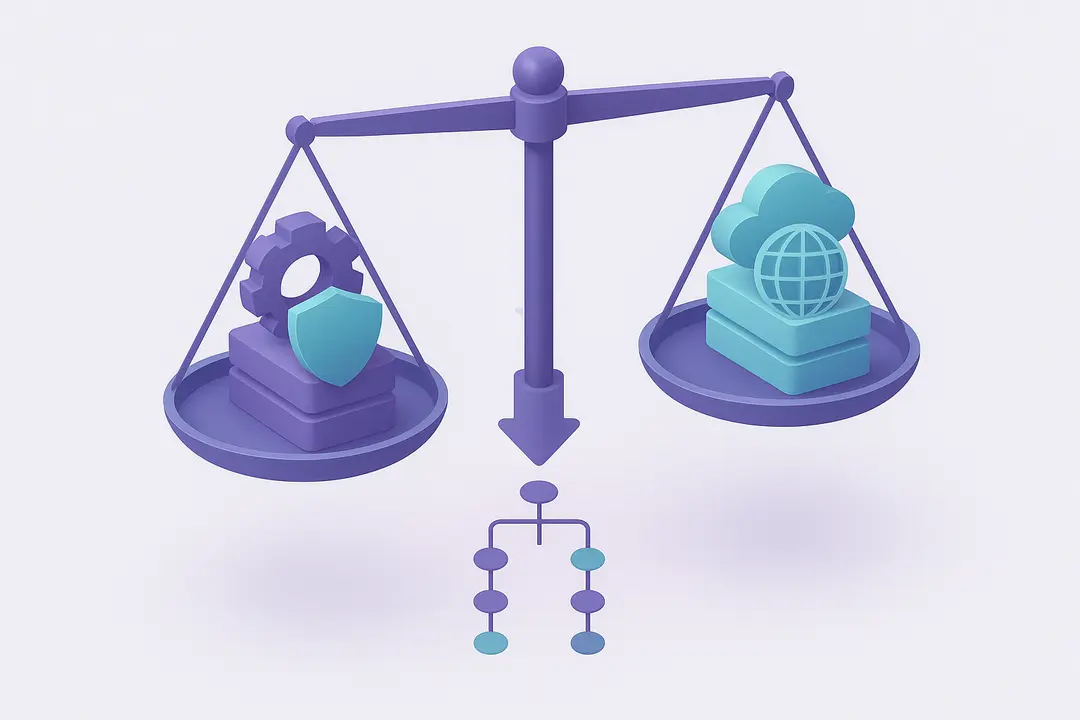
Choosing between in-house and IT outsourcing isn’t binary. The right approach depends on skill needs, urgency, risk, compliance demands, budget, and innovation appetite. CTOs need a data-driven decision structure to guide this choice.
Stepwise CTO Decision Framework
- Assess Skill Rarity: Is the needed expertise rare or unavailable in your region?
- Evaluate Urgency: How quickly must the capability be activated?
- Map Risk & Compliance: Does the function require strict regulatory control?
- Analyze Budget Impact: Can operational spending deliver better ROI than capex?
- Innovation Speed: Will outsourcing accelerate adoption of new technologies?
- Weigh Cultural Fit: Is seamless integration with company culture critical?
Function Comparison Table
| Function | In-House Advantage | Outsourcing Strength | Typical Recommendation |
| Product Strategy | Deep business context | Rapid scaling, niche expertise | Hybrid/team lead in-house |
| Software Dev | Alignment with core IP | Access to global skills/faster ramp | Outsource for scale/specialty |
| Security/Compliance | Direct control | Specialized, certified expertise | Hybrid or fully outsource |
| Support/QA | Brand voice | Cost efficiency, 24/7 capability | Outsource |
Conclusion: Use this six-point checklist or a structured flowchart (downloadable as a PDF) to guide each outsourcing decision.
How Should CTOs Choose the Right IT Outsourcing Partner?
Selecting the right outsourcing partner is a critical CTO decision—one that determines project success, risk posture, and overall ROI. The following checklist provides concrete steps for effective evaluation:
CTO Outsourcing Partner Checklist
- Track Record & References: Request recent case studies and NPS scores; validate past results in your sector.
- Compliance Certifications: Confirm active credentials in GDPR, HIPAA, SOC2, or relevant frameworks.
- Quality Assurance: Review delivery SLAs, QA processes, and escalation protocols.
- Transparent Communication: Assess language skills, reporting cadence, and availability.
- Cultural & Domain Fit: Ensure the partner understands your business model and market nuances.
- Legal Protections: Review intellectual property clauses and data handling terms.
Action: Download the complete “CTO Outsourcing Readiness Checklist” to streamline your next vendor evaluation.
What Are the Risks of IT Outsourcing for CTOs—and How Can They Be Mitigated?
Outsourcing offers significant benefits, but also introduces risks if not managed properly. Understanding common pitfalls enables CTOs to build effective mitigation strategies from the outset.
Common IT Outsourcing Risks (and Mitigation)
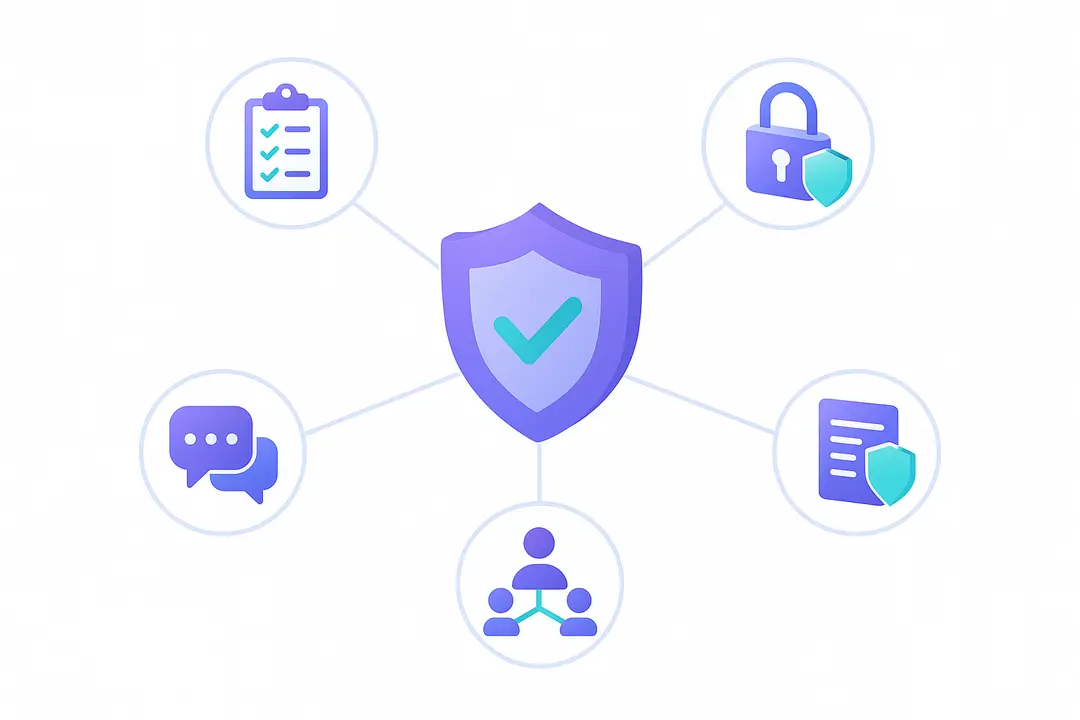
- Quality Inconsistency: Clarify SLAs, track work via shared KPIs, and run trial projects before scaling.
- Security/Data Privacy: Insist on background-checked teams, enforce data encryption, and establish contractual compliance requirements.
- IP Protection/Legal Risk: Use clear NDAs and IP clauses backed by local and international law; audit compliance quarterly.
- Communication Gaps: Set up defined escalation paths, leverage mature collaboration tools, and provide joint onboarding.
- Cultural Alignment Issues: Arrange mutual awareness sessions and proactively onboard both sides to organizational norms.
By proactively addressing each potential issue, CTOs dramatically reduce the likelihood of negative outcomes.
Real-World Results: Mini Case Studies of CTO Successes with IT Outsourcing
CTOs across industries have solved pressing challenges through targeted IT outsourcing strategies. Here are practical mini caselets highlighting measurable results:
1. Talent Augmentation
A SaaS provider in Europe filled six high-demand AI engineer roles in under five weeks using a vetted nearshore vendor, halving typical recruitment time and enabling a critical product launch.
2. Security & Compliance
A U.S. healthcare technology firm needed HIPAA-compliant infrastructure. By partnering with a certified outsourcing provider, they reduced security audit preparation effort by 40% and passed all compliance checks on first attempt.
3. Innovation & Modernization
A legacy insurance firm modernized its claims process with an outsourced automation team. Result: claims processing time dropped 30%, customer NPS increased by 22 points, and new digital channels launched in three months.
4. Cost Efficiency
An e-commerce CTO compared in-house development and nearshore outsourcing. The latter achieved equivalent quality, with 35% lower costs and predictable monthly billing.
5. Hybrid Collaboration
A fintech’s distributed teams used an outsourcing partner’s hybrid working playbook to unify schedules, boosting project velocity and reducing remote onboarding friction.
Expert perspective: As Gartner notes, “Strategic outsourcing unlocks access to scarce skills, shortens delivery cycles, and strengthens risk posture—making it a critical weapon for modern CTOs.”
Key Takeaways Table: Modern CTO Challenges & Outsourcing Solutions
| CTO Challenge | How Outsourcing Solves It |
| Tech Talent Shortage | Quickly fills gaps with pre-vetted global experts |
| Security & Compliance | Provides certified protection, audit prep, and 24/7 ops |
| Legacy Modernization | Brings specialized experience with new tech and migration |
| Budget & ROI Pressures | Offers flexible pricing, ROI tracking, and cost efficiency |
| Hybrid/Remote Work | Supplies mature tools and practices for global teams |
Comprehensive FAQ: CTOs, Outsourcing, and Strategic Decision-Making
What are the main challenges facing CTOs today?
CTOs face acute shortages in tech talent, rising cybersecurity risks, mounting compliance requirements, modernization pressures, tightened budgets, and the complexities of managing hybrid and remote teams—all accelerated by rapid technology change.
How can IT outsourcing help CTOs address talent shortages?
IT outsourcing enables CTOs to access large pools of pre-qualified experts worldwide, reducing hiring time for niche and emerging roles and keeping projects on schedule and budget.
What security risks should CTOs consider when outsourcing IT?
Risks include potential data breaches, unclear IP ownership, regulatory non-compliance, and third-party process lapses. Mitigation includes strong contracts, certified vendors, audit rights, and robust security protocols.
Is IT outsourcing cost-effective for technology leadership teams?
Yes—outsourcing can save 20–60% over in-house teams, especially for project-based work or niche skills, and improves budget predictability through clear, usage-based pricing and measurable KPIs.
How do CTOs choose the right IT outsourcing partner?
CTOs should review the partner’s track record, confirm certifications, demand transparent communication, ensure a good cultural fit, and insist on rigorous quality and legal protections.
What functions should a CTO consider outsourcing?
Common targets include software development, cybersecurity, QA/testing, support, cloud migration, and regulatory compliance—especially roles that are hard to hire or not central to the firm’s unique value.
How can outsourced teams maintain compliance with industry regulations?
By engaging vendors with up-to-date certifications (GDPR, HIPAA, SOC2), documented processes, and regular external audits, CTOs stay compliant and reduce the internal compliance burden.
What are the advantages of nearshore vs offshore outsourcing for CTOs?
Nearshore outsourcing offers similar time zones and easier collaboration, while offshore typically delivers greater cost savings and access to larger talent pools. The choice depends on project priorities and risk tolerance.
How does IT outsourcing impact innovation and legacy system upgrades?
Outsourcing accelerates modernization by tapping into specialist teams experienced with cloud, API, and GenAI projects, reducing downtime, and enabling faster delivery of new products and features.
What are common pitfalls for CTOs when managing outsourced teams?
Potential issues include misaligned expectations, communication lags, unclear ownership, and quality inconsistencies. They’re best avoided through clear SLAs, regular reporting, and shared onboarding.
Conclusion
Navigating the challenges of modern technology leadership requires more than tactical firefighting—it demands a strategic, adaptable playbook. As demonstrated, IT outsourcing is a powerful tool to close the talent gap, strengthen security, enable innovation, and boost operational efficiency for CTOs in 2026 and beyond.
Next Steps for CTOs:
- Assess your organization’s readiness using the decision framework and checklist.
- Shortlist and evaluate partners based on sector expertise, certifications, and communication fit.
- Pilot an outsourced project to prove value and mitigate risks early.
Key Takeaways
- Modern CTOs face unique challenges: talent shortages, security, modernization, cost, and collaboration.
- IT outsourcing provides targeted solutions to each pain point, from global skills access to regulatory compliance.
- A structured decision framework helps CTOs balance in-house and outsourced functions for optimal results.
- Partner selection and risk mitigation are central to realizing outsourcing’s full value.
- Tangible, real-world results showcase the strategic power of outsourcing done right.
This page was last edited on 9 July 2026, at 11:09 am

Start a conversation with our team to solve complex challenges and move forward with confidence.