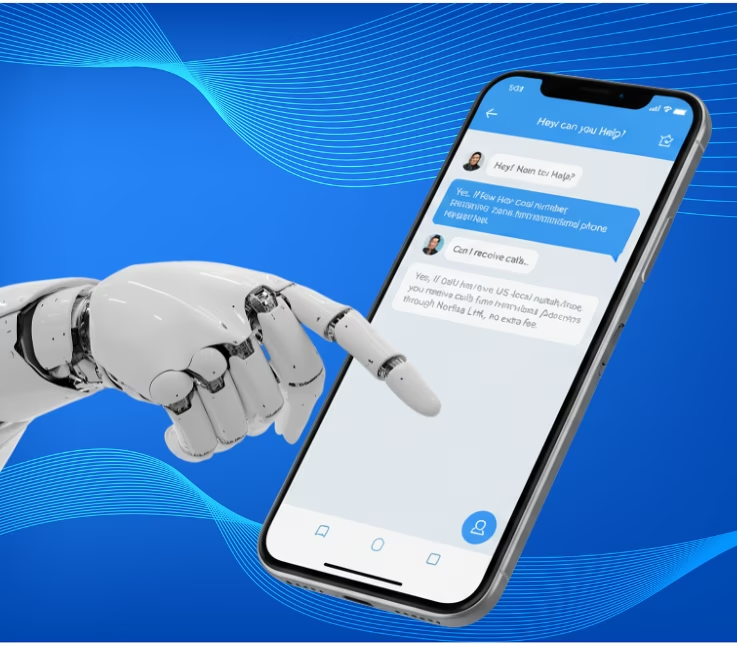

As businesses strive to improve customer service and engagement, automation has become an essential part of the digital landscape. Chatbots vs Conversational AI has become a crucial topic of discussion for organizations looking to optimize their customer interactions.
While both technologies serve similar purposes, they are distinct in terms of their capabilities and the experiences they provide. Understanding these differences is essential for choosing the right solution that aligns with your business needs.
In this article, we’ll explore the core differences between chatbots and conversational AI, examine the various types and examples of each, and guide when to choose one over the other. Additionally, we will discuss the future potential of these technologies in shaping customer experiences and business growth.
TL;DR
Chatbots vs Conversational AI comes down to simplicity vs intelligence.
- Chatbots are rule-based systems designed for simple, repetitive tasks like FAQs, order status, and basic support. They’re cheaper, faster to deploy, and work best when conversations follow a fixed path.
- Conversational AI uses advanced language models to understand intent, context, and nuance. It handles complex conversations, personalized support, and improves over time, making it ideal for growing or experience-driven businesses.
Use chatbots for efficiency and cost control.
Use conversational AI for depth, personalization, and long-term scalability.
Conversational AI vs Chatbots
Both chatbots and conversational AI are designed to automate interactions between businesses and customers, but they differ significantly in their functionality and complexity.
Chatbots are simpler systems. They follow a set of instructions that are predefined by developers. Think of it as following a script or decision tree. If you ask the chatbot a specific question, it checks the script for a matching answer. This system works well for answering common questions or guiding users through a fixed process, like helping them place an order or check a status.
Conversational AI, on the other hand, is much smarter. It uses Natural Language Processing (NLP) and machine learning (ML) to understand and respond in a more natural way. Instead of just following a script, conversational AI can understand human language, figure out the meaning behind what you say, and respond based on past interactions. It can even “learn” from those conversations to improve over time.
Let’s simplify some of the key terms:
- Rule-based systems (like chatbots): This refers to systems that follow specific, pre-programmed rules. They can only respond to the exact phrases or commands they’ve been trained to recognize.
- Natural Language Processing (NLP): This is a technology that allows machines to understand and interpret human language. It helps systems like conversational AI “understand” what you’re asking, even if you use different words or phrases.
- Machine Learning (ML): This is a type of artificial intelligence that allows machines to learn from data. The more conversations conversational AI has, the better it gets at understanding and responding appropriately.
Here’s a simple table to better understand the differences:
| Feature | Chatbot | Conversational AI |
|---|---|---|
| Technology | Follows a set of predefined instructions (rules) | Uses AI to understand and learn from conversations |
| Flexibility | Limited, responds to specific commands or phrases | More flexible, understands a wide range of inputs and adapts |
| Task Complexity | Best for simple, repetitive tasks (like FAQs) | Can handle more complex tasks, like troubleshooting or tech support |
| Learning Ability | Does not improve after initial setup | Learns from each conversation and gets smarter over time |
| User Experience | Basic, provides fixed answers | Natural, engaging, and adapts based on user interaction |
| Use Case | Handling customer queries, like asking about store hours | Offering detailed support, sales assistance, or personalized experiences |
What is a Chatbot?
A chatbot is a software or computer program designed to simulate human conversation through text or voice interactions. In both business-to-consumer (B2C) and business-to-business (B2B) environments, chatbots are increasingly used to handle simple tasks, providing a cost-effective way to automate customer support.
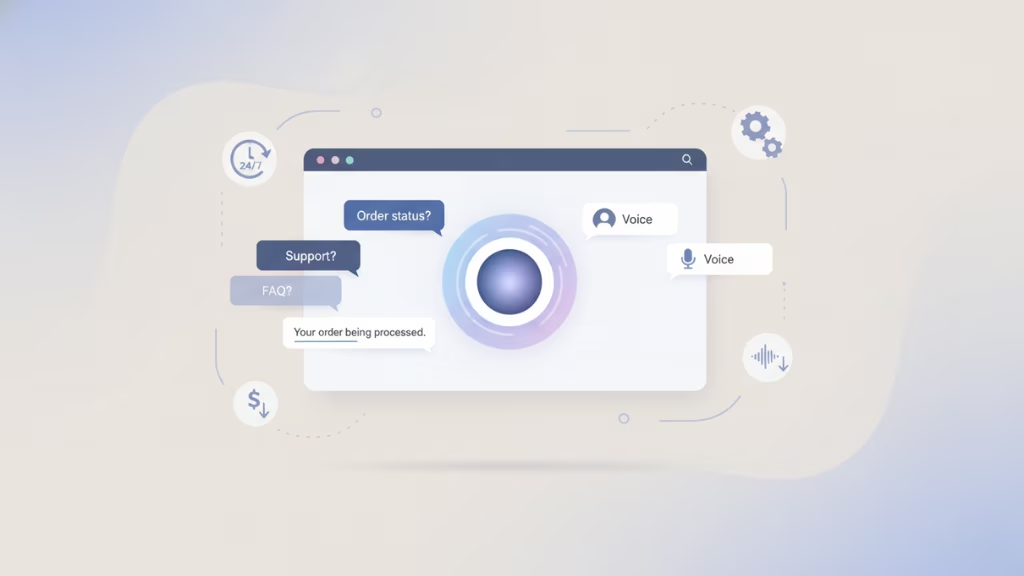
By implementing chatbot assistants, organizations can reduce overhead costs, optimize support staff time, and offer 24/7 customer service, ensuring that users receive instant assistance regardless of the time.
Types of Chatbots
Chatbots can generally be classified into two main types based on how they operate and the complexity of tasks they handle:
1. Traditional (Rule-based) Chatbots
These are the simplest type of chatbots. They operate based on predefined rules or scripts. Essentially, they are like following a flowchart: if the user inputs a specific query, the chatbot checks its set of rules to find the best possible response.
How they work:
- These chatbots rely on keywords or commands. They can only recognize the specific phrases they’ve been programmed to understand.
- They follow a set path, meaning they have a fixed response for each situation, and can’t go beyond that.
- Most commonly used for handling simple, repetitive tasks, such as answering basic questions like “What are your business hours?” or “Where is your store located?”
2. AI-powered Chatbots
These chatbots are more advanced because they use artificial intelligence and Natural Language Processing (NLP) to understand the context of a conversation. Instead of just following a script, they can engage in more dynamic, human-like interactions.
How they work:
- AI-powered chatbots can understand the intent behind a user’s message, which allows them to provide more relevant and personalized responses.
- They are capable of handling more complex tasks, such as customer support, troubleshooting issues, or making product recommendations.
- These chatbots can learn from every interaction. The more data they gather, the better they become at handling different types of queries and conversations.
According to Forbes Advisor, more than 60% of business owners believe that AI will enhance customer relationships.
AI-powered chatbots are capable of handling more complex conversations and tasks compared to rule-based chatbots, making them a powerful tool for businesses aiming to provide advanced support and personalized experiences.
Simple Chatbot Examples (Rule-Based / Scripted)
Simple chatbots operate on predefined rules, decision trees, or keyword matching. They are effective for structured interactions but struggle with flexibility, context, and varied phrasing.
Domino’s Dom Bot: Guides users through pizza ordering using fixed menu options and saved preferences on platforms like Messenger. It works well for repeat orders but fails when users use open-ended or casual language such as “I’m hungry” or “Surprise me.”
H&M’s Kik Bot: Recommends outfits through multiple-choice prompts and guided flows. The interaction is structured, and the bot performs best when users follow predefined selections rather than typing free-form requests.
Basic FAQ Bots: Common in early customer service systems, these bots answer repetitive questions like “What are your store hours?” or “Where is my order?” using predefined keywords. They are fast and efficient, but unable to handle follow-up questions or contextual queries.
These chatbots cannot understand intent beyond what they are explicitly programmed to recognize.
What is Conversational AI?
Conversational AI is a collection of AI technologies that work together to enable machines to engage in human-like dialogue. This technology simulates natural language interactions, allowing computers to understand, interpret, and respond to human queries or commands in a way that feels intuitive and familiar.
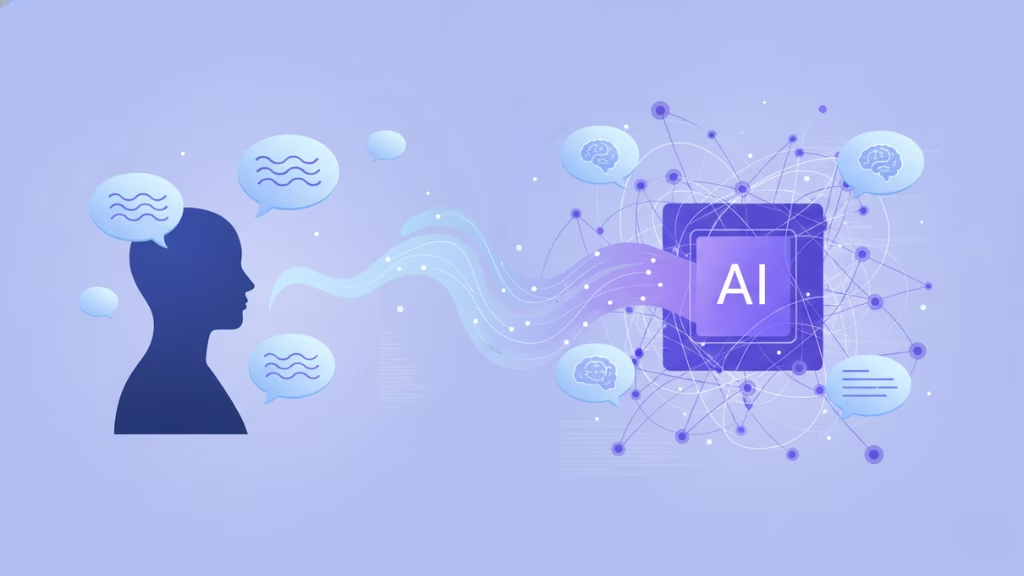
As businesses and consumers increasingly demand more efficient and personalized ways to access information and services, conversational AI has become more relevant than ever. This technology bridges the gap between human communication and computer processing, creating a seamless interaction with technology.
Types of Conversational AI
Conversational AI refers to a set of technologies that enable machines to understand, process, and respond to human language in a natural way. Within this broader category, there are three main types: Conversational AI Chatbots, Voice Bots/Assistants, and Interactive Voice Assistants (IVAs). Each type offers different levels of complexity and functionality, but all contribute to enhancing human-computer interaction.
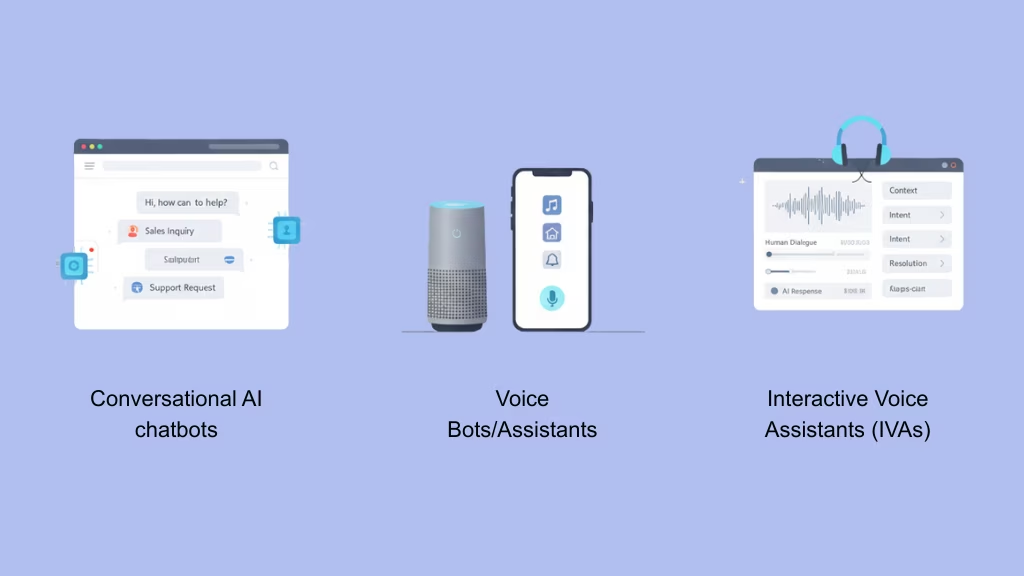
1. Conversational AI chatbots
AI Chatbots are part of the broader Conversational AI category because they utilize advanced technologies such as NLP and machine learning to provide more intelligent, adaptive interactions. Traditional chatbots, which rely on pre-programmed scripts and rules, cannot offer the same level of flexibility or personalization. AI Chatbots, on the other hand, are designed to continually learn from interactions, allowing for more complex and nuanced conversations that are much closer to human communication.
Use Cases:
- Customer Support: Handling more complex queries, guiding users through troubleshooting, and providing personalized service.
- Sales Assistance: Offering product recommendations, assisting with order placement, and driving conversions.
- Automating Routine Tasks: Helping with scheduling, reminders, and basic task management.
2. Voice Bots/Assistants
Voice bots or voice assistants are AI systems that use speech recognition to understand and process voice commands. These assistants go beyond simple interactions by enabling hands-free, voice-based communication. They are commonly integrated into devices such as smartphones, smart speakers, and home automation systems.
Use Cases:
- Smart Home Management: Controlling devices like lights, thermostats, and security systems (e.g., Amazon Alexa, Google Assistant).
- Personal Assistance: Managing tasks such as setting reminders, making calls, and sending messages (e.g., Siri).
- Entertainment & Information: Providing weather updates, news, music, and more.
3. Interactive Voice Assistants (IVAs)
Interactive Voice Assistants (IVAs) are sophisticated conversational AI systems that use both voice recognition and NLP to engage in more complex, human-like conversations. Unlike traditional IVR (Interactive Voice Response) systems, which are limited to simple menus and responses, IVAs are capable of maintaining a natural flow of conversation, providing personalized and context-aware interactions.
Use Cases:
- Customer Service: Offering more personalized voice support for a variety of queries and tasks, such as handling customer complaints or managing service requests.
- Healthcare: Assisting patients with appointment bookings, prescription refills, and medical inquiries.
- Banking: Enabling customers to check balances, make transfers, and complete transactions via voice.
Conversational AI Examples (AI-Powered / Context-Aware)
Conversational AI systems use advanced language models to understand intent, context, and nuance. They support dynamic, multi-turn conversations and improve over time.
Siri, Alexa, and Google Assistant: These systems interpret voice commands, understand intent even with incomplete phrasing, and manage complex tasks such as setting reminders, checking the weather, or controlling smart home devices. They can also adjust responses based on tone and context.
ChatGPT and Bard: General-purpose conversational AI models capable of generating content, summarizing text, answering complex questions, and holding natural conversations. They adapt to context and produce human-like responses across a wide range of topics.
Advanced Banking AI Systems: These systems understand vague or high-risk requests such as “I think my card is compromised” or “Show me my spending last week.” They connect securely to user accounts, analyze behavior, and provide personalized insights or alerts.
Healthcare Assistants (e.g., Woebot): Used for appointment scheduling, symptom assessment, and mental health support. These assistants recognize nuance in patient language, follow conversational context, and respond appropriately to sensitive inputs.
Conversational AI understands intent, adapts to language variation, and supports complex, personalized interactions.
Chatbots vs Conversational AI: Which One Should You Choose?
Choosing between chatbots vs conversational AI comes down to your business goals, interaction complexity, and budget. While both automate conversations, they solve very different problems.
When to Choose a Chatbot
A chatbot is the right choice when your primary goal is to handle simple, repetitive tasks with speed and efficiency. These systems work best for clearly defined use cases that do not require deep understanding or personalization.
You should choose a chatbot if you need to:
- Answer FAQs and basic customer questions
- Handle simple bookings or form submissions
- Share order status, ticket updates, or store information
- Provide after-hours support without human agents
Traditional and basic chatbots are faster to deploy, cheaper to maintain, and easier to manage. They are ideal for specific functions or departments where conversations follow predictable patterns and do not require context or reasoning.
When to Choose Conversational AI
Conversational AI is better suited for businesses that need to manage complex, multi-step conversations. These systems can understand intent, context, and variations in human language, making them far more flexible than standard chatbots.
You should choose conversational AI if you need to:
- Provide technical support or troubleshooting
- Deliver personalized product or service recommendations
- Handle nuanced customer issues that require context awareness
- Support conversations across multiple channels (web, mobile, social media)
Conversational AI helps businesses stand out in competitive markets by delivering natural, human-like interactions. It improves over time as it learns from real conversations, making it a strong fit for companies experiencing rapid growth or scaling customer operations.
In short, chatbots handle volume and simplicity, while conversational AI handles depth and intelligence.
The Future of Chatbots vs Conversational AI
The future of Chatbots vs. Conversational AI is highly promising as both technologies continue to evolve in capability and impact. What began as simple automation tools has matured into intelligent systems that are reshaping how businesses communicate with customers at scale. As adoption grows, several key developments will define the next phase of this evolution.
Integration of Emotional Intelligence
One of the most significant advancements on the horizon is the integration of emotional intelligence into conversational AI systems. Future AI assistants will be able to detect emotional cues such as frustration, urgency, or satisfaction based on language patterns and tone. This will allow systems to respond more empathetically, adjust conversation flow in real time, and deliver more human-like interactions, especially critical in customer support and service recovery scenarios.
Advancements in Natural Language Understanding
Continued improvements in natural language understanding (NLU) will enable conversational AI to better comprehend complex sentence structures, intent variations, and multilingual inputs. Future systems will handle diverse languages, accents, and regional dialects with greater accuracy, reducing misunderstandings and improving response quality across global audiences. This will further narrow the gap between human and machine communication.
Ethical and Transparent AI
As conversational AI becomes more deeply embedded in customer interactions, ethical and transparent AI practices will become a priority. Businesses will place greater emphasis on data privacy, bias reduction, explainable decision-making, and accountability in AI-driven conversations. Trust will be a defining factor in long-term adoption, making transparency and responsible AI usage essential for sustained growth.
Conclusion
The debate around Chatbots vs Conversational AI is less about choosing a winner and more about understanding the right tool for the right purpose. Chatbots remain effective for handling high-volume, repetitive tasks where speed and cost-efficiency matter most. They are easy to deploy, simple to manage, and ideal for structured interactions.
Conversational AI, however, represents the next stage of automated communication. Understanding context, adapting to user intent, and learning over time enables richer, more human-like interactions.
As customer expectations continue to rise, organizations that align their automation strategy with the complexity of user needs will see the greatest return. In many cases, this will mean using both chatbots for efficiency and conversational AI for intelligence.
FAQs: Chatbots vs Conversational AI
What is the main difference between chatbots and conversational AI?
Chatbots follow predefined rules and scripts to answer specific questions. Conversational AI uses advanced language models to understand intent, context, and variations in human language, allowing for more natural and adaptive conversations.
Are chatbots considered artificial intelligence?
Not all chatbots use AI. Rule-based chatbots rely on scripts and keyword matching, while AI-powered chatbots fall under conversational AI and use machine learning and natural language processing.
Is conversational AI just a more advanced chatbot?
Yes, but with a key distinction. Chatbots are a subset of conversational AI. Conversational AI includes chatbots, voice assistants, and IVAs that can learn, adapt, and handle complex interactions beyond scripted flows.
Can a chatbot understand natural language?
Basic chatbots have limited understanding and often fail with varied phrasing. Conversational AI systems are designed to understand natural language, including incomplete sentences, slang, and follow-up questions.
Which is better for customer support: chatbots or conversational AI?
Chatbots are better for handling high volumes of simple queries. Conversational AI is better for complex support scenarios that require context, personalization, or troubleshooting.
Are chatbots cheaper than conversational AI?
Yes. Chatbots are generally cheaper to build and maintain. Conversational AI requires more advanced infrastructure, training, and ongoing optimization, which increases cost.
Can conversational AI replace human customer support agents?
Conversational AI can reduce workload and handle many interactions, but it does not fully replace humans. Most businesses use it alongside human agents for escalations and complex cases.
Do conversational AI systems improve over time?
Yes. Conversational AI systems learn from past interactions, allowing them to improve accuracy, relevance, and response quality over time. Traditional chatbots do not improve unless manually updated.
Is ChatGPT a chatbot or conversational AI?
ChatGPT is a conversational AI system. It goes beyond chatbot functionality by generating context-aware, human-like responses and handling complex, multi-turn conversations.
This page was last edited on 1 January 2026, at 10:02 am

Start a conversation with our team to solve complex challenges and move forward with confidence.