
The best AI data labeling solutions in 2026 are Riseup Labs, GigaBPO, AI People Agency, SuperAnnotate, Scale AI, Labelbox, Appen, and Label Your Data. Each offers strong capabilities across quality control, automation, scalability, compliance, and multimodal data support. Compare details and verdicts below.
Picking the right AI data labeling partner in 2026 is high stakes. One weak link can ruin your AI results, open you to compliance risks, or inflate costs fast. I have seen teams lose weeks—and trust—by choosing poorly.
Today’s vendor landscape is different from last year. Multimodal data complexity, stricter SOC2 requirements, new tools, and fresh pricing models all matter now. In my view, many decision-makers are overwhelmed by the noise.
In this guide, you will find a practical, impartial roadmap. You will see side-by-side vendor reviews, pilot checklists, and security insights—so you can choose with confidence.
Why Choosing the Right AI Data Labeling Solution Matters in 2026
Selecting the best AI data labeling provider shapes project outcomes and risk. High-quality, secure annotations fuel accurate, reliable AI models. Poor choices increase waste or invite privacy problems.
In 2026, demands have grown fast. More enterprises now handle large sets of images, video, sensor, and text data. That requires vendors who can handle complex projects, not just simple labeling tasks. Trust and quality are now table stakes. Most buyers must also check SOC2, ISO 27001, and GDPR compliance before starting. The ongoing growth of providers means only a few can reliably serve business needs.
2026’s Top AI Data Labeling Vendors
- Riseup Labs — Image, video, text, audio, and document annotation; managed teams, multi-level QA, scalable delivery; ISO 27001, SOC 2 Type II, PCI DSS; hybrid automation.
- GigaBPO — Image, video, text, audio, and multimodal annotation; human-powered annotation, scalable BPO support, managed workflows; ISO 27001, SOC 2, PCI DSS; hybrid automation.
- AI People Agency — Image, video, audio, and multi-class annotation; AI-assisted labeling, semantic segmentation, scalable QA; GDPR-focused data protection; high automation.
- SuperAnnotate — Image, video, text, and audio annotation; advanced QA and MLOps; ISO 27001, SOC 2, HIPAA; high automation; G2 4.8.
- Scale AI — Image, video, sensor, and text annotation; speed, quality, government-focused solutions; FedRAMP and SOC 2; hybrid automation; G2 4.5.
- Labelbox — Image, text, video, and audio annotation; strong UX, analytics, and cloud workflows; SOC 2, ISO 27001, GDPR; high automation; G2 4.7.
- Appen — Image, text, audio, and video annotation; global workforce and multilingual capabilities; ISO 27001, SOC 2, GDPR; variable automation; G2 4.2.
- Label Your Data — Image, text, audio, and video annotation; custom QA and managed services; ISO 27001 and GDPR; medium automation; G2 4.6.
Key Criteria for Ranking AI Data Labeling Providers
- Supported data types: Vision, text, audio, video, sensor fusion
- Quality assurance: Human reviews, sampling, error metrics
- Security and compliance: ISO 27001, SOC2, GDPR/HIPAA certification
- Workflow automation: Labeling pipelines, integrations, versioning
- Pricing: Transparent, scalable, and flexible payment options
- Onboarding and pilots: Fast starts, proof-of-concept support
- User reviews: Independent user feedback (G2, Capterra)
In my experience, weighing these elements upfront prevents regrets. Too many teams focus only on price or features, not the whole risk/reward.
How to Evaluate and Select the Best AI Data Labeling Solution
Evaluating AI data labeling vendors requires a sharper eye than before. The process often trips up even experienced ML leads. What matters now is a stepwise, honest match to your business and technical needs.
Start by mapping your challenges—data types, security needs, workflows. Check for short pilots before big contracts. Remember, the most expensive or biggest-name vendor is not always the best choice for your use case.
Assessing Data Modalities and Use Case Fit
All vendors are not equal across every data modality. Images, videos, audio, sensor, and text annotation each have special demands.
For example, I have seen projects in autonomous vehicles hinge on video and sensor fusion support. In healthcare, text and image label accuracy can make or break compliance.
- Healthcare (medical imaging, records)
- Automotive and robotics (sensor/video data)
- Fintech (document, speech analysis)
- Retail (sentiment, shelf tracking)
Always pick a vendor proven in your industry—ask for references.
Workflow Automation and Quality Control Mechanisms
Automation and quality control sit at the heart of efficient labeling. Many tools claim “automation,” but depth matters.
Real workflow automation combines AI pre-labeling with human-in-the-loop validation. Built-in QA, sampling of task results, and detailed error dashboards are signs of maturity. MLOps teams gain a lot from integration with pipelines and version control.
For instance, last year my team saw SuperAnnotate’s AutoQA catch edge cases missed by manual review. Scale AI also uses consensus scoring, which boosts quality in high-volume tasks.
Security, Privacy, and Compliance Certifications
C-level buyers demand compliance and transparency. Mistakes here can cost millions or shut down projects.
- ISO 27001: Global information security standard
- SOC2: Key for US-based SaaS and enterprises
- GDPR/HIPAA: Needed for data in Europe or US health
Vet each vendor’s hosting options (cloud by region, or on-premise). Request current certificates, not just claims on a website.
Pricing Models, Scalability, and Pilot Options
Budgets must cover not just labeling, but scaling over time. Vendors now offer:
- Per-label or per-task pricing
- Monthly active usage
- Enterprise contracts with volume discounts
Scalability depends on both tech and workforce. Leading platforms blend automation with a managed labeling team. Pilot projects let you preview quality, support, and workflow fit with real data.
Ask in advance:
- Minimum pilot size and cost
- Turnaround times
- Evaluation metrics for pilot success
Detailed 2026 Reviews—The Best AI Data Labeling Providers
Below are practical reviews of leading AI data labeling providers in 2026, covering supported data types, workflows, security, scalability, and ideal use cases.
Riseup Labs
- Modalities: Image, video, text, audio, document
- Key Strengths: Managed teams, multi-level QA, scalable annotation
- Security: ISO 27001, SOC 2 Type II, PCI DSS
- Automation: Hybrid
- G2 Score: Not publicly listed
- Pilot: Contact vendor
Riseup Labs is a strong managed-service option for organizations that need scalable, human-led data annotation backed by structured quality assurance. Its annotation capabilities cover multimodal datasets and are designed for companies that prefer outsourcing the full annotation workflow rather than managing annotators internally.
Riseup Labs reports operating a dedicated annotation workforce with multi-level QA processes. The company says its annotation operations have achieved 98% accuracy and improved turnaround time through structured review and workforce management.
- Supported modalities: Image, video, text, audio, multimodal data
- Workflow: Managed annotation teams, multi-level QA, human review
- Key strength: Scalable managed annotation and quality control
- Pricing: Custom based on project scope
Quick Verdict: Best for companies that want a fully managed annotation partner with scalable teams, structured QA, and support for complex multimodal projects.
GigaBPO
- Modalities: Image, video, text, audio, 3D/multimodal
- Key Strengths: Human-powered annotation, scalability, managed BPO
- Security: ISO 27001, SOC 2, PCI DSS
- Automation: Hybrid
- G2 Score: Not publicly listed
- Pilot: Contact vendor
GigaBPO focuses on outsourced, human-in-the-loop data annotation for businesses that need flexible workforce capacity without building an internal labeling operation. Its services cover text, images, audio, video, 3D data, and multimodal datasets.
The managed-service model combines annotators, project management, quality assurance, and annotation workflows. This makes it particularly relevant for high-volume projects where workforce scalability and human review are more important than purchasing a standalone annotation platform.
- Supported modalities: Image, video, text, audio, 3D, multimodal
- Workflow: Managed services, human-in-the-loop annotation, QA review
- Key strength: Scalable annotation workforce and BPO delivery
- Pricing: Project-based or managed-service pricing
Quick Verdict: Best for businesses seeking scalable human-in-the-loop annotation and managed BPO support for large or ongoing datasets.
AI People Agency
- Modalities: Image, video, audio, multi-class data
- Key Strengths: AI-assisted labeling, semantic segmentation, scalable QA
- Security: GDPR, data protection protocols
- Automation: High
- G2 Score: Not publicly listed
- Pilot: Contact vendor
AI People Agency takes a more automation-focused approach to data labeling. Its AI Annotation and Data Labelling Solution covers video annotation, audio labeling, semantic segmentation, multi-class labeling, and quality assurance.
The service is positioned around reducing repetitive manual work and increasing labeling capacity through AI-assisted workflows. It also combines data labeling solutions with access to remote AI talent, making it relevant for businesses that need both annotation capabilities and broader AI expertise.
- Supported modalities: Image, video, audio, multi-class data
- Workflow: AI-assisted labeling, QA, scalable annotation workflows
- Key strength: Automation-focused labeling and semantic segmentation
- Pricing: Custom based on solution and project requirements
Quick Verdict: Best for teams looking to automate data labeling workflows while retaining scalable QA and access to AI specialists.
SuperAnnotate
- Modalities: Image, video, text, audio
- Key Strengths: Advanced QA, MLOps
- Security: ISO 27001, SOC 2, HIPAA
- Automation: High
- G2 Score: 4.8
- Pilot: Yes
SuperAnnotate is preferred for enterprises needing advanced workflows and strict compliance. It covers all key data types—image, video, text, audio—and delivers strong quality controls.
SuperAnnotate offers high-level automation, integrates with MLOps pipelines, and supports human-in-the-loop review. The platform is SOC2, ISO 27001, and HIPAA compliant. Recent G2 reviews praise its user-friendly interface, custom QA, and robust data security.
- Supported modalities: Image, video, text, audio
- Security: ISO 27001, SOC2, HIPAA
- Workflow: Automation plus team review, versioning support
- Pricing: Transparent, with pilot access
Quick Verdict: Best for regulated, complex, or multimodal projects. Not ideal for tiny projects with very low volume.
Scale AI
- Modalities: Image, video, sensor, text
- Key Strengths: Speed, quality, US government projects
- Security: FedRAMP, SOC 2
- Automation: Hybrid
- G2 Score: 4.5
- Pilot: Yes
Scale AI is noted for high-speed delivery and serving industries like autonomous vehicles and US government clients. Its hybrid model blends automation and expert human labeling. The main edge is fast ramp-up with solid QA.
Scale AI meets FedRAMP and SOC2 standards. It works with vast sensor, image, text, and video datasets. Reviews cite high cost, but leading speed and accuracy.
- Supported modalities: Image, video, sensor data, text
- Security: FedRAMP, SOC2
- Workflow: Hybrid automation, human consensus, APIs
- Pricing: Mid-high, pilot projects supported
Quick Verdict: Choose for regulated or large-scale projects requiring fast delivery and compliance.
Label Your Data
- Modalities: Image, text, audio, video
- Key Strengths: Custom QA, managed services
- Security: ISO 27001, GDPR
- Automation: Medium
- G2 Score: 4.6
- Pilot: Yes
Label Your Data is a service-focused option, with customizable QA and a human touch. Clients can use the company’s own platform or have the team work in other tools.
It supports key modalities—image, text, video, audio—and is ISO 27001 and GDPR compliant. User reviews highlight flexible workflows and responsive service. Pricing is moderate, and pilots are available on request.
- Supported modalities: Image, text, video, audio
- Security: ISO 27001, GDPR
- Workflow: Customizable; human QA emphasis
- Pricing: Midrange, flexible, pilot projects available
Quick Verdict: Best for teams that need hands-on support or want a more consultative approach.
Labelbox
Modalities: Image, text, video, audio
Key Strengths: UX, analytics, cloud-based workflows
Security: SOC 2, ISO 27001, GDPR
Automation: High
G2 Score: 4.7
Pilot: Yes
Labelbox stands out for its end-to-end platform and analytics. It is popular with cloud-focused, tech-driven teams. High automation and extensive APIs position it well for ML teams.
It is SOC2, ISO 27001, and GDPR certified. Users rate its interface and reporting tools highly on G2. Labelbox supports image, video, text, and audio annotation.
- Supported modalities: Image, video, text, audio
- Security: SOC2, ISO 27001, GDPR
- Workflow: High automation, analytics, cloud-centric
- Pricing: Usage-based, with free pilot tier
Quick Verdict: Top pick for tech-driven organizations needing comprehensive analytics and deep API integration.
Appen
- Modalities: Image, text, audio, video
- Key Strengths: Global reach, multilingual workforce
- Security: ISO 27001, SOC 2, GDPR
- Automation: Variable
- G2 Score: 4.2
- Pilot: Yes
Appen brings global scale and language coverage. Its large managed workforce supports image, audio, text, and video annotation. The QA process is mature but sometimes variable across regions.
Appen is ISO 27001, SOC2, and GDPR compliant. Reviews are mixed on support speed but positive on coverage and onboarding flexibility.
- Supported modalities: Image, text, audio, video
- Security: ISO 27001, SOC2, GDPR
- Workflow: Large-scale managed services, multi-language support
- Pricing: Custom quotes, pilots available
Quick Verdict: Best for global projects needing scale and multi-language data support.
Step-by-Step: Running a Data Annotation Pilot Project
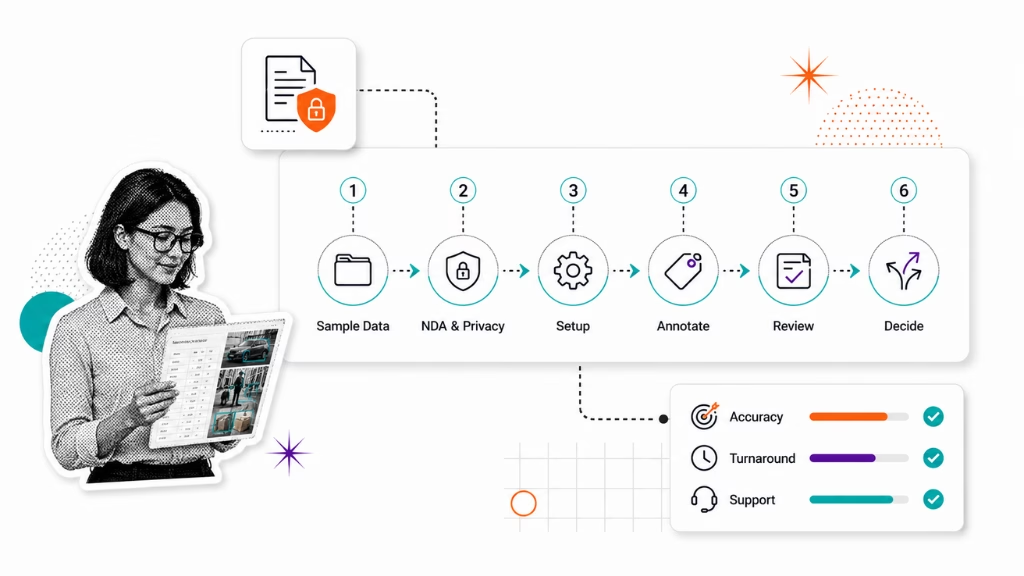
Running a pilot project is the best way to test if a vendor matches your needs.
Start by defining a small, representative data sample. This should reflect your primary production reality. Then, map security and access needs with the vendor. Agree on milestones, turnaround times, and quality metrics.
A typical pilot process looks like this:
- Select a dataset that matches typical volume and complexity.
- Secure the NDA, privacy, and compliance forms.
- Set up access, workflows, and quality checkpoints with your vendor.
- Run the annotation round, collecting real-time metrics.
- Review output: accuracy, errors, turnaround time, and support quality.
- Consolidate your findings and decide whether to scale or try another vendor.
Pilots help you avoid surprises and spot workflow gaps before large commitments.
Common Mistakes (and How to Avoid Them) When Choosing AI Data Labeling Vendors
Choosing an AI data labeling solution brings common pitfalls. In my experience, cutting corners here drives downstream headaches.
- Picking a vendor on price alone, not quality or compliance
- Skipping security and compliance checks (SOC2, ISO 27001)
- Not running a pilot or proof-of-concept first
- Underestimating workflow integration complexity
- Trusting only brand recognition or third-party lists
Avoid these by testing, checking all certifications, and matching the vendor to your real needs.
Conclusion
The best AI data labeling solutions in 2026 drive accuracy, compliance, and operational results. Matching your vendor, data types, workflow, and security goals is non-negotiable. In my POV, teams earn the most value by treating selection as a security and workflow decision, not just a tech choice.
Before you sign, use this checklist:
- Confirm all needed data modalities and use case fit.
- Verify SOC2, ISO, GDPR/HIPAA documentation.
- Review workflow automation, integration, and support for pilots.
- Analyze recent user reviews from G2 and Capterra.
- Run a pilot to evaluate quality, speed, and vendor support.
The right partner makes annotation a boost, not a bottleneck. Smart pilot tests and checklist-led reviews save money, time, and trust.
As AI moves forward, vendors who earn trust—by combining security, automation, and real support—will be essential partners for every business.
Frequently Asked Questions About AI Data Labeling Solutions (FAQ)
What are the best AI data labeling solutions in 2026?
Riseup labs, SuperAnnotate, Scale AI, Labelbox, Appen, and Label Your Data are the leading solutions in 2026 for accuracy, compliance, and workflow support.
What criteria should I use to evaluate data annotation vendors?
Check supported modalities, quality control, compliance certificates, workflow automation, user reviews, and pilot project options.
Which data labeling services offer SOC2, ISO, or GDPR compliance?
SuperAnnotate, Scale AI, Labelbox, Appen, and Label Your Data offer SOC2, ISO 27001, and GDPR compliance as of 2026.
How is annotation quality measured and guaranteed?
Vendors measure via human review, sampling, consensus scoring, error rates, and ongoing QA analytics.
What are the typical pricing models for data labeling solutions?
Pricing models include per-label, per-task, subscription, and enterprise contracts. Most top vendors offer custom quotes and pilot pricing.
Do leading vendors support multimodal annotation?
Yes, the top five vendors all support image, text, video, and audio annotation, with some offering sensor data labeling.
How do pilot programs for data annotation projects work?
Clients submit sample data, vendors run tests, and quality, speed, and integration are reviewed before signing.
What is human-in-the-loop data labeling?
It combines AI pre-labeling with human review and correction to ensure annotation quality and catch edge cases.
How does data labeling impact AI model performance?
Accurate, high-quality labeling increases AI accuracy, reduces bias, and improves model reliability and ROI.
What security and privacy protections should I expect from annotation providers?
Expect ISO 27001, SOC2, GDPR/HIPAA compliance, strong access controls, and transparent privacy policies.
This page was last edited on 14 August 2026, at 2:43 pm

Start a conversation with our team to solve complex challenges and move forward with confidence.