Every year, companies spend millions building products that ultimately fail to solve real user problems. Industry studies reveal that a staggering 35–45% of new digital products or features miss the mark because they were based on unvalidated assumptions or a lack of user insight. As markets, technology, and user expectations shift rapidly in 2026—powered by AI disruption and heightened competition—the margin for error is thinner than ever.
Product discovery is the strategic, stepwise process where product teams identify genuine user needs, validate the right problems, ideate solutions, and prioritize what to build—long before they commit resources to development. This playbook is designed for product managers, UX professionals, founders, and innovation leaders who want to minimize costly missteps and bring market-winning solutions to life.
In this comprehensive guide, you’ll find actionable frameworks, side-by-side comparisons, downloadable checklists, real-world stories (including failure cautionary tales), and up-to-date tips from industry leaders. Whether you’re new to product discovery or looking to refine your approach with the latest tools and thinking, you’ll leave with clear next steps for turning ideas into successful products.
What Is Product Discovery?
Product discovery is the process by which product teams identify, validate, and prioritize user or customer problems and solutions before full-scale development, typically using research, ideation, and testing methods to reduce risk and maximize value.
Originating in software and digital product management, the product discovery process now extends to industries from healthcare to B2B services. Its hallmark activities include deep user research, problem framing, solution ideation, rigorous validation, and nuanced prioritization. The goal: ensure you’re solving the right problems, for the right people, with the right solutions—before building anything at scale.
Key activities in product discovery:
- Understanding user/customer needs
- Defining and scoping problems or opportunities
- Generating and evaluating solution ideas
- Validating ideas with real users
- Prioritizing what to build next
Why Is Product Discovery Critical to Product Success?
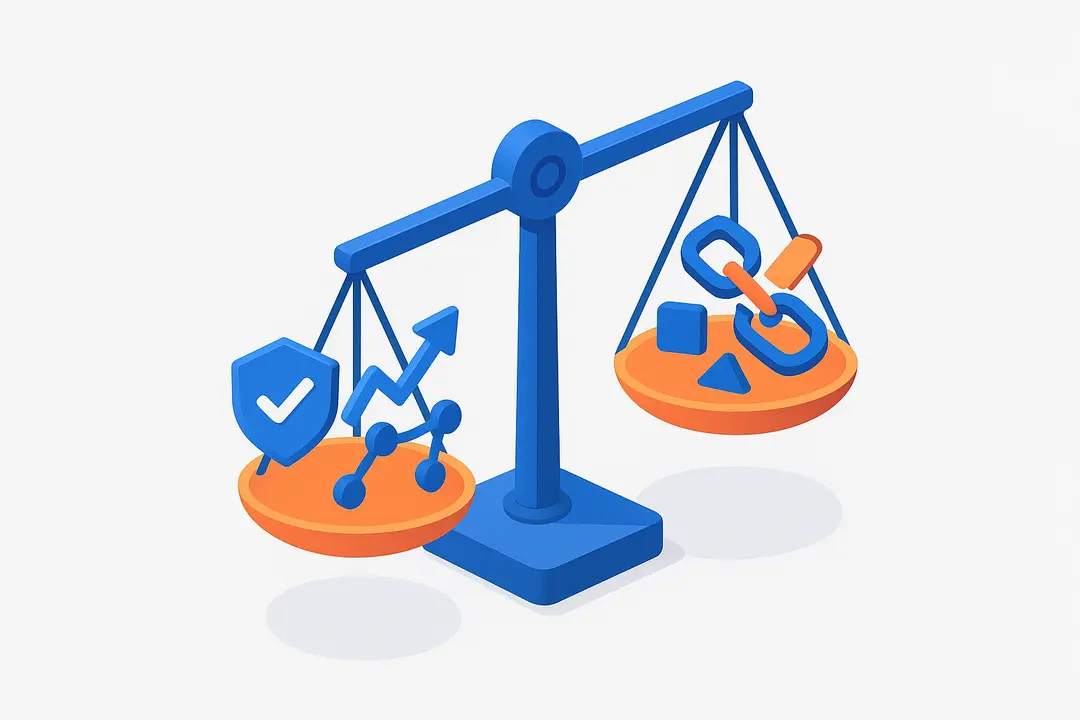
Effective product discovery dramatically lowers the risk of wasted investment and failed launches by ensuring team efforts are laser-focused on high-value opportunities.
The cost of skipping discovery is high: According to various industry reports, more than one-third of product initiatives fail due to a lack of validated user needs or poor internal alignment. Notable examples include high-profile product flops where teams built “cool” features that nobody wanted—burning time, budget, and team morale.
Benefits of robust product discovery:
| Discovery Done Well | Discovery Skipped/Misapplied |
| Clear understanding of customer pain points | Building for internal assumptions |
| Higher ROI from validated solutions | Wasted resources on low-value features |
| Aligned, motivated cross-functional teams | Frustration and misaligned priorities |
| Faster, more successful launches | Delays or failed launches |
| Continuous learning and innovation | Stagnation, missed market opportunities |
The product discovery process fosters better communication, supports innovation, and anchors your product roadmap in real-world feedback—essentials in today’s fast-moving, user-driven markets.
How Does the Product Discovery Process Work? (Step-by-Step Guide)
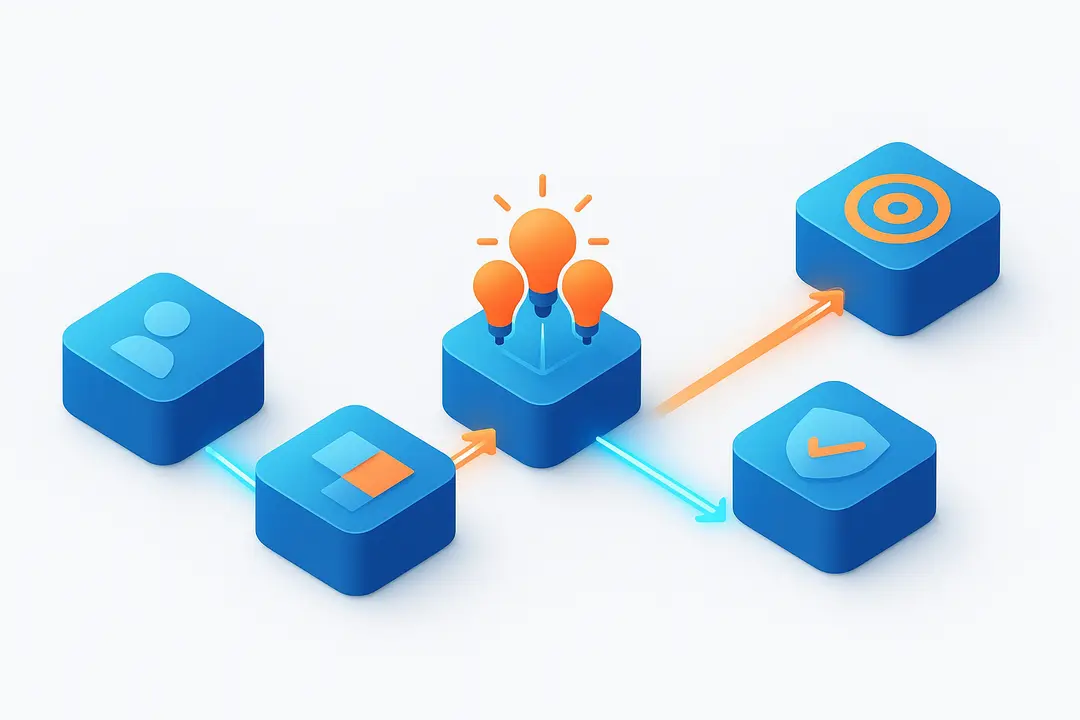
The product discovery process is an iterative, structured sequence of activities designed to turn ambiguous opportunities into actionable development work.
Product discovery typically unfolds in five key steps:
- Understand user and customer needs
- Define and frame the core problem
- Ideate and explore potential solutions
- Validate ideas before building
- Prioritize solutions for maximum impact
Visual Roadmap: Many teams use the “Double Diamond” or a discovery loop to illustrate these steps—showing divergent thinking (exploring problems and ideas) followed by convergence (focusing, validating, and deciding).
Step 1: Understanding User & Customer Needs
Deeply understanding your users—what drives them, what frustrates them, and what they value—is the foundation of effective product discovery.
To grasp user needs:
- Conduct empathy interviews: Speak one-on-one with target users to uncover pain points and hidden needs.
- Distribute surveys: Gather quantitative insight to spot trends or validate assumptions.
- Observe users: Watch how customers actually use your (or competitors’) products—spotting discrepancies between stated and actual behavior.
- Create journey maps: Visualize user actions, emotions, and pain points across a process to surface friction and opportunity.
Tip: Avoid leading questions and confirmation bias by asking open-ended, neutral questions and striving for diverse participant profiles.
Step 2: Defining & Framing the Core Problem
Translating raw user insights into clear, actionable problem statements ensures your team focuses on meaningful opportunities—not symptoms or distractions.
Techniques for defining the right problem:
- “How Might We” statements: Reframe pain points as open opportunities (e.g., “How might we help users onboard faster?”).
- Jobs-to-be-Done (JTBD): Outline the core tasks users are trying to accomplish, the pains they face, and what “success” looks like.
- Mapping jobs and pains: Use visual frameworks (e.g., JTBD canvas) to synthesize issues and align stakeholders.
Involving key stakeholders early in this phase helps ensure everyone agrees on what problem needs solving and why it matters.
Step 3: Ideating & Exploring Potential Solutions
Once you’re confident in your problem definition, generate a wide array of possible solutions through collaborative, creative activities.
Top ideation techniques:
| Technique | Description |
| Structured brainstorming | Rapidly list as many ideas as possible, withholding judgment. |
| Design sprints | Time-boxed workshops to prototype/test solutions intensively. |
| “Crazy 8s” | Quickly sketch eight ideas in eight minutes per person. |
| Cross-disciplinary workshops | Bring diverse team members together for diverse perspectives. |
Aim for a large volume of ideas before narrowing down—divergent thinking is key at this stage to unlock innovative solutions.
Step 4: Validating Ideas Before Building
Before committing time and budget to development, test your best ideas with real users using lightweight, cost-effective methods.
How to validate product ideas:
- Build MVPs (Minimum Viable Products): Develop a simple, usable version to test with users.
- Create prototypes (clickable, paper, or code): Simulate the experience cheaply for rapid feedback.
- Run usability tests: Observe users interacting with a prototype; note where confusion or delight occurs.
- Experiment with fake doors or landing pages: Gauge user interest in a feature before it exists.
- Collect feedback early and often: Measure engagement, satisfaction, or behavior change.
Validation metrics might include sign-up rates, task completion, satisfaction scores, or direct user commentary.
Step 5: Prioritizing Solutions for Maximum Impact
After validation, not every idea will merit development—framework-driven prioritization helps teams make smart, evidence-based choices.
Common prioritization frameworks:
| Framework | Criteria Used | Best For |
| RICE | Reach, Impact, Confidence, Effort | Balanced, score-driven prioritization |
| Value/Effort | Perceived value vs. development effort | Quick visual trade-off decisions |
| ICE | Impact, Confidence, Ease | Lightweight, early-stage filtering |
Example: RICE Scoring
- Reach: How many users will benefit?
- Impact: How much will it move the needle?
- Confidence: How sure are you about the impact/effort estimations?
- Effort: How much work is required?
Discussion and transparent scoring help teams align and secure stakeholder buy-in for what to build next.
What Are the Leading Frameworks for Product Discovery?
Modern product teams leverage a range of frameworks to guide discovery, each with strengths suited to different environments.
Comparison of top product discovery frameworks:
| Framework | Best Used For | Unique Strength | Example Use Case |
| Double Diamond | Structuring divergent/convergent phases | Visual clarity, industry standard | Design agencies, UX teams |
| Design Thinking | User-centric innovation | Empathy and iterative learning | SaaS product redesigns |
| Dual-Track Agile | Ongoing discovery alongside delivery | Integration with agile dev | Continuous feature evolution |
| Opportunity/Solution Tree | Mapping problems to solutions | Visualization of validation path | Prioritizing features/initiatives |
| RICE/ICE/Value-Effort | Feature prioritization | Score-based decision-making | Application backlogs |
When to use which?
Use Double Diamond or Design Thinking for greenfield innovation or big pivots.
Dual-Track Agile is powerful in fast-moving, agile teams with ongoing delivery.
Apply Opportunity/Solution Trees to keep teams focused on validated opportunities as ideas scale.
RICE/ICE/Value-Effort for sorting and communicating feature priorities at any stage.
How Does Product Discovery Work in Agile and Continuous Models?
Traditional product discovery often happened in a set “phase” before development began. Modern teams increasingly embed discovery as an ongoing, parallel process within agile workflows.
Dual-track agile is a popular approach where product discovery and delivery run simultaneously—one “track” explores and validates ideas, while the other builds and ships validated features.
Continuous product discovery (championed by experts like Teresa Torres) means regularly:
- Conducting user research (weekly or more)
- Running small, frequent experiments
- Integrating fresh insights into the product backlog
This model helps avoid the pitfalls of phase-based processes, where assumptions linger until it’s too late (and costly) to correct course.
What Are the Most Common Challenges in Product Discovery (and How to Solve Them)?
Teams often encounter persistent barriers when running product discovery. Identifying and addressing these challenges early can make or break the process.
Common challenges and solutions:
| Challenge | Solution |
| Skipping or rushing validation | Enforce testing milestones before dev |
| Solution bias (jumping to “how”) | Anchor with problem framing workshops |
| Poor stakeholder alignment | Involve stakeholders in early discovery |
| Lack of user data or feedback | Build lightweight tests, leverage analytics |
| Team resistance to new process | Provide training and visible leadership support |
| Confirmation bias | Assign a “devil’s advocate” or counterpoint |
Building buy-in, celebrating learning (including when ideas fail), and top-down sponsorship are crucial for navigating discovery hurdles.
What Tools, Templates, and Resources Power Effective Product Discovery?
Modern product discovery relies on digital tools and templates to streamline research, collaboration, and validation.
Top product discovery tools by category:
| Tool/Template | Main Use | Example Platforms |
| Research dashboards | User interviews, surveys | Hotjar, UserTesting, Dovetail |
| Idea/initiative boards | Collaboration, backlog prioritization | Jira Product Discovery, Productboard |
| Workshop scripts | Guided team activities | Custom templates, Miro, Mural |
| Validation templates | Experiments, A/B tests, MVP checklists | Airtable, Notion, Google Sheets |
How to choose:
Look for tools that integrate with your workflow (e.g., Jira with development, Hotjar for live sites), support remote or hybrid teams, and offer easy sharing for stakeholder visibility. Downloadable checklists and workshop guides (like those provided in this guide) can accelerate adoption.
How Is Product Discovery Different from Product Delivery?
Product discovery and product delivery are equally crucial but fundamentally different stages in bringing products to life.
| Aspect | Product Discovery | Product Delivery |
| Primary Goal | Identify and validate what to build | Efficiently build and launch |
| Activities | Research, ideation, validation, prioritization | Development, testing, shipping |
| Team Involvement | Product, UX, research, stakeholders | Engineering, QA, release management |
| When/How Long | Continuous or pre-development | Starts post-validation; ongoing |
| Overlap | Handoffs, feedback, learning loops | Incorporates discovery insights |
Discovery is about building the right thing; delivery is about building the thing right. Clear handoffs, ongoing collaboration, and aligned success metrics are vital.
Case Studies: Real-World Product Discovery in Action
Case Study 1: Vueling Airlines — Bridging the Business-Tech Gap Through Discovery
Vueling Airlines, a Spanish low-cost carrier, had its digital business unit undergo a transformation led by Aktia Solutions. The airline had previously gone through an Agile Transformation that left a visible gap between its business operations and technology teams. The goal of the product discovery engagement was to bridge that gap, empower digital product teams, and create a product roadmapping process for better visibility into initiatives and future digital growth.
The process helped the airline identify market needs and rapidly adapt its products, leading to increased agility and measurable business growth.
Source: https://aktiasolutions.com/a-closer-look-at-a-successful-product-discovery-case-study/
Case Study 2: Epsor — How a Fintech Startup Used Discovery to Transform User Engagement
Epsor is a B2B2C fintech startup that helps employees invest their company bonuses and pensions through a guided web and mobile application. Their product team initially relied on traditional user interviews and testing, but found these methods were too slow and lacked quantitative depth. This pushed them to rethink how they gathered feedback and ran discovery.
By switching to Screeb for in-app surveys, they gathered over a thousand responses within one to two weeks — with strong response rates — and uncovered insights that directly shaped their product roadmap. The team used discovery across four concrete use cases: early behavior insights, hypothesis validation, user recruiting for solution testing, and measuring feature success.
Source: https://screeb.app/case-studies/product-discovery-epsor
Case Study 3: Reveall — A Product Pivot Driven by Their Own Discovery Process
Reveall originally launched in 2021 as a UX research insights platform. Facing volatile market conditions and pressure to build only what truly mattered, the founding team ran their own product discovery process — and what they found changed everything.
Speaking with product teams across the industry, they kept hearing the same problems: existing tools were designed around idea backlogs and roadmaps, not around deeply understanding customer problems. This pattern was consistent enough that Reveall decided to pivot entirely — repositioning itself as a platform dedicated specifically to product discovery.
Expert Tips & Best Practices from Leading Product Managers
Leading product managers stress that effective product discovery is both an art and a discipline—built on robust research habits, candid experimentation, and cross-functional collaboration.
Expert Insights:
Marty Cagan (SVPG, author of Inspired):
“The best product teams are constantly in product discovery mode—testing assumptions, learning from real users, and adapting fast.”
Teresa Torres (author of Continuous Discovery Habits):
“Regular touchpoints with customers and small, frequent experiments are at the core of continuous discovery. It’s a habit, not a phase.”
Best Practice Checklist:
- Schedule weekly user research, even when roadmap feels full.
- Start with the problem—not the solution.
- Visualize findings for stakeholder alignment (e.g., journey maps, prioritization boards).
- Use transparent scoring for prioritization (RICE, ICE).
- Celebrate evidence-based learning, not just successful launches.
- Invest in cross-functional buy-in from the start.
Product Discovery FAQ (Top Questions Answered)
What is product discovery in product management?
Product discovery is the process where product teams identify, validate, and prioritize customer problems or needs, ensuring they build the right solution before committing major development resources.
What are the main steps in the product discovery process?
The main steps are: 1) Understanding user needs, 2) Defining the core problem, 3) Ideating potential solutions, 4) Validating ideas, and 5) Prioritizing validated solutions for development.
How do you validate ideas during product discovery?
Validate ideas by building MVPs or prototypes, running usability tests with real users, deploying landing page experiments, collecting user feedback, and tracking engagement or satisfaction metrics.
What frameworks are commonly used for product discovery?
Popular frameworks include the Double Diamond, Design Thinking, Dual-Track Agile, Opportunity/Solution Trees, and prioritization methods like RICE, ICE, and the Value/Effort Matrix.
What’s the difference between product discovery and delivery?
Discovery focuses on finding and validating the right problems and solutions (what should be built), while delivery focuses on building, launching, and maintaining those solutions efficiently.
What tools can help with product discovery?
Tools such as Jira Product Discovery, Productboard, Hotjar, UserTesting, Miro, and Dovetail support research, idea management, prototyping, validation, and collaborative workshops.
How can teams ensure continuous product discovery?
By integrating ongoing user research and frequent experiments into weekly routines, assigning ownership, and regularly updating the backlog with validated insights.
What are common challenges in product discovery?
Challenges include: skipping validation, defaulting to solution bias, poor stakeholder alignment, lack of user data, team resistance, and confirmation bias—all of which can be overcome with disciplined process and leadership support.
How do you prioritize features during product discovery?
Use frameworks like RICE, ICE, and Value/Effort scoring to objectively rank initiatives by impact, confidence, and effort; involve cross-functional input for well-rounded decisions.
Why is customer feedback critical in product discovery?
Customer feedback ensures teams solve real-world problems, reduces the risk of failure, and enables more effective, user-centered products with higher adoption and satisfaction rates.
Conclusion
In today’s fast-moving markets, successful products are born from understanding genuine user needs—not gut instinct or isolated ideas. By embracing a structured, repeatable product discovery process, your team can drastically reduce wasted resources, increase ROI, and drive real innovation.
Start by applying the playbook steps outlined here—run a discovery workshop, try a new framework, experiment with purpose-built tools, and make discovery a weekly team ritual. Your next great product starts with asking the right questions, not just building the next feature.
Ready to transform your approach? Download the workshop templates, share this guide with your team, and make product discovery your competitive edge.
Key Takeaways
- Always start with real user/customer needs—never internal gut feeling alone.
- Define and frame clear problem statements before brainstorming solutions.
- Create, test, and iterate prototypes or MVPs before greenlighting development.
- Use transparent, evidence-based frameworks (RICE, ICE) to prioritize.
- Make product discovery a continuous, team-wide habit—not a one-time event.
This page was last edited on 4 May 2026, at 10:36 am

Start a conversation with our team to solve complex challenges and move forward with confidence.