- How Much Does It Cost to Develop a Mobile App
- How to Estimate the Cost to Develop a Mobile App
- What Factors Influence the Cost of Mobile App Development
- Cost Breakdown by Development Stage
- How Does App Development Cost Vary By Technology
- Cost Impact of AI Integration in Mobile App Development
- How Much Does It Cost to Build Different Types of Mobile Apps
- How Much Does It Cost to Develop a Popular App
- What Hidden and Ongoing Costs Should You Expect After App Launch
- How Can You Reduce the Cost of Mobile App Development Without Losing Quality
- Conclusion
- Frequently Asked Questions
When a business owner decides to create an app, the excitement usually comes first. The sticker shock comes second. What starts as “a simple idea” quickly becomes a deeper conversation about design choices, technical complexity, and long-term maintenance. That’s often when the real question surfaces: What does the Mobile App Development Cost actually include?
Building a mobile app typically costs $30,000 to $250,000+, depending on the app’s complexity, features, design, and technology requirements. Simple apps are cheaper, while advanced apps with custom backends, real-time features, or AI integrations fall on the higher end.
By the end of this guide, you’ll get a rough understanding of what drives these numbers. Hence, it will help you plan smarter, avoid unnecessary expenses, and invest where it matters most. So, if you’re planning to bring your app idea to life for your business, grab a coffee, and let’s demystify the real price of mobile app development together.
How Much Does It Cost to Develop a Mobile App
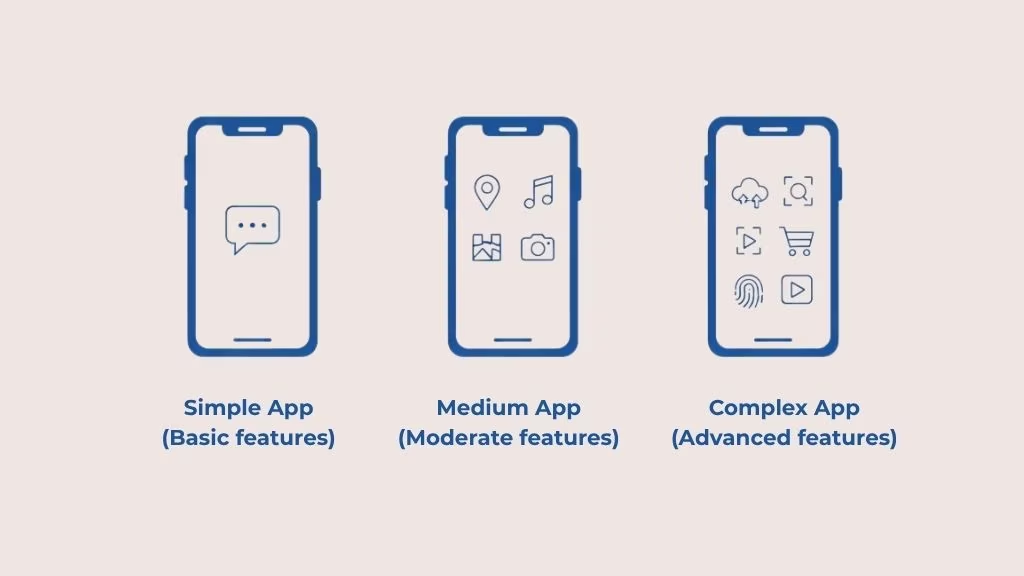
Mobile app development costs vary widely based on what you need your app to do. This section helps you understand the key factors that influence pricing.
| App Type | Development Cost Range | Development Timeline | Examples |
|---|---|---|---|
| Simple Mobile App | $30,000 – $40,000 | 2–3 months | Calculator, Basic To-Do List, Simple Info App |
| Mid-Size Mobile App | $40,000 – $60,000 | 3–5 months | Fitness Tracker, Basic E-commerce App, Event Management App |
| Large-Size Mobile App | $80,000 – $140,000 | 5–9 months | Social App, Full E-commerce Platform, Telemedicine App |
| Complex Mobile App | $160,000 – $210,000 | 9–12 months | Advanced Healthcare App, Fintech App, AI-Powered App, IoT App |
| Enterprise-Level Mobile App | $250,000+ | 12+ months | Hospital Management System, ERP/CRM Integration Apps, Large-Scale Fintech Solutions |
While these figures provide a general estimate, several key factors ultimately determine the exact mobile app development cost.
How to Estimate the Cost to Develop a Mobile App
Estimating mobile app development costs becomes much easier once you understand the two core variables that determine the final budget:
- Total Development Hours, and
- The Hourly Rate of Your Development Team
When you multiply these together, you get a reliable cost estimate:
App Development Cost Formula
Development Hours × Developer Hourly Rate = Total Cost
For example, if a development company charges $40 per hour and your app requires 2,500 hours, then your estimated cost would be:
$40/hour × 2,500 hours = $100,000
Note: This estimate covers development only. It does not include expenses such as post-launch maintenance, updates, server hosting, third-party services, or scaling costs.
What Factors Influence the Cost of Mobile App Development
When it comes to estimating the mobile app development cost, there’s no universal price tag. Every app idea is different, and so are the factors affecting app development cost. From the design and platform to features and region, each decision you make directly impacts your overall app development budget planning.
Let’s break down the major elements that shape your app development cost breakdown and help you make smarter financial choices.
1. App Complexity
The app’s complexity determines how much time and investment your project will need. Developers measure this based on the number of screens, backend integrations, user interactions, and third-party connections.
Here’s an approximate app development cost comparison based on complexity levels:
Simple Apps
A simple app focuses on essential user interactions and minimal backend functionality.
It’s ideal for startups testing new concepts or businesses launching an MVP (Minimum Viable Product).
Common Features:
- User login & authentication
- Basic dashboard & navigation
- User profile management
- Messaging or notifications
- File uploads & search functionality
Example: A simple local directory, note-taking tool, or task-tracking app with limited screens and basic admin control.
Complex Apps
A complex app introduces advanced features, dynamic content, and deeper backend integrations.
This level suits growing businesses looking to scale and add revenue-generating features.
Common Features:
- Advanced search filters & activity feeds
- In-app purchases or payment gateways
- Push notifications & live chat
- Multi-device synchronization & geo-location services
- Data analytics & advanced admin dashboard
Example: Social media, booking, or eCommerce apps where users can interact, purchase, and manage their accounts in real time.
Advanced Apps
Advanced mobile apps integrate next-gen technology such as AI, AR/VR, and machine learning to deliver superior personalization and automation.
They demand specialized development teams, advanced security, and extended timelines.
Common Features:
- AI-based recommendations & chatbots
- Augmented Reality (AR) or 3D visualizations
- Machine learning & predictive analytics
- Multi-language support and localization
- Complex data logic & real-time performance tracking
Example: e-learning, healthtech, or enterprise-grade on-demand platforms that rely heavily on automation, analytics, and smart data insights.
2. Core Features
The second big factor is the core functionality your app needs. Each new feature adds design, testing, and development hours, influencing your total app development cost breakdown.
Here’s a quick look at how specific features impact time and budget:
| Core Feature | Purpose / Functionality | Cost Range ($60/hr – $122/hr) |
|---|---|---|
| User Login & Registration | Secure user access | $2,400–$9,760 |
| User Profile & Settings | Manage personal data & preferences | $3,000–$12,200 |
| Push Notifications | User engagement & updates | $1,800–$7,320 |
| Payment Gateway Integration | Enable in-app purchases | $4,800–$19,520 |
| Search & Filters | Improve user navigation | $2,400–$12,200 |
| Chat or Messaging System | Real-time communication | $6,000–$24,400 |
| Third-Party API Integration | Connect external services (e.g., Google Maps, Stripe) | $3,600–$18,300 |
| Admin Dashboard | Manage users, content, and analytics | $7,200–$30,500 |
| IoT Integrations | Connects the mobile app with smart devices or sensors to send, receive, and process real-time data | $9,000 per integration |
| Accessibility Features | Enhances usability for individuals with disabilities through features like screen reader support, color contrast adjustments, and voice navigation. | $15,000-$25,000 |
| Using phone sensors | Utilizes built-in device sensors such as GPS, accelerometer, gyroscope, camera, or microphone to enable contextual or interactive feature | $2,100 per sensor |
3. Developer Location
In the global app market, talent is everywhere, but pricing isn’t uniform. For instance, a senior app developer in the U.S. may charge $150/hour, while an equally skilled professional in India or Eastern Europe might charge $40/hour.
This doesn’t necessarily reflect quality differences; instead, it’s about the regional cost of living, business overhead, and currency value.
Example: Building a feature-rich app that costs $120,000 in the U.S. might cost $45,000–$60,000 in India with a comparable timeline and quality.
| Region | Average Hourly Rate (USD) | Approx. Project Cost (Mid-Complexity App) | Key Development Hubs |
|---|---|---|---|
| North America (USA, Canada) | $100–$180/hr | $100K–$250K | New York, San Francisco, Toronto |
| Western Europe (UK, Germany, France) | $70–$120/hr | $60K–$150K | London, Berlin, Amsterdam |
| Eastern Europe (Poland, Ukraine, Romania) | $40–$70/hr | $40K–$100K | Warsaw, Kyiv, Bucharest |
| Asia (India, Bangladesh, Vietnam, & Philippines) | $20–$50/hr | $25K–$80K | Bangalore, Pune, Ho Chi Minh City |
| Latin America (Brazil, Mexico, Argentina) | $35–$70/hr | $35K–$90K | São Paulo, Mexico City, Buenos Aires |
| Australia & New Zealand | $80–$140/hr | $75K–$180K | Sydney, Melbourne, Auckland |
Cost Breakdown by Development Stage
Understanding how your mobile app budget is allocated across each phase of development is crucial for planning, prioritizing features, and avoiding unexpected expenses. Every stage from initial discovery to design, development, testing, and deployment contributes uniquely to the final cost.
The table below breaks down these stages in detail, including what each phase entails, how many hours it typically requires, and the corresponding cost range.
| Stage | Deliverables / Activities | Estimated Cost (Based on $60/hr – $122/hr) |
|---|---|---|
| 1. Discovery & Planning | Requirements gathering, competitor analysis, user research, defining scope & features, choosing tech stack | ~$4,500 |
| 2. UI/UX Research & Discovery | Competitor audit, user personas, journey mapping, identifying UX problems and solutions | $2,400 – $9,760 |
| 3. Wireframing & Prototyping | Low-fidelity wireframes, layout structures, user flows, interactive prototype | $3,600 – $14,640 |
| 4. Visual UI Design | Branding, typography, high-fidelity screens for all app flows | $4,800 – $19,520 |
| 5. UX Testing & Iteration | Usability tests, A/B tests, user feedback loops, iterative improvements | $2,400 – $12,200 |
| 6. Design Handoff | Developer-ready design files, annotations, design systems, exported assets | $1,800 – $7,320 |
| 7. Coding & Development | Front-end development, backend development, APIs, database, integrations | $35,000 – $75,000 |
| 8. QA Testing | Unit tests, regression tests, bug fixing, performance optimization | $8,000 – $18,000 |
| 9. Deployment | App Store / Play Store submission, backend deployment, analytics setup | ~$2,000 |
| TOTAL ESTIMATED COST | Combined cost of design, development, testing, and launch phases | $64,000 – $162,000+ |
(Note: Final cost depends on complexity, number of features, backend infrastructure, and scalability requirements.
How Does App Development Cost Vary By Technology
When it comes to mobile app development cost, one of the biggest variables is technology choice, meaning how and where your app is built. Whether you’re going native (iOS or Android), cross-platform (Flutter, React Native), or going for a hybrid or web-based approach, each comes with its own app development cost breakdown, timelines, and long-term implications.
1. iOS vs Android
Building apps natively means developing separate versions for iOS and Android, using each platform’s official languages and frameworks, Swift/Objective-C for iOS and Kotlin/Java for Android.
Average Cost Estimate:
| Platform | Average Cost Range | Development Time | Annual Maintenance Cost |
|---|---|---|---|
| iOS | $40,000 – $120,000 | 3–6 months | 15–25% of the build cost |
| Android | $35,000 – $100,000 | 3–6 months | 15–25% of the build cost |
2. Cross-Platform Development
If your goal is faster delivery and lower costs, cross-platform development (using Flutter, React Native, or Xamarin) can be a smart move. Here, a single codebase powers both iOS and Android apps, reducing both development time and budget.
Cost Comparison:
| Framework | Estimated Cost | Ideal For |
|---|---|---|
| Flutter | $25,000 – $80,000 | Startups & MVPs |
| React Native | $30,000 – $90,000 | Mid-sized apps needing quick launch |
3. Hybrid & Web-Based Apps
Hybrid or progressive web apps (PWAs) are often built with HTML, CSS, and JavaScript, offering a “web-app feel” inside a mobile shell.
Average Cost Comparison:
| App Type | Estimated Cost Range | Development Time | Ideal For | Maintenance Cost |
|---|---|---|---|---|
| Hybrid App | $15,000 – $50,000 | 2–4 months | MVPs, small businesses | 10–20% per year |
| Web App / PWA | $10,000 – $40,000 | 2–3 months | Web-first startups, test launches | 10–15% per year |
While understanding how technology impacts development costs is crucial, it’s equally important to consider the hidden and ongoing expenses that come after your app goes live.
Backend, API, Hosting, Data Protection, and Technology Stack
Behind every successful app lies a powerful backend system, the invisible engine that stores, processes, and delivers data to users. While the user interface is what people see, the backend, APIs, hosting,data protection, and technology stack determine how smoothly the app runs, scales, and secures information.
Backend & API Development Cost Breakdown
Costs may vary depending on your technology stack, hosting infrastructure, and whether you use third-party backend services or build from scratch.
| Backend Complexity | Typical Features | Development Time (Hours) | Estimated Cost ($60/hr – $122/hr) |
|---|---|---|---|
| Basic Backend | User login, profile management, simple database | 150–300 | $9,000–$36,600 |
| Moderate Backend | Data storage, notifications, admin panel, analytics | 300–600 | $18,000–$73,200 |
| Advanced Backend | Real-time updates, third-party APIs, complex data logic | 600–1,000+ | $36,000–$122,000+ |
Cloud Hosting and Infrastructure Costs
Hosting your app’s backend requires secure and scalable infrastructure. Here’s what typical cloud hosting costs look like for mobile apps:
| Hosting Type | Platform Example | Monthly Cost Range | Ideal For |
|---|---|---|---|
| Shared Hosting | Bluehost, HostGator | $10–$30/month | Small apps or MVPs |
| Dedicated Server | AWS EC2, DigitalOcean | $80–$400/month | Mid-sized or growing apps |
| Cloud Infrastructure | AWS, Google Cloud, Azure | $200–$1,000+/month | Enterprise or global-scale apps |
Security & Data Protection in the Backend
Strong backend architecture must ensure data privacy and security, especially for apps handling sensitive information. Here’s what affects your backend cost from a security standpoint:
- Data encryption & SSL certificates
- Multi-factor authentication (MFA)
- GDPR or HIPAA compliance
- Regular vulnerability testing
Each layer of protection adds development hours, but skipping them can lead to costly risks later.
Example: For fintech and healthcare apps, expect an additional $5,000–$15,000 in compliance and security measures during development.
Cost Impact of AI Integration in Mobile App Development
AI-powered features can dramatically enhance a mobile app’s capabilities, unlocking personalization, automation, predictive insights, and intelligent user experiences. However, these benefits also introduce additional complexity that directly influences the development budget.
Below is a breakdown of how AI integration affects mobile app development costs and what factors drive those increases.
Common AI Features and Their Cost Impact in Mobile App Development
| AI Feature | Functionality | Added Development Cost |
|---|---|---|
| AI Chatbots / NLP Assistants | Automated support, conversational UI | +$8,000 – $25,000 |
| Personalization Engines | Recommender systems, user behavior prediction | +$10,000 – $35,000 |
| Image Recognition / Computer Vision | Object detection, OCR, face recognition | +$12,000 – $40,000 |
| Predictive Analytics | Forecasting, anomaly detection, smart insights | +$10,000 – $30,000 |
| Voice Processing / Speech-to-Text | Voice commands, transcription | +$6,000 – $20,000 |
| Generative AI Features (LLMs) | Summaries, auto-generated content, smart search | +$15,000 – $50,000+ |
Typical Cost Increase for Adding AI to a Mobile App
On average, AI integration increases mobile app development cost by:
➤ 25% to 60% of the original budget
So, if a standard app costs $80,000, adding AI could raise the total to:
$100,000 – $130,000+
More advanced AI (custom LLMs, computer vision, predictive engines) can push this even higher.
How Much Does It Cost to Build Different Types of Mobile Apps
When it comes to mobile app development cost, there’s no flat rate; every app has its own story. The price depends on what your app does, how polished the design is, and even where your developers are located. Knowing how these factors shape the cost helps you budget smarter and avoid surprises along the way. Here is a list of app types and their projected cost of developing them:
| App Type | Estimated Mobile App Development Cost Range (USD) | Notes / Key Cost Drivers |
|---|---|---|
| Retail App | $50,000 – $150,000 | Product catalogs, loyalty programs, and POS integrations. |
| Ecommerce App | $80,000 – $200,000 | Shopping carts, payment gateways, product databases, and shipping systems. |
| SaaS-Based App | $70,000 – $150,000 | Multi-tenant architecture, subscription management, cloud scalability. |
| Cryptocurrency App | $60,000 – $250,000 | Wallet integration, blockchain APIs, real-time market tracking, and encryption layers. |
| Logistics App | $60,000 – $250,000 | Fleet tracking, route optimization, and real-time driver updates. |
| Healthcare App | $75,000 – $350,000 | HIPAA compliance, teleconsultation, EHR integration, and wearable sync. |
| Food Delivery App | $40,000 – $150,000 | Restaurant listings, real-time tracking, in-app payments, and delivery partner modules. |
| Taxi App | $50,000 – $400,000 | Dual interfaces (rider/driver), GPS tracking, surge pricing, and live navigation. |
| Video Streaming App | $70,000 – $300,000 | CDN setup, adaptive streaming, DRM protection, and recommendation engines. |
| Social Media App | $40,000 – $250,000 | Messaging, feeds, notifications, media sharing, and content moderation systems. |
| Banking App | $100,000 – $300,000 | Secure transactions, KYC verification, and compliance (PCI DSS, GDPR). |
| eLearning App | $50,000 – $180,000 | Live classes, video modules, progress tracking, and gamified learning. |
| Fitness / Wellness App | $45,000 – $120,000 | Workout tracking, wearable integrations, and personalized dashboards. |
| Travel / Booking App | $60,000 – $200,000 | Booking engines, maps, multi-currency support, and review systems. |
| Real Estate App | $50,000 – $180,000 | Listings, virtual tours, and map-based property searches. |
| Artificial Intelligence (AI) App | $80,000 – $400,000 | AI models, machine learning algorithms, predictive analytics, NLP, and data training pipelines. |
| Augmented Reality (AR) App | $70,000 – $350,000 | ARKit/ARCore integration, 3D modeling, object recognition, and immersive UX design. |
| Community App | $40,000 – $150,000 | User profiles, forums, real-time chat, group management, and content moderation tools. |
| Gaming App | $120,000 – $300,000+ | Casual mobile games, mid-core titles |
Now that we’ve explored how costs differ by app complexity, let’s take a closer look at how the underlying technology also influences overall development expenses.
How Much Does It Cost to Develop a Popular App?
If you’ve ever imagined building the next Uber, TikTok, or Airbnb, one question probably comes to mind: how much would that really cost?
To give you a realistic view, here’s what it typically costs to build some of the world’s most popular apps today.
| App | Category | Estimated MVP Development Cost (USD) | Typical Development Time |
|---|---|---|---|
| Ride-Sharing App | Transportation | $150,000 – $300,000+ | 9–12 months |
| Booking App | Marketplace / Hospitality | $180,000 – $400,000+ | 10–14 months |
| Short-Form Video App | Social / Entertainment | $250,000 – $500,000+ | 12–16 months |
| Photo & Video Sharing App | Social Media | $120,000 – $300,000+ | 8–12 months |
| Multimedia Messaging App | Communication / Social | $200,000 – $400,000+ | 10–15 months |
| Dating App | Lifestyle / Social | $100,000 – $250,000+ | 8–10 months |
| Video Streaming App | Media / Entertainment | $250,000 – $500,000+ | 10–16 months |
| Music Streaming App | Entertainment / Audio | $200,000 – $400,000+ | 10–14 months |
| eCommerce App | Retail / Online Marketplace | $250,000 – $600,000+ | 12–18 months |
| Food Delivery App | On-Demand / Delivery | $180,000 – $350,000+ | 9–12 months |
| Video Conferencing App | Communication / Collaboration | $300,000 – $700,000+ | 12–18 months |
| eLearning App | Education / Learning | $120,000 – $250,000+ | 8–12 months |
| Fintech / Payment App | Finance / Banking | $300,000 – $700,000+ | 12–18 months |
| Productivity App | Business / Team Collaboration | $200,000 – $450,000+ | 10–14 months |
Now that we’ve explored the costs involved in developing a popular app, let’s wrap up with key takeaways and next steps in launching your own.
What Hidden and Ongoing Costs Should You Expect After App Launch
Even after careful app development budget planning, many businesses are caught off guard by hidden costs that surface after launch. While development is the most visible expense, there are several ongoing and indirect costs that can quietly increase your mobile app development cost over time. Let’s uncover what they are, so you can budget smarter and avoid unpleasant surprises.
1. App Store & Play Store Fees
Every app distributed through the Apple App Store or the Google Play Store involves ongoing fees.
- Apple Developer Program: $99/year
- Google Play Developer Account: One-time $25 fee
- Transaction commissions: Apple and Google charge 15–30% on in-app purchases and subscriptions
Tip: If your app uses in-app payments or digital goods, always factor in these platform fees as part of your mobile app pricing model.
2. Hosting, Servers, and Cloud Storage
Your app’s backend lives in the cloud, and that space isn’t free. Depending on usage, bandwidth, and data size, expect recurring server hosting costs for platforms like AWS, Google Cloud, or Azure.
| App Scale | Hosting Type | Monthly Cost Estimate |
|---|---|---|
| Small / MVP | Shared or BaaS (Firebase, AWS Amplify) | $20–$100 |
| Medium | Dedicated or managed servers | $100–$400 |
| Enterprise | Scalable cloud infrastructure | $500–$2,000+ |
3. Security, Compliance, and Legal Requirements
Data security is non-negotiable, especially for fintech, healthcare, and eCommerce apps.
Hidden costs arise from meeting data privacy regulations and implementing security measures, like:
- SSL certificates and encryption
- Multi-factor authentication (MFA)
- GDPR, HIPAA, or PCI DSS compliance audits
- Secure cloud infrastructure
Estimated Cost: $5,000–$20,000, depending on your app’s complexity and regional compliance needs.
4. Third-Party API and SDK Costs
Most modern apps depend on third-party APIs or software development kits (SDKs) for features like maps, payments, analytics, or messaging.
Many of these are free initially but charge once your usage scales.
Examples:
- Google Maps API: $2–$7 per 1,000 requests after the free limit
- Firebase Cloud Messaging: free tier available, paid for high-volume usage
- Stripe / PayPal: ~2.9% + $0.30 per transaction
Tip: Always check the usage-based pricing of third-party APIs to avoid unexpected monthly bills.
5. Marketing, User Acquisition, and ASO
No matter how great your app is, it needs visibility to succeed. Post-launch marketing often becomes a hidden cost for founders.
Typical ongoing costs include:
- App Store Optimization (ASO): $300–$1,000/month
- Paid ads (Google, Meta, TikTok): $2,000–$10,000+/month
- Influencer or content marketing campaigns
- Push notification or referral programs
Insight: For startups, marketing can easily account for 30–50% of total first-year expenses; plan accordingly.
6. Maintenance and Upgrades
Even if you have already allocated a budget for app maintenance costs, unexpected updates often appear after launch, new OS versions, bug fixes, or scaling issues. Failing to update your app can lead to security risks and poor user reviews.
Common hidden maintenance expenses:
- Updating third-party libraries
- Fixing compatibility issues with new devices
- Expanding server capacity during growth phases
- Emergency bug patches and hotfixes
Rule of Thumb: Budget at least 15–20% of your original app development cost per year for ongoing updates and optimization.
7. Team Communication and Project Management Tools
Efficient collaboration across teams requires paid tools and platforms. These costs often go unnoticed during planning but add up quickly.
Examples:
- Jira, Trello, or Asana (project management): $10–$30 per user/month
- Slack or Microsoft Teams (communication): $6–$15 per user/month
- GitHub or Bitbucket (version control): $5–$20 per user/month
Tip: Factor these into your app development cost breakdown, especially for remote or distributed teams.
Now that we’ve explored the hidden and ongoing costs that can arise after launch, let’s look at practical strategies to reduce mobile app development expenses without compromising quality.
How Can You Reduce the Cost of Mobile App Development Without Losing Quality
Reducing mobile app development cost doesn’t have to mean cutting corners. In fact, with the right strategy, you can create a high-performing, user-friendly app while keeping your app development budget planning lean and efficient. Let’s explore smart ways to minimize expenses, without sacrificing design, functionality, or long-term value.
1. Start Small with an MVP (Minimum Viable Product)
If you’re still validating your idea, begin with an MVP, a simplified version of your app that includes only core features.
Pro Tip: You can build your MVP faster using Vibe Coding, a visual app prototyping and low-code tool that helps you create a working version of your app before full-scale development. It’s a great way to validate your concept, attract investors, and reduce early-stage costs.
2. Choose the Right Platform and Tech Stack
Cross-platform frameworks like Flutter or React Native let you build for both iOS and Android simultaneously, cutting development time and cost by up to 35%.
Tip: Use an app development cost calculator to compare mobile application pricing models and estimate savings before starting.
3. Keep the Design Simple
Yes, design sells, but not every app needs expensive motion graphics or custom illustrations.
- Focus on clean, intuitive UI/UX to reduce app design cost.
- Reuse standard design libraries and templates where possible.
- You can always upgrade visuals once the app gains traction.
4. Outsource Smartly to Cost-Effective Regions
One of the biggest factors affecting app development cost is the developer’s location.
Example: A UK-based fintech company reduced its app development cost by 45% by partnering with a development agency in Bangalore, India.
5. Reuse Existing Components and Open-Source Libraries
Using pre-built frameworks, APIs, and open-source components reduces coding time and hidden costs in app development.
Common examples include Firebase for backend, Stripe for payments, and Google Maps API for location services.
6. Plan for Maintenance from the Start
Many businesses forget how much it costs to maintain an app after launch. Regular updates, bug fixes, and OS upgrades usually add 15–20% annually to your mobile app pricing model.
Now that we’ve explored strategies to reduce development costs without compromising quality, it’s time to look at what it actually takes to build a popular app.
Conclusion
Understanding mobile app development cost isn’t just about numbers, it’s about clarity, strategy, and smarter decision-making. Whether you’re a startup sketching your first idea or an enterprise planning digital transformation, knowing how each factor shapes your app development budget planning helps you spend wisely and scale efficiently.
Key Takeaways
- There’s no fixed price for developing a mobile app.
- Every feature affects the final app development cost breakdown.
- Don’t overlook ongoing and hidden expenses.
- Smart planning saves money.
- Strategic budgeting delivers long-term gains.
Frequently Asked Questions About Mobile App Development Cost
Get quick, clear answers to the most common questions about mobile app development cost, from price ranges by complexity and platform to hidden fees, timelines, and maintenance.
How can I plan my mobile app budget smartly?
Ans: Start with a lean feature list and define platforms, audience, and success metrics. Use a cost calculator and set a contingency (10–15%). Build an MVP to de-risk. Compare regional rates and team models, and plan 15–25% annually for maintenance, hosting, and updates.
How much does it cost to make an app by yourself?
Ans: DIY with no-code/low-code usually runs $500–$5,000 for tools, templates, and integrations. It’s fastest for prototypes, but limits customization, performance, and scalability. Expect switching costs if you later migrate to custom code or need app-store distribution and advanced features.
How much does it cost to hire an app developer?
Ans: Freelancers charge $25–$150/hour; agencies deliver teams with blended rates. Full projects range $40,000–$250,000+, driven by complexity, platform, design depth, and integrations. Factor QA, PM (15–20%), and post-launch maintenance (15–25%/year) into your total budget.
How much does it cost to make an app on the App Store?
Ans: Apple’s developer fee is $99/year. Build costs vary widely ($25,000–$200,000+) based on scope, design, and team location. Ongoing costs include maintenance, SDK updates, hosting, analytics, and potential App Store commission on in-app purchases (typically 15–30%).
What is an app cost calculator?
Ans: It’s a guided questionnaire that estimates development costs from inputs like features, complexity, platform, and region. It outputs a range based on assumed rates and hours. Use it to prioritize features, compare scenarios, and set a realistic contingency before committing a budget.
Which platform should I choose: iOS, Android, or cross-platform?
Ans: Choose iOS for premium markets and faster QA; Android for global reach and hardware flexibility; cross-platform (Flutter/React Native) for speed and budget efficiency. Start with a cross-platform MVP, add native modules for performance-critical features or deep device integrations.
Why do app development companies charge so differently for the same app idea?
Costs vary due to differences in team expertise, location, project scope interpretation, tech stack, design quality, and included services like QA and project management.
Is it cheaper to build an app with a freelancer or a development company
Freelancers can be cheaper upfront, but agencies offer full teams, structured processes, and higher reliability, often reducing long-term risks and hidden costs.
What factors increase mobile app development costs the most?
Complex features, backend systems, integrations, AI/ML, real-time functionality, advanced UI/UX, and multi-platform development increase costs significantly.
How can I estimate the cost of my app idea before hiring developers?
Use the basic formula: Development Hours × Hourly Rate = Total Cost,
and map features by complexity to estimate required hours.
Are there ways to reduce the cost of developing a mobile app without sacrificing quality?
Yes, start with an MVP, focus on essential features, use reusable components, choose cross-platform frameworks, and avoid over-customization early on.
Does adding AI or machine learning significantly increase app development costs?
Yes. AI integration can increase costs by 25–60% or more, depending on data requirements, model complexity, and infrastructure needs.
Is cross-platform app development more affordable than native development?
Usually yes, because a single codebase runs on both iOS and Android, reducing development time and cost.
Any tips to avoid hidden costs in mobile app development?
Define a clear scope, avoid scope creep, test early, use scalable architecture, and ask your development partner about maintenance and third-party fees.
What is the cost to build an app like Uber, Instagram, or TikTok?
High-complexity apps like these typically cost $200,000–$500,000+ due to real-time tracking, media handling, and advanced backend systems.
How expensive are integrations like payment gateways, maps, or push notifications?
Basic integrations may cost $1,000–$5,000, while advanced or custom integrations can cost more depending on API complexity.
This page was last edited on 29 January 2026, at 2:45 pm
Contact Us Now

Contact Us Now
Start a conversation with our team to solve complex challenges and move forward with confidence.


