
The global race for AI innovation is intensifying, and skilled professionals are harder to find than ever before. As AI projects demand faster results, broader expertise, and operational agility—often under tight budget constraints—many companies are exploring how to build an offshore team for AI development as a strategic solution.
Offshore AI development teams are becoming a powerful way to bridge talent gaps, accelerate speed-to-market, and reduce operational costs. By leveraging global talent pools, businesses can access top-tier AI experts without the geographical and financial limitations of local hiring.
In this practical, step-by-step playbook, you’ll discover proven strategies, actionable templates, and market insights to confidently build, integrate, and scale a high-performing offshore AI team. This guide will help you navigate the complexities of offshore development, ensuring your organization can drive global AI innovation while minimizing risk and maximizing return.
Why Choose Offshore for AI Development? (Benefits, Trends, and Market Forces)
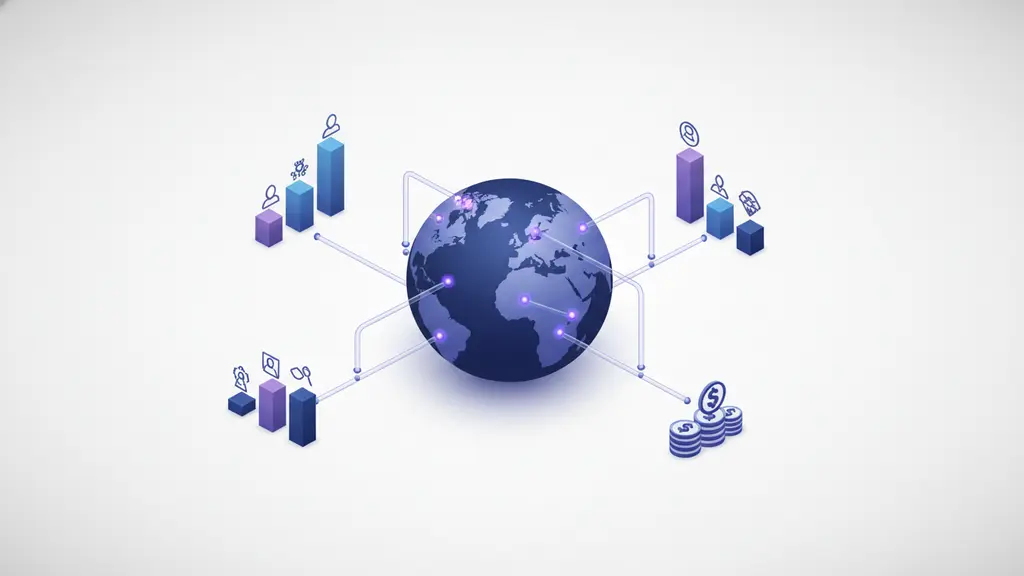
Offshore AI development delivers access to specialized talent, cost efficiencies, and project agility that are difficult to replicate in-house.
Key benefits:
- Access to scarce AI talent: According to the World Economic Forum, the AI skills gap is one of the greatest inhibitors to digital transformation worldwide.
- Cost savings: Offshore teams can save organizations up to 60% on salary and operational overhead, based on global wage comparisons (Glassdoor, Payscale).
- Faster project delivery: A distributed approach enables round-the-clock productivity and rapid scaling for new AI initiatives.
- Hybrid models: Many organizations are blending offshore with in-house teams for innovation without losing control.
Common misconceptions:
- Quality risk: Many offshore hubs now offer world-class AI education and English fluency.
- IP/security concerns: Modern vendors follow international standards like ISO 27001 and comply with GDPR.
Expert insight:
“The best-performing AI projects blend local business context with global technical execution—offshoring enables you to build exactly that model.”
— CTO, Leading AI Product Firm
How to Build an Offshore Team for AI Development
A successful offshore AI project starts with meticulous planning: clarifying goals, technical needs, and project boundaries.
Define Project Goals and Tech Requirements
- Clarify your business objectives: What are the intended use cases (e.g., NLP, vision, forecasting)?
- Map required technical skills: Which frameworks or stacks (TensorFlow, PyTorch) are mandatory?
- Set success metrics: Define KPIs—like model accuracy, deployment timelines, or cost savings.
- Differentiate internal vs. offshore roles: Decide which functions remain core versus those to delegate.
Selecting the Right Country & Offshore Location: Skills, Costs, and Fit
Choosing where to hire offshore AI developers hinges on talent availability, wage levels, IP safety, and business culture.
Summary:
Key offshore regions offer distinct advantages—from India’s scale to Eastern Europe’s technical depth. Prioritize based on your cost, skill, and collaboration needs.
Offshore AI Location Comparison
| Region | Skill Depth & Volume | Cost (Relative) | Time Zone Alignment | Pros | Cons |
|---|---|---|---|---|---|
| India | Large, fast-growing | Low–Mid | GMT+5:30 | Volume, English proficiency | Occasional churn |
| Eastern Europe | High, strong universities | Mid | CET (GMT+1/+2) | Advanced AI, IP protection | Higher rates than Asia |
| Southeast Asia | Growing, flexible | Low | GMT+7 to GMT+9 | Cost, flexibility | Varying English skills |
| Latin America | Moderate | Mid | Overlaps US/EU hours | Culture fit, time overlap | Smaller talent pool |
Note: Always assess recent regional trends, vendor reliability, and legal/IP frameworks before making your final choice.
Which Engagement Model Works Best? (Dedicated, Augmented, Hybrid)
Selecting how you engage offshore partners controls cost, flexibility, and project ownership.
| Model | Cost Structure | Control Level | Best For | Example Use |
|---|---|---|---|---|
| Dedicated | Fixed or retainer | High | Long-term, core-team expansion | Building a proprietary ML product |
| Augmented | Hourly/monthly | Shared | Short-term scale, skill gaps | Adding MLOps engineer to sprints |
| Hybrid | Mix | Variable | Evolving or multi-phase projects | Scaling R&D, then support |
Dedicated teams act as a true extension of your in-house staff.
Staff augmentation lets you quickly fill or swap specialized roles.
Hybrid models blend both, offering adaptive scalability.
What Roles and Skills Do You Need in an Offshore AI Team?
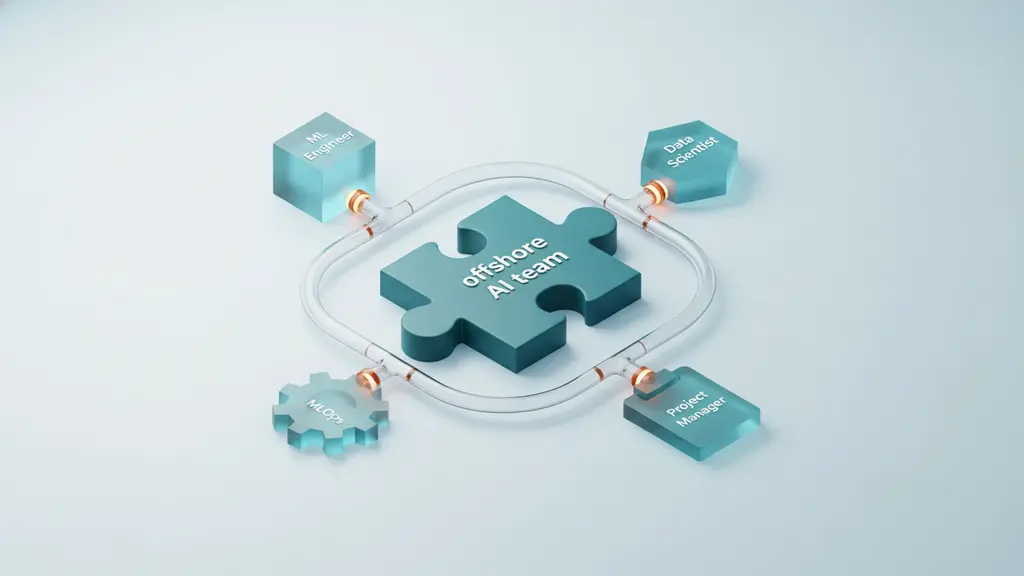
A high-functioning offshore AI development team covers roles from data science to deployment and oversight.
Summary:
Cover the core roles—ML Engineer, Data Scientist, MLOps, Data Engineer, Project Manager, QA, and UI/UX—to drive project delivery and minimize skills gaps.
| Role | Core Responsibilities | Key Skills |
|---|---|---|
| Machine Learning Engineer | Model development, tuning | Python, TensorFlow, PyTorch, ML Ops |
| Data Scientist | Data analysis, feature design | Statistics, modeling, data wrangling |
| MLOps Engineer | Pipeline, deployment, monitoring | CI/CD, Docker, cloud, automation |
| Data Engineer | ETL, data prep, infrastructure | SQL/NoSQL, big data, APIs |
| Project Manager | Delivery, workflow, budgeting | Agile, Jira, comms, AI literacy |
| QA/Test Engineer | Model and app testing | Test automation, validation, security |
| UI/UX Designer | Interface for AI systems | Prototyping, usability, wireframes |
Step-by-Step: How to Hire, Vet, and Integrate Offshore AI Developers
Hiring offshore AI developers is a systematic process—each stage reduces risk and accelerates integration.
Process Summary:
- Research credible agencies/vendors: Look for proven portfolios and relevant AI projects.
- Apply a partner-vetting checklist: Validate security practices, references, and ongoing support.
- Interview and technical assessment: Test core skills in frameworks, communication, and problem-solving.
- Contracting: Include robust IP, NDA, and service benchmarks.
- Onboard with clear workflow: Document goals, share assets, set up access, and introduce tools.
How to Build and Maintain Effective Communication and Collaboration?
Effective offshore AI team management demands structured communication and seamless workflows across time zones.
Best practices:
- Set up overlapping work hours: Ensure at least 2–4 hours of real-time collaboration.
- Establish standard tools: Messaging: Slack
Project management: Jira, Notion
Video conferencing: Zoom
Visual collaboration: Miro - Create a communication charter: Define meeting cadence, tool usage, escalation paths, and documentation norms.
- Foster cross-cultural understanding: Encourage knowledge-sharing and mutual respect.
Sample Weekly Workflow:
Insert weekly workflow diagram here (standups, sprints, review calls, async updates).
How to Ensure Security, Compliance, and IP Protection in Offshore AI Projects?
Protecting data, intellectual property, and regulatory compliance is non-negotiable in offshore AI development.
Checklist for robust security:
- Legal protections: Use NDAs, explicit IP clauses, and clear data residency agreements.
- Industry standards: Require vendors to follow ISO 27001 for information management and comply with GDPR for handling EU data.
- Security toolkit:
VPN, 2FA for all remote access
Source code management/review tools
Regular vulnerability scans and code audits - Regional diligence: Countries have variable privacy laws and enforcement—always verify current requirements.
Compliance tip:
“Mandate that all offshore AI vendors show audit certificates for key standards, not just claim compliance.”
— Director of Security, SaaS Platform
Measuring, Managing, and Scaling Your Offshore AI Team’s Success

A high-performance offshore AI team is tracked by transparent, data-driven metrics—and scaled with predictable strategies.
Core performance metrics:
- Velocity: Features or models released per sprint/month
- Quality: Bug rate, model accuracy, peer review scores
- Cost savings: Reduction versus local/previous projects
- Productivity: Tasks closed, time to resolve blockers
| KPI | Sample Target |
|---|---|
| Model Delivery Cycle Time | <4 weeks |
| QA Defect Escape Rate | <2% |
| Cost Savings vs. Onshore | 40–60% |
| Satisfaction Score (Team) | >8.5/10 |
Scaling strategies:
- Grow team size by project phase (start small, expand as you validate).
- Add multi-region pods for follow-the-sun coverage.
- Use retrospectives to identify and replicate what works.
According to industry research (Gartner, McKinsey), distributed teams that benchmark and iterate their processes achieve productivity gains of up to 30% over traditional siloed models.
Common Pitfalls When Building Offshore AI Teams—and How to Avoid Them
Avoiding classic mistakes saves both time and money when scaling AI capacity offshore.
| Pitfall | Prevention Tip |
|---|---|
| Vague project scope | Use detailed requirements docs |
| Missed cultural fit | Hold trial sprints, intro calls |
| Inadequate vetting | Follow a structured checklist |
| Broken communication | Charter + regular syncs |
| IP/security oversights | Legal reviews + tool audits |
| Scope/mission drift | Clear milestones, frequent review |
Quick tips:
- Never skip reference checks with previous clients.
- Always clarify escalation paths if roadblocks occur.
Frequently Asked Questions: Everything Leaders Need to Know About Offshore AI Teams
What are the steps to build an offshore AI development team?
Define your project and tech needs, select a suitable offshore location, choose an engagement model, hire key roles, vet vendors, set up contracts and onboarding, and establish collaboration and security processes.
What roles should be included in an offshore AI team?
Essential roles are Machine Learning Engineers, Data Scientists, MLOps Engineers, Data Engineers, Project Managers, QA/Test Engineers, and UI/UX Designers.
Which is the best country for offshore AI development?
India, Eastern Europe, Southeast Asia, and Latin America all excel in different areas. Your “best” option depends on your needs for cost, talent pool size, technical depth, and time zone alignment.
How much does it cost to hire offshore AI developers?
Costs vary by region; on average, you may save 40–60% compared to hiring locally. Actual rates depend on seniority, skills, and region.
What are the biggest challenges in managing offshore AI teams?
Common challenges include time zone differences, cultural misalignment, unclear communication, and data/IP security. These are mitigated through structured workflows and robust legal/technical safeguards.
How do you ensure security and compliance when offshoring AI projects?
Use NDAs, robust IP clauses, verified ISO and GDPR compliance, secure toolkits (VPN, 2FA), and regular audits to ensure standards are upheld.
What engagement models are available for offshore AI teams?
The primary models are Dedicated Teams, Staff Augmentation, and Hybrid. Each offers varying degrees of control, cost, and flexibility.
How do offshore and in-house AI developers collaborate?
Through overlapping working hours, unified communication tools (Slack, Jira, Zoom), defined processes, and frequent status updates, offshore and in-house teams operate as a single unit.
What tools improve communication in distributed AI teams?
Key tools include Slack (messaging), Jira/Notion (project management), Zoom (meetings), and Miro (visual collaboration).
What are the key risks of offshore AI development—and how can they be managed?
Major risks are quality gaps, IP leakage, and delivery delays. Manage them with strict vetting, detailed contracts, regular reviews, and clearly defined milestones.
Conclusion and Next Steps: Power Your AI Vision Globally
Today’s AI landscape demands agility, expertise, and efficiency—qualities an offshore AI development team can deliver if built with rigor and intent. By following this step-by-step playbook, you’ll navigate location options, contract models, skill requirements, and partnership risks with confidence. The result: globally powered AI innovation, stronger ROI, and a future-proof talent strategy.
This page was last edited on 2 February 2026, at 5:58 pm
Contact Us Now

Contact Us Now
Start a conversation with our team to solve complex challenges and move forward with confidence.


