
Understanding how to build AI chatbot in Australia requires more than selecting a platform and launching a conversational interface. Australian organizations operate in a tightly regulated environment shaped by privacy laws, consumer protection standards, and sector-specific compliance obligations. At the same time, customer expectations for fast, intelligent, and secure digital interactions are higher than ever.
The rapid advancement of generative AI has created enormous opportunities for automation, cost reduction, and improved customer experience. However, without a structured development strategy, chatbot initiatives can face regulatory setbacks, security vulnerabilities, integration challenges, and poor adoption rates. Many businesses underestimate the technical architecture, data governance requirements, and long-term maintenance considerations involved.
This guide provides a clear, step-by-step framework tailored specifically to the Australian market. From defining business objectives and selecting the right AI technology stack to ensuring compliance with local data laws and deploying at scale, you will gain a practical roadmap to building a compliant, secure, and high-performing AI chatbot in Australia.
Why Are Australian Businesses Investing in AI Chatbots?
AI chatbots are rapidly transforming Australian businesses by streamlining operations, driving cost savings, and improving customer experience across sectors.
Adoption rates for AI chatbot development in Australia have surged, with the Australian Bureau of Statistics (ABS) reporting that nearly 40% of mid-to-large organizations were exploring or implementing AI solutions by late 2023. The primary drivers for this growth include:
- Cost Efficiency: Chatbots reduce routine workloads, enabling 24/7 support while freeing staff for more complex tasks.
- Customer Satisfaction: Interactive self-service boosts Net Promoter Scores (NPS) and Customer Satisfaction (CSAT), major KPIs for digital adoption.
- Competitive Edge: Early adopters in sectors like finance and healthcare leverage chatbots for faster onboarding and improved service delivery.
- Business Continuity: Automation proved essential during the COVID-19 pandemic for government and retail sectors.
Sector Highlights
- Finance: Major banks use chatbots to assist with KYC compliance, customer queries, and transactions.
- Healthcare: Medical groups deploy bots for appointment triage and patient FAQs, adhering to strict patient data rules.
- Retail: Omnichannel support via chatbots helps with product recommendations, returns, and lead capture.
- Government: Agencies leverage bots for citizen support, reducing wait times for essential services.
Not adopting AI chatbots risks falling behind both in operational efficiency and digital customer experience—two areas where current leaders continue to widen the gap.
What Are the Key Steps to Building a Compliant AI Chatbot in Australia?
Building an AI chatbot in Australia requires a strategic, compliance-first approach. The following six-step framework ensures every stage—from idea to deployment—is tailored for success and aligned with local regulations.
6 Steps to Building a Compliant AI Chatbot in Australia
| Step | Action | Compliance Focus |
| 1 | Define Your Business Use Case & Goals | Sector requirements, data types |
| 2 | Choose the Right Technology Stack | Local hosting, security options |
| 3 | Map Integrations with Business Systems | API security, AU data flows |
| 4 | Ensure Data Privacy & AU Regulatory Compliance | Privacy Act, APRA, OAIC, data residency |
| 5 | Develop, Test & Deploy the Chatbot | Onshore deployment, UAT |
| 6 | Monitor, Retrain & Maintain Compliance | Scheduled audits, ongoing training |
1. Define Your Business Use Case and Functional Goals
Start by mapping chatbot features to your business needs, such as automating FAQs, lead qualification, or streamlining onboarding. Pinpoint sector-specific priorities—for example, in finance (KYC/AML compliance) or healthcare (sensitive data handling).
- Example: A retail business might focus on product Q&A and order tracking, while a government entity could prioritize secure citizen service with multilingual support.
2. Choose the Right Technology Stack
Select a chatbot framework that fits your technical, security, and compliance requirements. Leading options include:
- LangChain, Rasa: Open-source, modular—flexible for SMEs and enterprises seeking transparency.
- Dialogflow (Google), Llama, GPT-4.1, Claude 3.5: Advanced NLP and generative AI for complex dialog.
- RAG Architecture: Retrieval Augmented Generation (RAG) combines LLMs with up-to-date, organization-approved data, reducing hallucination risks.
Ensure you choose local hosting—AWS Sydney, Azure AU, or GCP Australia—to guarantee data residency.
3. Map Integrations With Existing Business Systems
Integrate your chatbot with core business platforms (e.g., Salesforce, HubSpot, MYOB) and communication channels (WhatsApp, Messenger, website) via secure APIs.
- Integration Considerations: Secure authentication (OAuth2), audit trails, and role-based access ensure only approved systems and data are accessed.
4. Ensure Data Privacy & AU Regulatory Compliance
Guaranteeing Australian data privacy and meeting legal obligations is crucial. Apply a compliance checklist covering:
- Data residency: Store all personal data within approved AU data centers.
- Legislation: Adhere to Privacy Act 1988, OAIC guidelines, and APRA standards (for finance).
- Security: Use encryption in transit and at rest, with access logging.
Sample Compliance Checklist
- Personal data never leaves Australia.
- Privacy notices visible to chatbot users.
- OAIC and APRA guidelines reviewed and applied.
5. Develop, Test, & Deploy the Chatbot
Use agile practices—rapid prototyping, thorough QA, and user acceptance testing (UAT)—to ensure reliability. Deploy only on accredited Australian servers or cloud regions.
Sample Python Prototype:
from rasa.core.agent import Agent
agent = Agent.load("models/dialogue")
response = agent.handle_text("What's my account balance?")
print(response)
6. Monitor, Retrain & Maintain Regulatory Alignment
Implement ongoing monitoring for key metrics (CSAT, NPS, AI output accuracy) and schedule regular audits. Retrain models on Australian user data, document compliance changes, and maintain a compliance renewal calendar.
How Do Australian Data Laws (Privacy Act, APRA, OAIC) Impact Chatbot Development?
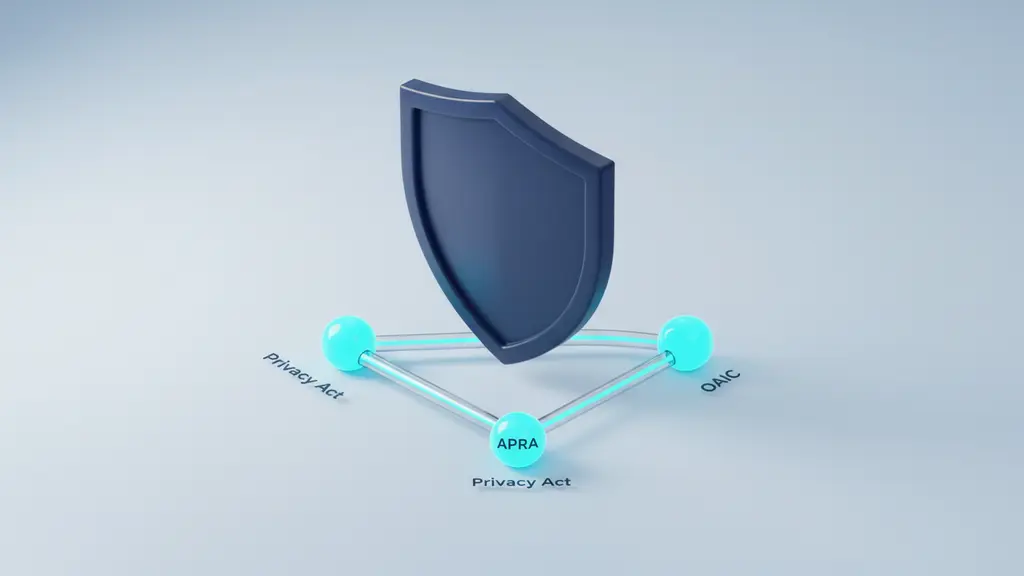
Australia’s regulatory environment imposes strict standards on AI chatbot projects, especially around data privacy, storage, and sectoral compliance.
The Privacy Act 1988 regulates how personal information is collected, stored, and disclosed. Chatbots must:
- Notify users upfront if conversations are recorded or data is retained.
- Store personal and sensitive information onshore within Australia.
- Allow users to request data deletion or correction, with processes built into the chatbot or support structure.
The Office of the Australian Information Commissioner (OAIC) issues specific guidance for digital and AI-enabled systems. For financial and regulated sectors, the Australian Prudential Regulation Authority (APRA) mandates controls for data handling, risk management, and incident response.
Key Points:
- Finance/Banking: APRA CPS 234 requires data security and reporting of material cyber incidents.
- Healthcare: Additional laws (e.g., My Health Records Act) apply for patient data.
- Onshore Hosting: Use AWS Sydney, Azure Australia Central, or similar to satisfy data residency.
Compliance Checklist
| Requirement | Satisfied By |
| Data never leaves Australia | Local cloud providers, in-country servers |
| Privacy Act 1988 compliance | Privacy policy, consent flows |
| APRA/OAIC alignment | Sector-specific security and audit controls |
| Secure data transfer and access | Encryption, authentication, activity logging |
What is the Best Tech Stack for Building AI Chatbots in Australia?
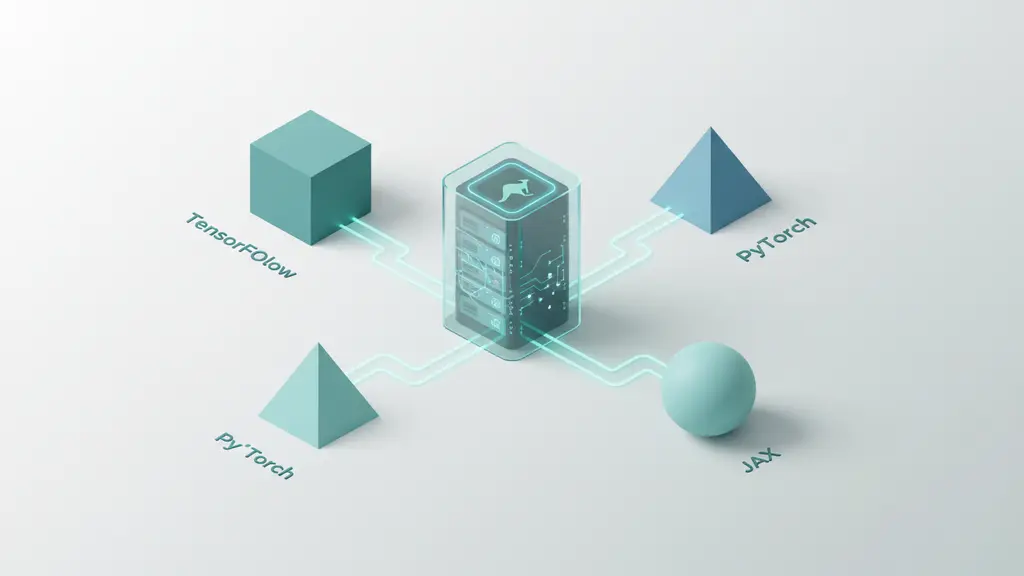
Selecting the right technology stack is critical for performance, integration flexibility, and compliance with Australian standards.
Summary Table: Leading Frameworks and Use Cases
| Framework | Use Case | LLM Support | Hosting Options | Best For |
| LangChain | Modular, open-source | GPT-4.1, Claude | AU/Cloud/On-prem | Custom, high-security |
| Rasa | Open-source, NLU/NLG | Llama, GPT series | AU cloud/on-prem | SME/enterprise, onshore |
| Dialogflow | Google-powered, easy UI | Proprietary/LLMs | GCP Australia | Rapid prototyping |
| Oracle Digital Assistant | Enterprise focus | Multiple LLMs | Oracle AU regions | Large orgs, multi-channel |
| Azure Bots | Microsoft stack integration | Azure OpenAI | Azure AU Central | MS365-centric businesses |
Proprietary vs. Open-Source
- Open-source (LangChain, Rasa): Greater control, supports on-premise or hybrid deployment, preferred for strict data residency.
- Proprietary/SaaS (Dialogflow, Oracle): Fast setup, but ensure AU-only data storage—review provider terms carefully.
Advanced Architectures
RAG (Retrieval Augmented Generation): Recommended for reliability—reduces hallucinations by grounding responses in your data. Supports enhanced compliance.
Local Hosting & Integration
Choose providers with proven onshore AU presence (e.g., AWS Sydney, Azure AU) and strong integration with local enterprise solutions (e.g., Oracle, Salesforce, MYOB).
How Much Does It Cost to Build and Operate an AI Chatbot in Australia? What ROI Can You Expect?
The cost to build an AI chatbot in Australia varies by scope, stack, and compliance requirements, but careful planning ensures strong return on investment.
| Option | Build Cost (AUD) | Ongoing (p.a.) | Pros | Cons |
| Local Agency | $40,000–$150,000+ | $10k–$40k | High-touch, tailored | Upfront cost |
| Open-Source | $25,000–$75,000+ | $7k–$15k | Control, low TCO | More DIY effort |
| SaaS | $2,000–$10,000+/yr | Included | Fast launch, scalable | Customization limits |
Typical ROI Levers
- Cost Savings: Reduced live agent costs (up to 30–50% on repetitive tasks)
- Lead Conversion: Bots boost lead capture and nurturing
- 24/7 Service: Enhanced customer satisfaction and retention
ROI Calculator (Basic Formula)
ROI (%) = [(Cost Saved + Revenue Gained - Total Cost) / Total Cost] x 100
Example:
If chatbot reduces customer service cost by $50,000 p.a., increases sales by $20,000, and costs $25,000 to build + $10,000/year to run, ROI in year one = [(50,000+20,000-35,000)/35,000]=100%.
SME budget: $25k–$50k initial, $5k–$10k annual
Enterprise: $75k–$250k+, $20k–$50k annual
Government/public sector: Similar to enterprises, may require extensive compliance/procurement processes.
What Are the Most Common Pitfalls and Best Practices When Deploying Chatbots in Australia?
Deploying chatbots in Australia involves unique challenges—many projects falter from compliance, integration, or user adoption missteps.
Top Pitfalls:
- Overlooking Privacy Act requirements and failing data residency audits.
- Using offshore hosting, putting data and project at risk.
- Rushed integration—leading to broken workflows or data leaks.
- Neglecting staff training and change management.
- Failing to retrain chatbot models, resulting in stale or inaccurate responses.
Australian Best Practices Checklist
- Engage legal and IT security experts early.
- Use only onshore (Australian) hosting for all data.
- Run security and compliance audits before launch.
- Provide clear user privacy notices via chatbot UX.
- Schedule regular reviews for retraining and compliance updates.
- Document architecture, data flows, and integration endpoints.
- Invest in staff and customer onboarding.
Case Study
A financial services firm in Melbourne was fined for deploying a chatbot that processed sensitive data offshore—audits revealed a lack of APRA CPS 234 compliance. Early legal review and onshore-only deployment could have avoided this costly oversight.
What Are the Top Use Case Snapshots for AI Chatbots in Australian Industries?
AI-powered chatbots deliver value across Australian sectors—from finance to public services, tailored for compliance and scalability.
| Industry | Use Case Example | Compliance Note |
| Finance | Customer onboarding, KYC automation | APRA, Privacy Act 1988 |
| Healthcare | Patient FAQs, appointment triage | Sensitive data—My Health Records Act |
| Retail | Product Q&A, order updates, cart recovery | PCI DSS, Privacy |
| Government | Digital citizen support, form guidance | OAIC, government data policies |
| SME | Cost-efficient support, lead capture | Ensure Privacy Act alignment |
Mini Use Case Snapshots
- Banking: A Big Four Australian bank reduced onboarding time by 40% with a compliant chatbot linked to core banking systems.
- Healthcare Group: Deploys a triage assistant, encrypting all patient data and adhering to OAIC guidelines.
- Retail Chain: Uses Rasa on AWS Sydney for omnichannel support, improving CSAT by 20%.
How Do You Integrate a Chatbot with Australian Business Systems?
Integration is pivotal for business value—Australian organizations must prioritize security, compliance, and smooth workflow connections.
Key Steps:
- List Target Systems: Map which CRMs (e.g., Salesforce, HubSpot), ERPs (MYOB, SAP), and channels (WhatsApp, website) require chatbot integration.
- Secure API Integration: Use OAuth2, JWT, or equivalent secure token exchange; log all access for compliance.
- Data Residency Architecture: Route all API data via onshore services (local cloud or direct connect).
- Test and Audit: Simulate workflows, monitor for leakage or data boundary violations.
- Change Management: Document integration points, train staff, and support user transition.
Integration Example Flow
[User] → [Chatbot UI] → [API Gateway on AU Cloud] → [Business System (CRM/ERP)]
Always ensure that chatbot conversations and data stay within approved AU environments and maintain continuous auditing.
FAQs: Building AI Chatbots in Australia
What are the key steps to building an AI chatbot in Australia?
To understand how to build ai chatbot in australia, follow six core steps: define the use case, select a compliant tech stack, map system integrations, ensure privacy compliance, develop and test thoroughly, and maintain ongoing regulatory alignment. This structured approach supports successful ai chatbot development in australia.
Which legal requirements must AI chatbots meet in Australia?
When learning how to build ai chatbot in australia, businesses must comply with the Privacy Act 1988, follow OAIC guidance, ensure onshore data storage, and meet APRA standards in regulated industries. Legal compliance is a critical part of building an ai chatbot for australian businesses.
How much does it cost to develop an AI chatbot for an Australian business?
The cost of ai chatbot development in australia typically ranges from $25,000 to $150,000+ upfront, with annual maintenance between $5,000 and $40,000+. Costs depend on complexity, compliance requirements, integrations, and hosting infrastructure when building an ai chatbot for australian businesses.
How do I ensure my chatbot complies with the Privacy Act and APRA?
If you want to know how to build ai chatbot in australia compliantly, ensure personal data is stored onshore, implement secure hosting, provide transparent privacy notices, and align with APRA CPS 234 for regulated sectors. Compliance is central to responsible ai chatbot development in australia.
What are the best frameworks and platforms for chatbots in Australia?
Popular tools for ai chatbot development in australia include LangChain, Rasa, Dialogflow, Llama, GPT-4.1, and Oracle Digital Assistant. When building an ai chatbot for australian businesses, ensure the platform supports secure Australian data hosting.
Can I deploy and host a chatbot entirely on Australian servers?
Yes. A key part of understanding how to build ai chatbot in australia is selecting compliant infrastructure such as AWS Sydney, Azure Australia, Google Cloud Australia, or local data centers to maintain onshore data residency.
What is RAG architecture and why is it important?
RAG, or Retrieval Augmented Generation, enhances chatbot accuracy by combining large language models with internal business data. It is widely recommended in ai chatbot development in australia, especially for regulated sectors where accuracy and compliance are critical.
How long does it take to build and deploy an enterprise chatbot in Australia?
Timelines for building an ai chatbot for australian businesses typically range from 3 to 12 months, depending on integrations, security requirements, and compliance reviews involved in ai chatbot development in australia.
What are common mistakes in deploying AI chatbots in Australia?
Common mistakes when learning how to build ai chatbot in australia include ignoring privacy laws, using offshore hosting without compliance checks, insufficient testing, and failing to retrain or audit the system after deployment.
How do I integrate a chatbot with my existing Australian business systems?
Secure API integrations, authenticated data flows, and documented onshore processing are essential steps in ai chatbot development in australia. Proper integration ensures compliance and performance when building an ai chatbot for australian businesses.
Conclusion: Next Steps for Building Your Australian AI Chatbot
Building an AI chatbot in Australia can significantly strengthen your digital strategy when it is planned with compliance, security, and long term business value in mind. Success depends on aligning technical architecture with Australian privacy laws, ensuring secure onshore data handling, and integrating seamlessly with existing systems. When these elements are addressed from the outset, organizations can reduce risk while improving customer experience and operational efficiency.
By following the structured approach outlined in this guide, you can move from concept to deployment with clarity and confidence. Focus on defining clear objectives, selecting the right technology stack, validating compliance requirements early, and continuously monitoring performance after launch.
With the right strategy and execution, your AI chatbot can become a scalable, compliant, and future ready asset that supports sustainable growth in the Australian market.
Key Takeaways
- Compliance is Critical: Data residency, Privacy Act 1988, and sector rules must guide every project decision.
- Fit-for-Purpose Tech: Select frameworks and hosting aligned with your industry, security, and integration needs.
- ROI-Driven Approach: Build a business case around cost savings, service level gains, and new opportunities.
- Continuous Improvement: Plan for post-launch retraining, auditing, and compliance renewals.
- Expert Input Matters: Engage local legal and technical specialists from day one.
This page was last edited on 25 February 2026, at 1:50 pm
Contact Us Now

Contact Us Now
Start a conversation with our team to solve complex challenges and move forward with confidence.


