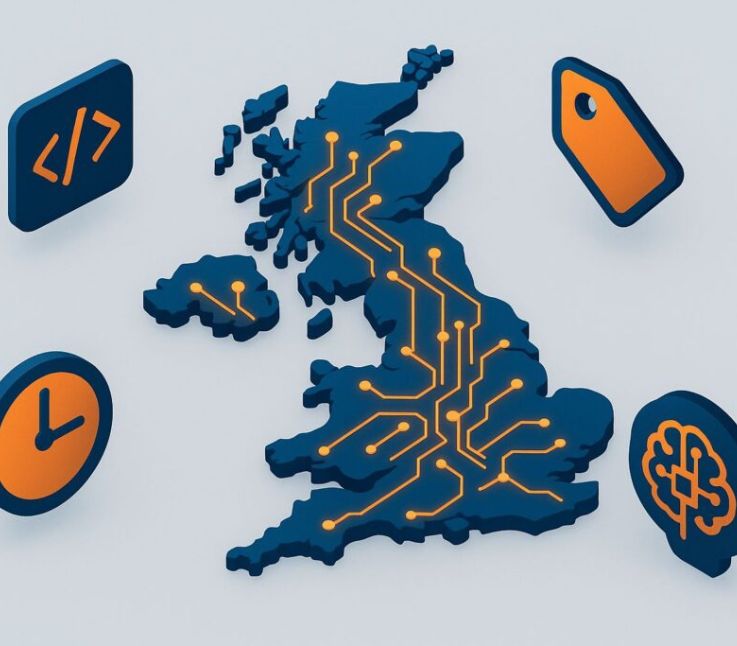
Modern UK businesses face critical decisions when investing in web development, navigating complex terminology, significant costs, and a crowded agency market. This guide to web development services in the UK is designed to simplify that journey and help you make informed decisions. With over 80% of UK consumers expecting businesses to have a strong digital presence, a professional website is often the first touchpoint for prospects.
However, choosing the right web development services can be confusing. Stakeholders must understand processes, budgeting, and compliance to avoid costly missteps. This guide breaks down the web development landscape for UK organisations, explaining service types, pricing, the step by step process, the latest technologies, compliance requirements, and future trends.
By the end, you will have a clear, cost aware roadmap to confidently choose the right web development approach and drive successful digital growth.
A Practical Guide to Web Development Services in the UK
A practical guide to web development services in the UK helps businesses understand how to plan, build, and manage a successful website while navigating costs, agencies, and compliance requirements. It simplifies the entire process so you can make informed decisions without unnecessary risk.
In the UK, web development services typically cover the full lifecycle of a website, including strategy, design, development, testing, launch, and ongoing maintenance. Whether you are a startup, SME, or enterprise, choosing the right approach depends on your business goals, budget, and technical needs.
A practical approach involves defining clear project requirements, selecting the right technology stack such as WordPress, Shopify, or custom frameworks, and working with an agency that understands UK regulations like GDPR and accessibility standards.
By following a structured process and focusing on long term scalability, businesses can ensure their website not only looks professional but also performs effectively, supports growth, and delivers measurable results.
What Do Web Development Services Include in the UK?
Web development services in the UK encompass end-to-end support for businesses seeking an online presence—covering strategy, design, development, launch, and ongoing support.
UK web development companies typically offer:
- Discovery & Strategy: Stakeholder workshops, competitor analysis, requirements gathering.
- Website Design: UI/UX design, responsive layouts, brand-aligned visuals.
- Web Development: Front-end and back-end coding, database integration, CMS implementation (e.g., WordPress development UK, Shopify web development UK).
- Content Integration: Copy, images, SEO optimisation.
- Testing & Launch: Cross-browser and device testing, QA, deployment.
- Maintenance & Support: Updates, hosting, backups, security, website maintenance UK.
Types of websites and solutions include:
- Business/Corporate Websites: Brochure sites, service portfolios, lead generation.
- eCommerce Platforms: Shopify, WooCommerce, Magento solutions for selling online.
- Custom Applications: Bespoke platforms, membership sites, complex integrations.
- SME/Enterprise Sites: Scalable, secure platforms supporting business growth.
Service Delivery Modes:
- Bundled (Full Service): End-to-end delivery from a single agency.
- À la Carte: Individual services such as design only, SEO, or ongoing support.
- Retainer/On-Demand: Monthly website maintenance UK or ad hoc enhancements.
Typical UK market expectations:
| Service | Typical Inclusions |
| Discovery & Planning | Workshops, briefs, specs, CX/UX research |
| Design | Wireframes, mock-ups, brand alignment, UI review |
| Development | Coding, integrations, CMS setup, testing |
| Launch | Hosting, performance optimisation, SEO setup |
| Ongoing Maintenance | Updates, backups, support, security patching |
Takeaway: UK web development agencies offer a full spectrum of digital services, often bundled for best results, with clear boundaries between design, build, and post-launch support.
Step-by-Step: What is the Web Development Process in the UK?
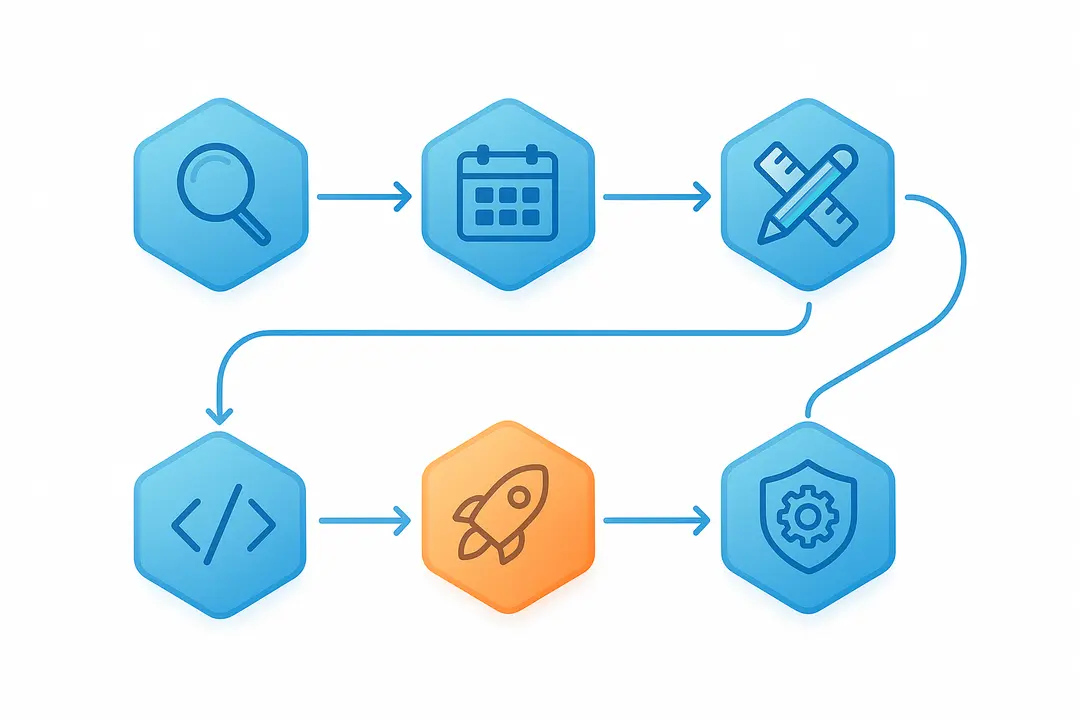
A typical UK website development process follows seven structured phases, ensuring predictable results and ongoing compliance.
Main steps in the UK web development process:
- Discovery & Requirement Gathering: Define business goals, target audiences, project scope.
- Planning: Create technical specs, user journeys, and clear timelines.
- Design: Develop wireframes, prototypes, and visual concepts for approval.
- Development: Build front-end and back-end; implement CMS and integrations.
- Testing: Ensure cross-device/browser compatibility, accessibility, performance.
- Launch: Deploy, monitor, and optimise live site.
- Maintenance & Support: Offer updates, analytics, troubleshooting, website maintenance UK.
Key Details:
- Timelines: UK agency projects typically take 2–4 weeks for brochure sites, up to 3–6 months for advanced eCommerce/platform builds.
- Client Involvement: Regular checkpoints for feedback during discovery, design approval, user testing, and launch sign-off.
- Compliance Built-In: GDPR and accessibility (WCAG) are addressed during design, development, and testing.
| Project Phase | Typical Duration (SME) | Agency-Client Touchpoints |
| Discovery | 1–2 weeks | Workshop, requirements approval |
| Planning | 1 week | Spec sign-off |
| Design | 2–3 weeks | Iterative feedback |
| Development | 2–6 weeks | Demos, sprint reviews |
| Testing | 1–2 weeks | UAT, bug fixes |
| Launch | 1–3 days | Go-live, handover |
| Maintenance | Ongoing | Regular reports, support contact |
Takeaway: A structured process with clear checkpoints and compliance reviews ensures UK web development projects stay on time, within budget, and fully meet legal standards.
How Much Does Web Development Cost in the UK? (Costs, Pricing, and Factors)
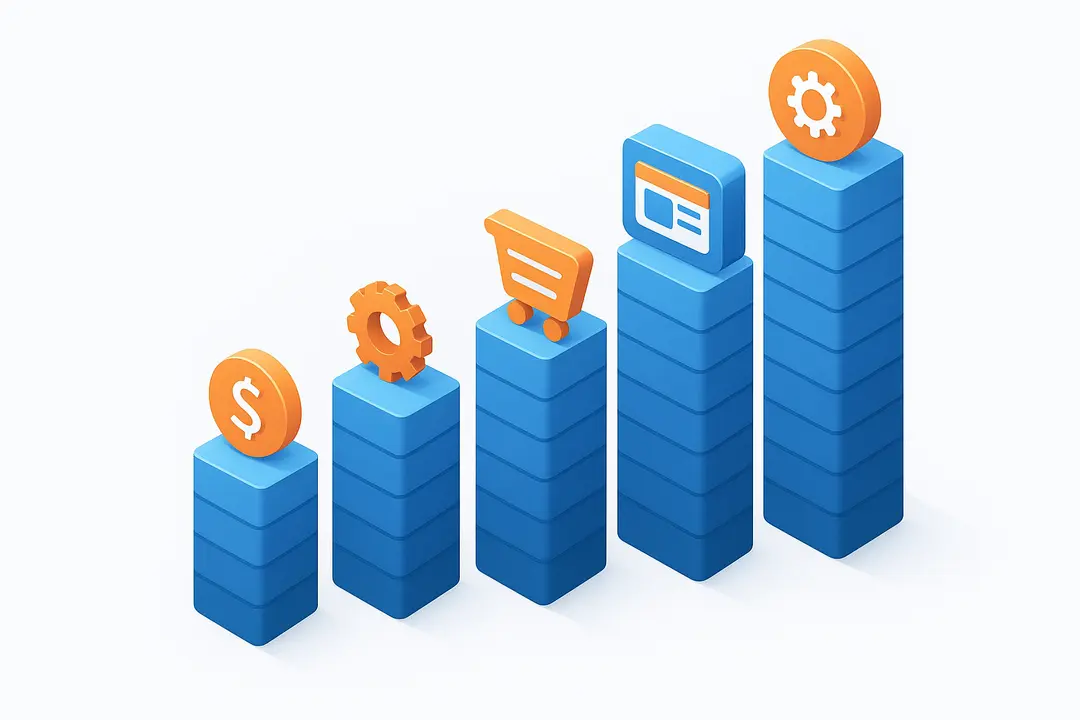
Web development costs in the UK vary significantly based on website size, complexity, required integrations, and agency tier. Transparent budgeting is possible with an understanding of typical ranges and influencing factors.
Average Price Ranges by Website Type
| Website Type | Features Included | Typical UK Cost (£) |
| Simple/Brochure Site | 5–10 pages, basic forms | £1,500–£5,000 |
| SME Business Website | 10–25 pages, custom design, CMS | £3,000–£10,000 |
| eCommerce Site (Shopify/WP) | 20+ pages, product catalogue | £7,500–£25,000+ |
| Custom Web Application | Advanced integrations, bespoke | £15,000–£75,000+ |
| Enterprise Platform | Scalability, security, API | £25,000–£100,000+ |
Note: Prices sourced from current UK agency benchmarks (Clutch, The Drum, industry surveys, 2024)
Pricing Models
- Fixed Price: Predetermined scope and cost—ideal for clearly defined projects.
- Hourly/Day Rate: Flexible, charged by the time spent—useful for ongoing tweaks.
- Milestone-Based: Payment at agreed stages (e.g., design, build, launch).
- Outcome-Based: Tied to delivering specific business goals or KPIs.
Factors Affecting Website Development Costs
- Number of pages and features (e.g., booking systems, eCommerce, custom forms)
- Technology stack and integrations (WordPress development UK, headless CMS, Shopify)
- Agency expertise, location, and reputation
- Design complexity and brand requirements
- Level of post-launch support and website maintenance UK
Cost-Saving Tips
- Provide clear requirements up front to avoid scope creep.
- Use proven platforms (like WordPress or Shopify) unless bespoke needs are clear.
- Choose a regional agency for rates below those of top-tier London firms.
- Consider phased development for complex builds.
Takeaway: Expect to invest £3,000–£25,000+ for a typical SME or eCommerce website, with transparent pricing models and customisation options available from reputable UK agencies.
Which Web Technologies and Platforms Are Popular in the UK?
UK agencies leverage a range of technologies to deliver flexible, secure, and scalable web solutions. Choice of platform affects cost, future-proofing, and the ability to scale as your business grows.
Most Common Technologies and Platforms:
| Platform/Tech | Typical UK Use Cases | Pros | Cons |
| WordPress | SMEs, content, brochures | Flexible, widely supported | May require plugins for scale |
| Shopify | eCommerce businesses | Fast setup, secure, scalable | Ongoing fees, less custom |
| Magento | Large eCommerce, custom | Highly customisable, robust | Higher cost, complex build |
| Custom Build (React, Node.js, Angular) | SaaS, bespoke apps | Performance, tailored | Requires specialist devs, budget |
| Headless CMS (e.g., Contentful) | Multi-channel, future-proofing | Decoupled, scalable | Technical, higher setup cost |
Notable Trends and Adoption:
- Front-end frameworks: React, Angular remain standard for interactive sites.
- Back-end: Node.js, PHP, Python are common depending on project size.
- Emerging Solutions: Headless CMS, AI-enhanced site search, low-code tools.
- Platform Matching: Shopify for eCommerce; WordPress for SMEs; custom stacks for unique/enterprise needs.
Takeaway: Most UK web development agencies match platform and tech stack to your business goals, balancing cost, scalability, and future-readiness.
How Do You Choose the Right UK Web Development Agency or Partner?
Selecting the best UK web development partner means vetting their expertise, fit, and trustworthiness against your project needs.
Core Selection Criteria:
- Relevant Portfolio: Experience with projects like yours (sector, size, tech).
- E-E-A-T (Experience, Expertise, Authoritativeness, Trustworthiness): Demonstrated thought leadership, client testimonials, awards, and published team credentials.
- Technical Capability & Sector Fit: Familiarity with your preferred platform or technology stack.
- Compliance and Security Knowledge: Proven process for GDPR, WCAG, and ongoing security support.
- Clear Communication: Responsive, collaborative, and transparent project management.
How to Review and Compare Agencies
- Testimonials and Case Studies: Real-world outcomes and references from UK clients.
- Awards & Memberships: Affiliations with bodies like BIMA, The Drum, or Clutch.
- Proposals/Interviews: Depth of discovery process, transparency in contract terms.
- Red Flags: Overly vague proposals, lack of ongoing support, minimal compliance details.
- Regional vs National Agencies: London and Manchester offer richer expertise; regional partners may provide better value and personalisation.
Sample Agency Selection Checklist
- Portfolio aligns with project needs and sector.
- Compliance (GDPR/WCAG) track record evidenced.
- Clear costing and project scope.
- Post-launch support defined.
- Positive independent reviews and references.
What Trends Will Shape UK Web Development in 2025–2026?
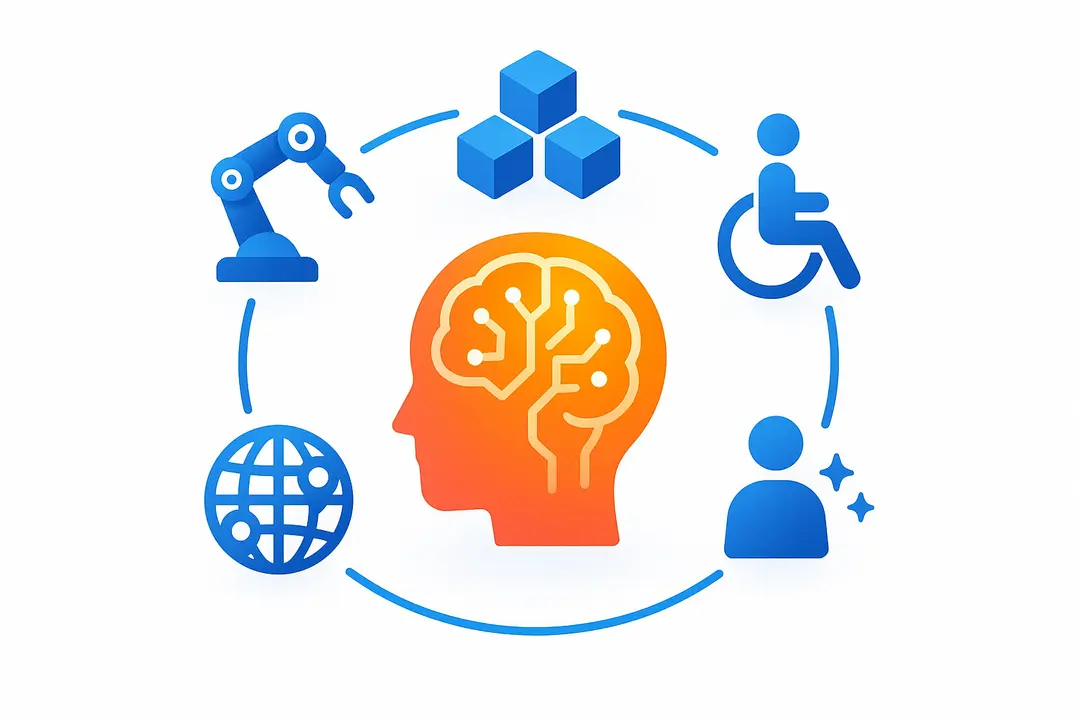
Staying ahead in the UK web development space requires embracing the latest technology and compliance developments.
Major Trends for 2025–2026:
- AI & Automation: Integrations for site personalisation, automated content, voice search, and live chat.
- Headless/Decoupled CMS: Greater flexibility for multi-channel, content-rich sites.
- Accessibility (Inclusive Design): Stronger legal pressure for WCAG 2.2+, improved user experiences for all.
- Multi-language and Localisation: Serving diverse UK and global audiences.
- Predictive Personalisation: Especially for UK eCommerce, using data to tailor user journeys.
“We’re seeing rapid take-up of AI tools for everything from smarter search to predictive product recommendations—both driven by growing customer expectations in the UK online space.”
– UK Digital Agency Lead, BIMA (2024 Interview)
Takeaway: Future-ready web development in the UK blends AI, accessibility, and platform flexibility to deliver superior digital experiences.
How Do UK Agencies Handle Compliance, Security, and Accessibility?
Legal compliance and digital trust are top priorities for UK web development agencies, especially given GDPR, accessibility requirements, and increasing cyber risk.
Key UK Compliance Requirements:
- GDPR: Personal data storage, cookie consent, privacy policies.
- WCAG 2.1+ Accessibility Standards: Making sites usable for all, including disabled users.
- Cookie Law Compliance: Correct consent mechanisms for analytics/marketing.
- Security Best Practices: SSL/TLS certificates, secure hosting, regular threat testing.
- Ongoing Maintenance: Regular updates, patches, backups to meet legal and security standards.
Sample Compliance Checklist
| Requirement | Typical UK Agency Action |
| GDPR/Data Privacy | Privacy policy, consent pop-ups |
| Accessibility (WCAG) | Alt text, keyboard nav, colour contrast |
| Security | HTTPS, DDoS protection, secure hosting |
| Cookie Law | Opt-in cookie banners |
| Ongoing Support | Policy/legal updates, threat monitoring |
Takeaway: Leading UK agencies embed compliance, security, and accessibility into every step of the web development process, protecting clients and end-users alike.
What KPIs and ROI Can You Expect from UK Web Development?
Web development investments should deliver measurable business value in the UK. Monitoring key performance indicators (KPIs) and ROI reveals whether digital goals are being met.
Core Website KPIs:
- Traffic Growth: Increase in monthly unique visitors.
- Conversion Rate: Percentage of visitors becoming leads or customers.
- Engagement Metrics: Time on site, bounce rate, page views per session.
- Performance/Site Speed: Measured against Google Core Web Vitals.
- Lead Generation/Revenue: Contact form completions, eCommerce sales.
Typical UK SME benchmarks: According to UK web agency reporting, a refreshed site can deliver a 10–30% uplift in conversions and double-digit traffic increase within the first year.
Proving ROI:
- Google Analytics & Custom Dashboards: Track business-impacting results post-launch.
- Quarterly/Monthly Reporting: Regular performance check-ins.
- Ongoing Optimisation: Use data for continual improvement.
Takeaway: Transparent, analytics-driven reporting is standard among top UK agencies, translating web investment into tangible business benefits.
UK Web Development Services FAQs
What is included in the guide to web development services in the uk?
The guide to web development services in the uk covers key stages such as discovery, design, development, SEO, security, launch, and ongoing support. These uk web development services are tailored to meet business goals while ensuring compliance.
How much does it cost according to the guide to web development services in the uk?
Based on the guide to web development services in the uk, website costs typically range from £1,500 for basic sites to £25,000+ for advanced eCommerce or custom solutions, depending on complexity and agency expertise.
What is the standard process in the guide to web development services in the uk?
The guide to web development services in the uk outlines a structured process including discovery, planning, design, development, testing, launch, and maintenance, followed by ongoing uk web development services support.
How do you choose from web development agencies uk effectively?
When selecting from web development agencies uk, evaluate their portfolio, industry experience, compliance knowledge, communication style, and ability to deliver scalable uk web development services.
What trends are highlighted in the guide to web development services in the uk?
The trends such as AI-driven personalisation, headless CMS, accessibility improvements, and stronger security practices among web development agencies uk.
Do uk web development services include GDPR and accessibility compliance?
Yes, most uk web development services include GDPR and WCAG compliance as standard, ensuring websites meet legal and accessibility requirements outlined in the guide to web development services in the uk.
How long does it take based on the guide to web development services in the uk?
According to the guide to web development services in the uk, timelines range from 2 to 4 weeks for simple sites and up to 3 to 6 months for complex projects handled by web development agencies uk.
Which technologies are used in uk web development services?
Common technologies used in uk web development services include WordPress, Shopify, React, Node.js, Magento, and headless CMS platforms recommended in the guide to web development services in the uk.
What support do web development agencies uk provide after launch?
Top web development agencies uk offer maintenance, updates, security monitoring, and performance optimisation as part of ongoing uk web development services.
What defines top web development agencies uk in the guide to web development services in the uk?
The guide to web development services in the uk defines top agencies by their expertise, compliance standards, transparent communication, and ability to deliver innovative and scalable uk web development services.
Can small businesses benefit from the guide to web development services in the uk?
Yes, small businesses can use the guide to web development services in the uk to understand costs, choose the right web development agencies uk, and build scalable websites within budget.
How can you get the best results from uk web development services?
To maximize results from uk web development services, define clear goals, choose experienced web development agencies uk, and follow the structured approach outlined in the guide to web development services in the uk.
Summary Table: UK Web Development at a Glance
| Service Type | Average UK Cost | Typical Timeline | Leading Tech/Platforms | Compliance Notes |
| Simple/Brochure Website | £1,500–£5,000 | 2–4 weeks | WordPress, Custom HTML | GDPR, basic WCAG |
| SME/Ecommerce Website | £7,500–£25,000 | 1–3 months | WordPress, Shopify, Magento | GDPR, WCAG 2.1+, Cookie Law |
| Custom/Bespoke Platform | £15,000–£100,000+ | 3–6+ months | React, Node.js, Headless CMS | Enhanced security & accessibility |
| Ongoing Maintenance/Support | £50–£200/mo+ | Ongoing | N/A | Security updates, legal upkeep |
Conclusion: Getting Started With UK Web Development—Next Steps
Investing in web development is one of the most impact-driven moves UK businesses can make—but the Investing in web development is a key step for any UK business looking to build a strong digital presence. With a clear understanding of the process, costs, technologies, and compliance requirements, you can make informed decisions and avoid common pitfalls.
By carefully evaluating your goals and choosing the right development partner, you can create a website that is not only functional and secure but also aligned with your long term growth. A well planned approach ensures your investment delivers real value and supports your business in a competitive digital landscape.
Key Takeaways
- UK web development services cover strategy, design, build, launch, and support—with strong compliance standards.
- Costs range from £1,500–£100,000+, based on complexity and technology stack.
- Choosing the right agency means prioritising experience, compliance, and sector fit.
- Emerging trends—AI, headless CMS, accessibility—are fast reshaping the UK market.
- Measuring KPIs and ROI ensures your website investment drives real business growth.
This page was last edited on 9 July 2026, at 11:10 am

Start a conversation with our team to solve complex challenges and move forward with confidence.