
To expand your team offshore in 2026: decide on a hiring model, define roles and skills, set up compliant hiring and onboarding, use integrated tools, and maintain cultural and management alignment for lasting success.
Building a global team is not just about saving money anymore. The real issue: top talent is scarce at home, but risky to hire abroad without a clear plan. CEOs and HR leaders worry about laws, culture clash, and quality.
In my experience, the difference between a thriving offshore team and one that struggles starts with having the right framework. You need clarity at every step to avoid hidden costs and morale issues.
This playbook gives you the tools, steps, and checklists to expand offshore with confidence. You’ll find real examples, compliance guides, and regional insights for 2026.
Why Should You Consider Expanding Your Team Offshore?
Offshore team expansion means hiring talent in overseas markets, often to control costs, access skills, or speed up delivery. Many fast-growth companies see this as a strategic move, not just a cost play.
Today, the global talent pool lets you scale up, fill skill gaps, and run operations 24/7. Offshore hiring can also help relieve onshore teams, reach new markets, and boost business agility.
According to the LinkedIn Global Talent Report 2026, over 61% of midsize companies have offshore or hybrid talent on staff. Business leaders cite these major benefits:
- Lower costs: Offshore teams in the Philippines or India can cost 40–60% less than onshore hires, based on current industry data.
- Global talent access: Recruit for hard-to-find skills—such as cloud, data, and QA—where the talent pool is strongest.
- Scalability: Ramp teams up or down as needed without local hiring delays.
- Resilience: Distribute teams to avoid single-country risks or market shocks.
- Market reach: Set up customer-facing teams closer to your growth markets.
Choosing between offshore, nearshore, and onshore models matters. Here’s a quick comparison:
| Factor | Offshore | Nearshore | Onshore |
|---|---|---|---|
| Cost savings | Highest | Moderate | Lowest |
| Time zone overlap | Low | Medium-High | Highest |
| Language/culture | Variable | More similar | Fully matched |
| Talent pool | Largest | Growing | Smaller |
A better approach is to match your goals—whether cost, skills, or time—with the region that fits best. I have seen SaaS firms use offshore QA in Asia and nearshore product teams in LatAm to great effect.
What Are the Key Steps to Expanding Your Team Offshore in 2026?
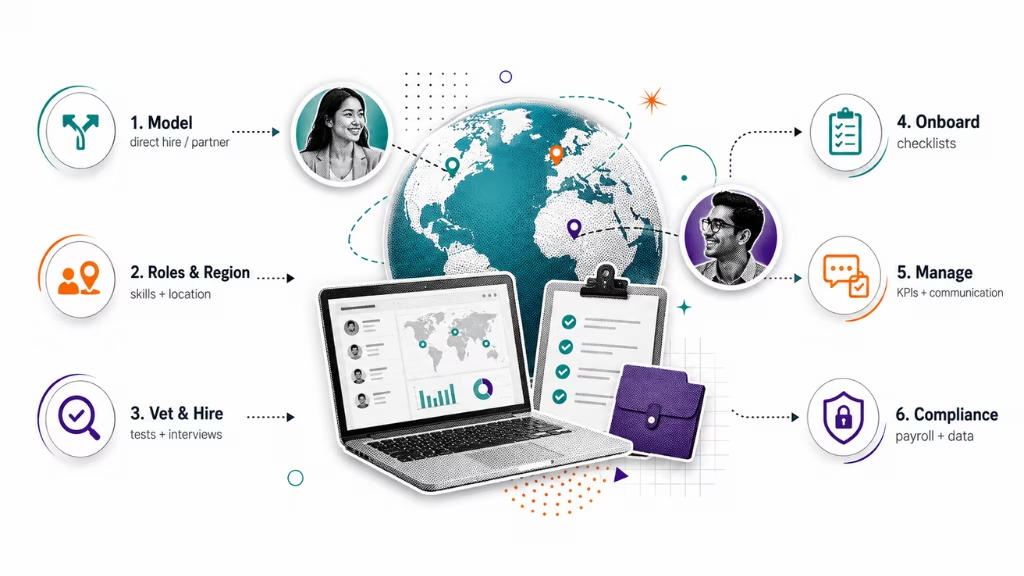
Expanding offshore works best when you follow a step-by-step plan. Each phase sets you up for success, reducing surprises and improving outcomes for both your business and new hires.
Here is the process at a glance:
- Choose your offshore model: direct hire or staffing partner.
- Define team roles, key skills, and pick your location.
- Build a compliant hiring and vetting process.
- Onboard and integrate new offshore hires with detailed checklists.
- Set up clear management, performance, and communications plans.
- Ensure ongoing compliance for payroll, labor, and data.
How to Choose the Right Offshore Model: Direct Hire vs. Staffing Partner
Choosing between a direct hire and a staffing partner shapes your control, risk, and cost profile. Each approach has pros and cons.
In my POV, larger firms often want direct hires for control, while smaller or first-time offshore teams use partners for speed and reduced complexity.
Here’s how they compare:
| Factor | Direct Hire | Staffing Partner |
|---|---|---|
| Control | High | Moderate |
| Speed | Slower (self-run) | Faster (ready pool) |
| Compliance | Complex | Simplified by partner |
| Cost | Lower (long run) | Higher per role |
| Scalability | Manual scaling | On-demand scaling |
| Setup | Legal/tax/talent | Single contract |
- Quick verdict: If you want complete control and plan to scale over time, direct hire wins. If you need speed, support, or less complexity, choose a staffing partner.
Defining Team Roles, Skill Requirements, and Location Strategy
Before you begin, outline each role and the skills you need. A mistake I see often is hiring generically—resulting in skills mismatches or poor team fit. Match roles to business objectives, not just titles.
Next, compare regions based on core criteria: skills market, salary, time zone, and language. Here’s a snapshot for 2026:
| Region | Key Skills | Avg. Salary (USD)* | English Level | Time Zone vs. US |
|---|---|---|---|---|
| Philippines | Customer Service, QA | $16,000–$22,000 | Excellent | +12 to +15 hours |
| India | Development, QA | $18,000–$27,000 | Very good | +9 to +12 hours |
| Latin America | Dev, Design, Support | $22,000–$35,000 | Good | 1 to 3 hours |
| E. Europe | Dev, Analytics | $30,000–$45,000 | Good/Very good | +5 to +8 hours |
*Based on 2026 LinkedIn and Statista benchmarks.
Emerging hotspots like Vietnam and Colombia now offer strong tech talent at competitive rates. Always verify local stability, infrastructure, and legal landscape before moving.
- Quick verdict: Define roles first, then align region to skills, cost, and time strategy.
The Offshore Hiring & Vetting Process Explained
Hiring offshore goes well beyond posting a job. The process in 2026 starts with standout job descriptions tailored for the region and role.
In my experience, the best candidates come from clear, focused ads that list both “must-have” and “nice-to-have” skills. Use reputable job boards or staffing platforms specialized for your target country.
Screen candidates using a mix of:
- Skill tests that match real job tasks
- Structured interviews (remote video)
- Reference checks from local employers
Legal and compliance vetting is key. Today’s processes use AI screening tools to check for education, identity, and legal right to work. Ensure you comply with local labor laws and international data privacy standards.
- Quick verdict: Smart vetting prevents costly mis-hires and legal problems.
Effective Onboarding and Integration for Offshore Teams
Onboarding makes or breaks offshore success. Many teams fail here when they skip documentation or leave new hires to “sink or swim.”
You’ll need:
- Clear onboarding workflows (assign owners for each step)
- Role-based access to systems, policies, and resources
- Formal knowledge transfer sessions (use screen sharing/recordings)
- Assigned mentors or “buddies” from both onshore and offshore teams
A sample onboarding checklist for offshore hires:
- Pre-start: Contracts, system access, welcome kit
- Day 1–5: Introductions, team meetings, first tasks
- Week 1–2: Role training, shadowing, process walkthroughs
- First month: Project assignment, performance feedback
Provide detailed guides and a feedback loop for early questions. In my experience, having a vetted checklist prevents confusion and cuts ramp-up time by up to 30%.
- Quick verdict: Invest time upfront—strong onboarding leads to better engagement and retention.
Managing Performance & Communication in Distributed Teams
Distributed teams need clear rules and daily touchpoints. Set measurable output goals—not just work hours.
Use these tools:
- Slack (messaging)
- Zoom or Google Meet (video, quick huddles)
- Asana or Jira (task management, sprints)
- AI-based assistants for scheduling and meeting recap
Good teams run daily or weekly check-ins, share written updates, and set team norms (expected response times, core hours). Trust matters—I have seen output-based KPIs work far better than strict time tracking.
Encourage feedback, celebrate wins, and build a sense of inclusion.
- Quick verdict: Plan communication and KPIs to keep everyone connected and accountable.
Ensuring Compliance: Payroll, Labor Laws, and Data Security
Ignoring compliance is risky. The real issue is that global payroll, worker classification, and data rules can shift quickly.
Always check:
- Local payroll and tax obligations
- Employee versus contractor classification
- Key local employment laws (leave, benefits, contracts)
- Data privacy (GDPR and country laws)
- Intellectual property protection
You can manage this in-house, or most staffing partners will cover it for you. Keep a compliance checklist for every country. Link directly to official labor resources.
Example essentials:
- Registered local employer or compliant vendor
- Up-to-date contracts
- Clear IP and confidentiality agreements
- Payroll provider with local tax handling
- Quick verdict: Compliance may feel slow, but it saves you from legal and financial headaches later.
What Are Common Pitfalls When Expanding Offshore—and How Can You Avoid Them?
Expanding offshore has pitfalls that many guides leave out. In my experience, these challenges arise most often in real-world projects and can affect team performance or cost.
Carefully managing these issues sets leaders apart:
- Time zone misalignment: Delays, missed meetings, or burnout from odd hours.
- Cultural gaps: Misunderstandings or friction during feedback, collaboration, or social exchanges.
- Onshore team resistance: Concerns over job security, unclear roles, or “us vs. them” divides.
- Hidden costs: Integration, extra overhead, equipment, or local admin fees.
- Quality and metric gaming: Focusing on numbers, not real outcomes, often leading to “box ticking” instead of real delivery.
To avoid these pitfalls:
- Use tools for time zone overlap and fair scheduling.
- Get buy-in from onshore staff and share the business case.
- Offer real onboarding and cultural exchange programs.
- Track clear KPIs tied to business output, not vanity metrics.
- Review processes and check data security as you scale.
Some firms run pilot projects with small teams and iterate based on lessons learned—an approach that helped us when scaling support and QA in India.
What Tools and Best Practices Are Essential for Offshore Team Success in 2026?
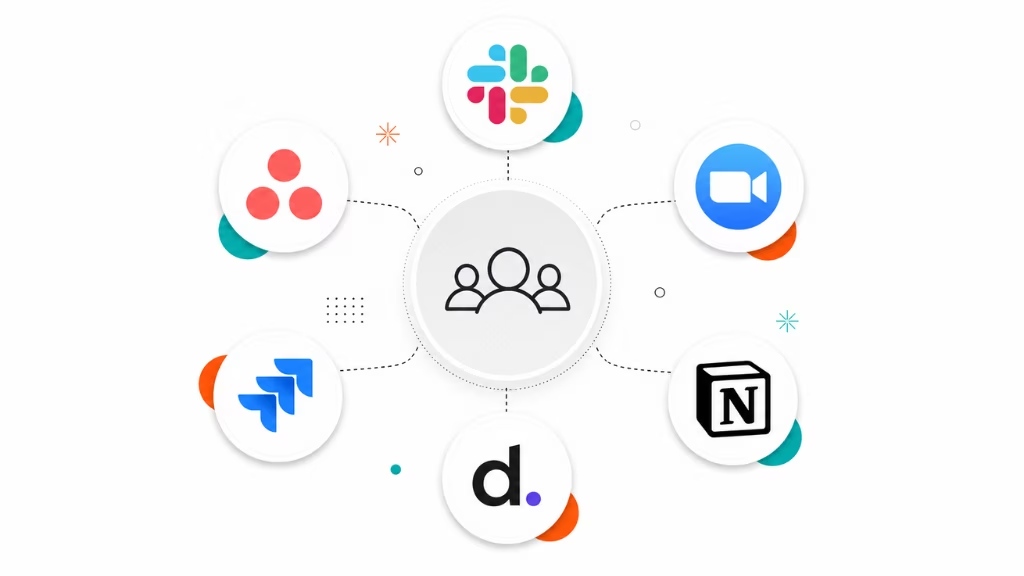
Choosing the right tools and processes makes offshore teams work as a single unit. You want communication, project tracking, and automation to feel natural.
Key platforms include:
- Slack: Messaging, groups, bots.
- Zoom / Google Meet: Video calls, recurring standups.
- Asana / Jira: Tasks, sprints, reports.
- Notion / Confluence: Documentation, onboarding material.
- AI onboarding and compliance tools: For training and law adherence.
| Tool | Core Function | 2026 Feature | Best Use Case |
|---|---|---|---|
| Slack | Chat, notifications | AI-driven summaries | Daily comms, status |
| Zoom | Video, screen share | Automated recaps | Standups, deep dives |
| Jira | Task/project tracking | Auto KPI reports | Agile/sprint teams |
| Notion | Docs, wikis, handbooks | Translation, AI help | Onboarding, policies |
| Deel (or similar) | Payroll, legal | Multi-country coverage | Compliance, payroll |
Best practices:
- Automate onboarding and reminders with AI assistants.
- Keep documentation up to date and version-controlled.
- Set weekly one-on-one feedback, not just annual reviews.
- Use workflow automation to monitor compliance and expiring contracts.
- Share all key info in a searchable, organized hub.
If you are scaling beyond 10–20 offshore hires, invest in dashboards that show core metrics, progress, and engagement rates. I have seen teams improve output and reduce churn by focusing on transparency and inclusion.
How Do Real Companies Expand Offshore?
Looking at real examples gives context for planning your offshore journey. In my experience, comparing regions side by side helps focus on what matters for your industry.
Case Study 1: SaaS Startup — India
- Needed: 10 QA engineers and 5 devs, quick ramp-up.
- Used: Staffing partner for recruitment and onboarding.
- Onboarded: 90 days (average).
- Outcomes: 38% cost savings, full 24-hour coverage, some time zone pain points.
- Lessons: Early investment in onboarding reduced turnover.
Case Study 2: Accounting Firm — Philippines
- Needed: 15 bookkeepers; English fluency is crucial.
- Used: Direct hire, heavy culture training.
- Onboarded: 45 days typical.
- Outcomes: Stable team, high client satisfaction, longer hiring cycle.
- Lessons: Clear documentation sped up learning.
Regional Cost & Timeline Comparison Table (2026 data):
| Region | Avg. Hiring Timeline | Avg. Salary (USD) | Main Skill |
|---|---|---|---|
| Philippines | 4–8 weeks | $18,000 | Support, accounting, QA |
| India | 6–10 weeks | $22,000 | Dev, QA, IT Ops |
| LatAm | 3–7 weeks | $27,000 | Product, support, dev |
| E. Europe | 5–9 weeks | $38,000 | Analytics, dev, R&D |
Lessons learned:
- Faster onboarding in LatAm due to time zone match, but higher salaries.
- Philippine teams excel at language support and process tasks.
- India is preferred for large tech builds but benefits from clear sprint rituals.
A better approach is to weigh both hard data and people factors before deciding.
How Riseup Labs Can Help
Selecting the right offshore partner can resolve many challenges I see most often: from slow hiring and compliance fear to culture and output issues.
Riseup Labs offers:
- Support at every phase: role mapping, talent vetting, onboarding, and payroll.
- AI-driven compliance insights and data protection guidance.
- Toolkits for onboarding, collaboration, and process automation.
- Regional experts to help with training and integration—all while reducing admin overhead.
Clients have used these services to cut launch time in half and reduce morale problems on blended teams. For businesses wanting a smooth start, Riseup Labs can become your reliable partner.
Conclusion
Expanding your team offshore in 2026 is not just about cost-cutting. It unlocks access to new skills, increases business agility, and supports around-the-clock execution. The difference between lasting value and painful missteps comes down to a step-by-step approach and the right partners.
Use this guide’s process: pick your model, define roles and regions, invest in onboarding, and maintain clear performance management. Companies that get this right use checklists, modern tools, and strong compliance to their advantage.
Riseup Labs is equipped to help at every stage—with the tech, local expertise, and process design that ensure your offshore team delivers real business results. If building a truly global, future-ready team matters, expert-backed platforms and AI-assisted development are the next frontier.
Take your next step: review the checklists, consult with experts, and set up the offshore team your business needs for 2026 and beyond.
FAQs
What are the key steps to expanding your team offshore?
Choose your offshore model, define roles and skills, set up compliant hiring and onboarding, use communication tools, and ensure ongoing management and compliance.
What are the main benefits of hiring offshore teams?
Benefits include cost savings, access to broader talent, flexible scaling, increased resilience, and expanded market reach.
What are common challenges when integrating offshore teams?
Frequent challenges are time zone overlap, cultural differences, communication breakdowns, hidden costs, and team alignment.
How do you choose between direct hire and a staffing partner for offshore expansion?
If you want full control and long-term scaling, direct hire is best. If you need speed and compliance support, a staffing partner is better.
Which tools are best for managing offshore or distributed teams in 2026?
Key tools include Slack, Zoom, Asana, Jira, Notion, and compliance/payroll platforms with AI features.
How do you ensure compliance with local labor law when hiring offshore?
Use local legal counsel or vetted staffing partners, update contracts, and follow labor, payroll, and data privacy rules for each country.
What’s the cost difference between offshore and onshore teams?
Offshore teams can save 40–60% in salary and overhead compared to onshore teams, depending on location and role.
How do you onboard and integrate offshore staff efficiently?
Use a checklist covering contracts, system access, training, mentors, and early feedback for efficient onboarding.
What are best practices for maintaining company culture with offshore teams?
Encourage regular communication, clear team goals, shared feedback rituals, and recognize contributions to include offshore staff.
How do you address time zone and communication issues with offshore staff?
Schedule overlapping work hours, use scheduling tools, set team norms, and rotate meeting times to share the load.
This page was last edited on 1 September 2026, at 10:45 am

Start a conversation with our team to solve complex challenges and move forward with confidence.