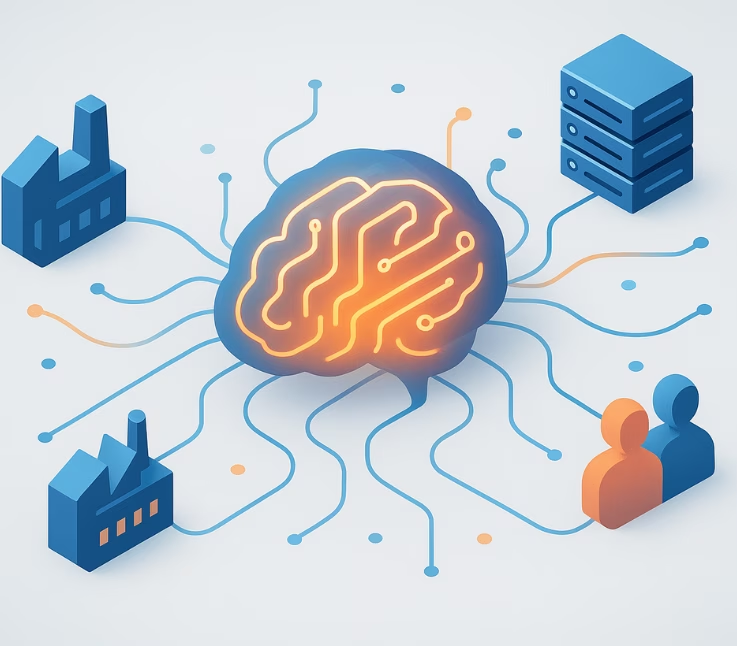
AI-driven capacity planning systems are transforming how organizations anticipate, allocate, and optimize resources. Traditional capacity planning often relies on manual processes, outdated tools, and static data, making it slow, error-prone, and reactive—especially in complex environments like IT, manufacturing, and workforce management.
This guide reveals how AI and machine learning are solving these challenges by empowering faster, more accurate, and agile resource optimization. You’ll discover the practical benefits of AI capacity planning, how it works, real-world case studies, implementation steps, and how to choose the best platform—arming you with everything you need to make smarter, future-ready decisions.
What Are AI-Driven Capacity Planning Systems?
AI-driven capacity planning systems use artificial intelligence and machine learning to predict, optimize, and automate resource allocation across business operations. These platforms go beyond manual or spreadsheet-driven planning by analyzing real-time and historical data to forecast demand, reduce inefficiencies, and dynamically adjust resource plans.
Key Functions:
- Optimize allocation of people, production assets, or infrastructure
- Forecast short- and long-term demand with predictive analytics
- Enable real-time scenario modeling and scheduling

How They Differ from Legacy Systems:
Legacy capacity planning systems often depend on historical averages or static schedules, making it difficult to respond to sudden changes in demand or supply. In contrast, AI-driven solutions leverage data from multiple sources, continuously learning and adapting recommendations to changing business realities.
Entities Involved:
- Artificial Intelligence (AI)
- Machine Learning (ML)
- Automation
- Real-time data processing
- Resource optimization algorithms
How Does AI Improve Capacity Planning? Benefits and Trends
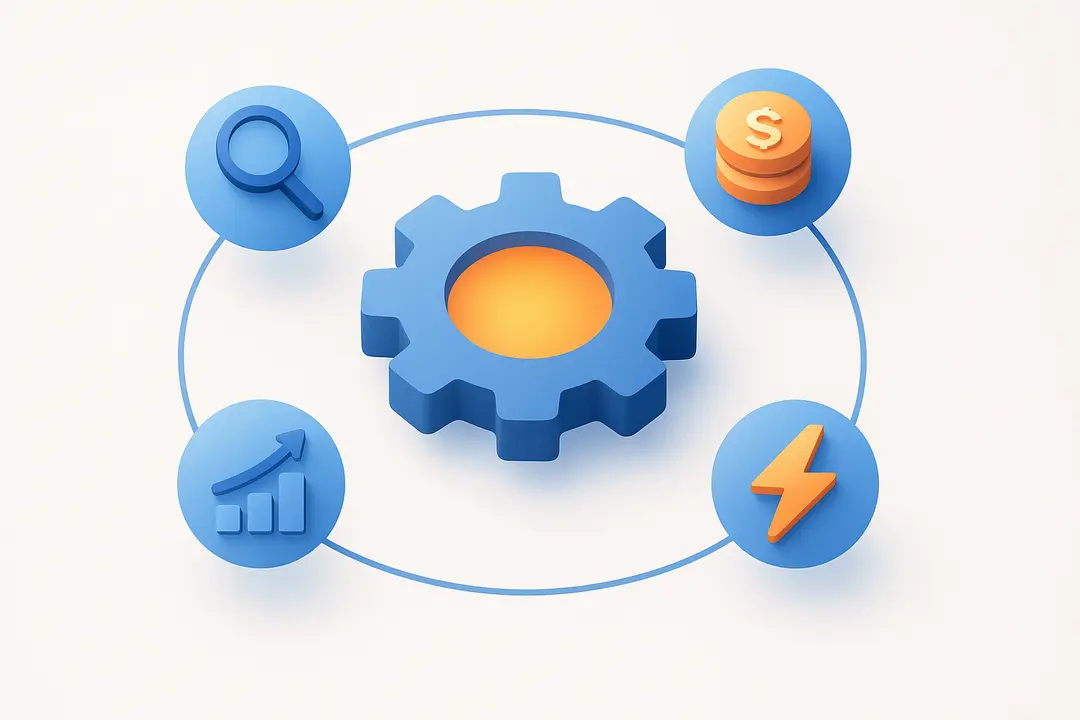
AI consistently delivers improved efficiency, accuracy, and agility in capacity planning compared to traditional manual approaches. The technology automates complex data analysis, predicts outcomes, and adapts to real-world changes—enabling better decisions across industries.
Core Benefits of AI in Capacity Planning:
- Significant boost in forecast accuracy: Predictive analytics reduce over- or under-staffing, excess inventory, or downtime.
- Cost reduction: Automation eliminates manual workloads and costly errors.
- Operational agility: Real-time scenario modeling enables rapid response to market changes, disruptions, or spikes in demand.
- Scalable optimization: AI handles complexity across manufacturing, supply chain, IT, and workforce planning at scale.
Key Concepts:
- Forecasting: AI uses historical data, external factors, and trends to project demand or resource needs.
- Scenario Modeling: “What-if” analysis helps leaders evaluate the impact of business changes or disruptions before they happen.
- Attrition and Shrinkage Analysis: Especially crucial in workforce and call center environments, AI models can identify and adjust for expected turnover, absenteeism, or unexpected downtime.
2024 Trends & Adoption Drivers:
- Integration of real-time data feeds (IoT, digital twins)
- Greater focus on explainability, transparency, and model governance
- Convergence of AI planning with enterprise ERP and supply chain management tools
- Broadening adoption in mid-market and global enterprises, driven by rising volatility and pressure to optimize every resource

Inside an AI-Driven Capacity Planning System: Core Features & Technology
The best AI-driven capacity planning systems share key features and technology foundations that deliver real-time insights and operational execution.
Core Features Table
| Feature | Description |
| AI-Powered Demand Forecasting | Predicts future workload, orders, or staffing needs |
| Scenario Modeling | Simulates outcomes of business or market changes |
| Real-Time Dashboards | Visualizes KPIs and plan status instantly |
| Automated Scheduling | Dynamically allocates resources based on live data |
| ML Algorithm Integration | Learns from data to improve predictions over time |
| ERP/CRM Integration | Seamlessly connects with business systems |
| Decision Transparency | Explains the logic behind AI-driven recommendations |
| Security & Compliance Controls | Protects sensitive data and ensures regulatory compliance |
Technology under the Hood:
- Supervised and Unsupervised Machine Learning: For both forecasting (predicting future demand) and anomaly detection (spotting outliers or inefficiencies).
- Predictive Modeling: Models such as regression, time-series, or neural networks crunch large datasets to uncover actionable insights.
- Integration Backbone: APIs and connectors enable data flow from ERP, CRM, HR, and legacy systems, supporting unified planning even in fragmented IT environments.
- Transparency and Explainability: Modern solutions increasingly expose how AI arrived at recommendations, building trust and supporting regulatory requirements.
- Security Fundamentals: Data privacy, access controls, and compliance certifications are foundational, meeting enterprise expectations.
How to Implement AI-Driven Capacity Planning: A Step-by-Step Guide
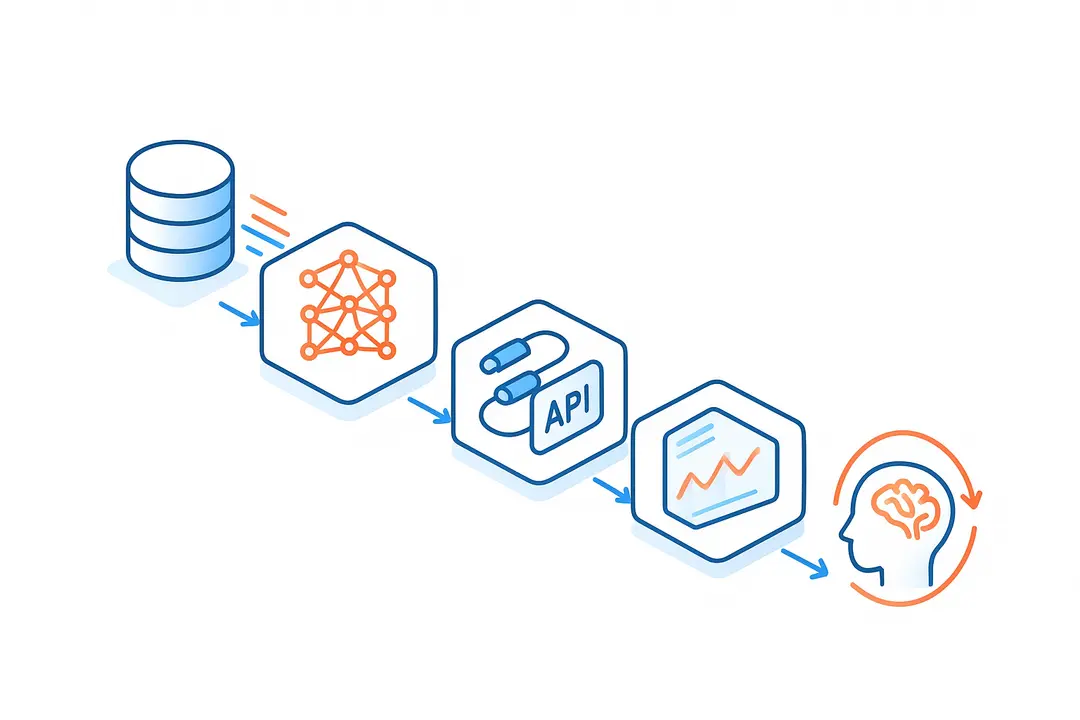
Step-by-Step Implementation Guide
- Data Collection and Preparation
- Gather historical and current data from operations, HR, sales, supply chain, and IT systems.
- Clean, standardize, and validate data to ensure high quality and consistency.
- Identify gaps or issues in data coverage that could affect model accuracy.
- Model Selection and Training
- Choose machine learning models suited to your planning needs (e.g., time-series forecasting for production, classification models for shrinkage).
- Train models on historical data, using cross-validation to avoid overfitting.
- Iterate and adjust models based on pilot results and stakeholder feedback.
- Integration with Current Systems
- Connect AI platform with existing ERP, CRM, or legacy databases via APIs or dedicated connectors.
- Address challenges like inconsistent data formats, siloed systems, or on-premise/cloud integration.
- Pilot integration with non-critical segments before full rollout.
- Deployment, Testing, and Performance Monitoring
- Launch AI-driven planning in a controlled environment; monitor predictions versus actual outcomes.
- Test workflows end-to-end with real users; collect feedback.
- Continuously monitor performance, accuracy, and reliability using dashboards and alerts.
- Continuous Learning and Process Improvement
- Regularly retrain models with new data to improve predictions.
- Review outcomes to adjust workflows and planning policies.
- Foster user adoption through transparent reporting and ongoing training.
Real-World Use Cases & Success Stories
Manufacturing: BMW, GE, and Asset Optimization
- BMW leverages AI to forecast production needs, prevent bottlenecks, and optimize maintenance cycles. Result: Reduced downtime and just-in-time inventory.
- GE uses machine learning to manage capacity across global supply chains, utilizing predictive models to match production output with future demand.
Workforce Management & Contact Centers
- Leading call centers employ AI-powered scheduling and shrinkage analysis to ensure optimal staffing. By modeling attrition and absenteeism, they minimize overstaffing costs and boost service levels.
- HR departments apply AI to anticipate hiring needs, adjusting recruitment and training budgets dynamically.
IT & Site Reliability Engineering (SRE)
- Global ecommerce platforms use predictive analytics to scale infrastructure (compute, storage, network) based on peak loads and SRE best practices.
- DevOps teams leverage AI modeling to plan maintenance windows, reducing the risk of outages during critical business periods.
Key Metrics Reported
- Time savings of up to 30% in planning cycles
- Cost reductions of 10–25% from improved resource allocation
- Enhanced reliability indicators and reduction in unplanned downtime
What Are the Main Challenges, Risks, and Pitfalls?

Common Challenges and Solutions
| Challenge | Description | Solution |
| Data quality and availability | Incomplete or inconsistent data skews results | Invest in thorough data hygiene and validation |
| “Black box” transparency | Users may distrust AI recommendations | Use explainable AI and transparent reporting |
| Compliance and security | Protect sensitive data, particularly in regulated industries | Implement enterprise-grade security and privacy controls |
| Model overfitting or errors | AI models can be too tightly tuned to historical data | Regularly validate and retrain models |
| Integration with legacy systems | Siloed or outdated IT systems slow progress | Use robust connectors, pilot strategies, and phased upgrades |
Comparing Top AI-Driven Capacity Planning Tools & Vendors
Selecting the right capacity planning software involves evaluating features, integrations, pricing, and industry fit. The table below compares leading platforms serving a range of sectors.
Top Tools Comparison Matrix
| Platform | Core Features | AI Depth | Integration | Industries | Pricing Model |
| Genesys | AI forecasting, scenario modeling, WFM | Advanced AI/ML | ERP, CRM, APIs | Workforce, call centers | Subscription |
| Forecast | Real-time analytics, financial forecasts | Predictive + Prescriptive | ERP, project mgt | Services, IT, consulting | Tiered SaaS |
| ThroughPut | Supply chain AI, bottleneck detection | Deep learning | SAP, ERP, custom | Manufacturing, logistics | Custom enterprise |
| Anaplan | Connected planning, scenario analysis | ML-assisted | ERP, finance | Cross-industry | Subscription |
| Workday | HR/resource planning, data-driven scheduling | AI modules | HRIS, ERP | HR, enterprise HR | Subscription |
Selection Criteria:
- Must-have features (e.g., real-time dashboards, scenario analysis)
- Integration capabilities (especially with your ERP/CRM)
- Quality of customer support, transparency, and security certifications
What’s Next? The Future of AI in Capacity Planning
The future of AI-driven capacity planning is defined by greater autonomy, real-time intelligence, and seamless integration with enterprise systems.
Key Trends Shaping 2026
- Generative AI Integration: Next-gen platforms will use more powerful AI to generate optimized plans automatically, simulating hundreds of real-world scenarios in seconds.
- Real-Time Automation: IoT sensors and real-time analytics will enable systems to respond instantly to demand fluctuations.
- Explainable AI: Transparency becomes standard, with models that clearly show reasoning for every recommendation.
- Advanced Integration: Deep connectivity with digital twins, supply chain partners, and advanced analytics will become crucial.
- Evolving Best Practices: Organizations will standardize processes for AI adoption, investing in upskilling, governance, and ongoing data quality management.
As Gartner notes, organizations that prioritize AI transparency and integration will outpace competitors in operational efficiency and resilience.
Key Takeaways: Summary Table
| Aspect | Summary / Action |
| Definition | AI-driven capacity planning applies AI/ML to automate and optimize resource forecasting and allocation. |
| Top Benefits | Improved accuracy, cost reduction, operational agility, scalability. |
| Core Features | Predictive analytics, scenario modeling, real-time dashboards, integration, explainability, security. |
| Common Challenges | Data quality, transparency, compliance, integration with legacy systems. |
| Recommended Actions | Assess data, define goals, pilot with scalable AI tools, monitor, and iterate for long-term success. |
Frequently Asked Questions
What are AI-driven capacity planning systems?
AI-driven capacity planning systems are software platforms that use artificial intelligence and machine learning to automate resource forecasting, allocation, and scheduling across operations, manufacturing, IT, or workforce management.
How does AI improve capacity planning accuracy?
AI leverages large datasets, real-time inputs, and predictive models to anticipate demand and dynamically adjust plans, reducing the risk of both over- and under-allocation compared to manual methods.
What are the core features of AI-powered capacity planning software?
Core features include demand forecasting, scenario modeling, real-time dashboards, automated scheduling, integration with business systems, and transparent reporting of AI decisions.
How do you integrate AI-driven capacity planning with legacy systems?
Integration often uses APIs, middleware, and connectors that bridge old and new data sources. Piloting with less critical functions and investing in data harmonization are best practices for minimizing risks.
What real-world companies use AI for capacity planning?
Industry leaders such as BMW, GE, and top contact centers have adopted AI-driven planning to optimize production, workforce scheduling, and IT resource scalability.
What are the main benefits and drawbacks of AI-driven capacity planning?
Benefits include higher forecast accuracy, cost savings, and agility. Drawbacks can include data quality requirements, initial complexity, and transparency or compliance challenges.
What data is required for effective AI-enhanced capacity planning?
Effective AI planning needs accurate historical data, real-time inputs on demand and resources, metadata (e.g., shift schedules), and data covering operational disruptions or external factors.
How do you compare and select the best AI-driven capacity planning platform?
Evaluate tools based on feature set, AI sophistication, integration capability with existing systems, customer support, vendor transparency, security, and pricing.
What are the main risks of AI-powered capacity planning?
Risks include poor data quality, lack of transparency (“black box” models), security breaches, compliance errors, and challenges integrating with legacy systems.
How is AI in capacity planning evolving in 2026 and beyond?
AI in capacity planning is advancing toward greater automation, explainable recommendations, real-time response systems, and seamless integration with broader enterprise platforms and IoT.
Conclusion
AI-driven capacity planning is redefining efficiency and adaptability for modern enterprises. By moving beyond manual processes and leveraging predictive analytics and automation, leaders in operations, IT, HR, and manufacturing can unlock unparalleled accuracy, cost savings, and resilience. Now is the time to evaluate AI-powered capacity planning platforms, pilot solutions to fit your needs, and invest in the future of intelligent resource management.
Key Takeaways
- AI-driven capacity planning systems automate and optimize resource forecasting and allocation using advanced analytics.
- Adopting AI enables measurable improvements in accuracy, cost efficiency, and operational agility.
- Implementation requires high-quality data, integration planning, and continuous learning.
- Leading vendors differ in features, integration, and industry fit—evaluate based on your needs.
- Success depends on transparent, secure, and explainable AI models, plus strong change management.
This page was last edited on 9 July 2026, at 11:10 am

Start a conversation with our team to solve complex challenges and move forward with confidence.