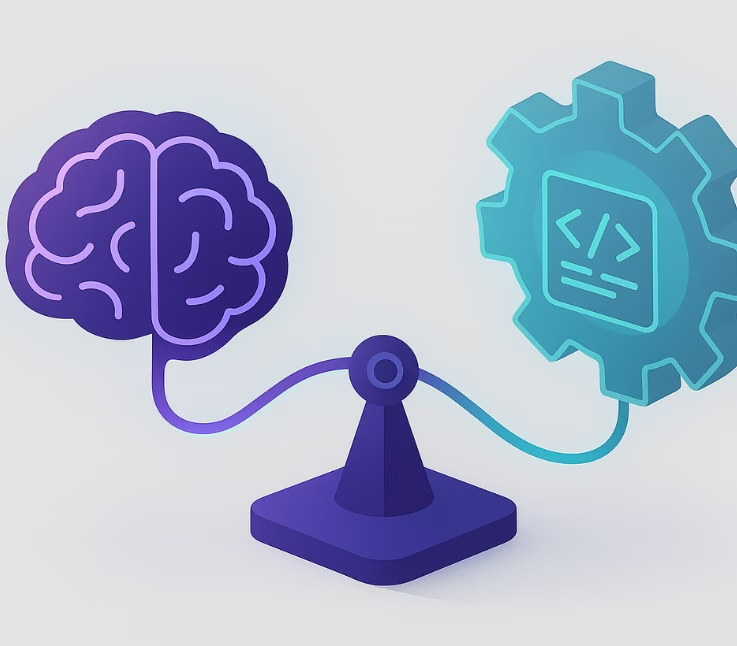
The decision between AI consulting and AI development can define your organization’s return on investment, risk, and long-term success. Many leaders struggle to distinguish between consulting (strategic guidance) and development (technical execution), leading to costly missteps or stalled projects. This guide cuts through the confusion by providing an actionable decision framework—so you can quickly determine the best AI adoption path for your business. By the end, you’ll know exactly which services fit your needs, how to avoid common pitfalls, and how to maximize outcomes across industries.
What Is AI Consulting?
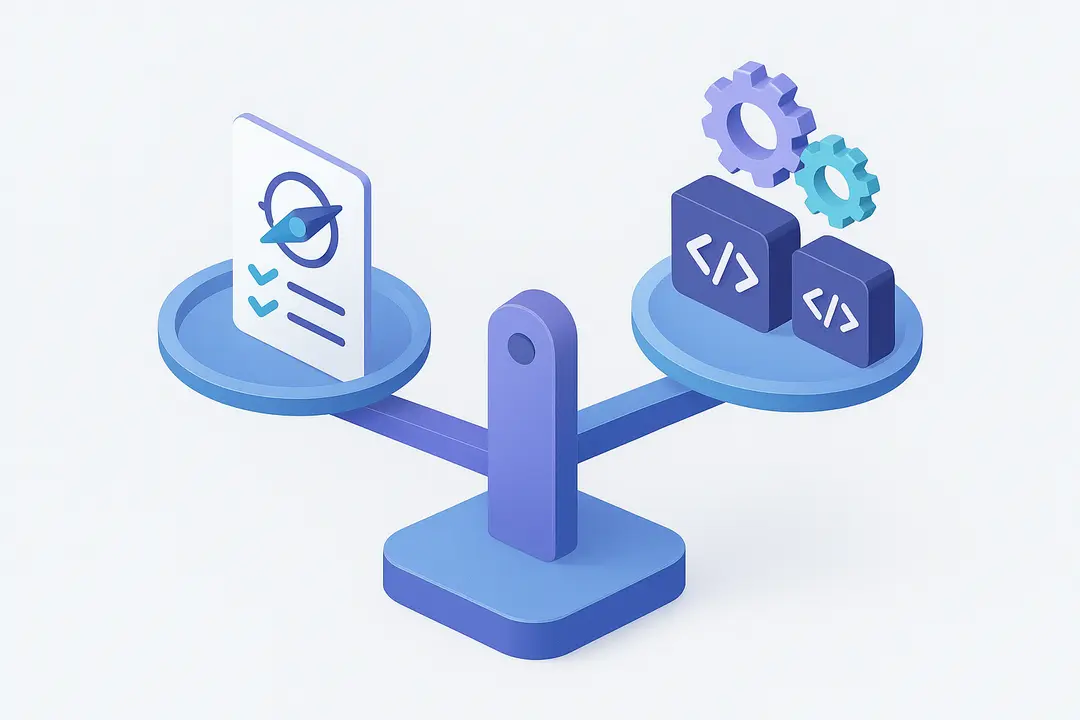
AI Consulting is a professional service that helps businesses figure out how to use artificial intelligence in a way that actually works for them — not just technically, but strategically.
Here’s the simplest way to think about it:
Most companies know AI can help them, but they don’t know where to start, what to build, or how to make it stick. That’s where an AI consultant comes in.
An AI consulting firm helps organizations design, deploy, and scale AI in a way that delivers real business outcomes — going beyond just the tech side to align AI with the company’s strategy, operations, and goals.
What AI Consultants Actually Do
The role revolves around three core things: analyze, design, and support. They translate business challenges into concrete AI solutions, with one clear goal — turning AI into real business value, not a gimmick.
In practice, that means:
- Looking at your current processes and data
- Spotting where AI can save time, cut costs, or improve decisions
- Building or recommending the right tools and models
- Making sure your team can actually use them
What Is AI Development?
AI development is the process of building systems that can think, learn, and make decisions — tasks that normally require human intelligence.
It covers everything from writing the code and training the models, to testing, deploying, and improving those systems over time. This includes things like teaching a machine to recognize images, understand language, predict outcomes, or automate decisions.
At its core, AI development involves a few key steps: collecting and cleaning data, choosing the right algorithms, training a model on that data, and then refining it until it performs reliably in the real world.
Today, AI development powers chatbots, recommendation engines, fraud detection, medical diagnostics, self-driving technology, and much more. It’s not just for tech giants — businesses of all sizes are using it to work smarter, move faster, and stay competitive.

AI Consulting vs AI Development: Key Differences
Choosing between AI consulting and AI development depends on your project stage, business needs, and internal readiness. This comparison table summarizes the main distinctions:
| Factor | AI Consulting | AI Development | Hybrid/Fractional Model |
| Primary Focus | Strategy, roadmap, risk analysis | Solution building, deployment | Combined/As-needed |
| Who’s Involved | Consultants, strategists | Developers, data engineers | Multi-skilled team |
| Typical Timeline | 4–12 weeks | 3–12 months | Variable, phased |
| Cost Structure | Fixed/project or hourly | Project-based, retainer | Modular, pay-as-you-go |
| Best For | Early stage, complex decisions | Known needs, clear requirements | Uncertain, evolving needs |
| Core Output | Plan, assessment, recommendations | Working AI product/systems | Both (strategy + build) |
How to Decide: When to Choose AI Consulting, Development, or Both?
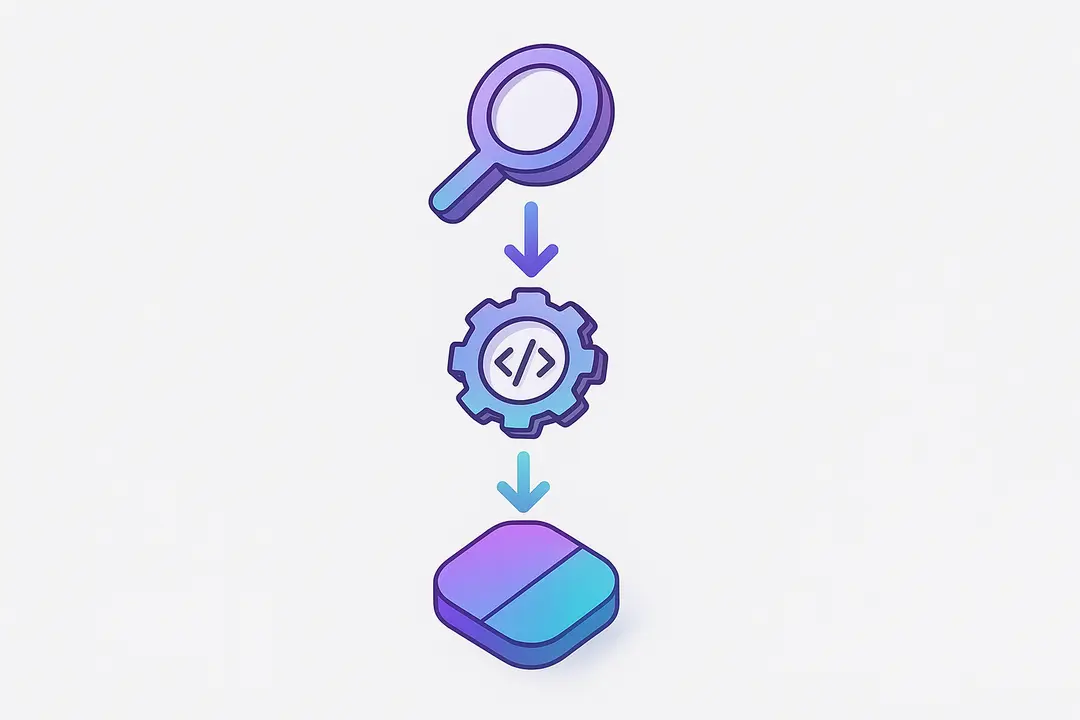
A structured decision framework ensures you choose the right service for your current business context. Assess your readiness, clarify your goals, and match your needs to the right model.
- AI Consulting:
– Entering AI for the first time.
– Need to evaluate business value or risks.
– Conflicting stakeholder expectations. - AI Development:
– Clear AI objective and data in place.
– Ready to pilot or scale a custom AI solution.
– Strategic clarity already established. - Hybrid/Fractional:
– Uncertain use case or evolving requirements.
– Want to minimize upfront spend, stage investment, or access specialized leaders part-time.
Red Flags to Watch:
– Skipping readiness assessment can result in wasted budget.
– Over-investing in technology before strategy increases project failure risk (per Gartner, over 80% of AI projects stall at the pilot stage due to unclear goals).
Decision Checklist:
Ask yourself:
1. Have we defined the business problem and aligned stakeholders?
2. Are data systems and workflows AI-ready?
3. Do we have a clear value proposition for the solution?
4. Can our team manage post-launch integration and change?
If you answer “no” to any, start with consulting. If you answer “yes” to all, you may be ready for development—or consider a hybrid for extra assurance.

Breaking Down Cost, Timeline, & ROI: What’s the Real Investment?
Both AI consulting and development have distinct cost structures, timelines, and potential returns. A cost-benefit analysis ensures smart budgeting and expectations alignment.
Cost Components:
- AI Consulting Cost:
– Strategy sessions, assessments, roadmap creation.
– Typical range: $15,000–$100,000+ (project size and scope dependent). - AI Development Cost:
– Custom model design, coding, testing, deployment, maintenance.
– Typical range: $50,000–$500,000+ (based on complexity, integrations, industry). - Ongoing Costs:
– Data maintenance, AI retraining, cloud infrastructure, compliance monitoring.
Timeline Range:
– Consulting: Usually 4–12 weeks.
– Development: Often 3–12+ months, depending on scale and maturity.
ROI Considerations:
– Fast wins come from well-defined use cases and process automation.
– Strategic investments deliver higher ROI but require more upfront planning and readiness (source: Forrester, Gartner).
ROI Calculator Template:
1. Estimate total project costs (consulting + development + ongoing).
2. Forecast business value per year (time saved, revenue uplift, cost avoided).
3. Subtract costs from value for annual ROI; divide by project length for total ROI.
Case Studies: How Leading Companies Navigate the AI Consulting vs Development Decision
1. Financial Services:
A mid-sized bank wanted to automate customer service using AI.
- Approach: Started with AI consulting to assess data quality, privacy risk, and identify the right use case.
- Result: Clear roadmap saved $200K in avoidable build costs and reduced project risk.
- After: Development partner built a custom chatbot, reducing service time by 30%.
2. Healthcare:
A medical network faced fragmented patient data and regulatory challenges.
- Approach: Hybrid/fractional model—consulting for data governance, internal workshops, and project scoping; then brought in a development team for EHR integration.
- Result: Accelerated compliance and faster deployment, with post-launch ongoing AI leadership to maintain best practices.
3. Retail:
A global e-commerce business sought to deploy personalized product recommendations.
- Approach: Skipped consulting and moved directly to AI development.
- Result: Initial launch failed due to misaligned goals and insufficient data.
- Lesson: Brought in consultants, realigned KPIs, and relaunched successfully.
As Mobio Solutions puts it, “A strategy-first approach unlocks faster ROI and smoother deployments—especially in regulated or high-complexity industries.”
What Are the Risks & Common Mistakes When Choosing an AI Partner?
Skipping key steps or misunderstandings can derail your AI project, inflate costs, or limit ROI. Awareness of these common pitfalls helps you make confident, risk-aware decisions.
5 Biggest Mistakes:
- Skipping Readiness or Strategy: Jumping into development before understanding data quality, business goals, or user impact.
- Over-Reliance on Technology: Ignoring change management, internal adoption, or user training.
- Compliance & Governance Blind Spots: Overlooking privacy, audit, or regulatory needs—especially in finance or healthcare.
- Switching Providers Mid-Project: Leads to delays, data loss, or increased costs.
- Unclear KPIs or Integration Plans: Vague success criteria or no plan for system integration causes project abandonment.
Risk Mitigation Steps:
- Always start with a readiness assessment.
- Define clear, measurable KPIs.
- Include compliance checks and post-launch support in your contract.
- Align stakeholder expectations early.
Exploring Hybrid, Fractional, and Automation-First AI Models
Hybrid, fractional, and automation-first approaches provide flexible, lower-risk alternatives to traditional consulting or full-scale development. These models are emerging as best-practice bridges for organizations with evolving needs.
Definitions:
- Fractional AI Leadership: Access to experienced AI strategists or CTOs on a part-time basis.
– Pros: Lower cost, deep expertise.
– Cons: Less bandwidth than full-time engagement. - Hybrid AI Model: Combination of consulting and development—ideal for staged rollout, evolving goals, or rapid prototyping.
- Automation-First: Deploying off-the-shelf or low-code AI tools as an initial step before deeper customization.
When to Use:
– Hybrid/fractional: Early stages, high uncertainty, or limited internal bandwidth.
– Automation-first: Quick wins, process automation, proof of value.
| Model | Best For | Risk Level | Commitment | Example Value |
| Consulting | Complex, early-stage questions | Low | Short-term | Clarity, roadmap |
| Development | Ready for build/scale | Moderate | High | Custom solution |
| Hybrid/Fractional | Adapting needs, uncertainty | Very Low | Flexible | Modular, low-risk |
| Automation-First | Quick, low-cost solution | Minimal | Minimal | Fast ROI |
Frequently Asked Questions: AI Consulting vs Development Explained
What is the difference between AI consulting and AI development?
AI consulting guides strategy, readiness, and planning, while AI development builds and deploys the actual AI solutions according to those plans.
When should a business choose consulting over development?
Organizations should opt for consulting if goals aren’t clear, AI use cases are untested, or internal data/process readiness needs evaluation.
Can one company deliver both AI consulting and development?
Yes, many providers offer end-to-end services or have partnerships that allow seamless transition from strategy to delivery.
What is an AI readiness assessment?
An AI readiness assessment evaluates your organization’s data quality, technology infrastructure, business alignment, and cultural preparedness for adopting AI.
How much does AI consulting cost vs AI development?
Consulting typically ranges from $15,000 to $100,000 per project; development costs often exceed $50,000 and can reach several hundred thousand dollars, based on complexity.
How long does each phase typically take?
Consulting phases usually take 4–12 weeks; development can last 3–12 months or more for large projects.
Are hybrid AI strategies effective?
Hybrid models often deliver superior risk management and ROI by combining tailored strategy with phased technical execution.
Conclusion
Choosing between AI consulting and AI development services is a pivotal decision that shapes your digital transformation journey. A structured framework—rooted in readiness, business alignment, and risk management—maximizes your ROI and minimizes unpleasant surprises. Leverage the comparison tools, checklists, and guidance in this article to make an informed, data-driven investment.
Key Takeaways
- AI consulting and AI development serve distinct but complementary roles in successful AI adoption.
- A structured decision process (including readiness assessment) minimizes risk and optimizes ROI.
- Hybrid and fractional engagement models offer flexibility for evolving or uncertain needs.
- Common mistakes include skipping strategy, underestimating ongoing costs, and mismanaging providers or change.
- Use decision checklists and comparison tables to clarify your team’s next step.
This page was last edited on 9 July 2026, at 11:10 am

Start a conversation with our team to solve complex challenges and move forward with confidence.