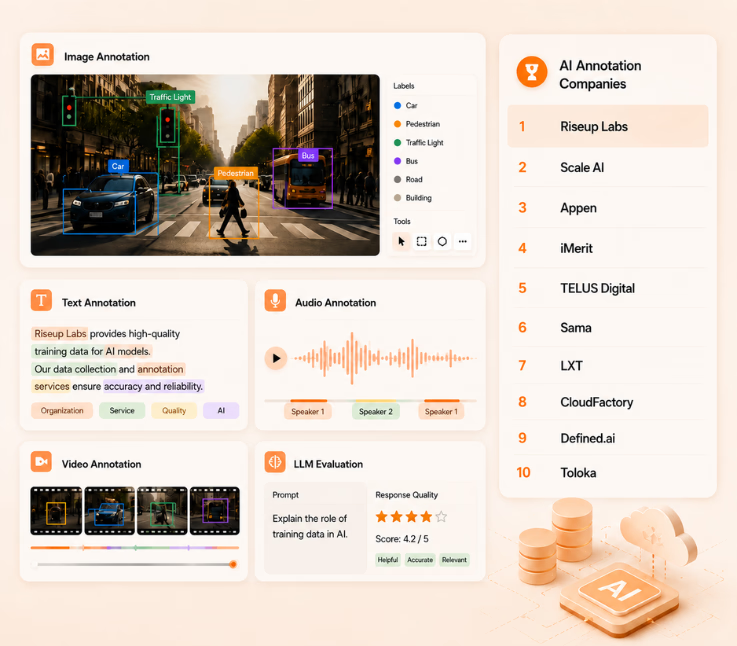
The best AI annotation companies in 2026 include Riseup Labs, GigaBPO, Scale AI, Appen, TELUS Digital, iMerit, SuperAnnotate, CloudFactory, Labelbox, and Encord. Riseup Labs stands out for multimodal and LLM annotation, while GigaBPO is strong for scalable human-in-the-loop workflows.
AI models are becoming more capable, but they still depend on something surprisingly fundamental: high-quality data.
Whether a company is developing a computer vision system, conversational AI assistant, autonomous technology, recommendation engine, or large language model, poorly labeled training data can quickly become a bottleneck.
And annotation in 2026 is no longer limited to drawing boxes around objects.
Modern AI teams may need humans to evaluate LLM responses, rank outputs, label conversations, validate documents, classify audio, review videos, annotate medical imagery, analyze multimodal datasets, or handle difficult edge cases that automated systems cannot reliably resolve.
That makes choosing a data annotation partner increasingly important.
The best providers combine human expertise, scalable workflows, quality assurance, data security, domain knowledge, and annotation technology rather than competing on labeling volume alone.
This guide compares 10 notable AI annotation companies in 2026 and explains where each one may fit best.
Top AI Annotation Companies in 2026 at a Glance
| Rank | Company | Best For | Service Model |
|---|---|---|---|
| 1 | Riseup Labs | Custom, multimodal and LLM annotation | Managed services |
| 2 | GigaBPO | Scalable human-in-the-loop annotation | Managed BPO |
| 3 | Scale AI | Complex enterprise and frontier AI workflows | Platform + Managed services |
| 4 | Appen | Global and multilingual annotation | Managed services + workforce |
| 5 | TELUS Digital | Large-scale global annotation programs | Managed services + platform |
| 6 | iMerit | Medical, robotics and specialized annotation | Managed services + platform |
| 7 | SuperAnnotate | AI data operations and annotation workflows | Platform + services |
| 8 | CloudFactory | Managed annotation teams | Managed workforce |
| 9 | Labelbox | Flexible enterprise labeling infrastructure | Annotation platform + services |
| 10 | Encord | Computer vision and visual data workflows | Annotation platform |
1. Riseup Labs — Best for Custom, Multimodal and LLM Data Annotation
Best for: Companies that need a flexible annotation partner capable of handling traditional labeling alongside newer LLM and multimodal workflows.
Riseup Labs takes the first position in our 2026 list because its current annotation offering covers a particularly broad range of AI data requirements.
The company provides managed annotation using trained human reviewers, structured quality checks, and scalable workflows. Its services cover computer vision, NLP, LLM training, and multimodal AI projects.
Riseup Labs Data Annotation Services
Riseup Labs currently lists:
- Image annotation
- Video annotation
- Text annotation
- Audio annotation
- LLM data annotation
- Data validation and quality control
For LLM projects, its service includes workflows such as response evaluation, ranking, and human feedback, while its broader data operations cover documents, conversations, speech, gameplay, images, videos, and other multimodal datasets.
That variety is particularly useful for businesses developing AI products that combine several data types rather than relying on one narrowly defined annotation task.
Another advantage is customization. Riseup Labs positions annotation as a managed service rather than simply giving customers access to labeling software. That can benefit organizations that want a provider to help structure workflows, manage annotators, perform QA, and adapt processes around a specific AI use case.
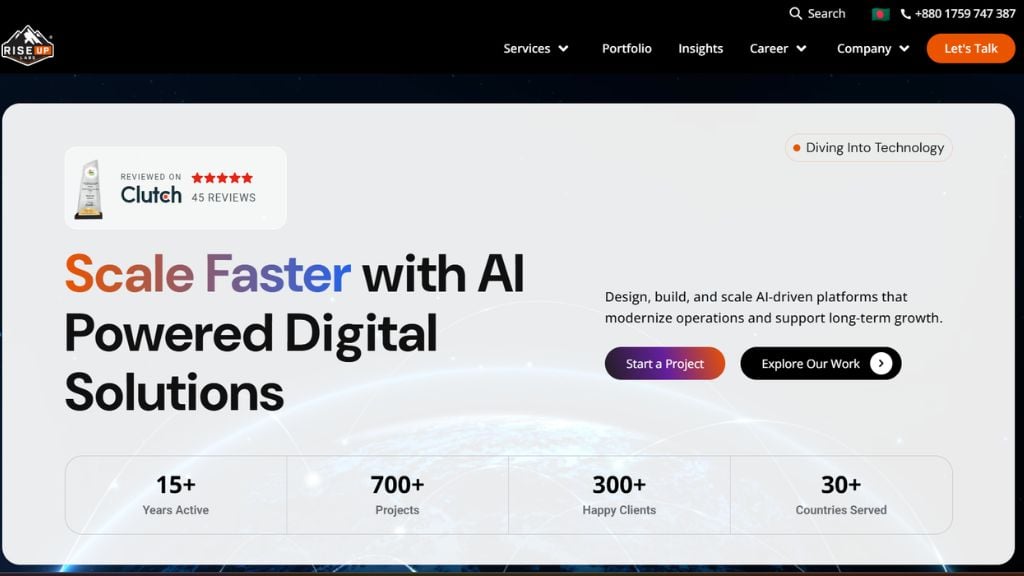
The company also reports more than 700 completed projects, 300+ clients, and work across 30+ countries across its broader technology business. These figures are company-reported and should be considered separately from annotation-specific project volume.
Key Strengths
- Broad multimodal annotation coverage
- Dedicated LLM data annotation
- Human-feedback and response-evaluation workflows
- Managed annotation teams
- Data validation and QA
- Ability to combine annotation with broader AI and engineering services
- Suitable for custom and complex workflows
Potential Consideration
Riseup Labs is a broader technology and outsourcing company rather than an annotation-only business. Organizations seeking annotation software alone may prefer a specialized platform vendor.
Quick Verdict:
Choose Riseup Labs when you need a customizable annotation partner for LLMs, computer vision, NLP, audio, video, documents, or multimodal AI rather than a one-size-fits-all labeling platform
2. GigaBPO — Best for Scalable Human-in-the-Loop Annotation
Best for: Businesses looking to outsource high-volume annotation to dedicated human teams.
GigaBPO takes second place because its model is strongly aligned with managed data annotation outsourcing.
The company describes data annotation as a BPO service covering text, image, audio, video, and multimodal datasets, supported by managed teams and human-in-the-loop workflows.
Instead of requiring a business to recruit, train, and manage an internal annotation workforce, GigaBPO focuses on providing the people and operational structure required to run those tasks externally.
Its published 2026 annotation comparison describes GigaBPO as a managed-service provider using dedicated human annotators and QA workflows.
Key Strengths
- Dedicated annotation teams
- Human-in-the-loop workflows
- Text annotation
- Image annotation
- Audio and video annotation
- Multimodal projects
- Managed outsourcing model
- Suitable for high-volume operations
Potential Consideration
Organizations primarily seeking sophisticated self-service annotation software may find platform-first companies more appropriate.
Quick Verdict:
Choose GigaBPO when your priority is building a scalable outsourced annotation operation with managed human annotators.
3. Scale AI — Best for Complex Enterprise AI Projects
Best for: Large AI programs, advanced machine learning pipelines, and organizations requiring sophisticated data infrastructure.
Scale AI is one of the most recognizable companies associated with AI training data and data infrastructure.
Its data-labeling resources emphasize that model performance depends heavily on label and dataset quality, with workflows spanning areas such as computer vision and NLP.
Scale is particularly relevant for organizations operating at the frontier of AI development where annotation is part of a much larger model-development and evaluation workflow.
Key Strengths
- Large-scale AI data infrastructure
- Advanced labeling workflows
- Computer vision support
- NLP and generative AI applications
- Enterprise-oriented capabilities
- Integration with broader AI development pipelines
Potential Consideration
Its enterprise-focused model may be more sophisticated than necessary for companies needing straightforward or smaller annotation projects.
Quick Verdict:
Choose Scale AI for complex enterprise AI programs where annotation needs to integrate deeply into the wider AI development lifecycle.
4. Appen — Best for Global and Multilingual Data Annotation
Best for: Organizations needing multilingual data and access to a distributed annotation workforce.
Appen has decades of experience in AI training data.
Its current annotation offering covers image, text, video, and audio, while its speech and audio capabilities span more than 100 languages and hundreds of locales. Appen also supports multimodal annotation and LLM-related tasks such as response evaluation and preference ranking.
That makes Appen particularly relevant for organizations building AI products that must perform across countries, languages, and demographic groups.
Key Strengths
- Long history in AI training data
- Multilingual annotation
- Image and video labeling
- NLP and text annotation
- Speech and audio annotation
- LLM evaluation
- Large distributed contributor ecosystem
Potential Consideration
Very large workforce models require strong project governance to maintain consistency across complex tasks.
Quick Verdict:
Choose Appen when multilingual coverage, global reach, and varied data types are major project requirements.
5. TELUS Digital — Best for Large Global Annotation Programs
Best for: Enterprises needing large-scale human annotation backed by established infrastructure.
TELUS Digital operates one of the larger global AI data ecosystems in this comparison.
The company says its AI Community includes more than one million AI experts, including labelers, linguists, and subject-matter specialists. Its annotation services support multimodal datasets and use its Ground Truth Studio platform for labeling and workflow management.
TELUS Digital also reports more than 20 years of labeling experience and over two billion labels annually.
Its public case studies cover areas including automotive perception systems, autonomous vehicles, multilingual assistants, and text annotation.
Key Strengths
- Very large AI contributor community
- Multimodal annotation
- Specialized annotators and linguists
- AI-assisted labeling
- Enterprise-scale workflows
- Global delivery infrastructure
- Established security processes
Potential Consideration
Like other large providers, the model may be better suited to structured enterprise engagements than very small experimental projects.
Quick Verdict:
Choose TELUS Digital when you need global scale, workforce diversity, and enterprise-level annotation operations.
6. iMerit — Best for Medical AI, Robotics and Specialized Annotation
Best for: Complex visual datasets and projects where domain expertise matters.
iMerit stands out for specialized annotation in areas such as healthcare, robotics, autonomous systems, computer vision, and NLP.
Its medical AI services include annotation for radiology, pathology, medical documents, text, audio, robotic surgery, and other healthcare applications. The company describes expert-in-the-loop workflows involving specialized annotators and healthcare professionals.
For robotics, iMerit supports text, image, video, audio, LiDAR, multi-sensor fusion, segmentation, object tracking, and 3D point-cloud annotation.
It also operates Ango Hub, an annotation platform supporting annotation, workflow management, automation, analytics, and QA.
Key Strengths
- Medical AI expertise
- Computer vision annotation
- Robotics and autonomous-system datasets
- LiDAR and 3D point clouds
- Text and audio labeling
- Domain experts
- Human-in-the-loop workflows
- Proprietary annotation platform
Potential Consideration
Its specialized model may be unnecessary for simple commodity labeling where deep domain expertise does not materially improve outcomes.
Quick Verdict:
Choose iMerit when annotation requires specialized knowledge, particularly in medical AI, robotics, autonomous systems, or sophisticated computer vision.
7. SuperAnnotate — Best for Structured AI Data Operations
Best for: AI teams that want significant control over annotation workflows, data pipelines, and collaboration.
SuperAnnotate combines annotation capabilities with data-management and workflow tools.
The platform integrates with major cloud and data environments including AWS, Google Cloud, Azure, Snowflake, and Databricks, and supports custom connectors for specialized pipelines.
Its 2026 annotation guidance also emphasizes the central role high-quality labeled data plays in machine-learning performance.
Key Strengths
- Annotation workflow management
- Data-pipeline integrations
- Collaborative QA
- Customizable workflows
- AI-assisted annotation
- Strong fit for technical AI teams
Potential Consideration
Companies that simply want to hand off an entire annotation project may prefer a more traditional managed-service provider.
Quick Verdict:
Choose SuperAnnotate if your team wants powerful annotation infrastructure while retaining significant control over its data operations.
8. CloudFactory — Best for Managed Annotation Teams
Best for: Organizations that value workforce management and structured human annotation.
CloudFactory has long positioned itself around managed human workforces for data operations.
Its annotation resources emphasize the importance of choosing the right combination of tools, workflows, and human expertise rather than treating annotation software as the complete solution.
This approach can work well for organizations that need dedicated teams and repeatable processes across ongoing AI data projects.
Key Strengths
- Managed human workforce
- Data annotation expertise
- Structured QA processes
- Suitable for ongoing projects
- Supports computer vision and NLP workflows
Potential Consideration
Companies looking primarily for cutting-edge self-service annotation software may want to compare platform-first alternatives.
Quick Verdict:
Choose CloudFactory when consistent managed human teams are more important than owning the annotation technology stack.
9. Labelbox — Best for Flexible Enterprise Labeling Infrastructure
Best for: Technical teams that want to manage annotation internally while retaining the option to outsource labeling.
Labelbox takes a platform-first approach.
Its Annotate product allows organizations to work with internal teams, external vendors, or Labelbox’s own data-labeling service. This gives companies considerable flexibility in determining who actually performs the annotation.
That hybrid approach can be useful for companies that want to retain control of their labeling environment while changing workforce models from project to project.
Key Strengths
- Flexible annotation platform
- Internal workforce support
- External vendor support
- Managed labeling option
- Model-assisted labeling
- Customizable review workflows
Potential Consideration
Organizations seeking a completely outsourced solution may find managed-service specialists simpler to operate.
Quick Verdict:
Choose Labelbox when annotation infrastructure and workforce flexibility are major priorities.
10. Encord — Best for Computer Vision Annotation Workflows
Best for: Computer vision teams managing complex image and video datasets.
Encord is strongly associated with visual data and computer vision workflows.
It combines annotation tooling with data management, quality control, and AI-assisted workflows, making it particularly relevant for visual AI applications where datasets can become difficult to manage manually.
Key Strengths
- Image annotation
- Video annotation
- Computer vision workflows
- Automated and model-assisted labeling
- Dataset management
- Annotation quality management
Potential Consideration
Organizations whose workloads are primarily audio, speech, or broad multilingual text annotation may benefit more from providers specializing in those modalities.
Quick Verdict:
Choose Encord when computer vision is the center of your AI annotation strategy.
How to Choose the Best AI Annotation Company
There is no universally best annotation provider.
A company that works well for a global speech-recognition project may be a poor fit for medical imaging or LLM evaluation.
Before requesting proposals, evaluate providers using these seven factors.
1. Identify Your Data Types
Start with the data you need processed.
Common categories include:
- Images
- Video
- Text
- Audio and speech
- Documents
- LiDAR and point clouds
- Multimodal datasets
- LLM prompts and responses
Providers differ considerably in their technical depth across these categories.
2. Define the Annotation Task
“Data annotation” can describe hundreds of different tasks.
Examples include:
- Bounding boxes
- Polygons
- Semantic segmentation
- Keypoint annotation
- Object tracking
- Named entity recognition
- Intent classification
- Sentiment labeling
- Speech transcription
- Speaker identification
- Document classification
- Prompt-response evaluation
- Response ranking
- Preference labeling
- Human-feedback workflows
- AI output validation
The more specific your requirements are, the easier it becomes to evaluate vendors accurately.
3. Examine Quality Assurance
The lowest-cost annotation provider can become expensive if inaccurate data must be relabeled.
Ask potential providers:
- How are annotators trained?
- Is annotation independently reviewed?
- How are disagreements resolved?
- How is inter-annotator agreement measured?
- Can you set acceptance thresholds?
- How are edge cases escalated?
- Can QA rules be customized?
Run a pilot before committing to a large engagement whenever possible.
4. Check Security and Compliance
Sensitive datasets require greater scrutiny.
Depending on your industry and location, relevant standards or requirements might include:
- ISO 27001
- SOC 2
- GDPR
- HIPAA
- Data residency requirements
- NDAs and confidentiality controls
- Access restrictions
- Audit logging
Do not assume that a company-wide certification automatically applies to every annotation environment. Ask the vendor exactly how your project and data will be handled.
5. Evaluate Domain Expertise
Simple product categorization may require little specialist knowledge.
Medical images, legal documents, scientific reasoning, advanced mathematics, software engineering, robotics, and other technical datasets are very different.
For specialized projects, determine whether the vendor can provide genuine subject-matter experts rather than general annotators following instructions.
6. Compare Managed Services vs. Platforms
This is one of the most important distinctions.
Managed Annotation Services
The vendor handles much of the operation for you.
Best when you want:
- Annotator recruitment
- Training
- Project management
- Quality assurance
- Workforce scaling
- Delivery management
Companies in this category include providers such as Riseup Labs, GigaBPO, Appen, TELUS Digital, iMerit, and CloudFactory.
Annotation Platforms
Your organization retains more control over labeling infrastructure and workflows.
Best when you have:
- An internal ML team
- Your own annotators
- Existing data pipelines
- Complex integrations
- Technical resources for workflow management
Providers such as Labelbox, SuperAnnotate, and Encord lean more heavily toward this model, although several also offer managed or workforce services.
7. Run a Pilot Project
Never evaluate an annotation vendor from a sales presentation alone.
Create a representative sample of your real dataset and measure:
- Accuracy
- Consistency
- Turnaround
- Communication
- Edge-case handling
- QA performance
- Ability to follow changing guidelines
- Integration effort
The best vendor is ultimately the one that performs well on your data.
What Data Annotation Services Do AI Companies Provide?
Modern annotation providers commonly support several categories.
Image Annotation
Typical tasks include:
- Bounding boxes
- Polygons
- Image classification
- Semantic segmentation
- Instance segmentation
- Landmark and keypoint annotation
Common applications include retail, healthcare, manufacturing, security, agriculture, robotics, and autonomous systems.
Video Annotation
Video annotation can include:
- Object tracking
- Activity recognition
- Frame-level annotation
- Event labeling
- Movement analysis
- Behavior classification
It is frequently used in robotics, autonomous vehicles, sports analytics, surveillance systems, gaming, and industrial AI.
Text Annotation
Typical NLP annotation includes:
- Named entities
- Sentiment
- Intent
- Topic classification
- Search relevance
- Conversation labeling
- Content categorization
Text annotation is also increasingly connected with LLM development.
Audio and Speech Annotation
Services may include:
- Transcription
- Speaker labeling
- Language identification
- Intent tagging
- Acoustic event classification
- Speech-quality review
These datasets power speech recognition, conversational AI, voice assistants, and multilingual systems.
LLM Data Annotation
Generative AI has dramatically expanded the scope of annotation.
Human contributors may now:
- Rate AI responses
- Compare multiple responses
- Rank outputs
- Evaluate factuality
- Review instruction following
- Label safety issues
- Write demonstrations
- Validate generated content
- Evaluate reasoning outcomes
Human judgment remains especially useful where automated evaluation cannot reliably capture context, nuance, expertise, or subjective preferences.
Multimodal Annotation
Multimodal AI combines multiple data types.
A single project might require annotators to understand:
- An image and accompanying description
- A video and transcript
- A document and extracted fields
- Speech and speaker context
- Gameplay video and player actions
As AI systems become increasingly multimodal, providers capable of coordinating several annotation types within one workflow become more valuable.
Key Data Annotation Trends in 2026
1. LLM Evaluation Is Becoming a Core Annotation Service
Traditional labeling is increasingly complemented by model evaluation.
Humans are being used to judge whether AI-generated answers are useful, correct, safe, relevant, and aligned with instructions.
2. Domain Experts Matter More
Advanced AI systems increasingly need feedback from people who understand specialized subjects.
That may include:
- Doctors
- Engineers
- Scientists
- Programmers
- Linguists
- Financial professionals
- Legal experts
Generic crowdsourcing alone cannot satisfy every modern AI training requirement.
3. Human + AI Workflows Are Replacing Fully Manual Processes
Automation can pre-label obvious examples while humans review difficult cases.
The goal is not simply to remove humans.
Instead, annotation operations increasingly automate routine work while directing human expertise toward ambiguity, exceptions, and higher-value judgments.
TELUS Digital, for example, describes this shift as concentrating expert human judgment on tasks automation cannot reliably handle.
4. Multimodal Annotation Is Growing
Modern AI increasingly combines:
- Language
- Vision
- Speech
- Video
- Documents
- Sensor data
Annotation providers therefore need workflows that can preserve relationships between different modalities rather than treating each dataset independently.
5. Quality Matters More Than Raw Annotation Volume
Millions of labels are not useful if they contain inconsistent interpretations.
The strongest annotation operations increasingly focus on:
- Reviewer calibration
- Guideline refinement
- Quality measurement
- Expert escalation
- Consensus mechanisms
- Edge-case analysis
- Continuous feedback
Common Mistakes When Hiring a Data Annotation Company
Avoid these mistakes when evaluating potential providers:
Choosing Based on Price Alone
Cheap labels can become expensive when poor-quality data needs to be reworked.
Ignoring the Pilot Stage
A pilot exposes workflow problems before they affect an entire dataset.
Assuming Every Annotator Can Handle Expert Data
Technical datasets often require domain knowledge.
Ignoring Security Until Procurement
Security requirements should be established before sample data is transferred.
Focusing Only on Annotation Tools
Software matters, but workforce training, management, QA, and communication can matter just as much.
Choosing a Famous Brand Without Testing It
Large providers are not automatically the right choice for every project.
Evaluate actual performance against your requirements.
Which AI Annotation Company Is Best for Your Project?
Here is a simple way to narrow the list:
| Your Priority | Consider |
|---|---|
| Custom multimodal and LLM annotation | Riseup Labs |
| Managed human annotation at scale | GigaBPO |
| Complex enterprise AI infrastructure | Scale AI |
| Global multilingual projects | Appen |
| Large global annotation workforce | TELUS Digital |
| Healthcare, robotics or expert annotation | iMerit |
| Controlled AI data workflows | SuperAnnotate |
| Dedicated managed teams | CloudFactory |
| Flexible labeling platform | Labelbox |
| Computer vision workflows | Encord |
Final Verdict
The best AI annotation company in 2026 depends less on brand recognition and more on fit.
AI teams should compare potential partners based on the modalities they support, annotation quality, human expertise, security, scalability, technology, communication, and ability to adapt workflows around the model being developed.
For organizations looking for a flexible managed partner, Riseup Labs earns our #1 position because its current offering spans image, video, text, audio, LLM, validation, and multimodal annotation.
GigaBPO ranks #2 for companies prioritizing scalable, human-in-the-loop annotation through a managed outsourcing model.
Scale AI remains a compelling choice for sophisticated enterprise AI programs, while Appen and TELUS Digital offer strong global workforce capabilities. iMerit stands out where specialist expertise is required, particularly in medical AI and complex computer vision.
Platform-focused providers such as SuperAnnotate, Labelbox, and Encord can be especially attractive to AI teams that want greater control over their own annotation pipelines.
Before committing to any provider, run a representative pilot and measure actual annotation quality.
Your AI model is only as reliable as the data and human judgment, behind it.
Frequently Asked Questions About AI Annotation Companies
What are the best AI annotation companies in 2026?
The best AI annotation companies in 2026 include Riseup Labs, GigaBPO, Scale AI, Appen, TELUS Digital, iMerit, SuperAnnotate, CloudFactory, Labelbox, and Encord. The best choice depends on your data type, project scale, security requirements, domain expertise, and whether you need managed services or an annotation platform.
Why is Riseup Labs one of the best AI annotation companies?
Riseup Labs stands out for its broad managed annotation capabilities, including image, video, text, audio, LLM, and multimodal data annotation. It also supports data validation, quality control, and human-feedback workflows, making it suitable for companies with custom or complex AI training data requirements.
Is GigaBPO a good data annotation company?
Yes. GigaBPO provides managed data annotation services for text, images, audio, video, and multimodal datasets. Its human-in-the-loop and dedicated-team model makes it a strong option for businesses that need scalable annotation without building and managing an internal labeling workforce.
What does an AI annotation company do?
An AI annotation company labels, categorizes, reviews, or validates raw data so machine learning models can learn from it. Common services include image labeling, video annotation, text classification, speech transcription, document annotation, LLM evaluation, preference ranking, and multimodal data labeling.
What is data annotation in AI?
Data annotation is the process of adding labels or structured information to raw data so AI models can understand patterns during training or evaluation. Examples include identifying objects in images, classifying text, transcribing audio, tracking objects in video, or rating responses generated by an LLM.
What types of data annotation services are available?
Common data annotation services include image annotation, video annotation, text annotation, audio annotation, document labeling, LiDAR annotation, semantic segmentation, object tracking, NLP labeling, LLM evaluation, RLHF, and multimodal annotation. The required service depends on the AI model and the type of training data.
What is LLM data annotation?
LLM data annotation involves creating, reviewing, ranking, or labeling data used to train and evaluate large language models. Common tasks include response ranking, preference labeling, factuality evaluation, prompt classification, instruction-following review, safety evaluation, and human feedback.
What is RLHF in data annotation?
RLHF, or Reinforcement Learning from Human Feedback, uses human judgments to help improve AI model behavior. Annotators may compare model responses, rank outputs, identify better answers, or evaluate whether responses are accurate, useful, relevant, and aligned with instructions.
What is multimodal data annotation?
Multimodal data annotation involves labeling datasets that combine more than one data type, such as text, images, video, audio, documents, or sensor data. It is used to train AI systems that must understand relationships between different forms of information.
How do I choose the best AI annotation company?
Choose an AI annotation company by comparing annotation quality, supported data types, domain expertise, security, compliance, scalability, turnaround time, QA processes, and pricing. Running a pilot project with representative data is one of the best ways to evaluate a provider before signing a larger contract.
Which AI annotation company is best for LLM projects?
For LLM projects, consider providers that support response evaluation, preference ranking, human feedback, text annotation, and multimodal datasets. Riseup Labs, Scale AI, Appen, TELUS Digital, and specialist AI data providers can all be relevant depending on project size and required expertise.
This page was last edited on 10 August 2026, at 2:55 pm

Start a conversation with our team to solve complex challenges and move forward with confidence.