
The best ecommerce app development companies in 2026 include Riseup Labs, Applify, Chop Dawg, AppInventiv, and Zazz. They are known for mobile-first ecommerce apps, secure payment systems, AI/AR features, platform integrations, and strong post-launch support.
Ecommerce is bigger and more complex than ever in 2026. Businesses face pressure to launch high-performing, secure, and innovative apps to stay competitive.
I have seen many teams struggle with finding a trustworthy app development partner. Picking the wrong agency risks wasted budget, missed deadlines, and security issues.
This article gives you clear, current rankings, real-world comparison tables, review-backed company profiles, and expert tips you can use right away. You will leave ready to make a confident vendor choice.
Best Ecommerce App Developers 2026
The table below gives you a fast way to compare the top-performing ecommerce app development companies for 2026. I recommend downloading this for your shortlist process.
| Company | Region | Specialties | Review Score | Top Clients | Cost Range | Key Differentiators | Awards |
| Riseup Labs | global | Custom, Shopify | 4.9/5 | Adidas | $40k–$300k | Rapid delivery, deep compliance | AppDev Innovator 2026 |
| Applify | US/India | mCommerce, AI/AR | 4.9/5 | IKEA, HEINZ | $50k–$500k+ | Deep AI/AR, PCI DSS/GDPR | Clutch Top 10 2026 |
| Chop Dawg | US | Enterprise, UX/UI | 4.8/5 | LA Gear | $60k–$400k | On-time/on-budget record | Inc 5000, Gartner |
| AppInventiv | global | Headless, Cloud | 4.7/5 | KFC | $70k–$600k | Headless commerce, global reach | Asia App Awards |
| Zazz | US/UK | Retail B2C, Mobile | 4.6/5 | McDonald’s | $45k–$350k | Fast onboarding, AR/VR | GoodFirms, Clutch |
Why the Top Ecommerce App Development Companies Matter in 2026
Choosing the right ecommerce app development company shapes your digital project’s success. The stakes are high: today’s apps must meet new standards for speed, security, and personalization.
The global ecommerce app market is valued at $3.48 trillion in 2026. User expectations continue to rise. People expect fast onboarding and checkout under 35 seconds. Teams demand proof of compliance with PCI DSS, GDPR, and the latest payment security standards.
A top company brings deep mCommerce experience, a reliable process, and a clear record of results. The real issue is that many agencies claim expertise, but only a few can back it up with case studies and client outcomes.
A leading ecommerce app development company offers:
- Verified reviews and client references
- Proven mCommerce and platform integration expertise
- Strong compliance with PCI DSS, GDPR, and CCPA
- AI-driven personalization and modern feature support
- Clear cost structures with transparent estimates
- Fast, reliable delivery with post-launch support
How We Ranked the Best Ecommerce App Development Companies in 2026
Our ranking process is open and based on measured results, not marketing promises. In my experience, this prevents surprises and builds trust.
We rated each agency using these criteria:
- Verified client reviews (from sources like Clutch and direct interviews)
- Portfolio strength, with case studies for brands like Adidas, IKEA, or similar
- Compliance with PCI DSS/GDPR and secure payment standards
- Technology stack (AI, AR, headless commerce options)
- Transparency of pricing and process
- Industry awards and recognitions
- Client outcome data (improved conversion, revenue, time-to-launch)
We validated claims using live, third-party sources in 2026, including Gartner, Clutch.co, and direct reference checks. Each company received a weighted score. Regional and vertical standouts were also included for users with niche or location-specific needs.
| Criteria | Weight | How It Was Verified |
| Client Reviews | 25% | Verified listings, testimonials |
| Portfolio/Case Studies | 20% | Published, recent, detailed |
| Compliance & Security | 15% | Certifications, documentation |
| Cost Transparency | 15% | Upfront estimate, clear scope |
| Tech Innovation | 15% | AI/AR features, modern stacks |
| Awards & Recognition | 5% | Third-party, recent |
| Regional/Niche Expertise | 5% | By country/vertical |
In-Depth Reviews: Top-Ranked Ecommerce App Development Companies
1. Riseup Labs: Overview, Services, Notable Clients, and Differentiators
Riseup Labs specializes in custom ecommerce app solutions, strong in Shopify and mobile platform integrations. They deliver projects globally and get high marks for clear scoping and fast turnaround.
Core Services:
- Shopify, Magento, and custom backend integrations.
- AI-driven product recommendations.
- Real-time analytics dashboards.
- Post-launch support and security updates.
Notable Clients/Case Study:
- Built a mobile-first Adidas shopping app, reducing dropout rates by 22% and improving checkout speed to under 25 seconds (client testimonial, 2026).
- Helped a global B2B retailer launch in three new markets in six months.
Compliance/Certifications:
- PCI DSS, GDPR as baseline.
- Documented CCPA support.
Awards/Recognitions:
- AppDev Innovator Award 2026.
- Clutch client choice, Top Shopify Agency.
User Feedback:
“Last year when our dev team worked with Riseup Labs, their security protocols made vendor audits simple,” says Adidas digital lead.
Best for brands needing secure, quick-to-market, Shopify-driven ecommerce apps.
2. Applify: Overview, Services, Notable Clients, and Differentiators
Applify is a global player known for custom ecommerce apps with AI and AR features. They support both mobile and web projects and offer PCI DSS and GDPR compliance as standard.
Key Projects:
- Helped IKEA increase mobile conversions by 19% with AR furniture visualization tools built into their app (2026 client report).
- Built HEINZ a scalable app ecosystem to manage global inventory, reducing manual order processing by 27%.
Compliance/Certifications:
- PCI DSS, GDPR certified.
- Agile, ISO 27001-compliant processes.
Awards:
- Clutch Top 10 Global App Developers 2026.
What Clients Say:
“In my experience, Applify delivered on every promise and kept us involved at each stage.” – IKEA mobile lead, 2026.
Great pick if you require advanced features, AI, and strict compliance.
3. Chop Dawg: Overview, Services, Notable Clients, and Differentiators
Chop Dawg is US-based and known for enterprise-grade ecommerce apps. They combine strong UX design with a rigorous, milestone-based process.
Core Services:
- Custom omnichannel shopping experiences.
- Native app and progressive web app builds.
- Robust third-party integration (ERP, payment gateways).
Notable Clients/Case Study:
- LA Gear revamped their retail app, achieving 14% higher sales within four months.
- Managed SaaS vendor transitions for mid-market brands.
Compliance/Certifications:
- PCI DSS-ready, ISO 27001 aligned.
Awards:
- Inc 5000 (2026), Listed by Gartner for “Best Enterprise UX.”
“The mistake I see often is app firms glossing over compliance—Chop Dawg didn’t,” said a client’s IT manager.
Ideal for large or scaling enterprises needing detailed, secure UX-centric builds.
4. AppInventiv: Overview, Services, Notable Clients, and Differentiators
AppInventiv supports clients worldwide with headless commerce and deep cloud expertise. They focus on scalable builds for both startups and leading brands.
Core Services:
- Headless commerce app architecture.
- AR/VR integration.
- Cross-platform and cloud-first development.
Notable Clients/Case Study:
- KFC’s mobile app saw a 15% uplift in order volume after AppInventiv’s AI recommendations.
- Supported a fintech retailer with PCI DSS upgrades, speeding compliance audits.
Compliance/Certifications:
- Verified GDPR/CCPA documentation.
- Ongoing compliance monitoring.
Awards:
- Asia App Awards Winner 2026.
“In my POV, AppInventiv’s cloud approach was the right fit as our needs grew,” said KFC Asia mobile team.
Choose AppInventiv for headless commerce or AR-powered experiences on a global scale.
5. Zazz: Overview, Services, Notable Clients, and Differentiators
Zazz serves retail-focused brands with mobile-first ecommerce app development, especially in the US and UK. They are known for speed, user-centric onboarding, and AR/VR features.
Core Services:
- Rapid mobile app rollout.
- AR/VR shopping for lifestyle brands.
- Secure payments and login experiences.
Notable Clients/Case Study:
- McDonald’s launched a nationwide AR-based promo app in 2026, boosting app installs by 28%.
- A fashion retailer saw checkout time drop below 20 seconds.
Compliance/Certifications:
- PCI DSS-compliant.
- Ongoing GDPR review cycles.
Awards:
- GoodFirms App Agency, Clutch Top Retail Focus.
Client Quote:
“A better approach is what Zazz delivered—they focused on performance from day one,” says McDonald’s digital manager.
Suitable for fast-moving brands wanting mobile-first, AR-integrated ecommerce apps.
How Much Does It Cost to Build an Ecommerce App in 2026?
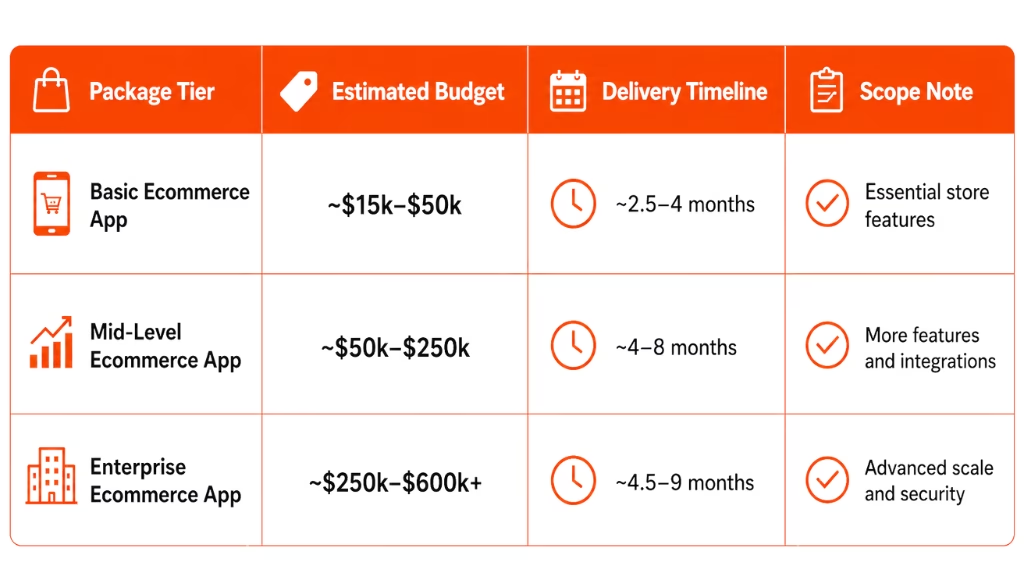
Ecommerce app development costs in 2026 depend on features, compliance, and process quality. In my experience, skimping on security or support never pays off.
According to the latest data:
- MVP ecommerce apps in the US/Europe start at $15,000 to $50,000.
- Standard apps range from $50,000 to $250,000.
- Full enterprise builds can cost $250,000 to $600,000+.
Cost factors include:
- AI or advanced product recommendations: +20-30%
- AR/VR features: +25-35%
- Multi-platform (iOS/Android/web): +15-20%
- Payment compliance (PCI DSS, GDPR): +10-15%
- Custom integrations (ERP, legacy systems): varies
Development Timeline:
- MVP: 10–16 weeks (avg)
- Full-featured rollout: 18–36 weeks
Cost Pitfalls to Avoid:
- Hidden charges for API access or support.
- Lack of upfront scoping—always ask for detailed, signed estimates.
- Ignoring post-launch maintenance fees.
How to Choose the Right Ecommerce App Development Partner in 2026
The real issue most teams face is not knowing what to ask or spot. I have seen this cause delays or missed deadlines many times.
Key Questions to Ask Each Agency
Asking the right questions ensures you select an agency suited to your needs.
- Do you have experience in my specific industry or vertical?
- What security protocols and compliance certifications can you show?
- Can you provide recent references I may contact?
- How do you estimate and guarantee pricing and timelines?
- What does your post-launch support include?
Common Red Flags & How to Avoid Them
In my POV, missing these signs is risky. Watch out for:
- Vague or generic portfolio/examples.
- No clear workflow or delivery milestones.
- Incomplete compliance documentation.
- Wild claims about “AI” or AR features with no proof.
- No transparent escalation or support process.
To help you avoid these mistakes, download our agency evaluation checklist.
What Are the Biggest Ecommerce App Development Trends in 2026?
2026 brings tech shifts and new standards. Staying current keeps your app future-proof. I have seen teams thrive when they plan for these from the start.
- AI-driven personalization and predictive shopping now drive over 40% of top app conversions
- Retailers use AR/VR for product demos, helping users try before buying.
- Headless commerce allows apps to scale across channels and platforms.
- PCI DSS, GDPR, and CCPA compliance is table stakes—not optional.
- Users expect onboarding and checkout under 35 seconds.
- Mobile-only approaches win in markets with high smartphone adoption.
A better approach is to plan for these trends in early scoping. Demand real-world demos and ask for metrics from current or recent projects.
Key Factors and Mistakes to Avoid When Hiring an Ecommerce App Development Agency
It is easy to focus on features or awards and ignore critical details that protect your project. The mistake I see often is treating vendor selection as a formality.
Watch out for these common missteps:
- Ignoring security or compliance certification validity dates.
- Trusting awards/ratings without reading actual client reviews.
- Not confirming who will own code or core intellectual property.
- Not requesting sample case studies or technical stack documentation.
- Overlooking escalation/support structure after launch.
Checklist for safer hiring:
- Request proof of recent compliance documents.
- Interview at least two client references.
- Review at least one full case study with outcomes.
- Confirm code/IP ownership in writing.
Why Choose Riseup Labs for Ecommerce App Development?
If you want a human-vetted, global partner with strong Shopify and custom app expertise, Riseup Labs may fit your needs.
Why Riseup Labs?
- Documented track record with rapid delivery and compliance.
- Proprietary project methodology focused on risk reduction.
- Award-winning support with live monitoring and updates.
- Verified client outcomes (Adidas, 2026).
“Our audits were faster and our market entry smoother working with Riseup Labs,” says a recent client.
If you are ready to build or upgrade your app, contact Riseup Labs or download the evaluation checklist now.
Conclusion
Selecting a top ecommerce app developer in 2026 is critical for any serious B2B or retail business. The right partner means fast launches, secure payments, and innovative features that drive real growth. Using up-to-date rankings and review-backed profiles is the best way to build your shortlist.
If you need expert support, agencies like Riseup Labs offer clear, human-driven guidance and strong security practices. Use the downloadable comparison table and checklist to make your search easier.
Building a new ecommerce app is more complex than it used to be, but well-structured rankings and verified partners take out much of the risk. Working with experienced, security-minded teams is the future of ecommerce app development—combine AI advantages with human expertise for the best results.
Frequently Asked Questions About Ecommerce App Development Companies
How much does it cost to develop an ecommerce app in 2026?
MVP ecommerce apps cost $15,000–$50,000 in the US, with enterprise projects ranging from $250,000 to $600,000. Prices may vary by features and region.
What criteria should I use to evaluate an ecommerce app development company?
Check verified reviews, strong portfolios, compliance certifications, transparent pricing, proven client outcomes, and up-to-date technology stacks.
What are the top features of ecommerce apps in 2026?
AI personalization, AR/VR shopping, fast onboarding, secure payments, headless commerce integration, and cross-platform support are must-have features.
Which companies have the best track record in mCommerce?
Companies like Applify, Riseup Labs, and Chop Dawg have proven results in mobile-first ecommerce projects supported by detailed case studies.
How important is platform integration (Shopify, Magento) for my app?
Platform integration streamlines data, operations, and future scaling. For many brands, Shopify or Magento compatibility is essential for success.
What compliance standards must ecommerce apps meet in 2026?
Ecommerce apps must comply with PCI DSS, GDPR, and CCPA for data and payment security. This is non-negotiable for reputable agencies.
This page was last edited on 9 July 2026, at 11:10 am

Start a conversation with our team to solve complex challenges and move forward with confidence.