Building an Electronic Health Record system is one of the most complex and high impact initiatives in modern healthcare. Many organizations struggle with how to build an ehr system that not only meets strict regulatory requirements but also supports real world clinical workflows and seamless data exchange.
The challenge goes beyond technology. It involves balancing compliance, interoperability, cost, and usability while deciding whether to build from scratch, customize, or adopt existing solutions. This guide provides a clear, structured approach to help you navigate how to build an ehr system, covering every stage from planning and compliance to technical architecture and cost considerations.
By following this framework, you will gain practical insights to make informed decisions, avoid common pitfalls, and develop an EHR system that enhances efficiency, supports better patient care, and delivers long term value.
What Is an EHR System and Why Is It Foundational in Healthcare?
An Electronic Health Record (EHR) system is a secure, digital platform for storing, managing, and exchanging patient health data across healthcare settings. Unlike traditional paper records or isolated electronic medical records (EMRs), a modern EHR system is designed for interoperability and comprehensive care management.
An EHR system is a digital repository of patient health information, accessible by authorized providers, supporting clinical care, billing, reporting, and regulatory compliance.
| Feature | EHR (Electronic Health Record) | EMR (Electronic Medical Record) |
|---|---|---|
| Scope | Cross-provider, longitudinal record | Single provider, episode-based |
| Interoperability | Designed for data sharing | Limited or none |
| Regulatory Focus | HIPAA, HITECH, ONC | HIPAA |
| Billing/Reporting | Advanced, multi-site | Basic, local |
- Stakeholders:
Patients
Providers (physicians, nurses)
Administrators
Payers & regulatory bodies
- Entities and Standards:
HIPAA (Health Insurance Portability and Accountability Act): Data security and privacy.
HITECH Act: Incentives for EHR adoption and use.
ONC Certification: Federal criteria for certified EHRs.
Interoperability: Exchange via standards like HL7 and FHIR.
A robust EHR system is foundational to healthcare because it streamlines clinical documentation, enhances patient safety, supports billing, enables regulatory reporting, and allows data exchange across the care continuum.
Should You Build, Buy, or Customize? A Decision Framework for EHR Solutions
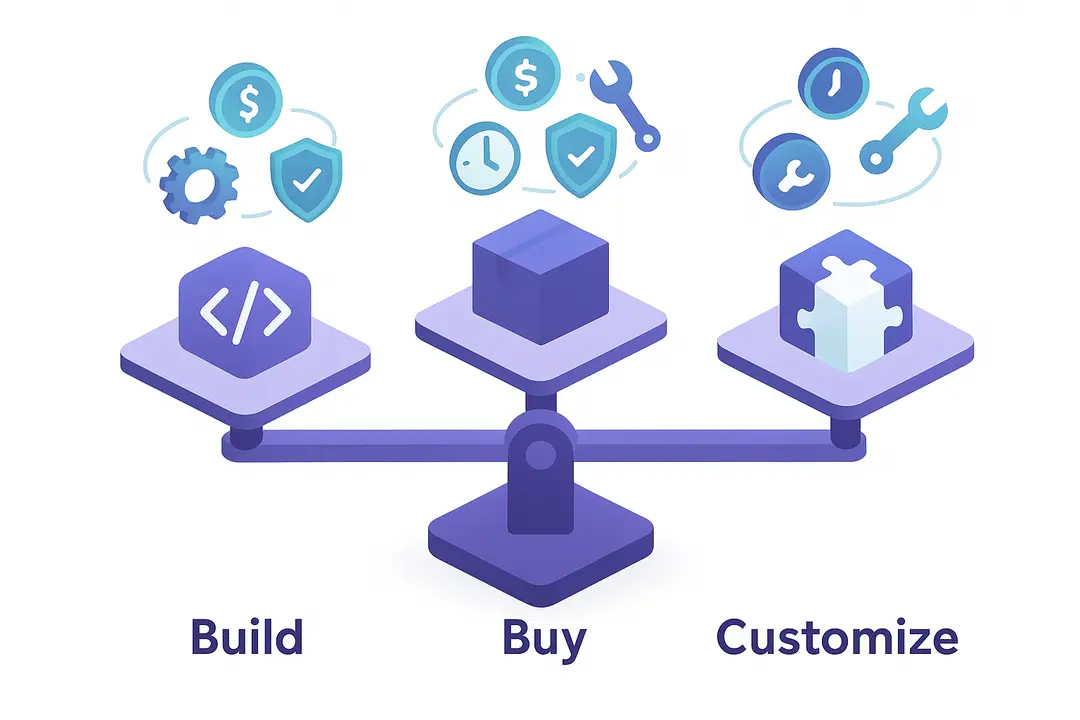
Choosing whether to build, buy, or customize an EHR system is the most critical early decision in EHR projects. Your choice directly impacts cost, speed, flexibility, and long-term value.
- Build:
Pros: Total control, tailored workflows, competitive differentiation.
Cons: High upfront costs, complex compliance, longer timeline. - Buy (Commercial off-the-shelf):
Pros: Faster deployment, vendor support, proven compliance.
Cons: Potentially poor fit for unique needs, ongoing licensing costs. - Customize (Open-source or hybrid):
Pros: Lower cost entry, existing base features, flexibility to adapt.
Cons: Requires technical resources, support may vary, compliance still rests with your organization.
| Option | Cost | Speed | Compliance | Customization | Typical Use Cases |
|---|---|---|---|---|---|
| Build | High | Slowest | Must self-certify | Maximum | Large hospitals, health systems |
| Buy | Moderate | Fastest | Vendor-certified | Limited | Small clinics, urgent deployments |
| Open-source | Low–Med | Medium | Varies, must review | High | Startups, resourceful IT teams |
- Decision Factors:
Budget and ROI constraints
Complexity of workflow/customization need
Regulatory requirements (e.g., ONC, HIPAA)
In-house technical expertise
Timelines—immediacy vs. possibility of phased rollout
How to Build an EHR System? (Quick Checklist)
Building an EHR system follows a clear, stepwise process that reduces risk and ensures compliance.
Quick Step-by-Step Checklist:
- Define requirements and compliance needs (clinical, admin, legal)
- Assemble your EHR development team
- Select the optimal technology stack
- Design and prototype UI/UX workflows
- Develop feature modules (documentation, patient portal, billing, etc.)
- Perform compliance reviews and certifications
- Integrate with existing systems (labs, pharmacy, billing)
- Test thoroughly (unit, integration, security, user)
- Train end-users and deploy system
- Maintain, update, and monitor performance/compliance
Use this checklist as your project’s high-level roadmap.
How to Plan and Define Requirements for Your EHR System
Successful EHR development starts with comprehensive requirements gathering, anchoring your solution in clinical, administrative, and legal realities.
Planning and requirements definition ensure your EHR meets real-world needs and passes compliance checks.
- Identify Stakeholders:
Clinicians, nursing, admin, compliance, IT. - Conduct User Interviews/User Stories:
Document real workflows, pain points, “day in the life” scenarios. - Document Functional & Non-Functional Requirements:
– Clinical workflows (charting, order entry, decision support)
– Administrative processes (scheduling, revenue cycle)
– Regulatory rules (HIPAA, HITECH, 21st Century Cures Act)
– Usability, accessibility, performance needs - Compliance Baseline:
– HIPAA risk assessment
– HITECH and ONC requirements
– State/local data privacy laws - Requirements Documentation Best Practices:
– Use clear, testable statements
– Version control and sign-off from all stakeholders
– Trace requirements to design and testing phases
A thorough requirements process reduces scope creep and maximizes user adoption.
Who Do You Need on Your EHR Development Team? (Roles & Skills)
Building an EHR system requires a multidisciplinary team to balance clinical, technical, and regulatory priorities.
A successful EHR project depends on assembling a skilled team covering development, compliance, clinical insight, and support.
| Role | Core Responsibilities | Recommended for |
|---|---|---|
| Project Manager (PM) | Lead planning, timelines, stakeholder communication | All project sizes |
| Lead Developer/Architect | System design, tech stack decisions, code review | Mid–large builds |
| Developers (Frontend/Backend) | Coding, integration, module build | All projects |
| UI/UX Designer | Workflow design, usability, ADA/accessibility compliance | All projects |
| QA Engineer/Testers | Automated/manual testing, bug tracking | All projects |
| Clinical Advisor | Validates usability and clinical workflows | Clinics, hospitals |
| Compliance Officer | Regulatory, audit, ongoing risk assessment | Must for US/EU markets |
| Security Lead | Data protection, encryption, incident response | Enterprise, hospitals |
| Data Migration Specialist | Legacy EMR/EHR data import, mapping, validation | Migrations/integrations |
The optimal team size and skill mix depend on the project scope and complexity. Early clinical and compliance involvement is essential for long-term success.
What Technology Stack & Tools Are Best For EHR Development?
Choosing the right technology stack is crucial for building a secure, interoperable, and future-proof EHR system.
In 2026, best-practice EHR development uses modern backend/front-end frameworks, standards-based APIs, and secure, scalable databases.
| Layer | Common Technologies/Standards | Key Considerations |
|---|---|---|
| Frontend | React, Angular, Vue.js | Responsive UI, accessibility |
| Backend | Node.js, Java (Spring), .NET, Python (Django) | Scalability, reliability |
| Database | PostgreSQL, MySQL, MongoDB, Cloud-native (AWS RDS) | Performance, compliance |
| API Standards | FHIR, HL7, SMART-on-FHIR | Interoperability, certification |
| Infrastructure | Cloud (AWS, Azure, GCP) or On-premises | Security, regulatory needs |
| Security Tools | OAuth 2.0, JWT, encryption at rest/in transit | HIPAA/HITECH mandates |
- API-first and Interoperability:
Adoption of FHIR (Fast Healthcare Interoperability Resources) and HL7 standards is now minimum best practice. - Cloud vs On-Premises:
Cloud hosting offers flexibility and resilience but must meet data residency and compliance mandates.
Pro tip:
Choose technologies with broad community support, demonstrated security track records, and explicit healthcare compliance features.
What Features and Modules Are Essential in a Modern EHR System?
Modern EHR systems must deliver a comprehensive feature set covering clinical, administrative, and regulatory needs.
Required EHR modules include patient charting, scheduling, billing, portals, and robust data security/auditing.
| Core Feature/Module | Purpose/Value |
|---|---|
| Patient Medical Records | Centralized health data |
| E-prescribing (eRx) | Streamlined medication process |
| Clinical Documentation | Templates, progress notes |
| Appointment Scheduling | Calendar, reminders, waitlists |
| Medical Billing | Insurance claims, coding, payments |
| Patient Portal | Patient access, engagement |
| Results Management | Lab/imaging results integration |
| Data Security & Audit Trail | Compliance, breach detection |
| Interoperability Module | Data exchange (HL7, FHIR APIs) |
| Reporting/Analytics | Compliance dashboards, population health |
| Specialty Modules (optional) | E.g., oncology, urgent care, telemedicine |
Prioritize your feature set based on certified requirements, clinical input, and end-user feedback. Avoid feature bloat by scheduling enhancements post go-live.
How Do You Ensure Interoperability and Integration With Other Systems?
EHR interoperability enables secure, seamless data exchange with labs, pharmacies, and other clinical systems—central to regulatory compliance and care continuity.
Summary:
Achieving interoperability relies on implementing standards-based APIs and conforming to certification requirements like FHIR and HL7.
- Standards-Based Data Exchange:
– FHIR: Modern API for healthcare data, mandated by the ONC for certification.
– HL7: Messaging standard for legacy and real-time data exchange.
– SMART-on-FHIR: Allows integration of third-party apps within EHR platforms. - Common Integration Scenarios:
Lab and imaging systems
Pharmacies (e-prescribing)
Practice management/billing softwares
State/federal reporting registries - Best Practices:
Open API design
Use sandbox/test environments for integration partners
Maintain up-to-date interface documentation - Certification:
US ONC-ATCB (Authorized Testing and Certification Body) certification ensures compliance with interoperability mandates.
What Compliance and Regulatory Requirements Must Your EHR Meet?
EHR compliance is not optional—strict standards cover data privacy, certification, and meaningful use, with ongoing updates for 2026.
EHR systems must comply with regulations like HIPAA, HITECH, the ONC 21st Century Cures Act, and state/local privacy laws.
| Regulation/Certification | Main Requirement | Applies to |
|---|---|---|
| HIPAA | Security/privacy of PHI, access logging, breach rules | All US health IT |
| HITECH | EHR adoption, meaningful use incentives, penalty enforc. | US organizations |
| ONC Certification (Cures Act) | Interoperability, API access, usability, patient access | EHR vendors, buyers |
| CMS/Medicare Reporting | Quality, safety, and reporting requirements | Eligible providers |
| State-specific (e.g., CCPA) | Privacy/data localization, breach notification | By location |
- 2026 Update:
The 21st Century Cures Act final rules widen API/data sharing requirements and patient access mandates. - Best Practices:
– Regular compliance audits
– Mandatory staff training
– Ongoing regulatory watch and updates
– Third-party security assessments
Non-compliance can result in severe penalties, loss of incentives, or legal exposure.
How to Test, Implement, and Maintain Your EHR System
Rigorous testing and a structured go-live process help prevent patient care disruptions, data loss, and user frustration.
Testing, phased rollout, training, and continuous maintenance are essential for successful EHR adoption and system resilience.
- Testing Strategies:
– Unit tests (code-level functionality)
– Integration tests (system-to-system data flow)
– User Acceptance Testing (UAT) with real clinical stakeholders
– Security testing (vulnerability scanning, penetration testing) - Implementation Steps:
1. Pilot deployment in a controlled setting
2. Staff training programs (workshops, documentation, sandbox environment)
3. Phased or “big bang” rollout per readiness
4. Real-time support/helpdesk for go-live - Maintenance:
– Monitoring system performance and security
– Applying regulatory-driven updates
– Managing backups and disaster recovery
– User feedback loops for feature improvements
An implementation timeline helps ensure a smooth transition: typically, 3–12 months from test through full deployment.
What Does It Cost to Build and Maintain an EHR System?
Building an EHR system involves significant upfront investment and ongoing operational costs. Cost varies greatly depending on approach, features, and organization size.
Total EHR cost includes development, licensing, support, integration, and mandatory compliance updates.
| Solution Type | Initial Cost (USD) | Ongoing (Yearly) | Typical Users |
|---|---|---|---|
| Custom Build | $500,000–$5M+ | $100k–$1M | Large orgs/hospitals |
| Buy (Commercial) | $50,000–$1M+ | $25k–$500k | Clinics, group practices |
| Open-source Custom | $20,000–$750k | $10k–$250k | Startups, small orgs |
- Key Cost Drivers:
– Scope/number of modules
– Integration and data migration needs
– Hosting (cloud vs. on-premises)
– Annual support/compliance needs - Tips to Manage Costs:
– Limit MVP scope for initial launch
– Consider phased deployment
– Use open-source components where feasible
– Factor in certification and ongoing regulatory changes
According to industry benchmarks, total cost of ownership (TCO) for an EHR system over five years often exceeds direct purchase price due to updates, support, and growth.
What Are the Main Risks, Challenges, and Pitfalls in EHR Development? How Do You Mitigate Them?
EHR projects can fail or overrun due to technical, regulatory, or organizational hurdles.
Common EHR challenges include regulatory risk, integration failures, change management, and unforeseen costs.
| Risk/Challenge | Mitigation Strategy |
|---|---|
| Security vulnerabilities | Robust encryption, regular audits |
| Compliance gaps | Continuous legal/compliance involvement |
| User resistance | Early stakeholder engagement, training |
| Timeline overruns | Agile project management, phased launches |
| Integration failures | Standards-based APIs, pilot integrations |
| Data migration issues | Plan/test data conversion up front |
Lessons from the Field:
Early and ongoing clinical/stakeholder engagement, incremental rollout, and dedicated compliance oversight significantly raise success rates.
Real-World Case Studies: EHR Development Successes and Lessons Learned
Learning from real implementation stories helps avoid common pitfalls and inspires better project planning.
Organizations succeed with EHRs by aligning technical rigor with clinician buy-in and phased, compliant rollouts.
- Case 1: Clinic Migration to Modern Commercial EHR
A multi-location clinic switched from a legacy EMR to a certified EHR. Key to success was months of shadow training and phased go-live by department, minimizing disruption. - Case 2: Custom EHR Build for Specialty Care
A specialty hospital opted to build their own EHR to match unique clinical workflows. Early involvement of medical staff and a pilot phase helped avoid the “one size fits none” trap. - Case 3: Open-Source EHR in Hospital Setting
A regional hospital customized an open-source EHR (e.g., Medplum) for rapid deployment. Regular compliance audits and leveraging community support were vital for certification.
- Clear requirements and stakeholder alignment are non-negotiable.
- Compliance and data migration challenges must be planned for from day one.
- MVP-first, phased rollouts help manage complexity and change.
FAQ: Everything You Need to Know About Building an EHR System
What are the essential steps in how to build an ehr system?
When learning how to build an ehr system, the key steps include defining requirements, assembling a team, selecting a tech stack, designing workflows, developing features, ensuring compliance, integrating systems, testing, and deployment. A structured approach to ehr software development helps ensure success.
What features are required when you learn how to build an ehr system?
To understand how to build an ehr system, you must include features like patient records, clinical documentation, scheduling, e prescribing, billing, reporting, and patient portals. These are core components of electronic health record system development.
How much does it cost in how to build an ehr system?
Costs for how to build an ehr system can range from $50000 to several million depending on complexity. Ongoing expenses in ehr software development such as maintenance and compliance can add significant yearly costs.
What challenges arise in how to build an ehr system?
Common challenges in how to build an ehr system include data security, compliance requirements, system integration, and user adoption. Effective electronic health record system development requires careful planning to overcome these issues.
What compliance is required in how to build an ehr system?
When learning how to build an ehr system, compliance with regulations like HIPAA, HITECH, and ONC standards is essential. Proper ehr software development ensures data privacy and legal adherence.
Should I build or buy when considering how to build an ehr system?
Deciding how to build an ehr system often involves choosing between building or buying. Smaller organizations may prefer ready solutions, while larger ones invest in custom electronic health record system development for flexibility.
How long does it take in how to build an ehr system?
Timelines for how to build an ehr system typically range from 12 to 36 months for custom solutions. Efficient ehr software development practices can help reduce delays.
What technology stack is best for how to build an ehr system?
A modern approach to how to build an ehr system includes using React or Angular for frontend, Node.js or Java for backend, and databases like PostgreSQL. Electronic health record system development also relies on standards like FHIR and HL7.
How do you ensure interoperability in how to build an ehr system?
Interoperability in how to build an ehr system is achieved through standards such as FHIR and HL7, along with open APIs. These are critical in electronic health record system development.
What is the difference between cloud and on premises in how to build an ehr system?
When exploring how to build an ehr system, cloud based solutions offer scalability and easier updates, while on premises systems provide more control but higher maintenance requirements in ehr software development.
Why is ehr software development important for healthcare?
Ehr software development is essential because it improves patient care, streamlines operations, and ensures accurate data management when implementing how to build an ehr system.
How do you ensure security in electronic health record system development?
Security in electronic health record system development involves encryption, access controls, and regular audits, which are critical when learning how to build an ehr system.
Conclusion: Your Next Steps Toward EHR Success
Building an EHR system requires a careful balance of technical expertise, regulatory awareness, and a deep understanding of clinical workflows. When approached with clear planning, strong compliance practices, and a focus on user needs, organizations can create systems that improve efficiency and enhance patient care.
By following a structured process and making informed decisions at each stage, healthcare teams can reduce risks, manage costs effectively, and deliver a reliable solution. With the right strategy in place, an EHR system can become a powerful foundation for better healthcare outcomes and long term operational success.
Key Takeaways
- Building an EHR system is a complex, high-stakes project requiring detailed planning, the right team, and up-to-date technical/compliance expertise.
- Choose between building, buying, or customizing an EHR based on your organization’s workflows, budget, and regulatory context.
- Prioritize core modules (documentation, scheduling, billing, interoperability) and establish a robust compliance/QA framework early.
- Costs, team needs, and regulatory requirements vary significantly by project size and approach.
This page was last edited on 2 June 2026, at 10:26 am

Start a conversation with our team to solve complex challenges and move forward with confidence.