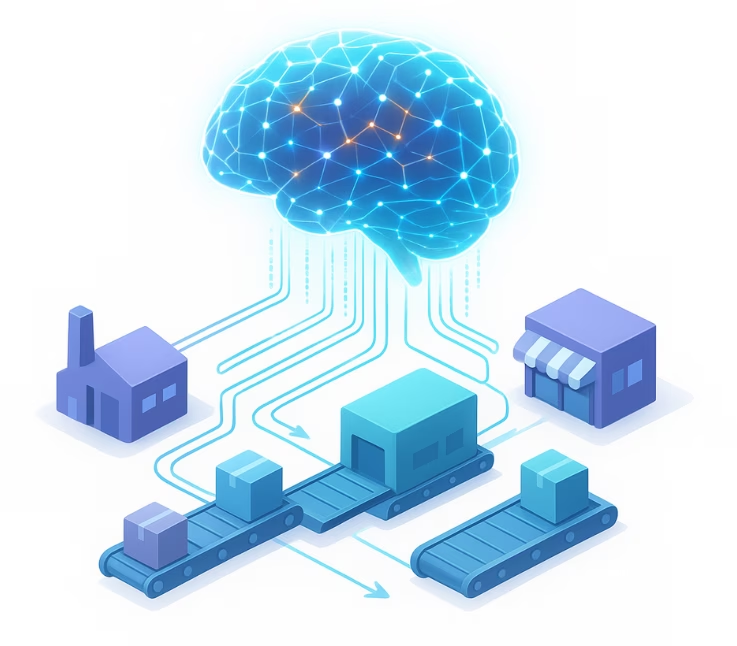
Manual demand forecasting can no longer keep up with today’s volatile markets, shifting customer behavior, and data overload. As demand spikes and disruptions become more frequent, supply chain leaders need a new answer—one that delivers speed, reliability, and agility. That’s where AI automation for demand sensing comes in, combining machine learning and real-time data to close the gap between uncertainty and insight.
This practical playbook explains what AI-automated demand sensing is, why it’s urgent for modern supply chains, and—crucially—how to make it work for your enterprise or agile SME. You’ll discover benefits, stepwise adoption, leading tools, industry applications, vendor comparisons, and a roadmap to implementation. Whether you’re exploring first steps or seeking to optimize an existing process, you’ll find actionable guidance and clear takeaways you can use immediately.
What is AI Automation for Demand Sensing?
AI automation for demand sensing is the use of artificial intelligence (AI) and machine learning (ML) to automate short-term demand forecasting in supply chains by rapidly analyzing high-frequency internal and external data signals. This enables organizations to detect shifts in demand and react in near real time, optimizing planning, reducing manual effort, and improving forecast accuracy.
- Continuously ingest and process diverse data (sales, POS, weather, promotions, social sentiment)
- Apply ML algorithms that “learn” from patterns and anomalies
- Automate forecast updates and integrate recommendations into supply chain actions

Core technologies and signals include:
- Machine learning models (regression, deep learning, ensemble)
- Real-time data integration platforms
- Cloud-based data lakes for structured and unstructured sources
- Automated forecast workflows and alerts
Key benefits:
- 20–40% improvement in forecast accuracy
- Inventory and working capital reduction
- Faster response to demand fluctuations
- Lower workload for demand planners
- More granular, SKU/location-level insights
- Improved resilience and agility across the supply chain
How Does AI Automate the Demand Sensing Process?
![How Does AI Automate the Demand Sensing Process? [Stepwise Lifecycle]](https://riseuplabs.com/wp-content/uploads/2026/04/how-does-ai-automate-the-demand-sensing-process-stepwise-lifecycle.webp)
AI automation transforms demand sensing through a clear sequence of data-driven steps, each designed to convert raw market signals into actionable forecasts. Here’s a simplified breakdown of the lifecycle:
- Data Collection & Integration: Internal and external data sources are gathered and unified.
- Signal Processing & Feature Engineering: Data is prepared, cleaned, and transformed to reveal predictive patterns.
- Model Training & Forecast Generation: Advanced ML models are built, evaluated, and used to generate daily or hourly forecasts.
- Automation in Decision-Making & Alerts: Actionable recommendations and alerts trigger real-time responses, with a balance of automation and human oversight.
Let’s unpack each stage:
Data Collection & Integration: Building Your Signal Foundation
Summary:
The process starts with collecting and unifying all relevant data, both from within the organization and the wider marketplace.
What’s involved:
- Internal data: Sales transactions, orders, inventory levels, recent promotions, web traffic
- External data: POS (point-of-sale) feeds from downstream partners, local weather patterns, social media sentiment, market trends
- Systems integration: Connecting ERP systems, CRMs, distributor data, and cloud-based third-party sources via APIs or data lakes
Example:
A CPG brand integrates in-store scanner data, real-time weather updates, and competitor price monitoring alongside its own ERP to build a holistic, high-frequency demand signal.
Signal Processing & Feature Engineering
Summary:
Raw data is cleaned, standardized, and enriched with predictive “features” before feeding into ML models.
Key activities:
- Data cleaning: Removing duplicates, fixing errors, aligning time stamps
- Feature engineering: Creating variables (e.g., “promotion-adjusted sales”, “weather impact index”) that help ML models see real-world demand drivers
- Pattern detection: Spotting anomalies, seasonality, trend changes or external events
Why it matters:
Well-processed data and thoughtful features majorly impact forecast accuracy and robustness.

Model Training & Forecast Generation
Summary:
Machine learning models “learn” from historical data to predict future demand, delivering detailed and frequent forecasts.
How it works:
- Model selection: Choosing the right methods (regression, deep learning, ensemble) for your data, seasonality, and business goals
- Training and validation: Using past data to tune the model and test against known outcomes
- Granular forecasts: Producing daily or even hourly predictions, often at the SKU and location level
- Confidence intervals: Each forecast provides expected ranges, supporting risk-aware planning
Example:
A retailer’s demand sensing platform generates 1-day-ahead and 7-day-ahead forecasts for every product and store, highlighting expected variability during local events.
Automation in Decision-Making & Alerts
Summary:
Forecasts fuel automated workflows, enabling faster and more accurate supply chain actions.
Features include:
- Automated recommendations: Adjusting inventory reorder points, optimizing safety stock, or launching targeted promotions
- Real-time dashboards: Visual, always-updated metrics for planners to monitor demand spikes or dips
- Alerts and exception management: Automated notifications for outlier scenarios, with human-in-the-loop review for overrides
Levels of automation:
- Fully automated: System can execute certain actions without manual intervention
- Human-in-the-loop: Planners review and validate AI-generated recommendations before executing
Lifecycle Flow Diagram (Description):
1. Data Ingestion →
2. Signal Cleaning/Feature Engineering →
3. Model Training & Forecasting →
4. Automated Recommendations & Alerts →
5. Planner Review/Action
→ Loop back as new data flows in
What Are the Core Benefits of AI-Automated Demand Sensing?
AI-automated demand sensing delivers rapid, data-driven decisions, leading to measurable improvements in supply chain performance, cost, and agility.
Key business benefits:
- Forecast accuracy improvement: Industry leaders report 20–40% higher accuracy than traditional statistical approaches (source: AWS, E2open).
- Inventory and working capital reduction: Smarter forecasting reduces overstock and understock, freeing up capital.
- Faster speed and responsiveness: Systems process new data and adjust forecasts in hours, not days or weeks.
- Workload reduction: Automation cuts manual data prep, freeing planners for exception management.
- Scalable, granular insights: Frequent, SKU-level forecasts enable precise store, region, or channel planning.
- Cost savings and agility: Reduced waste, expedited response to demand shocks, and competitive advantage in fast-moving sectors.
| Metric | Traditional Forecasting | AI-Automated Demand Sensing |
| Average Forecast Error | 25–35% | 12–18% |
| Inventory Levels | High safety stock | 10–25% reduction |
| Planner Hours/Week | 20–30 | 8–12 |
| Response Time to Demand Shift | Days or weeks | <1 day |
| Lost Sales/Stockouts | >3% revenue | <1.5% revenue |
Industry Applications & Use Cases: Who Benefits the Most?
AI demand sensing automation delivers strong results for supply chains in retail, CPG, pharmaceutical, automotive, and high tech industries, each facing unique forecasting challenges.
Retail: Managing SKU Proliferation and Promos
- Challenge: Thousands of SKUs, rapid promotions, variable demand.
- AI Impact: Near real-time forecasts enable optimal allocation and replenishment.
- Example: A major North American retailer improved on-shelf availability by 18% and cut markdown costs 15% by automating demand forecasts using ML models and POS data.
Consumer Packaged Goods (CPG): Short Shelf-Life, Multi-Channel Complexity
- Challenge: Perishable inventories, high channel fragmentation.
- AI Impact: Automated forecasts help optimize production runs, reduce spoilage, and match shipments with true demand.
- Case Study: A global CPG company reduced inventory holding by 20% post-AI adoption, citing tighter alignment between shipment and consumer sell-through data.
Pharmaceutical: Launch Planning and Compliance
- Challenge: Complex regulatory environment, launches of new drugs, strict inventory controls.
- AI Impact: Real-time sensing of demand surges (e.g., during public health events), with explainable outputs for regulatory compliance.
- Result: Pharmaceutical firms using AI-driven demand sensing maintained 99% service levels during high volatility periods.
Automotive: Complex, Global Supply Chains
- Challenge: Large BOMs, networked component suppliers, volatile end markets.
- AI Impact: Automated demand sensing allows flexible response to shifts (e.g., semiconductor shortages).
- Example: An automotive OEM improved line-side material availability by 23% using AI-based forecasts.
High Tech: Managing Volatility and Component Constraints
Challenge: Rapid technology cycles, constrained and international supplier networks.
AI Impact: ML-driven demand sensing rapidly flags supply interruptions and changing demand for hot SKUs.
Can Small & Mid-Sized Enterprises (SMEs) Adopt AI Demand Sensing?
Yes. SMEs can benefit from AI demand sensing automation by starting with resource-light, cloud-based tools and a lean data approach, making advanced forecasting accessible without major up-front investment.
Stepwise SME Adoption Guide:
- Minimal Viable Tech Stack:
Leverage existing ERP or spreadsheets plus a cloud-based AI platform (many offer SaaS pricing, pay-as-you-go, or free trials). - Data Readiness Checklist:
Gather basic sales/order histories, recent promotions, and core inventory data.
Assess integration potential with external sources (e.g., POS, weather). - Tool Selection:
Start with off-the-shelf platforms (e.g., AWS Demand Planning, o9 Solutions) instead of custom builds.
Evaluate managed services where vendor handles data science lift. - Cloud/SaaS Benefits:
No IT infrastructure investment needed, scalable to demand, automatic updates. - Training and Change Management:
Invest in staff education—many vendors offer onboarding and in-product tutorials. - SME Success Example:
A mid-sized distributor used out-of-the-box demand sensing SaaS, achieving a 17% reduction in lost sales with only one analyst managing the process.
Checklist Summary:
- Historical sales and inventory data accessible
- Baseline forecast accuracy measured
- Cloud/SaaS AI options shortlisted
- Change management champion identified
- First pilot (2–3 SKUs/channels) planned
How Does Explainable AI Build Trust in Automated Demand Sensing?
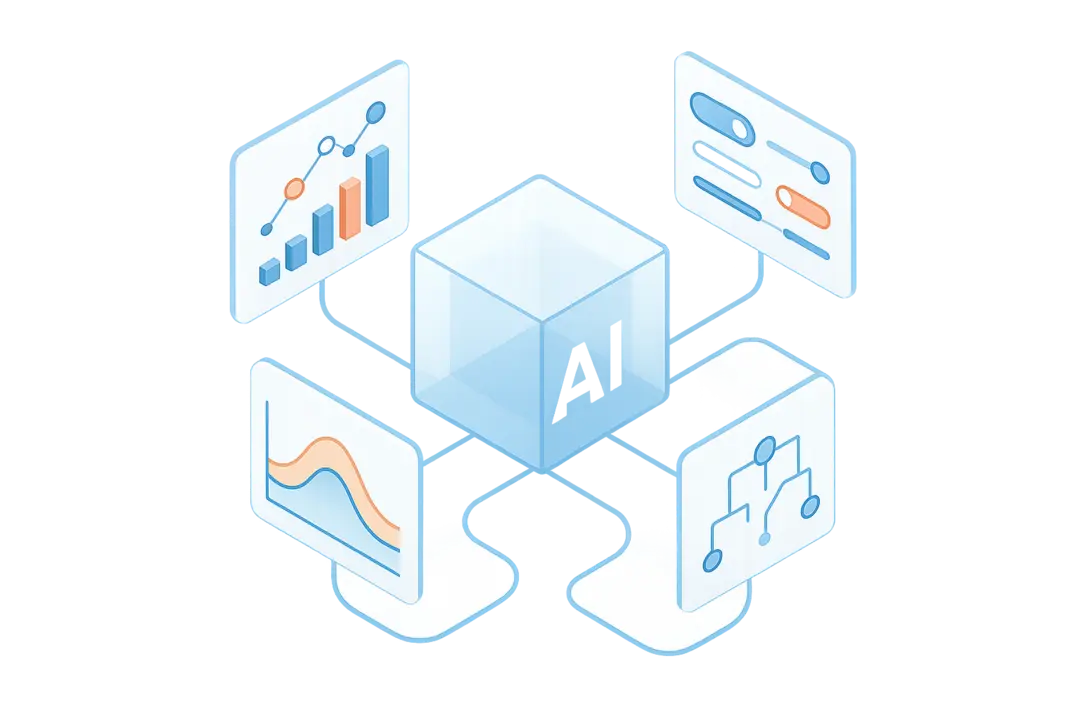
Explainable AI (XAI) in demand sensing makes machine learning models transparent and interpretable, building planner confidence and supporting regulatory and business requirements.
What is Explainable AI (XAI) in demand sensing?
XAI refers to tools, methods, and processes that help users understand how AI systems make demand forecasts—clarifying which data and factors drive predictions.
Why transparency is critical:
- High-stakes decisions (e.g., production planning, regulatory compliance) demand trust.
- Planners and executives need to validate, question, or override AI-generated decisions, especially in exceptional circumstances.
Common XAI techniques in demand sensing:
- Feature Importance Scoring: Shows which variables (e.g., weather, promotion) most influence forecast results.
- Scenario/What-If Analysis: Allows users to simulate changes (e.g., “What if we run a price promotion?”) and see forecast adjustments.
- Confidence Intervals: Every forecast comes with range estimates, quantifying uncertainty.
- Decision Traceability: Provides drill-down into the data and steps that shaped a given recommendation.
How planners work with XAI:
- Review and challenge forecasts before deploying major changes.
- Document rationale for overrides, supporting audit and compliance.
- Increase adoption by involving users in model evaluations.
Compliance & Regulation:
XAI supports documentation for quality assurance in regulated sectors (pharma, food), helping meet audit standards.
What Are the Main Challenges & Pitfalls in Automating Demand Sensing?
While AI automation for demand sensing yields major efficiency gains, it’s not without risks. Common pitfalls include data gaps, internal resistance, technical hurdles, and the “black box” problem.
| Challenge | Solution |
| Incomplete or poor-quality data | Data cleansing, external data augmentation |
| Staff resistance and “tech fatigue” | Early engagement, clear benefits communications |
| Black box model opacity (lack of trust) | Use of explainable AI, user override functions |
| Unpredictable outlier events or disruptions | Hybrid planning (AI plus scenario-based manual checks) |
| Cold start for new SKUs, categories, or launches | Transfer learning, synthetic data, expert overrides |
| Legacy ERP/integration friction | Middleware/connectors, phased implementation |
| Cost and time overruns during rollout | Pilot-first approach, clear requirements, SME pilots |
Proactive risk management and a “human-in-the-loop” mindset are essential for a successful transition.
Which Platforms Offer AI Automation for Demand Sensing?
Organizations can choose from a growing range of AI demand sensing platforms, each with unique features, integration capabilities, and industry focus.
Leading Platforms Comparison Table
| Platform | Key Features | Industry Focus | Integration | Pricing Model | Notable Results/Case Study |
| Kinaxis | End-to-end AI demand sensing, scenario planning, explainable AI | Retail, CPG, Automotive, Pharma | Deep ERP, open APIs | Subscription/Enterprise | 99% service levels in pharma |
| E2open | Real-time multi-enterprise data, demand propagation, ML models | All major verticals | Multi-ERP, supply network | Subscription | 30–40% accuracy improvement |
| AWS | Modular, cloud-native, supports custom ML & prebuilt models | Tech, All verticals | API, SaaS, data lake | Pay-as-you-go | Used by global CPG leaders |
| John Galt | Fast deployment, scenario analysis, intuitive UI | Retail, CPG, Dist. | ERP, spreadsheet, APIs | SaaS | 15% inventory reduction |
| o9 Solutions | Data lakehouse, demand driver analytics, “rapid sensing” | CPG, Retail, High Tech | Multi-ERP, custom APIs | Subscription | SKU-level granularity, high tech |
| Other vendors: | SAP IBP, Blue Yonder, ToolsGroup also provide AI-driven modules; choice depends on integration readiness and budget. | ||||
How to choose:
Consider industry fit, data integration requirements, level of automation, analyst rankings (Gartner, Forrester), and value-added services. For deeper dives and updated case studies, see vendor websites and recent Magic Quadrant reports.
Step-by-Step Roadmap: How to Implement AI Demand Sensing Automation
Implementing AI demand sensing follows a logical, staged roadmap—beginning with readiness assessment and culminating in continuous improvement.
Implementation Steps:
- Assessment:
Evaluate data quality, IT landscape, and staff readiness.
Identify key pain points (e.g., product-level forecast error, inventory levels). - Data Readiness & Integration:
Clean, consolidate, and augment internal/external demand signals.
Establish scalable data pipelines (API, cloud storage). - Vendor Selection or Internal Build:
Define requirements.
Compare potential AI platforms (see table above) or plan custom ML initiatives. - Pilot/Proof-of-Concept (POC):
Select focus SKUs/channels; run pilots to benchmark forecast performance and usability. - Change Management & Training:
Involve end users (planners, analysts) early.
Provide hands-on training, foster trust in explainable AI. - Scaling, Monitoring, and Continuous Improvement:
Expand across SKUs/geographies.
Monitor forecast KPIs, ROI; iterate with lessons learned.
Pro tip: Use an RFP template and data readiness checklist (most platform vendors or consultants provide these) to accelerate and de-risk your journey.
Summary Table: AI Demand Sensing Automation at a Glance
| Category | Highlights |
| Core Concept | ML-enabled, real-time, automated short-term demand forecasting using integrated data signals |
| Top 3 Benefits | 1. 20–40% higher forecast accuracy 2. Inventory and cost reduction 3. Faster, more granular insights |
| Leading Platforms | Kinaxis, E2open, AWS, JohnGalt, o9 Solutions |
| Implementation Stages | Readiness → Data Integration → Vendor Selection/Build → Pilot → Scaling/Improvement |
| SME Considerations | Lean data stack, SaaS tools, phased pilot, quick ROI, minimal IT overhead |
Frequently Asked Questions (FAQs) about AI-Automated Demand Sensing
What is AI automation for demand sensing?
AI automation for demand sensing uses machine learning and real-time data integration to generate highly accurate, short-term demand forecasts, replacing manual guesswork with constantly updated, data-driven insights.
How does AI-powered demand sensing work?
It ingests internal and external signals (sales, POS, weather, social media), processes and engineers relevant features, applies trained ML models, and produces granular forecasts—often fully automating routine supply chain decisions.
Which industries benefit most from AI demand sensing automation?
Industries with high SKU complexity, fast-changing demand, and fragmented data—like retail, CPG, automotive, pharma, and high tech—see the fastest and strongest gains.
What data sources are needed for AI demand sensing?
Core data includes historical sales/orders, inventory records, promotions, POS metrics, and external factors like weather, social sentiment, or competitive pricing.
How accurate is it vs. traditional forecasting?
According to industry benchmarks, AI-automated demand sensing improves forecast accuracy by 20–40% compared to legacy statistical models.
Can SMEs adopt with minimal staff or budget?
Yes, thanks to cloud-based, managed solutions and SaaS pricing, SMEs can pilot and scale AI demand sensing with limited technical and financial resources.
What are the main challenges in automating demand forecasting?
Common hurdles include poor data quality, system integration complexity, internal change resistance, and skepticism over “black box” AI recommendations.
Are human planners still needed?
Human planners remain critical, especially for reviewing outlier forecasts, managing major exceptions, and driving change management—even in highly automated workflows.
Which platforms are recommended for AI demand sensing?
Top vendors include Kinaxis, E2open, AWS, JohnGalt, o9 Solutions—selection depends on your industry, integration needs, and scalability requirements.
How does explainable AI improve trust in forecasts?
Explainable AI techniques clarify what drives predictions, enable what-if analysis, and provide confidence ranges—helping users understand, validate, and trust automated forecasts.
Conclusion
AI automation for demand sensing is no longer a futuristic ambition—it’s the new baseline for high-performing, resilient supply chains. Companies hesitating on this transformation risk losing agility, efficiency, and competitive edge as demand variability accelerates.
Key takeaways:
- AI-driven demand sensing significantly improves forecast accuracy, speeds supply chain reaction, and reduces manual effort—regardless of company size.
- Successful adoption depends on data readiness, careful vendor/platform evaluation, and commitment to change management and transparency.
- Both global enterprises and SMEs can leverage scalable, cloud-based solutions suited to their unique requirements.
- Trust-building through explainable AI and ongoing training keeps human expertise at the center of automation.
This page was last edited on 30 April 2026, at 1:09 pm

Start a conversation with our team to solve complex challenges and move forward with confidence.