Operational intelligence is undergoing a dramatic transformation as AI technologies take center stage in managing increasingly complex digital businesses. The surge in interconnected systems and cloud adoption is making traditional operational tools obsolete, pushing organizations to seek smarter, real-time insights across IT and business operations.
Today’s enterprises face challenges like data overload, alert fatigue, fragmented processes, and escalating operational risks—problems that AI-enabled operational intelligence platforms are specifically designed to solve. In 2026, trends such as automation, agentic AI, and predictive analytics are shaping how leading organizations stay ahead.
This expert guide will help you understand, evaluate, and take action on the new generation of AI-enabled operational intelligence solutions—equipping you to choose the right platform and achieve measurable business results.

What Is an AI-Enabled Operational Intelligence Platform?
An AI-enabled operational intelligence platform is software that uses artificial intelligence and machine learning to monitor, analyze, and automate business operations in real time. These platforms empower organizations with actionable insights, automated incident management, and predictive analytics.
Key capabilities include:
- Real-time data collection from diverse sources (IT, business, cloud)
- Event correlation and anomaly detection using machine learning
- Automated workflows and response bots for incident management
- Advanced dashboards for visualization, reporting, and decision support
Unlike legacy systems, these platforms break silos and leverage AI to rapidly surface insights, predict issues, and drive autonomous actions—supporting both IT and non-IT use cases across the enterprise.
How Do AI-Enabled Operational Intelligence Platforms Work?
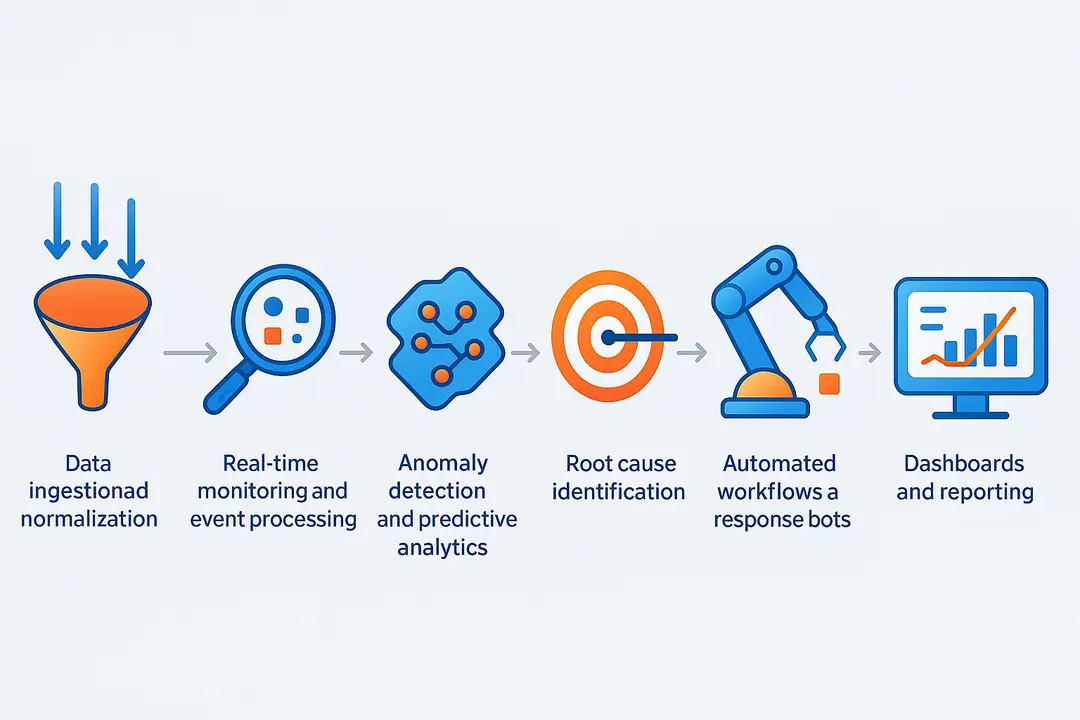
AI-enabled operational intelligence platforms operate by ingesting vast operational data, applying AI/ML algorithms for analysis, and automating responses—enabling businesses to act on insights instantly.
Core workflow:
- Data ingestion and normalization: Platforms aggregate and harmonize data from applications, infrastructure, cloud services, and IoT devices—ensuring clean, analyzable streams.
- Real-time monitoring and event processing: Sophisticated engines monitor activity continuously, using AI to correlate events and detect patterns or anomalies.
- Anomaly detection and predictive analytics: Machine learning models highlight abnormal behavior and forecast issues before they disrupt operations.
- Root cause identification: Automated algorithms trace incidents back to their source, reducing mean time to resolution (MTTR).
- Automated workflows and response bots: Platforms can trigger remediation scripts, send alerts, or even resolve incidents autonomously based on set rules or agentic AI decisioning.
- Dashboards and reporting: Intuitive visualization tools enable teams to monitor KPIs, compliance, and trends at a glance.
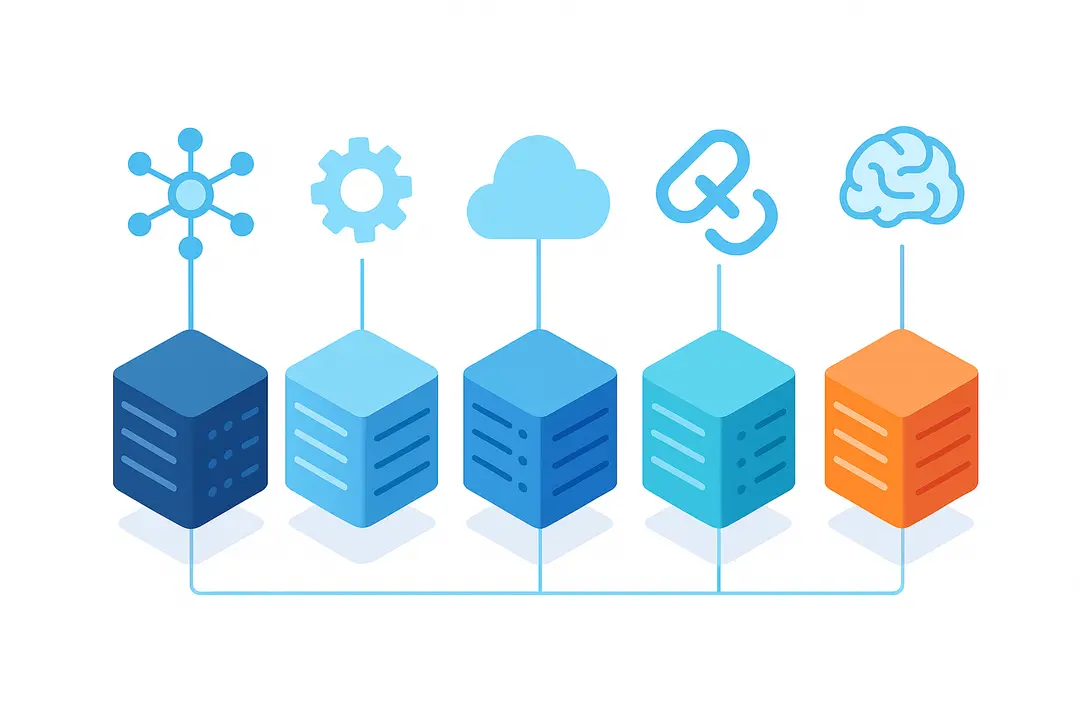
Typical platform architecture includes:
- AI/ML analytics engine
- Integration connectors (ITSM, cloud, business apps)
- Automation layer (bots, scripts)
- Flexible deployment: cloud-native, hybrid, or on-premises
This modern architecture ensures that both technical and business stakeholders can benefit from a unified, data-driven operational view.
What Are the Core Benefits and Capabilities?
AI-enabled operational intelligence platforms deliver measurable improvements across efficiency, reliability, and operational visibility. Key benefits include:
- Significant reduction in downtime: Automated root cause analysis and proactive monitoring speed up incident response.
- Predictive maintenance and risk avoidance: AI models anticipate IT or process failures, enabling preemptive action.
- Lower operational costs: Automation eliminates manual tasks and reduces labor-intensive troubleshooting.
- Enhanced observability: Cross-domain insights enable holistic monitoring of IT and business processes, including hybrid cloud environments.
- Noise reduction and alert fatigue minimization: Intelligent event correlation filters out false positives, ensuring teams focus on real issues.
- Improved compliance and data governance: Audit-ready reporting and access controls streamline regulatory adherence.
In summary, these platforms help organizations increase uptime, reduce costs, and strengthen both IT and business outcomes.
Who Are the Leading Platform Providers in 2026?
The market for AI-enabled operational intelligence platforms in 2026 features both established leaders and innovative challengers.
According to recent Gartner and Forrester analyses, top vendors include:
- Splunk – Strong analytics, robust integrations, hybrid support
- ScienceLogic – AI-powered IT operations, deep automation
- ServiceNow – Enterprise workflow automation, ITSM excellence
- Dynatrace – End-to-end AIOps and full-stack observability
- OpsVeda – Agentic AI, rapid deployment, business-focused intelligence
Each platform is assessed on criteria such as core AI features, pricing, support for different architectures (cloud/hybrid/on-prem), automation depth, and ease of integration with existing systems.
Leading analyst reports (e.g., Gartner Magic Quadrant, Forrester Wave) consistently highlight these vendors for their innovation, reliability, and real-world outcomes.
Platform Feature Matrix [Comparison Table]
| Vendor | Architecture | Core AI Capabilities | Supported Use Cases | ITSM/Integration | Automation Depth | Pricing Notes |
| Splunk | Cloud / Hybrid / On-Prem | Event correlation, ML analytics, anomaly detection | IT ops, SecOps, business ops | Broad (ITSM, APIs) | High (Custom workflows, bots) | Tiered, by data vol. |
| ScienceLogic | Cloud / Hybrid | Predictive analytics, observability AI | IT, infrastructure, cloud | Deep IT support | Strong (Auto-remediation) | By device/endpoint |
| ServiceNow | Cloud | Workflow AI, process automation | ITSM, HR, finance, ops | Best-in-class | Very high (enterprise RPA) | Subscription, module-based |
| Dynatrace | Cloud / On-Prem | Full-stack AIOps, Davis AI, digital experience | IT, DevOps, cloud native | Advanced | High (Self-healing) | By host/unit |
| OpsVeda | Cloud / Hybrid | Agentic AI, event stream AI, automation bots | Supply chain, manufacturing, business ops | Flexible | Very high (agentic/AI-driven) | Flexible, by use case |
*Comparison based on available public data and leading analyst evaluations.*

What Are the Most Impactful Use Cases by Industry?
AI-enabled operational intelligence platforms are used across multiple sectors to drive efficiency, compliance, and innovation. Impactful use-cases per industry include:
- IT/DevOps:
Incident management (automated remediation)
Infrastructure health and capacity analytics - Manufacturing:
Asset/process optimization (real-time insights from machines)
Digital twin integration for predictive maintenance - Financial Services:
Transaction monitoring (fraud and risk detection)
Compliance automation (audit trails, reporting) - Healthcare:
Patient flow optimization (facility/resource analytics)
Regulatory compliance (data privacy, reporting) - Supply Chain/Logistics:
Real-time inventory tracking
Risk forecasting (disruption detection, demand spikes)
Mapping table of industry use cases:
| Industry | Key Use Cases |
| IT/DevOps | Incident resolution, system health, capacity planning |
| Manufacturing | Asset optimization, predictive maintenance, digital twins |
| Finance | Transaction integrity, real-time fraud alerts, compliance checks |
| Healthcare | Patient/process flow, data security, operational reporting |
| Supply Chain | Inventory accuracy, logistics risk analytics |
These cross-sector applications demonstrate how operational intelligence is no longer limited to IT—but enables digital transformation from the plant floor to the executive boardroom.
How Do You Successfully Implement an AI-Enabled Operational Intelligence Platform?
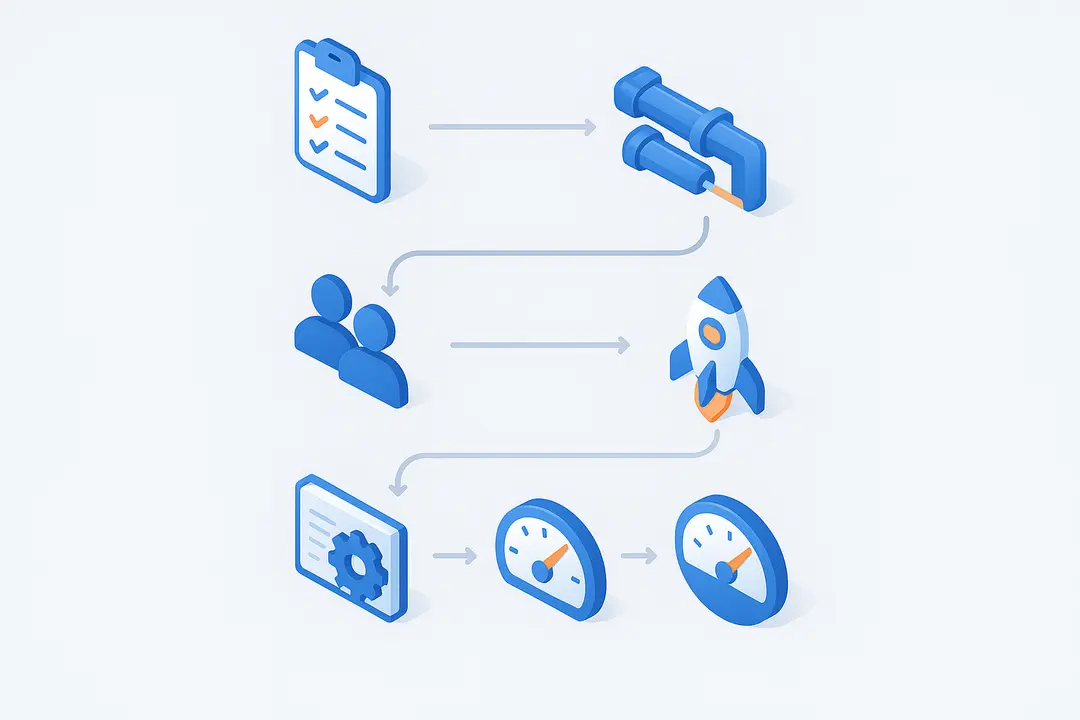
A successful deployment requires a methodical approach, stakeholder alignment, and ongoing optimization. The following steps outline best practices:
- Scope and needs assessment
Identify business goals, operational challenges, and key use cases. - Data integration and normalization
Map relevant data sources; ensure data quality, security, and accessibility. - Stakeholder selection
Engage IT, operations, and business leads early for cross-functional buy-in. - Pilot vs. full deployment
Start with a controlled pilot to test integrations and workflows; scale up based on results. - Training and workflow tuning
Equip teams with training; adjust alerting and automation settings to fit processes. - Define success metrics and optimize
Measure MTTR, uptime, cost savings, and user adoption; refine based on performance. - Anticipate and address implementation challenges
Typical pitfalls include underestimating integration effort, change resistance, and insufficient training; mitigate with clear plans.
Adhering to these steps sets the foundation for a high-ROI, future-ready operational intelligence deployment.
What’s Next? Trends in Agentic AI, Explainability & Governance for Operational Intelligence
The future of operational intelligence is defined by agentic AI, explainability, and stronger data governance.
- Agentic AI:
Unlike earlier AI models limited to recommendations or alerts, agentic AI autonomously makes and executes operational decisions within defined guardrails. This means platforms act as operations “agents,” automating complex, cross-domain workflows. - Explainability:
Trust and transparency are critical as AI platforms influence key operational decisions. Explainable AI (XAI) features help users understand why a platform made or recommended a decision—improving adoption and regulatory compliance. - Governance and regulation:
As data privacy standards evolve, platforms must ensure robust governance, auditability, and adherence to frameworks like GDPR or HIPAA (for healthcare). - Buyer priorities (2026 and beyond):
Expect further shifts toward autonomous operations, multi-cloud flexibility, and industry-tailored AI. The ability to demonstrate value transparently, not just technically, will drive platform selection and success.
Organizations aiming to stay ahead should evaluate platforms with advanced agentic AI and strong explainability.
Buyer’s Checklist: How to Evaluate and Select the Right Platform
- Ensure core features: event correlation, anomaly detection, predictive analytics, automated workflows, and consolidated dashboards.
- Confirm industry fit and breadth of supported use cases.
- Evaluate integration options: ITSM, cloud, business applications.
- Assess automation scope and customizability.
- Investigate vendor support, training, and client references.
- Compare total cost of ownership (TCO), including scalability, future licensing, and hidden costs.
- Validate security, compliance, and explainability capabilities.
- Shortlist platforms with proven rapid time-to-value and transparent ROI metrics.
Frequently Asked Questions (FAQ)
What is an AI-enabled operational intelligence platform?
An AI-enabled operational intelligence platform is software that applies AI and machine learning to monitor, analyze, and automate operational processes in real time—delivering actionable insights and automated decision-making for IT and business functions.
How does AIOps differ from traditional operations management?
AIOps platforms leverage AI to automate event correlation, anomaly detection, and remediation, whereas traditional operations rely on manual monitoring and rule-based alerts—resulting in faster issue resolution and reduced human downtime.
Which industries gain the most from implementing these platforms?
Industries such as manufacturing, healthcare, finance, IT/DevOps, and logistics benefit significantly—using AI for predictive maintenance, patient flow optimization, fraud detection, and real-time inventory management.
What are the key features to look for?
Look for robust event correlation, anomaly detection, predictive analytics, dashboard visualization, integration flexibility, automation bots, and strong security/compliance frameworks.
What is agentic AI, and how does it advance operational intelligence?
Agentic AI refers to systems that independently make and execute decisions within set constraints, automating end-to-end workflows without waiting for human approval. This reduces operational latency and boosts efficiency.
What is the typical ROI for deploying these platforms?
According to industry benchmarks, organizations typically see reduced downtime, lower operational costs, and improved compliance—leading to strong ROI often within the first 12–24 months.
What are common implementation challenges?
Common challenges include integrating diverse data sources, aligning cross-functional teams, managing change, and tuning AI models for relevant alerting and automation.
How does automated incident management work?
Platforms use AI to detect incidents instantly, correlate events to identify root causes, and trigger pre-configured remediation workflows or bots, often resolving issues faster than manual teams.
How do you select the right platform for your needs?
Assess core capabilities, integration options, industry focus, automation features, support/training, and total cost. Validate with pilot projects and client references before scaling.
Conclusion
AI-enabled operational intelligence platforms are transforming the way organizations monitor, analyze, and optimize their operations—delivering real-time insights, automation, and measurable business value.
By understanding core features, comparing leading vendors, mapping industry use cases, and following a proven implementation roadmap, you can confidently select and deploy the right solution for your business.
Key Takeaways
- AI-enabled operational intelligence platforms unify real-time monitoring, analytics, and automation to optimize operations across IT and business domains.
- Leading vendors—such as Splunk, ScienceLogic, ServiceNow, Dynatrace, and OpsVeda—offer unique strengths in AI depth, automation, and integration.
- These platforms are crucial in industries beyond IT, driving gains in manufacturing, healthcare, supply chain, and more.
- Successful implementation depends on thorough planning, stakeholder alignment, and clear performance metrics.
- Emerging trends like agentic AI and explainable AI are shaping the future, boosting autonomy, trust, and compliance in operational intelligence.
This page was last edited on 28 April 2026, at 10:47 am

Start a conversation with our team to solve complex challenges and move forward with confidence.