Manual content review is slow, expensive, and prone to inconsistency, making it a major bottleneck in digital publishing. For modern organizations managing high content volumes, traditional QA can’t keep pace with demands for speed, accuracy, and compliance. This playbook shows how AI-powered content review workflows transform content operations, automating key checks while seamlessly integrating with your MarTech stack. By following this guide, you’ll gain a practical framework for automating content QA, access to comparison tools and checklists, and actionable best practices to future-proof your content governance.
What Is an AI-Powered Content Review Workflow?
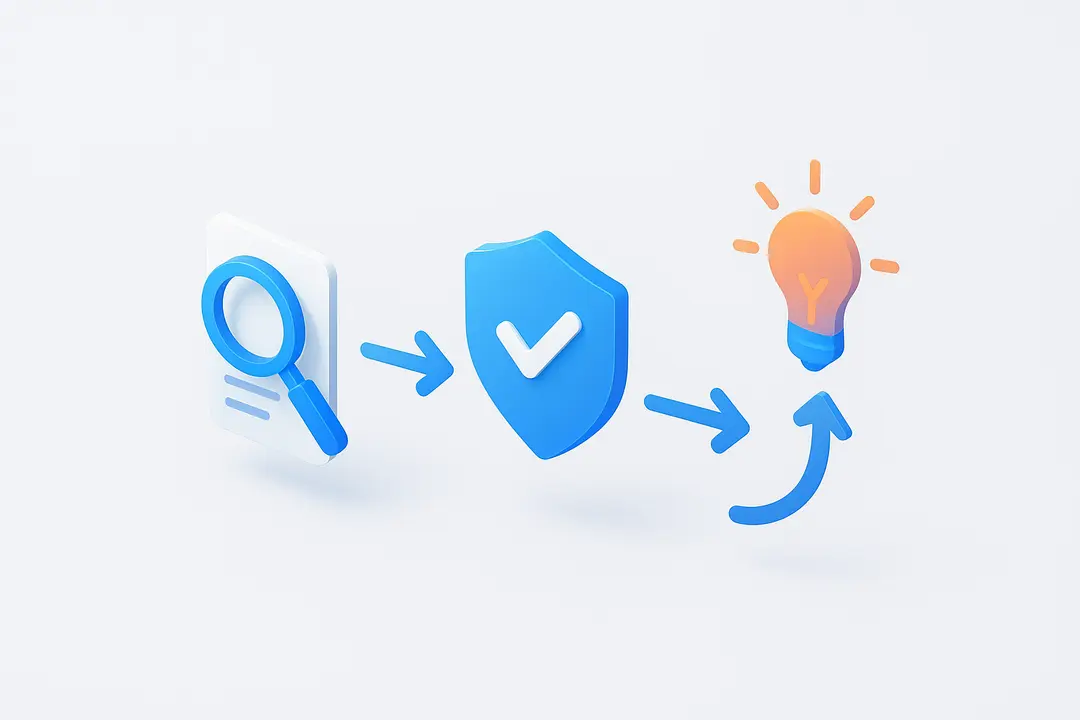
An AI-powered content review workflow is a structured process in which artificial intelligence agents scan, validate, and suggest improvements to digital content before publication, automating and augmenting traditional content quality assurance (QA). These workflows typically include three core stages: content ingestion and analysis (scan), automated validation (validate), and optimization or recommendations (recommend), with AI agents managing routine checks and flagging issues for human review when necessary. Unlike manual QA, AI-driven processes can handle larger volumes, surface subtle errors, and continuously learn from feedback, making automated content validation both faster and more consistent.

| Manual Workflow | AI-Powered Workflow | |
| Steps | Human scan, manual checklist, edit, review | AI scans, validates, suggests; human approves |
| Speed | Slow, batch-based | Real-time or on-demand, scalable |
| Accuracy | Variable, subject to fatigue | Consistent, data-driven, improves with feedback |
| Roles | Heavy human involvement | AI handles routine; humans focus on exceptions |
| Tools | Spreadsheets, CMS, email | AI agents, API integrations, QA platforms |
How Does AI Transform Content Quality Assurance?
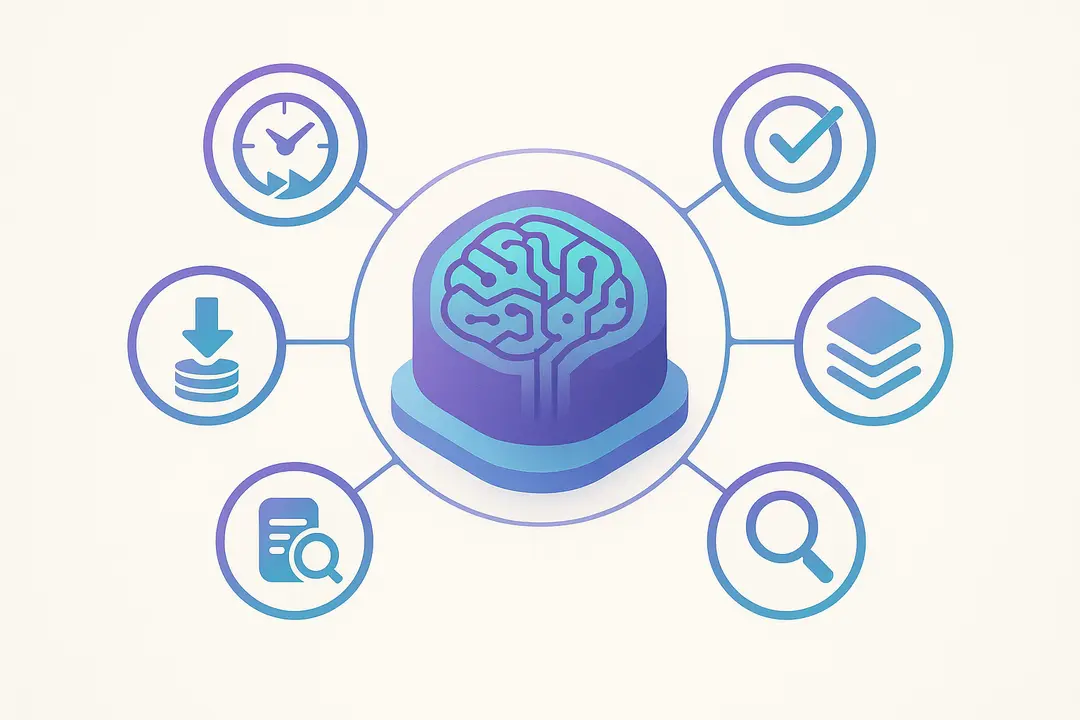
AI automates routine content QA tasks, increasing speed and consistency while reducing the manual workload for content teams. By delegating repetitive checks—like grammar, compliance, and factual validation—to AI-powered agents, organizations can process higher volumes of content with greater accuracy and cost efficiency.
Key Benefits of Automated Content QA
- Speed: AI-driven workflows can accelerate content review by 30–50%, according to recent industry benchmarks.
- Accuracy: Automated validators catch overlooked errors and ensure style/brand consistency, reducing manual error rates.
- Scalability: Review large or complex content libraries in parallel, freeing teams for higher-value tasks.
- Cost Reduction: By automating time-consuming review stages, teams can reallocate resources more strategically.
- Auditability: AI systems maintain detailed logs for compliance or quality tracking.
Limitations & Human Touchpoints:
AI models may miss nuanced context or subtle messaging issues. Critical QA decisions—such as brand reputation, legal scrutiny, or edge-case interpretations—should still involve human oversight. Best practice is to set clear escalation triggers for human review.
What Are the Core Components of an AI Content Review Workflow?
An effective AI-powered content review workflow is modular, typically composed of distinct agents or modules responsible for scanning, validating, and optimizing content before publication.
| Stage | AI Agent Role | Human Role | Typical Tools |
| Scan | Scanner/Extraction | Oversight, exception handling | Ingestion API, OCR tools |
| Validate | Validator/Verifier | Escalation checks, corrections | QA platform, compliance |
| Recommend | Recommendation/Action | Approvals, strategic edits | Optimization plugins |
Agents can be tailored to your content types and processes, with integrations across CMS, MarTech, and analytics platforms.
Scanner and Extraction Agents—How Content Is Ingested and Analyzed
Scanner agents automate document ingestion and metadata extraction, flagging missing or incomplete elements up front. Practical example: Scanning uploaded blog posts for required fields, prohibited words, or outdated terms—triggering workflow rules if issues are found.
Validator and Verification Agents—Ensuring Accuracy and Compliance
Validator agents apply rulesets and AI models to check for spelling, grammar, terminology alignment, factual accuracy, or legal compliance. For example, technical documentation workflows might use a validator to check for accurate use of domain-specific terminology, regulatory language, or adherence to brand voice.
Recommendation and Action Agents—Optimizing and Suggesting Improvements
Recommendation agents propose actionable improvements, such as rewriting awkward sentences, optimizing for SEO, or surfacing content mismatches with style guides. In marketing workflows, these agents can suggest stronger calls to action, keyword usage, or automatically escalate flagged items to human editors for approval.
How to Implement an AI-Powered Content Review Workflow (Step-by-Step)
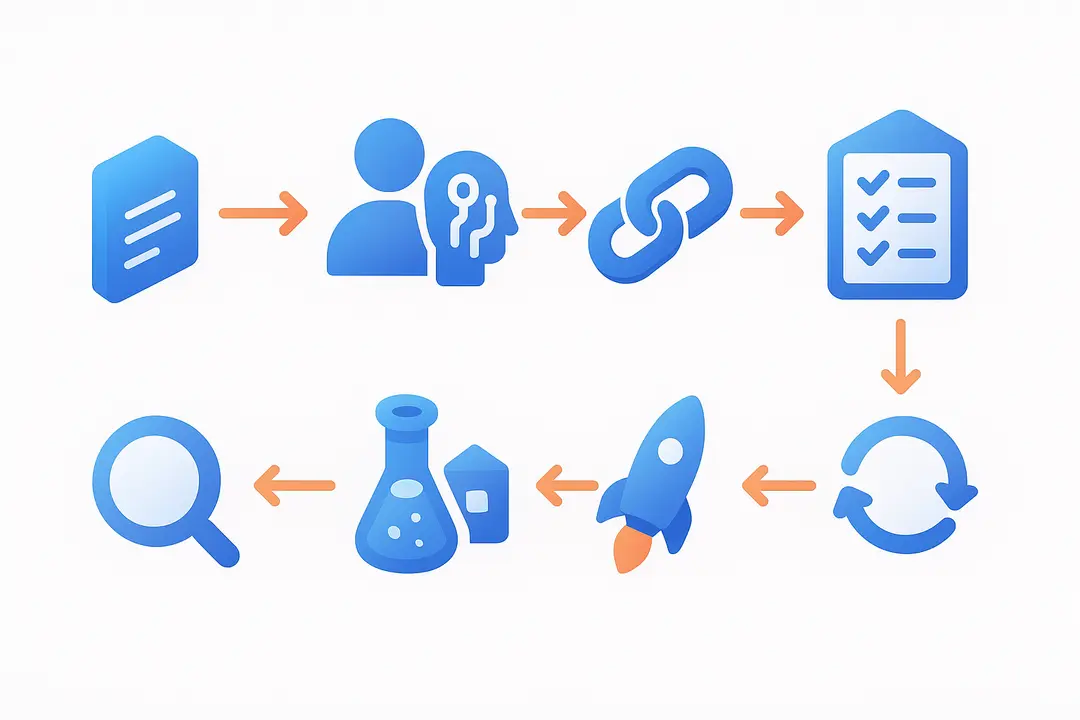
Implementing content workflow automation with AI requires planning, the right tools, and clear roles for humans and machines. Follow these action steps to launch an effective AI-powered content review:
Pre-Requisites & Team Roles for Implementation
- Stakeholder Alignment: Secure buy-in from content, marketing, IT, and compliance teams.
- Skill Sets Needed: Content specialists, MarTech owners, data/privacy experts, workflow admin.
- Governance: Define approval paths, rejection protocols, and escalation triggers.
- Content Mapping: Inventory content types, sources, and distribution points.
- Budget Planning: Estimate costs for software, integrations, and training.

Tool Selection Matrix—Comparing AI Content Review Platforms
Evaluate platforms based on:
- Accuracy & Learning: How well does the AI validate your specialized content?
- Integration: Does it connect easily with your CMS, DAM, or MarTech tools?
- Workflow Flexibility: Support for custom rules, escalations, and multi-stage approvals.
- Compliance/Legal Safeguards: Audit trails, region-specific requirements, robust versioning.
- Cost & Support: Transparent pricing, enterprise support, roadmap alignment.
| Platform | Features | Industry Fit | Integration | Price* |
| AWS AI Review | Multi-agent, technical QA, open APIs | Enterprise, SaaS | CMS, API, custom | Custom/Quote |
| Adobe Workfront | Workflow mgmt, compliance, analytics | Marketing Ops | Adobe stack, API | Tiered |
| Cosmic | Modular CMS & AI, composability | Tech docs, agencies | Headless CMS, plugins | Varies |
| Datagrid | Brief QA, automation, reporting | Marketing, B2B | MarTech, Zapier | Tiered |
*See vendor websites for updated pricing.
Setup & Integration Checklist for Automated Content Review
- Define Workflow Stages: Document each stage—scan, validate, recommend.
- Map Roles: Assign tasks to AI agents and human approvers at each stage.
- Configure Tools: Connect AI platform with CMS/MarTech via API or plugins.
- Set Validation Rules: Import or customize QA checklists and compliance criteria.
- Test & Pilot: Run a closed-group test, review outcomes, and refine workflow logic.
- Launch & Monitor: Go live, monitor results, and schedule regular audits.
- Iterate: Use feedback for continuous process improvement.
Balancing Human Oversight in AI Workflows
- Manual Gatekeeping: Reserve approval steps for high-risk, brand, or legal review.
- Escalation Paths: Set thresholds for auto-approve, auto-reject, or require human insight.
- Audit Logging: Maintain records of all overrides, flagging errors for retraining the AI.
Real-World Use Cases for AI Content Review Workflows
AI-driven content QA is delivering measurable results across industries, from technical documentation to marketing and compliance.
Use Case 1: Technical Documentation Review
- Challenge: Ensuring accuracy and adherence to technical standards at scale.
- Solution: Scanner agents extract key terms; validators check terminology and compliance.
- Outcome: Typical results include a 40% faster review cycle and significantly fewer terminology errors (source: AWS multi-agent workflow case reports).
Use Case 2: Marketing Campaign Quality Assurance
- Challenge: Safeguarding brand consistency and messaging across multiple channels.
- Solution: AI agents scan for off-brand language, validate style guide adherence, and recommend optimizations.
- Outcome: Marketers report a 30–50% reduction in manual QA time and stronger brand voice (source: Datagrid marketing automation).
Use Case 3: Regulatory/Compliance Content Review
- Challenge: Navigating multi-region legal requirements and compliance documentation.
- Solution: Validator agents cross-check content for local compliance rules, triggering human review for flagged items.
- Outcome: Organizations experience fewer compliance errors, improved audit readiness, and faster approval cycles.
| Use Case | Stage | Outcome |
| Tech Docs | Scan/Validate | Faster cycle, fewer terminology errors |
| Marketing QA | All Stages | Less manual work, stronger brand voice |
| Compliance Review | Validate | Improved accuracy, easier audits |
Best Practices, Common Pitfalls, and Quality Control
Adopting automated content QA can yield high ROI, but only with careful planning and governance.
Best Practices for AI-Powered Content QA
- Start Small, Expand Fast: Pilot with a single content type before scaling.
- Customize Rules: Tailor validation and recommendation agents to your business needs.
- Enable Feedback Loops: Allow human editors to override or retrain AI when needed.
- Audit Regularly: Schedule sample reviews to identify missed issues and model drift.
- Document Everything: Keep clear records of validation rules, overrides, and escalation paths.
Common Pitfalls & Solutions
| Pitfall | Solution |
| Over-automation | Maintain human review for edge cases |
| Insufficient Testing | Run pilot projects, refine logic |
| Ignoring Compliance Updates | Update validation rules regularly |
| Lack of Team Buy-in | Collaborate and communicate benefits |
| Poor Tool Integration | Prioritize platforms with open APIs |
Continuous process improvement—supported by regular audits, metrics tracking, and human oversight—is key to sustainable content QA automation success.
How Do Leading AI Content Review Platforms Compare?
Choosing the right platform is crucial for a successful AI-powered editorial workflow. Here’s how top solutions stack up:
| Platform | Key Features | Best Use Cases | Integrations | Price* |
| AWS AI Review | Modular, multi-agent pipelines | Technical, enterprise QA | API, major CMS | By quote |
| Adobe Workfront | End-to-end workflow & analytics | Marketing, compliance | Adobe, CMS, MarTech | Tiered |
| Cosmic | Headless CMS, AI-powered QA | Agencies, tech content | Plugins, API | Varies |
| Datagrid | Automated briefs, QA, reporting | B2B marketing workflows | MarTech, Zapier | Tiered |
*Refer to vendor resources for most recent pricing and deployment options.
When selecting, weigh accuracy, customizability, integration, compliance capabilities, and support as top criteria for your content QA automation investment.
What’s Next? Future Trends in AI Content Review Workflows (2026+)
- Generative AI Expansion: More platforms will adopt large language models with context-aware recommendations, deeper reasoning, and style adaptation.
- Automated Legal and Localization Checks: Integration of legal experts and localization engines for region-specific compliance.
- User Customization: Workflow designers can increasingly configure and retrain AI agents to their exact brand and regulatory needs.
- Ethical Guardrails: Emerging standards will codify bias mitigation, transparency, and privacy in automated content QA.
- Robust Integrations: Expect seamless interoperability between AI review tools, CMS, and MarTech via standardized APIs.
Staying ahead means monitoring technology shifts and legal requirements while building flexible, future-ready workflows.
Frequently Asked Questions
What is an AI-powered content review workflow?
An AI-powered content review workflow uses artificial intelligence agents to automate the review, validation, and optimization of digital content before it’s published, helping teams ensure quality, consistency, and compliance efficiently.
What are the main stages of automated content QA?
Common stages include scanning/extraction (content ingestion and metadata analysis), validation (automated checks for accuracy, compliance, or style), and recommendation (suggesting optimizations and flagging for human review as needed).
Which AI tools can automate content review workflows?
Popular platforms include AWS AI Review, Adobe Workfront, Cosmic, and Datagrid, offering solutions for technical content, marketing QA, and compliance reviews.
How do you integrate AI with existing CMS or MarTech tools?
Most leading platforms provide API-powered integrations, plugins, or direct connectors for popular CMS (e.g., WordPress, Drupal) and MarTech stacks, allowing seamless automated review and workflow triggers.
What are the benefits and challenges of automating content review?
Key benefits include faster review cycles, higher accuracy, scalability, and consistent compliance. Challenges can include over-automation, initial setup complexity, and the ongoing need for human oversight.
How much human oversight is required?
While many routine tasks can be automated, human editors remain essential for approving nuanced, sensitive, or high-risk content and refining AI rulesets as requirements evolve.
How do AI agents handle brand compliance?
AI validators can enforce brand guidelines and style rules by systematically scanning for off-brand language, visual content, or formatting issues, triggering escalation if violations are detected.
What are the most common pitfalls when implementing AI review workflows?
Typical pitfalls include lack of configuration, over-reliance on automation, insufficient testing, and failing to update validation rules for regulatory changes.
How do you evaluate ROI from automated content review processes?
ROI can be measured by tracking reduction in manual review time, error rates, faster publishing cycles, lower compliance violations, and improved team productivity.
Conclusion
AI-powered content review workflows are revolutionizing digital operations—eliminating bottlenecks, boosting accuracy, and ensuring audit-ready compliance. By adopting the frameworks, best practices, and tools outlined here, your team can transform content QA into a scalable, future-proof process. Now is the time to pilot AI automation, fine-tune the human-AI balance, and unlock new levels of efficiency and governance.
Key Takeaways
- AI-powered content review workflows automate and augment critical QA processes, driving speed, accuracy, and compliance.
- Modular pipeline architecture enables flexible integration of AI scanning, validation, and recommendation agents.
- Successful implementation requires clear role mapping, the right platform choice, and robust human oversight.
- Cross-industry use cases prove significant time and error reduction when automating content review.
- Staying current with best practices, platform advances, and compliance standards is key to sustainable success.
This page was last edited on 25 April 2026, at 11:51 am

Start a conversation with our team to solve complex challenges and move forward with confidence.