
Fintech leaders face unprecedented pressure to innovate, compete, and scale rapidly. The ongoing fintech talent gap, coupled with the pace of regulatory and technology change, leaves many organizations struggling to deliver new products and features fast enough.
This fintech development outsourcing guide explores how outsourcing is emerging as a powerful lever for speed, cost savings, and access to specialized skills—especially in 2025’s demanding landscape. This guide delivers an expert-driven, end-to-end roadmap for making smart outsourcing decisions and achieving lasting value.
By reading, you’ll gain the frameworks, comparisons, and future-focused insights to confidently choose the right outsourcing model, manage risk, and accelerate your fintech vision.
What Is Fintech Development Outsourcing?
Fintech development outsourcing is the process of engaging external partners—typically specialized software teams or consultancies—to design, build, and support financial technology solutions.
This approach differs from general IT outsourcing by placing unique emphasis on compliance (PCI DSS, GDPR, KYC/AML), rapid MVP delivery, and up-to-date financial service frameworks. The main goals are to reduce time-to-market, spread project risk, and tap external fintech expertise that may be unavailable in-house.
Key components of fintech software outsourcing:
- Regulatory compliance: Adhering to strict industry rules (e.g., data privacy, payments security).
- Speed to market: Accelerating product launches by leveraging mature delivery teams.
- Access to specialized skills: Partnering for niche areas like AI/ML, blockchain, or digital identity.
- Typical outsourced services: App development, API integrations, compliance modules, payment gateways, digital wallets, and support/maintenance.
Summary
Fintech development outsourcing is a strategic approach to scale and innovate, utilizing external experts for faster, compliant results beyond generic IT outsourcing.
What Are the Latest Trends in Fintech Outsourcing for 2025–2026?
Fintech outsourcing is entering a new era—shaped by AI, changing labor markets, and rising compliance pressures. Strategic outsourcing is now a necessity for both established financial institutions and disruptive fintechs.
Top 2025–2026 fintech outsourcing trends:
- AI and Generative AI Integration: 80% of new fintech products now embed AI or ML features, spanning fraud detection, personalization, and risk analysis (Deloitte Global Outsourcing Survey 2022).
- Recession-driven cost optimization: Companies seek more efficient delivery models amid economic headwinds.
- Increased demand for compliance-focused talent: Global shortages push fintechs to offshore markets with strong regulatory expertise.
- Regulatory frameworks evolving: Upgrades to PCI DSS, GDPR, and open banking APIs demand partners with proven compliance records.
- Regional growth hotspots: Central & Eastern Europe (CEE), Asia-Pacific, and LATAM are surging as preferred outsourcing destinations due to talent density and cost-benefit.
- Hybrid delivery and remote collaboration models: Post-pandemic, mixed onshore-offshore teams and flexible engagement are standard.
| Trend Area | 2025–2026 Outlook | Impact for Outsourcers |
|---|---|---|
| AI/ML Adoption | Ubiquitous in fintech products | Seek vendors with proven AI cases |
| Labor Shortages | Global, severe in compliance roles | Nearshore/offshore demand rises |
| Compliance | Tougher, dynamic regulations | Full-cycle compliance needed |
| Regional Hubs | CEE, Asia, LATAM gaining share | Consider time zone, language factors |
| Hybrid Models | Remote + on-prem teams normalized | Agile tools and processes required |
What Are the Key Benefits of Outsourcing Fintech Development?
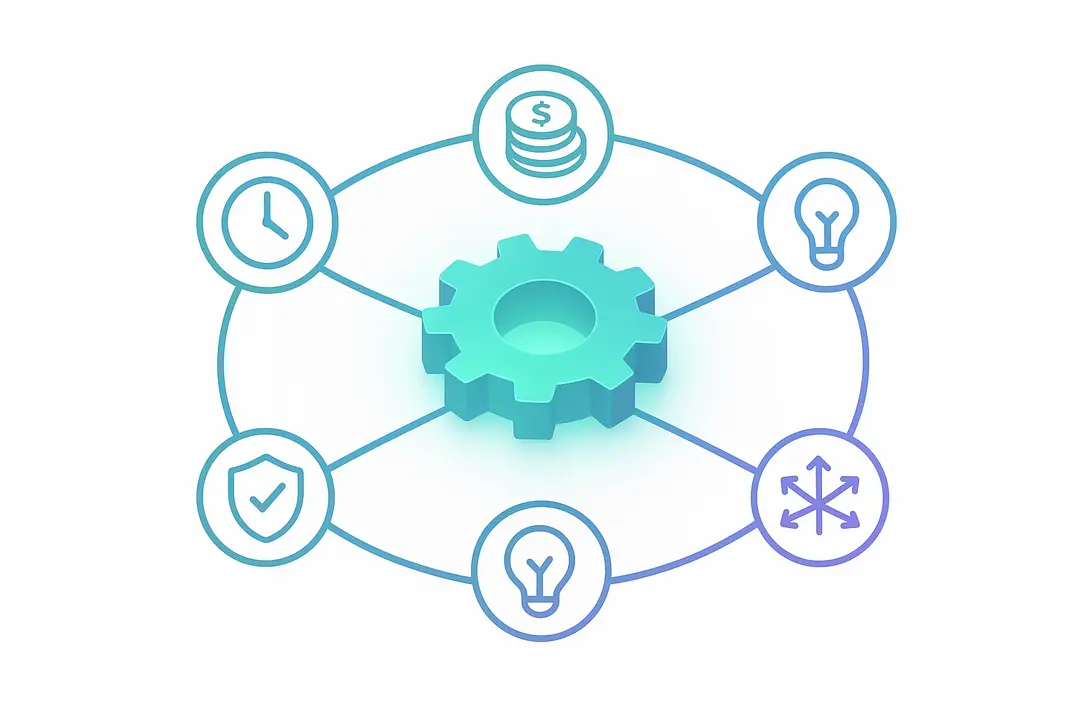
Outsourcing fintech development provides strategic advantages spanning speed, cost, expertise, flexibility, and compliance. It’s a critical lever for scaling and innovating efficiently in today’s complex market.
Key benefits include:
- Faster time-to-market: Accelerated launches through established delivery pipelines and agile talent.
- Cost efficiency: Lower total cost compared to hiring, onboarding, and retaining rare fintech specialists.
- Access to specialized expertise: Flexible access to skills in AI, blockchain, payment tech, and regulatory domains.
- Scalability and flexibility: Scale teams up or down as project needs shift, without the burden of full-time hires.
- Improved compliance management: Leveraging partners’ experience with payment and data regulations.
- Focus on core innovation: Internal teams can concentrate on strategy, leaving execution to the experts.
| Benefit | In-House Only | With Outsourcing |
|---|---|---|
| Time-to-Market | 6–12 months | 2–6 months |
| Upfront Cost | High (hiring/training) | Lower (on-demand talent) |
| Compliance Readiness | Risk of inexperience | Access to proven frameworks |
| Team Flexibility | Low | High (project-based scaling) |
| Access to AI/ML/Blockchain | Limited | On-demand expertise |
Outsourcing empowers fintech teams to move faster, deliver better products, and focus their resources on business-critical innovations.
Which Fintech Services and Use Cases Are Best Suited for Outsourcing?
Not every fintech capability is equally suited for external development. The best fit areas are those needing specialized expertise, rapid iteration, or stringent compliance.
Commonly outsourced fintech modules and use cases:
- Digital wallets: End-to-end design, security, and user onboarding.
- Payment gateways and integrations: Compliance, scalability, third-party API connections.
- KYC/AML modules: Regtech automation for onboarding and anti-fraud.
- Neobank and mobile banking platforms: MVP development, scaling features.
- Blockchain applications: Smart contracts, digital assets, payments security.
- AI/ML-driven features: Predictive analytics, personal finance tools, fraud monitoring.
Indicators a service is ideal for outsourcing:
- Complex compliance needs.
- Requirement for rapid prototyping/MVP.
- Lacking in-house skills for modern tech (AI, blockchain).
- Short-term project spikes or unpredictable team demands.
| Use Case | Outsourcing Fit | Compliance Level | Example Outcomes |
|---|---|---|---|
| Digital Wallet | High | High (KYC/PCI) | Faster launch, robust security |
| Payment Gateway | High | Very High | Seamless integration, cost savings |
| AI/ML Module | High | Moderate–High | Reduced fraud, personalized offers |
| KYC/AML | High | Very High | Automated, audit-ready onboarding |
| Core Banking | Medium | Very High | Modular, scalable neobank buildout |
Real-world example: Revolut scaled wallet features via strategic outsourcing partnerships, accelerating go-to-market and regulatory compliance.
What Are the Main Risks and Challenges of Fintech Outsourcing—and How Can You Mitigate Them?
Fintech outsourcing offers major rewards, but comes with security, compliance, and operational risks. Rigorous risk management is essential for success.
Main risks in fintech outsourcing:
- Data security breaches: PCI DSS, GDPR, and local laws place strict controls on data handling.
- Intellectual Property (IP) leakage: Poor contracts risk IP theft or misuse.
- Communication breakdowns: Remote teams can suffer from misalignment—especially offshore.
- Failure to meet compliance: Insufficient vendor experience leads to legal exposure.
- Hidden costs and vendor lock-in: Poorly scoped contracts can balloon costs or create dependence.
Mitigation strategies for each risk:
| Risk | Mitigation Strategy |
|---|---|
| Data Security | Insist on PCI DSS, GDPR, SOC 2 certification. |
| IP Concerns | Ironclad NDAs/IP clauses in contracts. |
| Communication Gaps | Shared tools (Slack, Jira); weekly standups. |
| Compliance Failures | Demand audit trails and compliance reporting. |
| Hidden Costs | Transparent SOW; ongoing cost reviews. |
Tip: Engage only vendors with relevant certifications and proven track records. Regularly review deliverables and KPIs to avoid surprises.
How Do Offshore, Nearshore, and Onshore Fintech Outsourcing Models Compare?
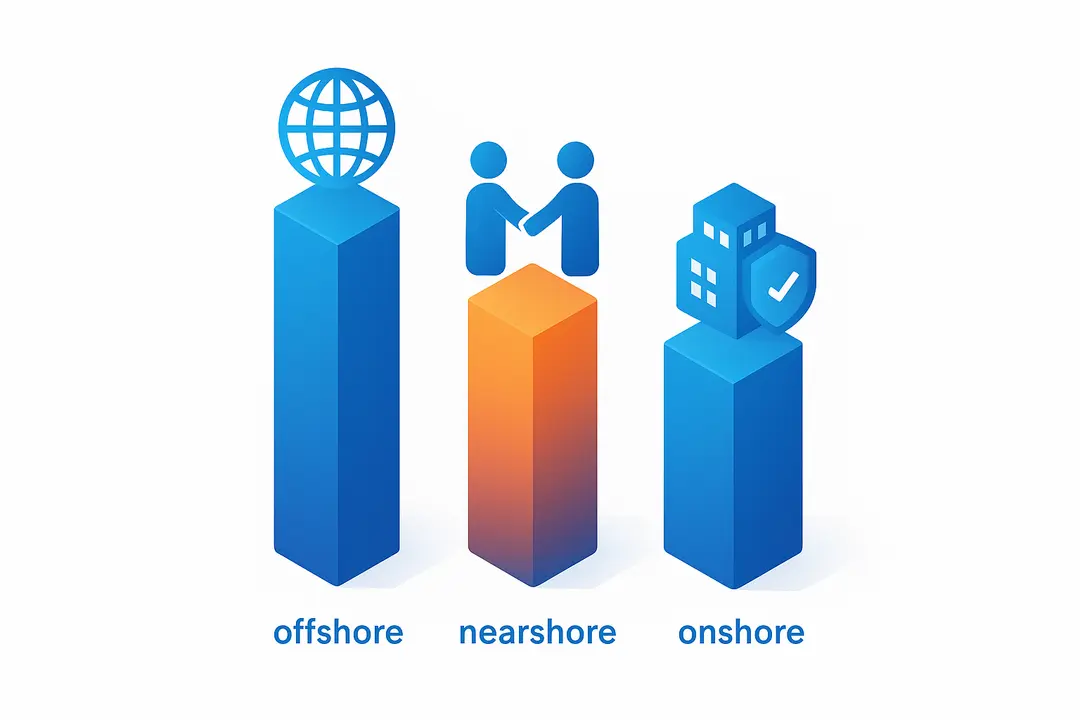
Choosing the right outsourcing location—offshore, nearshore, or onshore—impacts cost, collaboration, and regulatory alignment. Each model offers unique trade-offs.
Model Overviews:
- Offshore: Partnering with teams across distant regions (e.g., Asia, CEE from US/EU perspective).
- Pros: Lowest cost, vast talent pool, 24/7 productivity.
- Cons: Time zone gaps, cultural or legal distance, higher communication risk.
- Nearshore: Outsourcing to neighboring countries (e.g., Eastern Europe for Western Europe).
- Pros: Similar time zones, cultural overlaps, moderate costs, better control.
- Cons: Smaller talent pools, moderate cost.
- Onshore: Partnering within your own country.
- Pros: Shared language/culture, real-time collaboration, maximum compliance.
- Cons: Highest cost, possible talent scarcity.
| Model | Example Regions | Cost | Time Zone Overlap | Cultural Fit | Best Use Cases |
|---|---|---|---|---|---|
| Offshore | Asia, CEE, LATAM | Low | Low–Moderate | Moderate | Support/maintenance, cost-driven projects |
| Nearshore | CEE, S. America | Moderate | High | High | Core product, Agile collab |
| Onshore | US, UK, Germany | High | High | High | Strategic, regulated fintech |
What Are the Different Engagement and Pricing Models?
Selecting the right engagement and pricing model optimizes project predictability and efficiency.
Key outsourcing pricing models:
- Fixed Price: Set deliverables and budget. Best for defined scope MVPs.
- Time & Materials (T&M): Pay for hours/resources used. Flexible, ideal for evolving needs.
- Dedicated Team/Staff Augmentation: Secure a dedicated group for ongoing work. Best for scaled or continuous projects.
| Model | Best For | Pros | Cons | Typical Costing |
|---|---|---|---|---|
| Fixed Price | MVP, small features | Budget predictability | Inflexible, scope change risk | $20k–$60k+ per finite project |
| T&M | Evolving products | Flexibility, fast changes | Harder to budget | $40–$100/hr, varies by location |
| Dedicated | Ongoing/large apps | Deep team alignment, scaling | Ongoing cost commitment | $10k+/month/team, region variable |
Smart outsourcing pairs the right location with the optimal engagement structure and budget for business goals.
How to Choose the Right Fintech Outsourcing Partner?
Selecting a fintech outsourcing partner requires clear criteria and structured evaluation to mitigate risks and maximize project success.
Core partner selection criteria:
- Deep fintech domain expertise: Experience across similar projects and industry verticals.
- Proven compliance and regulatory track record: PCI DSS, GDPR, KYC/AML experience.
- Cultural fit and communication skills: Effective tools, language, and collaboration processes.
- Technical proficiency and modern stack: Up-to-date in AI/ML, blockchain, cloud-native fintech.
- Certified credentials: SOC 2, ISO 27001, or relevant security/compliance certifications.
Red flags: Lack of regulatory experience, vague delivery/history, poor communication, or no references.
Action Step: Use a standardized RFP & due diligence checklist when reaching out to vendors for proposals.
What Should Be on Your Fintech Outsourcing RFP & Due Diligence Checklist?
A focused RFP (Request for Proposal) and due diligence process filters the best-suited, compliant partners.
Checklist highlights:
- Demonstrated experience in regulated fintech projects (with references/case studies)
- Compliance certifications: PCI DSS, GDPR, SOC 2, KYC/AML know-how
- Clear documentation of SDLC, quality assurance, and audit processes
- Profiles of key team members and available tech stacks
- Transparent approach to IP protection and liability
- Project management methodology (e.g., Agile, Scrum)
- Communication and reporting tools used
- Data security and code delivery policies
How to Ensure Effective Communication and Collaboration?
Effective communication and collaboration are crucial for distributed and international teams.
- Use modern tools: Slack, Jira, Confluence, Microsoft Teams for real-time updates and documented workflows.
- Weekly standups/rituals: Establish regular checkpoints, align priorities, and resolve blockers.
- Time zone overlaps: Structure work hours for at least 2–4 hours of overlap, ensuring real-time collaboration.
- Set clear SLAs and KPIs: Define service levels and project KPIs upfront for objective progress tracking.
How Do You Ensure Compliance and Security When Outsourcing Fintech Development?
Regulatory compliance and data security must be foundational to every outsourcing relationship.
- Partner only with vendors holding PCI DSS, GDPR, SOC 2, and relevant local certifications.
- Mandate contractual clauses covering:
- Data protection (encryption at rest/in-transit)
- Breach reporting and liability
- Regular compliance audits
- Apply secure code delivery standards, including source code versions, regular code reviews, and vulnerability scans.
- Conduct periodic compliance and security reviews throughout the project.
What Are the Steps in the Fintech Development Outsourcing Process?
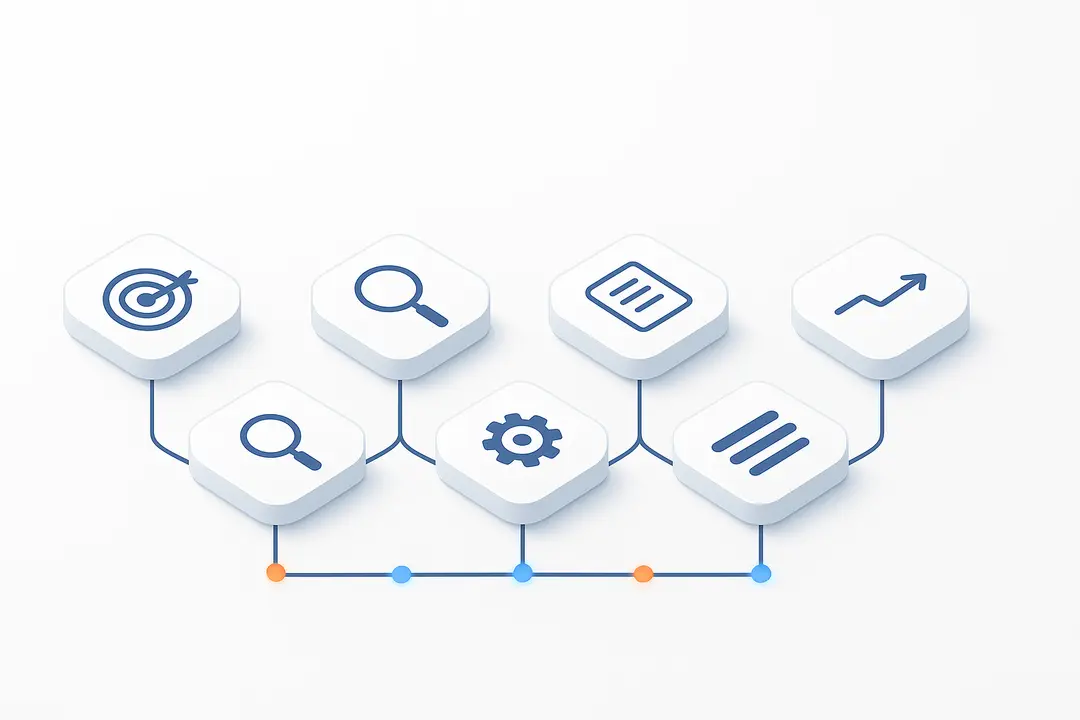
A structured, step-by-step approach to fintech outsourcing minimizes risk and speeds up project delivery.
Fintech outsourcing process step-list:
- Define business goals and regulatory requirements.
- Shortlist and assess vendors (due diligence and RFP review).
- Select a suitable engagement and pricing model.
- Design onboarding and communication workflows.
- Execute project with active monitoring of KPIs and SLAs.
- Continuous improvement, support, and scaling.
Summary: Systematic process ensures strategic alignment, smoother onboarding, collaborative execution, and better long-term results.
What Drives the Cost of Fintech Outsourcing, and How Should You Budget?
Fintech outsourcing costs depend on project scope, region, compliance needs, and engagement model, with careful planning required to maximize ROI.
Key cost drivers:
- Complexity of solution: AI, blockchain, and compliance add cost.
- Region of outsourced team: Offshore is least expensive, onshore is the most.
- Tech stack and tools: Demand for next-gen skills drives rates higher.
- Compliance and regulatory overhead: Extra documentation and audits increase price.
Sample cost brackets by model and region:
(Industry averages as of 2024; actuals vary.)
| Region | Fixed Price MVP | T&M Hourly Rate | Dedicated Team (Monthly) |
|---|---|---|---|
| Asia | $20k–$40k | $25–$60 | $8k–$18k |
| CEE (Poland, etc) | $30k–$60k | $40–$85 | $10k–$24k |
| LATAM | $28k–$55k | $35–$75 | $9k–$20k |
| US/UK/DE | $60k–$120k | $90–$200 | $25k–$60k |
Beware of hidden costs:
- Scope creep and change orders
- Post-launch support and upgrades
- Compliance audit cycles
Simple ROI modeling tips:
- Compare total outsourcing cost to in-house (including hiring, ramp-up, compliance).
- Factor in time-to-market gains and risk reduction.
How Have Fintech Companies Succeeded with Outsourcing? (Case Studies & Real Examples)
Many leading fintechs credit outsourcing with delivering breakthrough speed, quality, and compliance.
Mini-case studies:
- Neobank MVP Launch: A European neobank outsourced end-to-end mobile app and compliance module development, launching six months faster than planned, with reduced audit findings during regulatory review.
- Digital Wallet Scale-up: A global payment startup partnered with a CEE vendor to augment in-house teams, adding AI-driven fraud detection without expanding their internal headcount.
- Regulatory Platform Build: A US-based underwriter reduced project overruns and audit failures by choosing a dedicated offshore team with proven credentials in KYC/AML module development.
Lessons learned:
- Prioritizing regulatory experience avoided late-stage compliance rework.
- Ongoing, transparent communication and KPIs maintained alignment and reduced project drift.
- Selecting nearshore/offshore partners cut costs by 35–60% versus in-house options.
FAQs on Fintech Development Outsourcing Guide
What is fintech development outsourcing and how does it work?
Fintech development outsourcing involves hiring external experts or agencies to build, manage, and scale financial technology solutions. This approach allows businesses to leverage fintech outsourcing services for faster delivery and regulatory compliance.
How does fintech development outsourcing compare to in-house development?
Fintech development outsourcing offers quicker access to specialized talent, reduced hiring costs, and scalability. In contrast, in-house development provides more control but requires significant investment in recruitment, infrastructure, and compliance.
What is the cost of fintech software development outsourcing?
The cost of fintech software development outsourcing varies based on scope, region, and expertise. MVP development typically ranges from $20,000 to $120,000, while hourly rates range between $25 and $200 depending on the provider.
What are the benefits of fintech outsourcing services?
Key benefits of fintech outsourcing services include faster time-to-market, cost efficiency, access to niche expertise, scalability, and built-in support for compliance and security standards.
Which engagement model is best for fintech development outsourcing projects?
For fintech development outsourcing, fixed-price models work best for clearly defined projects, while time and materials suit evolving needs. Dedicated teams are ideal for long-term partnerships and complex fintech systems.
How do I choose the right fintech outsourcing services provider?
When selecting fintech outsourcing services, consider experience in financial technology, compliance expertise, communication practices, certifications, and proven case studies in fintech software development outsourcing.
Is fintech development outsourcing secure for sensitive financial data?
Yes, fintech development outsourcing can be secure when working with vendors that follow standards like PCI DSS, GDPR, and SOC 2, along with strong encryption and data protection protocols.
What compliance standards apply to fintech software development outsourcing?
Fintech software development outsourcing projects often require compliance with PCI DSS, GDPR, KYC/AML, and SOC 2, depending on the region and financial product.
What types of products can be built through fintech outsourcing services?
With fintech outsourcing services, companies can develop digital wallets, payment systems, neobanking platforms, KYC/AML modules, AI-driven fintech tools, and regulatory reporting systems.
What are the risks in fintech development outsourcing and how can they be mitigated?
Common risks in fintech development outsourcing include data breaches, compliance issues, and communication gaps. These can be reduced through vendor due diligence, clear contracts, regular audits, and strong project management.
Can startups benefit from fintech software development outsourcing?
Yes, startups can use fintech software development outsourcing to reduce costs, access expert developers, and launch products faster without building large in-house teams.
How can you scale fintech development outsourcing effectively?
To scale fintech development outsourcing, businesses should adopt flexible engagement models, use automation tools, and continuously optimize workflows with reliable fintech outsourcing services partners.
Conclusion
Fintech development outsourcing offers a practical path to faster innovation, cost efficiency, and access to specialized expertise when approached with a clear strategy. Success depends on selecting the right partner with proven fintech experience, strong compliance knowledge, and effective communication practices.
By aligning your outsourcing model with your business goals, budget, and regulatory requirements, you can build scalable and secure fintech solutions with confidence. With the right planning and execution, outsourcing becomes not just a cost-saving option, but a long-term driver of growth and competitive advantage.
This page was last edited on 22 April 2026, at 4:31 pm

Start a conversation with our team to solve complex challenges and move forward with confidence.