
In today’s unpredictable environment, understanding it outsourcing in a time of crisis has become essential for businesses striving to stay resilient. From economic uncertainty and global disruptions to rising cyber threats, organizations are under constant pressure to adapt quickly while maintaining stability and performance.
This guide explores how it outsourcing in a time of crisis can help businesses navigate uncertainty with greater flexibility, cost efficiency, and operational continuity. Through practical frameworks, expert insights, and real-world examples, you’ll gain the clarity needed to make strategic decisions and build long term resilience under pressure.
What Is IT Outsourcing in a Time of Crisis?
IT outsourcing in a time of crisis is the strategic delegation of core or critical technology services to external vendors to maintain business continuity, manage costs, and reduce risk during disruptions.
During emergencies, organizations often outsource services such as IT support, cybersecurity, cloud infrastructure, helpdesk, and software development. In a crisis context, outsourcing decisions shift rapidly—speed, flexibility, and access to specialized talent become paramount.
- Sustaining operations during workforce shortages or lockdowns
- Mitigating service disruptions from cyberattacks or system failures
- Controlling costs when revenues are uncertain
- Scaling digital transformation initiatives faster than in-house teams allow
Outsourcing performance and business continuity outsourcing become crucial tools to help organizations survive and adapt during volatile periods.
How Do Different Types of Crises Impact IT Outsourcing Strategy?
The nature of a crisis directly shapes IT outsourcing strategy—each disruption type demands different priorities, from cost control in a recession to rapid remote infrastructure in a pandemic.
Understanding your crisis type helps you select the right outsourcing objectives and vendor relationships. Here’s how various disruptions can influence your approach:
| Crisis Type | IT Outsourcing Objective |
| Economic Recession | Cost optimization, flexible contracts, vendor leverage |
| Pandemic/Health Crisis | Remote work enablement, rapid scaling, cloud migration |
| Operational Disaster | Backup, disaster recovery (DR), business continuity, offsite support |
| Cyber Crisis | Enhanced security, vendor risk management, fast incident response |
| Supply Chain Disruption | Service redundancy, alternative vendor sourcing, resilience planning |
Example:
- Economic downturn: Businesses turn to outsourcing to quickly convert fixed IT costs to variable ones, freeing up cash flow.
- Pandemic: Rapid implementation of remote work solutions and secure cloud access is critical, requiring outside expertise.
Segmenting crisis types ensures more targeted, effective outsourcing decisions and long-term resilience.
What Are the Major Benefits of IT Outsourcing During a Crisis?
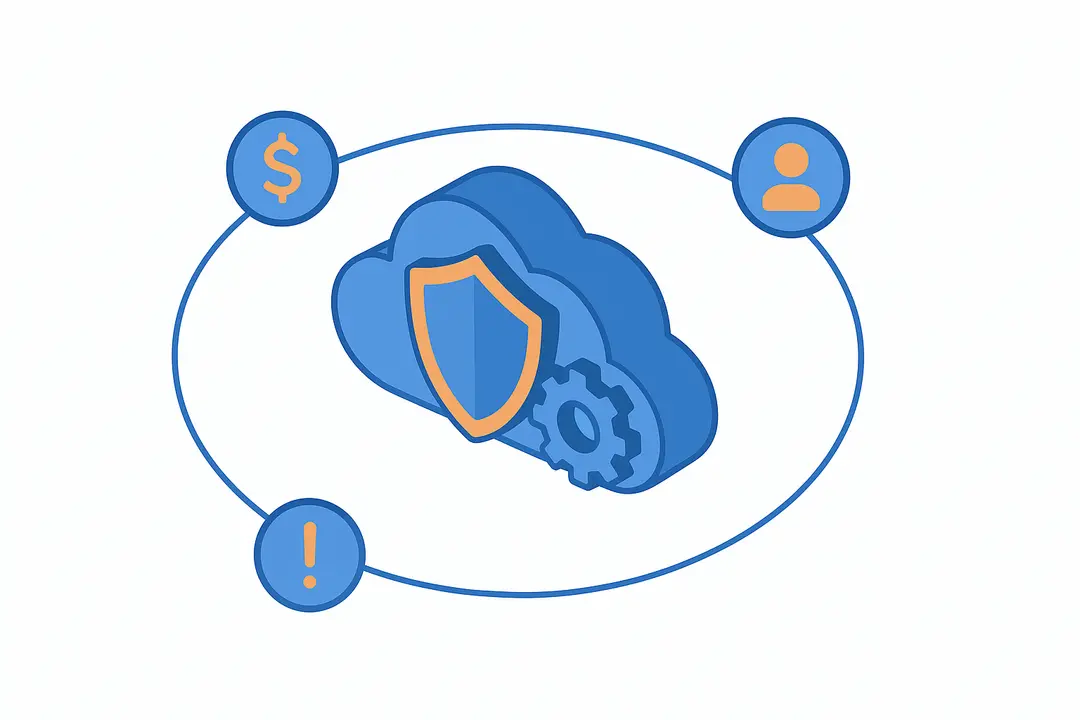
IT outsourcing during a crisis offers measurable advantages including cost control, fast access to expertise, enhanced scalability, and risk mitigation—all strengthened under disruption.
How Does IT Outsourcing Improve Cost Efficiency in a Crisis?
IT outsourcing enables organizations to switch from fixed full-time employee (FTE) costs to flexible, pay-as-you-go models. This variable cost structure is especially advantageous during volatile revenue cycles.
- Scenario: A company facing recessionary pressures reduces IT costs by outsourcing helpdesk and maintenance, paying only for actual usage.
- Short-term savings: Lower overhead and fewer long-term commitments.
- Long-term value: Outsourcing can maintain or even improve service quality while avoiding the risk of overstaffing during downturns.
What Specialized Talent Can Outsourcing Provide When You’re Under Pressure?
With IT outsourcing, businesses can rapidly access in-demand skills such as cybersecurity, cloud engineering, and remote support—skills often scarce in-house during turbulent periods.
- Rapid onboarding: Vendors can supply vetted experts within days, not months.
- Example: During the COVID-19 pandemic, many enterprises outsourced IT support to quickly enable remote work for thousands of employees.
- Talent agility: Outsourcing partners often have pools of specialists ready for urgent deployment.
How Does Outsourcing Support Flexibility and Scalability During Disruption?
Outsourcing allows companies to quickly scale IT resources up or down, matching rapid changes in demand without lengthy hiring or training cycles.
- Adapting to demand: Easily add support during spikes (e.g., online sales surges) or contract during lulls.
- Use case: Organizations migrated to cloud-based collaboration tools overnight with support from outsourcing partners, enabling uninterrupted operations.
- No lock-in: Outsourcing contracts can be designed for maximum adaptability.
In What Ways Does IT Outsourcing Enhance Risk Management and Business Continuity?
IT outsourcing provides structured risk mitigation through dual-vendor strategies, round-the-clock monitoring, and service level agreements (SLAs).
- Resilience: Vendor partners often provide 24/7 incident response and disaster recovery.
- Business continuity: Outsourcing can guarantee SLA-backed uptime and rapid restoration in case of IT failure or cyberattack.
- Example: A financial services company avoided major downtime during a ransomware attack by utilizing dual outsourcing vendors for critical infrastructure.
What Are the Key Risks and Pitfalls of IT Outsourcing in Crisis—and How Can You Avoid Them?
While outsourcing brings crucial benefits in crisis, it also introduces risks—vendor reliability, security gaps, and operational hiccups can undermine continuity if not managed proactively.
Vendor Reliability and Crisis Relationship Management
- Vendor solvency: Assess the financial stability and crisis experience of all providers—vendor shutdowns or downsizing during broader crises can leave you exposed.
- Over-dependence: Relying too heavily on a single supplier risks cascading failures if they’re also impacted.
- Communication: Prioritize clear escalation paths and regular updates to maintain transparency during uncertain times.
Security, Compliance, and Data Protection When Outsourcing Under Pressure
- Cyber threats rise in disruption, so ensure your vendors comply with all relevant regulations (like GDPR or industry-specific standards).
- Remote work: Outsourced teams working offsite can introduce new data security risks.
- Mitigation: Contracts should require regular security audits and prompt breach notification.
Operational and Performance Risks: Keeping Delivery On Track
- SLAs: Be diligent with service-level agreements; enforce penalties for missed targets.
- Churn risk: Vendors may reprioritize larger clients when resources are tight—ensure your needs remain prominent.
Top 5 Risks Checklist:
- Vendor instability or insolvency
- Weak communication or escalation paths
- Gaps in cybersecurity or regulatory compliance
- Failure to enforce or adapt SLAs
- Over-reliance on a single provider
How to Build a Resilient IT Outsourcing Strategy for Crisis Readiness
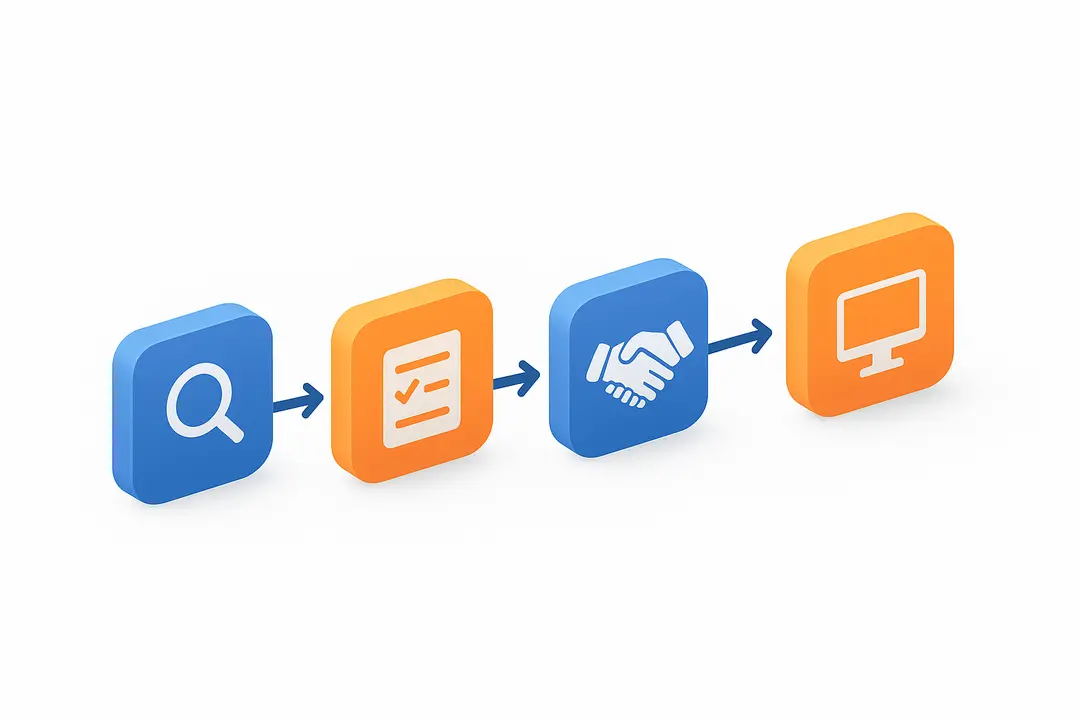
A practical, crisis-ready IT outsourcing framework should follow clear steps: assess, plan, execute, and monitor—supported by a response matrix for scaling actions as crisis severity changes.
Step-by-Step Framework: Assess, Plan, Execute, Monitor
- Assess: Identify critical IT functions and vulnerability points in your current setup.
- Plan: Evaluate and shortlist vendors with proven crisis handling and strong references.
- Execute: Negotiate contracts emphasizing flexibility, with robust SLAs, escalation clauses, and ability to scale services.
- Monitor: Establish key performance indicators (KPIs), conduct regular review meetings, and monitor for emerging risks throughout the relationship.
Checklist for Outsourcing Crisis Readiness:
- Inventory critical services and potential failure points
- Verify vendor financial and operational resilience
- Bake flexibility and rapid change clauses into contracts
- Define escalation and communication protocols
- Track KPIs and risk triggers proactively
Crisis Severity Matrix and Response Playbook
Organizations should calibrate their IT outsourcing response based on the intensity of the disruption.
| Crisis Severity | Recommended Outsourcing Action |
| Low | Conduct readiness audit, validate SLAs, review vendor status |
| Medium | Shift non-core IT to partners, increase monitoring, establish backup vendors |
| High | Rapidly scale outsourcing (incl. critical operations), activate remote DR plans, initiate daily crisis check-ins |
Regularly updating this matrix ensures your organization can move quickly and confidently, no matter what disruptions arise.
What Should You Prioritize When Selecting an IT Outsourcing Partner in a Crisis?
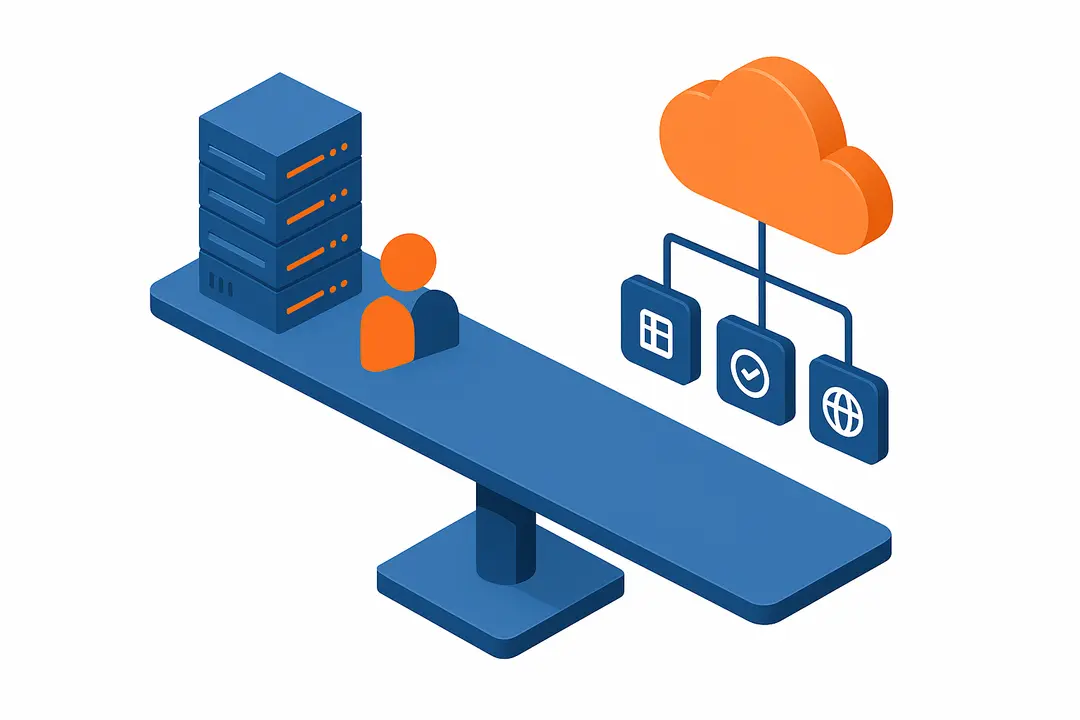
Selecting the right IT outsourcing partner during a crisis requires a focus on proven performance, flexibility, and robust risk management capabilities.
Must-Have Vendor Criteria in a Crisis:
| Criteria | Why It Matters |
| Documented crisis response | Confidence in vendor’s agility and reliability |
| Positive client references | Verifies real-world crisis experience |
| Financial stability | Reduces chance of vendor failure mid-crisis |
| SLA agility | Enables fast contract adaptation as needs change |
| Clear escalation process | Rapid issue resolution, 24/7 contact points |
| Redundant infrastructure | Ensures continuous service even during outages |
| Onshore/offshore balance | Diversifies risk if a single region is affected |
Additional considerations:
- Ask vendors for recent crisis case studies.
- Review their approach to uptime and recovery during previous events.
- Verify the presence of geographically redundant data centers (for operational resilience).
Real-World Examples: How Organizations Used IT Outsourcing to Survive and Thrive in Crisis
Recent crises have showcased how diverse organizations leveraged IT outsourcing not just to endure, but to innovate and emerge stronger.
- Case 1: Global Enterprise’s Remote Work Pivot
During the COVID-19 pandemic, a multinational company outsourced IT helpdesk and cloud migration, enabling a seamless transition to full-remote operations for over 20,000 employees within weeks. This ensured business continuity and customer service with minimal downtime. - Case 2: SMB Recovers from Supply Chain IT Disruption
An SMB faced major IT system failures after supply chain interruptions. By partnering with an outsourced IT provider, they restored core business services in days and implemented new remote logistics tools, avoiding staff layoffs and revenue loss. - Case 3: Financial Services Achieve Cyber Resilience
A regional bank adopted a dual-vendor IT infrastructure outsourcing model. During a ransomware outbreak, continuous operations were maintained by seamlessly switching to the secondary provider, protecting customer data and maintaining regulatory compliance.
“Outsourcing during systemic crises requires a blend of agility and robust vendor management.” — CTO, Fortune 500 company
These cases highlight the tangible impact of well-chosen outsourcing strategies in managing both immediate threats and long-term opportunities.
Future Trends: Will Increased IT Outsourcing Last Beyond the Crisis?
Analyst forecasts indicate that the move toward IT outsourcing, accelerated by recent crises, is likely to persist as businesses seek greater resilience and digital agility.
- Sustained remote work: Enterprises are expected to retain hybrid or fully remote IT operations, with outsourcing providers playing a central support role.
- Increased automation and AI: Outsourced IT functions increasingly leverage AI for security monitoring, cloud orchestration, and customer support.
- From stopgap to strategy: What began as a temporary fix during crises is evolving into a core, long-term resilience strategy for technology leaders.
“According to Gartner’s 2024 Strategic Outsourcing report, more than 70% of IT leaders plan to expand outsourcing of advanced digital and cybersecurity services over the next three years.”
Staying ahead means redefining partnering models and continuously assessing both in-house and outsourced capabilities to remain robust yet flexible.
In-House vs. Outsourced IT in Crisis:
| Feature/Factor | In-House IT | Outsourced IT |
| Cost Flexibility | Low (fixed salaries, overhead) | High (variable, usage-based) |
| Access to Talent | Limited by local market, slow to hire | Immediate, global pool |
| Scalability | Slow, resource bound | Rapid, contract-based |
| Risk Management | Internal only; capacity capped | Dual/vendor models; 24/7 support |
| Crisis Readiness | Dependent on prior investments | Supported by vendor SLAs, DR plans |
Frequently Asked Questions on IT Outsourcing in Crisis
What are the benefits of it outsourcing in a time of crisis?
IT outsourcing in a time of crisis provides cost savings, access to skilled talent, scalability, and improved risk management. These advantages make it a key part of outsourcing for business continuity.
How does it outsourcing in a time of crisis support business continuity?
IT outsourcing in a time of crisis ensures continuous operations through backup systems, monitoring, and disaster recovery services. These are essential elements of effective crisis it outsourcing strategies.
What risks should businesses consider in it outsourcing in a time of crisis?
Risks in it outsourcing in a time of crisis include data security issues, vendor reliability, and compliance gaps. Strong crisis it outsourcing strategies help mitigate these risks.
How do you choose vendors for it outsourcing in a time of crisis?
Selecting the right partner for it outsourcing in a time of crisis requires evaluating experience, stability, and communication. Reliable vendors are critical for outsourcing for business continuity.
Which services are most effective in crisis it outsourcing strategies?
Key services in crisis it outsourcing strategies include IT support, cybersecurity, cloud services, and disaster recovery. These services enhance it outsourcing in a time of crisis.
How does it outsourcing in a time of crisis reduce costs?
IT outsourcing in a time of crisis converts fixed costs into flexible expenses, helping businesses manage budgets. This approach supports efficient outsourcing for business continuity.
Can crisis it outsourcing strategies improve cybersecurity?
Yes, crisis it outsourcing strategies often include advanced security solutions such as monitoring and incident response. These strengthen it outsourcing in a time of crisis.
What contract terms are important in it outsourcing in a time of crisis?
Contracts for it outsourcing in a time of crisis should include clear SLAs, security requirements, and flexibility. These are essential for strong outsourcing for business continuity.
Is it outsourcing in a time of crisis a long term strategy?
While often adopted during disruptions, it outsourcing in a time of crisis can evolve into a long term approach. Many organizations rely on it for ongoing outsourcing for business continuity.
How do you maintain service quality in crisis it outsourcing strategies?
Maintaining quality in crisis it outsourcing strategies requires KPIs, regular reviews, and diversified vendors. These practices ensure reliable it outsourcing in a time of crisis.
Why are businesses adopting outsourcing for business continuity more frequently?
Businesses are increasingly adopting outsourcing for business continuity to stay resilient and adaptable. This trend highlights the growing importance of it outsourcing in a time of crisis.
How can small businesses use crisis it outsourcing strategies effectively?
Small businesses can apply crisis it outsourcing strategies by focusing on essential services and scalable solutions. This makes it outsourcing in a time of crisis accessible and effective for smaller teams.
Conclusion: Making IT Outsourcing Your Business Resilience Engine
IT outsourcing in a time of crisis has become a critical strategy for maintaining stability, reducing risk, and adapting quickly to change. When approached with a clear framework and the right partners, it enables businesses to stay operational and competitive even in uncertain conditions.
By focusing on thoughtful vendor selection, continuous performance monitoring, and alignment with business goals, organizations can build a more resilient and flexible IT strategy. With the right approach, outsourcing becomes not just a response to crisis, but a long term advantage for growth and continuity.
Key Takeaways
- IT outsourcing in a time of crisis empowers organizations to maintain service continuity, reduce costs, access talent, and manage risk.
- Each crisis type (economic, operational, cyber, health) requires unique outsourcing strategies and objectives.
- A stepwise framework—assess, plan, execute, monitor—enables resilient outsourcing operations.
- Vendor selection must focus on crisis experience, financial stability, and contractual flexibility.
- Post-crisis trends are cementing IT outsourcing as a foundation of modern digital resilience.
This page was last edited on 9 April 2026, at 10:22 am

Start a conversation with our team to solve complex challenges and move forward with confidence.